

Tussock moth caterpillars are easy to recognize because of their fuzzy, hair-covered bodies. While they may look soft and harmless, many people wonder if they are actually poisonous. The truth is more nuanced. These caterpillars are not truly poisonous, but they can still cause irritation when touched. In this guide, you’ll learn whether tussock moth caterpillars are dangerous, what happens if you touch them, and how to stay safe around them.
Are Tussock Moth Caterpillars Poisonous?
Tussock moth caterpillars are often mistaken for poisonous insects due to their appearance. However, they do not inject venom or poison in the way stinging insects do. Their defense comes from tiny hairs that can irritate the skin.
Are They Poisonous or Just Irritating?
Tussock moth caterpillars are not poisonous in the traditional sense. They do not bite or sting using venom. Instead, their bodies are covered in fine hairs that can break off and embed in the skin, causing irritation. This reaction is defensive rather than toxic.
Why They Can Feel Dangerous
- Their hairs can cause a burning or itching sensation
- Skin may develop redness or a rash
- Reactions can feel similar to insect stings
- Some species cause stronger irritation
- Sensitive individuals may react more severely
What Happens If You Touch a Tussock Moth Caterpillar?
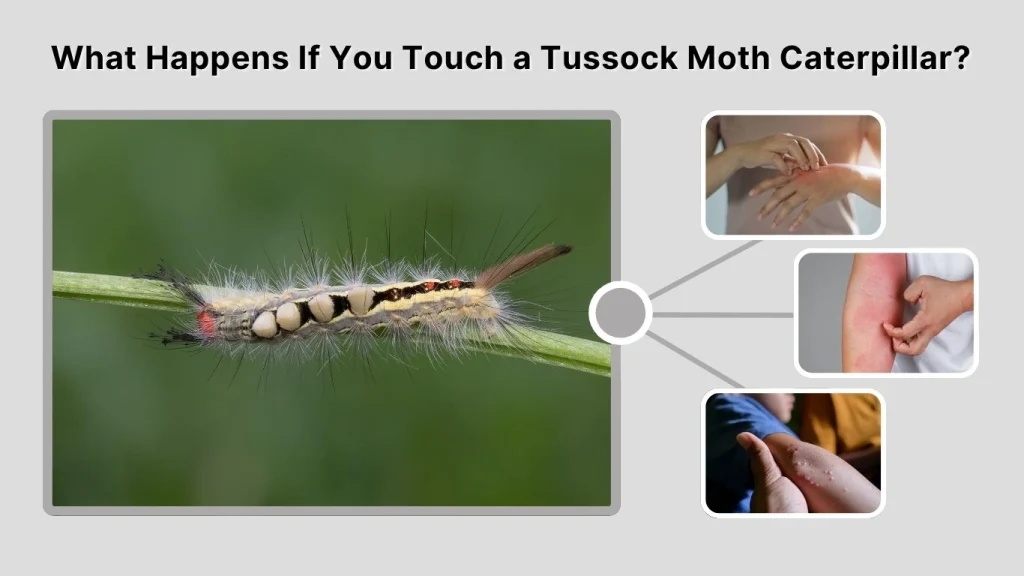
Touching a tussock moth caterpillar can lead to mild or moderate skin reactions. The severity depends on the species and the sensitivity of the person who comes into contact with it.
Common Symptoms
- Itching or burning sensation
- Redness on the skin
- Small rash or bumps
- Mild swelling
- Temporary discomfort
Severe Reactions (Rare)
- Strong allergic response
- Blistering in sensitive individuals
- Intense itching or irritation
- Reaction spreading beyond contact area
- Discomfort lasting longer than usual
Are Tussock Moth Caterpillars Poisonous to Humans?
For most people, contact with these caterpillars results in irritation rather than serious harm. However, reactions can vary depending on skin sensitivity and exposure level.
Effects on Skin
The tiny hairs on the caterpillar act like small needles. When they come into contact with skin, they can cause irritation and inflammation. This usually results in a mild rash that disappears within a short time without long-term effects.
Who Is Most at Risk
Certain individuals are more likely to experience stronger reactions. Children, people with sensitive skin, and those with allergies may develop more noticeable symptoms. Repeated exposure can also increase sensitivity, making reactions more uncomfortable over time.
Are Tussock Moth Caterpillars Poisonous to Dogs?
Pets, especially dogs, are more vulnerable because they may sniff, lick, or bite caterpillars. This increases the risk of irritation in sensitive areas such as the mouth and nose.
Effects on Dogs
- Mouth irritation and discomfort
- Excessive drooling
- Pawing at the face or mouth
- Mild swelling around lips
- Temporary behavioral changes
When to See a Vet
- Severe swelling or difficulty breathing
- Persistent drooling or discomfort
- Signs of pain lasting several hours
- Loss of appetite
- Unusual behavior after contact
Types of Tussock Moth Caterpillars and Their Toxicity

Not all tussock moth caterpillars are the same. Some species are more irritating than others due to differences in hair density and structure.
Hickory Tussock Moth Caterpillar
The hickory tussock moth caterpillar is one of the most well-known species for causing skin irritation. It has a white and black fuzzy appearance with long hairs that easily detach. Contact with this species often results in noticeable itching and redness.
White-Marked Tussock Moth Caterpillar
This species is easily identified by its distinctive tufts of hair along its back. While visually striking, it can also cause skin irritation. Its hairs act as a defense mechanism, making it uncomfortable for predators and humans to touch.
Other Common Tussock Moth Caterpillars
There are several other species that people commonly encounter. While not all are equally irritating, most should be handled with caution.
Common Species
- Sycamore tussock moth caterpillar
- Milkweed tussock moth caterpillar
- Banded tussock moth caterpillar
- Rusty tussock moth caterpillar
- Douglas fir tussock moth caterpillar
Toxicity Differences
- Some species have denser irritating hairs
- Others cause only mild reactions
- Appearance varies widely
- Bright colors often signal defense
- All should be avoided when possible
Why Do Tussock Moth Caterpillars Have Irritating Hairs?
Tussock moth caterpillars rely on their hairs as a primary defense system. These hairs protect them from predators and help them survive in the wild by making them unpleasant to touch or eat.
Defense Mechanism
The hairs act as a natural defense against birds and other predators. When touched, they can cause irritation or discomfort, discouraging predators from attacking. This allows the caterpillar to survive long enough to complete its development into a moth.
How the Hairs Work
Each hair is designed to break off easily when touched. These tiny fragments can stick into the skin and cause irritation. The reaction is not from poison but from the physical effect of the hairs and the body’s response to them.
How to Treat Tussock Moth Caterpillar Exposure
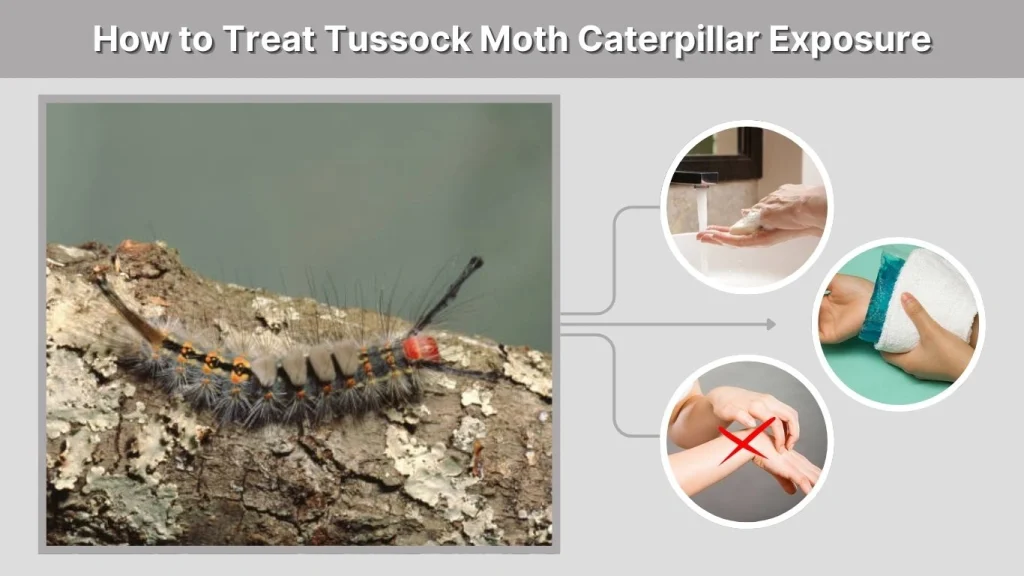
If you accidentally touch a tussock moth caterpillar, proper treatment can help reduce irritation and prevent further discomfort. Most reactions are mild and can be managed at home.
Immediate First Aid Steps
- Wash the affected area with soap and water
- Use adhesive tape to remove loose hairs
- Apply ice to reduce swelling
- Avoid rubbing the skin
- Keep the area clean
When to Seek Medical Help
- Severe or spreading rash
- Intense itching or pain
- Signs of allergic reaction
- Swelling around sensitive areas
- Symptoms lasting more than a few days
How to Avoid Tussock Moth Caterpillars
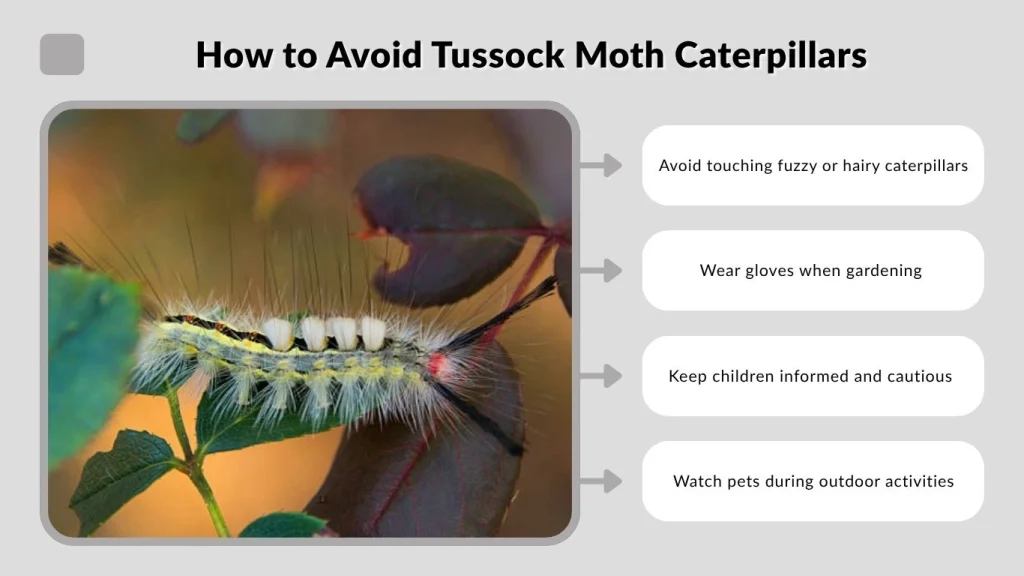
Preventing contact is the best way to avoid irritation. These caterpillars are often found on trees, plants, and outdoor surfaces, especially during warmer months.
Simple Prevention Tips
- Avoid touching fuzzy or hairy caterpillars
- Wear gloves when gardening
- Keep children informed and cautious
- Watch pets during outdoor activities
- Check plants before handling
Outdoor Safety Habits
Being aware of your surroundings can reduce the risk of contact. Pay attention to tree branches, leaves, and outdoor furniture. Staying cautious in areas where caterpillars are common can help prevent accidental exposure.
Are All Tussock Moth Caterpillars Poisonous?
Not all tussock moth caterpillars are equally irritating, but most have some level of defensive hairs. This means they should generally be treated with caution.
Differences Between Species
Some species have more dense or longer hairs, making them more likely to cause irritation. Others may only cause mild reactions. The level of irritation depends on the type of caterpillar and individual sensitivity.
General Safety Rule
It is safest to avoid touching any hairy caterpillar. Even if a species appears harmless, it may still cause irritation. Treating all fuzzy caterpillars as potentially irritating is the best way to stay safe.
Tussock Moth Caterpillar Facts
Tussock moth caterpillars are not only known for their defensive hairs but also for their unique characteristics and ecological role.
Interesting Facts
- Covered in distinctive hair tufts
- Develop into moths, not butterflies
- Found in many regions worldwide
- Appear during specific seasons
- Play a role in natural ecosystems
Behavioral Traits
- Feed mainly on leaves
- Remain hidden during parts of the day
- Use camouflage for protection
- Move slowly to avoid predators
- Rely on hairs for defense
FAQs
Are tussock moth caterpillars poisonous?
They are not poisonous but can cause skin irritation due to their tiny hairs. These hairs act as a defense mechanism and may lead to itching or a rash when touched.
What happens if you touch one?
You may experience itching, redness, or a mild rash. In most cases, symptoms are temporary and disappear within a short time without causing serious harm.
Are tussock moth caterpillars dangerous to dogs?
They can irritate a dog’s mouth or skin, especially if the animal bites or licks them. Symptoms are usually mild but may require attention if they persist.
Which tussock moth caterpillar is most irritating?
The hickory and white-marked tussock moth caterpillars are among the most irritating due to their dense and easily detachable hairs.
How do you treat a reaction?
Wash the affected area, remove any hairs, apply ice, and use anti-itch cream. Seek medical help if symptoms become severe or do not improve.
