
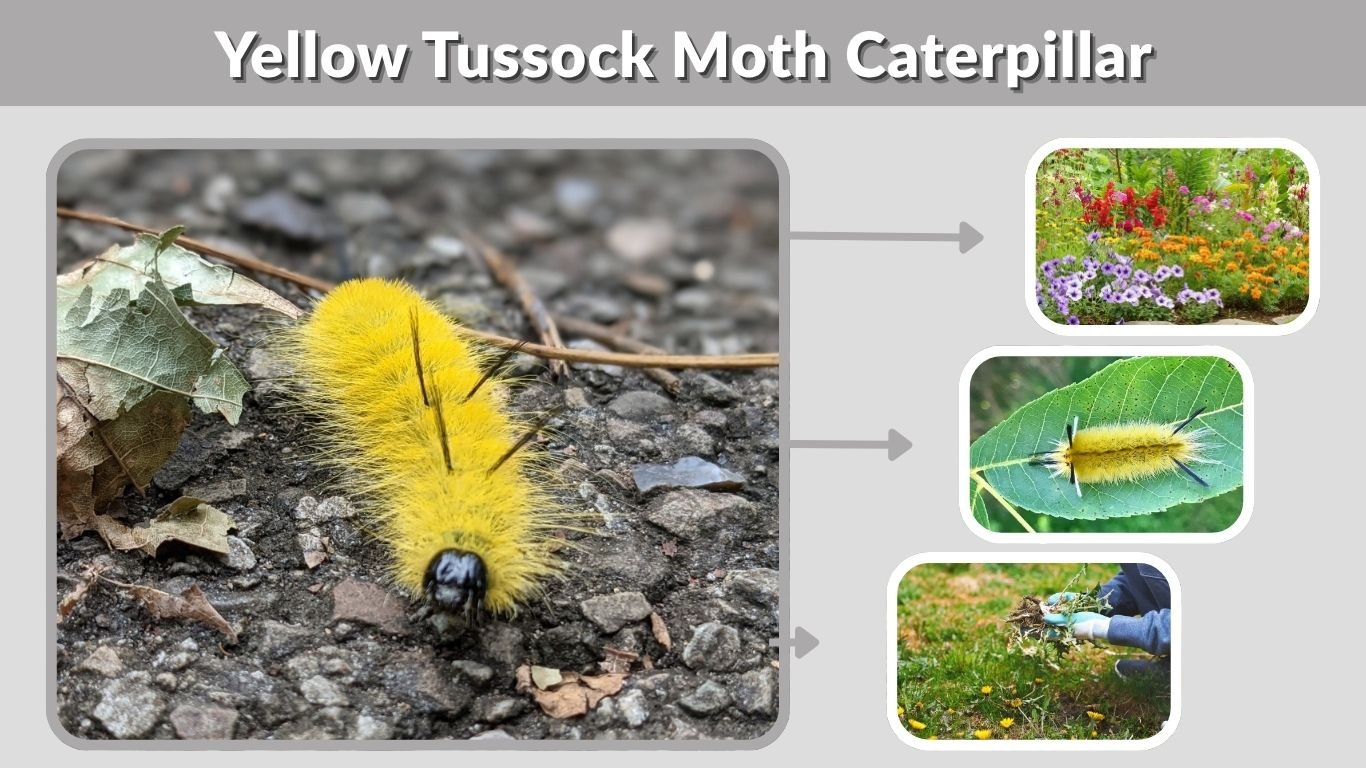
A yellow tussock moth caterpillar can look beautiful, but it is not something you should handle with bare hands. Many yellow, fuzzy, black-striped, or spiky caterpillars are moth larvae, and several species are easily confused with one another. This guide explains how to identify common yellow moth caterpillars, whether they are poisonous, what they eat, and what to do if one causes a rash.
What Is a Yellow Tussock Moth Caterpillar?
A yellow tussock moth caterpillar is usually a hairy moth larva with bright yellow, cream, white, black, or orange markings. The phrase is often used by homeowners and gardeners to describe several similar-looking caterpillars, not just one exact species.
Some are true tussock moth caterpillars, while others may be dagger moths, tiger moths, yellownecked caterpillars, underwing moth caterpillars, or woolly bear caterpillars. This is why identification can be confusing. Many of these larvae share the same warning signs: fuzzy hairs, bright color, black tufts, or a striped body.
Why People Search for This Caterpillar
Most people notice a yellow fuzzy caterpillar on a tree, garden plant, porch, driveway, or lawn. The next question is usually whether it is safe to touch. Bright yellow caterpillars often look soft, but their hairs can irritate skin.
People also search for this caterpillar because it may be feeding in groups and stripping leaves from trees. Others find one crawling alone and want to know what kind of moth it becomes.
Quick Identification Guide
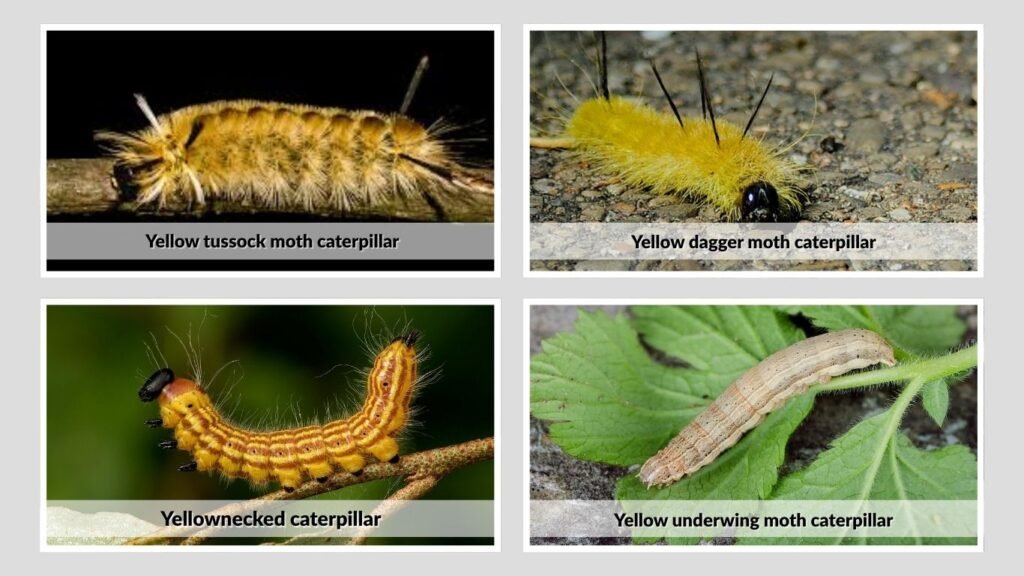
The easiest way to identify a yellow moth caterpillar is to look at its body color, hair pattern, host plant, and behavior. A single feature is rarely enough because several caterpillars look similar.
| Caterpillar Type | Common Look | Main Concern | Common Host or Location |
| Yellow tussock moth caterpillar | Hairy body, yellow or cream tufts, dark markings | Skin irritation from hairs | Trees, shrubs, garden plants |
| Yellow dagger moth caterpillar | Fuzzy yellow body with black hair pencils | Rash or stinging sensation | Hardwood trees, wooded areas |
| Yellownecked caterpillar | Black and yellow striped body, black head, yellow “neck” | Defoliates trees in groups | Oak, birch, maple, fruit trees |
| Yellow underwing moth caterpillar | Smooth brown, gray, or dull caterpillar, often not bright yellow | Plant damage near stems | Soil, lawns, gardens |
| Yellow woolly bear caterpillar | Fuzzy yellow, tan, orange, or brown body | Mild irritation in some people | Weeds, low plants, fields |
Key Features to Check
Look closely without touching the caterpillar. Use a phone camera or magnifying lens if needed.
Common identification clues include:
- Hair or fuzz: Tussock, dagger, and woolly bear caterpillars often look hairy.
- Black hair pencils: Yellow dagger moth caterpillars often have long black tufts or “pencils.”
- Bright stripes: Yellownecked caterpillars are often black and yellow striped.
- Group feeding: Yellownecked caterpillars often feed together on tree branches.
- Soil behavior: Yellow underwing caterpillars are cutworms and may hide in soil.
Is the Yellow Tussock Moth Caterpillar Poisonous?
A yellow tussock moth caterpillar is not usually “poisonous” in the way people imagine. The bigger concern is contact irritation. The hairs or bristles on some caterpillars can break off and lodge in skin, causing itching, redness, burning, swelling, or a rash.
This is why it is better to avoid touching yellow fuzzy caterpillars, even if they look harmless. Children and pets should also be kept away from them. Some people have almost no reaction, while others may develop a stronger rash.
Poisonous vs. Venomous vs. Irritating
These words are often mixed together in search results.
A caterpillar is usually called poisonous if it can make something sick after being eaten. It is called venomous if it injects venom through spines or stinging structures. Many yellow moth caterpillars are best described as irritating because their hairs can cause skin reactions.
However, for practical safety, the advice is the same: do not handle unknown fuzzy caterpillars.
Can It Sting?
Some people describe the reaction as a sting because it can burn or itch suddenly. In many cases, the feeling comes from tiny hairs or spines irritating the skin rather than a bee-like sting.
A yellow dagger moth caterpillar is a common example. It can look soft and fuzzy, but its hairs may cause a painful rash or stinging sensation after contact.
Yellow Dagger Moth Caterpillar vs. Yellow Tussock Moth Caterpillar
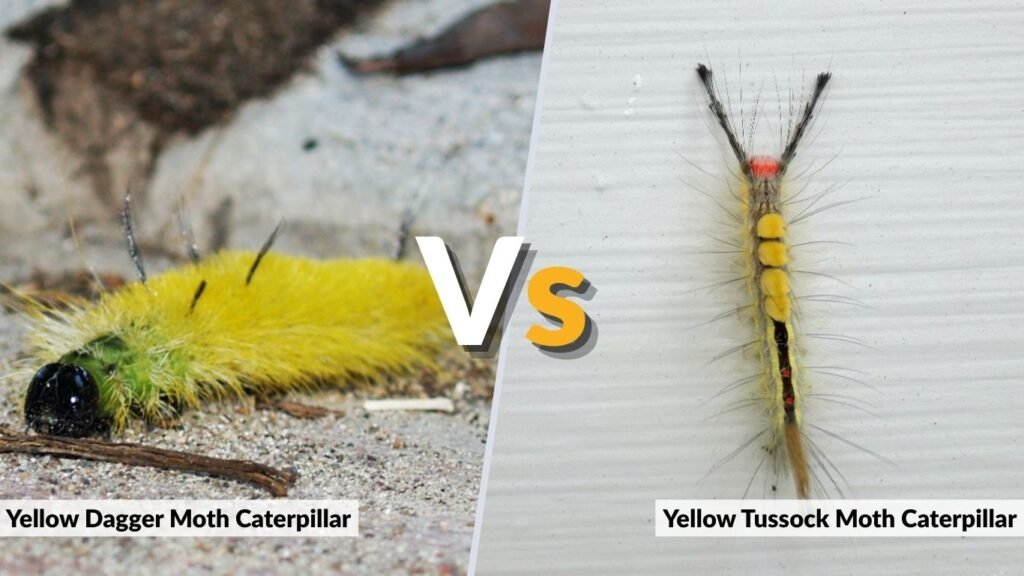
The yellow dagger moth caterpillar is one of the most common lookalikes. Many people searching for a yellow tussock moth caterpillar are actually looking at an American dagger moth caterpillar.
Yellow dagger moth caterpillars are often bright yellow, yellow-green, or whitish. They usually have a fuzzy body and several long black tufts. These black tufts are one of the best clues.
How to Tell Them Apart
A yellow dagger moth caterpillar often has:
- A fuzzy yellow or pale body
- Several long black hair pencils
- A soft-looking but irritating coat of hairs
- A habit of feeding on hardwood trees
- A reputation for causing skin discomfort when touched
A yellow tussock moth caterpillar may have:
- Dense tufts of hair on the back
- Yellow, white, orange, or black markings
- Brush-like hair clumps
- A more “tufted” appearance than a dagger moth caterpillar
- Skin-irritating hairs in some species
If you are unsure, treat the caterpillar as a no-touch species.
Other Yellow Moth Caterpillars People Confuse
Many keywords in this topic are really about lookalikes. Searchers may type “yellow moth caterpillar,” “yellow fuzzy caterpillar moth,” or “black and yellow moth caterpillar” without knowing the exact species.
Yellow Spotted Tussock Moth Caterpillar
The yellow spotted tussock moth caterpillar is often searched because of its bold color pattern. It may show yellow, black, and pale markings with a hairy or tufted body. Like other fuzzy caterpillars, it should not be handled.
People also search “yellow spotted tussock moth caterpillar poisonous.” In most cases, the main issue is not poisoning but possible irritation from contact with hairs.
Yellow Marked Tussock Moth Caterpillar
The yellow marked tussock moth caterpillar is another hairy species that can attract attention on trees and shrubs. It may have tufts, pale yellow markings, and dark contrasting patches.
Because tussock moth caterpillars can be difficult to identify by color alone, look at the full body pattern, location, host plant, and season before deciding on the species.
Yellownecked Caterpillar Moth
The yellownecked caterpillar moth is different from the fuzzy yellow tussock or dagger caterpillars. Its larva is usually black and yellow striped with a black head and a yellow-orange area behind the head.
These caterpillars are often found in groups. They can feed heavily on trees such as oak, birch, maple, and fruit trees. Their group feeding makes them more noticeable than a single fuzzy caterpillar.
Yellow Underwing Moth Caterpillar
The yellow underwing moth caterpillar is usually not the bright yellow fuzzy caterpillar people imagine. Many are cutworms, which hide in soil and feed near plant stems.
The adult large yellow underwing moth gets its name from yellow-orange hindwings, not from a bright yellow caterpillar. This is an important distinction for gardeners trying to identify plant damage.
Yellow Woolly Bear Caterpillar
A yellow woolly bear caterpillar may become a tiger moth or a related moth species. These caterpillars are often fuzzy and may be yellow, tan, orange, brown, or black.
Although woolly bears are familiar to many people, it is still best not to handle them unnecessarily. Their hairs can irritate sensitive skin.
What Do Yellow Moth Caterpillars Eat?
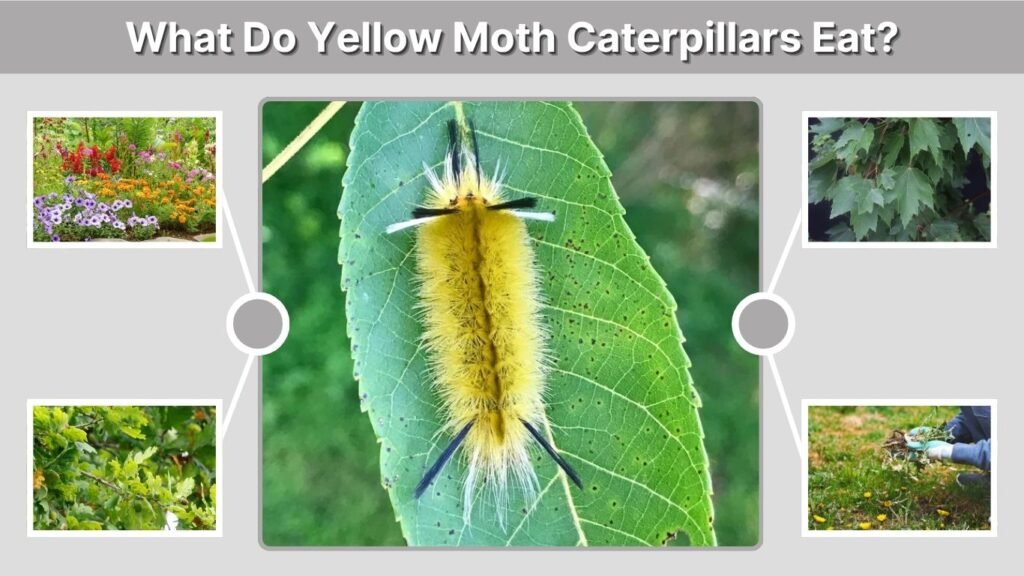
Yellow moth caterpillars eat different plants depending on the species. Some feed on hardwood trees, while others eat weeds, garden plants, grasses, or low-growing vegetation.
Common food sources include:
- Oak, maple, birch, elm, walnut, and other hardwood trees
- Apple, blueberry, and other fruit plants in some cases
- Garden flowers, weeds, and herbaceous plants
- Lawn grasses and plant stems for cutworm-type caterpillars
- Shrubs and ornamental trees
A caterpillar’s host plant can help with identification. For example, a yellow fuzzy caterpillar on a hardwood tree may be a dagger moth or tussock moth caterpillar, while a cutworm near the soil may be related to an underwing moth.
Are Yellow Tussock Moth Caterpillars Bad for Trees?
One or two caterpillars usually do not cause serious damage. Problems are more likely when caterpillars feed in groups or when a small tree is already stressed.
Yellownecked caterpillars, for example, can skeletonize leaves when young and consume larger sections of leaves as they grow. Tussock moth caterpillars may also chew foliage on trees and shrubs.
Signs of Caterpillar Damage
Look for these signs on trees and garden plants:
- Chewed leaf edges
- Skeletonized leaves
- Clusters of caterpillars on branches
- Droppings under feeding areas
- Sudden thinning of foliage
- Caterpillars moving down trunks or across patios
Late-season leaf feeding often looks dramatic, but mature trees can usually recover. Young trees, newly planted ornamentals, and fruit plants may need closer attention.
What to Do If You Find One
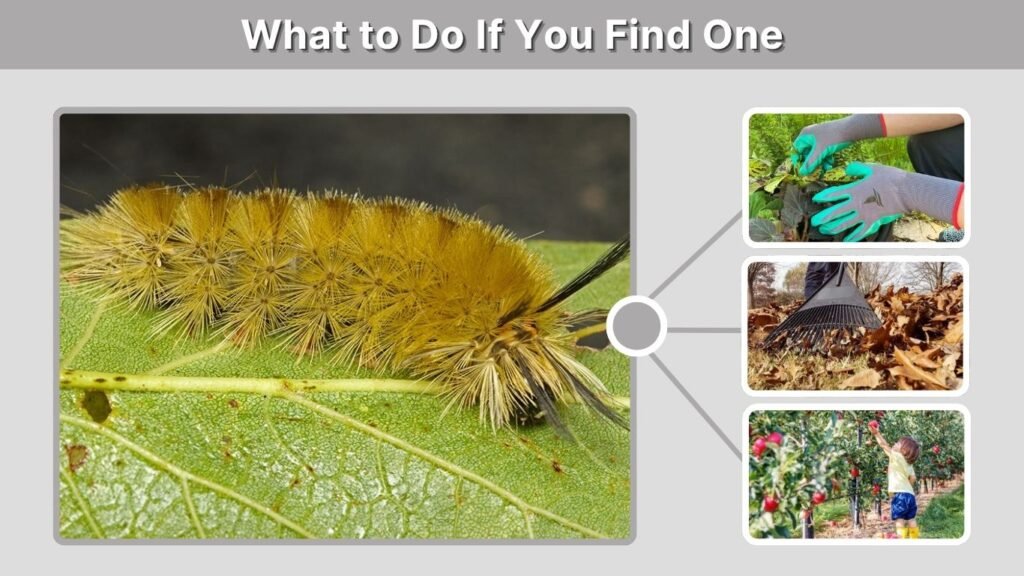
The safest approach is simple: observe, photograph, and avoid touching it. Many moth caterpillars are part of the ecosystem, serving as food for birds and later becoming pollinating moths.
If the caterpillar is not causing serious plant damage, leave it alone. If it is on a walkway, porch, or child’s play area, move it carefully without direct contact.
Safe Handling Tips
Use these methods instead of bare hands:
- Wear thick garden gloves.
- Use a leaf, stick, cardboard, or small container to move it.
- Keep children from picking it up.
- Keep pets from sniffing or eating it.
- Wash hands and tools after contact with hairy caterpillars.
- Do not crush fuzzy caterpillars with bare skin exposed.
If there are many caterpillars on a valuable plant, remove them by hand with gloves or ask a local extension office or pest professional for identification.
What to Do for a Rash
If you touch a yellow tussock moth caterpillar or yellow dagger moth caterpillar and develop irritation, act quickly. The goal is to remove any tiny hairs and calm the skin.
Basic first aid steps include:
- Do not scratch the area.
- Use sticky tape to lift out loose hairs.
- Wash the area with soap and water.
- Apply a cold compress for itching or burning.
- Change and wash clothing that may have touched the caterpillar.
- Seek medical help if swelling, breathing issues, eye exposure, or a severe rash occurs.
This guide is informational and not a substitute for medical advice. Strong allergic reactions are uncommon but possible, especially in sensitive individuals.
Should You Remove Yellow Moth Caterpillars?
Removal depends on location and risk. In a wild area, the best choice is usually to leave them alone. In a garden, you may remove them if they are damaging young plants or gathering where people will touch them.
Avoid broad pesticide use unless there is a serious infestation. Many caterpillars support birds, beneficial insects, and native moth populations. A small amount of leaf chewing is often part of a healthy yard ecosystem.
When Removal Makes Sense
Consider removing caterpillars when:
- They are on children’s play equipment.
- They are near doorways, chairs, or handrails.
- They are heavily defoliating a young tree.
- They are damaging fruit plants or ornamentals.
- Someone in the household is sensitive to caterpillar hairs.
- Pets are trying to eat them.
For most homeowners, careful relocation or hand removal with gloves is enough.
How to Prevent Caterpillar Problems
You cannot prevent every caterpillar, and you should not try to eliminate all of them. Instead, focus on reducing unwanted contact and protecting valuable plants.
Good prevention steps include:
- Inspect young trees during caterpillar season.
- Prune out small clusters when practical.
- Encourage birds and natural predators.
- Keep outdoor furniture away from infested branches.
- Teach children not to touch fuzzy caterpillars.
- Use gloves when gardening around trees and shrubs.
- Avoid unnecessary pesticides that harm beneficial insects.
A balanced garden can support moths while still protecting people and plants from problem caterpillars.
FAQs
Is a yellow tussock moth caterpillar poisonous?
A yellow tussock moth caterpillar is usually not poisonous in the strict sense, but its hairs can irritate skin. Some people may develop itching, redness, burning, or a rash after touching it. The safest choice is to avoid handling any fuzzy yellow caterpillar with bare hands.
What does a yellow dagger moth caterpillar become?
A yellow dagger moth caterpillar becomes a dagger moth, such as the American dagger moth. The adult moth is usually pale gray or whitish with subtle markings. The caterpillar stage is more noticeable because it can be bright yellow and fuzzy with black hair pencils.
Can a yellow moth caterpillar sting?
Some yellow moth caterpillars can cause a stinging or burning feeling when their hairs touch skin. This is especially associated with fuzzy species such as dagger moth and some tussock moth caterpillars. The reaction may feel like a sting, even when tiny irritating hairs are the cause.
What should I do if my child touches one?
Remove any visible hairs with tape, wash the area with soap and water, and use a cold compress for discomfort. Watch for worsening rash, swelling, eye contact, or breathing symptoms. Contact a medical professional if the reaction is severe or your child seems unusually uncomfortable.
Are yellow fuzzy caterpillars bad for the garden?
Not always. A few caterpillars usually cause minor leaf chewing and support local wildlife. They become moths and may serve as food for birds. Removal is only necessary when they are causing heavy damage, gathering in unsafe areas, or creating skin-irritation risks for people or pets.
