The cecropia moth caterpillar is the larval stage of the giant cecropia silk moth. It is known for its large size, bluish-green body, and colorful raised bumps. Many people find one on a tree, sidewalk, or garden plant and wonder what it eats, whether it is poisonous, and what to do with it. This guide explains how to identify a cecropia moth caterpillar, what to feed it, how its stages work, and how it prepares for a cocoon.
What Is a Cecropia Moth Caterpillar?
A cecropia moth caterpillar is the growing stage of the cecropia moth, scientifically known as Hyalophora cecropia. This caterpillar spends its time eating leaves, molting, and gaining size before spinning a silk cocoon. It later becomes a large adult moth, but the adult stage is short and does not involve feeding.
Cecropia Moth Caterpillar Scientific Name
The scientific name of the cecropia moth is Hyalophora cecropia. The caterpillar is the larva of this moth. It is also called the cecropia silk moth caterpillar or giant cecropia moth caterpillar.
Cecropia Caterpillar Moth Meaning
Some people search for “cecropia caterpillar moth,” but this usually means the caterpillar of the cecropia moth. It is not a separate insect. It is simply one stage in the moth’s life cycle.
Giant Cecropia Moth Caterpillar
The word “giant” fits this caterpillar well. It grows large because it must store enough energy for the next stages of life. Adult cecropia moths do not eat, so the caterpillar stage is when most feeding and growth happen.
Cecropia Moth Caterpillar Identification
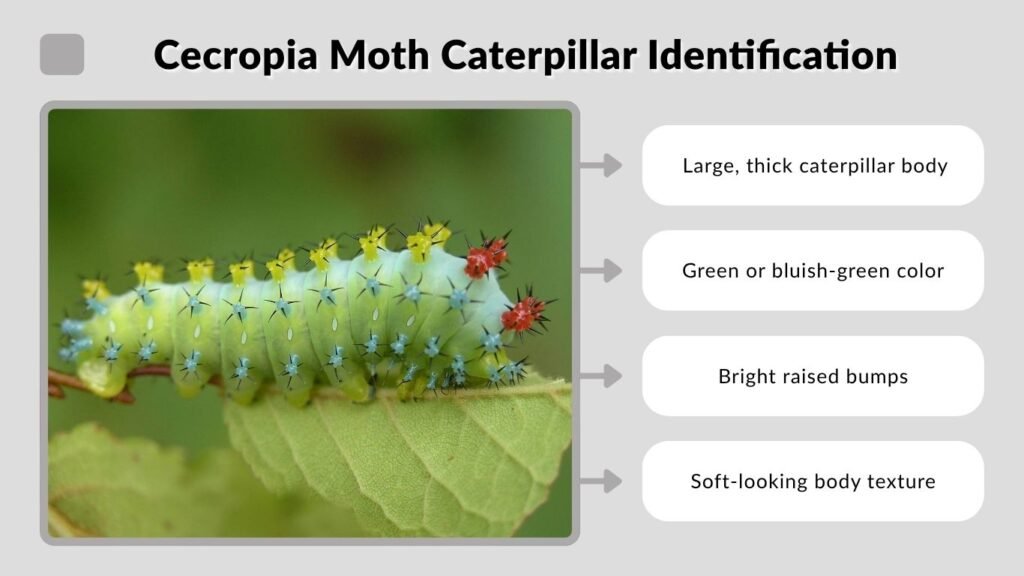
Cecropia moth caterpillars can look very different depending on their age. Young caterpillars may be dark or blackish, while older ones become large and greenish-blue. Mature caterpillars have colorful raised bumps called tubercles. These bright markings make them look unusual, but they are usually harmless to people.
What Does a Cecropia Moth Caterpillar Look Like?
A mature cecropia moth caterpillar has a thick, soft body that is usually green to bluish-green. It has rows of raised tubercles along its body. Some are yellow, while others may be blue, orange, or red.
Key identification signs include:
- Large, thick caterpillar body
- Green or bluish-green color
- Bright raised bumps
- Soft-looking body texture
- Found on or near host trees
Cecropia Moth Baby Caterpillar
A baby cecropia moth caterpillar looks much smaller and darker than a mature one. Newly hatched caterpillars may not show the bright green body or colorful bumps yet. As they feed and molt, their appearance changes.
Pink Striped or Psychedelic Cecropia Moth Caterpillar
Some people describe this caterpillar as pink striped or psychedelic because of its unusual colors. These descriptions usually refer to the bright tubercles and bold body markings seen in later stages.
Cecropia Moth Caterpillar Size and Stages
The cecropia moth caterpillar grows through several stages called instars. Each instar happens between molts, when the caterpillar sheds its old skin and becomes larger. This is why one caterpillar may look dark and small, while another looks huge, green, and colorful. Both may be the same species at different stages.
Cecropia Moth Caterpillar Size
A mature cecropia moth caterpillar can become quite large compared with many common caterpillars. Its size is one reason people notice it on branches, sidewalks, or garden areas. The caterpillar must grow enough to store energy before forming its cocoon.
Cecropia Moth Caterpillar Instars
Instars are growth stages. During each instar, the caterpillar eats, grows, and eventually molts. Cecropia caterpillars change color and shape as they move through these stages.
Common stage changes may include:
- Tiny dark baby caterpillar
- Larger feeding caterpillar
- Changing body color
- Green or bluish-green mature caterpillar
- Cocoon-ready final stage
Cecropia Moth Caterpillar Life Cycle
The caterpillar is only one part of the full life cycle. The insect begins as an egg, hatches into a larva, grows through instars, spins a cocoon, becomes a pupa, and finally emerges as an adult moth.
What Do Cecropia Moth Caterpillars Eat?
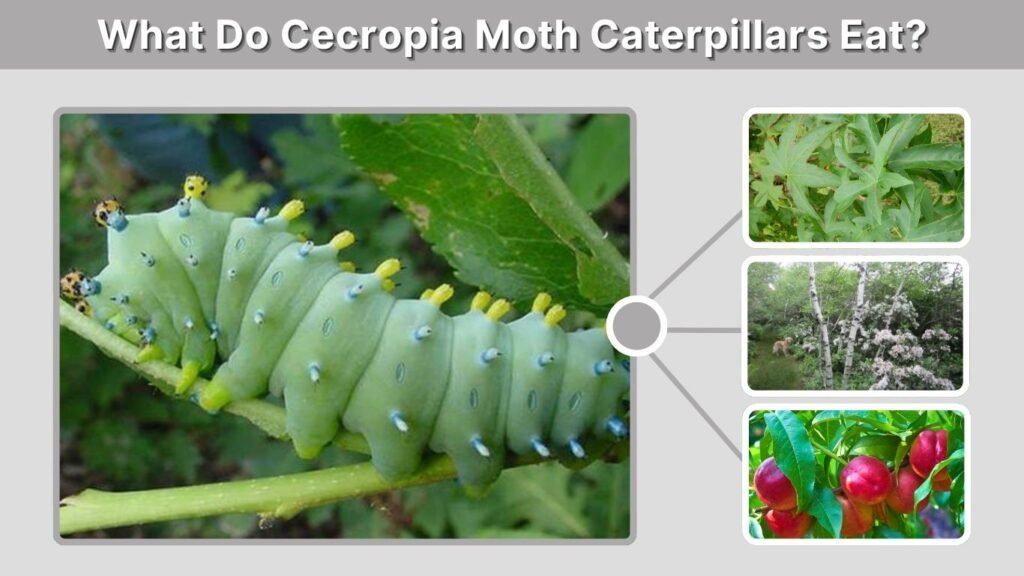
Cecropia moth caterpillars eat leaves from host trees and shrubs. They do not eat random garden plants, grass, or household food. The best food is usually fresh leaves from the same plant where the caterpillar was found. Fresh, untreated leaves give the caterpillar both nutrition and moisture while it grows.
Cecropia Moth Caterpillar Diet
Cecropia moth caterpillars feed on several types of host plants. Common food plants include:
- Maple
- Cherry
- Birch
- Apple
- Willow
- Alder
- Plum
- Poplar
- Box elder
- Elderberry
What to Feed a Cecropia Moth Caterpillar
If you find a cecropia moth caterpillar, offer fresh leaves from the plant where it was found. This is usually the safest choice because the caterpillar was already using that plant as food. Avoid pesticide-treated leaves, wilted leaves, or leaves from unknown plants.
Cecropia Moth Caterpillar on Tomato Plant
Tomato is not a typical host plant for cecropia moth caterpillars. If you find a large caterpillar on a tomato plant, check its appearance carefully. It may be a different species, or it may have wandered there from a nearby tree or shrub.
Are Cecropia Moth Caterpillars Poisonous?
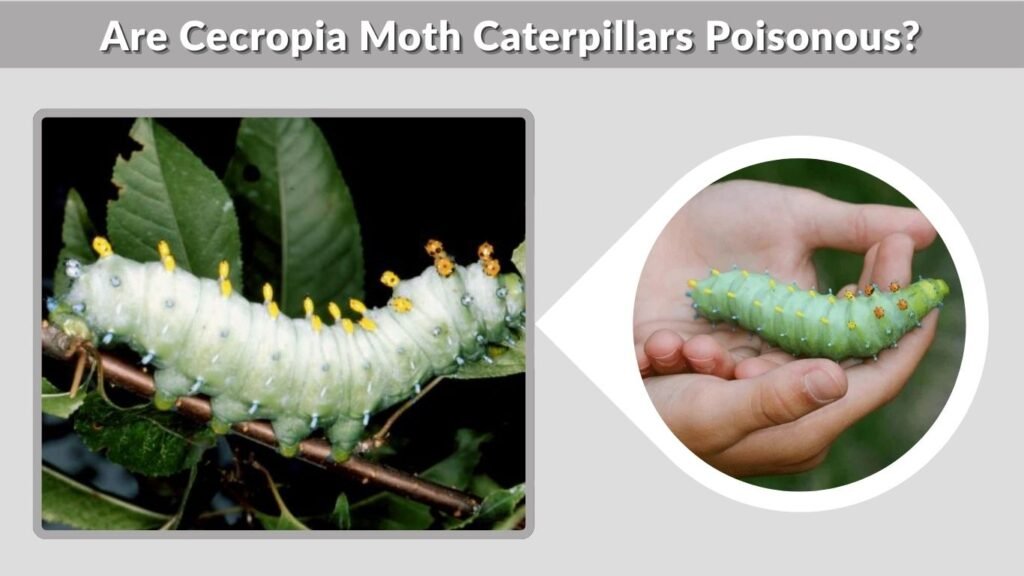
Cecropia moth caterpillars may look strange because of their colorful bumps, but they are not considered poisonous to people. They are also not known as stinging caterpillars. Their bright tubercles can look intimidating, yet they are part of the caterpillar’s appearance, not venomous spines. Gentle handling is still recommended.
Is the Cecropia Moth Caterpillar Poisonous?
The cecropia moth caterpillar is not generally considered poisonous. It does not have the type of toxic hairs or painful spines found on some other caterpillars. If you see one, there is usually no need to panic or kill it.
Does a Cecropia Moth Caterpillar Sting?
A cecropia moth caterpillar does not sting like a saddleback caterpillar or some other venomous species. Its raised bumps are not stingers. Still, it is better to avoid unnecessary handling because caterpillars are soft-bodied and can be injured easily.
Can You Hold a Cecropia Moth Caterpillar?
You can gently move a cecropia moth caterpillar if needed, but it is better to use a leaf, twig, or small branch. Avoid squeezing, dropping, or keeping it in your hand too long. If it is safe on its host plant, leaving it alone is usually best.
Cecropia Moth Caterpillar Care
Cecropia moth caterpillar care should focus on correct food, clean space, fresh air, and minimal stress. If the caterpillar is healthy and already on a safe host plant, it may not need help. If you are raising one temporarily, provide fresh host leaves, avoid chemicals, and give it room to spin a cocoon naturally.
How to Raise a Cecropia Moth Caterpillar
To raise a cecropia moth caterpillar safely, follow simple care steps:
- Feed fresh leaves from the correct host plant
- Replace wilted leaves regularly
- Avoid pesticide-treated leaves
- Keep the container clean and ventilated
- Remove droppings and old leaves
- Avoid direct sun and overheating
- Provide twigs when it is ready to cocoon
What to Do With a Cecropia Moth Caterpillar
If you find one on a safe tree or shrub, leave it there. If it is crossing a road, sidewalk, or driveway, gently move it to nearby vegetation. Try to place it near the same type of plant it was found on, especially if it was already feeding.
Raising Cecropia Moth Caterpillars Ethically
Wild caterpillars should not be collected in large numbers. Raising one for observation can be educational, but it should be done carefully. Avoid moving caterpillars across long distances, and do not release nonlocal insects into the wild. Local rules may also apply.
Cecropia Moth Caterpillar Cocoon
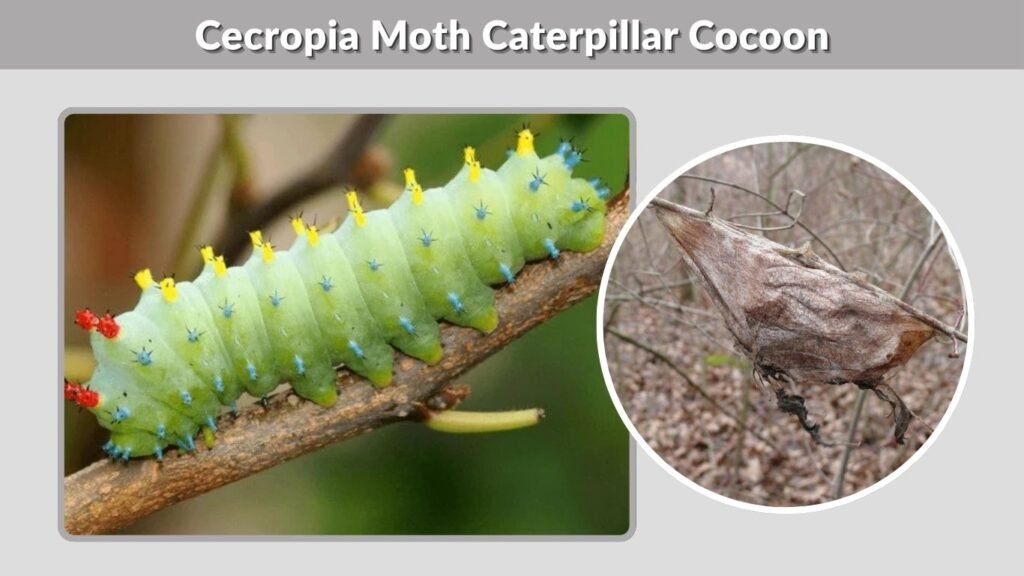
When a cecropia moth caterpillar is fully grown, it stops feeding and begins preparing to spin a cocoon. The cocoon is made of tough silk and is usually attached to a twig, branch, or stem. Inside the cocoon, the caterpillar becomes a pupa and slowly develops into an adult moth.
When Does a Cecropia Caterpillar Make a Cocoon?
A cecropia caterpillar makes a cocoon after it has finished growing. Before cocooning, it may wander away from its feeding area to find a safe place. This behavior is normal and does not always mean something is wrong.
How to Help a Cecropia Moth Caterpillar Cocoon
Do not try to wrap or cocoon the caterpillar yourself. It knows how to spin its own cocoon when ready. You can help by giving it a quiet space, good airflow, and small twigs or stems where it can attach silk.
Cecropia Moth Caterpillar Cocoon Problems
Cocoon problems can happen if the caterpillar is disturbed, kept too wet, overheated, or exposed to poor ventilation. Parasites can also affect caterpillars before they cocoon. If the caterpillar looks weak or stops eating too early, it may be sick or already parasitized.
Cecropia Moth Caterpillar vs Luna Moth Caterpillar
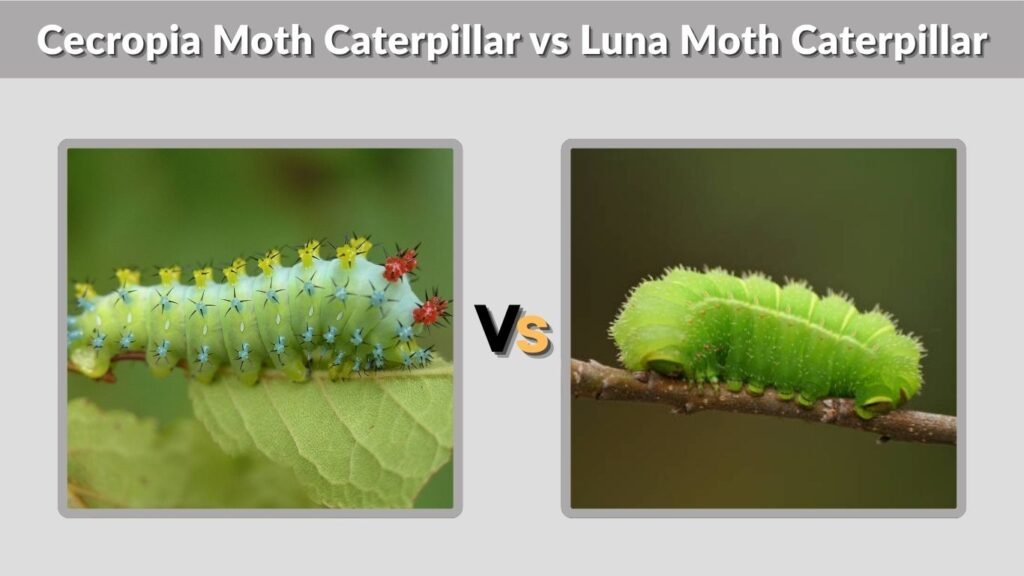
Cecropia and luna moth caterpillars are both large silk moth larvae, so people often compare them. Both eat leaves from host plants and later become beautiful adult moths. However, their appearance is different. Cecropia caterpillars usually have colorful raised bumps, while luna moth caterpillars are smoother and mostly green.
Luna Moth Caterpillar vs Cecropia Moth Caterpillar
A luna moth caterpillar is usually bright green with a smoother body. A cecropia moth caterpillar is often bluish-green and has yellow, blue, orange, or red raised tubercles. These colorful bumps are one of the easiest ways to tell them apart.
Cecropia vs Polyphemus vs Luna Caterpillars
Cecropia, polyphemus, and luna moth caterpillars can all be large and green. Cecropia caterpillars are usually the most colorful because of their raised tubercles. Luna caterpillars are smoother, while polyphemus caterpillars are green and thick but lack the same bright cecropia pattern.
FAQs
What does a cecropia moth caterpillar eat?
A cecropia moth caterpillar eats fresh leaves from host trees and shrubs. Common host plants include maple, cherry, birch, apple, willow, alder, plum, poplar, box elder, and elderberry. The best food is usually leaves from the same plant where the caterpillar was found.
Is a cecropia moth caterpillar poisonous?
A cecropia moth caterpillar is not considered poisonous to people. Its colorful bumps may look dangerous, but they are not venomous spines. It is usually harmless when left alone. Still, gentle handling is best because the caterpillar’s soft body can be injured.
Does a cecropia moth caterpillar sting?
No, a cecropia moth caterpillar does not sting. It is not like stinging caterpillars that have irritating or venomous spines. The raised bumps on its body are part of its appearance. If you need to move one, use a leaf or twig instead of touching it roughly.
What should I do if I find a cecropia moth caterpillar?
If it is on a safe host plant, leave it there. If it is on a road, sidewalk, or driveway, gently move it to nearby vegetation. Try to place it close to the same type of tree or shrub where it was found so it can continue feeding.
How do I help a cecropia moth caterpillar make a cocoon?
Do not try to make a cocoon for it. A mature cecropia moth caterpillar will spin its own silk cocoon when ready. You can help by giving it a quiet, ventilated space with twigs or stems, fresh air, and protection from overheating, excess moisture, and disturbance.