
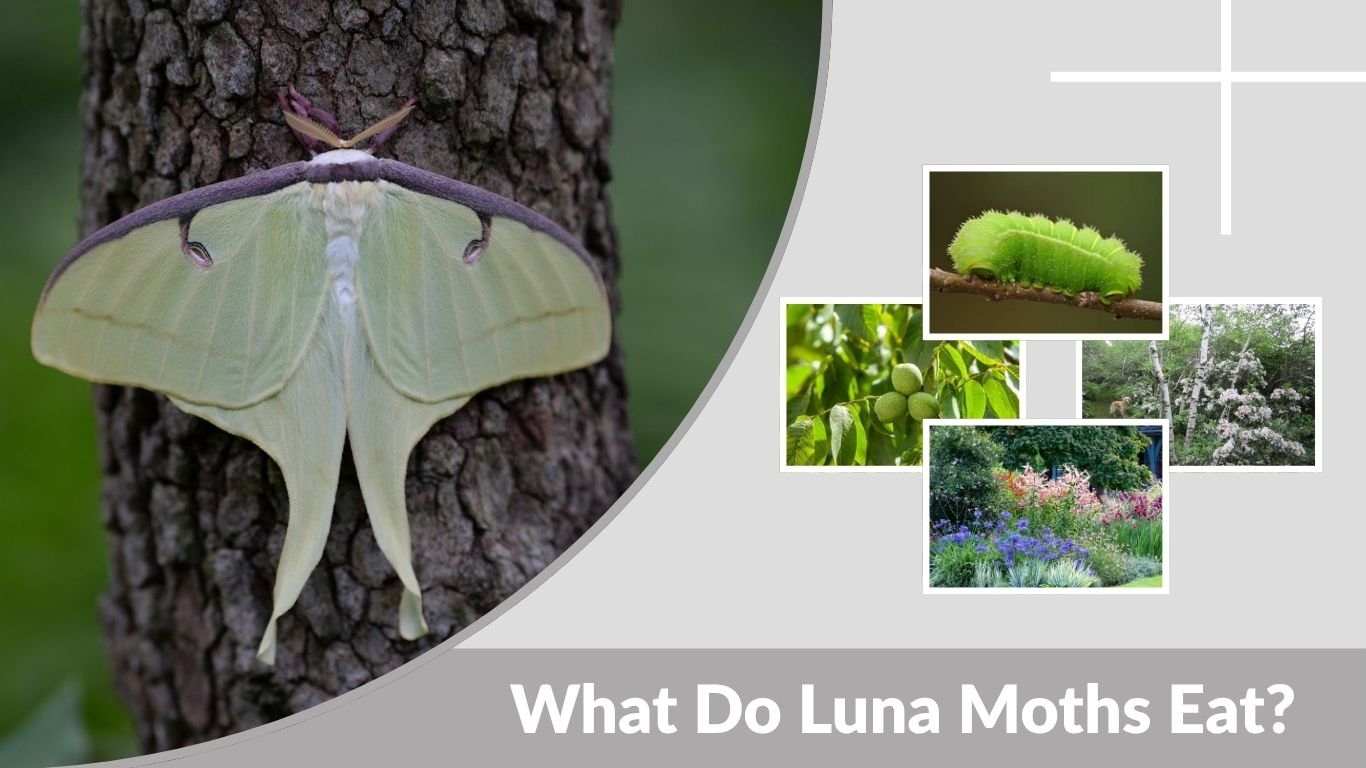
Luna moths are famous for their pale green wings, long tails, and beautiful nighttime appearance. But their diet surprises many people. Adult luna moths do not eat or drink at all. Instead, all real feeding happens when they are caterpillars. Luna moth caterpillars eat fresh leaves from specific host trees, including walnut, hickory, birch, sweetgum, persimmon, pecan, and sumac. Understanding the difference between adult luna moths and their caterpillars helps explain what these insects need at each life stage.
What Do Luna Moths Eat?
Adult luna moths are very different from many other insects because they do not feed after emerging from the cocoon. Their adult stage is short and focused mainly on mating and laying eggs. So, when people ask what luna moths eat, the answer depends on whether they mean the adult moth or the caterpillar stage.
Do Adult Luna Moths Eat?
Adult luna moths do not eat leaves, nectar, fruit, flowers, clothing, wood, or stored food. Unlike butterflies and some moths that visit flowers for nectar, adult luna moths do not have working mouthparts for feeding.
This means an adult luna moth does not damage garden plants, crops, trees, fabrics, or household items. If you see a large green luna moth near a porch light, it is not searching for food. It is usually looking for a mate or a safe place to rest.
Do Luna Moths Drink Water?
Adult luna moths also do not drink water. They live on the energy stored from their caterpillar stage. This is why the caterpillar stage is so important. During that time, the insect eats enough leaves to grow, store energy, and complete its life cycle.
Because adult luna moths do not eat or drink, they usually live only for a short time. Their main job as adults is reproduction, not feeding.
What Do Luna Moth Caterpillars Eat?
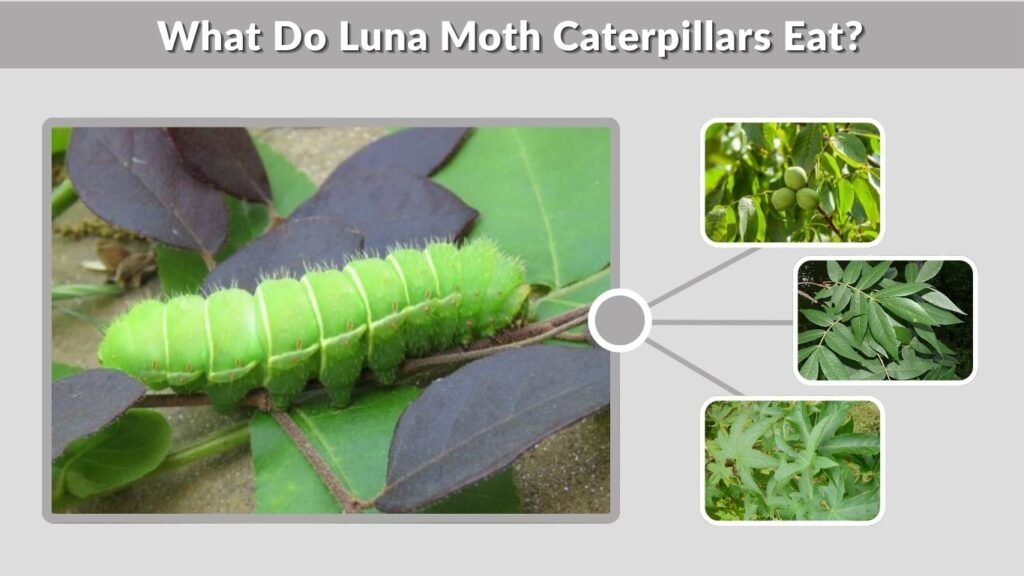
Luna moth caterpillars are the feeding stage of the luna moth life cycle. While adult luna moths do not eat, caterpillars must eat a lot to grow. They feed on leaves from specific host plants. These leaves provide the moisture, nutrition, and energy the caterpillar needs before forming a cocoon.
Common Leaves Luna Moth Caterpillars Eat
Luna moth caterpillars usually eat leaves from certain trees and shrubs. Their exact diet can vary by region, but common host plants include:
- Walnut leaves
- Hickory leaves
- Sweetgum leaves
- White birch leaves
- Persimmon leaves
- Pecan leaves
- Sumac leaves
These plants are known as host plants because female luna moths lay eggs on or near them. When the eggs hatch, the tiny caterpillars can begin eating right away.
Do Luna Moth Caterpillars Eat Any Leaf?
Luna moth caterpillars do not eat just any leaf. They need leaves from suitable host plants. If a caterpillar is placed on the wrong plant, it may refuse to eat. This is why it is important to know what tree or shrub the caterpillar was found on.
If you find a luna moth caterpillar, the safest food is usually fresh leaves from the same plant where you found it. Random garden leaves, grass, vegetable leaves, or houseplants may not be suitable.
What Do Luna Moth Larvae Eat?
The words “larvae” and “caterpillars” mean the same stage in the luna moth life cycle. Luna moth larvae hatch from eggs and begin feeding on host plant leaves. As they grow, they shed their skin several times before they are ready to make a cocoon.
What Do Baby Luna Moths Eat?
“Baby luna moths” usually means newly hatched caterpillars. These tiny caterpillars start eating soft, fresh leaves soon after hatching. They need the right host plant from the beginning because young caterpillars are small and delicate.
Fresh leaves are important because they provide both food and moisture. Dry, old, or chemically treated leaves can be harmful. For best results, the leaves should be clean, fresh, and from a tree the caterpillar naturally accepts.
What Do Luna Moth Caterpillars Eat and Drink?
Luna moth caterpillars mostly get water from the leaves they eat. They do not usually need a separate water dish. In fact, a dish of water can be dangerous for small caterpillars because they may fall in and drown.
To support a luna moth caterpillar, focus on giving it fresh host leaves. Replace wilted leaves regularly and remove old leaf pieces from its container if you are observing it for a short time.
What Do Luna Moths Eat in Minnesota?
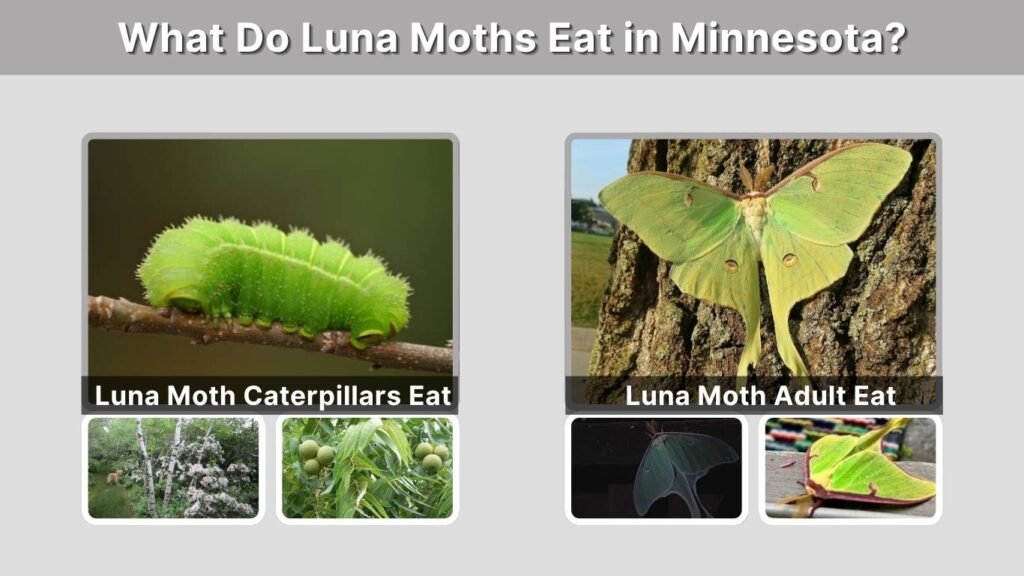
Luna moths can be found in many eastern parts of North America, including Minnesota. Their basic diet does not change much by location: adult luna moths do not eat, while caterpillars feed on host tree leaves. In Minnesota and the Twin Cities, the most useful question is which local trees can support luna moth caterpillars.
What Do Luna Moth Caterpillars Eat in Minnesota?
In Minnesota, luna moth caterpillars may feed on leaves from native or commonly available host trees. Good possible host plants include:
- Birch
- Walnut
- Hickory
- Sumac
The best food source is usually the plant where the caterpillar was found. If you find a caterpillar on a birch tree, for example, continue offering fresh birch leaves rather than switching to a random plant.
What Do Luna Moths Eat in the Twin Cities?
Adult luna moths in the Twin Cities do not eat or drink. They may be seen near lights at night, but they are not looking for food. They are usually resting, searching for a mate, or moving through suitable habitat.
Caterpillars in the Twin Cities need fresh leaves from accepted host plants. Yards, parks, wooded neighborhoods, and natural areas with birch, walnut, hickory, or sumac may provide food for luna moth larvae.
What Leaves Should You Feed a Luna Moth Caterpillar?
If you find a luna moth caterpillar, feeding it the right leaves is very important. Caterpillars cannot survive well on random plants. They need fresh, safe leaves from a host tree. The easiest method is to use the same plant where the caterpillar was discovered, because that is likely already an accepted food source.
Use the Same Plant It Was Found On
The safest first choice is the original plant. A luna moth caterpillar found on walnut should be offered walnut leaves. One found on birch should be offered birch leaves. This reduces the chance that the caterpillar will reject the food.
Keep the Leaves Fresh and Clean
Fresh leaves are better than dry or wilted leaves. When caring for or observing a caterpillar, remember to:
- Replace wilted leaves often
- Remove old leaf pieces
- Avoid leaves with pesticide or herbicide spray
- Keep the container clean and ventilated
- Do not add a water dish
A caterpillar gets moisture from leaves, so clean, fresh foliage is more useful than extra water.
Do Luna Moths Eat Garden Plants?
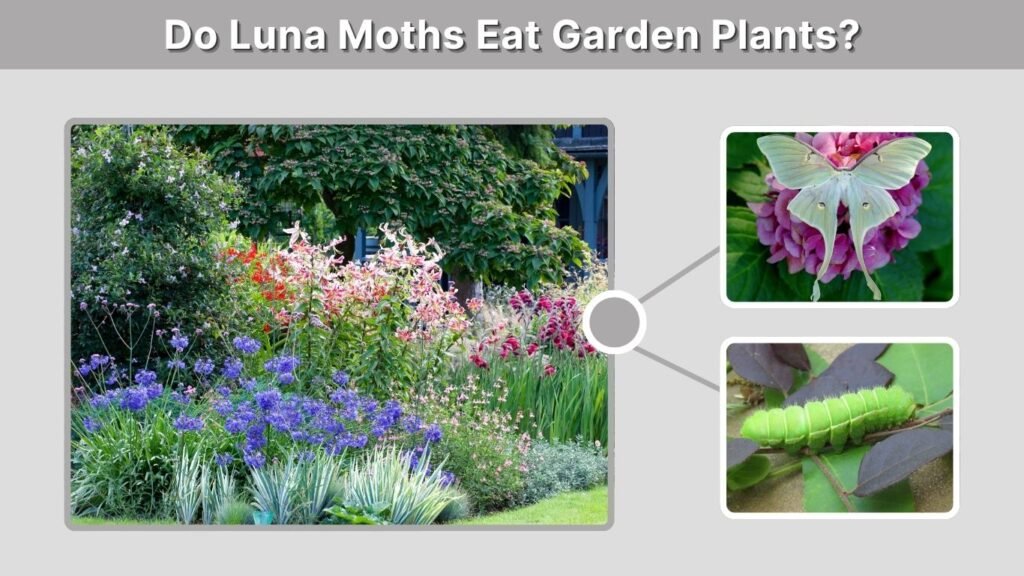
Adult luna moths do not eat garden plants, flowers, vegetables, or shrubs. They are harmless to gardens as adults. Luna moth caterpillars do eat leaves, but they usually feed on certain trees rather than common vegetable garden plants. In most cases, a few caterpillars will not seriously damage a healthy tree.
Are Luna Moth Caterpillars Bad for Trees?
Luna moth caterpillars are not usually a major pest. They may chew some leaves, but they are not known for destroying entire trees in normal numbers. A healthy tree can usually handle light feeding from caterpillars.
Should You Remove Luna Moth Caterpillars?
In most cases, you do not need to remove them. Luna moths are beautiful native insects and part of the natural food web. If you want to support them, avoid spraying pesticides on host trees and allow some natural leaf feeding.
Common Confusion: Luna Moth vs. Lunar Moth
Many people search for “lunar moth,” but the correct common name is “luna moth.” These searches usually mean the same insect. So, if someone asks what lunar moths eat, the answer is the same: adult luna moths do not eat, and luna moth caterpillars eat host tree leaves.
What Do Adult Lunar Moths Eat?
If “adult lunar moth” means adult lunar moth, it does not eat anything. It does not drink nectar, water, or tree sap. Its energy comes from food eaten during the caterpillar stage.
What Do Brown Luna Moths Eat?
A brown “luna moth” may be an old or damaged luna moth, a cocoon, or a different moth species. If it is truly an adult luna moth, it still does not eat. If it is a caterpillar, it needs fresh host plant leaves.
FAQs
What do luna moths eat?
Adult luna moths do not eat anything. They do not eat leaves, flowers, nectar, fabric, or stored food. Luna moths do all their feeding as caterpillars, when they eat fresh leaves from specific host trees such as walnut, hickory, birch, sweetgum, persimmon, pecan, and sumac.
What do luna moth caterpillars eat?
Luna moth caterpillars eat leaves from accepted host plants. Common food sources include walnut, hickory, sweetgum, white birch, persimmon, pecan, and sumac. If you find a caterpillar, the best food is usually fresh leaves from the same plant or tree where it was found.
Do adult luna moths drink water?
No, adult luna moths do not drink water. They also do not drink nectar or sap. Their mouthparts do not work for feeding or drinking, so they survive on energy stored during the caterpillar stage. Their adult life is short and mainly focused on mating and laying eggs.
What do baby luna moths eat?
Baby luna moths are newly hatched caterpillars. They eat soft, fresh leaves from suitable host plants soon after hatching. They should not be given random leaves, grass, or houseplants. Fresh leaves from the plant where they were found are usually the safest choice.
What do luna moth caterpillars eat in Minnesota?
In Minnesota, luna moth caterpillars may eat leaves from local host trees such as birch, walnut, hickory, and sumac. Adult luna moths in Minnesota do not eat or drink. In the Twin Cities, caterpillars need fresh leaves from suitable host plants found in yards, parks, and wooded areas.
