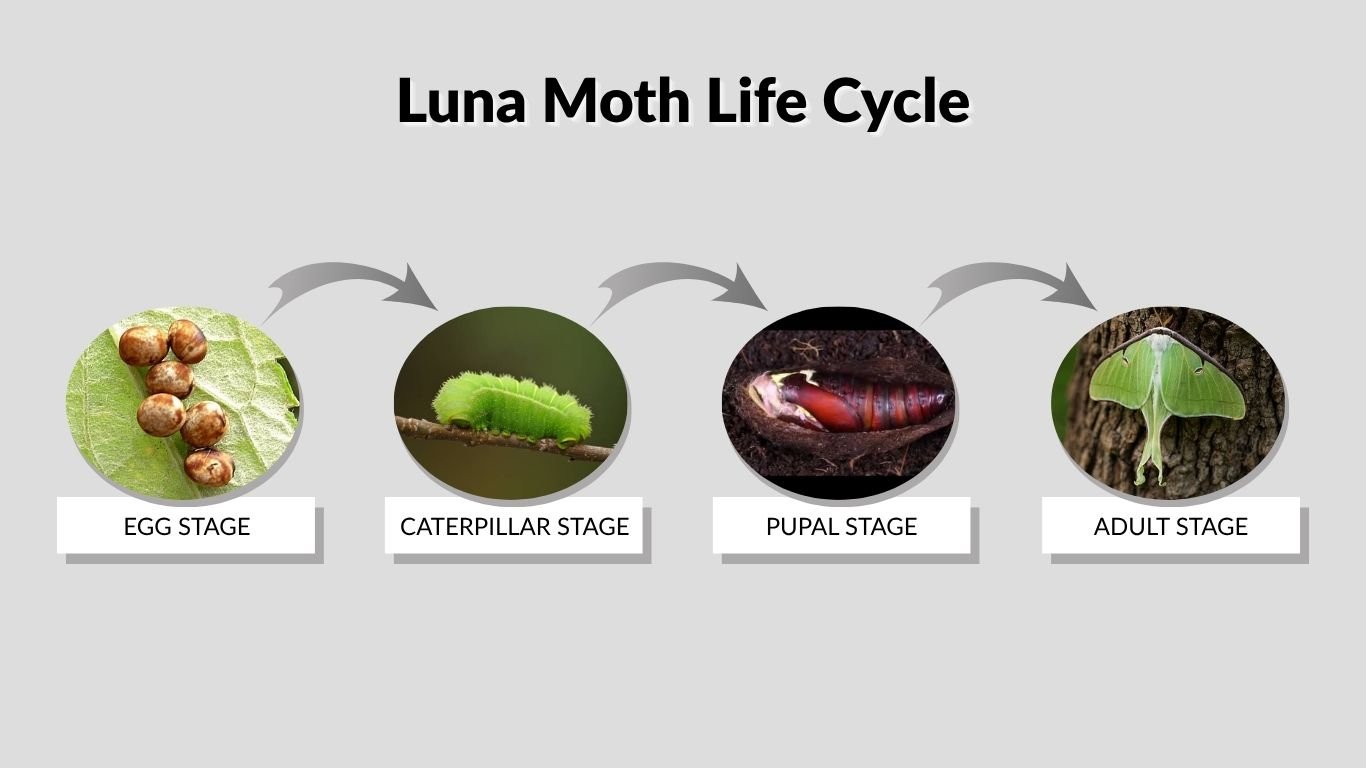
The luna moth (Actias luna) is one of North America’s most recognizable and beautiful moth species. Known for its pale green wings and long tail-like extensions, this giant silk moth undergoes a remarkable transformation throughout its life. Like butterflies, luna moths experience complete metamorphosis, passing through four distinct stages before reaching adulthood. Understanding the luna moth life cycle helps nature enthusiasts, students, and gardeners appreciate how these fascinating insects grow, survive, and reproduce in the wild.
What Is the Luna Moth Life Cycle?
The luna moth life cycle is the developmental process that transforms a tiny egg into a fully grown adult moth. This process consists of four stages: egg, caterpillar, pupa, and adult. Each stage serves a specific purpose and contributes to the survival of the species.
The complete life cycle may take anywhere from two months to nearly a year, depending on climate, temperature, and seasonal conditions. While the adult moth lives for only a short time, the earlier stages are focused on growth and preparation for reproduction.
The Four Stages of the Luna Moth Life Cycle
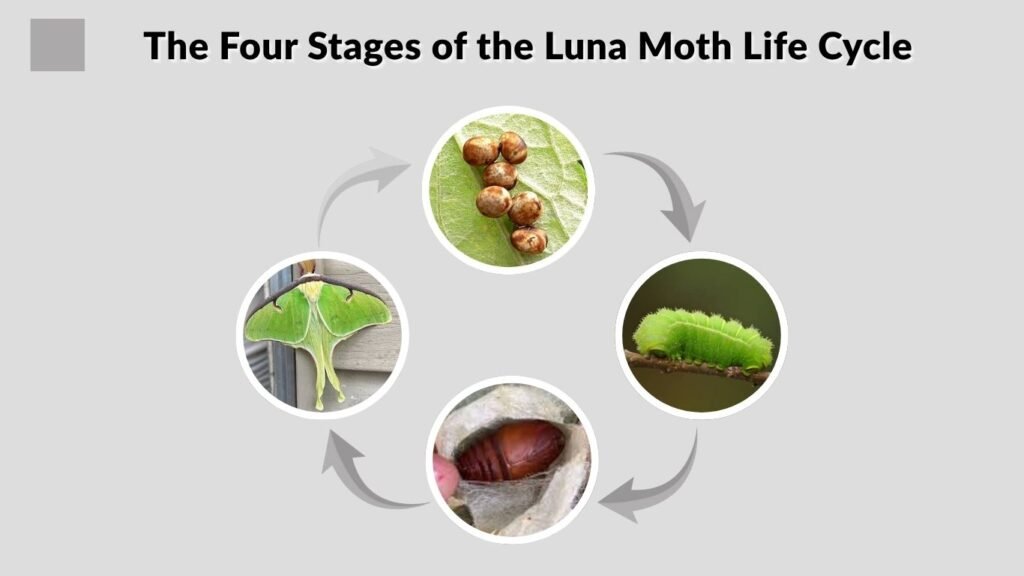
The luna moth undergoes complete metamorphosis, which means its appearance changes dramatically during development. Each stage has unique characteristics and functions.
Egg Stage
The life cycle begins when a female luna moth lays eggs on the leaves of suitable host trees. These eggs are small, oval-shaped, and usually attached individually or in small groups.
Important facts about luna moth eggs include:
- Eggs are typically laid on the underside of leaves.
- A female may lay between 200 and 400 eggs.
- The eggs hatch within 8 to 13 days.
- Warmer temperatures often speed up development.
Once the eggs hatch, tiny caterpillars emerge and immediately begin feeding.
Caterpillar Stage
The caterpillar stage is the longest active feeding period in the luna moth’s life. During this stage, the insect consumes large quantities of leaves to store energy for its future development.
Young caterpillars are relatively small but grow rapidly over several weeks. As they mature, they become bright green and develop distinctive features that help identify them.
Pupal Stage
After reaching full size, the caterpillar stops feeding and prepares for metamorphosis. It spins a silk cocoon, often among fallen leaves on the ground.
Inside the cocoon, one of nature’s most incredible transformations takes place. The caterpillar gradually develops into an adult moth while protected from predators and environmental conditions.
Adult Stage
When development is complete, the adult luna moth emerges from the cocoon. Its wings initially appear soft and folded but expand within a few hours.
The adult stage is focused almost entirely on reproduction. Adult luna moths do not eat because they lack functional mouthparts. Instead, they rely on energy reserves stored during the caterpillar stage.
Luna Moth Caterpillar Life Cycle Explained
The caterpillar stage deserves special attention because it is the period of rapid growth and development. During this time, luna moth caterpillars increase their body size dramatically and prepare for metamorphosis.
Unlike the adult stage, caterpillars spend most of their time feeding. Their primary goal is to accumulate enough nutrients to support the pupal stage and short adult life.
What Do Luna Moth Caterpillars Eat?
Luna moth caterpillars feed on the leaves of several deciduous trees. Common host plants include:
- Sweetgum
- Hickory
- Walnut
- Birch
- Persimmon
- Sumac
These food sources provide the nutrients necessary for growth and successful development.
How Long Do Luna Moth Caterpillars Live?
The caterpillar stage typically lasts three to four weeks. During this time, the insect undergoes several molts, shedding its outer skin as it grows larger.
Growth rates vary depending on temperature, food availability, and environmental conditions. In favorable conditions, caterpillars can develop rapidly and reach their final size within a month.
Luna Moth Life Cycle Instars
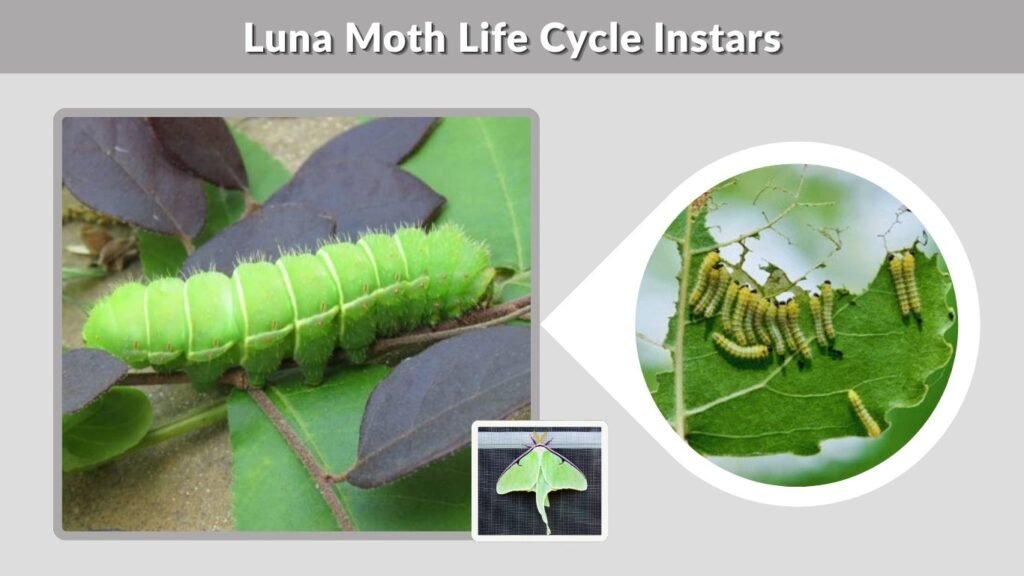
An important part of the luna moth caterpillar life cycle involves a series of developmental phases called instars. Each instar represents a period between molts.
As the caterpillar grows, its exoskeleton becomes too small. To continue developing, it sheds the old skin and enters a new instar.
Instar 1 and Instar 2
Newly hatched caterpillars begin in the first instar. At this stage, they are small, delicate, and focused entirely on feeding.
During the second instar, growth accelerates and the caterpillar becomes noticeably larger. Its coloration also becomes more distinct.
Instar 3 and Instar 4
The middle instars are characterized by rapid weight gain and increased feeding activity. The caterpillar consumes large amounts of foliage and continues developing its bright green appearance.
These stages are critical because they allow the insect to store the energy required for metamorphosis.
Instar 5
The fifth instar is the final caterpillar stage. At this point, the insect reaches its maximum size and begins preparing for cocoon construction.
Feeding gradually decreases as the caterpillar searches for a suitable location to pupate.
Luna Moth Cocoon Stage
The cocoon stage marks the beginning of the pupal phase. This period is one of the most fascinating parts of the luna moth life cycle because dramatic internal changes occur even though little activity is visible from the outside.
Inside the cocoon, the caterpillar’s body reorganizes into the structure of an adult moth. Wings, antennae, legs, and reproductive organs develop during this process.
How Luna Moths Build Their Cocoon
Before entering the pupal stage, the caterpillar creates a protective silk cocoon. This cocoon is often wrapped within leaves, helping it blend into the surrounding environment.
The cocoon protects the developing pupa from weather, predators, and other environmental threats while metamorphosis takes place.
How Long Do Luna Moths Stay in Their Cocoon?
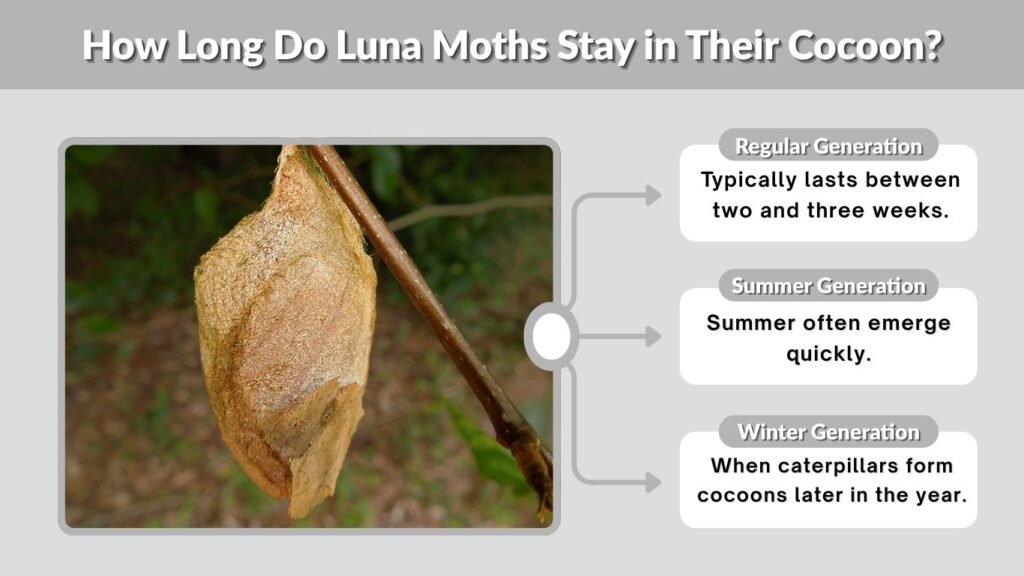
The amount of time a luna moth spends inside its cocoon depends largely on the season and local climate. Some moths emerge within a few weeks, while others remain dormant for several months.
In warmer months, the pupal stage typically lasts between two and three weeks. During this time, the transformation from caterpillar to adult moth is completed.
Summer Generation
Luna moths that develop during spring and summer often emerge quickly. Warm temperatures accelerate development, allowing the life cycle to continue without long delays.
These moths may complete their entire life cycle in just a few months, making multiple generations possible in some southern regions.
Winter Generation
When caterpillars form cocoons later in the year, they often enter a dormant state called diapause. This adaptation allows them to survive cold winter temperatures.
The pupa remains inactive inside the cocoon until warmer conditions return in spring. As a result, the cocoon stage can last several months before the adult moth finally emerges.
Luna Moth Life Cycle Timeline
The luna moth life cycle timeline varies depending on location, but a typical development schedule follows a predictable pattern.
Days 1–13: Egg Stage
The female deposits eggs on suitable host plants. Embryos develop inside the eggs until hatching occurs approximately one to two weeks later.
Weeks 2–6: Caterpillar Stage
Newly hatched caterpillars begin feeding immediately. Over several weeks, they pass through five instars and increase dramatically in size.
Weeks 6–9: Cocoon Stage
The fully grown caterpillar spins a cocoon and enters the pupal stage. Internal metamorphosis transforms the larva into an adult moth.
Weeks 9–10: Adult Stage
The adult luna moth emerges, mates, lays eggs, and completes the reproductive cycle before dying.
Actias Luna Life Cycle
The scientific name of the North American luna moth is Actias luna. It belongs to the giant silk moth family, Saturniidae, which contains some of the world’s largest and most visually striking moth species.
Scientific Classification
The luna moth belongs to:
- Kingdom: Animalia
- Phylum: Arthropoda
- Class: Insecta
- Order: Lepidoptera
- Family: Saturniidae
- Genus: Actias
- Species: Actias luna
This classification places the luna moth among other giant silk moths known for their impressive size and dramatic life cycles.
Unique Characteristics of Actias Luna
Several traits make Actias luna unique among North American moths:
- Pale green wings
- Long tail-like wing extensions
- Distinctive eyespots
- No functional adult mouthparts
- Exceptional camouflage abilities
These adaptations help the species survive despite its relatively short adult lifespan.
Chinese Luna Moth Life Cycle
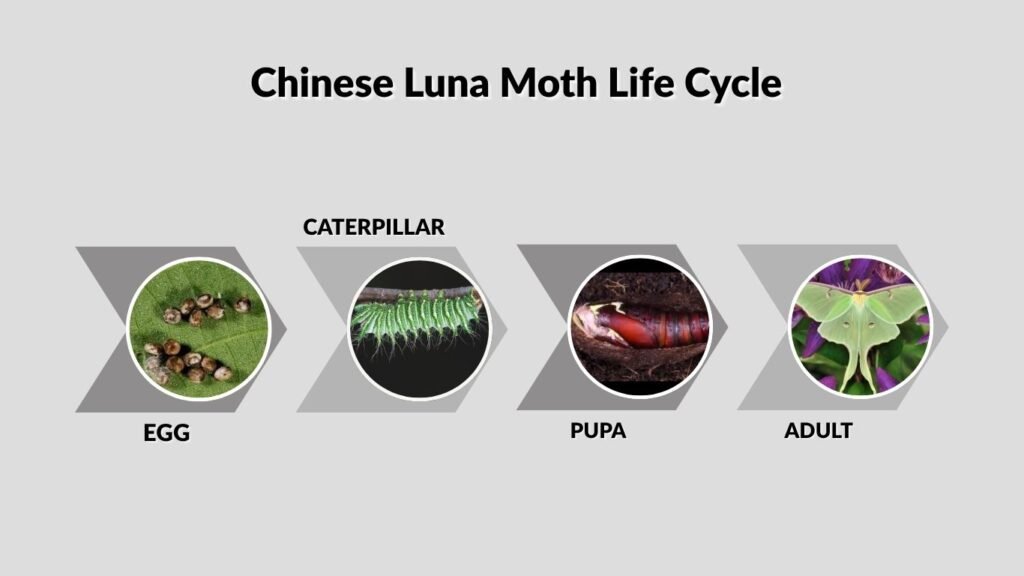
Several Asian species within the Actias genus are commonly referred to as Chinese luna moths. Although they differ slightly in appearance, their life cycles closely resemble that of the North American luna moth.
Like Actias luna, Chinese luna moths undergo complete metamorphosis through four developmental stages: egg, caterpillar, pupa, and adult.
The duration of each stage may vary according to species and climate, but the overall process remains remarkably similar.
Differences Between Chinese and American Luna Moths
While both groups share many characteristics, there are some differences:
- Geographic distribution
- Wing shape and coloration
- Preferred host plants
- Seasonal emergence patterns
Despite these variations, both rely on the same fundamental developmental strategy.
Fascinating Luna Moth Life Cycle Facts
The luna moth life cycle contains many remarkable features that make it one of the most studied moth species in North America.
Adults Never Eat
Adult luna moths lack functional mouthparts. They survive entirely on energy stored during their caterpillar stage.
Caterpillars Grow Rapidly
A luna moth caterpillar increases its body mass many times over before reaching maturity.
Tails Help Avoid Predators
The long tails on adult luna moth wings may help confuse bats by disrupting echolocation signals.
Females Use Pheromones
Female luna moths release chemical signals that attract males from surprisingly long distances.
Some Pupae Spend Winter in Cocoons
Overwintering allows the species to survive harsh seasonal conditions and emerge when temperatures become favorable.
What Happens After the Luna Moth Life Cycle?
The final stage of the luna moth life cycle is reproduction. After mating, females lay hundreds of eggs on suitable host trees.
Once egg laying is complete, the adult moth’s role in the life cycle ends. Because adults cannot eat, their energy reserves are eventually exhausted.
However, the species continues through the next generation as newly laid eggs hatch and begin the cycle again.
This continuous pattern has allowed luna moths to thrive in forests across North America for countless generations.
FAQs
Do Luna Moths Go Through Complete Metamorphosis?
Yes, luna moths undergo complete metamorphosis, which includes four distinct stages: egg, caterpillar (larva), pupa (cocoon), and adult moth. Each stage looks completely different and serves a unique purpose in the insect’s development.
How Many Generations of Luna Moths Are Produced Each Year?
The number of generations depends on the climate. Northern regions typically have one generation per year, while southern areas may have two or even three generations due to longer warm seasons.
What Triggers a Luna Moth Caterpillar to Build a Cocoon?
A luna moth caterpillar begins building a cocoon when it reaches its final instar and has stored enough energy for metamorphosis. Changes in daylight, temperature, and maturity level can trigger this behavior.
How Large Does a Luna Moth Caterpillar Get Before Pupating?
A fully grown luna moth caterpillar can reach about 2.5 to 3.5 inches (6–9 cm) in length before it spins its cocoon and enters the pupal stage.
Why Is the Luna Moth Life Cycle Important to Ecosystems?
The luna moth life cycle supports forest ecosystems by contributing to food webs. Caterpillars provide food for birds and other predators, while adult moths serve as prey for bats, helping maintain ecological balance.