Luna moths are among the most beautiful and mysterious insects in North America. With their pale green wings, long tail-like extensions, and impressive wingspan, these giant silk moths often capture the attention of nature lovers. One of the most common questions people ask after spotting one is: How long do luna moths live?
The answer may surprise you. Despite their large size and striking appearance, adult luna moths have an incredibly short lifespan. In fact, they spend most of their lives preparing for a brief period of adulthood focused entirely on reproduction.
In this guide, we’ll explore the lifespan of luna moths, how long each stage of their life cycle lasts, and whether factors such as captivity, location, and species differences affect their longevity.
Quick Answer: How Long Do Luna Moths Live?
Adult luna moths typically live for 7 to 10 days after emerging from their cocoon. In ideal conditions, some individuals may survive for up to two weeks, but most complete their life cycle within a shorter timeframe.
Unlike butterflies and many other moth species, adult luna moths cannot eat. Once they emerge from their cocoon, they rely entirely on energy reserves stored during their caterpillar stage. Because of this biological limitation, their primary goal is to find a mate and reproduce before their energy runs out.
If you’re searching for answers to questions such as:
- How long do luna moths live?
- How long do luna moths live for?
- Luna moth how long do they live?
The simple answer is that the adult stage generally lasts about one week.
Why Do Luna Moths Live Such Short Lives?
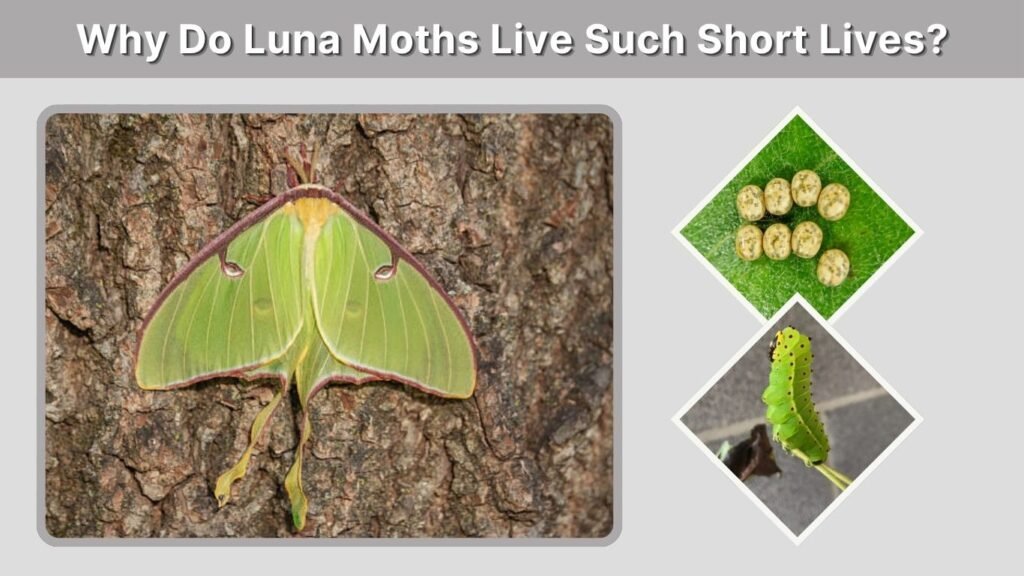
The short lifespan of adult luna moths is closely tied to their unique biology.
After metamorphosis, luna moths emerge with fully developed wings but without functional mouthparts. Since they cannot eat or drink, they are unable to replenish the energy they use for flying, mating, and laying eggs.
Every activity during adulthood consumes the limited resources accumulated during the caterpillar stage. As a result, adult luna moths are essentially living on borrowed time.
Their brief lifespan is not a flaw in nature’s design. Instead, it is an evolutionary strategy. Luna moths spend weeks feeding and growing as caterpillars so they can dedicate their short adult lives entirely to reproduction.
The Complete Luna Moth Life Cycle
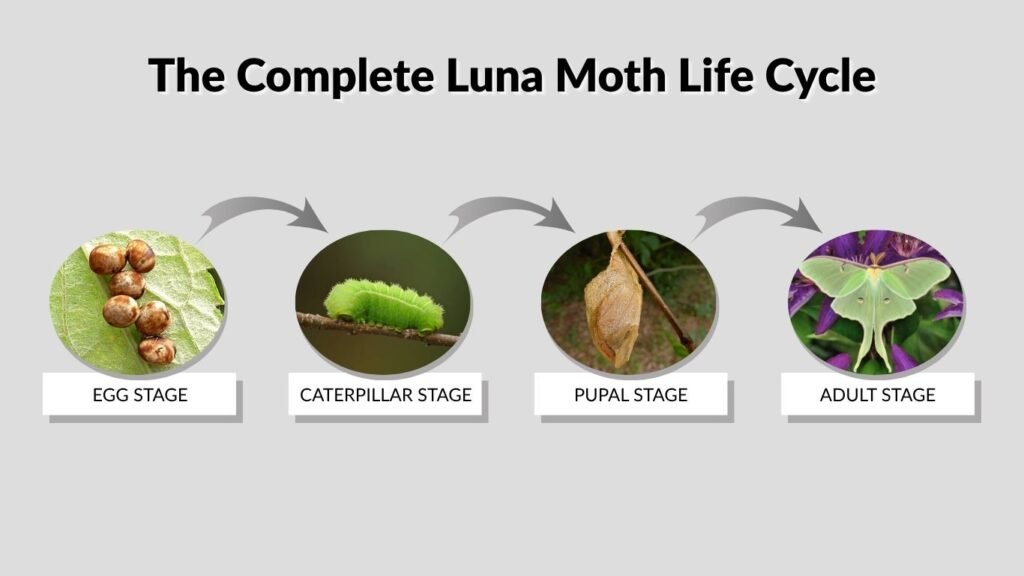
To fully understand how long luna moths live, it’s important to examine their entire life cycle. While adults survive for only a week or two, the complete journey from egg to adult can take several months.
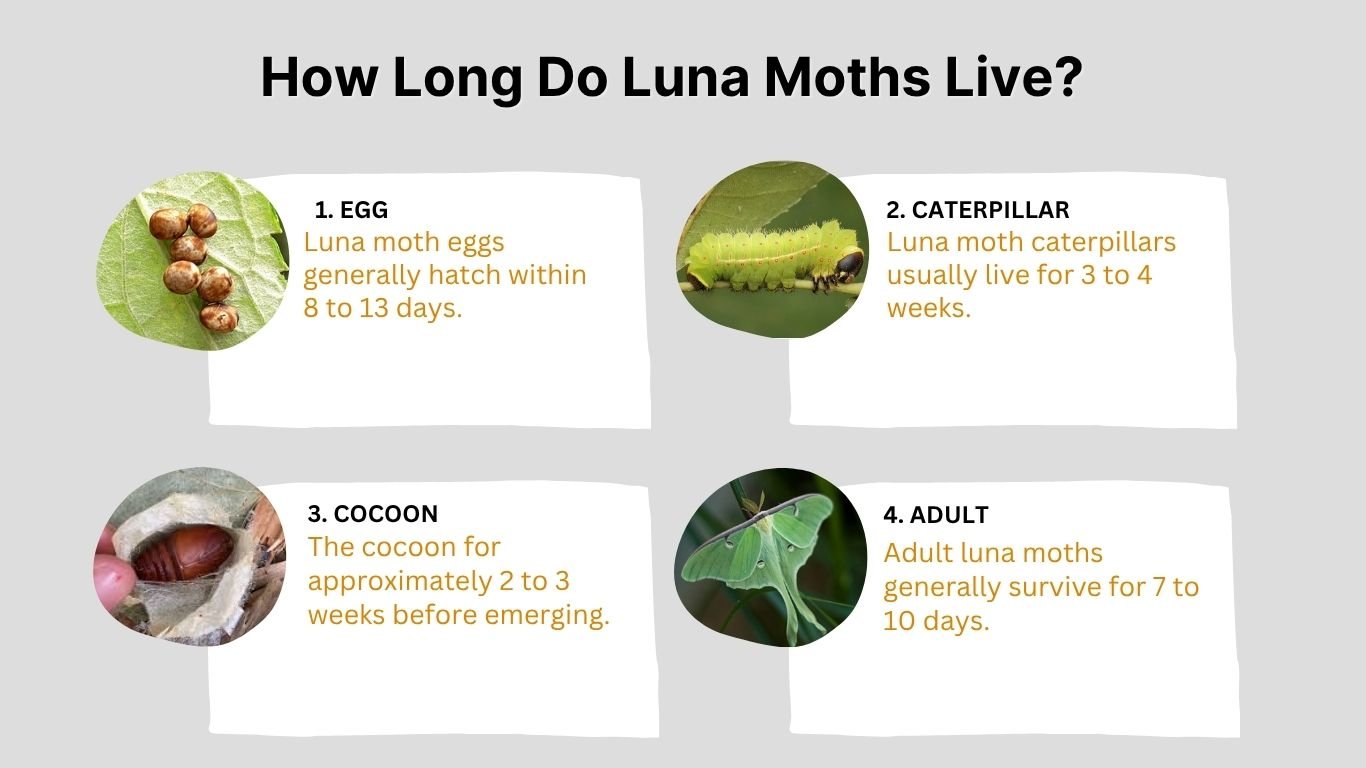
Stage 1: Egg Stage
The life of a luna moth begins when a female lays eggs on the leaves of suitable host trees.
Female luna moths typically lay between 200 and 400 eggs shortly after mating. These eggs are attached individually or in small clusters on the underside of leaves where newly hatched caterpillars will have immediate access to food.
How Long Do Luna Moth Eggs Last?
Luna moth eggs generally hatch within 8 to 13 days, depending on temperature and environmental conditions.
Warmer weather tends to accelerate development, while cooler temperatures may slow the hatching process.
Stage 2: Caterpillar Stage
After hatching, luna moth caterpillars begin feeding almost immediately. This is the longest active feeding period of their lives and is crucial for building the energy reserves needed for adulthood.
How Long Do Luna Moth Caterpillars Live?
One of the most frequently searched questions is: How long do luna moth caterpillars live?
Luna moth caterpillars usually live for 3 to 4 weeks before entering the pupal stage.
During this time, they go through five growth stages known as instars. With each molt, the caterpillar becomes larger and stores more nutrients.
Young caterpillars are tiny and bright green, but by the final instar they can reach lengths of more than three inches.
What Do Luna Moth Caterpillars Eat?
Luna moth caterpillars feed on the leaves of several deciduous trees, including:
- Sweetgum
- Hickory
- Walnut
- Birch
- Persimmon
- Sumac
Because they eat continuously throughout this stage, caterpillars gain the energy necessary to survive adulthood without feeding.
Stage 3: Cocoon and Pupal Stage
Once fully grown, the caterpillar stops feeding and begins preparing for metamorphosis.
The caterpillar spins a silky cocoon, usually inside fallen leaves or among leaf litter on the ground. Inside this protective structure, it transforms into a pupa and eventually into an adult moth.
How Long Do Luna Moths Stay in Their Cocoon?
The pupal stage can vary significantly depending on the season and climate.
In warmer months, luna moths may remain inside the cocoon for approximately 2 to 3 weeks before emerging.
However, individuals that enter the pupal stage late in the season often spend the entire winter inside their cocoon in a state known as diapause. These moths may remain dormant for several months until temperatures rise the following spring.
As a result, the complete life cycle of a luna moth can range from about two months to nearly a full year depending on environmental conditions.
Stage 4: Adult Luna Moth Stage
The adult stage is the most recognizable part of the luna moth’s life cycle and the one most people encounter.
When the moth emerges from its cocoon, its wings are initially soft and crumpled. Over the next few hours, fluid is pumped into the wings, allowing them to expand and harden.
Once fully developed, the adult begins searching for a mate.
How Long Do Adult Luna Moths Live?
Adult luna moths generally survive for 7 to 10 days, though some may live slightly longer under ideal circumstances.
Most of this time is spent:
- Finding a mate
- Reproducing
- Laying eggs
- Avoiding predators
Since adults cannot eat, their lifespan is naturally limited by the amount of stored energy remaining from their caterpillar stage.
How Long Do Luna Moths Live in Captivity?
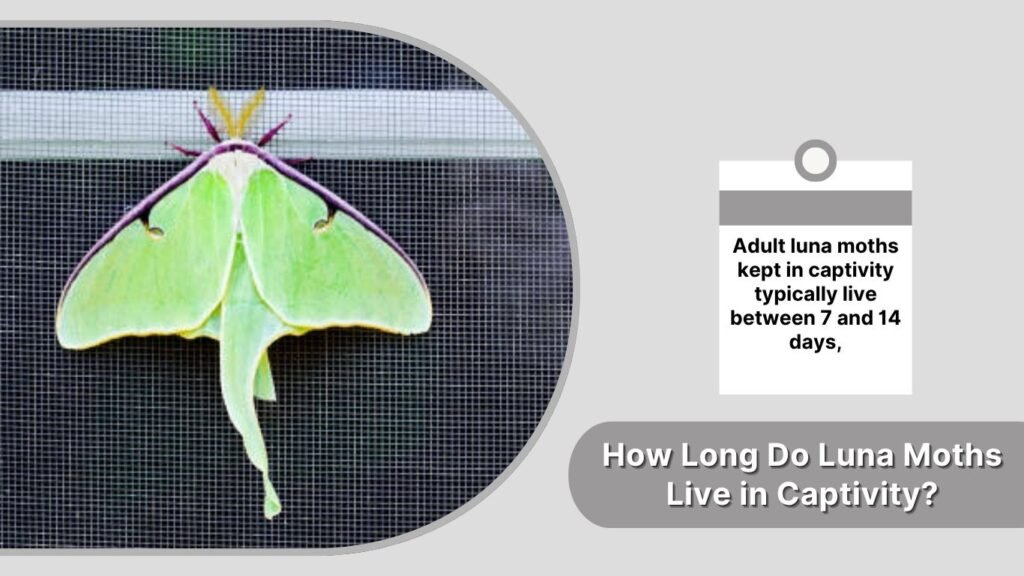
Many people who find a luna moth wonder whether keeping it in a protected environment will help it live longer. While captivity can reduce certain threats, it does not dramatically increase the lifespan of adult luna moths.
Average Lifespan in Captivity
Adult luna moths kept in captivity typically live between 7 and 14 days, which is similar to their lifespan in the wild.
Because adult moths lack functioning mouthparts, they cannot eat regardless of whether they live outdoors or indoors. Their lifespan is ultimately limited by the energy reserves accumulated during the caterpillar stage.
Factors That Affect Survival in Captivity
Several environmental conditions can influence how long a captive luna moth survives:
- Temperature
- Humidity levels
- Stress from handling
- Exposure to direct sunlight
- Space available for wing movement
Providing a calm environment with moderate humidity can help prevent unnecessary stress, but it cannot fundamentally alter the moth’s biological lifespan.
Can Captivity Extend a Luna Moth’s Life?
In some cases, captive luna moths may survive a few days longer because they face fewer predators and environmental hazards. However, most will still die naturally within two weeks of emerging from their cocoon.
How Long Do Luna Moths Live in Virginia?
Luna moths are found throughout much of Virginia and are especially common in wooded areas where suitable host trees are abundant.
Luna Moth Generations in Virginia
Virginia’s climate allows luna moths to produce multiple generations in some regions.
- Northern Virginia often experiences one or two generations per year.
- Southern Virginia may support two or even three generations during favorable years.
Because of the warmer growing season, luna moth development may occur more rapidly than in northern states.
Lifespan of Adult Luna Moths in Virginia
The lifespan of an adult luna moth in Virginia remains largely the same as elsewhere in North America:
- Average adult lifespan: 7–10 days
- Maximum lifespan: Approximately 14 days
The main difference is not how long individual moths live, but how many generations are produced each year.
Best Time to See Luna Moths in Virginia
Depending on location, luna moths can often be spotted from:
- April through June
- July through August
- Occasionally into early fall
Their attraction to lights makes them easier to observe near homes and buildings at night.
How Long Do Chinese Luna Moths Live?
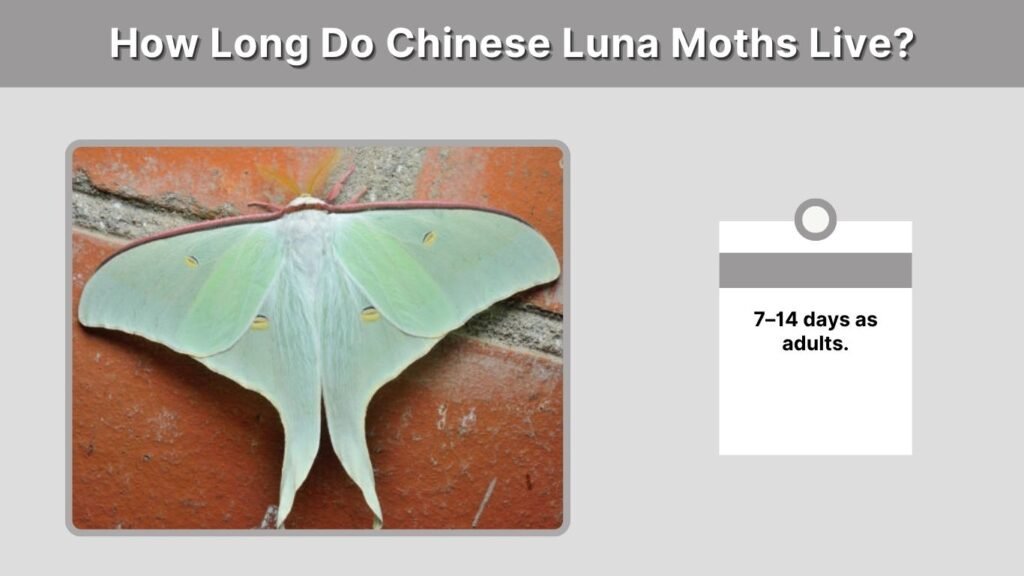
The term “Chinese luna moth” is commonly used to describe several species within the Actias genus found throughout Asia.
These species are close relatives of the North American luna moth and share many similar characteristics.
Lifespan of Chinese Luna Moths
Like their American counterparts, Chinese luna moths generally live:
- 7–14 days as adults
- Several weeks as caterpillars
- Months in the pupal stage when overwintering
Their short adult lifespan reflects the same reproductive strategy seen in North American species.
Differences Between Chinese and American Luna Moths
Although their lifespans are similar, Chinese luna moth species may differ in:
- Wing coloration
- Tail length
- Body size
- Geographic distribution
- Preferred host plants
Despite these differences, adult moths from both regions typically survive for only a brief period after emergence.
Factors That Affect Luna Moth Lifespan
Several natural factors can influence whether a luna moth reaches the upper end of its expected lifespan.
Temperature
Extremely high temperatures can accelerate metabolism and shorten lifespan. Cooler temperatures may help moths conserve energy but can also reduce activity levels.
Humidity
Adequate humidity helps maintain healthy wing and body function. Very dry conditions may contribute to dehydration and stress.
Predators
Luna moths face numerous predators, including:
- Bats
- Birds
- Spiders
- Small mammals
Many moths die before reaching the maximum lifespan possible under ideal conditions.
Artificial Light Pollution
Bright artificial lighting can disrupt normal nighttime behaviors. Moths may waste valuable energy flying around lights instead of locating mates.
Parasites and Disease
Parasitic insects, fungal infections, and other diseases can reduce survival rates throughout the life cycle.
Habitat Quality
Healthy forests with abundant host trees improve survival during both the caterpillar and adult stages.
Common Myths About Luna Moth Lifespan
Myth: Luna Moths Live for Several Months
This is false. Adult luna moths generally live only 7–10 days.
Myth: Adult Luna Moths Eat Leaves
Adult luna moths cannot eat because they lack functional mouthparts.
Myth: Captive Luna Moths Can Live for Months
Captivity may slightly improve survival but does not overcome the moth’s biological limitations.
Myth: All Luna Moths Have the Same Lifespan Worldwide
While many species in the Actias genus have similar lifespans, environmental conditions and species-specific traits can create variations.
FAQs
Can Luna Moths Survive Without Food?
Yes. Adult luna moths survive without food because they do not have functional mouthparts. During the caterpillar stage, they consume large amounts of leaves and store enough energy to sustain them throughout their short adult lives.
What Happens After a Luna Moth Emerges From Its Cocoon?
After emerging, a luna moth spends several hours expanding and drying its wings. Once its wings have fully hardened, it begins searching for a mate. Most adults mate within a few days of emerging and then focus on reproduction.
Do Male and Female Luna Moths Live the Same Length of Time?
Generally, both male and female luna moths have similar lifespans of about 7 to 10 days. However, females may die shortly after laying their eggs, while males often spend most of their adult lives searching for mates.
What Is the Longest a Luna Moth Has Been Known to Live?
Under ideal conditions, some luna moths may survive for up to two weeks. However, living beyond 14 days is uncommon because adults cannot replenish their energy reserves.
Why Are Luna Moths So Rarely Seen?
Luna moths are primarily nocturnal and are active only at night. Their short adult lifespan, combined with their seasonal emergence periods, means many people never encounter one despite the species being relatively widespread across North America.