
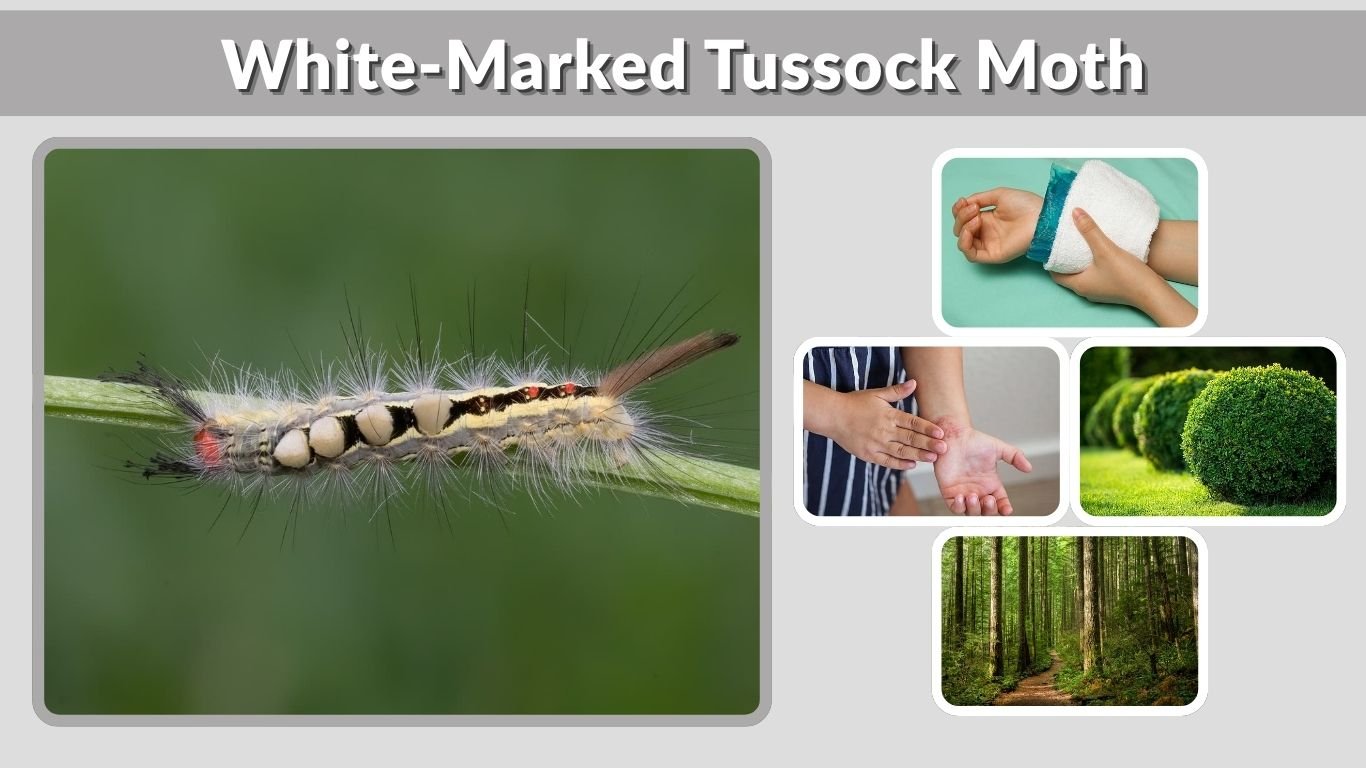
The white-marked tussock moth is a common insect known for its striking caterpillar, which often raises concerns about stings, rashes, and whether it is poisonous. Many people encounter these caterpillars on trees, decks, or garden plants and wonder if they are dangerous. While their fuzzy appearance may look harmless, contact can lead to skin irritation. This guide explains how to identify the white-marked tussock moth, understand its risks, and know what to do if you come into contact with it.
What Is the White-Marked Tussock Moth?
The white-marked tussock moth (Orgyia leucostigma) is a species commonly found in North America. It is best known for its unique caterpillar stage, which features bold colors and distinctive hair tufts. These caterpillars are often seen on trees and shrubs, especially during warmer months. While they play a role in the ecosystem, their presence can cause concern due to their irritating hairs.
Scientific Name and Classification
The species is scientifically known as Orgyia leucostigma and belongs to the tussock moth group. It is part of a family of moths recognized for their hairy larvae and their ability to adapt to different environments.
Where It Is Commonly Found
These moths are widely distributed across forests, parks, and residential areas. They are especially common in regions with abundant trees, where their caterpillars can feed and grow.
White-Marked Tussock Moth Caterpillar Identification
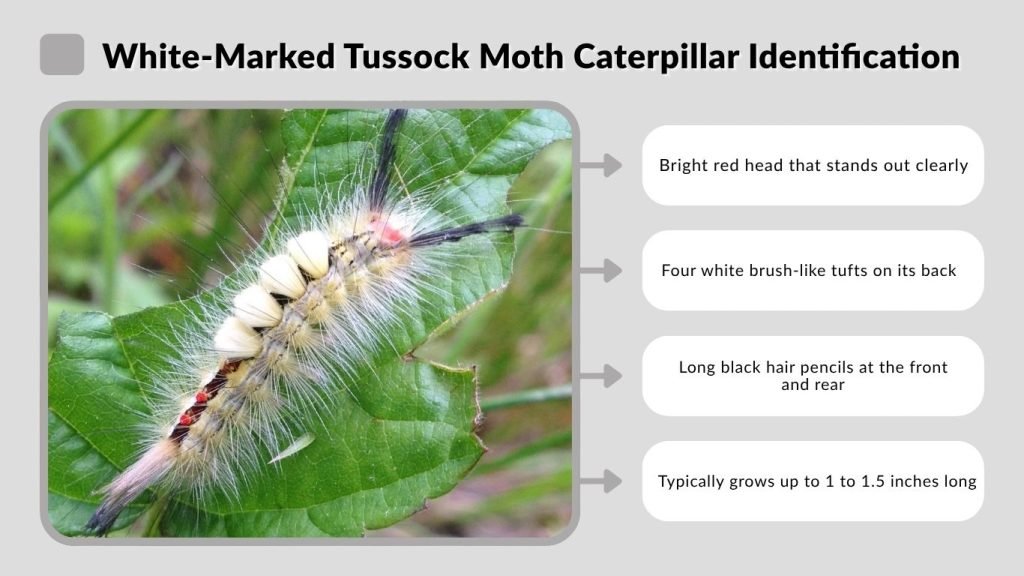
Identifying this caterpillar is important because it helps you avoid accidental contact and understand its behavior. The white-marked tussock moth caterpillar is visually distinct and easy to recognize once you know what to look for.
Key Physical Features
- Bright red head that stands out clearly
- Four white brush-like tufts on its back
- Long black hair pencils at the front and rear
Size and Appearance
- Typically grows up to 1 to 1.5 inches long
- Displays contrasting colors like black, yellow, and white
- Has a fuzzy, hairy body that signals caution
Common Places You Might See Them
- On tree leaves and branches
- Crawling on decks, fences, or outdoor furniture
- Around gardens and landscaped areas
Are White-Marked Tussock Moth Caterpillars Poisonous?
Many people assume these caterpillars are poisonous because of their bold colors and hairy appearance. In reality, they are not truly poisonous and do not produce venom. However, their hairs can still cause irritation when they come into contact with the skin. This reaction is often mistaken for poisoning, but it is actually a defensive response caused by the caterpillar’s physical structure rather than toxins.
Do White-Marked Tussock Moth Caterpillars Sting?
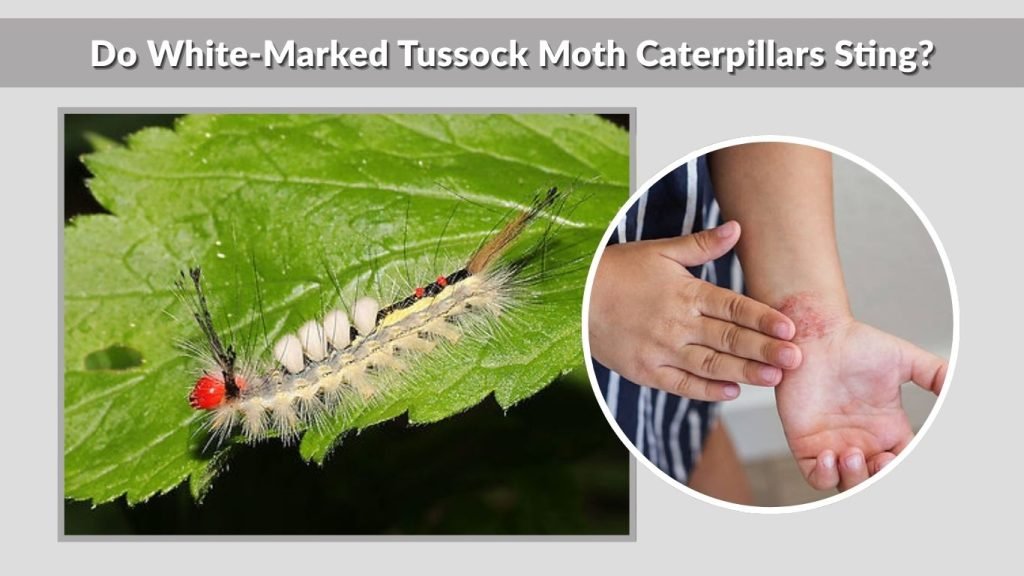
Although commonly described as a sting, these caterpillars do not have a stinger like bees or wasps. The discomfort comes from their tiny hairs, which can break off and embed into the skin. This can create a sensation similar to a sting, leading to confusion about how they cause irritation.
How the Irritation Happens
When touched, the caterpillar’s fine hairs can penetrate the skin or release irritating substances. This triggers the body’s natural reaction, causing itching, redness, and sometimes a burning feeling.
Common Symptoms After Contact
- Itching or tingling sensation
- Red rash or small bumps
- Mild swelling or irritation
White-Marked Tussock Moth Caterpillar Rash
A rash is one of the most common reactions after contact with this caterpillar. The severity of the rash depends on individual sensitivity and the extent of exposure. For most people, the reaction is mild and temporary, but it can still be uncomfortable.
The rash usually appears shortly after contact and may last for several hours or days. In some cases, people with sensitive skin may experience stronger reactions, including more intense itching or a wider rash area. Even though the symptoms are rarely serious, proper care can help reduce discomfort and prevent the irritation from worsening.
Treatment for White-Marked Tussock Moth Caterpillar Sting
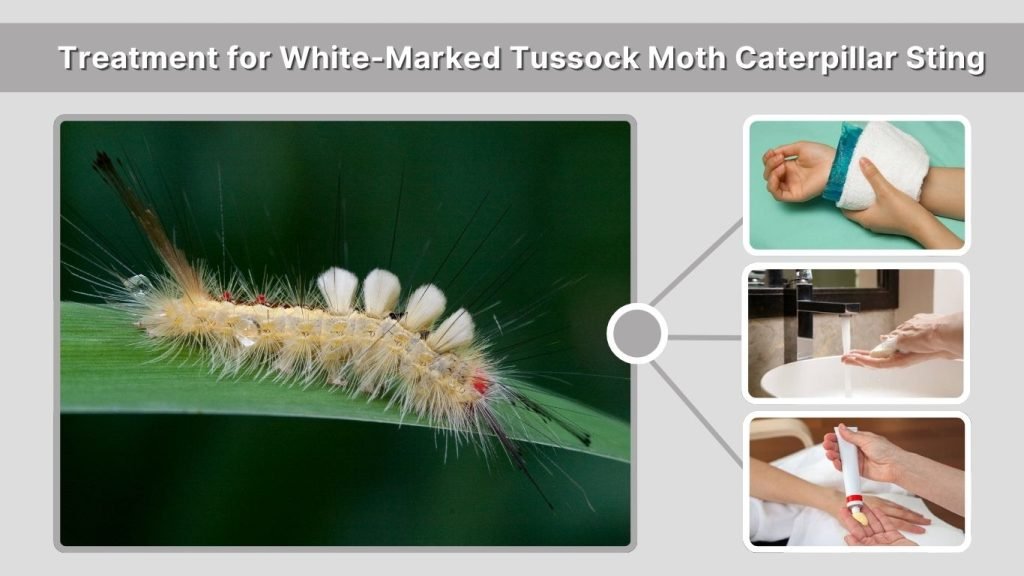
If you come into contact with a white-marked tussock moth caterpillar, treating the affected area quickly can reduce irritation and prevent further discomfort. Most reactions are mild and can be handled at home with simple first aid. The key is to remove any remaining hairs and soothe the skin as soon as possible.
Immediate First Aid Steps
- Wash the area gently with soap and lukewarm water
- Use adhesive tape to lift off any embedded hairs
- Avoid rubbing or scratching the skin
Relief and Care Options
- Apply hydrocortisone or antihistamine cream
- Use a cold compress to reduce swelling
- Keep the area clean and monitor symptoms
Are White-Marked Tussock Moth Caterpillars Dangerous?
Despite their alarming appearance, these caterpillars are not considered dangerous in a serious sense. Their main defense is irritation rather than toxicity. However, some individuals may react more strongly than others, especially those with sensitive skin or allergies. Understanding the level of risk helps you stay cautious without unnecessary concern.
Who Should Be More Careful
- Children who may touch them out of curiosity
- Individuals with sensitive skin
- Pet owners, as animals may interact with them
When to Seek Medical Help
- Severe or persistent swelling
- Signs of an allergic reaction
- Rash spreading beyond the contact area
White-Marked Tussock Moth Life Cycle
The life cycle of the white-marked tussock moth explains why these caterpillars appear in certain seasons and sometimes in large numbers. Like other moths, they go through a complete transformation, with the caterpillar stage being the most noticeable and active period.
Egg Stage
- Eggs are laid on tree bark or near cocoons
- They remain dormant until conditions are suitable
Caterpillar Stage
- Active feeding stage on leaves
- Most visible phase and responsible for plant damage
Cocoon and Adult Stage
- Caterpillar forms a cocoon covered with hairs
- Female moth is wingless and stays near the cocoon
- Male moth is winged and flies to mate
What Do White-Marked Tussock Moth Caterpillars Eat?
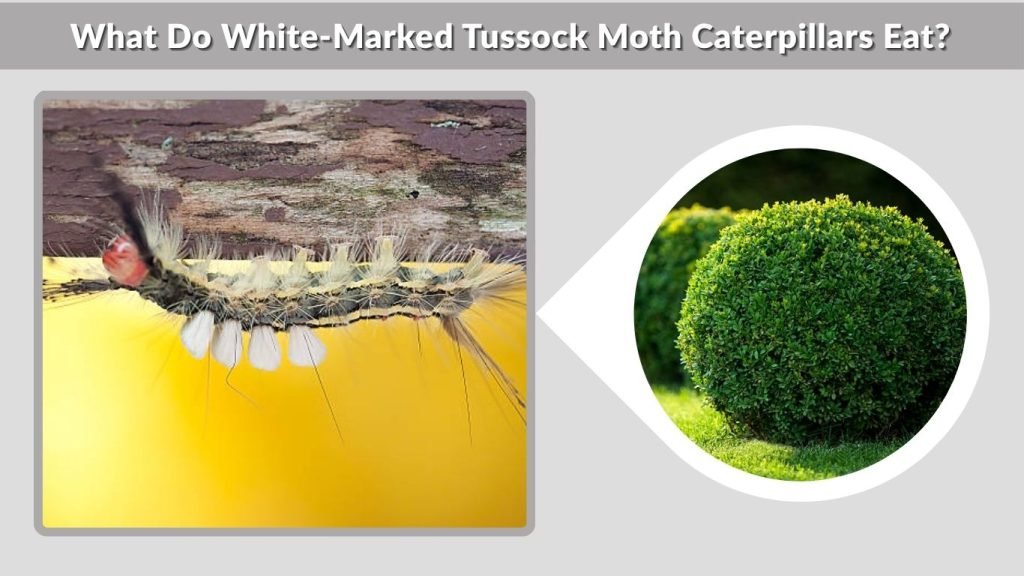
These caterpillars are known for feeding on a variety of trees and shrubs. Their diet plays an important role in their growth, but it can also affect the health of plants when populations become large. While small numbers are usually not harmful, heavy infestations can lead to noticeable leaf damage and weakened plants over time.
How to Get Rid of White-Marked Tussock Moth Caterpillars
If these caterpillars become too common around your home or garden, you may want to control their population. There are several safe and effective ways to manage them without harming the surrounding environment.
Natural Removal Methods
- Hand-pick caterpillars using gloves
- Encourage birds and natural predators
- Remove visible egg masses
Preventive Measures
- Inspect plants regularly
- Keep outdoor areas clean
- Trim heavily infested branches
Where Are White-Marked Tussock Moths Found?
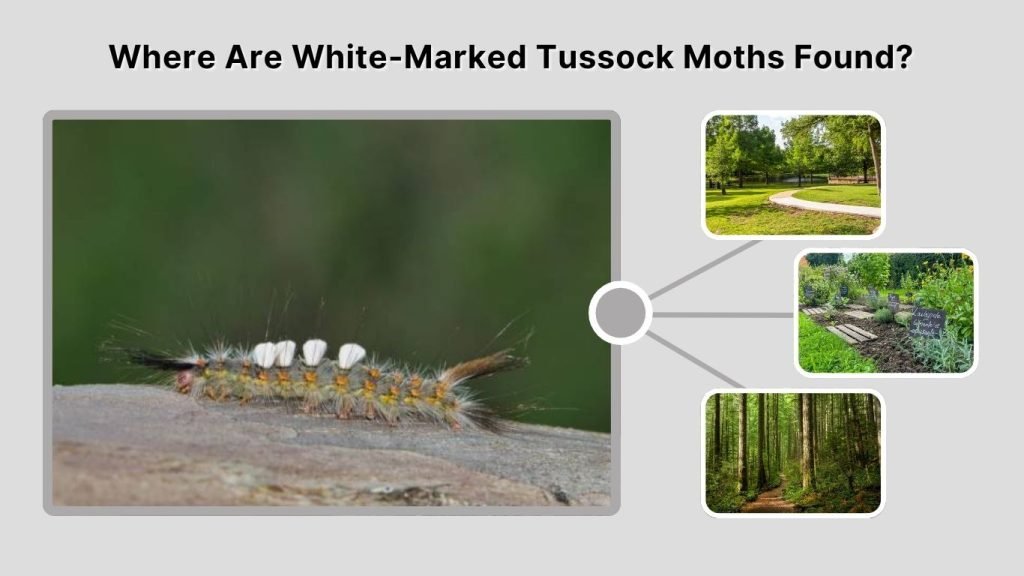
White-marked tussock moths are widely distributed and can be found in many regions with suitable vegetation. They are especially common in areas with a mix of trees and shrubs, where their caterpillars can easily find food. These insects often appear in both natural environments and residential landscapes, making encounters quite common during their active seasons.
Common Habitats
- Forests and wooded areas
- Parks and gardens
- Residential yards with trees
Regional Presence
- Common across North America
- Frequently reported in warmer and temperate regions
Prevention and Safety Tips
Preventing contact with these caterpillars is the best way to avoid irritation. A few simple precautions can help you stay safe, especially during outdoor activities or gardening.
Practical Safety Measures
- Avoid touching hairy caterpillars
- Wear gloves when working in the garden
- Teach children not to handle unknown insects
- Check plants before handling them
FAQs
Do white-marked tussock moth caterpillars bite?
They do not bite. The irritation people feel comes from their tiny hairs, which can embed in the skin and cause itching or a rash.
How long does a white-marked tussock moth rash last?
A mild rash usually lasts from a few hours to a couple of days. In sensitive individuals, it may last longer but typically improves with basic treatment.
Are white-marked tussock moths bad for trees?
In small numbers, they are not harmful. However, large populations can feed heavily on leaves and cause noticeable damage to trees and shrubs.
When are white-marked tussock moth caterpillars most active?
They are most active during late spring through early fall when they are feeding and growing before forming cocoons.
What does the adult white-marked tussock moth look like?
The adult male is small, winged, and brownish, while the female is wingless and stays near the cocoon where she lays eggs.
