
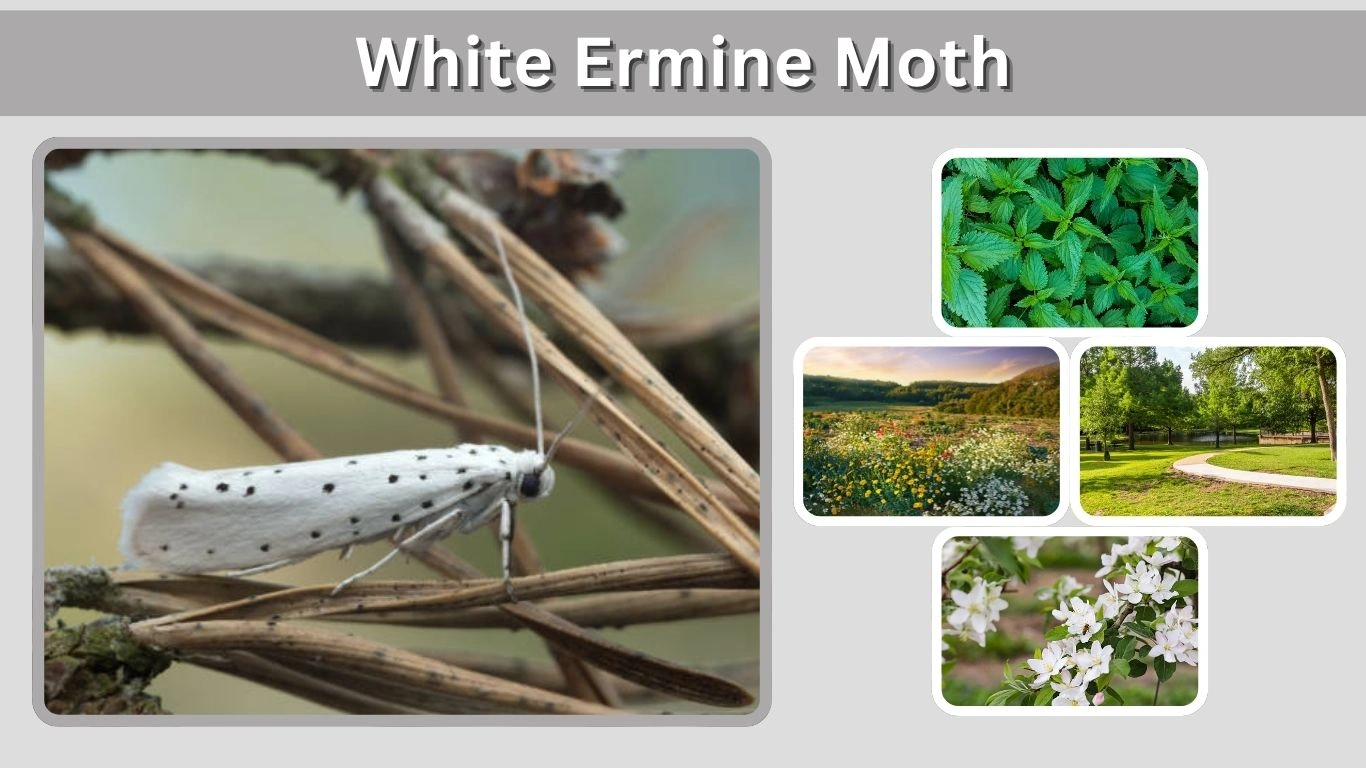
The white ermine moth is a striking insect known for its soft white wings dotted with black spots and its fuzzy body. Common across the UK and parts of Europe, it has also been recorded in North America. This moth attracts attention not only for its appearance but also for its interesting life cycle and ecological role. From its hairy caterpillar stage to its short-lived adult form, the white ermine moth offers insight into transformation, adaptability, and survival in changing environments.
What Is the White Ermine Moth?
The white ermine moth, scientifically called Spilosoma lubricipeda, belongs to the Erebidae family. It is a medium-sized moth often seen during summer nights. Known for its distinctive markings, it thrives in gardens, meadows, and woodland edges. Its adaptability allows it to survive in both rural and urban environments, making it a familiar species in many regions.
Scientific Classification
- Scientific name: Spilosoma lubricipeda
- Family: Erebidae
- Common name: white ermine moth
- Found in: UK, Europe, and parts of North America
Key Features
- White wings with black spots
- Hairy thorax and abdomen
- Medium wingspan with soft texture
- Nocturnal and attracted to light
White Ermine Moth Appearance and Size
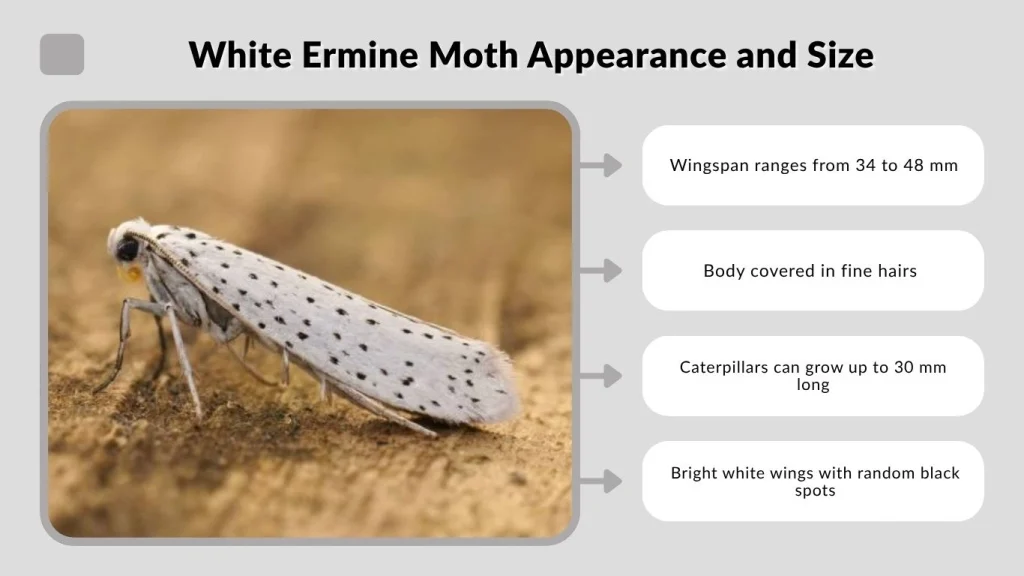
The white ermine moth is easily recognizable due to its clean white wings and scattered black markings. Its soft, furry body adds to its unique appearance. While it may look delicate, its coloration serves as both camouflage and a warning signal to predators in certain environments.
Size Details
- Wingspan ranges from 34 to 48 mm
- Body covered in fine hairs
- Caterpillars can grow up to 30 mm long
Visual Characteristics
- Bright white wings with random black spots
- Yellowish or pale markings on the abdomen
- Hairy caterpillar with dark brown or black coloring
White Ermine Moth Life Cycle
The white ermine moth undergoes complete metamorphosis, progressing through egg, larva, pupa, and adult stages. Each stage plays a crucial role in its development and survival. This transformation is one of the most fascinating aspects of its biology and contributes to its symbolic association with change.
Egg Stage
Female moths lay eggs on host plants, usually on the underside of leaves. These eggs hatch within a short period, depending on environmental conditions such as temperature and humidity.
Caterpillar Stage
The caterpillar, often called the larva, is covered in fine hairs and feeds actively on plants. It grows rapidly and sheds its skin multiple times as it develops.
Pupa Stage
Once fully grown, the caterpillar forms a cocoon in a sheltered area. Inside, it transforms into a pupa, where major changes occur before emerging as an adult moth.
Adult Stage
The adult moth emerges with fully developed wings and focuses on reproduction. It is mostly active at night and is commonly attracted to light sources.
What Do White Ermine Moths Eat?
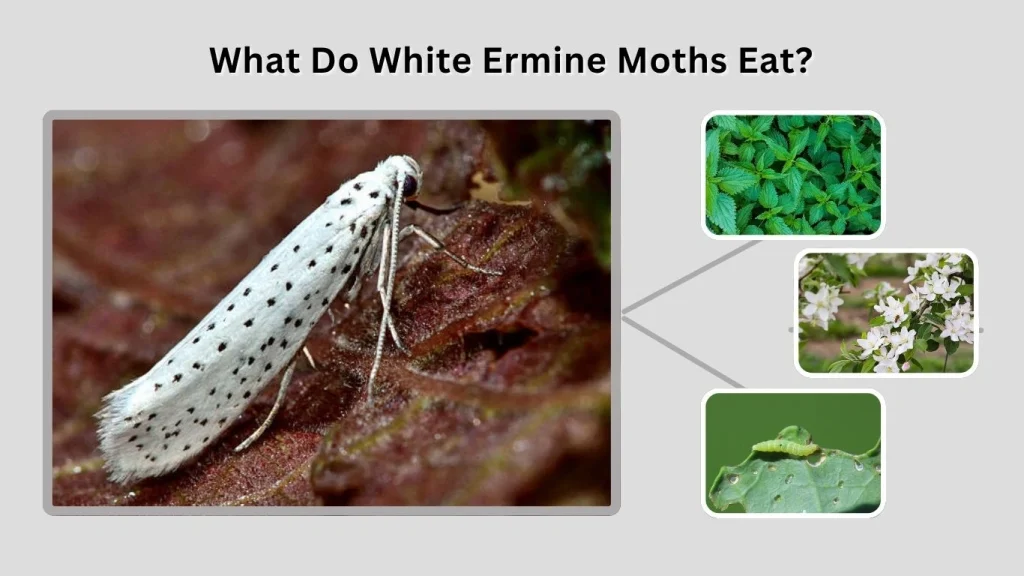
Feeding habits vary depending on the stage of the moth’s life. The larval stage is the most active feeding period, while adults have a simpler diet focused on nectar.
Caterpillar Diet
- Nettles and dandelions
- Various weeds and herbaceous plants
- Leaves from low-growing vegetation
Adult Diet
- Nectar from flowers
- Occasional plant fluids
- Minimal feeding compared to larvae
White Ermine Moth Habitat and Distribution
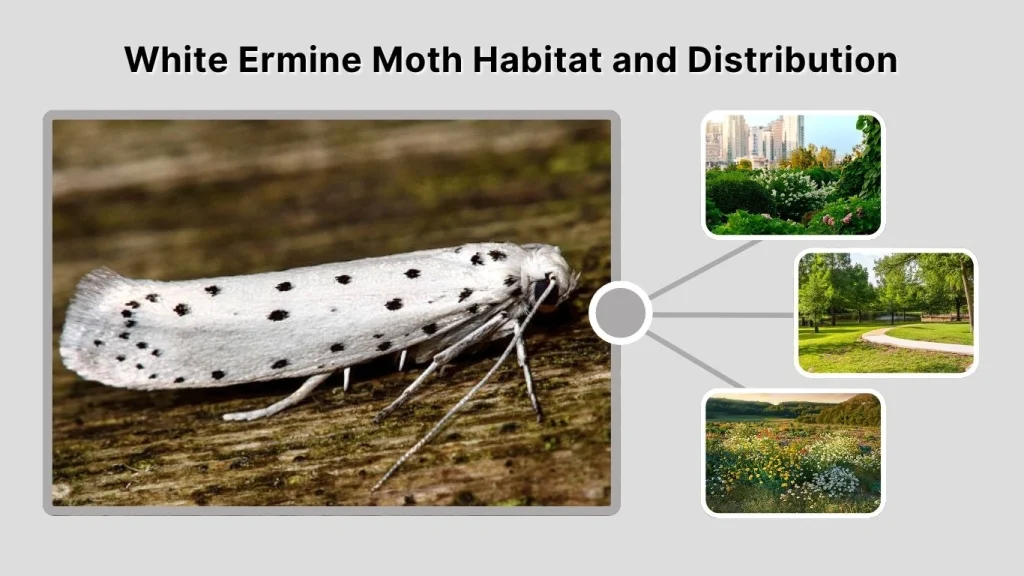
The white ermine moth is widely distributed and thrives in diverse habitats. It prefers areas with abundant plant life, which supports both caterpillars and adult moths. Its ability to adapt to different environments has contributed to its widespread presence.
Where They Are Found
- United Kingdom and Ireland
- Europe and parts of Eurasia
- Some regions in North America
Preferred Habitats
- Gardens and parks
- Grasslands and meadows
- Woodland edges and hedgerows
Are White Ermine Moths Poisonous or Dangerous?
The white ermine moth is generally harmless and does not pose any serious threat to humans or animals. While its caterpillars may appear intimidating due to their hairy bodies, they are not venomous. However, some individuals may experience mild skin irritation after contact with the caterpillar’s hairs, especially if they have sensitive skin.
Safety Overview
- Not poisonous to humans
- Do not bite or sting
- Caterpillar hairs may cause mild irritation
- Safe to observe in nature
White Ermine Moth Lifespan and Behavior
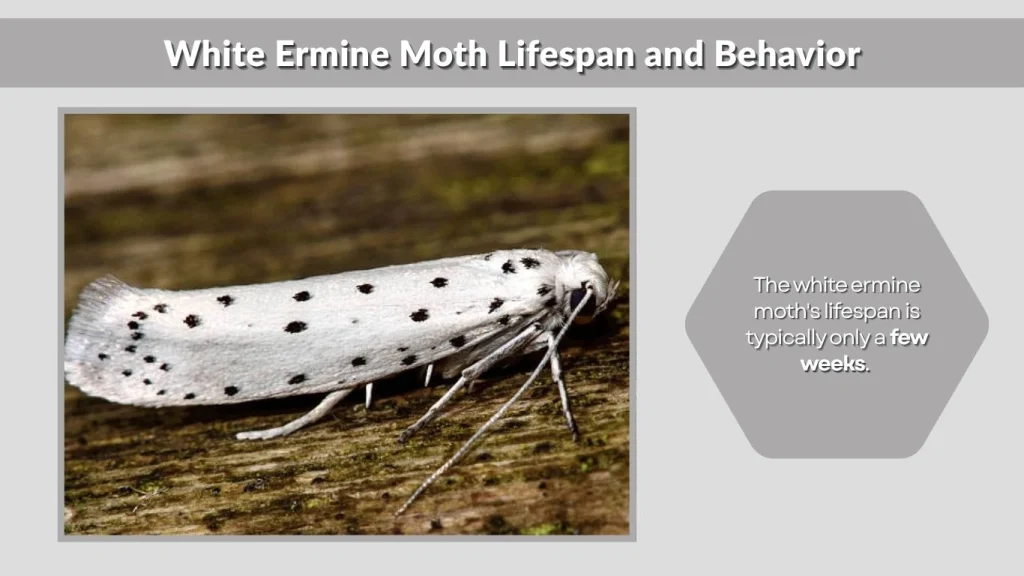
The white ermine moth has a relatively short adult lifespan, typically lasting only a few weeks. During this time, its main focus is reproduction. It is nocturnal and often seen flying around lights at night, which makes it more noticeable during summer months.
Behavior Traits
- Active at night
- Attracted to artificial light
- Rests during the day in vegetation
- Seasonal appearance during warmer months
Are White Ermine Moths Rare?
White ermine moths are not considered rare, especially in regions like the UK and parts of Europe where they are commonly seen during summer. However, their nocturnal nature and seasonal activity can make sightings feel uncommon. Their population levels depend on habitat quality, availability of food plants, and environmental conditions.
Rarity and Visibility
- Generally common in suitable habitats
- More visible during peak summer months
- Numbers may vary by region and climate
- Often overlooked due to nighttime activity
White Ermine Moth Symbolism and Meaning
The white ermine moth carries symbolic meaning rooted in its appearance and transformation. Its white color often represents purity, while its life cycle reflects growth and change. Many people associate this moth with quiet strength and adaptability in the face of change.
Spiritual Meaning
- Represents transformation and renewal
- Symbolizes purity and innocence
- Encourages adaptability and resilience
- Connected to personal growth
Cultural Interpretations
- Seen as a sign of subtle change
- Linked with calmness and balance
- Represents hidden beauty in nature
Interesting White Ermine Moth Facts
The white ermine moth has several fascinating traits that make it stand out among other moth species. Its combination of visual appeal and biological adaptability has made it a subject of interest for both scientists and nature enthusiasts.
- Distinct black-spotted white wings
- Hairy caterpillars for defense
- Wide range of host plants
- Common in gardens and wild habitats
White Ermine Moth Habitat Details

The habitats of the white ermine moth play a major role in its survival and distribution. These moths thrive in areas where vegetation is abundant and undisturbed. Their adaptability allows them to live in both natural and human-influenced environments without difficulty.
Natural Environment
White ermine moths are often found in open landscapes such as meadows and grasslands. These areas provide a rich supply of host plants for caterpillars and nectar sources for adults. Woodland edges also serve as ideal shelters.
Urban and Garden Spaces
They are frequently seen in gardens, parks, and hedgerows. These environments offer a mix of food sources and safe resting areas, making them suitable for all stages of their life cycle.
Can You Keep a White Ermine Moth as a Pet?
Keeping a white ermine moth is possible, especially when raising it from a caterpillar. However, it requires proper care and understanding of its needs. Providing the correct host plants and maintaining a natural environment are essential for its development.
Things to Consider
- Requires fresh plant leaves for feeding
- Needs a safe space for cocoon formation
- Adult moths have a short lifespan
- Ethical responsibility to avoid harming wild populations
FAQs
Are white ermine moths poisonous to humans?
White ermine moths are not poisonous and are safe to be around. However, their caterpillars have tiny hairs that may cause mild skin irritation in sensitive individuals, though this is not dangerous.
What do white ermine moth caterpillars eat?
The caterpillars feed on a variety of plants, including nettles, dandelions, and other common weeds. Their flexible diet allows them to survive in different environments.
How long do white ermine moths live?
Adult white ermine moths usually live for a few weeks. Their full life cycle, including egg, larva, and pupa stages, takes several months depending on environmental conditions.
Are white ermine moths rare?
No, they are generally not rare. They are commonly found in the UK and Europe, though sightings may vary based on season and habitat.
Where are white ermine moths found?
They are widely found in the UK, Europe, and some parts of North America. They prefer gardens, grasslands, and areas with plenty of vegetation.
