
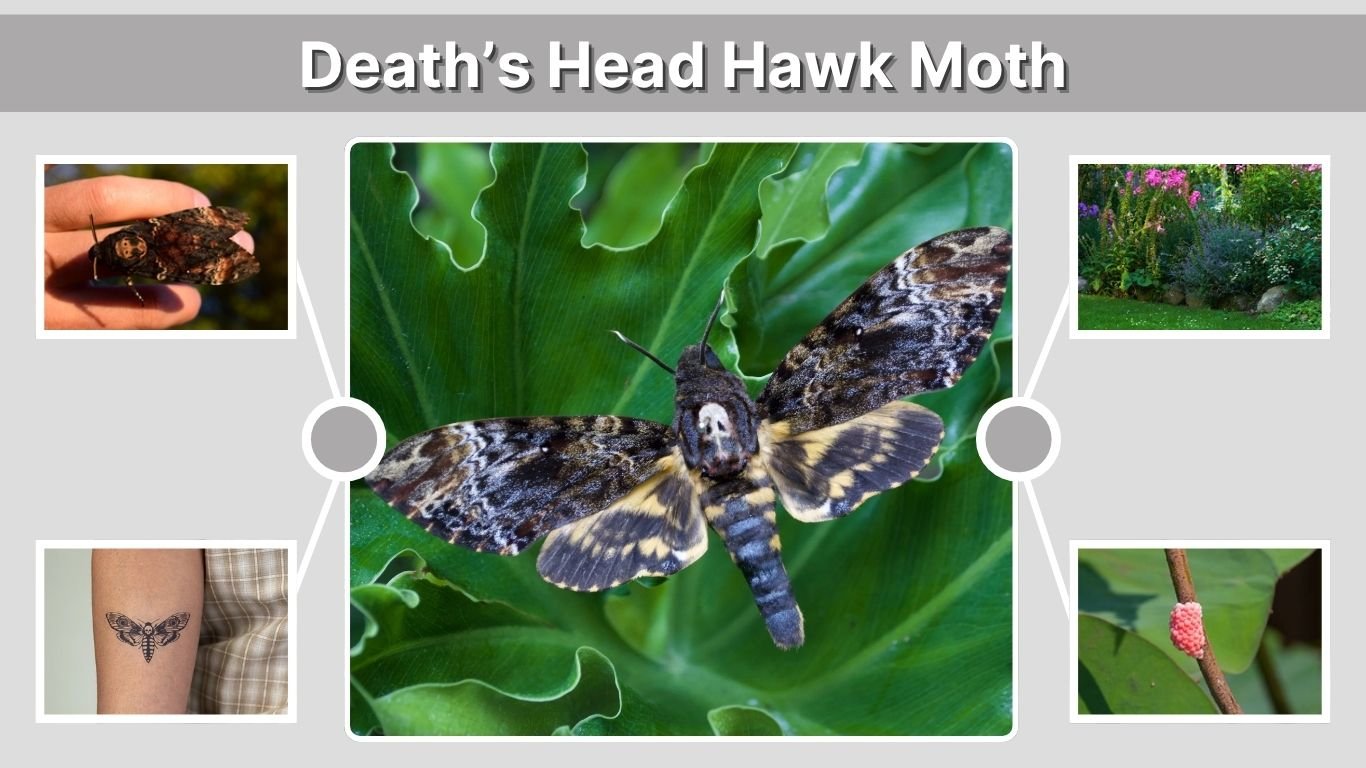
The Death’s-head hawk moth is one of the most mysterious insects in the world, instantly recognized by the skull-like marking on its body. Scientifically known as Acherontia atropos, this moth has inspired myths, art, and symbolism across cultures. Despite its eerie appearance, it is harmless and fascinating to study. In this guide, you will explore its appearance, life cycle, behavior, and deeper meaning, helping you understand why this moth continues to capture human imagination.
What Is a Death’s-Head Hawk Moth?
The Death’s-head hawk moth belongs to the hawk moth family, known for strong flight and unique features. It stands out due to the skull-shaped marking on its thorax, which has led to centuries of myths and cultural interpretations. This species is not only visually striking but also biologically interesting.
Scientific Name and Classification
- Acherontia atropos is the most well-known species
- Part of the Sphingidae (hawk moth) family
- Related to other large, fast-flying moths
Why It’s Called “Death’s-Head”
- Skull-like marking resembles a human skull
- Appearance linked to death symbolism
- Name inspired by visual resemblance rather than behavior
What Does a Death’s-Head Moth Look Like?
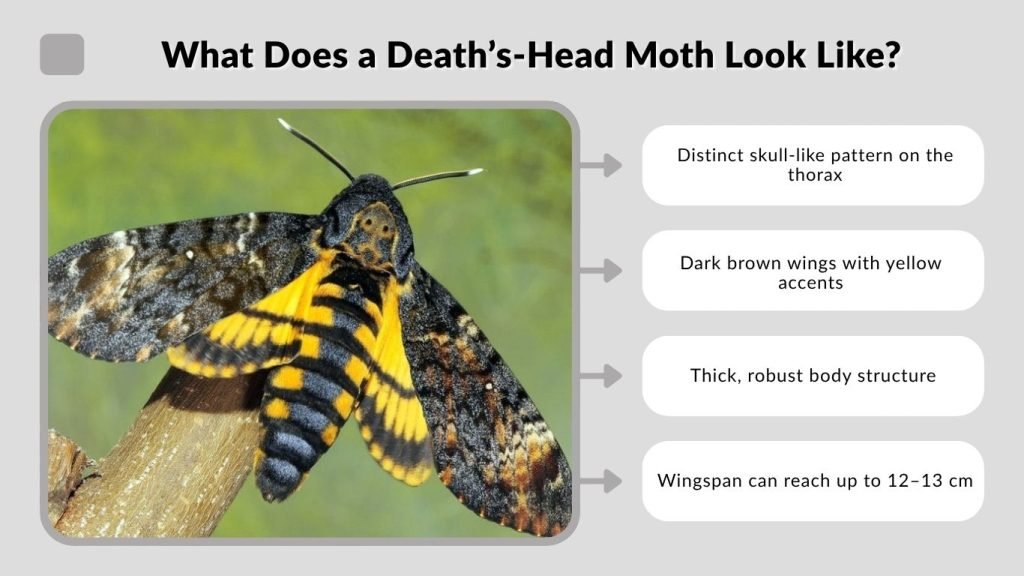
This moth is large, bold, and unmistakable once you know what to look for. Its body is thick and strong, while its wings display dark and earthy tones. The skull marking is the most defining feature, often appearing on the upper thorax.
Key Physical Features
- Distinct skull-like pattern on the thorax
- Dark brown wings with yellow accents
- Thick, robust body structure
Size and Wingspan
- Wingspan can reach up to 12–13 cm
- One of the largest moths in its range
- Powerful wings allow strong, direct flight
Death’s-Head Moth Life Cycle
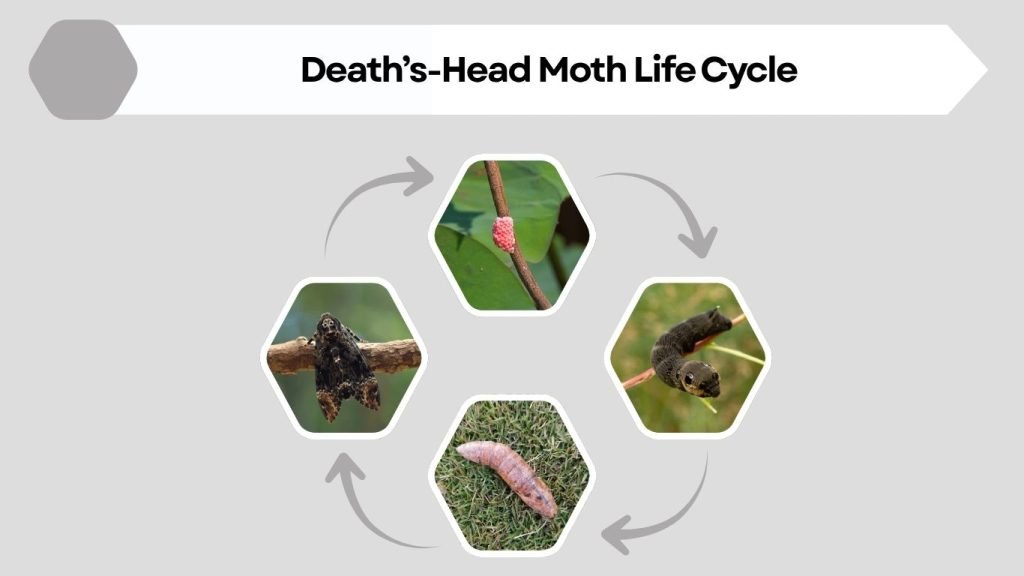
The life cycle of the Death’s-head moth follows complete metamorphosis, moving through four stages. Each stage is essential for development and survival, and the transformation from caterpillar to moth is especially remarkable.
Egg Stage
Female moths lay eggs on suitable host plants. These eggs are small and hatch relatively quickly, depending on environmental conditions.
Caterpillar Stage
The caterpillar is large and colorful, often green, yellow, or brown with diagonal stripes. It feeds heavily on plants like potato and nightshade, growing rapidly during this stage.
Pupa Stage
Once fully grown, the caterpillar burrows into soil and forms a pupa. Inside, it undergoes transformation into an adult moth.
Adult Moth Stage
The adult emerges with fully developed wings and becomes active mainly at night. Its primary goal is reproduction, and it has a relatively short lifespan.
Death’s-Head Moth Caterpillar
The caterpillar stage is one of the most noticeable and active phases of this insect’s life. It is large, easy to spot, and often found feeding on garden plants. Its appearance can vary, but it always has a thick body and a curved horn at the rear.
Appearance and Identification
- Bright green, yellow, or brown body colors
- Diagonal side stripes along the body
- Curved horn at the tail end
Feeding Habits
- Consumes large amounts of leaves
- Prefers plants like potato and tomato
- Grows quickly due to heavy feeding
Death’s-Head Moth Habitat and Distribution
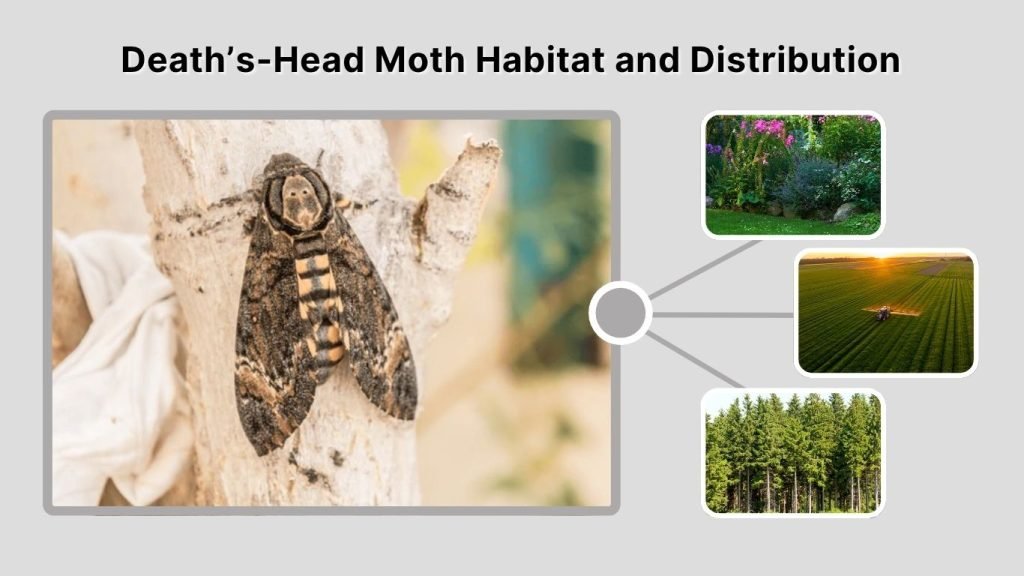
The Death’s-head hawk moth is found across several regions and is known for its ability to travel long distances. It prefers environments where host plants are abundant and conditions are suitable for feeding and reproduction.
Geographic Range
- Common in Europe and Africa
- Also found in parts of Asia
- Some populations migrate seasonally
Preferred Habitat
- Gardens and farmland
- Woodland edges
- Areas rich in host plants
The “Death Cry” Sound Explained
Unlike most moths, the Death’s-head hawk moth can produce a sound. It emits a squeaking noise by forcing air through its mouthparts. This sound may help scare predators or assist when entering beehives to steal honey. The ability to make noise adds to its mysterious reputation and makes it one of the most unique moth species in the world.
Meaning and Symbolism of the Death’s-Head Moth
The Death’s-head moth has long been associated with deep symbolism due to its skull-like marking. Across different cultures and time periods, it has represented both fear and transformation. While some view it as a sign of death, others interpret it as a symbol of change, rebirth, and the natural cycle of life.
Common Symbolic Meanings
- Death and mortality due to its skull marking
- Transformation and personal change
- Mystery and the unknown
- Spiritual awakening and rebirth
Cultural Interpretations
- Seen as an omen in old folklore
- Associated with gothic art and themes
- Used in modern symbolism for individuality
Death’s-Head Moth in Culture and Media
This moth has gained global recognition through its appearance in films, literature, and art. Its striking look makes it a powerful visual symbol, often used to represent fear, mystery, or transformation in storytelling and design.
Film and Media Presence
- Featured in The Silence of the Lambs
- Used as a symbol of psychological depth and fear
- Often appears in horror and thriller themes
Influence on Art and Fashion
- Popular in gothic and alternative fashion
- Used in jewelry, prints, and illustrations
- Represents bold and dark aesthetics
Death’s-Head Moth Tattoo Meaning
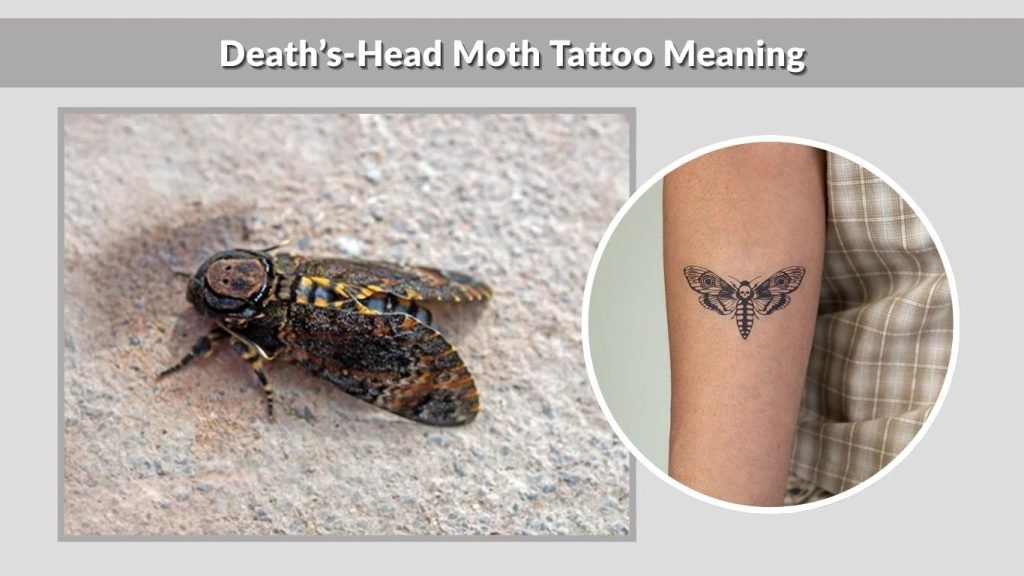
The Death’s-head moth is a popular tattoo choice because of its strong symbolism and unique design. People choose it not only for its appearance but also for the deeper meanings it can represent in personal stories.
What the Tattoo Represents
- Acceptance of mortality
- Personal transformation and growth
- Strength through change
Popular Tattoo Styles
- Realistic skull and wing detail
- Minimalist line designs
- Combined with flowers or crystals
Drawing a Death’s-Head Moth
Drawing this moth can be both challenging and rewarding due to its detailed patterns. Artists often focus on capturing the skull marking and wing textures to create a realistic or stylized piece.
Basic Drawing Steps
- Start with the outline of wings and body
- Add the skull-shaped marking carefully
- Include shading for depth and realism
Tips for Beginners
- Use reference images for accuracy
- Keep proportions balanced
- Practice simple sketches before adding detail
Are Death’s-Head Moths Dangerous?
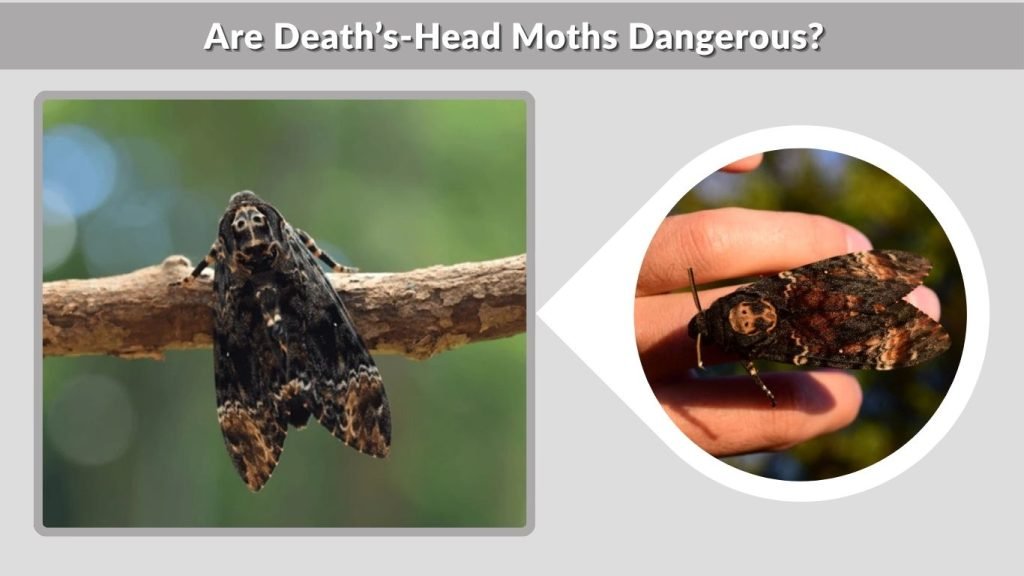
Despite their frightening appearance and unusual sound, Death’s-head moths are completely harmless to humans. They do not bite, sting, or produce venom. Their intimidating look is purely a natural adaptation that has led to misunderstanding over time. In reality, they are an important part of the ecosystem and pose no threat.
Interesting Facts About Death’s-Head Moths
There are many unique traits that make this moth stand out from others. These facts highlight its unusual abilities and behaviors.
Fascinating Traits
- Can enter beehives to steal honey
- Mimics bee scent to avoid detection
- Produces a squeaking “death cry” sound
- Strong flyer capable of long distances
FAQs
What does a death’s-head moth symbolize?
It commonly symbolizes death, transformation, and mystery. Many people also see it as a representation of change and the natural cycle of life, making it both feared and respected in different cultures.
Is the death’s-head moth dangerous?
No, it is completely harmless. It does not bite, sting, or produce venom. Its scary appearance is only a visual feature and does not reflect any real danger.
Why does the death’s-head moth make a sound?
It produces a squeaking noise by forcing air through its mouthparts. This sound may help scare predators or assist when interacting with beehives.
How big is a death’s-head moth?
It can reach a wingspan of about 12–13 cm, making it one of the largest moths found in its natural range.
What does a death’s-head moth tattoo mean?
It often represents mortality, transformation, and embracing change. Many people choose it as a symbol of strength, growth, and acceptance of life’s transitions.
