
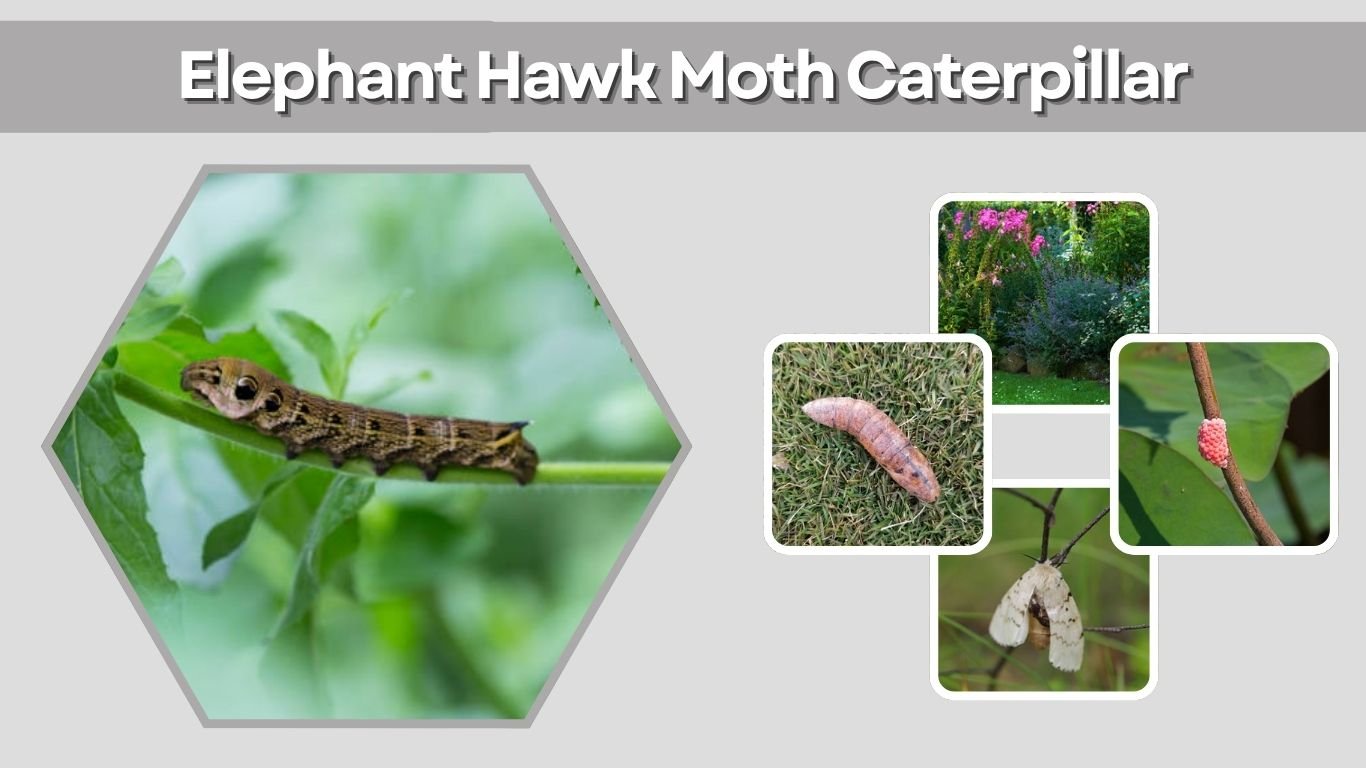
The elephant hawk moth caterpillar is one of the most fascinating insects you can encounter in gardens and wild habitats. Known for its snake-like appearance and large eye spots, it often surprises people at first glance. Despite its intimidating look, this caterpillar is completely harmless and plays an important role in nature. In this guide, you’ll learn how to identify it, understand its behavior, and explore its life cycle and feeding habits in detail.
What Is an Elephant Hawk Moth Caterpillar?
The elephant hawk moth caterpillar belongs to the hawk moth family and is scientifically known as Deilephila elpenor. It is widely recognized for its unusual appearance and rapid growth during its larval stage. This caterpillar eventually transforms into a beautiful moth with pink and olive-green wings, making it popular among nature enthusiasts and gardeners alike.
Scientific Name and Classification
This species is part of the Sphingidae family, commonly called hawk moths. These moths are known for their strong flying ability and hummingbird-like behavior when feeding on nectar. The caterpillar stage is the most visible and often draws attention due to its size and unique features.
Why It’s Called “Elephant Hawk Moth”
- The front segments resemble an elephant’s trunk when extended
- The name “hawk” comes from its fast, agile flight as an adult moth
- Its shape and posture give it a distinctive identity
What Does an Elephant Hawk Moth Caterpillar Look Like?
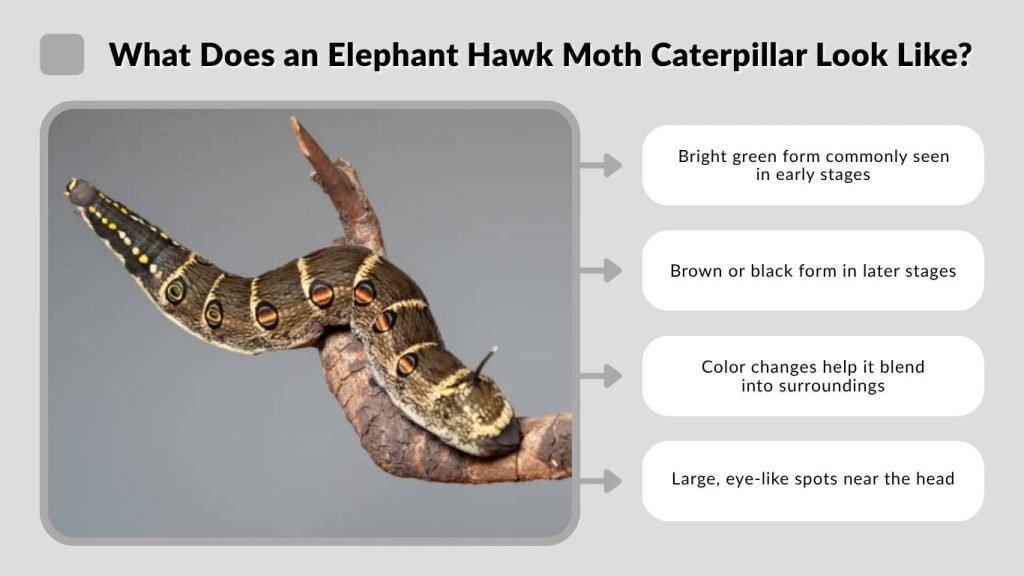
This caterpillar is famous for its striking and sometimes confusing appearance. It can easily be mistaken for a small snake due to its markings and defensive posture. Understanding its physical traits helps with proper identification and reduces unnecessary fear.
Color Variations
- Bright green form commonly seen in early stages
- Brown or black form in later stages
- Color changes help it blend into surroundings
Distinct Features
- Large, eye-like spots near the head
- Smooth, thick body structure
- A small horn at the rear end
Snake Mimicry
When threatened, the caterpillar retracts its head and inflates its front segments. This makes the eye spots more visible, creating a snake-like illusion that can scare away predators. It is a harmless but highly effective survival strategy.
Elephant Hawk Moth Caterpillar Size and Growth Stages
The elephant hawk moth caterpillar goes through several growth phases, becoming larger and more noticeable with each stage. Its size and appearance change significantly as it matures.
How Big Do They Get?
- Can grow up to 8–9 cm in length
- One of the larger caterpillars found in gardens
- Fully grown individuals appear thick and robust
Growth Phases
- Small, newly hatched caterpillars are less visible
- Mid-stage caterpillars grow quickly and change color
- Fully grown caterpillars are large and easy to spot
Life Cycle of the Elephant Hawk Moth
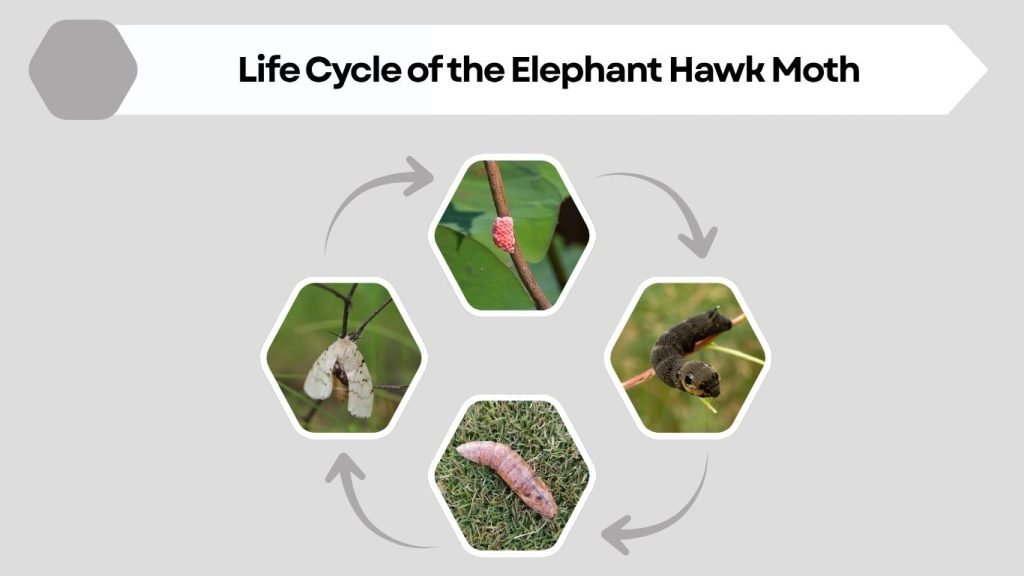
The life cycle of this species is a complete transformation, moving through four distinct stages. Each stage plays a crucial role in its development and survival.
Egg Stage
Female moths lay eggs on suitable host plants such as willowherb or bedstraw. These eggs are small and usually hatch within a short period, depending on environmental conditions.
Caterpillar Stage
This is the feeding and growth phase. The caterpillar consumes large amounts of plant material, storing energy for its transformation. It is during this stage that it develops its distinctive markings and grows rapidly.
Chrysalis (Pupa) Stage
After reaching full size, the caterpillar stops eating and searches for a place to pupate. It often burrows into soil, where it forms a chrysalis. This stage can last several weeks or longer, depending on temperature and season.
Adult Moth Stage
The adult moth emerges with striking pink and green wings. It feeds on nectar and is active mainly at night. Its lifespan is relatively short, focused on reproduction.
Elephant Hawk Moth Caterpillar Habitat and Distribution
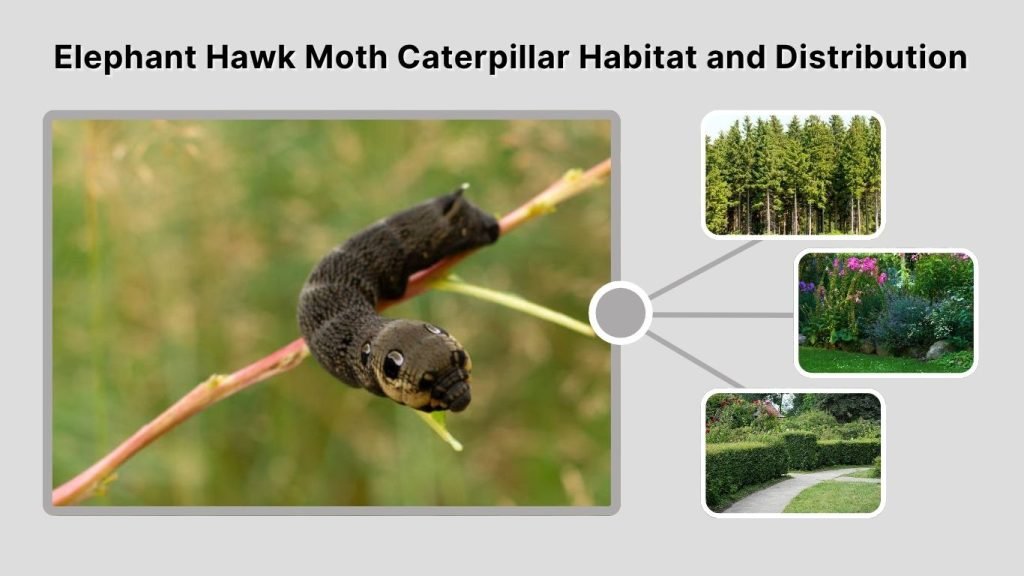
The elephant hawk moth caterpillar is found in a variety of regions, particularly where suitable food plants grow. Its adaptability allows it to thrive in both natural and human-influenced environments.
Common Locations
- Widely found in the UK and across Europe
- Present in parts of Asia
- Frequently seen in gardens and countryside areas
Preferred Habitat
- Woodland edges and hedgerows
- Gardens with flowering plants
- Damp areas where host plants grow naturally
What Do Elephant Hawk Moth Caterpillars Eat?
Understanding the diet of this caterpillar is essential for identification and care. These caterpillars are selective feeders and depend on specific plants to grow properly. Their feeding habits are also linked to their habitat, as they prefer areas where these plants are abundant.
Main Food Plants
- Willowherb (primary food source in the wild)
- Bedstraw species (commonly used host plant)
- Fuchsia (often eaten in gardens)
Feeding Behavior
- Mostly feeds at night (nocturnal activity)
- Consumes large amounts of leaves quickly
- Remains close to its food source for safety
Are Elephant Hawk Moth Caterpillars Poisonous?
Many people are concerned about whether these caterpillars are dangerous due to their intimidating appearance. However, they are completely harmless and pose no real threat to humans or animals. Their defense is based on appearance rather than physical harm.
Are They Dangerous to Humans?
Elephant hawk moth caterpillars do not sting, bite, or inject venom. They are safe to observe and even handle gently if necessary. Their snake-like look is purely a visual trick to scare predators.
Are They Harmful to Pets?
They are not toxic to cats or dogs. Even if a pet interacts with one, there is generally no risk. Still, it’s best to avoid unnecessary contact to protect both the caterpillar and the animal.
Defense Mechanisms and Survival
The elephant hawk moth caterpillar has evolved impressive ways to avoid being eaten. Its most notable adaptation is its ability to mimic a snake, which can confuse and frighten predators. This clever disguise increases its chances of survival in the wild.
How It Avoids Being Eaten
- Expands its front body segments to appear larger
- Displays eye spots that resemble snake eyes
- Retracts its head to enhance the illusion
Natural Predators
- Birds that hunt caterpillars
- Small mammals
- Parasites such as wasps and flies
How to Care for an Elephant Hawk Moth Caterpillar
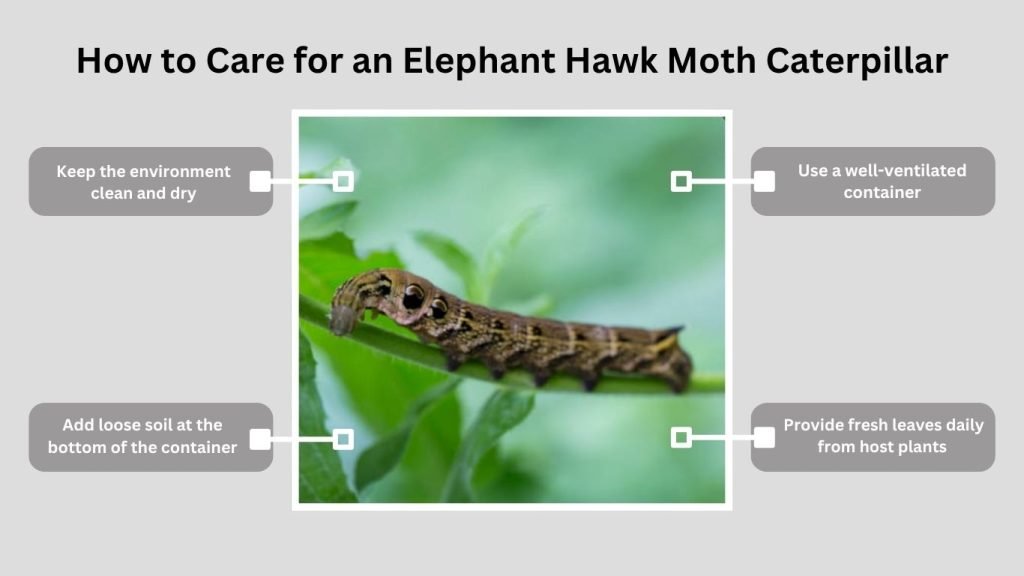
If you find one and decide to observe or raise it, proper care is important. Providing the right environment and food will help it develop naturally and safely transition into the next stage of its life cycle.
Basic Care Setup
- Use a well-ventilated container
- Provide fresh leaves daily from host plants
- Keep the environment clean and dry
Preparing for Pupation
- Add loose soil at the bottom of the container
- Watch for signs like reduced feeding and wandering
- Avoid disturbing it during transformation
Pupation and Chrysalis Stage
When the caterpillar reaches full size, it begins preparing for transformation. It stops eating and searches for a suitable place to pupate, usually in soil. During this stage, it forms a chrysalis where it undergoes a complete metamorphosis into an adult moth.
Signs of Pupation
The caterpillar may become less active and start wandering away from food sources. This behavior indicates it is looking for a safe place to burrow. Once underground, it remains hidden while transforming.
Time to Emerge
The duration of the chrysalis stage can vary depending on environmental conditions. In warmer weather, the moth may emerge within weeks, while cooler conditions can extend this period significantly.
FAQs
Are elephant hawk moth caterpillars dangerous?
No, they are completely harmless. They do not bite, sting, or produce venom. Their snake-like appearance is simply a defense mechanism designed to scare predators rather than harm anything.
What does an elephant hawk moth caterpillar eat?
They mainly feed on plants like willowherb and bedstraw. In gardens, they may also eat fuchsia. Providing the correct food source is essential for their survival and growth.
How big do elephant hawk moth caterpillars get?
They can grow up to 8–9 cm long when fully mature. This makes them one of the larger caterpillars commonly found in gardens and natural habitats.
Why does the caterpillar look like a snake?
The large eye spots and expandable body segments create the illusion of a snake’s head. This mimicry helps deter predators and increases its chances of survival in the wild.
Can you keep an elephant hawk moth caterpillar?
Yes, you can keep one temporarily if you provide proper care, including fresh food and soil for pupation. It is recommended to release the adult moth back into its natural environment after it emerges.
