
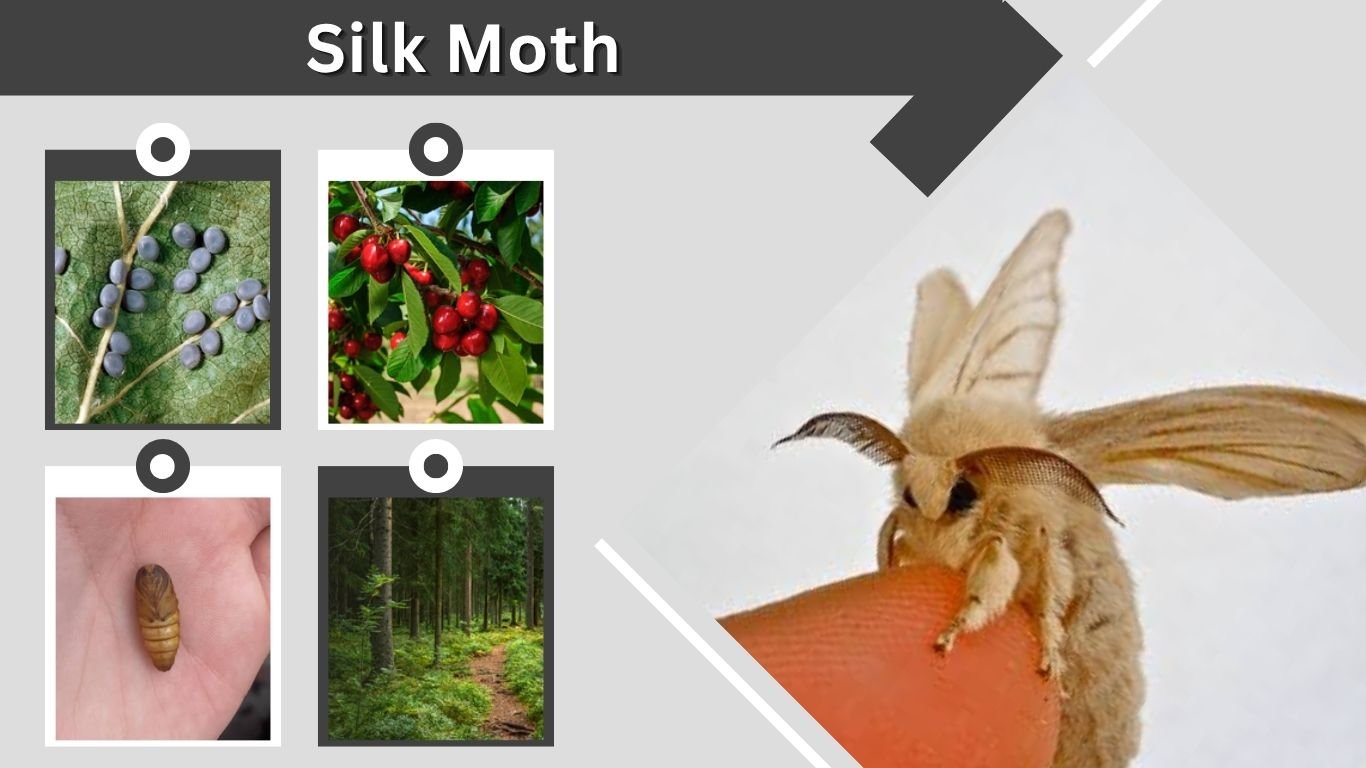
Silk moths are fascinating insects best known for the strong silk produced by their caterpillars when they build protective cocoons. The group includes the domesticated silk moth (Bombyx mori) as well as impressive wild species such as Cecropia, Luna, Polyphemus, Japanese Oak, and Ceanothus silk moths. They vary greatly in size, color, habitat, and host plants. Some have been raised for silk production for centuries, while giant wild silk moths spend their lives naturally in forests and woodlands.
What Does a Silk Moth Look Like?
Silk moth appearance varies considerably because the term covers domestic silkworm moths and numerous wild species. Domestic silk moths are relatively small, pale, and heavily dependent on people, whereas giant silk moths can have broad, colorful wings and thick furry bodies. Feathered antennae are particularly noticeable in males and help them detect female pheromones from considerable distances.
Silk Moth Identification
- Body may appear thick, soft, or furry.
- Adults have two pairs of scaled wings.
- Males often have strongly feathered antennae.
- Domestic silk moths are usually creamy white.
- Wild species may be green, pink, brown, yellow, or reddish.
- Many giant species have large eye spots.
- Size varies significantly between different species.
Silk Moth Size
Domestic silk moths are much smaller than most giant wild silk moths. Many saturniid silk moths have wingspans of several inches, giving them an impressive appearance. The Luna Moth, Cecropia Moth, and Polyphemus Moth are especially large North American examples.
Body size also differs between sexes. Females often have broader, heavier abdomens because they carry eggs, while males may be slimmer and have more elaborate antennae.
Domestic Silk Moth and Wild Silk Moths
Not all silk moths live the same way. The domestic silk moth has been bred by humans for generations specifically for silk production, while wild silk moths complete their development naturally on trees and shrubs. Wild species occur in numerous regions around the world and usually depend on particular host plants during the caterpillar stage.
Domestic Silk Moth
The domestic silk moth (Bombyx mori), also known as the mulberry silk moth, is the source of most commercial silk.
Its caterpillar is commonly called a silkworm. Silkworms are traditionally raised on mulberry leaves until they become mature enough to spin cocoons.
Adult domestic moths are pale and have greatly reduced ability to fly. They also have reduced mouthparts and do not feed as adults.
Giant Wild Silk Moths
Giant silk moths belong mainly to the family Saturniidae. They include some of the world’s largest and most recognizable moths.
Unlike Bombyx mori, these insects are not dependent on humans. Their caterpillars live naturally on host trees, eventually forming cocoons or, in certain species, pupating in the ground.
Common Types of Silk Moths
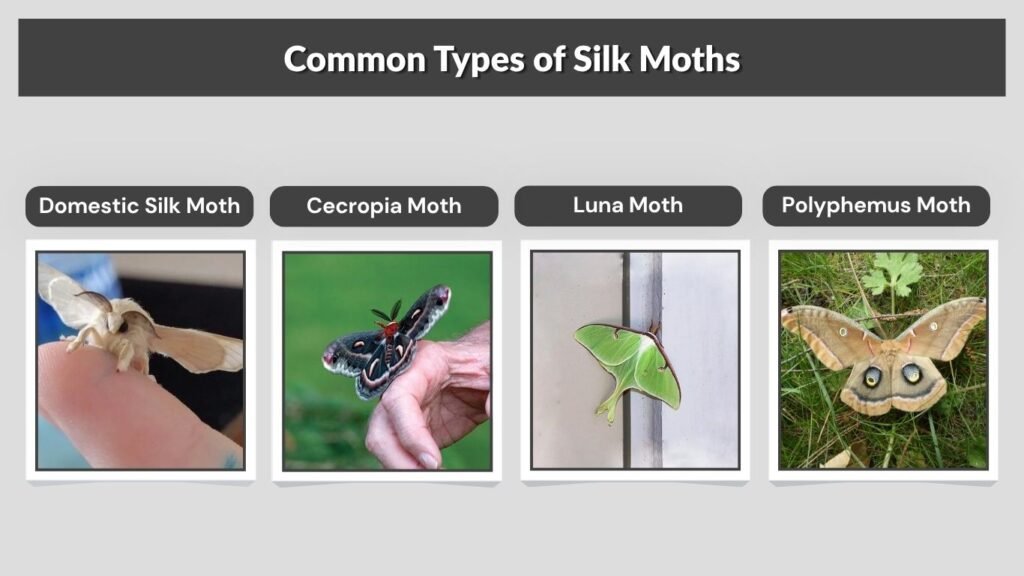
Silk-producing moths occur across Asia, North America, and other regions. Some have economic importance because of their silk, while others are primarily known for their spectacular appearance. The caterpillars of each species have their own host-plant preferences, meaning identifying the moth can also provide clues about where its caterpillar is likely to be found.
Popular Silk Moth Species
- Domestic Silk Moth: Bombyx mori, the main commercial silk-producing species.
- Cecropia Moth: A huge North American silk moth with red, white, and brown markings.
- Luna Moth: A pale-green species recognizable by its long hindwing tails.
- Polyphemus Moth: A large brown moth with prominent eye spots.
- Ceanothus Silk Moth: A reddish-brown western North American species.
- Promethea Moth: A large North American saturniid with strong sexual differences.
- Japanese Oak Silk Moth: An Asian species associated particularly with oak trees.
- Muga Silk Moth: An important Asian silk moth known for producing naturally golden silk.
Pink, White, Brown, and Black Silk Moths
Silk moth coloration varies enormously between species. White silk moth searches commonly refer to domestic Bombyx mori, while pink silk moths may refer to wild saturniids with pink or reddish coloration.
Brown is extremely common among giant silk moths because it provides camouflage against bark and dead leaves. Very dark individuals may appear almost black, depending on the species and lighting.
Silk Moth Caterpillar and Diet
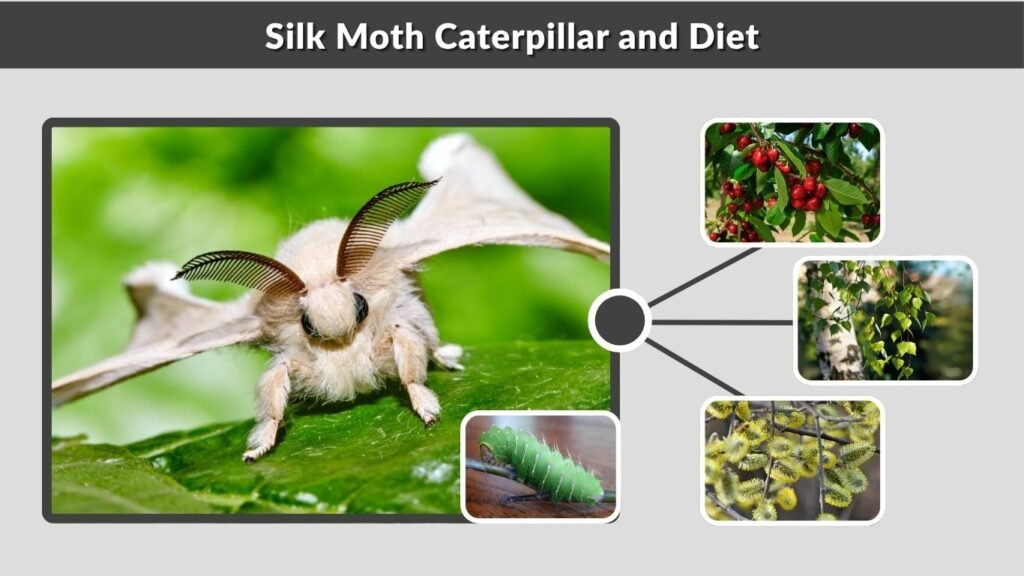
The caterpillar is the main feeding stage of every silk moth. During this period, the insect must obtain enough energy to grow, form a pupa, and eventually reproduce as an adult. Many giant silk moth adults cannot feed, so almost all the energy used during their adult lives was originally collected while they were caterpillars.
Silk Moth Caterpillar Identification
- Caterpillars can be white, green, yellowish, or blue-green.
- The body is divided into obvious segments.
- Wild species may have colorful knobs or tubercles.
- Giant silk moth caterpillars can become several inches long.
- Domestic silkworms are usually pale and relatively smooth.
- Mature larvae produce silk before pupation.
Some silk moth caterpillars are harmless to handle, but identification is important. For example, the closely related Io Moth caterpillar has spines capable of producing a painful sting.
What Does a Silk Moth Eat?
Domestic silkworm caterpillars are closely associated with mulberry leaves. Wild silk moth species use a much broader selection of plants.
Luna Moth caterpillars may feed on walnut, hickory, sweetgum, and related trees, while other giant silk moths use cherry, birch, willow, oak, maple, or various shrubs.
Adult feeding is very different. Domestic silk moths and many giant Saturniid adults have reduced or nonfunctional feeding structures. They live mainly on stored energy accumulated as caterpillars.
Silk Moth Life Cycle
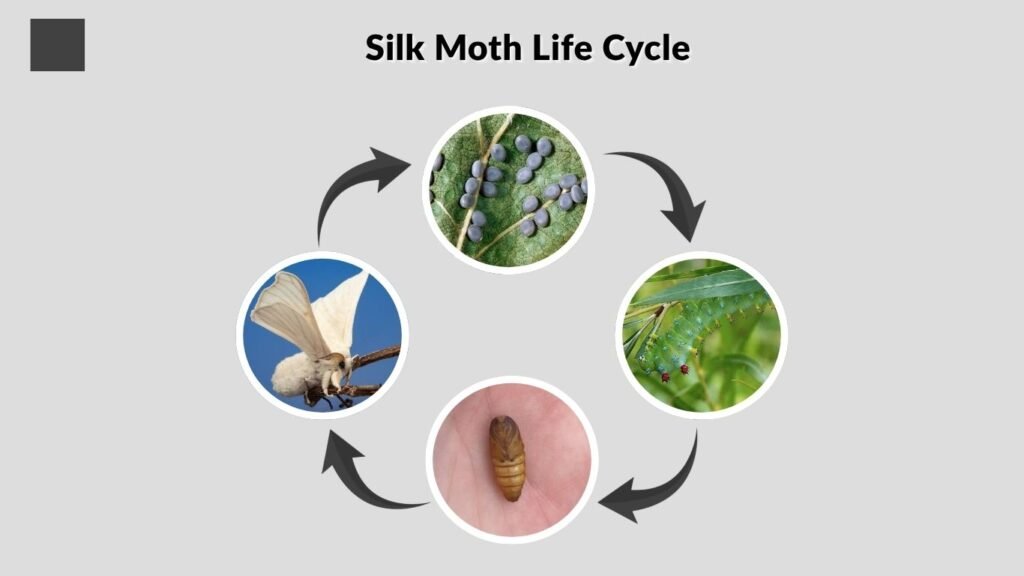
Every silk moth undergoes complete metamorphosis. The insect that hatches from an egg looks completely different from the adult moth it eventually becomes. Much of the life is spent feeding as a caterpillar or developing inside a pupa. The winged adult usually represents the final reproductive stage and may survive only a relatively short period.
Four Stages of the Silk Moth Life Cycle
- Egg: The female deposits eggs on suitable surfaces or host plants.
- Caterpillar: Larvae hatch, feed heavily, grow, and molt several times.
- Pupa: The mature caterpillar pupates, often inside a silk cocoon.
- Adult: The moth emerges, finds a mate, reproduces, and completes the cycle.
Silk Moth Eggs and Hatching
Female silk moths may produce many eggs after mating. Wild species generally place eggs where newly hatched caterpillars can reach suitable host plants.
Depending on the species and climate, eggs may hatch relatively quickly or survive an unfavorable season before development continues.
New caterpillars begin eating soon after hatching and must grow considerably before they are ready to pupate.
How Do Silk Moths Make Cocoons?
Cocoon construction is one of the most remarkable parts of silk moth development. When a caterpillar reaches maturity, specialized silk glands produce material that hardens into a strong fiber after leaving the body. The caterpillar repeatedly moves its head while surrounding itself with silk until it becomes protected inside the completed structure.
Silk Moth Cocoon and Pupa
Inside the cocoon, the caterpillar changes into a pupa.
Although the pupa appears inactive, extensive biological changes occur inside it. Larval structures are reorganized as the wings, antennae, reproductive organs, and other adult structures develop.
Some wild silk moths overwinter as pupae and remain protected for months before emerging when seasonal conditions become suitable.
Why Silk Cocoons Are Valuable
The domestic silkworm produces an exceptionally useful silk filament.
Humans developed sericulture—the farming of silkworms—to obtain and process these fibers into textiles.
Wild silk moths can also produce useful silk, including Muga and Eri silk, but their fibers and production methods differ from those of domesticated mulberry silkworms.
Silk Moth Habitat and Lifespan
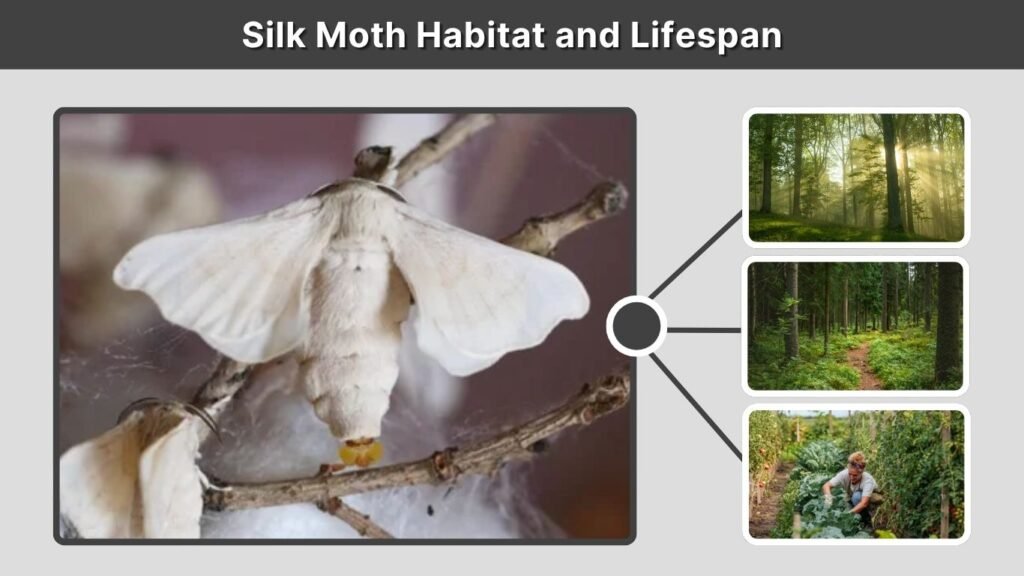
Silk moth habitat depends primarily on the species and availability of caterpillar food plants. Wild species usually inhabit forests, woodland edges, gardens, and other vegetated environments. Domestic Bombyx mori, in contrast, has been selectively bred under human care and is poorly suited to independent life in the wild.
Where Do Silk Moths Live?
North America supports giant silk moths such as Cecropia, Luna, Polyphemus, Promethea, Columbia, and Ceanothus moths.
Asian regions support numerous silk-producing species, including the domestic silk moth, Japanese Oak Silk Moth, Muga Silk Moth, and Eri Silk Moth.
Within these regions, caterpillar distribution closely follows suitable host plants.
How Long Does a Silk Moth Live?
Adult silk moths generally have relatively short lives, particularly species that cannot feed.
Many giant silk moth adults survive only around a week or two. Their goal during this brief period is primarily to locate a mate and reproduce.
The complete lifespan is considerably longer because the insect also spends time developing as an egg, caterpillar, and pupa. Species that overwinter inside cocoons may take many months to complete one generation.
FAQs
1. What is the scientific name of the domestic silk moth?
The domestic silk moth is scientifically known as Bombyx mori. It is also called the mulberry silk moth.
2. Do adult silk moths eat?
Many do not. Domestic silk moths and most giant Saturniid moths have reduced feeding structures and depend on energy stored during the caterpillar stage.
3. What do silk moth caterpillars eat?
Domestic silkworms mainly eat mulberry leaves. Wild silk moth caterpillars consume species-specific host plants such as oak, willow, cherry, walnut, birch, maple, and sweetgum.
4. How long does a silk moth live?
Many adults live only about one or two weeks, although the complete life cycle may take months because of the egg, caterpillar, and pupal stages.
5. Are giant silk moth caterpillars poisonous?
Most familiar giant silk moth caterpillars are not dangerously poisonous, but some related species have irritating or stinging spines. Unidentified caterpillars should therefore be observed rather than handled.
