
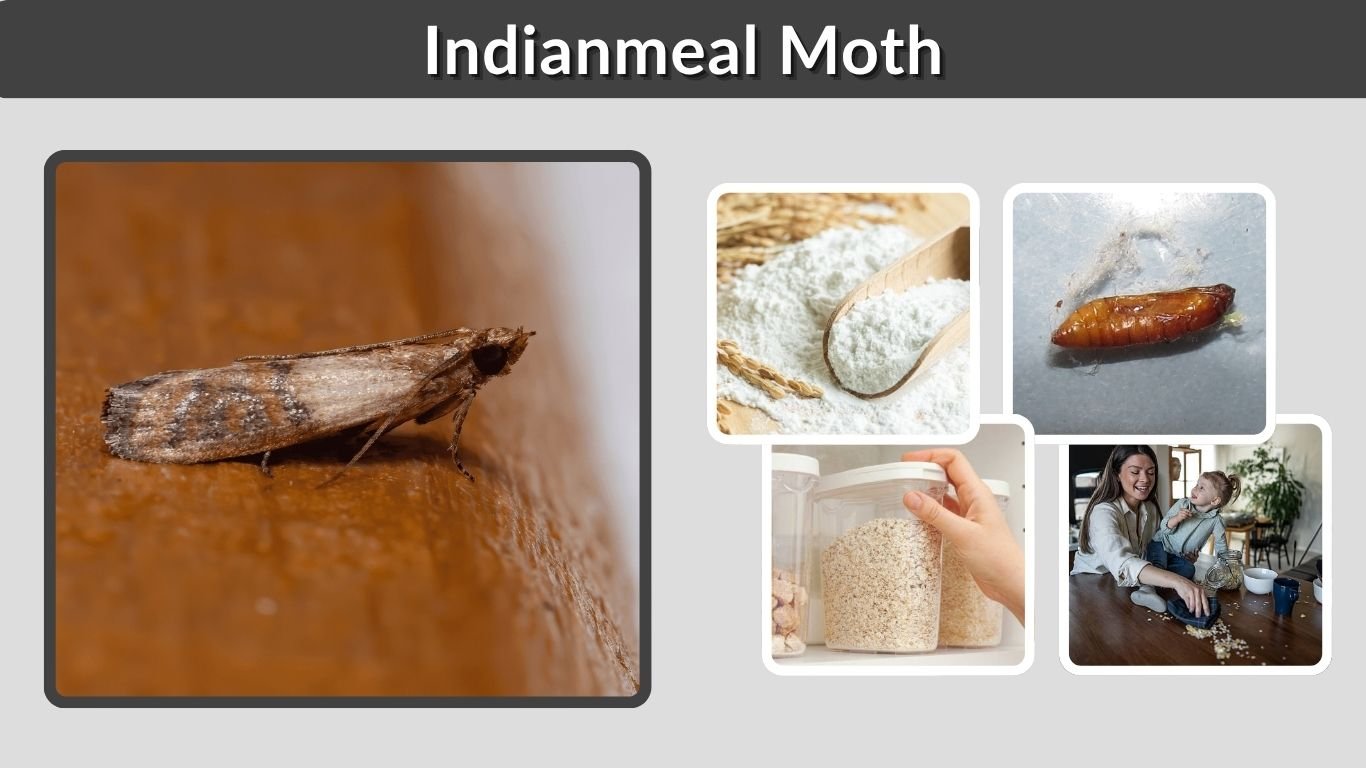
The Indianmeal moth (Plodia interpunctella) is one of the most common pantry pests found in homes, grocery stores, warehouses, and food-storage areas. The adults are small moths, but the larvae cause the actual damage by feeding on dry foods and producing silk webbing. Infestations commonly begin in flour, cereal, rice, nuts, dried fruit, birdseed, or pet food and can spread quickly between packages. The most effective way to get rid of Indianmeal moths is to locate and discard infested food, thoroughly clean storage areas, and keep replacement foods in airtight containers.
What Is an Indianmeal Moth?
The Indianmeal moth is a stored-food moth in the family Pyralidae. Despite its name, it is not specifically associated with India or Indian cuisine.
It gets its name from an older term for cornmeal, sometimes called “Indian meal.”
Indianmeal Moth Identification
- Scientific name: Plodia interpunctella
- Adult length: about 8–10 mm
- Wingspan: roughly 16–20 mm
- Inner half of forewings: pale gray or cream
- Outer half: reddish-brown or copper-colored
- Larvae: cream-colored caterpillars with brown heads
- Main habitat indoors: pantries and food-storage areas
The two-toned wings are one of the easiest characteristics for recognizing adult Indianmeal moths.
What Do Indianmeal Moth Larvae Look Like?
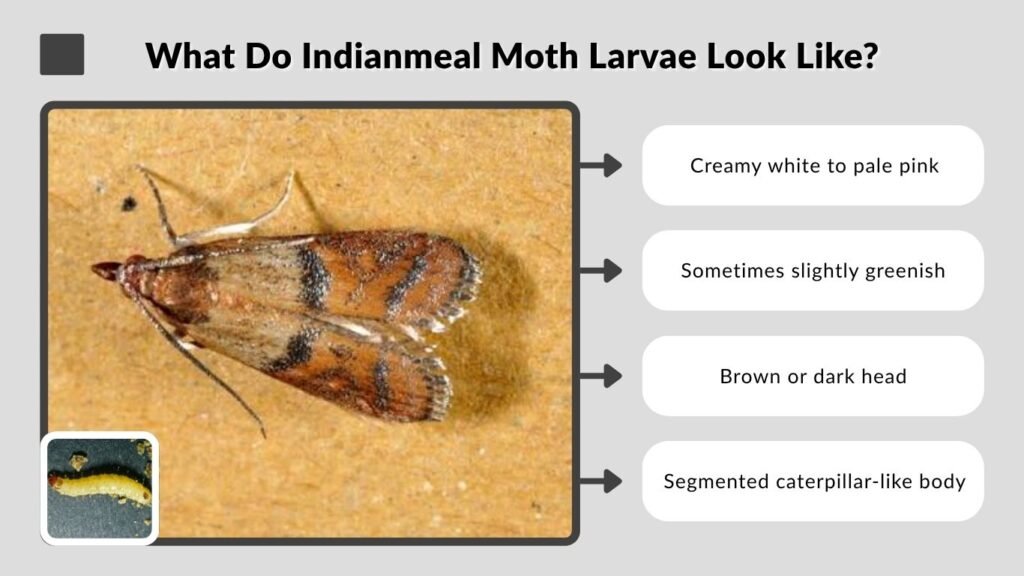
Indianmeal moth larvae look like small caterpillars rather than maggots.
Newly hatched larvae are extremely tiny, but they become much easier to see as they mature.
Larvae Identification
- Creamy white to pale pink
- Sometimes slightly greenish
- Brown or dark head
- Segmented caterpillar-like body
- Several pairs of small legs
- Approximately 1/2 inch long when mature
Larvae are often noticed crawling across pantry shelves, walls, ceilings, or kitchen cabinets.
Finding a caterpillar far from food does not necessarily mean the food source is nearby. Mature larvae frequently crawl considerable distances before pupating.
Why Are Indianmeal Moth Larvae Crawling on Walls?
When larvae finish feeding, they leave the contaminated food and search for a protected place to form a cocoon.
They may crawl:
- Up walls
- Across ceilings
- Under shelves
- Behind cabinets
- Into cracks
- Around door frames
- Behind appliances
This wandering behavior is why larvae sometimes appear in bedrooms or other rooms even though the infestation began in a kitchen or pantry.
Indianmeal Moth Eggs
Female Indianmeal moths deposit extremely small eggs directly on or near suitable food.
The eggs are usually too small to notice without close inspection.
Where Are Eggs Laid?
Common locations include:
- Flour
- Rice
- Cereal
- Nuts
- Dried fruit
- Grain
- Seeds
- Chocolate
- Spices
- Pet food
- Birdseed
Once eggs hatch, larvae immediately begin feeding.
Indianmeal Moth Life Cycle
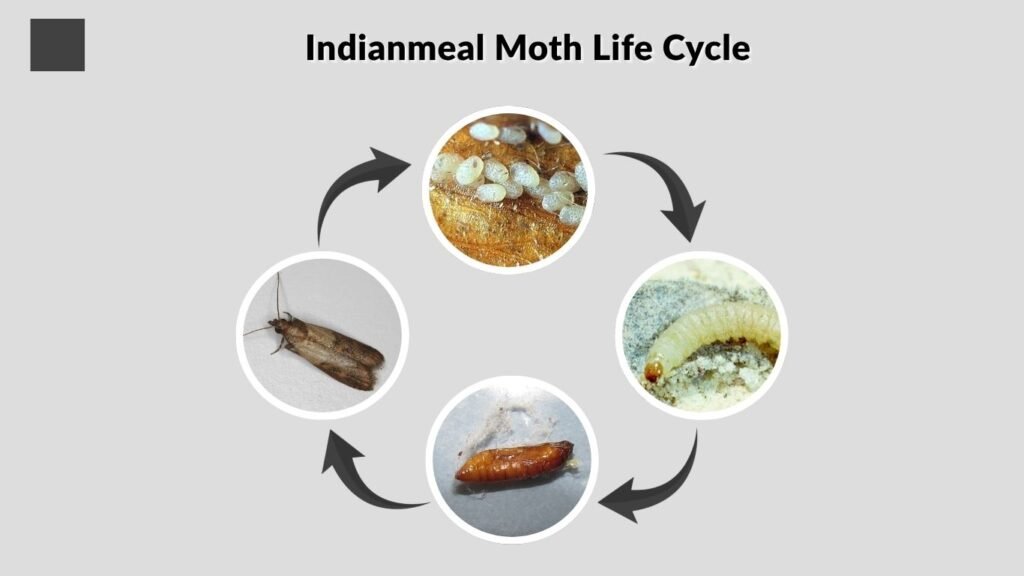
Indianmeal moths undergo complete metamorphosis:
Egg → Larva → Pupa → Adult
Warm temperatures can accelerate development considerably.
Egg Stage
Eggs may hatch within several days under warm conditions.
Larval Stage
The larval stage is the longest and most destructive portion of the life cycle.
Larvae feed while producing silk that becomes mixed with food particles and waste.
Pupal Stage
Mature larvae leave their food source and spin thin silken cocoons in cracks, corners, or other protected locations.
Adult Stage
Adults emerge, mate, and lay eggs.
Adult Indianmeal moths do not cause food damage themselves. Their primary role is reproduction.
A complete generation can sometimes develop within several weeks under favorable indoor conditions.
What Do Indianmeal Moths Eat?
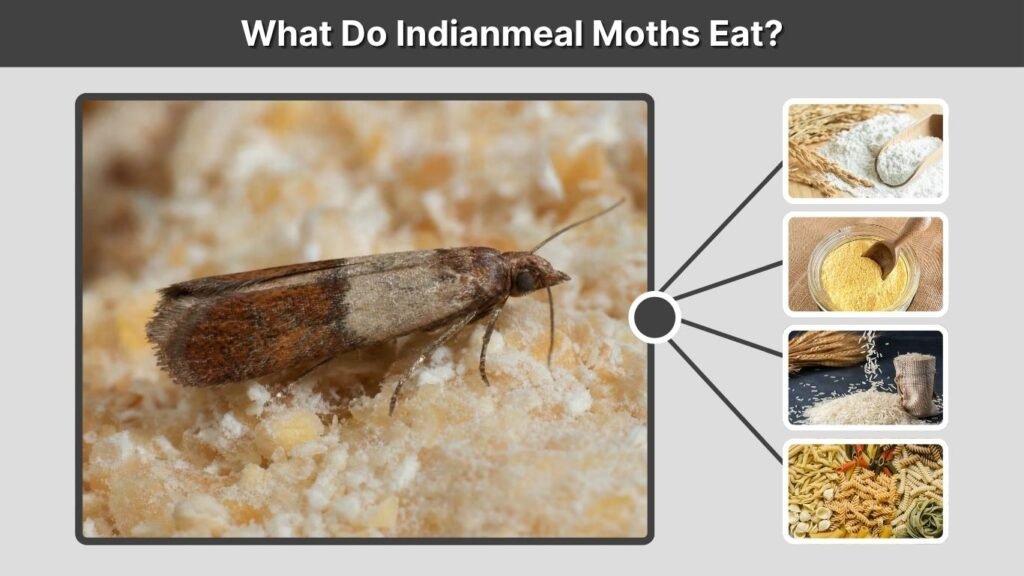
Technically, the larvae eat stored foods rather than adult moths.
Indianmeal moth larvae have an exceptionally broad diet.
Common Infested Foods
They may infest:
- Flour
- Cornmeal
- Rice
- Breakfast cereal
- Pasta
- Oatmeal
- Nuts
- Dried fruit
- Chocolate
- Candy
- Crackers
- Bread products
- Seeds
- Dried herbs
- Spices
- Powdered milk
- Dry pet food
- Birdseed
They are particularly associated with dry foods stored for extended periods.
Do Indianmeal Moths Infest Black Pepper?
They can infest spices, including pepper, although spices are usually less attractive than grains, nuts, cereals, and dried fruit.
A package containing webbing, larvae, shed skins, or clumped material should be discarded regardless of the type of food.
Check nearby spice containers carefully because larvae can move between packages.
Indianmeal Moths in Rice
Rice is a possible food source for Indianmeal moth larvae.
Signs in Rice
Infested rice may contain:
- Small caterpillars
- Fine silk webbing
- Clumped grains
- Shed skins
- Small cocoons
- Adult moths nearby
Discard heavily infested rice rather than attempting to separate the insects from the food.
Indianmeal Moths in Pet Food
Dry dog food, cat food, birdseed, and small-animal feed are common hidden sources of infestations.
Large bags may remain open for weeks, providing larvae with plenty of food.
How to Prevent Problems
Store pet food in sealed containers and inspect bags before pouring new food into an existing bin.
Wash and dry storage containers before refilling them so eggs or larvae are not carried into a fresh bag.
Can Indianmeal Moth Larvae Live in an Old Toaster?
Larvae may survive around an old toaster if enough crumbs and food debris have accumulated inside or underneath it.
The toaster itself is not food.
However, accumulated bread crumbs can provide organic material, while nearby cracks offer excellent pupation sites.
Unplug the appliance before cleaning and follow the manufacturer’s safe-cleaning instructions.
What Is Indianmeal Moth Webbing?
Silk webbing is one of the strongest signs of an Indianmeal moth infestation.
Larvae continuously produce silk while feeding.
What It Looks Like
You may notice:
- Thin white threads
- Food stuck together
- Clumped flour or cereal
- Webbing around package seams
- Silk inside corners
- Small cocoons near shelves
Webbing distinguishes Indianmeal moth larvae from many beetle pantry pests.
Are Indianmeal Moths Dangerous?
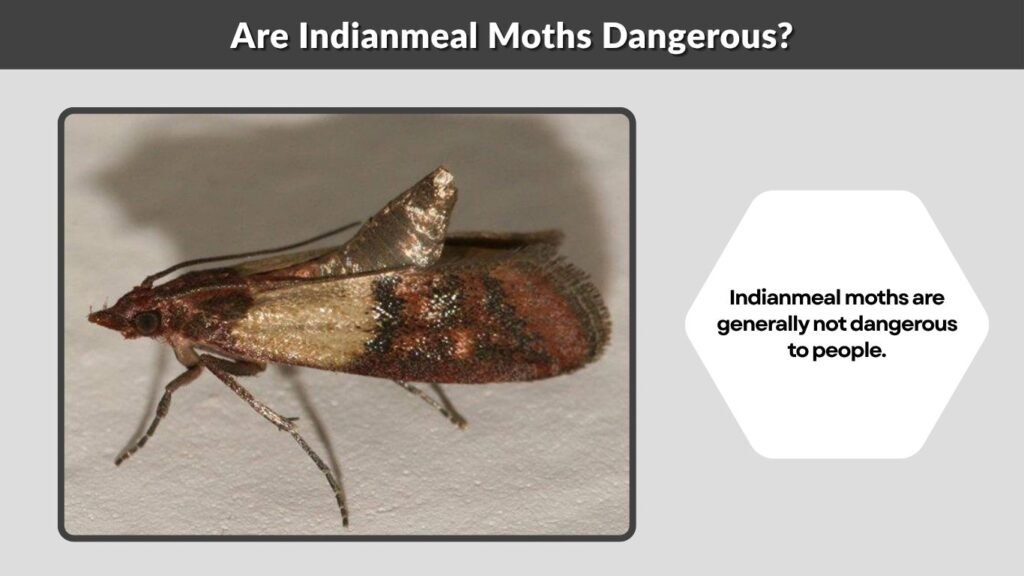
Indianmeal moths are generally not dangerous to people.
They do not sting, and adult moths do not normally bite.
Are the Larvae Dangerous?
The larvae are not considered venomous or poisonous.
However, food contaminated with larvae, feces, shed skins, webbing, or mold should generally be discarded.
The main problem is contamination and food loss rather than direct injury.
Can Indianmeal Moths Cause a Rash?
Indianmeal moth infestations are not a common cause of skin rashes.
People who develop unexplained skin irritation should not automatically assume pantry moth larvae are responsible.
If a rash is persistent or severe, medical evaluation is more appropriate than attempting to diagnose it based only on the presence of moths.
What If a Dog Eats Indianmeal Moth Larvae?
Accidentally eating a few Indianmeal moth larvae is unlikely to poison a dog.
The more important concern is whether the pet food has become spoiled, moldy, or otherwise contaminated.
Discard heavily infested food and replace it with a fresh supply.
Contact a veterinarian if a pet develops vomiting, diarrhea, weakness, or other unusual symptoms.
How to Get Rid of Indianmeal Moths
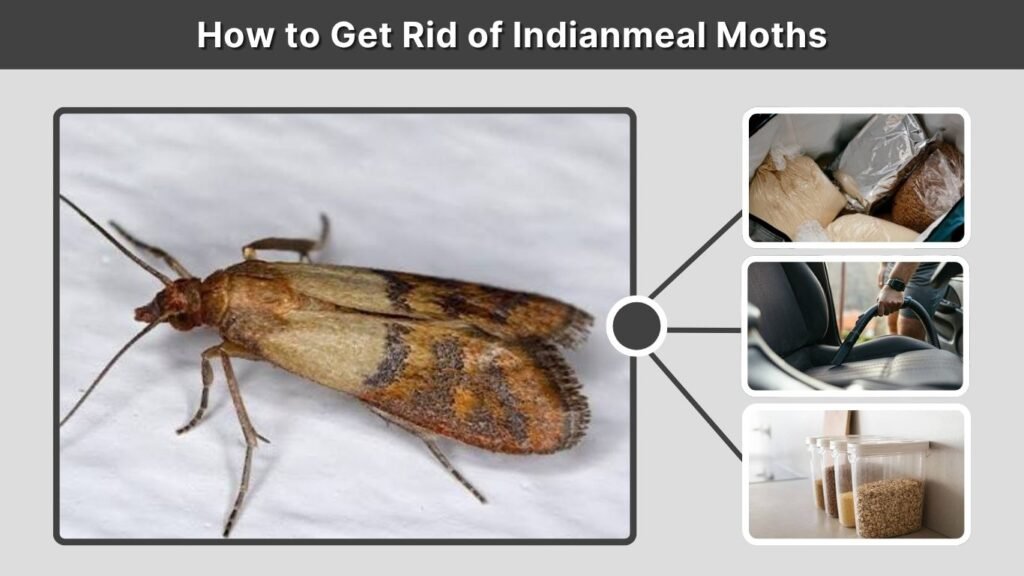
Finding the source is the most important step.
Simply killing adult moths will not stop larvae that are still developing inside food packages.
1. Inspect Every Dry Food
Check opened and unopened packages.
Larvae can enter some thin packaging through tiny openings or package seams.
Look especially closely at grain products, nuts, dried fruit, pet food, seeds, and foods that have been stored for months.
2. Discard Infested Food
Seal contaminated foods in a bag and remove them from the house promptly.
Do not leave infested packages sitting in an indoor trash can.
3. Vacuum the Pantry
Vacuum shelves, corners, cracks, peg holes, shelf supports, and cabinet edges.
Larvae frequently pupate in tiny spaces away from food.
Empty the vacuum afterward.
4. Clean Shelves
Wash food-storage surfaces and remove flour, crumbs, seeds, and other debris.
Cleaning helps remove hidden food particles but does not replace inspection of packaged foods.
5. Use Airtight Containers
Store vulnerable foods in glass, metal, or durable plastic containers with tightly fitting lids.
This prevents larvae from spreading easily between foods.
Do Indianmeal Moth Traps Work?
Pheromone traps are useful for detecting and monitoring Indianmeal moths.
They attract male moths using a synthetic version of the female sex pheromone.
What Traps Can Do
Pheromone traps can:
- Confirm adults are present
- Monitor infestation levels
- Help detect lingering moths
- Show whether control is improving
They generally cannot eliminate an infestation alone because larvae continue developing inside contaminated food.
Natural Ways to Get Rid of Indianmeal Moths
The best natural approach is sanitation and food-source removal.
Chemical treatment is usually unnecessary inside food cabinets when the infestation source can be located.
Effective Nonchemical Control
Remove contaminated food, vacuum thoroughly, clean pantry surfaces, and transfer new foods into sealed containers.
Check pet food and birdseed too, because overlooked bags can keep an infestation going for months.
How to Prevent Indianmeal Moths
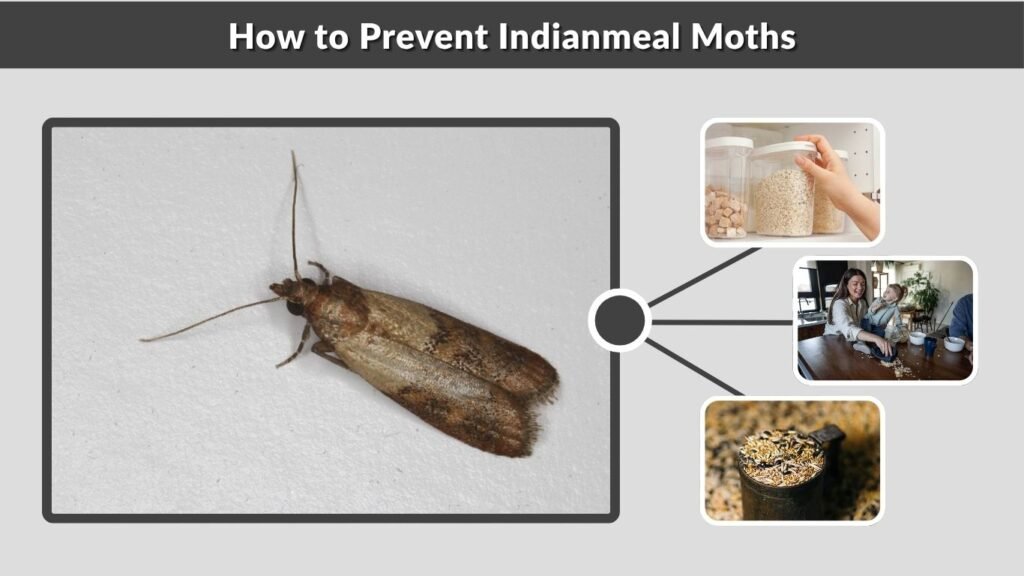
Prevention starts with food storage.
Prevention Tips
- Inspect packages before purchase.
- Avoid buying damaged food packages.
- Store grains and cereals in sealed containers.
- Rotate older food first.
- Clean spills immediately.
- Check pet food and birdseed regularly.
- Avoid keeping large quantities of dry food for long periods.
- Monitor with pheromone traps when previous infestations have occurred.
FAQs
1. What does an Indianmeal moth look like?
Adults are small moths with two-toned forewings: pale gray or cream near the body and reddish-brown toward the tips.
2. What do Indianmeal moth larvae look like?
They are small cream, pinkish, or occasionally greenish caterpillars with brown heads and may reach roughly 1/2 inch long.
3. Where do Indianmeal moths come from?
Infestations often begin when eggs or larvae are brought into the home inside contaminated dry food, pet food, birdseed, nuts, grain, or dried fruit.
4. Do Indianmeal moth traps get rid of them?
Traps catch male moths and help monitor infestations, but contaminated food must still be located and removed.
5. How do you permanently get rid of Indianmeal moths?
Find and discard every infested food source, vacuum and clean the pantry thoroughly, and store replacement foods in airtight containers.
