
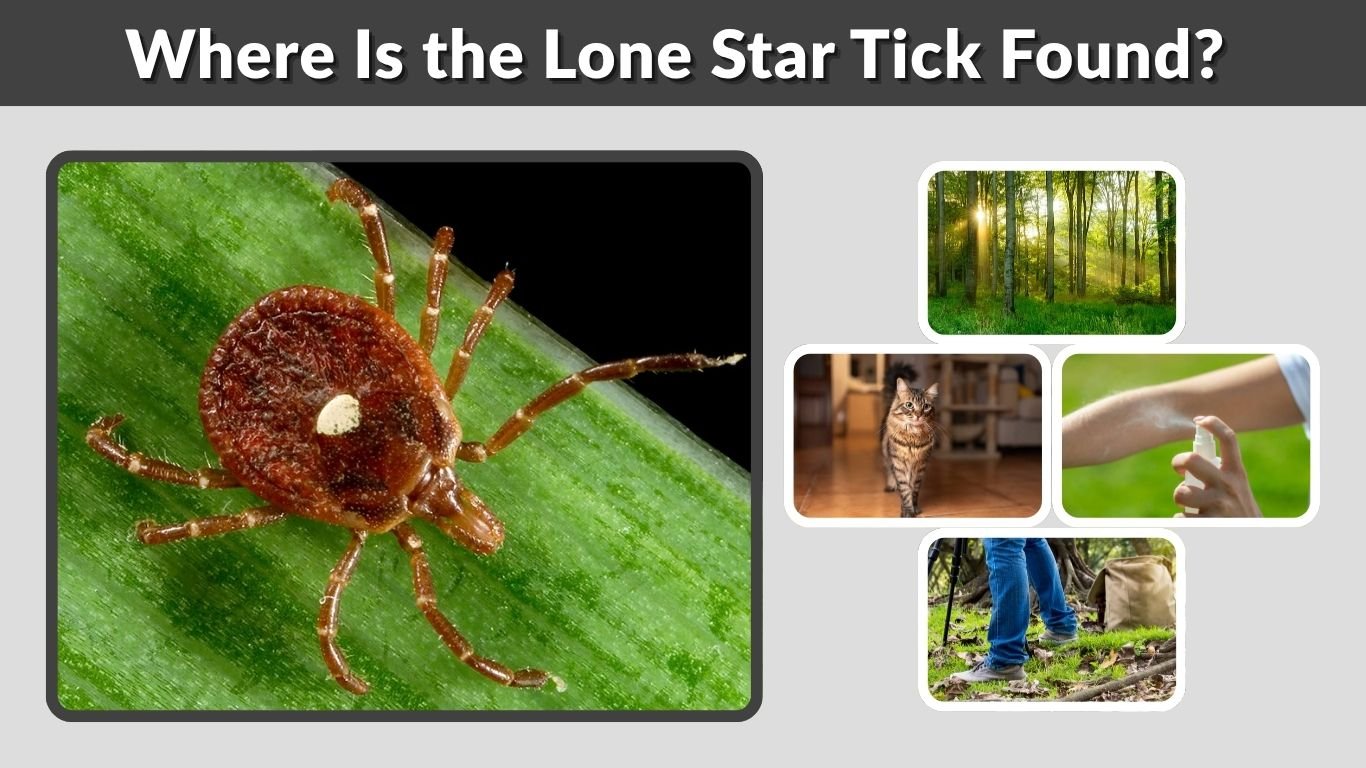
The lone star tick (Amblyomma americanum) is found mainly across the eastern, southeastern, and south-central United States, although its range has expanded northward in recent decades. It thrives in wooded and brushy environments where animals such as white-tailed deer are abundant. Lone star ticks have also occasionally been detected in parts of Canada. Knowing where these aggressive ticks live is useful because all active life stages can bite humans, and their bites are associated with several tick-borne illnesses and alpha-gal syndrome.
Where Is the Lone Star Tick Found?
The lone star tick is native to North America and is widely distributed throughout the eastern United States, with its greatest abundance in southern states. Its established range extends through much of the Southeast, South Central region, Mid-Atlantic, and portions of the Midwest and Northeast.
Main U.S. Range
Lone star ticks are commonly associated with:
- Southeastern United States
- South-central United States
- Mid-Atlantic states
- Southern and central Midwest
- Parts of the Northeast
- Atlantic coastal regions
They are especially common in warm, humid areas that support dense vegetation and large populations of deer and other wildlife.
Historically, the species was considered predominantly southern. Surveillance has since documented expansion farther north, including into parts of the Midwest and northeastern United States.
Where Is the Lone Star Tick Mainly Found?
The core range of the lone star tick remains the southern portion of the eastern United States. The Southeast and neighboring south-central areas generally provide especially favorable climate, vegetation, and animal hosts.
White-tailed deer are particularly important hosts for adult lone star ticks and help support large local populations.
States Where Lone Star Ticks Are Common
Strong populations are associated with states such as:
- Texas
- Oklahoma
- Arkansas
- Louisiana
- Mississippi
- Alabama
- Georgia
- Florida
- Tennessee
- Kentucky
- Missouri
- North Carolina
- South Carolina
- Virginia
They also occur farther north through parts of states such as Illinois, Indiana, Ohio, Pennsylvania, New Jersey, New York, and other areas of the eastern United States.
A tick’s presence can vary considerably even within the same state. One county may support abundant populations while another nearby area has relatively few.
Lone Star Tick Habitat
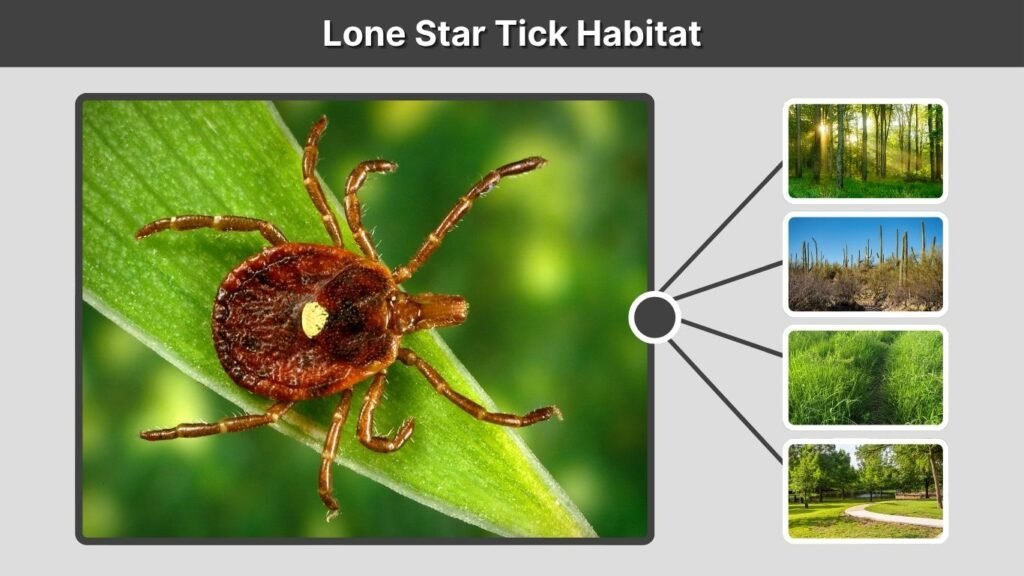
Lone star ticks do not usually live randomly across open landscapes. They prefer environments that provide vegetation, humidity, and frequent contact with animal hosts.
Woodlands and areas where forests meet open ground are particularly suitable.
Common Lone Star Tick Habitats
- Deciduous woodland
- Forest edges
- Brushy fields
- Tall grass
- Shrub-covered areas
- Trails through wooded areas
- Parks
- Hunting areas
- Overgrown yards
- Areas with abundant deer
Lone star ticks are active host-seekers. Rather than remaining permanently on one animal, they spend portions of their lives in vegetation waiting for or actively seeking another host.
Areas regularly traveled by deer can therefore become especially productive tick habitat.
Why Are Lone Star Ticks Expanding North?
The geographic range of the lone star tick has shifted northward over time. Surveillance records show expansion beyond parts of its historically recognized southern range.
Several factors can contribute to the spread of ticks.
Factors Supporting Range Expansion
Climate conditions can affect winter survival and the length of the tick’s active season. Wildlife movement also plays an important role because ticks can be transported while attached to deer, birds, and other animals.
Changes in land use can create additional forest-edge habitat, while abundant white-tailed deer provide adults with important hosts.
These factors do not mean lone star ticks will become equally abundant everywhere. Local temperature, humidity, vegetation, and wildlife populations strongly influence whether a population becomes established.
Where Is the Lone Star Tick Found in Canada?
Lone star ticks have been detected in Canada, but a sighting should not automatically be interpreted as evidence of a well-established local breeding population.
The Public Health Agency of Canada currently lists lone star tick findings from southern portions of Alberta, Manitoba, Nova Scotia, Ontario, Québec, and Saskatchewan.
Lone Star Ticks in Ontario
Ontario provides a useful example of the distinction between a tick being “found” and being “established.”
Public Health Ontario reports that lone star ticks are encountered in the province but research has not demonstrated established populations there. Many specimens are associated with people or animals that previously traveled to the United States. Others may arrive on migratory birds or other animals.
This means Canadians can occasionally encounter a lone star tick even outside the species’ main established U.S. range.
How to Identify a Lone Star Tick
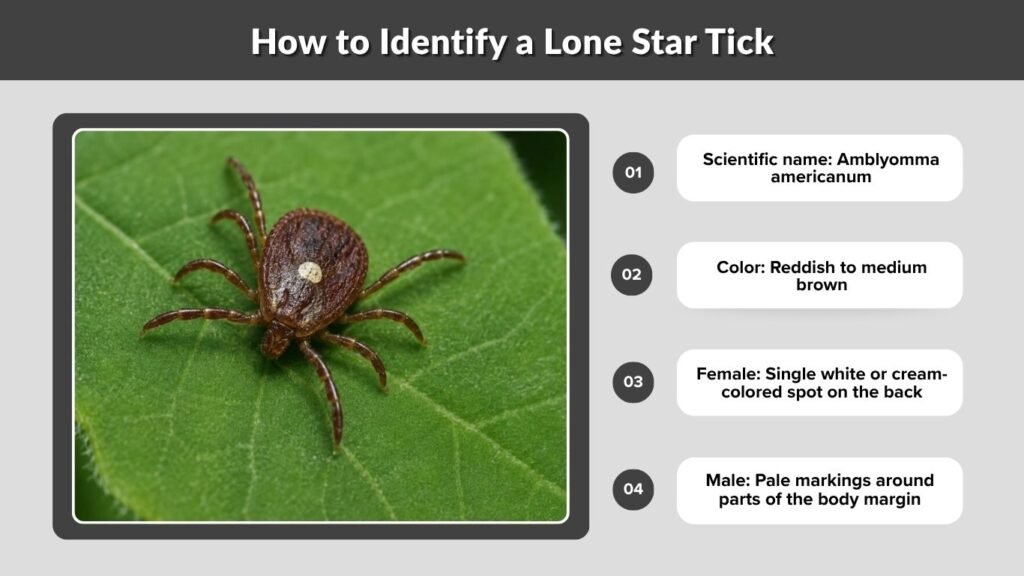
The adult female is the easiest stage to recognize because it carries the feature responsible for the species’ common name: a distinct pale spot in the middle of its back.
Adult males have a different pattern and lack one simple central white dot.
Key Identification Features
- Scientific name: Amblyomma americanum
- Color: Reddish to medium brown
- Female: Single white or cream-colored spot on the back
- Male: Pale markings around parts of the body margin
- Nymph: Much smaller and without the female’s obvious white spot
- Larva: Extremely small and has six legs
- Nymphs and adults: Eight legs
The absence of a white dot does not rule out a lone star tick because only adult females have the classic “lone star.”
What Animals Carry Lone Star Ticks?
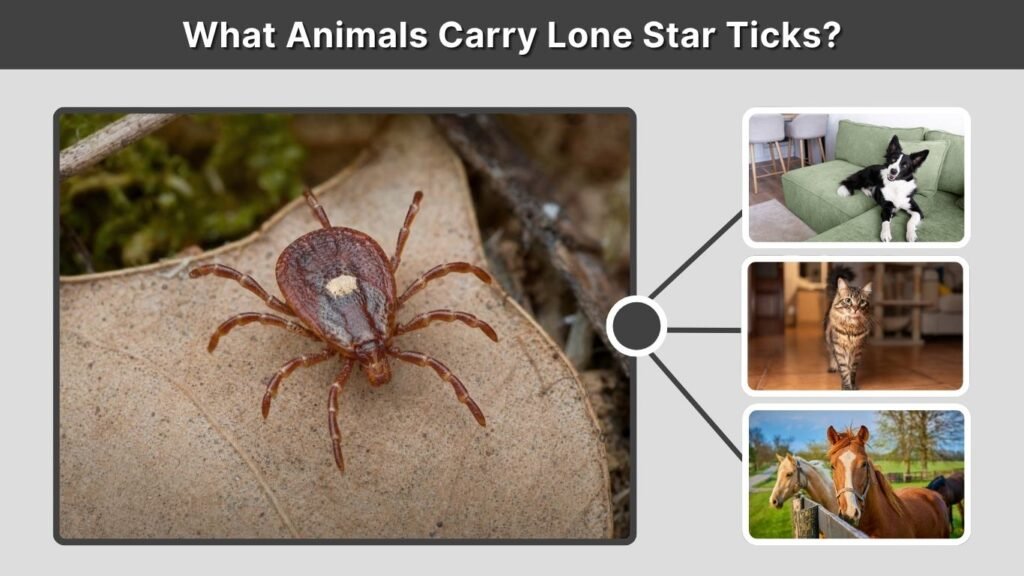
Lone star ticks can feed on an unusually broad variety of animals. Different life stages may use different hosts.
Common Hosts
- White-tailed deer
- Wild turkey and other birds
- Dogs
- Cats
- Raccoons
- Rodents
- Cattle
- Horses
- Humans
White-tailed deer are particularly important to adult ticks, while larvae and nymphs may feed on birds and various mammals.
Wildlife movement helps explain how individual ticks can occasionally turn up well outside established populations.
When Are Lone Star Ticks Most Active?
Activity varies by region, but encounters are generally most common during the warmer portions of the year.
Larvae, nymphs, and adults do not necessarily peak at exactly the same time. In much of their U.S. range, people should be particularly cautious during spring and summer, while activity can begin earlier and continue later in warmer southern climates.
Because lone star ticks are aggressive host seekers, people walking through brush, woodland edges, or tall vegetation can pick them up quickly.
Are Lone Star Ticks Dangerous?
Lone star ticks readily bite humans and can transmit several pathogens. CDC identifies them as vectors associated with ehrlichiosis, tularemia, Heartland virus disease, Bourbon virus disease, and southern tick-associated rash illness.
Their bites are also strongly associated in the United States with alpha-gal syndrome, an allergy to the sugar alpha-gal that may cause reactions after consuming mammalian meat or other mammal-derived products.
Lone star ticks are not considered vectors of the bacteria that cause Lyme disease.
How to Avoid Lone Star Ticks
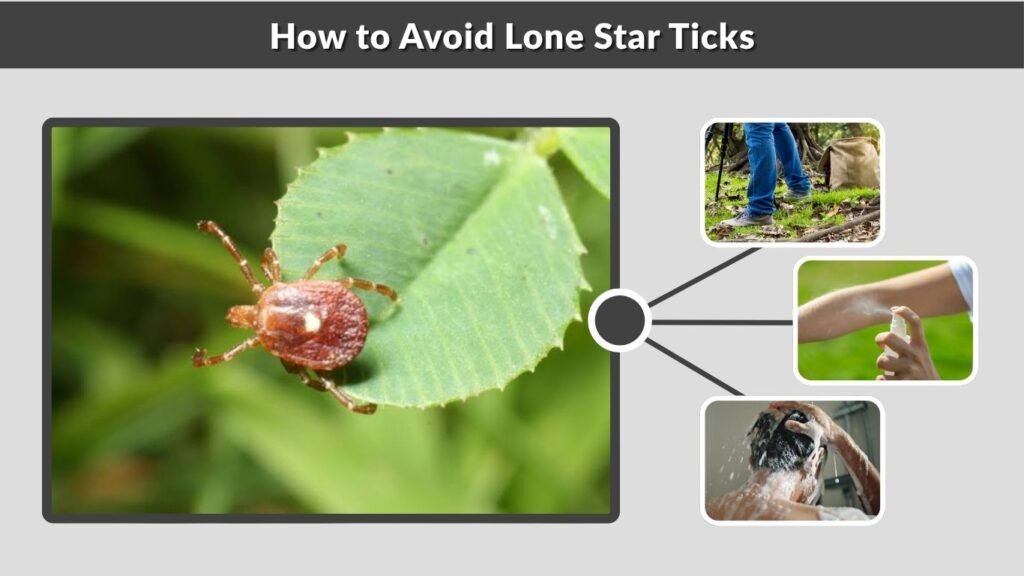
Knowing their habitat can substantially reduce the chance of a bite.
Prevention Tips
- Avoid brushing against tall grass and dense vegetation.
- Walk near the center of established trails.
- Wear long pants when entering tick habitat.
- Use an appropriate EPA-registered tick repellent.
- Treat clothing with permethrin when appropriate and according to the label.
- Check yourself after outdoor activities.
- Examine children and pets carefully.
- Shower soon after returning indoors.
- Remove attached ticks promptly with fine-tipped tweezers.
Pay particular attention to hidden areas such as the scalp, behind the knees, waist, groin, underarms, and behind the ears.
FAQs
Where are lone star ticks most common?
They are most common in the southeastern and south-central United States, although they are now widely distributed throughout much of the eastern United States.
Are lone star ticks found in northern states?
Yes. Lone star ticks occur considerably farther north than they historically did, with records extending through parts of the Midwest, Mid-Atlantic, and Northeast.
Are lone star ticks found in Canada?
Yes, individual lone star ticks have been found in several southern Canadian provinces. However, a detection does not necessarily indicate that a permanent breeding population is established there.
What habitat do lone star ticks prefer?
They are commonly associated with wooded areas, forest edges, brush, tall grass, and places with abundant wildlife, particularly white-tailed deer.
How can I tell if a tick is a lone star tick?
An adult female has a distinctive white or cream-colored spot in the center of her back. Males, nymphs, and larvae do not have this same single-dot appearance.
