
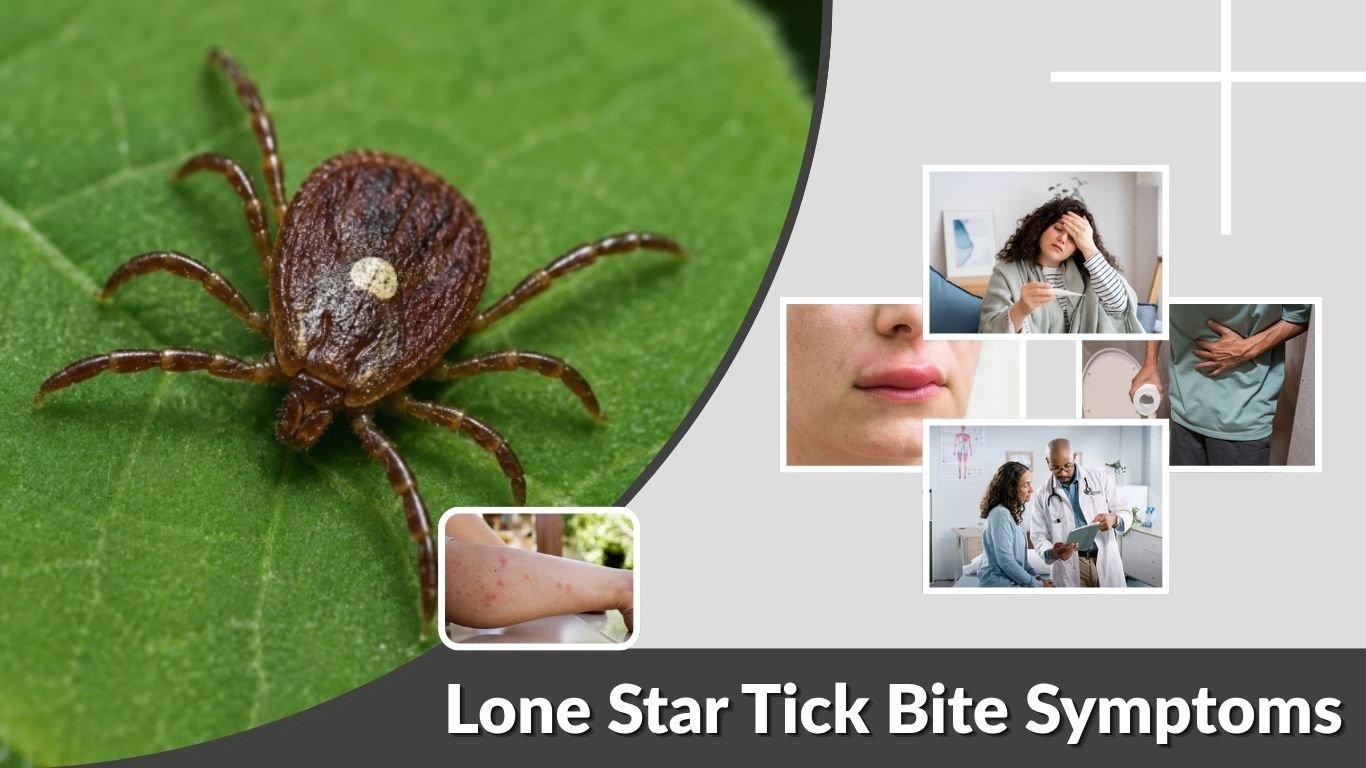
A lone star tick bite can cause anything from mild redness and itching to symptoms of a tick-borne illness or, in some people, alpha-gal syndrome. The lone star tick (Amblyomma americanum) is an aggressive human-biting tick found across much of the eastern United States. Most bites do not lead to serious illness, but knowing what symptoms to watch for is important. Problems such as ehrlichiosis may develop within days, while alpha-gal meat allergy can first appear weeks or even months after the original tick bite.
Early Lone Star Tick Bite Symptoms
A small amount of irritation around the bite is common. Lone star tick saliva itself can irritate the skin, so redness immediately around a bite does not automatically mean that an infection has developed.
Common Symptoms at the Bite Site
- Redness around the bite
- Mild swelling
- Itching
- Tenderness
- A small raised bump
- Local discomfort
These symptoms may appear shortly after the tick is removed and can gradually improve.
A small red area immediately surrounding a bite should also not be confused with an expanding tick-associated rash. Watch the area over the following days for significant enlargement or other changes.
Lone Star Tick Symptoms Timeline
There is no single timeline for symptoms after a lone star tick bite because different reactions and illnesses develop at different speeds. Some people experience nothing beyond temporary skin irritation, while tick-borne infections can cause symptoms days later.
How Long Before Symptoms Show Up?
Immediately to a few days: Mild itching, redness, or irritation may develop at the bite site.
Within about 7 days: A STARI rash can develop and begin expanding around the bite.
About 5–14 days: Symptoms of ehrlichiosis can begin after the bite of an infected tick.
Weeks or months later: Alpha-gal syndrome may first develop after a tick bite. Once a person has AGS, allergic symptoms commonly occur several hours after eating or being exposed to products containing alpha-gal.
Because symptoms can be delayed, remembering recent tick exposure can help a healthcare provider evaluate an unexplained illness.
Lone Star Tick Disease Symptoms
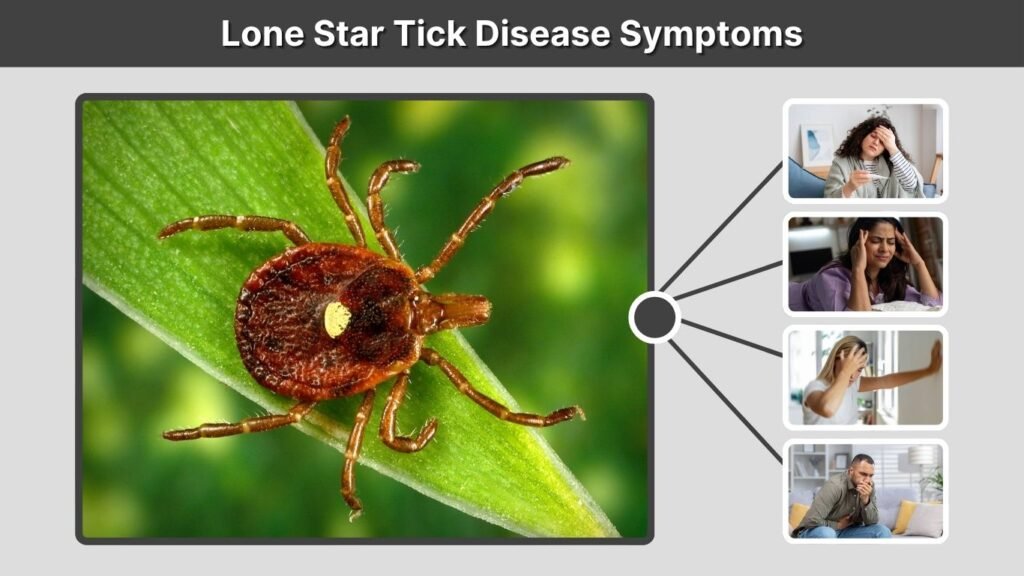
Lone star ticks can transmit several pathogens. CDC lists them as vectors of Ehrlichia chaffeensis, Ehrlichia ewingii, Heartland virus, Bourbon virus, and tularemia. Their bites are also associated with STARI and alpha-gal syndrome.
Ehrlichiosis Symptoms
Ehrlichiosis is one of the more important infections associated with lone star ticks. Symptoms typically start 5–14 days after the bite of an infected tick.
Early symptoms may include:
- Fever
- Chills
- Severe headache
- Muscle aches
- Fatigue or malaise
- Nausea
- Vomiting
- Diarrhea
- Loss of appetite
- Confusion
- Rash, particularly in children
A rash occurs in only some patients, so its absence does not rule out ehrlichiosis.
Without prompt treatment, ehrlichiosis can sometimes become severe and cause neurological problems, respiratory failure, bleeding problems, organ failure, or death.
Lone Star Tick STARI Symptoms
Southern tick-associated rash illness (STARI) is associated with lone star tick bites. Its cause remains unknown, and CDC states that it is not caused by the bacteria responsible for Lyme disease.
What Does a STARI Rash Look Like?
- Begins around the tick bite
- Usually develops within about 7 days
- Gradually expands outward
- May reach 3–12 inches across
- Can sometimes look like a bull’s-eye
- May occur with fatigue, fever, headache, and muscle or joint pain
The expanding rash is different from the small area of redness that commonly occurs directly after a tick bite.
Because STARI can resemble Lyme disease, evaluation by a healthcare professional is appropriate for a rapidly expanding rash.
Lone Star Tick Meat Allergy Symptoms
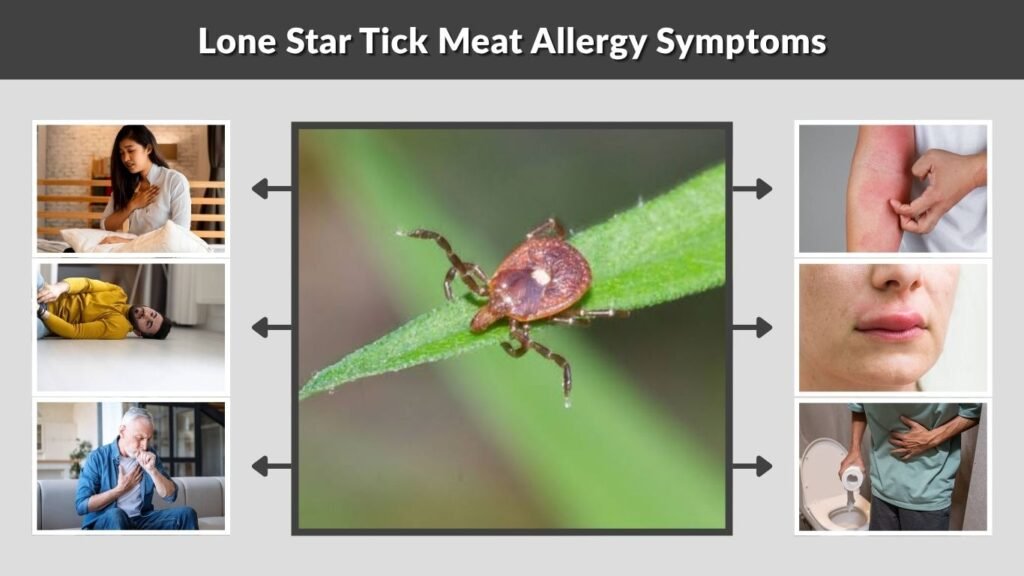
One of the most unusual consequences associated with lone star tick bites is alpha-gal syndrome (AGS), sometimes called red meat allergy or tick-bite meat allergy.
Alpha-gal is a sugar present in most mammals. In the United States, development of AGS is strongly associated with lone star tick bites.
Alpha-Gal Syndrome Symptoms
Symptoms can include:
- Hives
- Itchy rash
- Swelling of the lips, tongue, throat, face, or eyelids
- Severe stomach pain
- Nausea
- Vomiting
- Diarrhea
- Heartburn or indigestion
- Cough
- Wheezing
- Shortness of breath
- Dizziness or faintness
- Low blood pressure
- Anaphylaxis
AGS reactions can be potentially life-threatening.
When Do Alpha-Gal Symptoms Appear?
There are two different timelines to understand.
First, the allergy itself may not become noticeable immediately after the tick bite. CDC notes that symptoms can take weeks or months to develop after someone is bitten.
Once a person has developed AGS, an allergic reaction is unusually delayed compared with most food allergies. Symptoms typically appear about 2–6 hours after eating foods containing alpha-gal, although CDC surveillance criteria recognize reactions occurring roughly 2–10 hours after ingestion.
Possible triggers include beef, pork, lamb, venison, rabbit, gelatin, and some other mammal-derived products.
Does a Lone Star Tick Cause Lyme Disease?
Lone star ticks are not considered vectors of the bacteria that cause Lyme disease.
This distinction is particularly important because STARI can produce an expanding rash that looks similar to a Lyme disease rash. CDC reports that studies have not shown lone star ticks transmitting Borrelia burgdorferi, the primary bacterium responsible for Lyme disease in the United States.
An expanding rash still deserves medical attention because appearance alone may not identify its cause.
Lone Star Tick Symptoms in Dogs
Dogs are also frequently bitten by lone star ticks. The tick can transmit Ehrlichia ewingii and Ehrlichia chaffeensis to dogs, causing canine ehrlichiosis. Signs generally develop approximately 1–3 weeks after infection.
Symptoms to Watch for in Dogs
- Fever
- Lethargy
- Reduced appetite
- Lameness or joint pain
- Enlarged lymph nodes
- Abnormal bleeding or bruising
- Anemia
- Low platelet counts
- Eye inflammation
- Neurological abnormalities in severe cases
A dog that develops illness after a known tick bite should be evaluated by a veterinarian, particularly if fever, weakness, poor appetite, lameness, or unusual bleeding occurs.
What to Do After a Lone Star Tick Bite
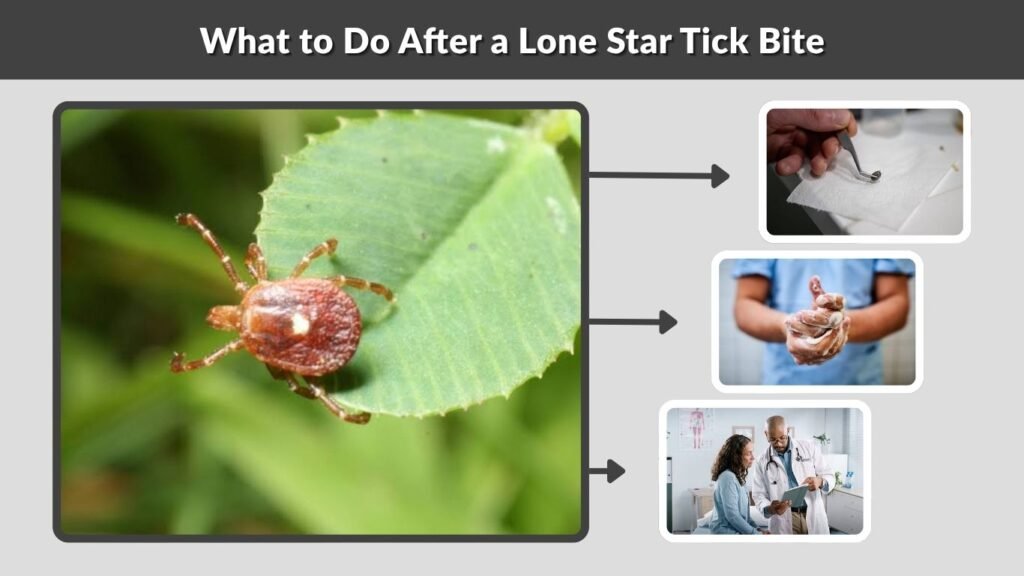
Finding a lone star tick attached to your skin does not mean you will become ill. Prompt removal and symptom monitoring are the most important immediate steps.
After a Tick Bite
- Remove the tick using fine-tipped tweezers.
- Grasp it as close to the skin as possible.
- Pull upward with steady pressure.
- Clean the bite area and your hands.
- Note the approximate date of the bite.
- Watch for fever, headache, rash, muscle pain, or other illness.
- Pay attention to delayed allergic reactions after mammalian meat or products.
- Contact a healthcare professional if symptoms develop.
Do not rely solely on the appearance of the bite to determine whether an infection has occurred.
When Should You Worry About Symptoms?
Seek medical advice if you develop fever, severe headache, an expanding rash, significant muscle pain, confusion, or other systemic illness within days or weeks of a tick bite. Ehrlichiosis responds best when treatment is started promptly, and delaying treatment can increase the risk of severe disease.
Call emergency services for signs of a severe allergic reaction, such as difficulty breathing, throat or tongue swelling, fainting, or widespread hives, particularly after eating mammalian meat or another possible alpha-gal trigger.
FAQs
How long after a lone star tick bite do symptoms appear?
It depends on the problem. Local irritation may appear quickly, STARI rash often develops within about 7 days, and ehrlichiosis generally begins 5–14 days after an infected tick bite. Alpha-gal syndrome can first become noticeable weeks or months after the bite.
What are the first symptoms of a lone star tick bite?
The earliest signs may simply be mild redness, itching, swelling, or tenderness around the bite. Fever, headache, muscle aches, or an expanding rash require closer attention.
What are lone star tick meat allergy symptoms?
Alpha-gal syndrome can cause hives, itching, stomach pain, vomiting, diarrhea, swelling, breathing problems, dizziness, or anaphylaxis after exposure to mammalian products.
Can lone star tick symptoms appear months later?
Yes. Alpha-gal syndrome may take weeks or months to become apparent after a tick bite, even though individual food-allergy reactions usually happen several hours after consuming alpha-gal.
Do all lone star tick bites cause illness?
No. Many bites cause only temporary local irritation. However, because lone star ticks can transmit pathogens and are associated with alpha-gal syndrome, monitoring for new symptoms after a bite is important.
