
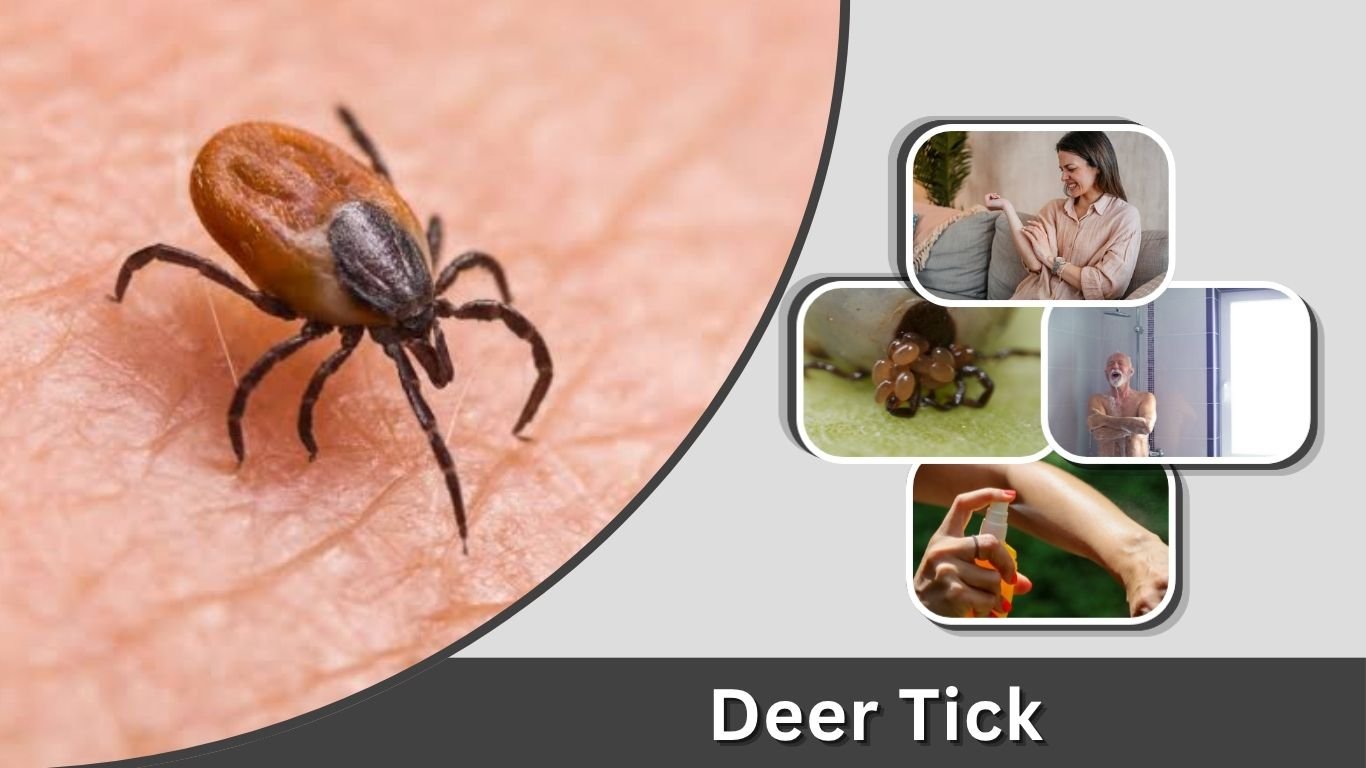
The deer tick is a tiny blood-feeding parasite best known for its connection to Lyme disease. Also called the blacklegged tick, it can attach to humans, dogs, deer, and other animals while they move through wooded or grassy areas. Because deer ticks are smaller than many other common ticks, they can be difficult to notice, especially during the nymph stage. Knowing what a deer tick looks like, how large it gets, and how to remove one can help reduce health risks.
What Is a Deer Tick?
The deer tick, commonly known as the blacklegged tick, belongs to the species Ixodes scapularis. It is widespread across much of the eastern and central United States and commonly lives in wooded environments with leaf litter, shrubs, and wildlife.
Deer Tick Identification
Adult deer ticks have several useful identifying characteristics:
- Eight legs as adults and nymphs
- Dark or black legs
- Flattened oval-shaped body
- Adult females often have a dark shield with a reddish-brown abdomen
- Adult males are generally darker overall
- No white markings or ornate patterns on the back
An unfed tick is flat, but its abdomen can expand considerably after feeding.
Male vs Female Deer Tick
Female deer ticks are usually easier to recognize because their abdomen often appears reddish-orange or reddish-brown behind a dark shield.
Males tend to be darker and have a shield covering most of their upper body. Females take larger blood meals because they need nutrients to produce eggs.
Deer Tick Habitat
Deer ticks prefer humid environments where they are protected from drying out. They are commonly found in forests, brush, tall vegetation, and areas covered with fallen leaves.
They do not jump or fly. Instead, they climb onto vegetation and wait for a passing host.
How Big Is a Deer Tick?
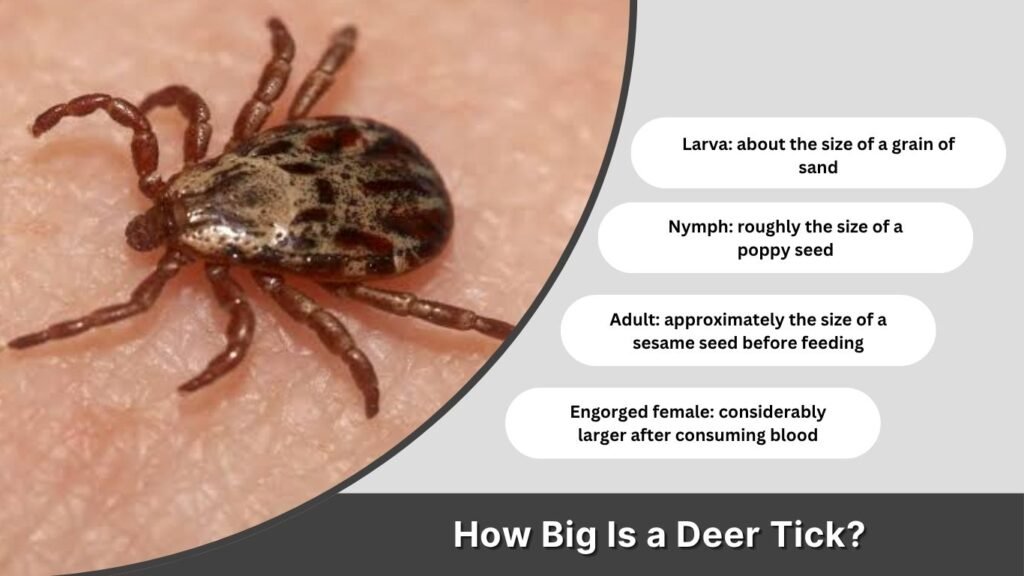
Deer ticks are much smaller than many people expect. Their size varies considerably depending on age, sex, and whether they have recently fed.
Deer Tick Size by Life Stage
Approximate sizes include:
- Larva: about the size of a grain of sand
- Nymph: roughly the size of a poppy seed
- Adult: approximately the size of a sesame seed before feeding
- Engorged female: considerably larger after consuming blood
Because nymphs are exceptionally small, they may remain attached without being noticed.
Deer Tick Nymph
The nymph stage is particularly important because nymphs commonly bite humans and can be very difficult to detect.
Their tiny size allows them to hide around the scalp, groin, waist, armpits, behind the knees, and other areas where visual inspection can be difficult.
Engorged Deer Tick
A deer tick becomes engorged after feeding for an extended period.
Its body becomes swollen and may appear grayish or pale compared with the darker appearance of an unfed tick.
If you discover an engorged tick attached to your skin, remove it promptly and consider contacting a healthcare professional if you are concerned about disease exposure.
What Does a Deer Tick Bite Look Like?
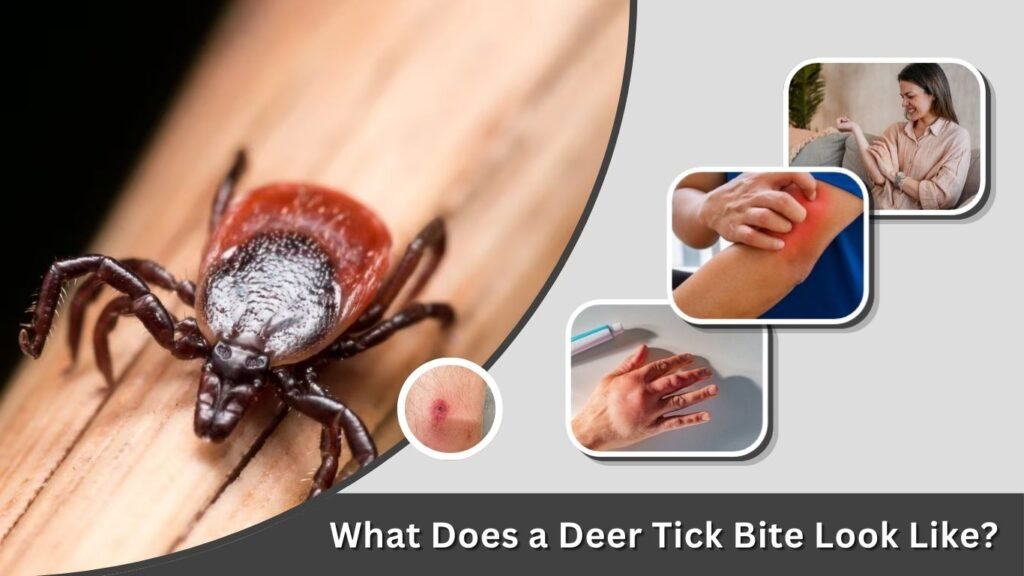
Many deer tick bites initially look similar to other insect bites. You may see a small red spot or mild irritation around the attachment site.
Normal Reaction to a Deer Tick Bite
A minor localized reaction can include:
- Small red bump
- Mild itching
- Slight tenderness
- Limited redness
- Minor swelling
These symptoms alone do not necessarily mean that an infection has occurred.
Lyme Disease Rash
Some people infected with Lyme disease develop an expanding rash known as erythema migrans.
It may gradually grow over several days. Although it is often described as a bull’s-eye rash, it does not always have a clear central ring.
A spreading rash following a tick bite should be evaluated by a healthcare professional.
Other Symptoms to Watch For
Depending on the infection, symptoms after a deer tick bite can include fever, headache, fatigue, swollen lymph nodes, muscle aches, and joint discomfort.
Symptoms may develop days or weeks after the original bite.
Deer Ticks and Lyme Disease
Deer ticks receive considerable attention because they can transmit the bacterium responsible for Lyme disease. However, finding a deer tick does not automatically mean that Lyme disease will develop.
How Lyme Disease Is Transmitted
A tick must first be infected before it can transmit Lyme disease.
The chance of transmission generally increases the longer an infected blacklegged tick remains attached. This is why prompt tick checks and early removal are so important after spending time outdoors.
Other Diseases Associated With Deer Ticks
Blacklegged ticks may also transmit organisms associated with other tick-borne illnesses, including:
- Anaplasmosis
- Babesiosis
- Borrelia miyamotoi disease
- Powassan virus disease
The exact diseases present vary geographically.
If you develop unusual symptoms after a recent tick bite, tell your healthcare provider when and where the exposure occurred.
Deer Tick vs Dog Tick
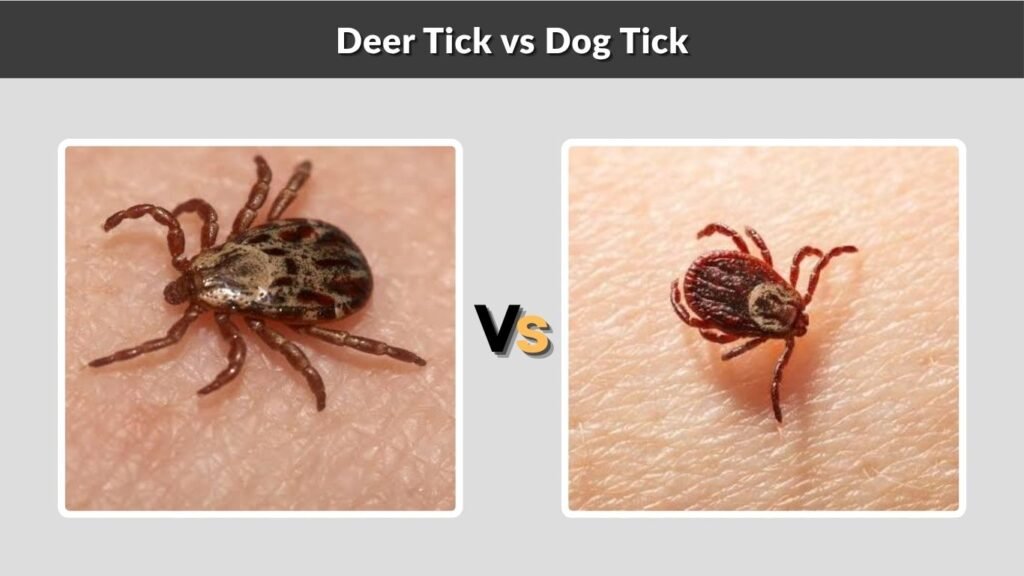
Deer ticks and dog ticks can look similar at first glance, but several differences make identification easier.
Appearance
Deer ticks are generally smaller and have dark legs. Adult female deer ticks commonly show a reddish-brown abdomen behind a dark shield.
American dog ticks tend to be larger and have distinctive pale or whitish markings on their backs.
Size
Dog ticks are noticeably larger than deer ticks in most adult stages.
This difference can become less obvious after either species becomes fully engorged, since both expand dramatically after feeding.
Disease Risk
Deer ticks are strongly associated with Lyme disease.
American dog ticks are not primary Lyme disease vectors but can transmit other pathogens, including those responsible for Rocky Mountain spotted fever and tularemia in some regions.
Deer Tick vs Wood Tick
“Wood tick” commonly refers to several species depending on location, but in much of North America it is often used for the American dog tick or Rocky Mountain wood tick.
Key Differences
Deer ticks typically have:
- Smaller bodies
- Dark legs
- Less decorative markings
- Reddish-brown females
Wood or dog ticks usually have larger bodies and more noticeable pale markings across the upper surface.
Because identification can be difficult with engorged or immature ticks, photographs or professional identification may sometimes be useful.
Deer Tick Life Cycle
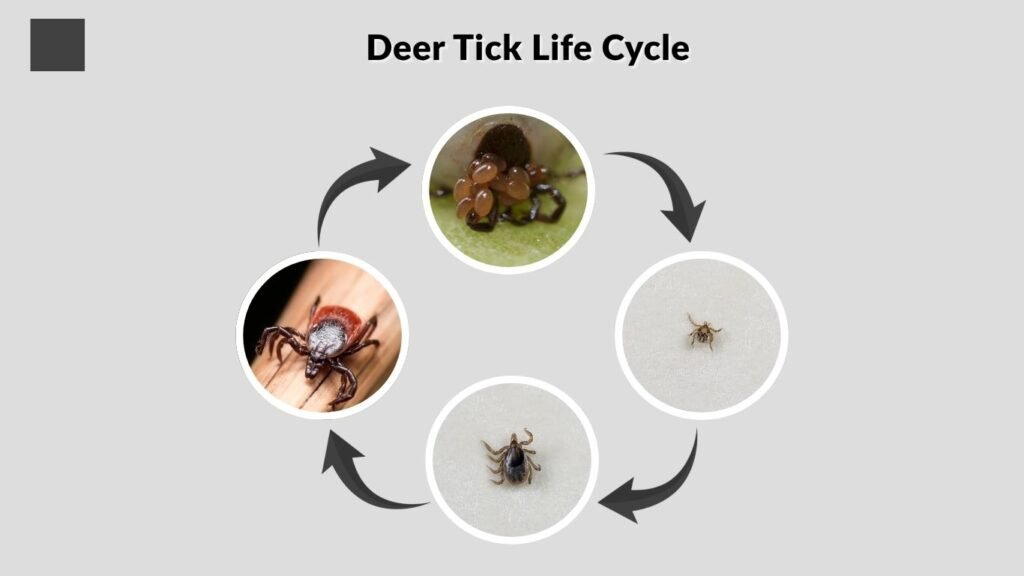
Deer ticks pass through four major stages: egg, larva, nymph, and adult. The entire cycle usually takes multiple seasons.
Egg and Larva
Female ticks lay large numbers of eggs, typically in protected ground-level environments.
Larvae hatch with six legs rather than eight. After feeding on a small host, they eventually molt into nymphs.
Nymph
Nymphs have eight legs and feed on small mammals, birds, humans, and other animals.
Because they are so small, people may not notice nymphs before or during feeding.
Adult
Adult deer ticks frequently feed on larger mammals, including deer. Humans and pets may also become hosts.
After successful feeding and mating, females eventually produce eggs and complete the life cycle.
How to Remove a Deer Tick
Removing an attached tick quickly and correctly is one of the most important steps you can take after discovering one.
Proper Tick Removal
Follow these steps:
- Use fine-tipped tweezers.
- Grasp the tick close to the skin.
- Pull upward with steady, even pressure.
- Avoid twisting or crushing the tick.
- Clean the bite area and your hands afterward.
- Monitor yourself for symptoms during the following weeks.
Avoid covering an attached tick with petroleum jelly, essential oils, nail polish, or other substances in an attempt to make it detach.
How to Prevent Deer Tick Bites
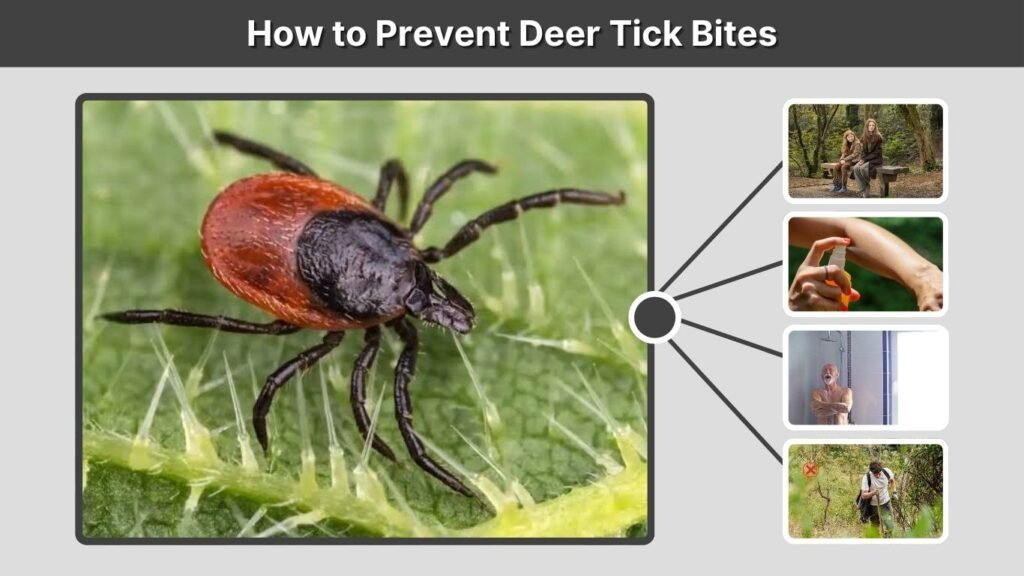
Reducing exposure is especially important in wooded and brushy environments.
Deer Tick Prevention Tips
- Wear long pants in wooded areas.
- Use an appropriate tick repellent.
- Walk near the center of trails.
- Avoid dense brush when possible.
- Check your body after outdoor activities.
- Examine children carefully.
- Inspect dogs after walks.
- Shower after returning indoors.
- Keep lawns and vegetation trimmed.
- Remove leaf litter near frequently used areas.
Check areas such as the scalp, behind the ears, waist, groin, armpits, and behind the knees.
FAQs
1. Is a deer tick the same as a blacklegged tick?
Yes. The term deer tick commonly refers to the blacklegged tick, Ixodes scapularis, particularly in the eastern United States.
2. Can every deer tick transmit Lyme disease?
No. Only infected ticks can transmit the bacteria responsible for Lyme disease, and not every deer tick carries them.
3. How small is a deer tick nymph?
A deer tick nymph is extremely small, often compared to a poppy seed. Its small size makes it easy to overlook during a body check.
4. What should I do if I find an engorged deer tick?
Remove it promptly with fine-tipped tweezers, clean the bite area, and monitor for symptoms. Contact a healthcare professional if you are concerned about how long it was attached or if symptoms develop.
5. Are deer ticks dangerous to dogs?
Deer ticks can bite dogs and can transmit certain tick-borne infections. Regular tick checks and veterinarian-recommended preventive treatments can help protect pets.
