
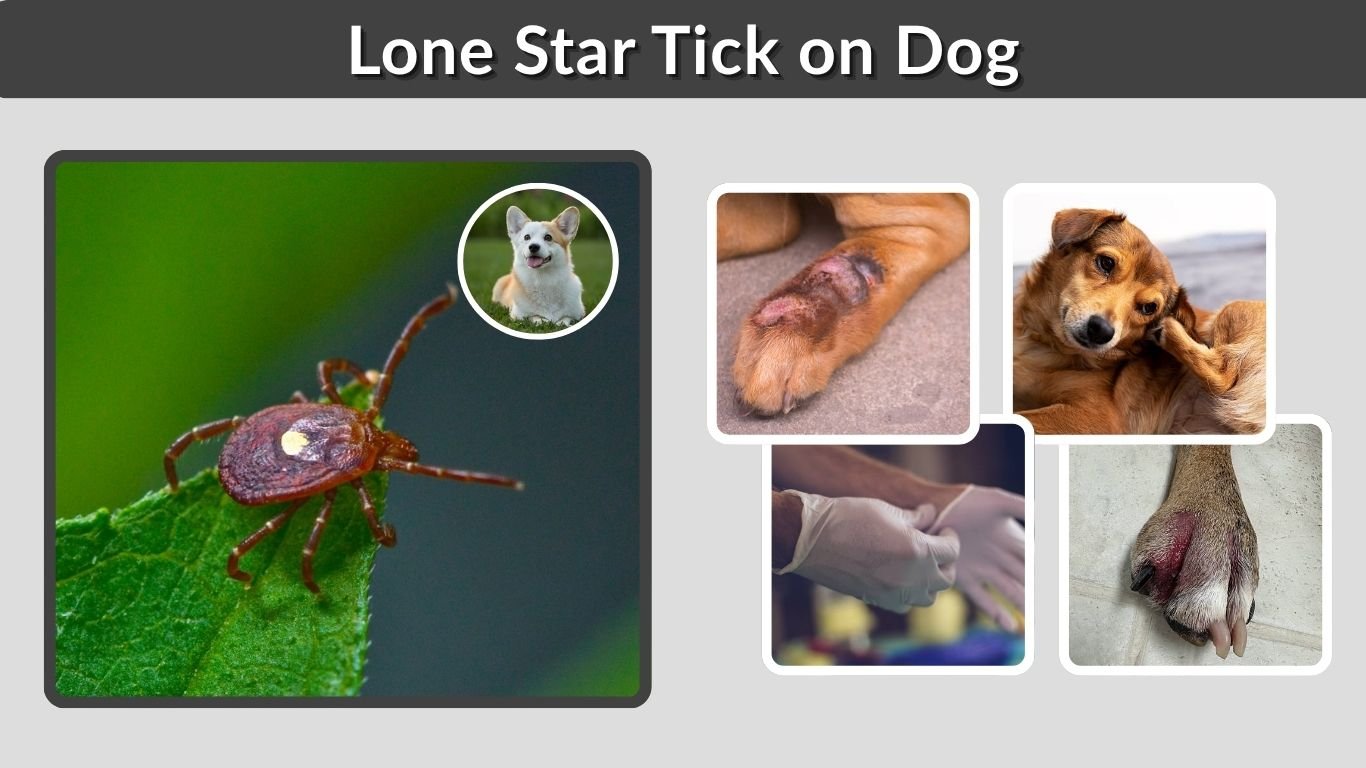
Finding a lone star tick on your dog can be concerning because these ticks can cause skin irritation and transmit certain infections. The lone star tick (Amblyomma americanum) commonly feeds on dogs, wildlife, livestock, and people. Dogs exposed to wooded or brushy areas may encounter adults, nymphs, or tiny larvae. Although many tick bites cause no serious illness, owners should remove attached ticks promptly and monitor their dogs afterward. Knowing the symptoms, disease risks, treatment options, and prevention methods can help keep your dog protected.
What Does a Lone Star Tick Look Like on a Dog?
Lone star ticks may be difficult to spot beneath thick dog fur, particularly when they are small or have only recently attached. Adults become easier to identify as they feed. The adult female has the characteristic marking responsible for the species’ common name, while males have a different pattern of pale markings across the back.
Identifying a Lone Star Tick
Look for these characteristics:
- Adult female: Brown body with a conspicuous silvery or white spot on the back.
- Adult male: Brown with pale markings rather than one central white star.
- Nymph: Much smaller and without the obvious white dot of an adult female.
- Larva: Extremely tiny and easily overlooked in a dog’s coat.
- Engorged tick: Becomes swollen and substantially larger after taking a blood meal.
Check areas with less hair carefully, because ticks commonly choose locations where they can reach the skin more easily.
Lone Star Tick Bite Symptoms in Dogs
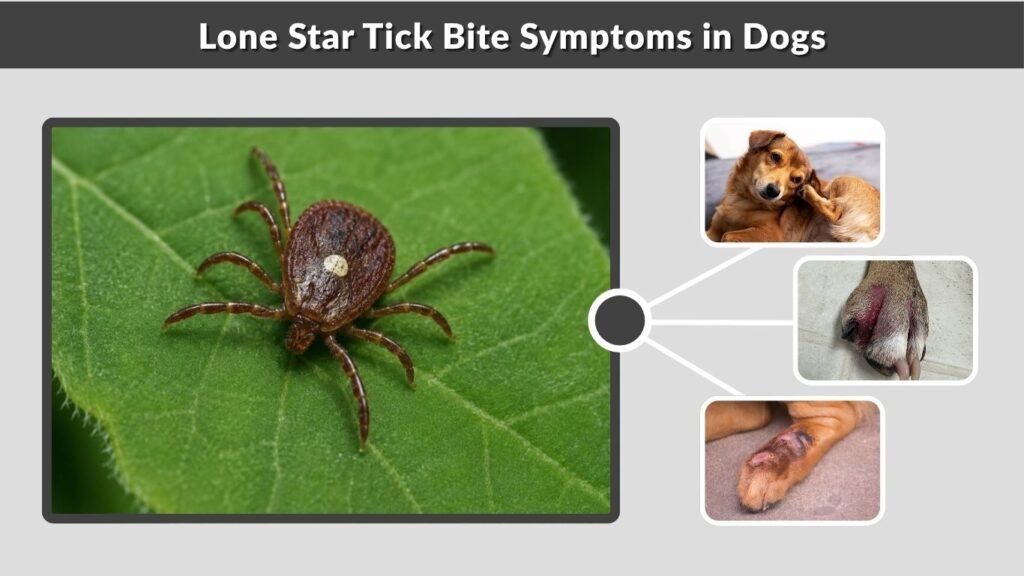
A tick attached to a dog can cause irritation even when no pathogen is transmitted. The attachment site may become itchy, inflamed, or damaged, and secondary bacterial infection is possible. More concerning symptoms can develop when a tick transmits an infectious organism, so behavioral or physical changes following a known tick exposure should be taken seriously.
Symptoms to Watch For
After finding a lone star tick on your dog, watch for:
- Redness or swelling around the bite
- Itching or scratching
- A small bump or skin lesion
- Fever
- Reduced appetite
- Lethargy or unusual tiredness
- Enlarged lymph nodes
- Lameness or stiffness
- Bruising or unusual bleeding
- Neurological abnormalities in severe cases
These symptoms do not automatically mean your dog has a tick-borne disease. However, ehrlichiosis can produce fever and other systemic signs, including bleeding abnormalities in some affected dogs.
What Does the Bite Look Like?
After removing the tick, you may notice a small red bump, mild swelling, or irritated area where its mouthparts entered the skin. Some attachment sites remain irritated temporarily.
Ticks have mouthparts designed to remain firmly attached while feeding, and lone star ticks have relatively long mouthparts. This can make them harder to remove and may contribute to local tissue irritation.
Persistent swelling, discharge, increasing redness, pain, or other signs of infection warrant veterinary attention.
Diseases Lone Star Ticks Can Cause in Dogs
Lone star ticks are more than irritating parasites because they can carry organisms capable of causing disease. One of the most important concerns for dogs is ehrlichiosis caused by Ehrlichia ewingii. Risk varies geographically, and not every lone star tick carries a pathogen, so finding a tick does not necessarily mean your dog will become sick.
Ehrlichiosis in Dogs
Ehrlichia ewingii causes granulocytic ehrlichiosis in dogs and is transmitted by the lone star tick. The geographic distribution of this infection has historically been associated particularly with the southeastern and south-central United States, although the lone star tick’s range has been expanding.
Dogs infected with Ehrlichia organisms can show fever, lethargy, swollen lymph nodes, bleeding abnormalities, or other systemic symptoms. Some infected dogs may show few or no noticeable signs, which is one reason veterinarians may recommend testing based on exposure history and regional risk.
Diagnosis may involve blood-cell evaluation, antibody testing, and PCR testing. Treatment decisions should be made by a veterinarian.
Other Health Risks
Lone star ticks are also recognized vectors of Francisella tularensis, the bacterium responsible for tularemia, and their bites can directly produce inflammation and skin irritation. Lone star ticks have additionally been associated with tick paralysis, although paralysis in U.S. dogs is more commonly linked to certain Dermacentor ticks.
Because several tick species may be present in the same region, accurately identifying the tick can help veterinarians evaluate potential disease risks.
What to Do If You Find a Lone Star Tick on Your Dog
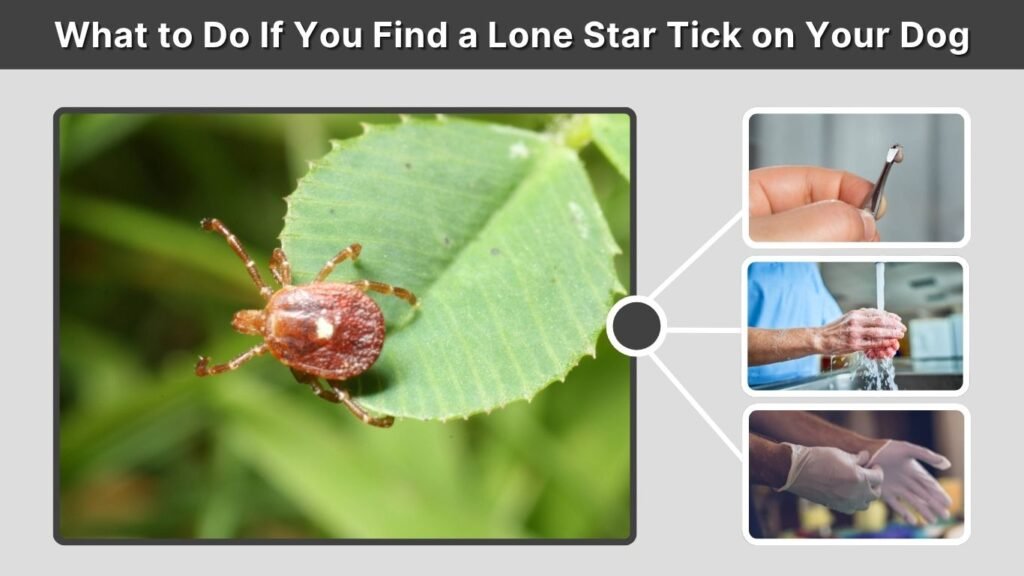
Finding an attached tick does not require panic, but it should be removed promptly and correctly. Avoid squeezing or crushing the tick while it is attached. Improper removal can break its mouthparts or expose you to material from the tick, so wearing gloves and using suitable forceps or tweezers is recommended.
How to Remove the Tick Safely
- Put on disposable gloves.
- Use fine-tipped tweezers or forceps.
- Grasp the tick as close to your dog’s skin as possible.
- Pull slowly and steadily away from the skin.
- Do not twist, jerk, or crush the tick.
- Clean the attachment area after removal.
- Wash your hands after handling the tick.
- Monitor your dog for illness during the following days and weeks.
CAPC advises using slow, steady pressure during tick removal and avoiding twisting or jerking because the tick’s mouthparts may break off in the skin.
Lone Star Tick Treatment for Dogs
Simply finding one tick does not mean your dog automatically needs antibiotics. Treatment depends on whether illness develops and what disease is suspected or diagnosed.
If ehrlichiosis is diagnosed, veterinarians commonly use doxycycline. Dogs showing illness after tick exposure should be examined rather than treated at home with leftover antibiotics or human medication.
Veterinary evaluation may be particularly important if your dog develops fever, weakness, appetite loss, bleeding, significant lethargy, or neurological signs.
Lone Star Tick vs. American Dog Tick
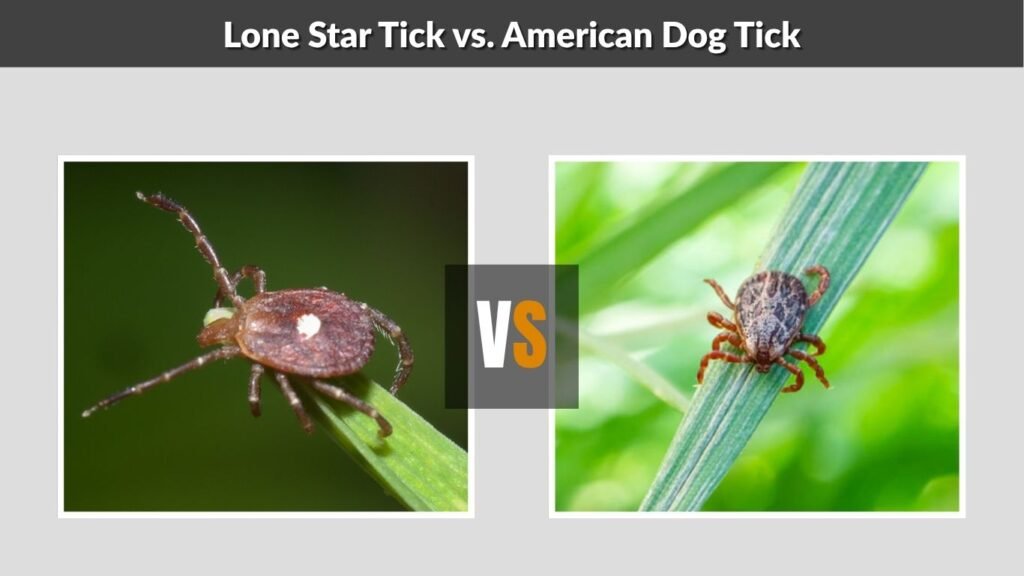
Lone star ticks and American dog ticks can occur in overlapping areas and both readily feed on dogs. However, they are different species with different markings and disease associations. Learning a few visual differences can make identification easier, although small nymphs and engorged ticks may still be difficult for owners to distinguish accurately.
Key Differences
- Lone star tick: Adult females have one prominent silvery-white spot on the back.
- American dog tick: Adults have whitish or gray patterned markings on the upper body rather than a single star.
- Scientific name: Lone star tick is Amblyomma americanum.
- American dog tick: Its scientific name is Dermacentor variabilis.
- Ehrlichiosis: The lone star tick is an important vector of E. ewingii.
- Rocky Mountain spotted fever: American dog ticks are important vectors of Rickettsia rickettsii in the United States.
Correct identification matters because different tick species are associated with different pathogens.
Can Dogs Get Meat Allergy From Lone Star Ticks?
Lone star tick bites are strongly associated with alpha-gal syndrome, or mammalian meat allergy, in humans. This has understandably led dog owners to wonder whether a lone star tick can make their dogs allergic to beef, pork, or other mammalian meats.
Does Alpha-Gal Syndrome Affect Dogs?
Current evidence does not establish the human form of alpha-gal syndrome as a recognized clinical meat-allergy disease in dogs. Research has shown that tick exposure can stimulate anti-alpha-gal antibodies in dogs, but detecting antibodies is not the same as proving that dogs develop the delayed meat allergy seen in humans.
Therefore, finding a lone star tick on your dog is not a reason to automatically remove beef or other mammalian meat from its diet. If your dog develops itching, gastrointestinal problems, swelling, or suspected food reactions, discuss the symptoms with a veterinarian rather than assuming alpha-gal syndrome is responsible.
How to Prevent Lone Star Ticks on Dogs
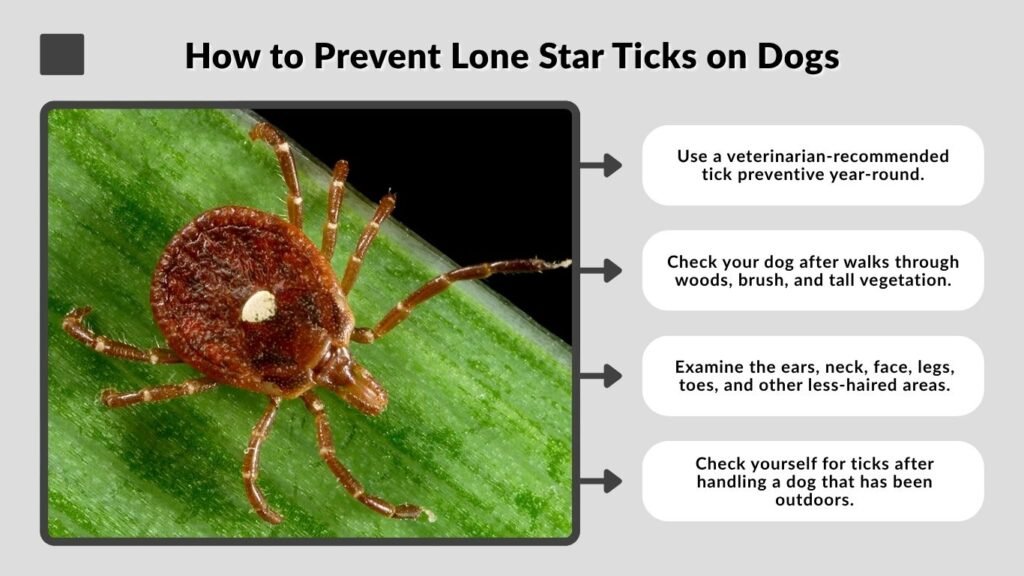
Regular prevention is the most effective way to reduce tick bites and tick-borne disease risk. Lone star ticks are active outdoor parasites and can infest pets that pass through vegetation where ticks are waiting for a host. CAPC recommends consistent tick control, while current parasite forecasts emphasize year-round protection as tick ranges and periods of activity continue to change.
Prevention Tips for Dog Owners
- Use a veterinarian-recommended tick preventive year-round.
- Check your dog after walks through woods, brush, and tall vegetation.
- Examine the ears, neck, face, legs, toes, and other less-haired areas.
- Remove attached ticks promptly.
- Keep grass and vegetation around frequently used yard areas maintained.
- Check yourself for ticks after handling a dog that has been outdoors.
- Ask your veterinarian which oral, topical, or collar-based preventive best suits your dog.
Tick-control products must be used according to their labels. Products approved for dogs should not automatically be used on other species, particularly cats, because safety can differ between animals.
FAQs
A lone star tick on a dog does not automatically mean disease has been transmitted. The main priorities are safe removal, continued tick prevention, and monitoring the dog for unusual symptoms. Understanding common concerns can also help owners distinguish established canine risks from conditions primarily recognized in humans.
1. Is a Lone Star Tick Dangerous to Dogs?
It can be. Lone star ticks can transmit Ehrlichia ewingii, which causes ehrlichiosis in dogs, and their bites may also cause irritation or other complications.
2. What Happens If a Lone Star Tick Bites My Dog?
Some dogs develop only a small irritated bite site and remain healthy. Others may develop tick-borne illness if an infected tick transmits a pathogen. Watch for fever, lethargy, reduced appetite, bleeding abnormalities, or other unusual symptoms.
3. Should I Take My Dog to the Vet After Finding a Tick?
Not every tick requires an emergency visit. However, contact your veterinarian if the tick cannot be removed properly, the attachment site looks infected, your dog has many ticks, or illness develops following exposure.
4. Can a Lone Star Tick Give a Dog Lyme Disease?
Lone star ticks are not recognized as competent vectors of the bacteria that cause Lyme disease. In North America, Lyme disease is primarily associated with Ixodes ticks, including the blacklegged tick.
5. Can Lone Star Ticks Make Dogs Allergic to Red Meat?
A human-like alpha-gal meat allergy has not been established as a recognized clinical condition in dogs. Research shows dogs can develop anti-alpha-gal antibodies after tick exposure, but that does not demonstrate the same meat-allergy syndrome seen in people.
