
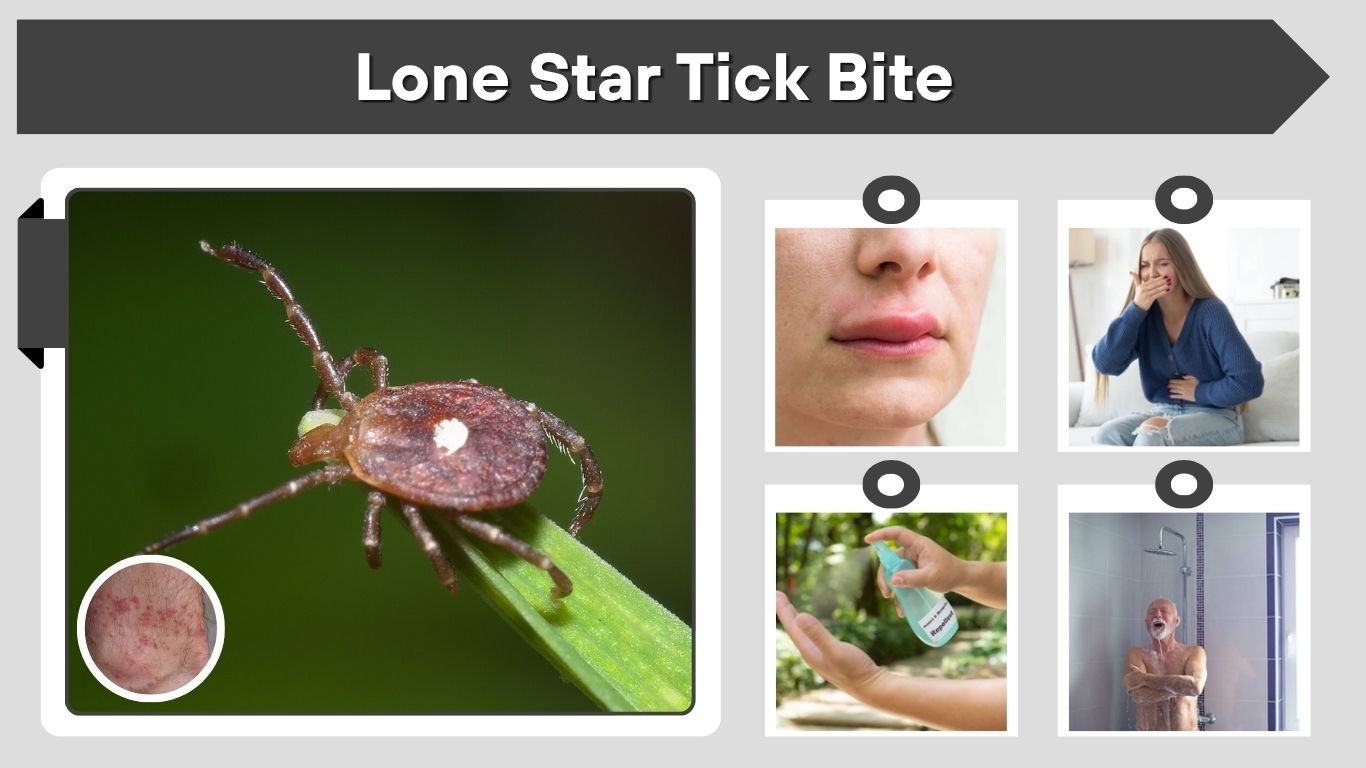
A lone star tick bite can cause anything from mild skin irritation to a tick-borne illness or, in some people, alpha-gal syndrome. The lone star tick (Amblyomma americanum) is an aggressive human-biting tick found widely across the eastern, southern, and midwestern United States. Recognizing the bite, removing the tick correctly, and watching for symptoms can help prevent complications. This guide explains what a lone star tick bite looks like, common symptoms, rashes, treatment, meat allergy concerns, and when medical care may be needed.
What Does a Lone Star Tick Bite Look Like?
A lone star tick bite may initially look similar to bites from other tick species. The tick’s saliva can irritate the skin, producing a small area of redness or discomfort that does not necessarily mean an infection is present. Adult females are easier to identify because they have a distinctive white dot in the center of their brown backs.
Common Appearance of the Bite
A recent lone star tick bite may cause:
- A small red bump at the attachment site
- Mild redness surrounding the bite
- Itching or irritation
- Slight swelling
- Local tenderness or discomfort
- A small scab after the tick is removed
The reaction varies from person to person. Minor localized redness can simply result from irritation caused by the tick’s saliva rather than a transmitted infection.
Lone Star Tick Larvae and Nymph Bites
Larvae and nymphs are extremely small and can be much harder to notice than adults. Lone star ticks can bite people during multiple life stages, including the larval, nymphal, and adult stages. Nymphs and adult females are particularly important human biters.
Larvae may occur in large numbers, so a person walking through vegetation can sometimes encounter many tiny ticks at once. Their bites may be mistaken for other small insect bites because the ticks themselves can be difficult to see.
Lone Star Tick Bite Symptoms
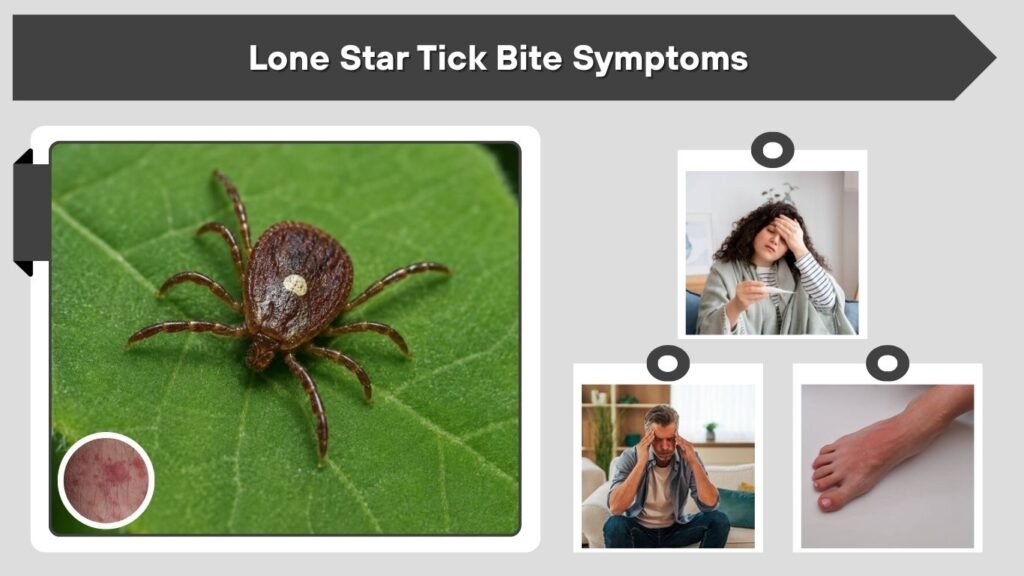
Many lone star tick bites cause only temporary irritation, but symptoms developing after a bite should be monitored carefully. Lone star ticks can transmit pathogens responsible for ehrlichiosis, tularemia, Heartland virus, and Bourbon virus. They are also associated with STARI and alpha-gal syndrome, although a bite does not mean that any of these conditions will occur.
Symptoms to Watch For
Possible symptoms following a bite include:
- Redness or itching at the bite site
- Fever
- Chills
- Headache
- Fatigue
- Muscle aches
- Joint pain
- Nausea
- An expanding rash
For example, ehrlichiosis commonly produces symptoms such as fever, chills, headache, muscle aches, nausea, and sometimes rash. Symptoms typically begin within one to two weeks after the bite of an infected tick.
How Long After a Bite Do Symptoms Appear?
There is no single timeline because different reactions have different causes. Simple irritation can appear soon after the bite, while symptoms of a tick-borne infection may develop days later.
Ehrlichiosis symptoms typically appear within about one to two weeks. Alpha-gal syndrome is different: CDC notes that it can take weeks to months after a tick bite before a person experiences symptoms related to the allergy.
Rash From a Lone Star Tick Bite
A small area of redness immediately around a tick bite is relatively common and does not automatically indicate disease. A more noticeable expanding rash, however, deserves closer attention. Lone star tick bites are specifically associated with Southern Tick-Associated Rash Illness, commonly called STARI, which can produce a rash that resembles the rash seen with Lyme disease.
Signs of a STARI Rash
A STARI rash may:
- Develop around the original bite
- Usually appear within about seven days
- Gradually expand outward
- Reach approximately 3–12 inches across
- Sometimes develop a target or bull’s-eye appearance
- Occur with fatigue, headache, fever, or muscle and joint pain
CDC distinguishes this expanding rash from the much smaller area of redness that commonly develops directly around an ordinary tick bite.
Is It Lyme Disease?
Lone star ticks have not been shown to transmit the bacterium responsible for Lyme disease. However, STARI can cause an expanding rash that looks similar to Lyme disease, making visual identification alone potentially confusing.
If an expanding rash or illness develops after a tick bite, medical evaluation is advisable rather than trying to determine the cause solely from the rash’s appearance.
Lone Star Tick Bite and Alpha-Gal Syndrome
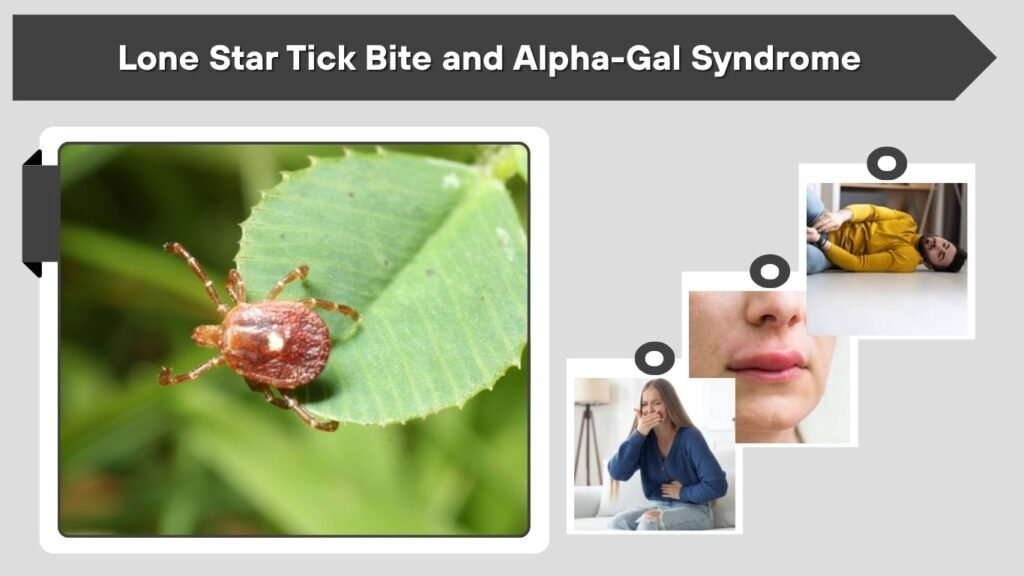
One reason lone star tick bites receive considerable attention is their connection with alpha-gal syndrome, sometimes called red meat allergy. Alpha-gal is a molecule naturally present in most mammals. After certain tick bites, a person’s immune system may develop an allergic response to alpha-gal, leading to reactions after exposure to mammalian meat or other products containing the molecule.
Does Every Lone Star Tick Bite Cause Alpha-Gal?
No. Most importantly, being bitten by a lone star tick does not mean a person will automatically develop alpha-gal syndrome. CDC states that not everyone bitten by a lone star tick develops the condition, and researchers do not yet fully understand why some people become allergic while others do not.
In the United States, the lone star tick is the species most often associated with alpha-gal syndrome. Symptoms may first appear weeks or months after the tick bite.
Alpha-Gal Allergy Symptoms
Reactions usually occur about 2–6 hours after eating or being exposed to a product containing alpha-gal. Possible symptoms include:
- Hives or an itchy rash
- Severe stomach pain
- Nausea or vomiting
- Diarrhea
- Heartburn or indigestion
- Swelling of the lips, tongue, throat, or eyelids
- Coughing or breathing difficulty
- Dizziness or faintness
- A drop in blood pressure
- Anaphylaxis
Severe breathing difficulty, throat swelling, fainting, or other signs of anaphylaxis require immediate emergency care.
What to Do If Bit by a Lone Star Tick
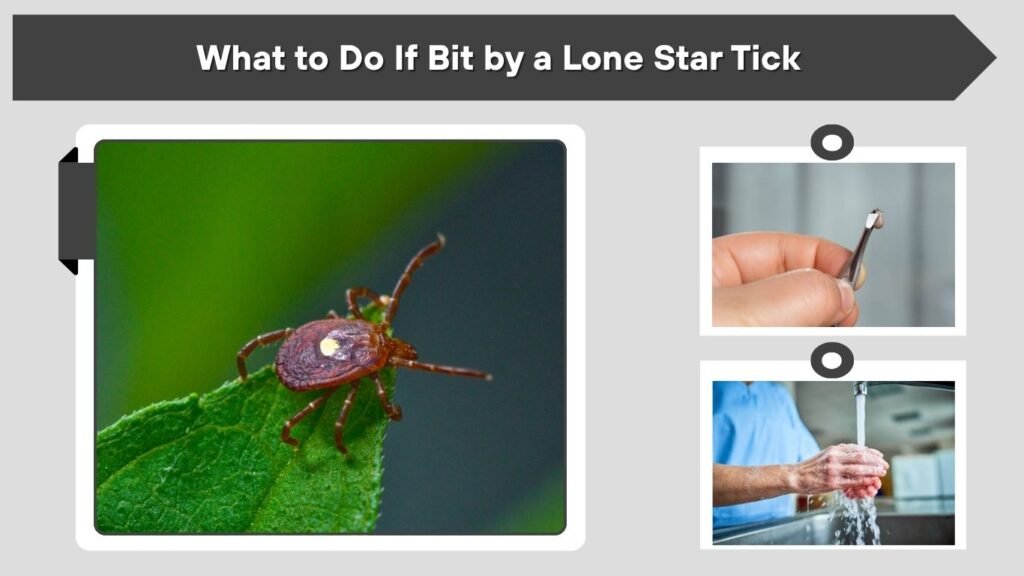
Finding a lone star tick attached to your skin can be alarming, but prompt and careful removal is the first priority. Do not crush, burn, or cover an attached tick with substances in an attempt to make it detach. After removal, monitor yourself for symptoms and remember when and where the exposure occurred in case medical evaluation becomes necessary.
Steps After Finding a Tick Bite
- Remove the attached tick promptly with fine-tipped tweezers.
- Grasp it as close to the skin’s surface as possible.
- Pull upward with steady, even pressure.
- Clean the bite area and your hands afterward.
- Note the approximate date of the bite.
- Watch for fever, rash, headache, fatigue, or other illness.
- Contact a healthcare professional if concerning symptoms develop.
People developing symptoms compatible with ehrlichiosis, such as fever, rash, or headache, should seek medical evaluation promptly.
Lone Star Tick Bite Treatment
A mild local bite reaction generally requires basic skin care and observation rather than specific treatment for the tick itself.
Antibiotics should not be taken automatically after every lone star tick bite. CDC specifically states that antibiotic prophylaxis is not recommended to prevent ehrlichiosis after a tick bite. Doxycycline is, however, the recommended first-line treatment when ehrlichiosis is suspected or diagnosed.
Because treatment depends on the illness involved, people with significant symptoms should receive individualized medical advice rather than self-treating with antibiotics.
When Should You Worry About a Lone Star Tick Bite?
Most local bite reactions are minor, but symptoms developing during the following days or weeks deserve attention. The presence of an expanding rash, fever, severe headache, unusual fatigue, muscle aches, or other systemic symptoms can indicate something beyond simple skin irritation. Allergic reactions occurring after eating mammalian meat should also be discussed with a healthcare professional.
Seek Medical Care If You Notice
Seek medical advice if you develop:
- An expanding or unusual rash
- Fever or chills
- Severe or persistent headache
- Significant muscle or joint pain
- Persistent fatigue
- Unexplained gastrointestinal symptoms
- Repeated reactions after eating beef, pork, lamb, or other mammalian products
- Symptoms suggesting a serious tick-borne illness
Seek emergency care immediately for trouble breathing, significant throat or tongue swelling, fainting, or other signs of a severe allergic reaction.
How to Prevent Lone Star Tick Bites
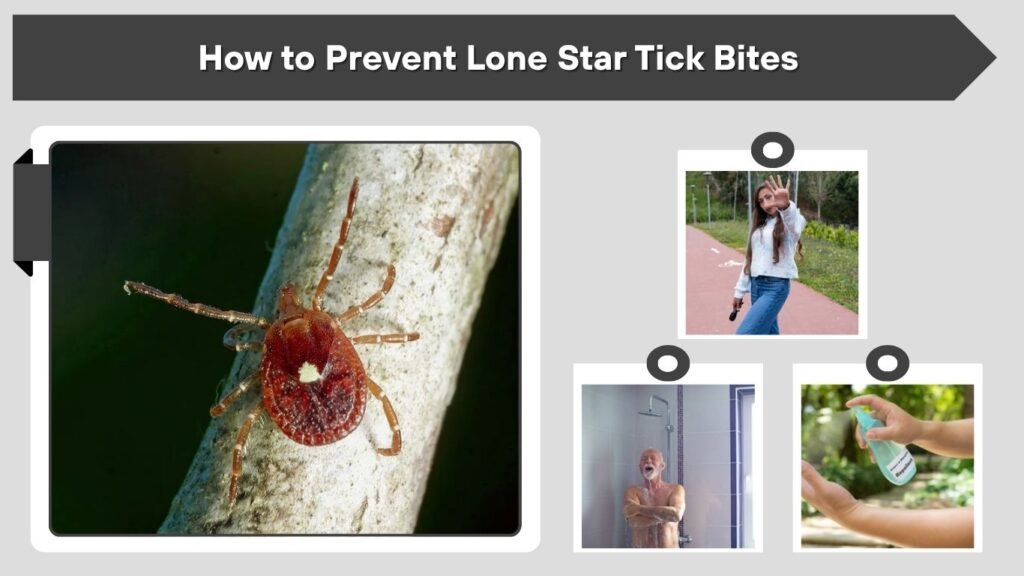
Preventing future bites is especially important for people who spend substantial time hiking, hunting, gardening, camping, or working around wooded and brushy environments. Lone star ticks are widespread across much of the Northeast, South, and Midwest, so prevention should become routine when entering areas where ticks are likely to occur.
Lone Star Tick Prevention Tips
- Avoid dense brush, tall grass, and heavy leaf litter when possible.
- Walk near the center of maintained trails.
- Use an EPA-registered insect repellent.
- Wear long pants and long-sleeved clothing.
- Treat clothing and gear with products containing 0.5% permethrin according to label instructions.
- Check your body and clothing after outdoor activities.
- Check pets for ticks after they have been outside.
- Shower after returning indoors.
- Remove attached ticks as soon as they are found.
CDC recommends EPA-registered repellents containing ingredients such as DEET, picaridin, IR3535, OLE, PMD, or 2-undecanone and recommends 0.5% permethrin for treating clothing and gear.
FAQs
Questions about lone star tick bites commonly focus on how dangerous they are, whether every bite causes meat allergy, and what symptoms may occur afterward. The effects vary considerably between people, so the most important approach is proper tick removal followed by careful monitoring for new symptoms.
1. Are Lone Star Tick Bites Dangerous?
They can be. Lone star ticks can transmit pathogens that cause ehrlichiosis, tularemia, Heartland virus, and Bourbon virus and are also associated with STARI and alpha-gal syndrome. However, not every bite causes disease.
2. Do Lone Star Tick Bites Always Cause Meat Allergy?
No. Not everyone bitten by a lone star tick develops alpha-gal syndrome. Why certain people develop the allergy while others do not remains incompletely understood.
3. Do Lone Star Tick Bites Itch?
They can. Lone star tick saliva may irritate the skin, causing localized redness, discomfort, or itching around the bite site. Such irritation alone does not necessarily indicate infection.
4. How Long After a Lone Star Tick Bite Can Alpha-Gal Start?
Alpha-gal syndrome symptoms may first appear weeks to months after the tick bite. Once AGS develops, allergic reactions typically occur about 2–6 hours after exposure to foods or products containing alpha-gal.
5. Can You Die From a Lone Star Tick Bite?
Death directly from the bite itself is uncommon, but some illnesses associated with tick bites and severe allergic reactions can become serious or life-threatening. Anyone experiencing severe illness or signs of anaphylaxis should seek immediate medical care.
