
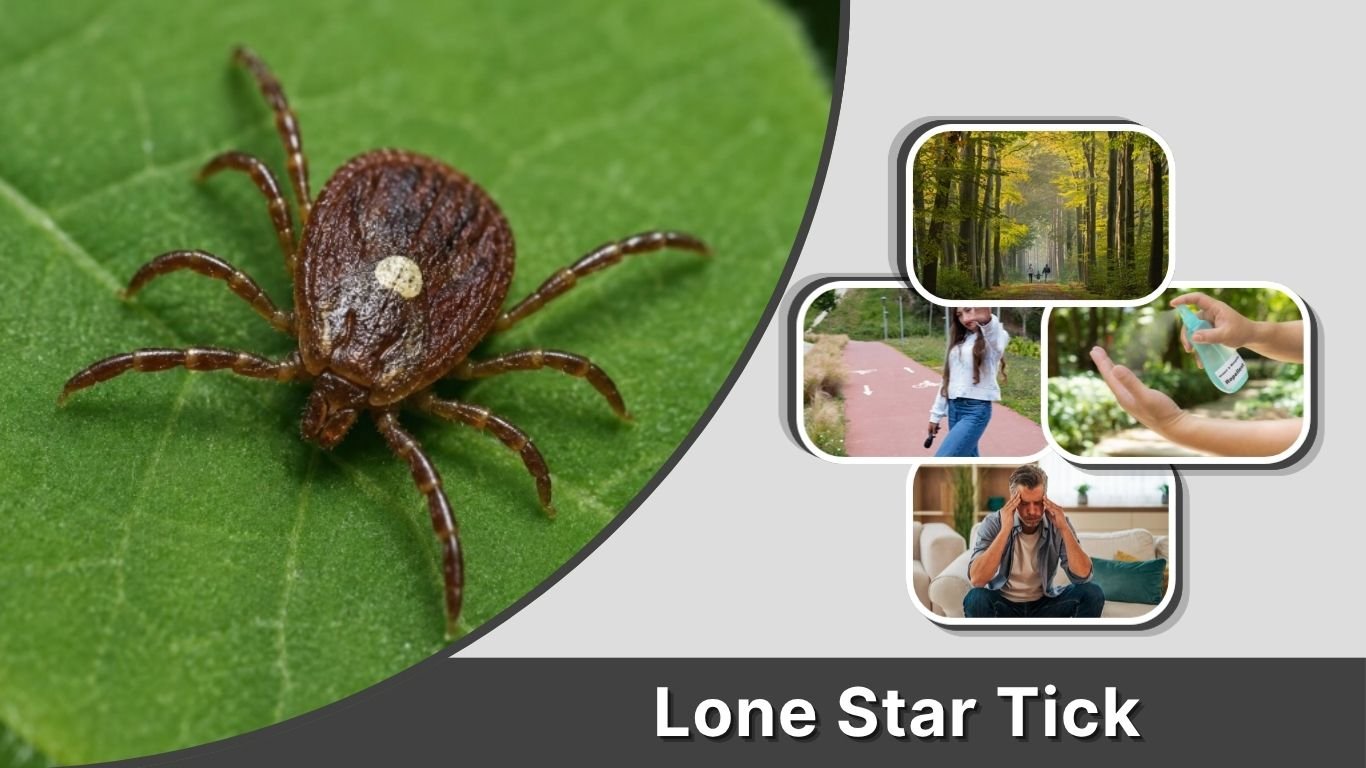
The lone star tick (Amblyomma americanum) is one of the most aggressive human-biting ticks in the United States. Easily recognized in adult females by a single white spot on the back, it occurs widely across the South, Midwest, and Northeast. Its bite may cause local irritation and can transmit several infections. It is also strongly associated with alpha-gal syndrome, a potentially serious allergy to mammalian meat and products. Understanding identification, habitat, bite symptoms, safe removal, and prevention can reduce your risk during outdoor activity.
Lone Star Tick Identification
Recognizing a lone star tick can help distinguish it from deer ticks, dog ticks, and other species found in the same regions. Appearance changes considerably between larvae, nymphs, males, females, and engorged individuals. The most famous identification feature occurs only on the adult female, so relying entirely on the white “star” can make immature ticks difficult to recognize.
What Does a Lone Star Tick Look Like?
- Adult female: Usually brown with a distinctive white or silvery spot in the center of the back.
- Adult male: Brown with pale or whitish markings around portions of the body rather than one central white dot.
- Nymph: Very small and lacks the obvious white spot seen on adult females.
- Larva: Extremely tiny and can be difficult to notice on skin.
- Engorged female: Becomes much larger after feeding and may look swollen, rounded, and lighter in appearance.
The CDC identifies the single white dot on the adult female as the species’ most recognizable characteristic. Nymphs and adult females are also among the life stages most frequently reported biting people.
Lone Star Tick Bite and Symptoms
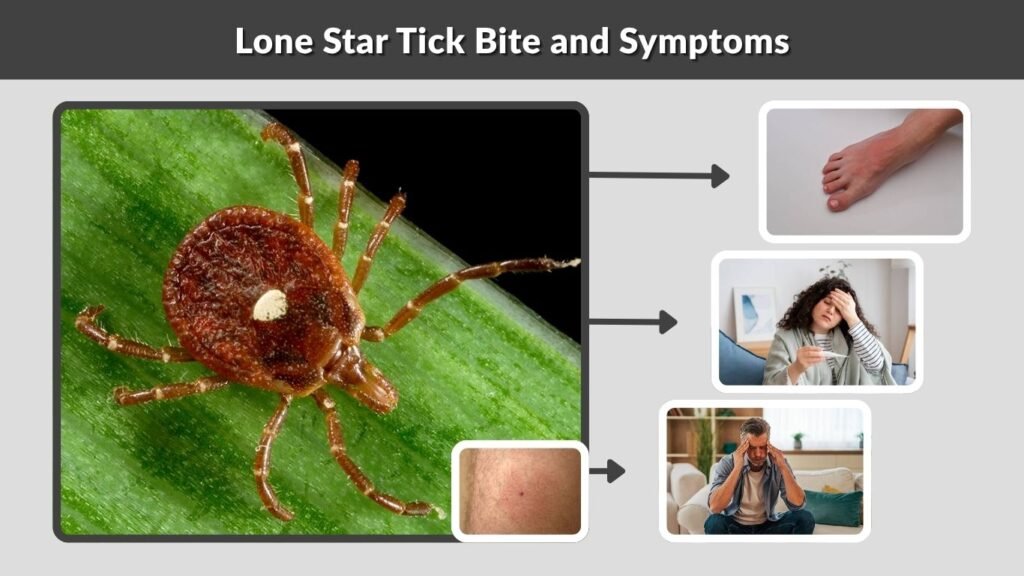
A lone star tick bite does not automatically mean that a person will become sick. Its saliva itself may cause redness, irritation, or discomfort around the bite site. However, the tick can also transmit disease-causing organisms, making it important to monitor your health after an attached tick is removed. Fever or rash developing afterward deserves medical attention.
Common Signs After a Bite
Possible changes to watch for include:
- Redness around the attachment site
- Local itching or irritation
- Mild swelling or discomfort
- Expanding or circular rash
- Fever
- Headache
- Muscle or joint aches
- Unusual fatigue
A circular rash following a lone star tick bite may be associated with Southern Tick-Associated Rash Illness, or STARI. It can resemble the rash associated with Lyme disease, although CDC states that STARI is not caused by the bacteria responsible for Lyme disease.
How to Remove a Lone Star Tick
- Grasp the tick close to the skin with clean, fine-tipped tweezers.
- Pull upward using steady, even pressure.
- Avoid twisting or jerking the tick.
- Clean your hands and the bite area afterward.
- Check the rest of your body for additional ticks.
Do not try to detach a tick with petroleum jelly, heat, nail polish, or similar substances. CDC recommends removing attached ticks as soon as possible.
Diseases Associated With Lone Star Ticks
Lone star ticks are medically important because they can spread multiple pathogens. CDC lists ehrlichiosis, tularemia, Heartland virus, and Bourbon virus among conditions associated with this species. Lone star tick bites are also connected with STARI and alpha-gal syndrome. The presence of a tick, however, does not mean that transmission has occurred.
Important Lone Star Tick Diseases and Conditions
- Ehrlichiosis: Lone star ticks transmit Ehrlichia chaffeensis and Ehrlichia ewingii, bacteria that can cause human ehrlichiosis.
- Tularemia: Lone star ticks are among the tick species capable of transmitting the bacteria responsible for tularemia.
- Heartland virus: This virus spreads to humans primarily through infected lone star tick bites.
- Bourbon virus: CDC considers infected ticks, likely lone star ticks, the probable route of Bourbon virus transmission.
- STARI: A circular rash and flu-like symptoms can sometimes develop following a lone star tick bite.
- Alpha-gal syndrome: Certain tick bites can trigger an allergy to alpha-gal, a molecule found in mammalian meat and various mammal-derived products.
Does the Lone Star Tick Carry Lyme Disease?
Lone star ticks are not considered the usual vector of Lyme disease in the United States. Lyme disease bacteria are primarily transmitted to humans by infected blacklegged ticks. A lone star tick bite can produce a circular STARI rash that may look similar to a Lyme disease rash, which sometimes causes confusion.
Lone Star Tick and Alpha-Gal Meat Allergy
One of the most unusual health concerns connected with lone star ticks is alpha-gal syndrome, or AGS. In the United States, bites from lone star ticks are strongly associated with development of this potentially serious allergy. People with AGS may react after consuming beef, pork, lamb, dairy products, gelatin, or other products containing mammalian-derived alpha-gal.
Alpha-Gal Allergy Symptoms
Unlike many food allergies that appear rapidly, AGS symptoms commonly begin about 2–6 hours after exposure to red meat or dairy products. Reactions vary considerably between individuals.
Symptoms may include:
- Hives or an itchy rash
- Nausea or vomiting
- Severe stomach pain
- Diarrhea
- Heartburn or indigestion
- Swelling of the lips, tongue, throat, or eyelids
- Shortness of breath
- Dizziness or fainting
- Low blood pressure
- Anaphylaxis
Severe breathing difficulty, significant swelling, fainting, or other signs of anaphylaxis require immediate emergency medical care.
Where Do Lone Star Ticks Live?
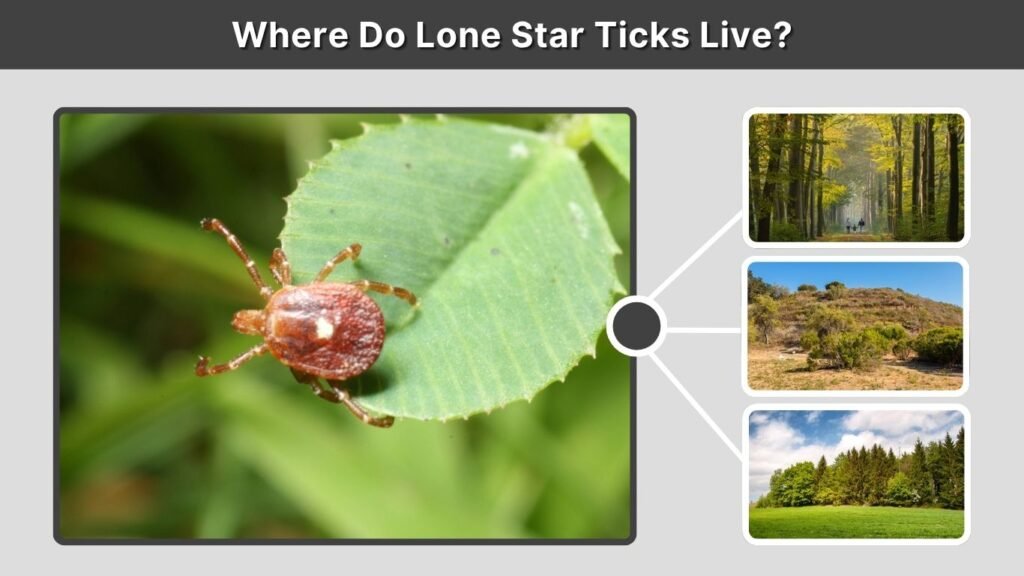
Lone star ticks occupy a large portion of the eastern United States, and their known distribution has expanded over time. Their presence is particularly important for people who spend time hiking, hunting, gardening, camping, working outdoors, or walking pets through natural vegetation. Local abundance can vary substantially even within areas shown as part of their general range.
Lone Star Tick Range and Habitat
CDC surveillance shows lone star ticks distributed widely through the Northeast, South, and Midwest. Established populations occur across much of the eastern and south-central United States, although finding ticks outside a mapped established county is still possible.
They commonly occur around wooded environments, brushy areas, forest edges, tall vegetation, and places frequently visited by wildlife. White-tailed deer are particularly important hosts and have played a significant role in the tick’s distribution.
Because lone star ticks actively seek hosts and readily bite humans, people can encounter them even without traveling deep into forests.
Lone Star Tick Life Cycle
Like other hard ticks, lone star ticks develop through several distinct life stages and require blood meals as they mature. Their small immature stages can easily escape notice, making careful tick checks important after outdoor exposure. Different wildlife hosts contribute to their survival, while humans and pets can become accidental hosts when they enter tick habitat.
Larvae, Nymphs, and Adults
The life cycle begins when eggs hatch into larvae. After feeding, larvae eventually develop into nymphs. Nymphs take another blood meal before becoming adults. Adult females feed before producing eggs and completing the cycle.
Humans may encounter several stages, but CDC notes that nymphs and adult females are particularly frequent human biters. White-tailed deer serve as an important host for lone star tick populations and help support their presence across large areas of the eastern United States.
How to Prevent Lone Star Tick Bites
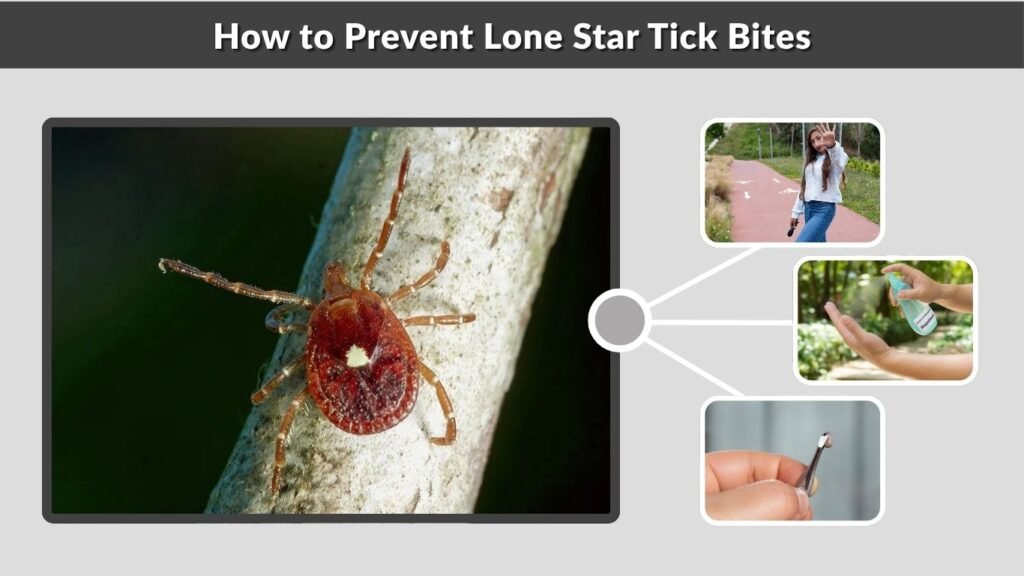
Prevention is especially important because there are several different illnesses and allergic conditions associated with lone star tick exposure. Reducing contact with ticks before they attach is generally easier than dealing with potential health effects afterward. Protective clothing, effective repellents, routine tick checks, and prompt removal all contribute to lowering risk.
Lone Star Tick Prevention Tips
- Avoid walking directly through dense brush, tall grass, and heavy leaf litter when possible.
- Use an EPA-registered repellent labeled for protection against ticks.
- Repellents containing ingredients such as DEET, picaridin, IR3535, OLE/PMD, or 2-undecanone may be options when used according to label instructions.
- Wear long pants and long-sleeved clothing in tick habitat.
- Consider permethrin-treated clothing and outdoor gear; permethrin products intended for clothing should not be applied directly to skin.
- Check your body carefully after outdoor activities.
- Examine clothing, gear, children, and pets for ticks.
FAQs
Questions about lone star ticks often focus on identification, Lyme disease, alpha-gal syndrome, and what to do after discovering an attached tick. Because individual bites vary, identifying the tick does not by itself determine whether illness will develop. Monitoring for symptoms and contacting a healthcare professional when concerning symptoms appear is important after any potentially significant tick exposure.
1. Are Lone Star Ticks Dangerous?
They can be. Lone star ticks may transmit ehrlichiosis, tularemia, Heartland virus, and other pathogens and are associated with alpha-gal syndrome. However, not every lone star tick is infected, and not every bite causes illness.
2. Does Every Lone Star Tick Bite Cause Alpha-Gal Allergy?
No. A lone star tick bite does not automatically cause alpha-gal syndrome. CDC states that AGS can develop after certain tick bites, with lone star ticks being an important association in the United States.
3. What Does a Female Lone Star Tick Look Like?
An adult female is brown and has a noticeable white or silvery dot in the middle of her back. This distinctive marking gives the lone star tick its common name.
4. When Should I See a Doctor After a Lone Star Tick Bite?
CDC recommends contacting a healthcare professional if you develop fever, rash, or other concerning illness within several days to weeks after removing a tick. Tell the provider when and where the bite likely occurred.
5. Can Lone Star Ticks Cause a Bull’s-Eye Rash?
A circular rash can occur after a lone star tick bite as part of STARI and may resemble a Lyme disease rash. The cause of STARI remains unknown, and CDC says it is not caused by the same bacteria responsible for Lyme disease.
