
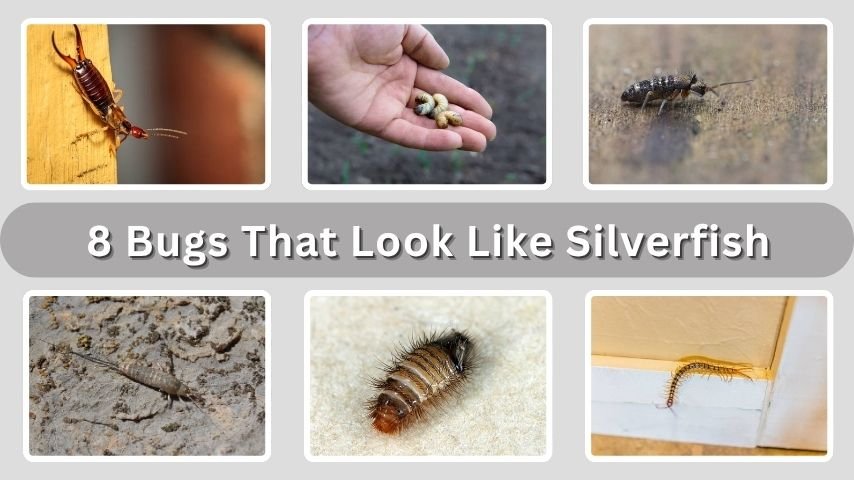
Silverfish are small, fast-moving insects with silver-gray bodies, long antennae, and three tail-like bristles. Because of their unusual shape, many other household pests can be mistaken for them at first glance. Some look similar because they are narrow and quick, while others appear in the same damp, dark places around bathrooms, basements, kitchens, and storage areas. Learning the differences can help you identify the right pest and choose the best control method.
1. Firebrat
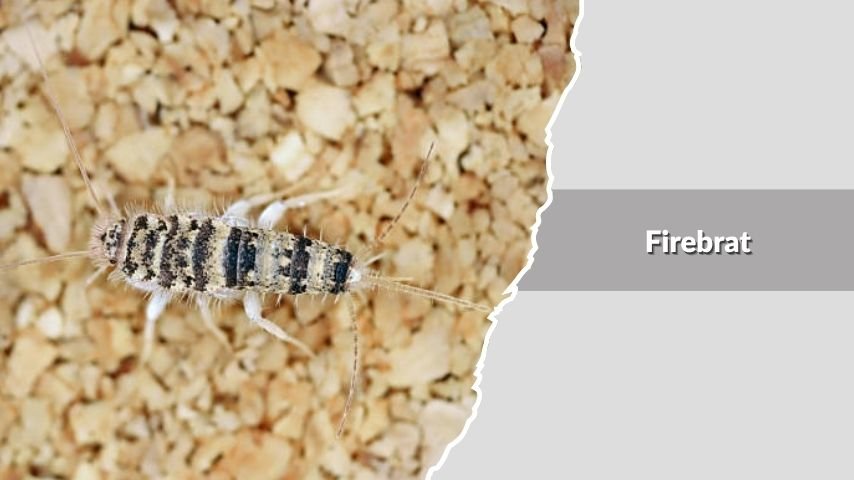
Firebrats are one of the most common insects that look like silverfish. They have a similar long, flat body, quick movement, long antennae, and three tail-like bristles at the back. However, firebrats usually prefer warmer places than silverfish, so they are often found near heat sources inside homes.
Identification
- Firebrats have a narrow, carrot-shaped body.
- Their color is usually grayish-brown or mottled brown.
- They have long antennae on the head.
- They have three thin bristles at the rear.
- They do not have wings.
- Their body is covered with small scales.
- They move quickly and usually hide when disturbed.
Habitat and Distribution
Firebrats are commonly found in warm, humid areas. Inside homes, they may live near furnaces, boilers, water heaters, ovens, laundry rooms, and heated pipes. They are also found in bakeries, commercial kitchens, and buildings where warm temperatures stay consistent. Unlike silverfish, which often prefer cooler damp places, firebrats are more attracted to hot and moist locations.
Behavior and Diet
Firebrats are mostly active at night. During the day, they hide in cracks, crevices, wall voids, and behind appliances. They feed on starchy materials, glue, paper, book bindings, wallpaper paste, cereal, flour, crumbs, and some fabrics. Because of this diet, they can damage stored items, books, paper products, and pantry goods over time.
Difference From Silverfish
Firebrats and silverfish look very similar, but their color and preferred habitat help separate them. Silverfish are usually shiny silver or pearl-gray, while firebrats are more grayish-brown or mottled. Silverfish are often found in bathrooms, basements, and closets, but firebrats are more likely to appear around warm appliances, heating systems, and boiler rooms. Both insects are nuisance pests, but firebrats are more strongly connected with heat.
2. Jumping Bristletail
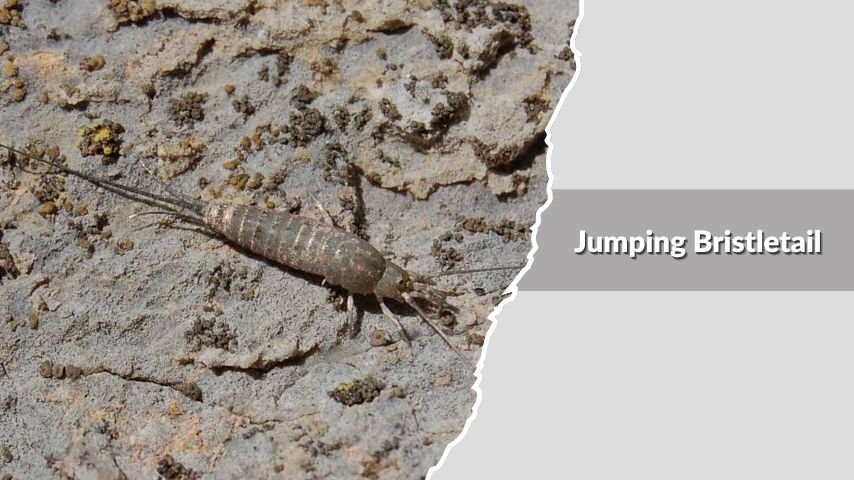
Jumping bristletails are primitive insects that can look similar to silverfish because of their long bodies, antennae, and tail-like bristles. They are not common indoor pests like silverfish, but people may notice them around damp outdoor areas, stones, leaf litter, or foundations. Their jumping behavior is one of the easiest ways to tell them apart.
Identification
- Jumping bristletails have long, narrow bodies.
- Their bodies are usually gray, brown, or mottled.
- They have long antennae.
- They have three tail-like appendages at the rear.
- Their body may look slightly arched or hump-backed.
- They do not have wings.
- They can jump when disturbed.
Habitat and Distribution
Jumping bristletails usually live outdoors in moist, protected places. They are commonly found under rocks, logs, bark, leaves, and debris. They may also appear around foundations, gardens, wooded areas, and damp soil. Unlike silverfish, they are not usually attracted to indoor paper, books, or pantry items. If they enter a home, it is often accidental and usually happens near doors, basements, or ground-level entry points.
Behavior and Diet
Jumping bristletails are most active in damp environments. They feed on algae, lichens, moss, decaying organic matter, and tiny plant materials. They do not usually cause household damage. Their jumping ability helps them escape predators and makes them different from silverfish, which run quickly but do not jump in the same noticeable way.
Difference From Silverfish
Jumping bristletails and silverfish both have long antennae and three tail bristles, but their habits are different. Silverfish are common indoor pests that damage paper, glue, cardboard, and fabrics. Jumping bristletails are mostly outdoor insects and are more likely to be found in natural, damp places. Their ability to jump is the biggest clue that they are not silverfish.
3. Earwig
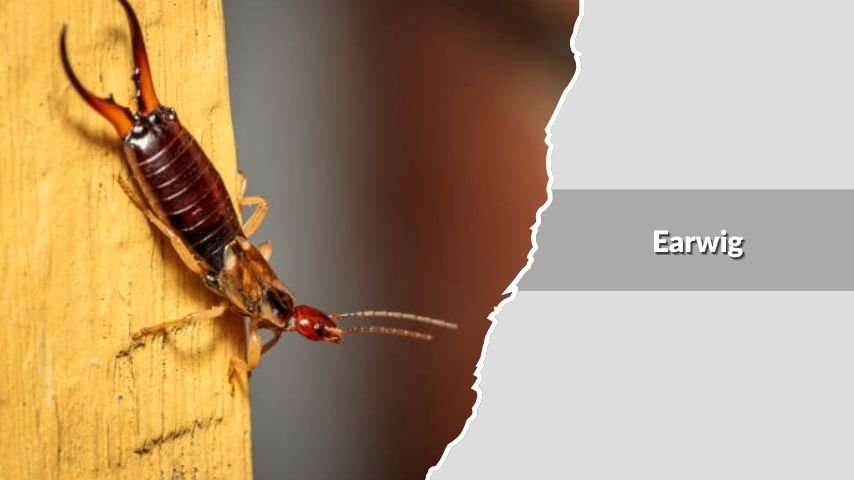
Earwigs can sometimes be mistaken for silverfish because they are fast-moving, narrow-bodied insects that may appear in bathrooms, basements, kitchens, and damp corners. However, earwigs have a very different body structure. Their most noticeable feature is the pair of forceps-like pincers at the end of the abdomen.
Identification
- Earwigs have long, flattened bodies.
- Their color is usually brown, reddish-brown, or dark brown.
- They have two antennae on the head.
- They have a pair of curved pincers at the rear.
- Some species have short wings.
- Their body is harder and less shiny than a silverfish.
- They may curl their abdomen when disturbed.
Habitat and Distribution
Earwigs prefer moist, dark spaces. Outdoors, they hide under mulch, stones, logs, flowerpots, leaf litter, and garden debris. Indoors, they may enter basements, bathrooms, laundry rooms, garages, and kitchens, especially during wet weather or when outdoor conditions become too dry. They do not usually live permanently inside homes unless there is enough moisture and shelter.
Behavior and Diet
Earwigs are mostly active at night. They feed on decaying plant matter, soft plants, small insects, and organic debris. In gardens, they may sometimes damage seedlings, flowers, fruits, or vegetables, but they can also eat pest insects. Indoors, they are mainly nuisance pests and do not damage books, paper, or fabrics the way silverfish do.
Difference From Silverfish
The easiest way to separate earwigs from silverfish is to look at the rear of the body. Silverfish have three thin tail-like bristles, while earwigs have two noticeable pincers. Silverfish are silver-gray and soft-bodied, while earwigs are usually brown and have a firmer body. Silverfish feed on starches and paper products, but earwigs are more connected with damp outdoor debris and garden areas.
4. House Centipede
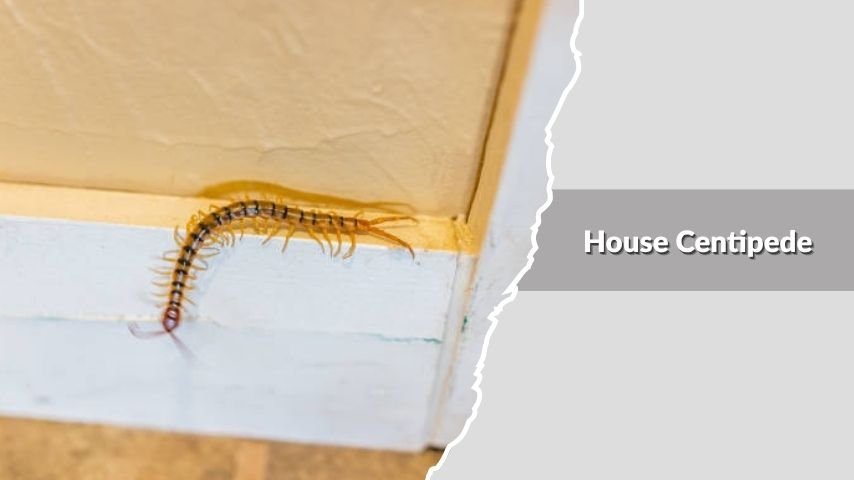
House centipedes can look confusing at first because they are fast, long-bodied, and often appear in damp indoor areas like bathrooms and basements. However, they are not insects like silverfish. They are centipedes with many long legs, a more elevated body, and a hunting lifestyle.
Identification
- House centipedes have long, slender bodies.
- Their color is usually yellowish-gray or light brown.
- They have many pairs of very long legs.
- Their legs make them look larger than they are.
- They have long antennae.
- They move extremely fast.
- They do not have three tail bristles like silverfish.
Habitat and Distribution
House centipedes are often found in damp, dark indoor spaces. Common hiding places include basements, bathrooms, closets, crawl spaces, garages, and under sinks. They may also live outdoors under stones, logs, mulch, and leaf litter. Indoors, they usually stay where other small insects are available as food.
Behavior and Diet
House centipedes are active hunters. They feed on small pests such as flies, moths, spiders, cockroaches, silverfish, and other insects. Because they eat household pests, they can be considered beneficial in some situations. However, many people dislike seeing them because of their speed and many legs. They usually hide during the day and hunt at night.
Difference From Silverfish
House centipedes are much leggier than silverfish. Silverfish have six legs and three thin bristles at the back, while house centipedes have many long legs and no silverfish-like tail bristles. Silverfish feed on paper, glue, starch, and fabric, but house centipedes hunt live prey. If the insect has many long legs and runs very fast across a wall or floor, it is likely a house centipede, not a silverfish.
5. Carpet Beetle Larva
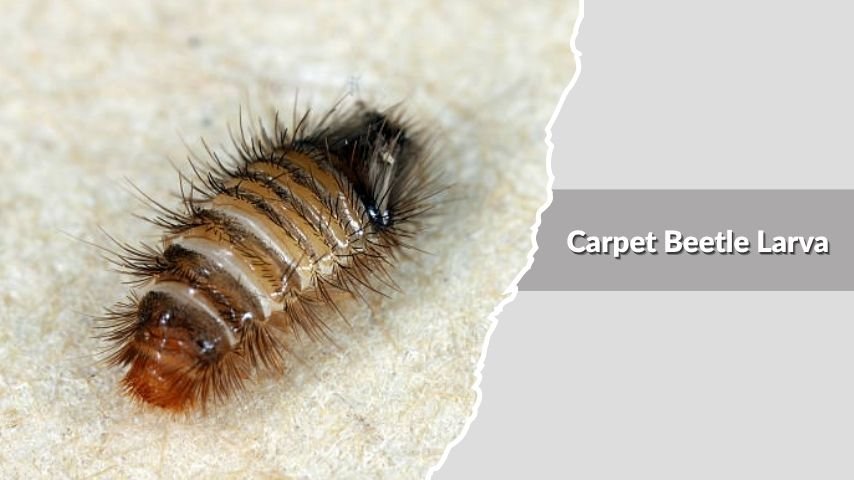
Carpet beetle larvae can sometimes be confused with silverfish because they are small, indoor pests that move around hidden areas of the home. However, they do not have the same smooth, silver, fish-like body. Carpet beetle larvae are usually hairy, brownish, and more worm-like in appearance.
Identification
- Carpet beetle larvae are small and oval to elongated.
- Their color is usually brown, tan, or dark striped.
- Their bodies are covered with tiny hairs.
- Some have a brush-like tuft of hairs at the rear.
- They do not have long silverfish-style antennae.
- They do not have three tail bristles.
- They move slowly compared with silverfish.
Habitat and Distribution
Carpet beetle larvae are often found in quiet, dark areas where natural fibers or animal-based materials are present. They may live in closets, drawers, carpets, rugs, furniture, air vents, baseboards, and stored clothing. They are also common around lint, pet hair, feathers, wool, silk, and old fabrics. Unlike silverfish, they are strongly connected with fabric damage.
Behavior and Diet
Carpet beetle larvae feed on animal-based materials such as wool, fur, feathers, silk, leather, pet hair, and dead insects. They may also damage stored clothing, blankets, rugs, and upholstered furniture. They usually hide well, so damage may appear before the larvae are noticed. Adult carpet beetles often feed on pollen outdoors, but the larvae are the damaging stage indoors.
Difference From Silverfish
Carpet beetle larvae are hairy and slower-moving, while silverfish are smooth, shiny, and fast. Silverfish have long antennae and three tail-like bristles, but carpet beetle larvae do not. Silverfish often damage paper, glue, cardboard, and starchy items, while carpet beetle larvae mainly damage natural fabrics and animal-based materials.
6. Booklouse
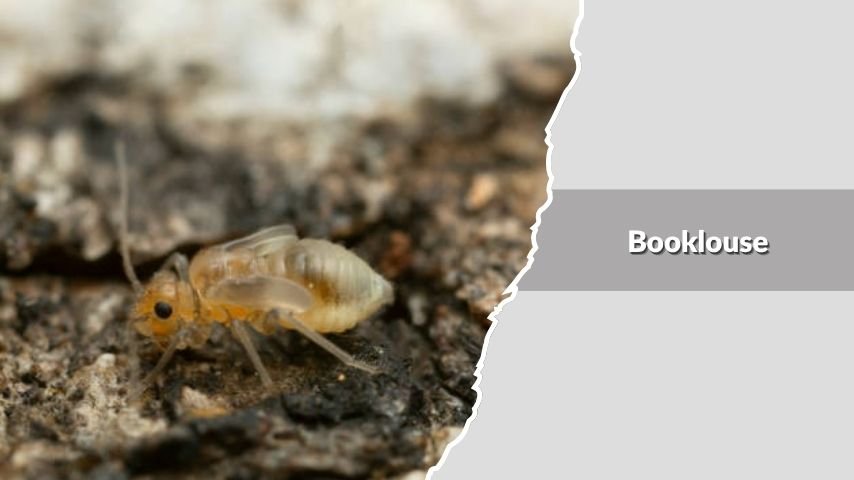
Booklice are tiny insects that may be mistaken for young silverfish because they are small, pale, and often found around books, paper, cardboard, and damp storage areas. They are much smaller than silverfish and do not have the same shiny, tapered body or three long tail bristles.
Identification
- Booklice are very small, usually pale gray, tan, or whitish.
- Their bodies are soft and delicate.
- They have relatively large heads.
- They have thin antennae.
- Some species have wings, while others are wingless.
- They do not have silver scales.
- They do not have three tail-like bristles.
Habitat and Distribution
Booklice prefer damp places where mold, mildew, or stored paper products are present. They may be found in bookshelves, cardboard boxes, basements, kitchens, bathrooms, pantries, and around windowsills. They are especially common in humid homes or storage areas where paper, glue, and mold growth are available.
Behavior and Diet
Booklice mainly feed on mold, fungi, and microscopic organic matter. They may also be found on books, paper, wallpaper, stored grains, and cardboard, but they are usually attracted to mold rather than the paper itself. They do not bite people or cause serious structural damage. Their presence often means there is too much moisture in the area.
Difference From Silverfish
Booklice are much smaller and softer-looking than silverfish. Silverfish are shiny, silver-gray, fast, and have three tail bristles. Booklice are pale, tiny, and more closely linked to mold and humidity. If the pest is very small and appears around damp books or cardboard, it may be booklice rather than silverfish.
7. Springtail
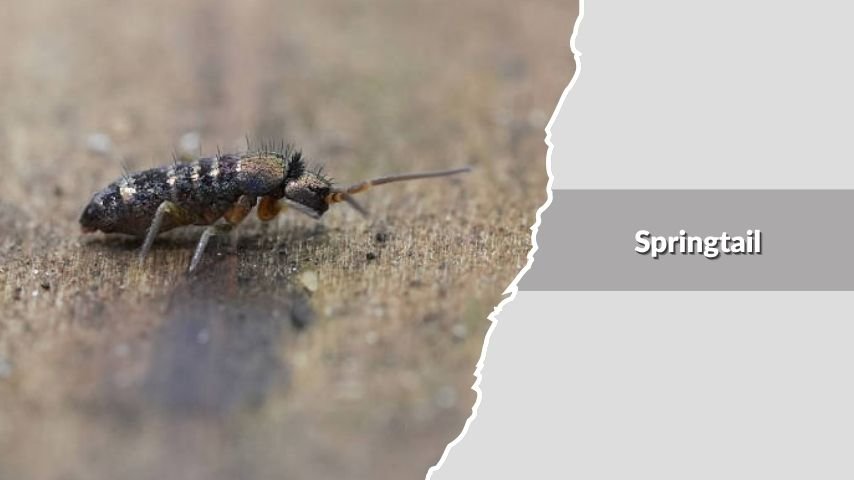
Springtails are tiny moisture-loving arthropods that can sometimes be confused with young silverfish. They are usually found in damp places and may suddenly appear in large numbers near bathrooms, basements, sinks, windows, or houseplants. Their jumping movement makes them different from silverfish.
Identification
- Springtails are very small and soft-bodied.
- Their color may be white, gray, brown, black, or bluish.
- They often have a rounded or slightly elongated body.
- They have short antennae.
- They do not have silver scales.
- They do not have three tail bristles.
- They can jump when disturbed.
Habitat and Distribution
Springtails live in moist environments. Outdoors, they are common in soil, leaf litter, mulch, compost, and around decaying plant matter. Indoors, they may appear near houseplants, bathrooms, basements, drains, damp walls, and leaky areas. They need moisture to survive, so dry indoor conditions usually reduce their numbers.
Behavior and Diet
Springtails feed on mold, fungi, algae, decaying plants, and organic debris. They do not bite, sting, or damage clothing, books, or stored food like silverfish can. When many springtails appear indoors, it usually points to excess moisture, mold, overwatered plants, or damp building materials.
Difference From Silverfish
Springtails are much smaller than silverfish and can jump. Silverfish are larger, silver-gray, flat, and fast-running, with long antennae and three tail bristles. Springtails are more rounded or tiny and are usually found in very damp areas. If the pest jumps when touched, it is likely a springtail, not a silverfish.
8. Ground Beetle Larva
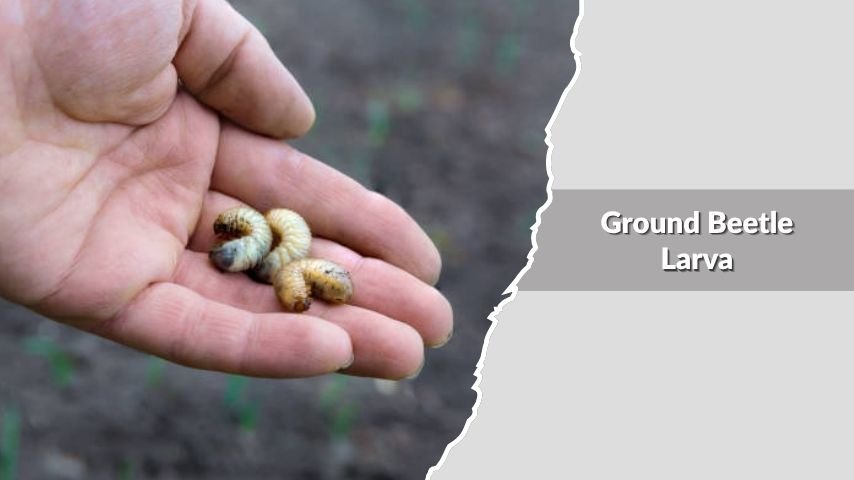
Ground beetle larvae may look a little like silverfish because they are long, narrow, and dark-colored. However, they are not common indoor pests and usually enter homes by accident. Their body is more segmented, harder-looking, and often darker than a silverfish.
Identification
- Ground beetle larvae have long, narrow bodies.
- Their color is usually dark brown, black, or reddish-brown.
- Their bodies look segmented and somewhat armored.
- They have six legs near the front of the body.
- They have noticeable jaws.
- They do not have silver scales.
- They do not have three long tail bristles like silverfish.
Habitat and Distribution
Ground beetle larvae usually live outdoors in soil, under rocks, under logs, in leaf litter, and around gardens. They may be found near foundations, mulch beds, lawns, and damp ground. Sometimes they wander indoors through gaps under doors, basement cracks, or garage openings, but they do not usually infest homes like silverfish.
Behavior and Diet
Ground beetle larvae are predators. They feed on small insects, insect eggs, worms, and other tiny organisms in the soil. Many ground beetles are considered beneficial because they help control garden pests. Indoors, they usually do not feed on paper, clothing, glue, or stored pantry products.
Difference From Silverfish
Ground beetle larvae are usually darker, harder-looking, and more segmented than silverfish. Silverfish are shiny, flat, and silver-gray with long antennae and three tail bristles. Ground beetle larvae are outdoor predators and are not interested in paper or starches. If the insect looks dark, segmented, and larva-like, it is more likely a ground beetle larva than a silverfish.
FAQs
What bug is most commonly mistaken for a silverfish?
Firebrats are one of the most commonly mistaken insects for silverfish. They have a similar long body, long antennae, and three tail-like bristles, but they are usually grayish-brown and prefer warmer areas.
How can I tell if it is a silverfish or a firebrat?
Silverfish are usually shiny silver or pearl-gray and prefer cool, damp places. Firebrats are usually brownish or mottled gray and are more common near heat sources like furnaces, boilers, ovens, and water heaters.
Do bugs that look like silverfish damage homes?
Some do, while others do not. Silverfish, firebrats, and carpet beetle larvae can damage paper, books, fabrics, or stored items. Springtails, booklice, and house centipedes are usually more connected with moisture or other pests.
Are silverfish look-alike bugs dangerous?
Most silverfish look-alikes are not dangerous to people. They usually do not bite or spread disease, but some can become nuisance pests or damage household materials if their numbers grow.
Why do I keep seeing silverfish-like bugs in my bathroom?
Bathrooms are damp, dark, and full of hiding spots, which attract pests like silverfish, firebrats, springtails, and booklice. Reducing humidity, fixing leaks, sealing cracks, and cleaning hidden areas can help prevent them.
