
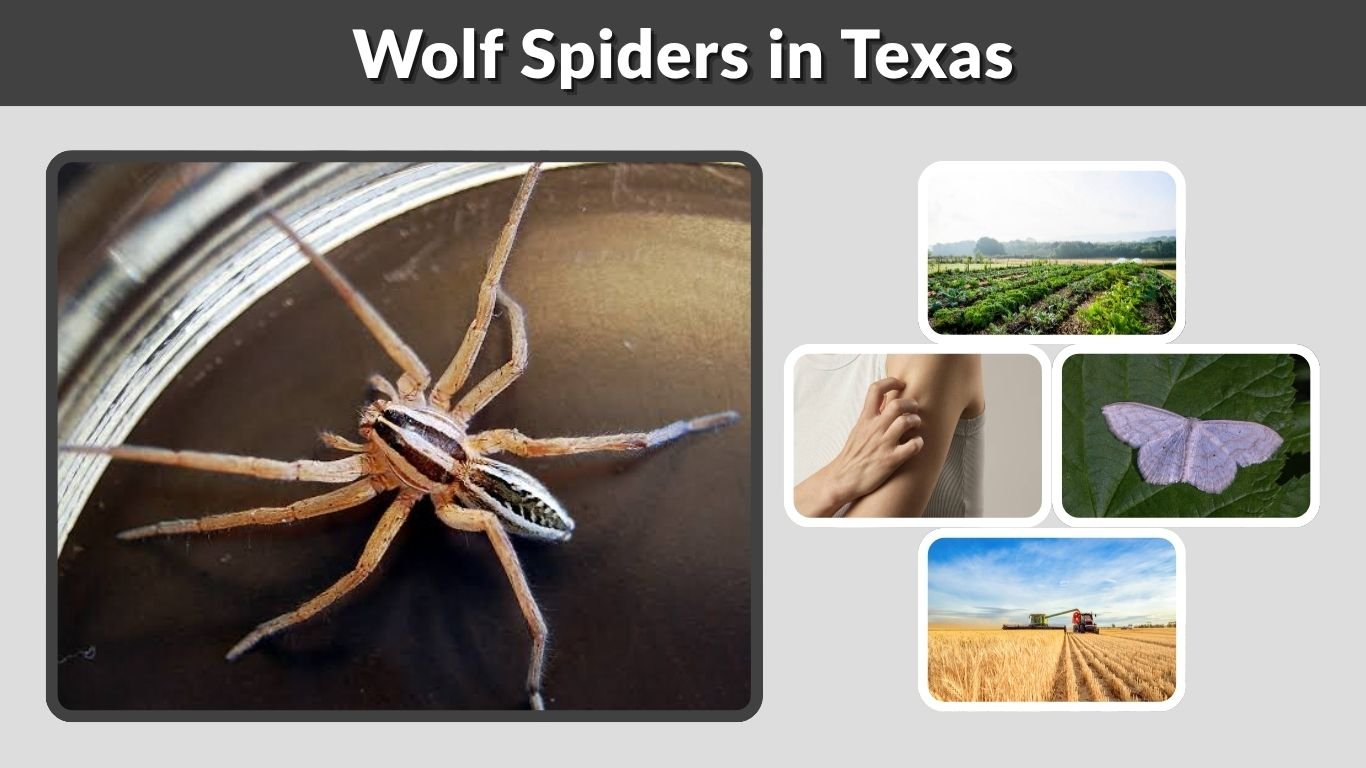
Wolf spiders in Texas are common ground-hunting spiders found in yards, gardens, fields, forests, and sometimes inside homes. Texas supports many wolf spider species, ranging from small grassland hunters to large species such as the Carolina wolf spider. They are usually brown, gray, or dark-colored and have excellent eyesight for chasing insects instead of trapping them in webs. Although their large size can look intimidating, wolf spiders generally avoid people, and their bites are usually limited to temporary local discomfort.
What Do Texas Wolf Spiders Look Like?
Texas wolf spiders belong to the family Lycosidae, a large group of active hunting spiders. Their colors and markings vary between species, but most have patterns that help them blend with soil, grass, rocks, and leaf litter. Their strong legs, hairy bodies, and distinctive arrangement of large eyes are among the most useful features for identification.
Texas Wolf Spider Identification
Common characteristics include:
- Brown, gray, tan, or nearly black coloration
- Hairy, sturdy body
- Eight strong legs
- Dark stripes or mottled patterns
- Eight eyes arranged in three rows
- Two especially large forward-facing eyes
- Fast running movement
- No permanent prey-catching web
- Females carrying round egg sacs
- Mothers carrying spiderlings on their backs
Because Texas has numerous wolf spider species, color alone usually cannot identify a particular species.
Texas Wolf Spider Eyes
Wolf spiders have excellent eyesight compared with many other spiders. Two large eyes dominate the middle row, with smaller eyes positioned above and below them.
Their eyes can reflect light strongly at night. If a flashlight is directed across a Texas lawn after dark, tiny shining points may reveal wolf spiders sitting among the grass.
Texas Wolf Spider Size
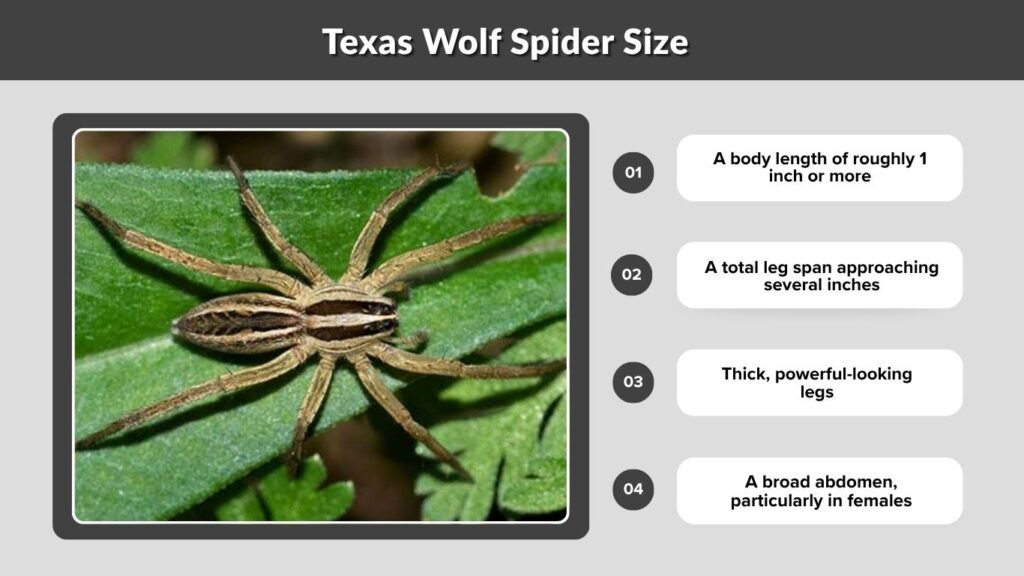
There is no single size for a Texas wolf spider because many species occur throughout the state. Some adults have bodies less than half an inch long, while the largest species can exceed an inch in body length. Their extended legs make large females appear considerably bigger than their body measurements suggest.
How Big Can Texas Wolf Spiders Get?
Size varies considerably, but large individuals may have:
- A body length of roughly 1 inch or more
- A total leg span approaching several inches
- Thick, powerful-looking legs
- A broad abdomen, particularly in females
- A heavier appearance when carrying eggs
Female wolf spiders are generally larger and more robust than males.
Biggest Wolf Spider in Texas
The Carolina wolf spider (Hogna carolinensis) is among the largest wolf spiders found in Texas and elsewhere in the United States.
Large females can have body lengths exceeding an inch and may appear around 3 inches or more across with their legs extended.
Despite its size, the Carolina wolf spider is primarily interested in hunting insects rather than interacting with people.
Common Wolf Spider Species in Texas
Texas contains a wide variety of habitats, from humid eastern forests to dry western landscapes, allowing many different wolf spiders to thrive. Individual species can differ in color, preferred habitat, hunting behavior, and size, although all share the characteristic active-hunting lifestyle associated with wolf spiders.
Wolf Spiders You May Encounter
Commonly encountered types include:
- Rabid wolf spider (Rabidosa rabida)
- Carolina wolf spider (Hogna carolinensis)
- Various Tigrosa wolf spiders
- Thin-legged wolf spiders
- Field and grassland wolf spiders
- Small Pardosa species
- Other burrowing and wandering members of Lycosidae
The exact species found around a property depends strongly on location and habitat.
Rabid Wolf Spider in Texas
The rabid wolf spider is one of the more recognizable Texas species. It typically has a brown body with contrasting stripes running along the cephalothorax.
Despite its alarming common name, the spider is not rabid and does not transmit rabies.
The name probably refers to its quick movements. Like other wolf spiders, it hunts insects by running them down rather than constructing a capture web.
Where Do Wolf Spiders Live in Texas?
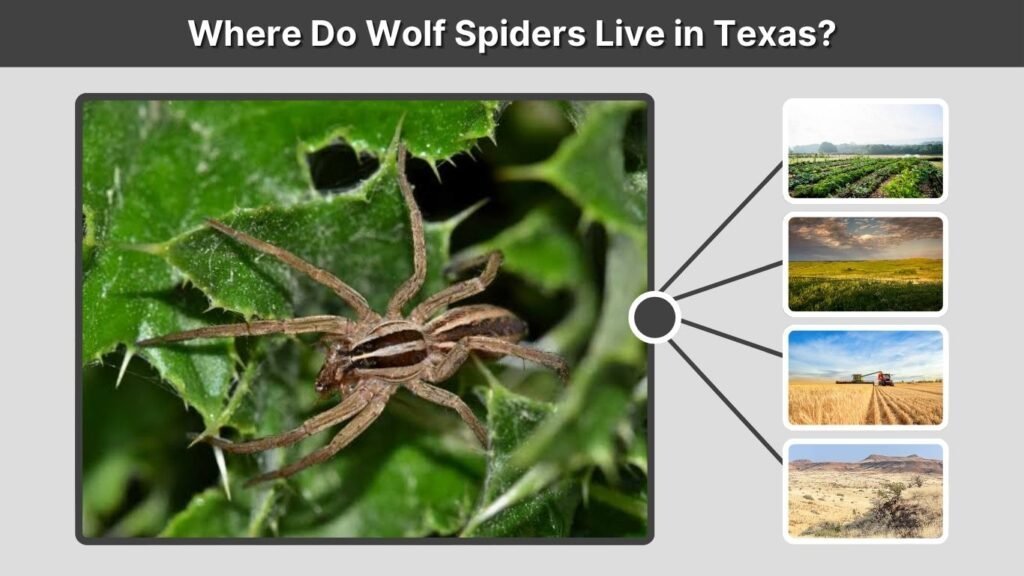
Texas wolf spiders occupy almost every type of terrestrial habitat where suitable prey and shelter are available. Some species dig burrows and wait near their entrances, while others wander through vegetation or leaf litter searching for prey. They become especially noticeable around homes during warm weather when insects are abundant.
Common Texas Habitats
Wolf spiders can be found in:
- Residential lawns
- Gardens
- Grasslands
- Agricultural fields
- Forest floors
- Desert and scrub habitats
- Areas around ponds
- Under logs and rocks
- Mulch and leaf litter
- Garages
- Sheds
- Patios and porches
Different species occur throughout North, Central, East, South, and West Texas.
Wolf Spiders Inside Texas Homes
A wolf spider found indoors usually wandered inside accidentally while looking for food or shelter.
They may enter through gaps beneath doors, cracks around foundations, garages, or open windows. They generally do not form large colonies inside houses.
Reducing indoor insects and sealing entry points can help prevent repeated encounters.
Are Texas Wolf Spiders Poisonous?
Wolf spiders possess venom, so technically they are venomous rather than poisonous. They inject venom through their fangs to immobilize insects and other small prey. However, Texas wolf spiders are not generally considered medically significant to humans.
Are Texas Wolf Spiders Dangerous?
Wolf spiders normally:
- Avoid contact with people
- Run away when disturbed
- Bite mainly when trapped or handled
- Use venom primarily against prey
- Do not deliberately chase humans
- Do not have medically significant venom for most people
Their large bodies and rapid movements often make them seem much more threatening than they really are.
Texas Wolf Spider Bite
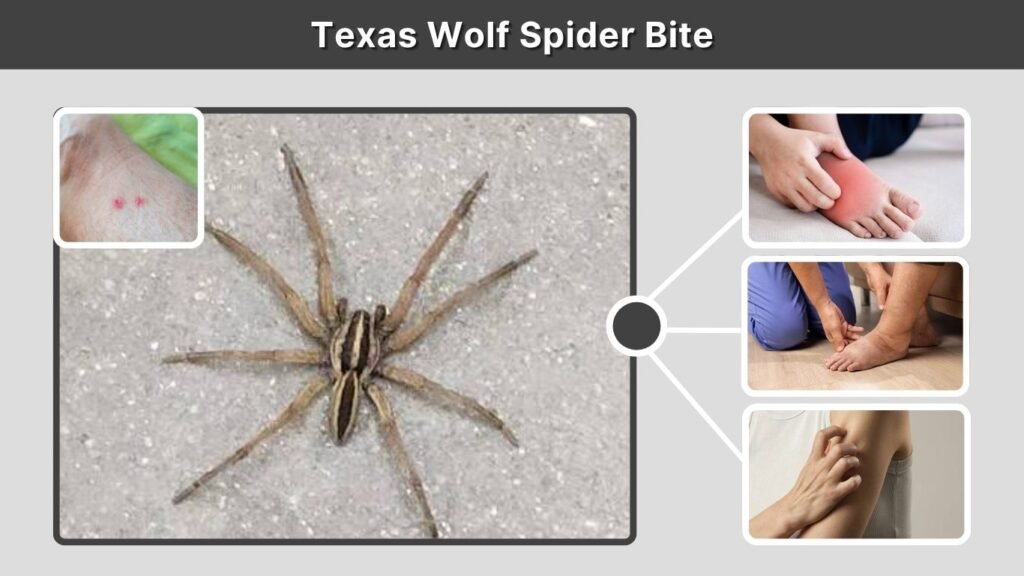
Bites are uncommon because wolf spiders generally prefer escape over confrontation. A bite may occur if someone grabs a spider, steps on one barefoot, or traps one against the skin.
What Does a Wolf Spider Bite Feel Like?
A bite may cause:
- Immediate localized pain
- Mild redness
- Slight swelling
- Itching
- Tenderness
- Temporary irritation
Wash the bite with soap and water and use a cool compress if necessary.
Seek medical attention if symptoms become severe, spread rapidly, involve difficulty breathing, or show signs of infection. An unexplained wound should not automatically be diagnosed as a wolf spider bite unless the spider was actually observed biting.
Texas Wolf Spider vs. Brown Recluse
Wolf spiders are frequently confused with brown recluse spiders because both can be brown and occur around Texas homes. However, the two groups differ significantly in appearance and behavior.
Main Differences
Wolf spiders generally have:
- Eight eyes
- Two very large central eyes
- Hairy, robust bodies
- Bold stripes or mottling
- Fast ground-hunting behavior
- Thick-looking legs
Brown recluse spiders generally have:
- Six eyes arranged in three pairs
- A smoother appearance
- More uniformly colored legs
- A possible violin-shaped marking
- A preference for secluded hiding places
Do not identify a brown recluse solely by its color, since many harmless Texas spiders are brown.
Black and Brown Wolf Spiders in Texas
People frequently search for black or brown wolf spiders, but these descriptions do not necessarily represent individual species. Wolf spider coloration varies considerably and often helps the animal camouflage itself within its particular habitat.
Why Texas Wolf Spiders Vary in Color
A wolf spider may look:
- Light brown
- Dark brown
- Gray
- Tan
- Reddish-brown
- Almost black
Lighting also affects their appearance. A dark brown spider seen indoors or at night may appear completely black.
Species, age, sex, habitat, and recent molting can all influence coloration.
What Do Texas Wolf Spiders Eat?
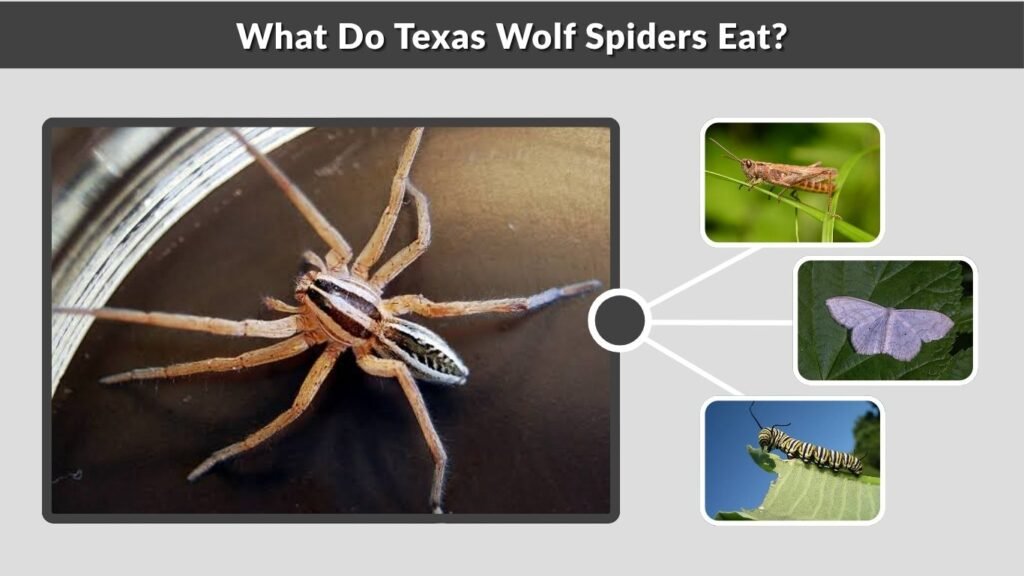
Wolf spiders are beneficial predators that consume many insects and other arthropods. They use speed and vision to stalk or chase prey rather than waiting for insects to become trapped in webs. Large Texas species may capture surprisingly substantial prey.
Common Foods
Texas wolf spiders may eat:
- Crickets
- Cockroaches
- Beetles
- Grasshoppers
- Flies
- Moths
- Caterpillars
- Small spiders
- Various ground-dwelling insects
- Other small arthropods
Their hunting helps naturally regulate insect populations in gardens and yards.
Female Texas Wolf Spiders With Babies
Female wolf spiders provide unusual parental care. This behavior is common throughout the family and is one of the easiest ways to distinguish a wolf spider from many similar-looking species.
How Wolf Spider Mothers Carry Babies
After producing eggs, the female wraps them inside a rounded silk sac attached to her spinnerets.
She carries the egg sac everywhere while continuing to move and hunt. After hatching, dozens of tiny spiderlings climb onto her abdomen.
The babies remain with their mother temporarily before dispersing and beginning independent lives. A female covered with spiderlings may look frightening, but the young are simply being transported and protected.
FAQs
Texas wolf spiders can look intimidating because they are fast, hairy, and sometimes surprisingly large. Most, however, are beneficial outdoor predators that pose little threat to people.
Are wolf spiders common in Texas?
Yes. Wolf spiders are widespread across Texas and occur in lawns, fields, forests, gardens, deserts, and residential landscapes. Different species occupy different regions, making them one of the more commonly encountered groups of ground-hunting spiders in the state.
Are Texas wolf spiders poisonous?
Texas wolf spiders are technically venomous, not poisonous. They use venom to immobilize insect prey, but their venom is not considered medically significant for most people. Bites are uncommon and generally cause only localized pain, redness, or swelling.
How big can a Texas wolf spider get?
Large Texas wolf spiders can exceed an inch in body length and appear several inches across with their legs extended. The Carolina wolf spider is among the largest species found in Texas, with females typically growing substantially larger than males.
Is the rabid wolf spider dangerous in Texas?
No. Despite its name, the rabid wolf spider does not have rabies and is not considered dangerously venomous to people. It is an active hunter that generally runs away when disturbed rather than attempting to bite.
Should I kill a wolf spider in my Texas yard?
Usually, there is no reason to kill an outdoor wolf spider. These spiders prey on cockroaches, crickets, beetles, and other insects. If one enters your home, it can usually be captured carefully in a container and released outside.
