
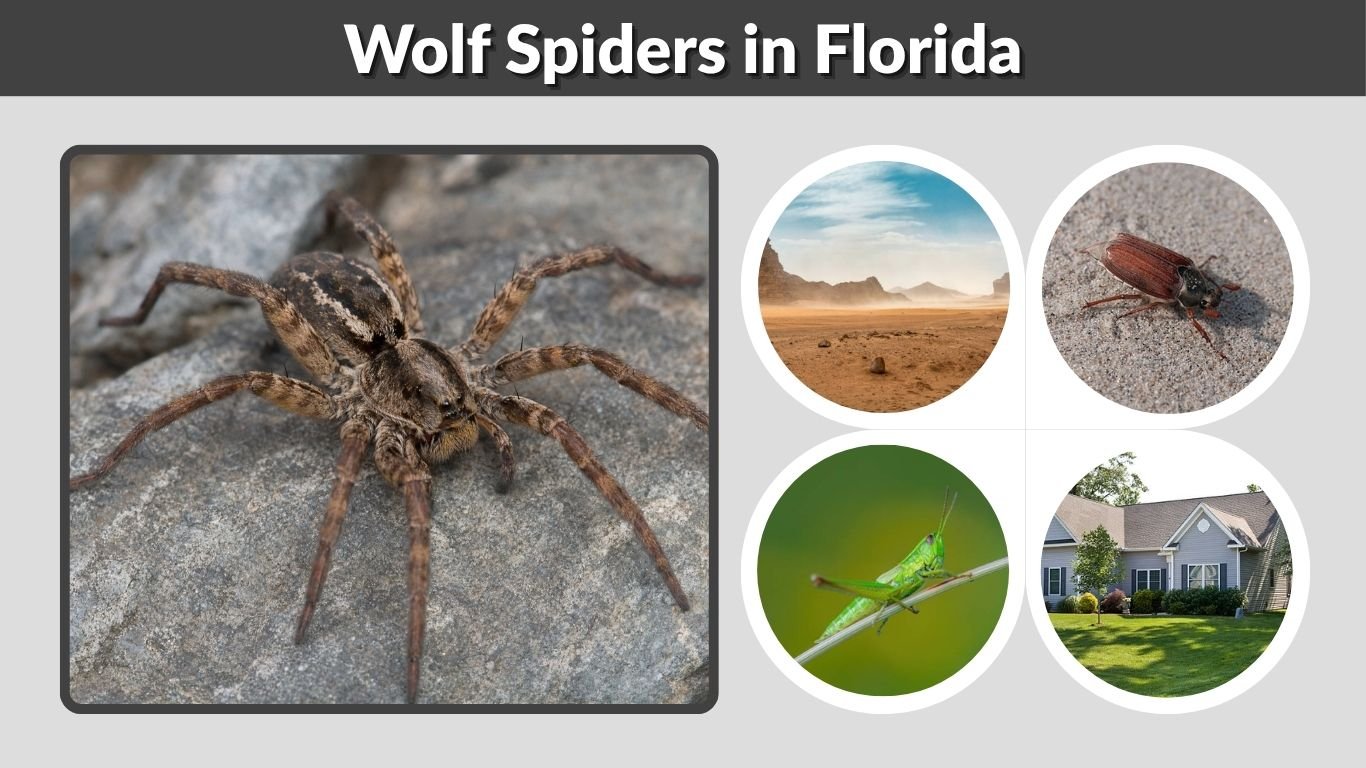
Wolf spiders in Florida are common ground-hunting spiders found in lawns, gardens, forests, wetlands, and sometimes homes. Unlike web-building spiders, they usually chase prey using speed and strong eyesight. Florida wolf spiders range from relatively small species to impressive large-bodied hunters, including the Carolina wolf spider. Although their size and hairy appearance can seem intimidating, they generally avoid people and bites are uncommon. Knowing their appearance, size, habitat, behavior, and bite symptoms makes these spiders much easier to recognize.
What Do Florida Wolf Spiders Look Like?
Florida wolf spiders belong to the family Lycosidae and vary considerably in color and size. Most have earthy shades that help them disappear against soil, leaves, bark, and grass. Their sturdy legs and relatively large eyes reflect their active hunting lifestyle. Because many brown spiders look similar, several characteristics should be considered together before identification.
Florida Wolf Spider Identification
Look for these common features:
- Brown, gray, tan, or nearly black coloration
- Hairy, robust body
- Eight strong walking legs
- Dark stripes or mottled patterns
- Large forward-facing eyes
- Fast running behavior
- Ground-dwelling habits
- No permanent prey-catching web
- Females sometimes carrying an egg sac
- Mothers sometimes carrying spiderlings on their backs
Wolf spiders may freeze when disturbed and then suddenly run for cover.
Wolf Spider Eyes
Eye arrangement is one of the best characteristics for recognizing a wolf spider. They have eight eyes arranged in three rows, including two particularly large eyes near the front.
These large eyes provide strong vision for detecting prey and navigating at night. If light shines toward a wolf spider after dark, its eyes may reflect the light, making nighttime searches surprisingly effective.
Florida Wolf Spider Size
Wolf spiders in Florida range widely in size because the state supports multiple species. Some are relatively small, while large individuals can look impressive when their long legs are included. Females are commonly larger and heavier than males, particularly when they are carrying eggs or young.
How Big Are Wolf Spiders in Florida?
Depending on species, adult wolf spiders may have body lengths ranging from less than half an inch to more than an inch.
Large specimens can appear several inches across when their legs are extended.
The Carolina wolf spider is among the largest wolf spiders encountered in the United States and can also occur in Florida. Females are generally larger than males and have heavier abdomens.
Giant Wolf Spiders in Florida
A large brown spider running across a Florida lawn may appear enormous, especially at night.
However, the term giant wolf spider is often used informally rather than referring to one particular Florida species. Large Carolina wolf spiders and other robust lycosids are often responsible for these sightings.
Leg span can make the spider look much larger than its actual body.
Where Do Wolf Spiders Live in Florida?
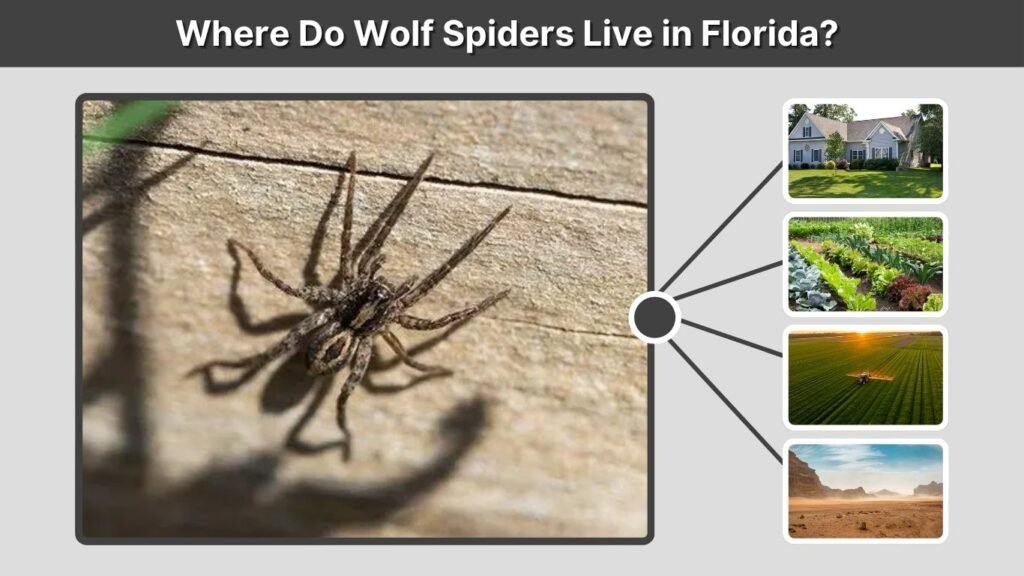
Florida’s warm climate and diverse landscapes provide suitable conditions for many wolf spiders. They favor places where insects are abundant and where they can hide during daylight hours. Some species use burrows, while others shelter beneath vegetation, logs, rocks, mulch, or debris and emerge to hunt.
Common Florida Wolf Spider Habitats
Wolf spiders may occur in:
- Lawns
- Gardens
- Forest floors
- Fields
- Swamps and wetlands
- Sandy areas
- Around ponds
- Under logs and rocks
- Landscape mulch
- Garages and sheds
- Patios
- Occasionally inside houses
Their presence around homes often increases where outdoor insects are plentiful.
Wolf Spiders in Florida Houses
Wolf spiders occasionally wander indoors while hunting prey or searching for shelter.
They generally do not establish large indoor colonies. Finding one inside usually means an individual accidentally entered through a door, gap, garage, or other opening.
Removing insects and sealing entry points can reduce future encounters without needing to treat every spider seen outdoors.
Are Florida Wolf Spiders Poisonous or Venomous?
Wolf spiders produce venom to subdue insect prey, but they are not considered among Florida’s medically important spiders. Their venom is adapted mainly for small animals they hunt. A defensive bite can hurt, yet serious effects in healthy adults are uncommon.
Are Florida Wolf Spiders Dangerous?
Wolf spiders are generally not dangerous to people.
They usually:
- Run away when approached
- Bite only when trapped or handled
- Do not actively chase humans
- Use venom primarily for hunting
- Prefer insects and other small prey
- Do not create aggressive colonies
Their frightening appearance often causes more concern than their actual medical importance.
Florida Wolf Spider Bite
A wolf spider bite may cause localized symptoms such as pain, redness, mild swelling, itching, or tenderness.
Wash the area gently with soap and water and avoid scratching it. Seek medical advice if severe swelling, intense pain, difficulty breathing, widespread symptoms, or signs of infection develop.
Spider bites can also be difficult to identify from appearance alone, so an unexplained skin lesion should not automatically be blamed on a wolf spider.
Wolf Spider vs. Brown Recluse in Florida
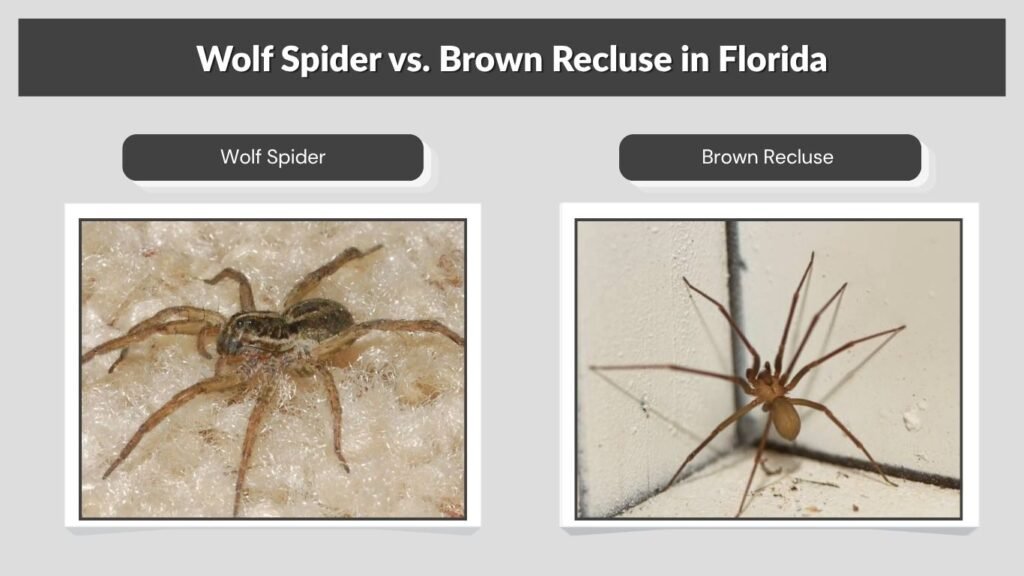
Brown spiders are frequently confused with one another. Wolf spiders and brown recluse spiders differ in body structure, eye pattern, behavior, and markings. Correct identification matters because brown recluse spiders have greater medical significance.
Main Differences
Wolf spiders generally have:
- Hairier bodies
- Bold stripes or mottled patterns
- Eight eyes
- Two noticeably large central eyes
- Strong running behavior
- Thick, athletic-looking legs
Brown recluse spiders are generally smoother-looking, have six eyes arranged in pairs, and may display a darker violin-shaped marking on the front part of the body.
A brown spider should never be identified from color alone.
Huntsman Spider vs. Wolf Spider in Florida
Huntsman spiders and wolf spiders can both become large and move rapidly, making confusion common. Florida is home to huntsman-type spiders as well as many wolf spiders, but their shapes and lifestyles differ.
How to Tell Them Apart
A wolf spider typically has a more compact, sturdy appearance. Its legs project outward but still give the body a fairly balanced shape.
A huntsman spider tends to look flatter and wider. Its legs extend sideways in a more crab-like orientation, producing a broad stance.
Wolf spiders usually hunt on the ground, while huntsman spiders are often found on walls, tree trunks, and other vertical surfaces.
What Do Florida Wolf Spiders Eat?
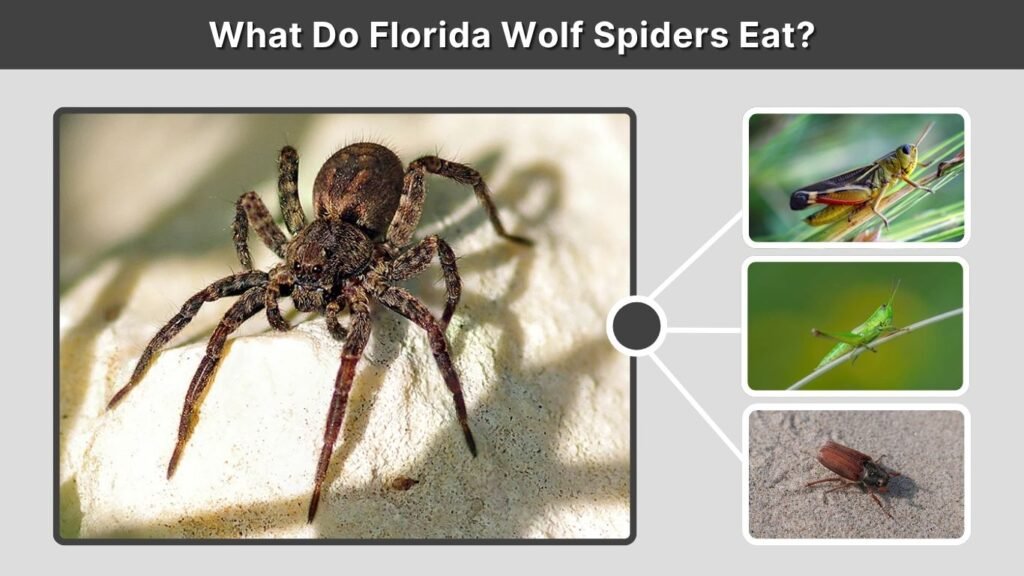
Wolf spiders are active predators and can help control many small arthropods. Instead of waiting in a capture web, they move through their habitat and pursue prey directly. Their strong eyesight, speed, and sensitivity to vibrations make them effective nighttime hunters.
Common Wolf Spider Prey
Their diet may include:
- Crickets
- Grasshoppers
- Cockroaches
- Beetles
- Flies
- Moths
- Small caterpillars
- Other spiders
- Various ground-dwelling insects
- Small arthropods
Large wolf spiders may occasionally take relatively substantial prey, but insects form the majority of their diet.
Florida Wolf Spider Babies and Reproduction
Female wolf spiders show unusual parental behavior compared with many spiders. Instead of abandoning their eggs, females actively carry and protect them. This behavior makes a female wolf spider with young one of the easiest wolf spiders to recognize.
Female Wolf Spider With Babies
After producing eggs, the female encloses them in a rounded silk egg sac attached to the rear of her abdomen.
She carries the sac while walking and hunting.
When the spiderlings hatch, they climb onto their mother’s abdomen and remain there for a period before dispersing.
A spider covered with dozens of tiny babies can look alarming, but the young are simply using their mother for transportation and protection.
Black and Brown Wolf Spiders in Florida
Color varies considerably among Florida wolf spiders. Some are pale tan, others medium brown, and some look almost black in poor lighting. Color by itself is therefore unreliable for determining the exact species.
Why Their Colors Vary
Wolf spider coloration helps them blend into local environments.
A spider living among dark soil or damp leaf litter may appear darker, while individuals associated with sand, dry grass, or pale debris may have lighter brown or gray coloration.
Age, sex, species, lighting, and recent molting can also change how dark a wolf spider appears.
Are Wolf Spiders Good to Have Around?
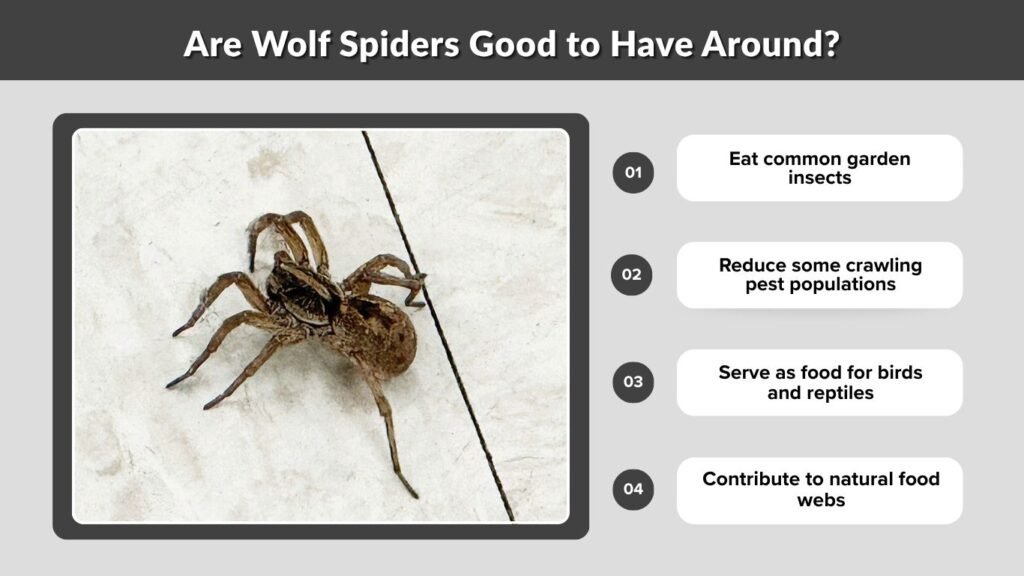
Wolf spiders can be beneficial predators in gardens and landscapes because they consume insects without damaging plants. They do not chew leaves, bore into wood, or create large sticky webs across walkways.
Benefits of Florida Wolf Spiders
Wolf spiders can:
- Eat common garden insects
- Reduce some crawling pest populations
- Serve as food for birds and reptiles
- Contribute to natural food webs
- Hunt without creating large capture webs
- Live outdoors without harming lawns or plants
Unless one is repeatedly entering a living space, a wolf spider outdoors usually does not need to be removed.
FAQs
Wolf spiders are among Florida’s more noticeable spiders because of their speed, large eyes, and sometimes impressive size. Most encounters are harmless, but understanding their behavior makes it easier to distinguish them from spiders that may require greater caution.
Are wolf spiders common in Florida?
Yes. Wolf spiders are common throughout Florida and occupy lawns, gardens, forests, wetlands, fields, and residential landscapes. Different species prefer different habitats, so their size and appearance can vary considerably across the state.
How big can a Florida wolf spider get?
Some Florida wolf spiders are small, while large species can exceed an inch in body length and appear several inches across with their legs extended. Female Carolina wolf spiders are among the largest wolf spiders that may be encountered in the state.
Are Florida wolf spiders poisonous?
Wolf spiders are venomous rather than poisonous because they inject venom when biting prey. Their venom is mainly used against insects and is not considered highly dangerous to humans. Most defensive bites cause only localized discomfort.
Do wolf spiders live inside Florida homes?
They can enter houses, garages, sheds, and patios, particularly when pursuing insects or searching for shelter. However, they are primarily outdoor hunters and usually do not form major indoor infestations.
Should I kill a wolf spider in my Florida yard?
Usually, no. Wolf spiders are beneficial predators that consume many insects and generally pose little risk to people. If one is somewhere inconvenient, it can often be relocated outdoors rather than killed.
