
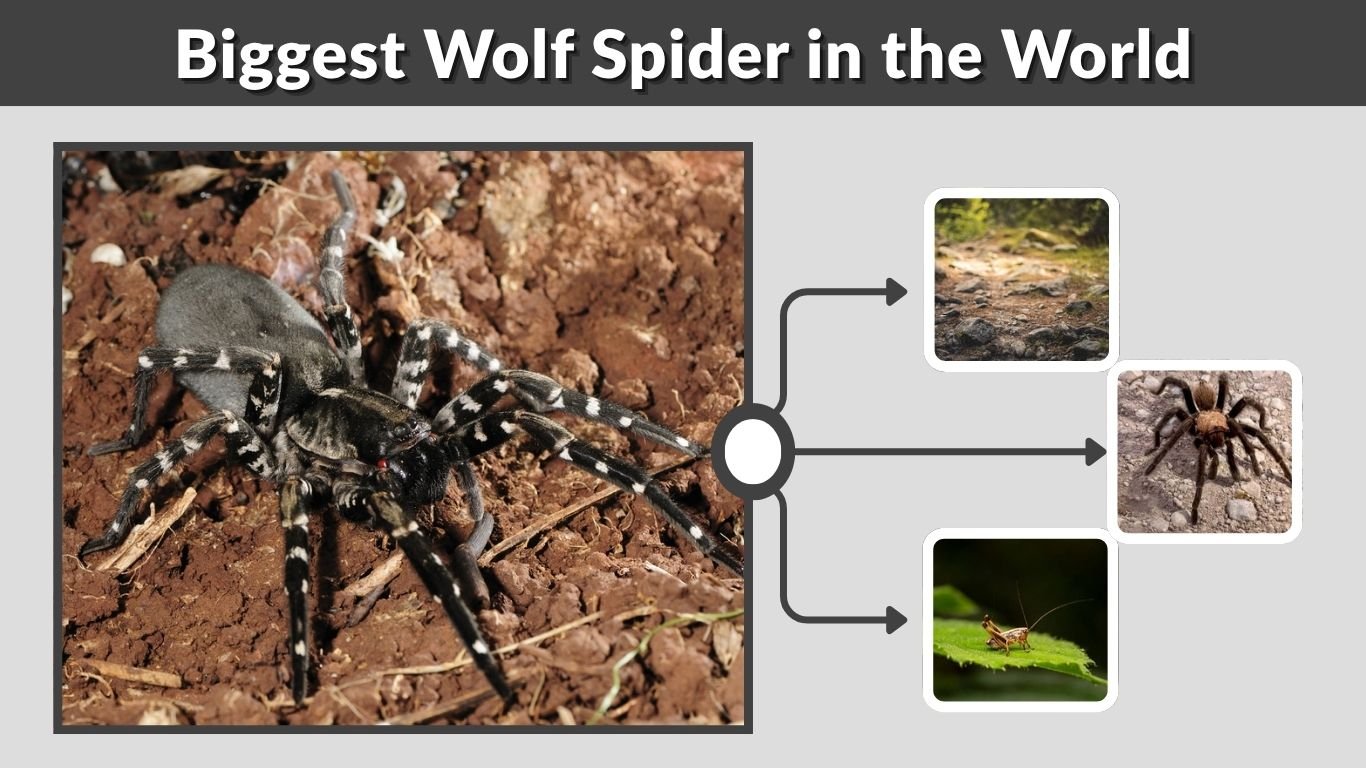
The biggest wolf spider commonly cited is the Deserta Grande wolf spider (Hogna ingens), an exceptionally large species found only on a small island in the Madeira archipelago. Large females can reach about 4 cm in body length and around 12 cm across the legs. Despite its impressive size, it is not the world’s largest spider overall. Other wolf spiders, including the Carolina wolf spider, can also become remarkably large. Here is how the biggest species compare in size, habitat, behavior, and appearance.
What Is the Biggest Wolf Spider in the World?
The Deserta Grande wolf spider (Hogna ingens) is regarded as one of the largest wolf spider species known. It is considerably larger than most members of the family Lycosidae and has a powerful, heavy-bodied appearance. The species is especially remarkable because its enormous size is combined with an extremely restricted natural distribution.
Deserta Grande Wolf Spider Size
Large females may reach:
- Body length: Up to about 4 cm or 1.6 inches
- Leg span: Up to roughly 12 cm or 4.7 inches
- Sex difference: Females are generally larger than males
- Build: Thick-bodied with strong hunting legs
- Color: Mainly gray to black with lighter markings
These measurements place Hogna ingens among the largest known wolf spiders. Twycross Zoo reports females reaching approximately 12 cm in leg span and 4 cm in body length.
Why Is It So Large?
Like other wolf spiders, Hogna ingens is an active predator rather than a spider that depends on a large prey-catching web. Its powerful body and legs help it move across rocky ground and overpower available prey.
Island environments can also produce unusual evolutionary patterns, although its exceptional size should not automatically be attributed to one single cause without detailed evolutionary evidence.
How Big Is the Biggest Wolf Spider?
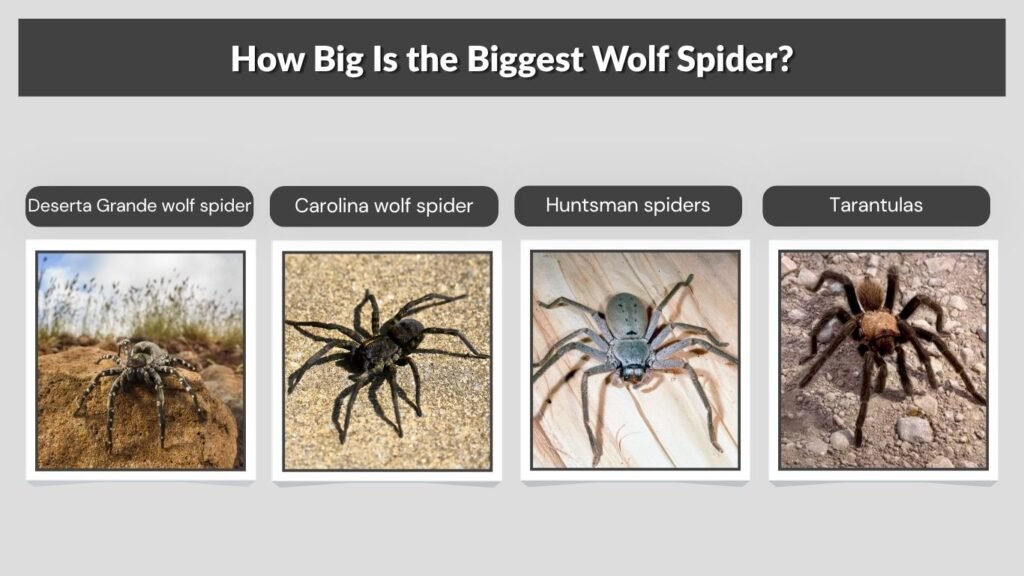
When people describe spider size, they may be talking about body length, total leg span, or body mass. This can make comparisons difficult. For Hogna ingens, its combination of a body approaching 4 cm and legs spanning roughly 12 cm makes it extraordinarily large for a wolf spider.
Biggest Wolf Spider Size Comparison
Approximate comparisons include:
- Deserta Grande wolf spider: Up to about 4 cm body length and 12 cm leg span
- Carolina wolf spider: Large females may reach roughly 2.2–3.5 cm in body length
- Many common wolf spiders: Often substantially smaller than either species
- Huntsman spiders: Some have much wider leg spans but are not wolf spiders
- Tarantulas: Many are heavier and larger overall but belong to a different spider family
This is why the phrase “biggest wolf spider” should not be confused with “biggest spider in the world.”
Where Does the World’s Biggest Wolf Spider Live?
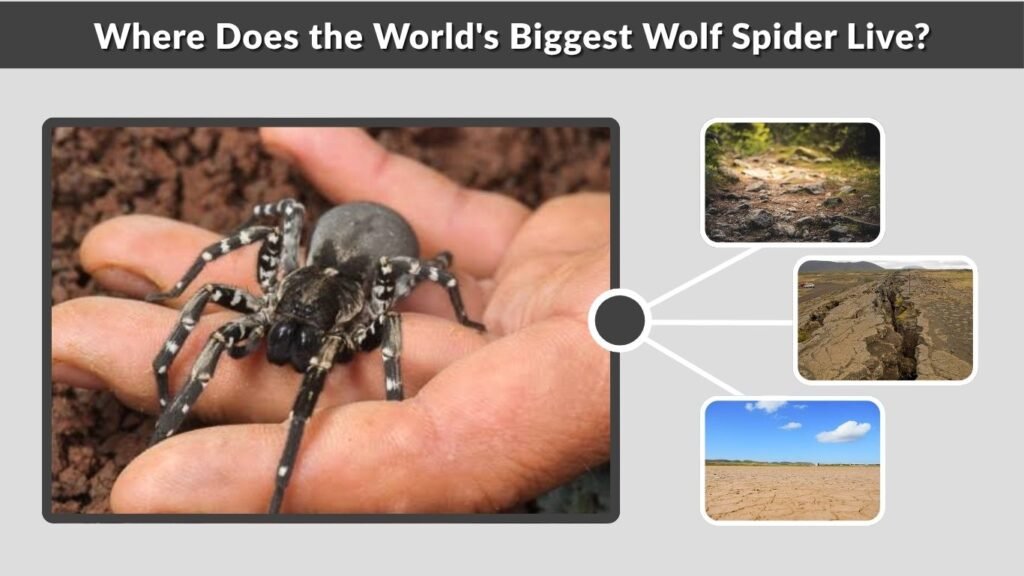
The enormous Hogna ingens has one of the most restricted distributions of any major wolf spider. It is endemic to Deserta Grande, part of Portugal’s Madeira archipelago. Research has documented the species within a very limited area, making habitat protection particularly important for its survival.
Deserta Grande Island Habitat
The spider is associated with:
- Rocky ground
- Crevices
- Areas beneath stones
- Native vegetation
- Dry island landscapes
- A limited valley habitat
Its known habitat is concentrated around Vale da Castanheira on Deserta Grande. Invasive vegetation has altered portions of this habitat and contributed to conservation concerns.
Is the Biggest Wolf Spider Endangered?
Yes. The Deserta Grande wolf spider is classified as Critically Endangered and has been the focus of conservation and captive-breeding efforts. Its extremely restricted range makes the species vulnerable to habitat changes and other environmental threats.
Biggest Wolf Spider in North America
North America has its own impressive giant: the Carolina wolf spider (Hogna carolinensis). It is widely recognized as the largest wolf spider species in North America and occurs across a broad geographic range. Although large, it generally does not reach the reported maximum size of Hogna ingens.
Carolina Wolf Spider Size
Large Carolina wolf spiders have:
- Female body lengths commonly around 22–35 mm
- Male body lengths around 18–20 mm
- Strong, hairy legs
- A heavy-bodied appearance
- Brown or gray camouflage
- Large forward-facing eyes
A Colorado museum source describes the species as reaching about an inch in body length with a leg span approaching 3 inches, while other individuals can vary in size.
Biggest Wolf Spider in Texas
The Carolina wolf spider occurs in North America and is among the largest wolf spiders that can be encountered in Texas.
When Texans report a “giant wolf spider,” a large Hogna species may be responsible. Females tend to look particularly impressive because their bodies are larger and heavier than those of males.
What Does the Biggest Wolf Spider Look Like?
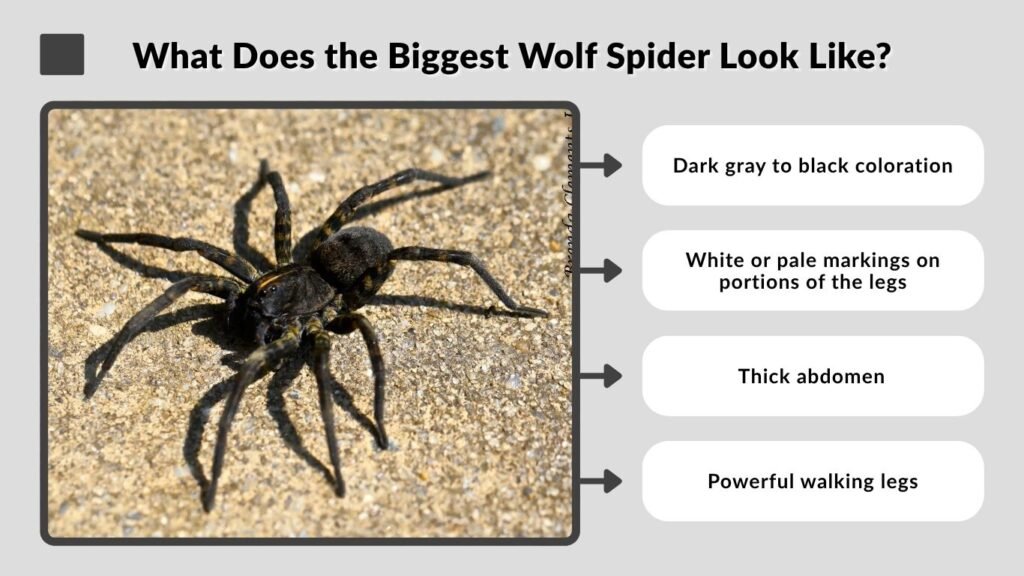
The Deserta Grande wolf spider looks much like an oversized version of other robust wolf spiders. It has a dark body, powerful legs, and the characteristic eye arrangement of the wolf spider family. Its coloration helps it remain less noticeable among rocks and dark ground despite its extraordinary size.
Identification Features
Look for characteristics such as:
- Dark gray to black coloration
- White or pale markings on portions of the legs
- Thick abdomen
- Powerful walking legs
- Hairy body
- Eight eyes
- Large forward-facing eyes
- Ground-hunting behavior
However, appearance alone should not be used to identify Hogna ingens outside its natural range because many unrelated large spiders can look similar.
What Does the Biggest Wolf Spider Eat?
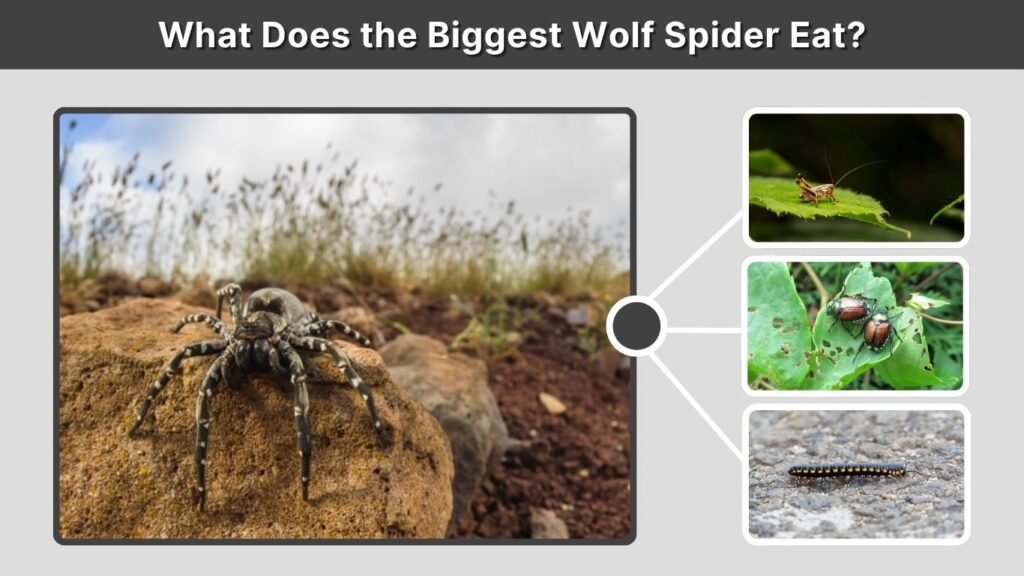
Large wolf spiders are active predators. They hunt on the ground rather than constructing large capture webs and use speed, vision, and strength to overpower prey. The Deserta Grande wolf spider is capable of eating relatively large prey compared with smaller wolf spiders.
Foods It May Eat
Its prey can include:
- Insects
- Beetles
- Other spiders
- Millipedes
- Other small invertebrates
- Occasionally small vertebrate prey such as lizards
Reports on Hogna ingens document a broad predatory diet that can include insects, millipedes, smaller spiders, and even small lizards.
Is the Biggest Wolf Spider Dangerous?
The size of Hogna ingens can make it appear threatening, but being large does not automatically make a spider exceptionally dangerous. Wolf spiders possess venom for subduing prey and may bite defensively if trapped or handled.
Can the Biggest Wolf Spider Bite?
Yes. Like other wolf spiders, it has fangs and venom.
A defensive bite from a large individual could be painful. However, wolf spiders generally prefer avoiding confrontation rather than attacking people. They do not regard humans as prey.
Because Hogna ingens is extremely rare and critically endangered, wild individuals should be left undisturbed.
Biggest Wolf Spider Ever Recorded
Searches for the biggest wolf spider ever found often lead to dramatic photographs, but there is no widely recognized official record for one individual wolf spider comparable to formal human or sporting world records. Measurements are normally reported for species rather than a single record-holding specimen.
What Is the Largest Reliable Size?
For the Deserta Grande wolf spider, reliable published and zoological sources report approximately 4 cm in body length and up to 12 cm in leg span for large females. Those figures are better treated as reported maximum species measurements rather than the size of one officially verified “largest-ever” individual.
Biggest Wolf Spider Facts
Large wolf spiders demonstrate how much size can vary within the Lycosidae family. Despite their intimidating proportions, they retain the same basic hunting strategy, strong eyesight, maternal behavior, and ground-dwelling lifestyle seen in many smaller wolf spiders.
Quick Facts
- Hogna ingens is among the world’s largest wolf spiders.
- Females can reach about 12 cm across the legs.
- Its body can reach approximately 4 cm long.
- It lives naturally only on Deserta Grande.
- The species is Critically Endangered.
- It hunts prey rather than using a capture web.
- The Carolina wolf spider is the largest wolf spider in North America.
- Female wolf spiders are commonly larger than males.
- Wolf spider mothers carry their egg sacs.
- Newly hatched spiderlings ride on their mother’s abdomen.
FAQs
The phrase “biggest wolf spider” can be confusing because body length and leg span are measured differently, and some other spider families become substantially larger. These answers clarify the most common questions about giant wolf spiders.
What is the biggest wolf spider in the world?
The Deserta Grande wolf spider (Hogna ingens) is widely regarded as one of the world’s largest wolf spider species. Large females can reach about 4 cm in body length and approximately 12 cm in leg span.
How big is the world’s biggest wolf spider?
The largest reported female Deserta Grande wolf spiders can span approximately 12 cm, or about 4.7 inches, including their legs. Their bodies can reach around 4 cm long, making them exceptionally large members of the wolf spider family.
What is the biggest wolf spider in North America?
The Carolina wolf spider (Hogna carolinensis) is recognized as the largest wolf spider species in North America. Females can reach roughly 22–35 mm in body length and are noticeably larger than males.
Is a wolf spider the biggest spider in the world?
No. Wolf spiders can become large, but they are not the world’s largest spiders overall. Some tarantulas become substantially heavier, while giant huntsman spiders can achieve much greater leg spans. The “biggest” claim applies specifically to comparisons within wolf spiders.
Is the biggest wolf spider poisonous?
Wolf spiders are venomous rather than poisonous because they inject venom through their fangs. They use this venom primarily to subdue prey. Large wolf spiders may bite defensively if handled or trapped, but they normally prefer to escape from people.
