
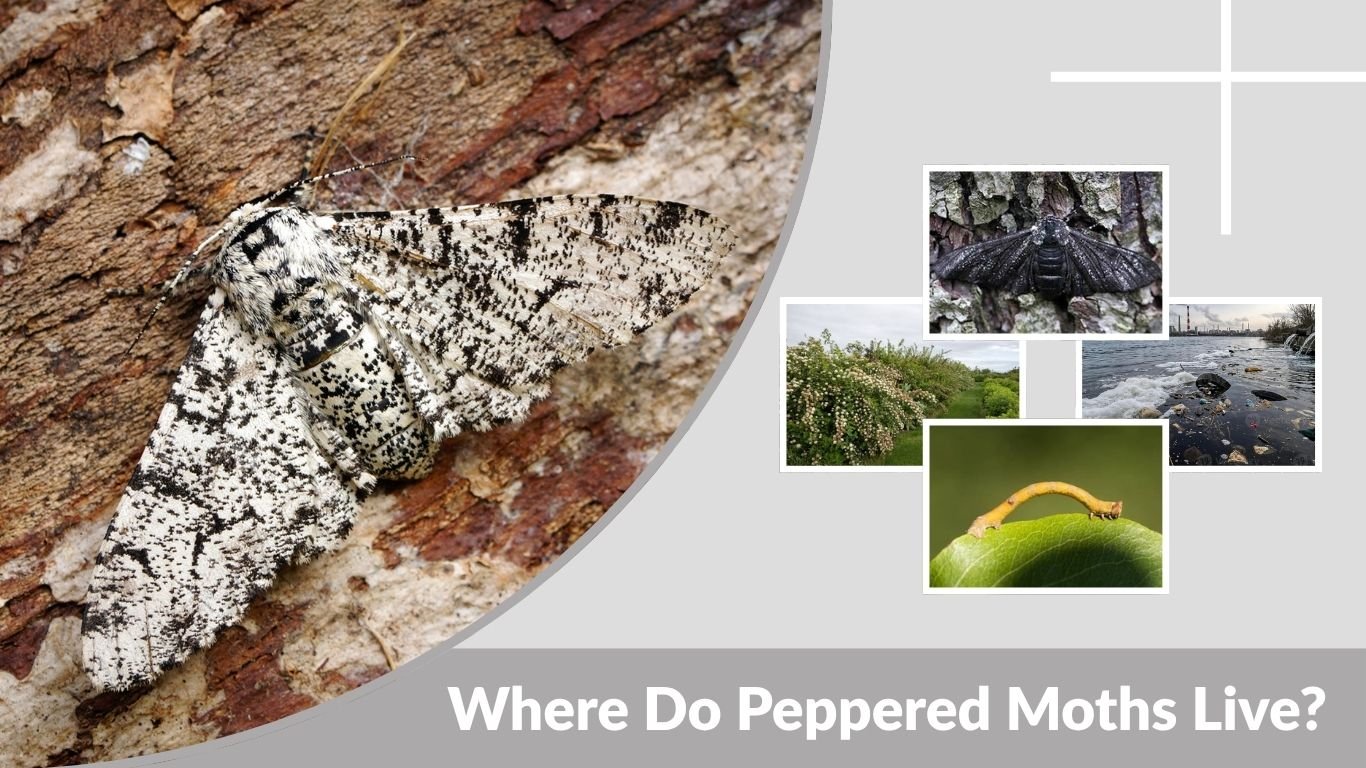
Peppered moths live mainly in temperate parts of the Northern Hemisphere, especially in woodland, gardens, hedgerows, and areas with plenty of trees and shrubs. They are best known from Britain and Europe, but they also occur in parts of Asia and North America. Their habitat matters because their wing color helps them blend into tree bark, lichen, and other natural resting surfaces.
Where Do Peppered Moths Live in the World?
Peppered moths are found across a wide range of cool and temperate regions. They are most famously associated with Britain, where they became a classic example of natural selection during the Industrial Revolution. However, they are not limited to the United Kingdom.
The peppered moth, known scientifically as Biston betularia, lives in parts of Europe, Asia, and North America. In these regions, it is usually connected to wooded places, rural landscapes, parks, and gardens where trees provide shelter, camouflage, and food for caterpillars.
In Britain and Ireland, peppered moths are widespread. They are often seen in woodlands, hedgerows, and suburban gardens. In Europe, they occur in many countries with suitable temperate habitats. In Asia, their range includes several northern and eastern regions. In North America, related populations live in areas where deciduous trees and mixed woodland are common.
Quick Range Summary
| Region | Where Peppered Moths May Live | Common Habitat Type |
|---|---|---|
| Britain and Ireland | Widespread across many areas | Woodlands, gardens, hedgerows |
| Europe | Many temperate regions | Forest edges, parks, wooded countryside |
| Asia | Parts of northern and eastern Asia | Temperate woodland and shrub areas |
| North America | Parts of the United States and Canada | Mixed woodland and tree-rich areas |
What Environment Do Peppered Moths Live In?
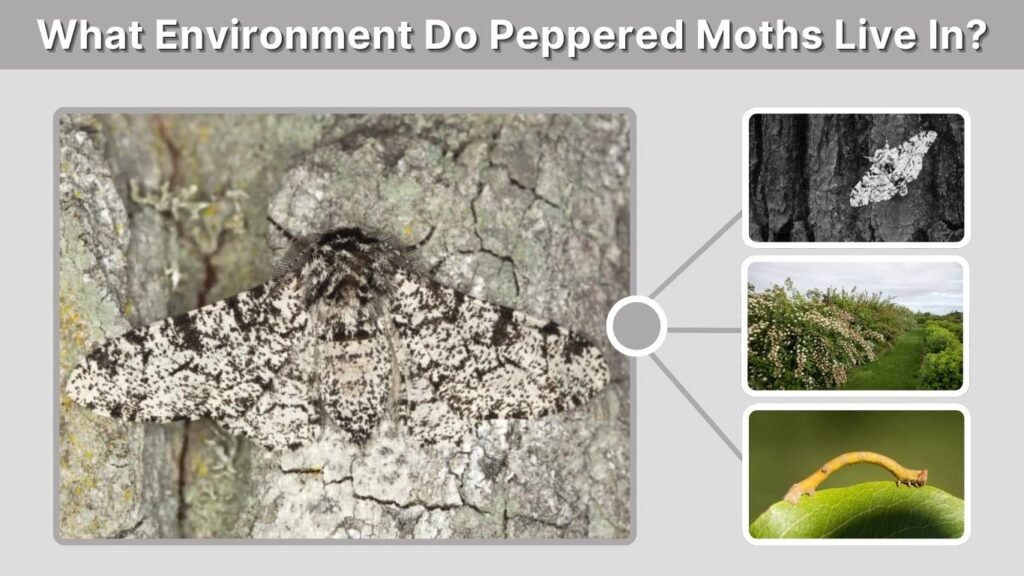
Peppered moths live in environments where they can hide during the day and where their caterpillars can feed. Adult moths are nocturnal, which means they are mostly active at night. During the day, they rest on tree trunks, branches, or other surfaces where their wing pattern helps them avoid predators.
The best environments for peppered moths usually include:
- Trees with bark that provides camouflage
- Shrubs and hedgerows for shelter
- Leaves for caterpillars to feed on
- Low disturbance areas where moths can rest
- Nearby vegetation that supports the full life cycle
They are not usually thought of as insects of open grassland or desert-like areas. Instead, they are strongly linked with tree-rich habitats. Woodlands, parks, orchards, gardens, and countryside edges can all support peppered moths if the right host plants are present.
What Trees Do Peppered Moths Live In?
Peppered moths do not live inside trees, but they rest on tree bark and their caterpillars feed on the leaves of several tree and shrub species. The adult moth’s speckled appearance helps it blend into pale bark, lichen-covered trunks, and branches.
Common trees and shrubs linked with peppered moth caterpillars include:
- Birch
- Oak
- Willow
- Hawthorn
- Blackthorn
- Hazel
- Apple and other fruit trees
- Other broadleaf trees and shrubs
This variety helps explain why peppered moths can live in many different wooded environments. They do not depend on just one tree species. As long as caterpillars have suitable leaves and adults have safe resting places, peppered moths can survive in a range of habitats.
Why Tree Bark Matters So Much
Peppered moths are famous because their survival is closely connected to camouflage. The typical peppered moth has pale wings with dark speckles. On pale, lichen-covered bark, this pattern can make the moth difficult for birds to see.
During the Industrial Revolution, pollution darkened many tree trunks in industrial areas. Soot killed or reduced pale lichens and made bark surfaces darker. In those places, darker moths were better hidden than pale moths. Birds were more likely to spot and eat the lighter moths, so dark moths became more common in polluted areas.
Later, as air quality improved, tree bark became lighter again in many places and lichens returned. Pale peppered moths once again had better camouflage in many habitats. This change made the peppered moth one of the best-known examples of how animals can adapt to environmental pressure.
Where Do Black Peppered Moths Live?
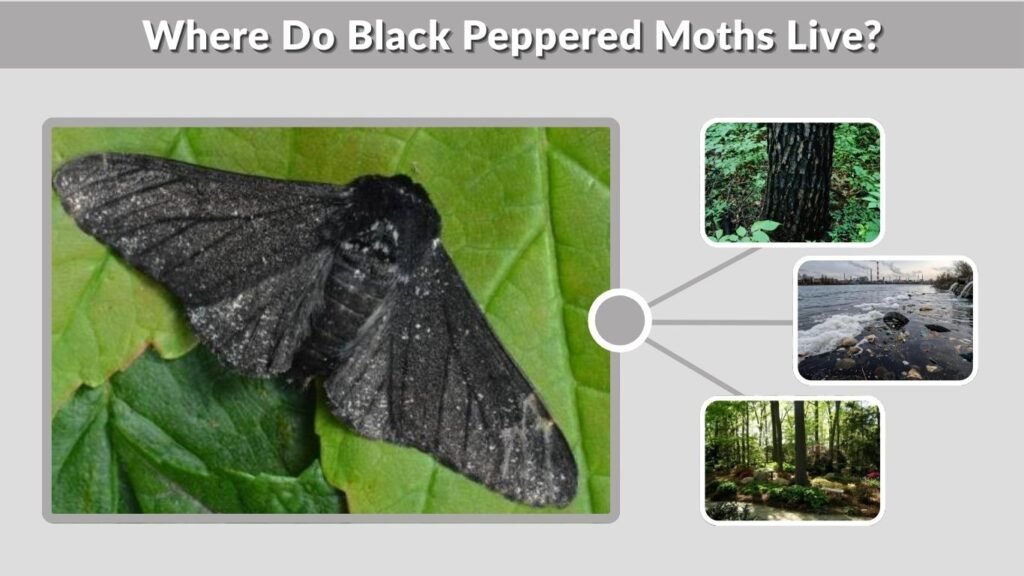
Black peppered moths, often called melanic peppered moths, can live in the same general areas as pale peppered moths. The difference is not that they require a completely different habitat. Instead, their dark color gives them an advantage in certain surroundings.
Black peppered moths are more likely to survive where resting surfaces are dark, such as:
- Soot-darkened tree bark
- Polluted industrial areas
- Dark trunks or branches
- Shaded woodland surfaces
- Areas where pale lichens are less common
Historically, black peppered moths became especially common in polluted industrial regions of Britain. Their dark wings helped them blend into soot-darkened environments. In cleaner environments with pale bark and lichens, the typical pale form often has better camouflage.
Where Do White Speckled Peppered Moths Live?
White or pale speckled peppered moths live in woodlands, gardens, and tree-filled habitats where their wing pattern blends with lighter surfaces. They are the typical form most people imagine when they hear the name “peppered moth.”
Their pale wings with dark speckles are useful on:
- Lichen-covered tree bark
- Pale branches
- Light woodland surfaces
- Clean rural habitats
- Gardens and parks with mature trees
This form was common before heavy industrial pollution changed many environments. It also became more common again in many areas after pollution levels declined and tree bark became lighter.
Do Peppered Moths Live in Cities?
Peppered moths can live in cities if there are enough trees, shrubs, and suitable resting places. Urban parks, gardens, cemeteries, green corridors, and tree-lined streets may provide habitat. However, they are generally more associated with wooded or semi-wooded environments than with heavily built-up areas without vegetation.
A city with mature trees and connected green spaces can support moths better than an area with only concrete, buildings, and little plant life. Caterpillars need leaves to eat, and adult moths need places to hide. This is why urban wildlife areas can be important for moth species, including peppered moths.
How Long Do Peppered Moths Live?
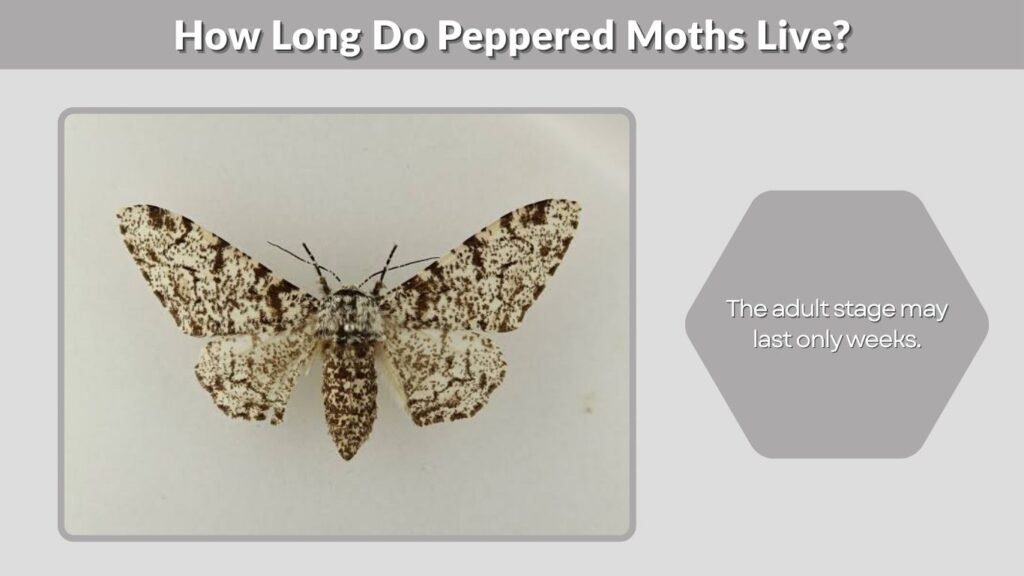
Peppered moths go through a complete life cycle: egg, caterpillar, pupa, and adult. In many parts of their range, there is one main generation each year. The adult moth stage is relatively short compared with the whole life cycle.
The full life cycle can last many months because the moth spends part of its life as a pupa, often overwintering before emerging as an adult. Adult peppered moths usually live for only a short period, mainly long enough to mate and lay eggs.
A simple way to understand their lifespan is:
- Eggs hatch into caterpillars
- Caterpillars feed on leaves and grow
- Caterpillars pupate, often in soil or sheltered places
- Pupae survive through the colder season in many regions
- Adults emerge, mate, lay eggs, and die
So, when people ask “how long do peppered moths live,” the answer depends on whether they mean the adult moth or the entire life cycle. The adult stage may last only weeks, while the full life cycle can stretch across much of a year.
What Do Peppered Moths Need to Survive?
Peppered moths need more than just trees. Their survival depends on a combination of food, shelter, camouflage, and suitable seasonal conditions.
They need:
- Host plants for caterpillars
- Tree bark or branches for adult resting sites
- Camouflage from birds and other predators
- Suitable temperatures for development
- Places to pupate safely
- Enough connected habitat to support breeding
Because they are nocturnal, adult moths are mostly active after dark. They may be attracted to lights, but artificial lighting can also disturb moth behavior. Healthy habitats with diverse trees and shrubs are usually better than overly tidy areas with few native plants.
Why Are Peppered Moths Important?
Peppered moths are important because they show how living things can change over time in response to the environment. Their color forms became famous in biology because they helped explain natural selection in a visible, easy-to-understand way.
When the environment favored dark camouflage, dark moths survived better. When cleaner conditions favored pale camouflage, pale moths became more common again. This does not mean individual moths changed color during their lives. It means moths with helpful inherited traits were more likely to survive and reproduce.
Peppered moths also remind us that small insects are closely connected to habitat quality. Changes in pollution, tree cover, lichens, and bird predation can all affect how well they survive.
FAQs
Where do peppered moths live?
Peppered moths live mainly in temperate regions of the Northern Hemisphere, including parts of Britain, Europe, Asia, and North America. They are usually found in woodlands, gardens, parks, hedgerows, and other places with trees and shrubs that provide shelter and food for their caterpillars.
Where does the peppered moth live in Britain?
In Britain, peppered moths are widespread and can live in woodlands, gardens, hedgerows, parks, and countryside areas. They are especially associated with places that have mature trees, leafy shrubs, and bark surfaces where adult moths can rest and stay camouflaged during the day.
What environment do peppered moths live in?
Peppered moths live in tree-rich environments such as woodland, forest edges, gardens, parks, and hedgerows. They need leafy plants for the caterpillar stage and bark or branches where adult moths can rest. Their habitat also needs good camouflage surfaces to help protect them from birds.
What trees do peppered moths live on?
Peppered moths may rest on many types of tree bark, while their caterpillars feed on leaves from trees and shrubs such as birch, oak, willow, hawthorn, blackthorn, hazel, and fruit trees. They are flexible feeders, which helps them survive in many wooded habitats.
How long do peppered moths live?
The adult peppered moth usually lives for a short time, often only long enough to mate and lay eggs. However, the full life cycle can last much longer because the moth also passes through egg, caterpillar, and pupa stages. In many regions, the species has one generation per year.
