
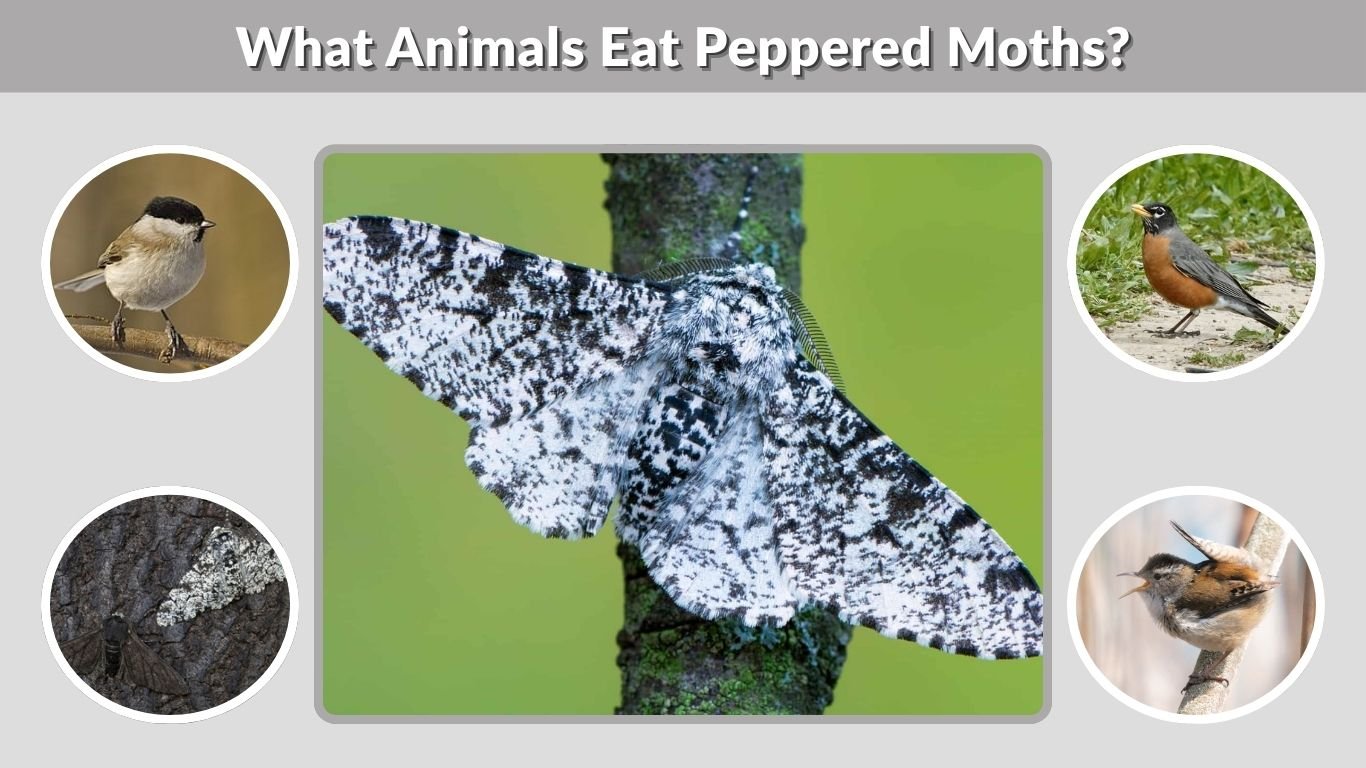
Peppered moths are eaten by several animals, especially birds that hunt resting moths during the day. Bats, spiders, and other small predators may also catch them, depending on the habitat and life stage. These moths are famous because their survival depends heavily on camouflage. Their wing color helps them hide from predators on tree bark, branches, and lichen-covered surfaces.
What Animals Eat the Peppered Moth?
Peppered moths are prey animals, which means many creatures may eat them when they are easy to find. The most important predators are birds. Birds use their sharp eyesight to spot adult moths resting on tree trunks, branches, walls, or other surfaces during the day.
Peppered moths are nocturnal, so they fly mostly at night. During daylight, they usually stay still and rely on camouflage. If their color matches the background, they are harder for birds to see. If they stand out, they are more likely to be eaten.
Other predators can also eat peppered moths, especially at night or during the caterpillar stage. These may include bats, spiders, beetles, and small insect-eating animals.
Main Peppered Moth Predators
| Predator | What It Usually Eats | How It Catches Peppered Moths |
|---|---|---|
| Birds | Adult moths and sometimes larvae | Spots resting moths during the day |
| Bats | Flying adult moths | Hunts at night using echolocation |
| Spiders | Small moths or larvae | Catches them in webs or by ambush |
| Beetles and insects | Eggs, larvae, or pupae | Finds them on plants or near soil |
| Small mammals | Larvae or pupae | May eat them while foraging |
What Birds Eat Peppered Moths?
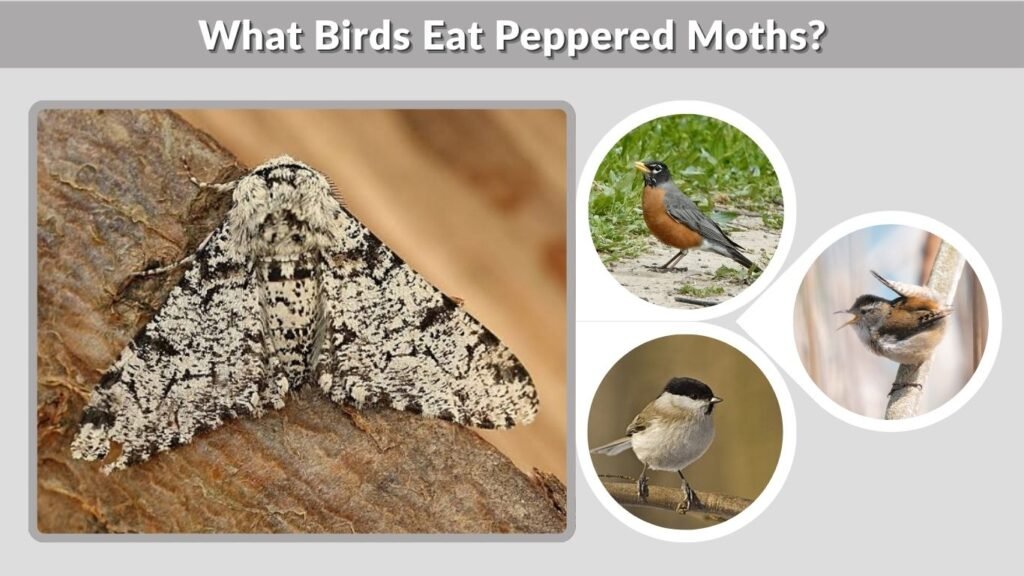
Birds are the best-known predators of peppered moths. In the wild, many insect-eating birds may eat moths if they find them. The exact bird species can vary by location, but woodland and garden birds are likely predators.
Birds that may eat peppered moths include:
- Robins
- Sparrows
- Tits and chickadees
- Wrens
- Blackbirds
- Other small insect-eating birds
Birds are important in the peppered moth story because they helped shape which moth colors survived best. Light-colored moths were harder to see on pale, lichen-covered bark. Dark-colored moths were harder to see on soot-darkened bark in polluted areas. Birds were more likely to eat the moths that stood out.
Why Birds Can Find Peppered Moths
Birds have strong vision and often search bark, leaves, and branches for insects. A resting peppered moth does not move much during the day, so its best defense is not speed. Its best defense is blending in.
If a pale moth rests on a light tree trunk, it may be difficult to notice. If that same moth rests on dark bark, it becomes easier to spot. The reverse is true for black peppered moths. This is why camouflage is so important to their survival.
Do Bats Eat Peppered Moths?
Yes, bats may eat adult peppered moths when the moths are flying at night. Since peppered moths are nocturnal, they are active during the same time many bats hunt. Bats usually catch flying insects in the air, including moths.
However, birds are usually discussed more often in relation to peppered moth evolution because adult moths rest during the day and can be selected by visual predators. Bats hunt differently. Instead of relying mainly on sight, many bats use echolocation to detect flying insects in the dark.
How Bats Hunt Moths
Bats can catch moths by:
- Flying through moth-rich areas at night
- Using echolocation to detect movement
- Catching moths in the air
- Feeding near trees, hedgerows, and woodland edges
Not every peppered moth will be caught by bats, but bats are part of the wider predator group that can reduce moth numbers.
What Eats Peppered Moth Larvae?
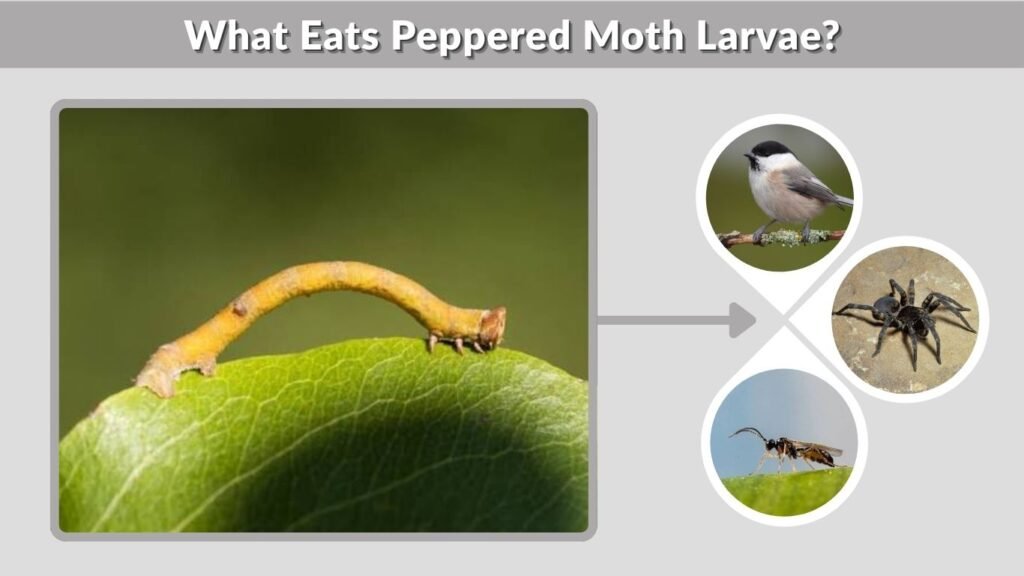
Peppered moth larvae, also called caterpillars, face different predators from adult moths. Caterpillars live on plants and feed on leaves, which makes them vulnerable to birds, spiders, predatory insects, and parasitic wasps.
The larvae have their own defenses. Peppered moth caterpillars can look like small twigs, which helps them hide on branches. This stick-like appearance makes them less obvious to birds and other animals.
Common predators of peppered moth larvae include:
- Birds searching leaves and branches
- Spiders on plants
- Predatory beetles
- Parasitic wasps
- Other insect predators
Caterpillars are soft-bodied and nutritious, so many animals eat them. This is why camouflage is useful even before the moth becomes an adult.
What Do Peppered Moths Eat?
Peppered moths eat different foods at different life stages. The caterpillar stage is the main feeding stage. Larvae need lots of food because they are growing quickly and storing energy for pupation.
Peppered moth caterpillars feed on leaves from several trees and shrubs. They are herbivores, meaning they eat plant material rather than other animals.
What Do Peppered Moth Caterpillars Eat?
Peppered moth caterpillars commonly eat leaves from broadleaf trees and shrubs. Their host plants may include:
- Birch
- Oak
- Willow
- Hawthorn
- Blackthorn
- Hazel
- Apple trees
- Other deciduous trees and shrubs
This flexible diet helps peppered moths survive in many wooded habitats. They are not limited to just one plant, so they can live in woodlands, hedgerows, parks, gardens, and other tree-rich places.
What Do Adult Peppered Moths Eat?
Adult peppered moths do not feed as heavily as caterpillars. The adult stage is mostly focused on mating and laying eggs. Some adult moths may take nectar or other liquid foods, but the caterpillar stage is much more important for growth and feeding.
In simple terms, peppered moth larvae eat leaves, while adult peppered moths mainly live long enough to reproduce.
Do Peppered Moths Eat Lichen?
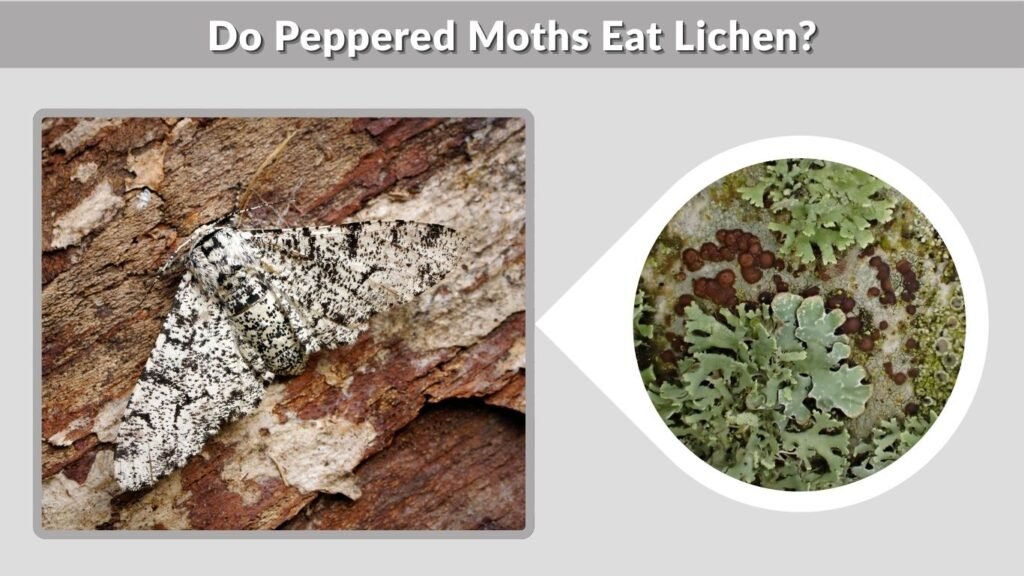
Peppered moths do not mainly eat lichen. Lichen is important because it affects camouflage, not because it is their main food. Pale peppered moths blend well with lichen-covered bark, which helps them avoid being seen by birds.
This is a common point of confusion. People often hear that peppered moths live on lichen-covered trees and assume they eat lichen. In reality, caterpillars feed on leaves, while adult moths rest on bark and other surfaces.
Do Peppered Moths Eat Pollution?
No, peppered moths do not eat pollution. Pollution became important in peppered moth history because it changed their environment. During the Industrial Revolution, soot darkened tree bark and reduced pale lichens in some areas. This made dark moths harder to see and pale moths easier to see.
The moths were not eating soot or pollution. Instead, pollution changed the background where they rested. Predators then found some moth colors more easily than others.
Do Black Peppered Moths Eat Clothes?
No, black peppered moths do not eat clothes. Peppered moths are not the same as clothes moths. Their caterpillars feed on leaves from trees and shrubs, not wool, cotton, or stored fabric.
Clothes moth damage usually comes from specific species whose larvae feed on natural fibers. Peppered moth larvae are outdoor plant feeders. Seeing a dark peppered moth does not mean your clothes are at risk.
Why Do Animals Eat Peppered Moths?
Animals eat peppered moths because they are a source of food. Birds, bats, spiders, and other predators need protein and energy, and moths are part of the food web. Peppered moths are not dangerous predators themselves; they are mostly plant-feeding insects during the larval stage.
Predation also plays a major role in natural selection. When predators eat the moths that are easiest to see, better-camouflaged moths are more likely to survive and reproduce. Over many generations, this can change how common certain color forms are in a population.
How Peppered Moths Avoid Being Eaten
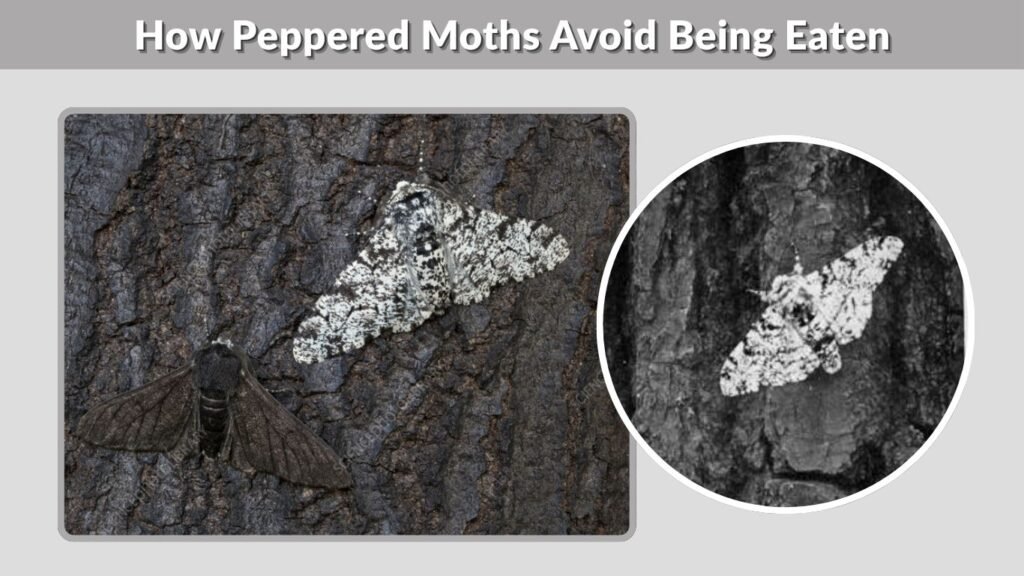
Peppered moths rely on camouflage more than active defense. Their wing patterns help them blend into the surfaces where they rest. Caterpillars also use camouflage by looking like twigs.
Peppered moths avoid predators by:
- Resting still during the day
- Blending with tree bark
- Having speckled or dark wing forms
- Flying mostly at night
- Using twig-like camouflage as caterpillars
Their survival depends on matching the environment. A moth that blends in well is less likely to be noticed by birds. A moth that contrasts with its background has a higher risk of being eaten.
FAQs
What animals eat peppered moths?
Peppered moths are mainly eaten by birds, especially when adults rest on tree bark during the day. Bats may catch flying adults at night, while spiders, beetles, parasitic wasps, and other insects may eat eggs, larvae, or pupae. The exact predators depend on habitat and life stage.
What birds eat peppered moths?
Many insect-eating birds may eat peppered moths, including robins, sparrows, tits, chickadees, wrens, and blackbirds. Birds are important predators because they use vision to spot moths resting on trees. Camouflage helps moths avoid being seen and eaten.
What do peppered moth larvae eat?
Peppered moth larvae eat leaves from trees and shrubs. Common food plants include birch, oak, willow, hawthorn, blackthorn, hazel, and apple trees. The caterpillar stage is the main feeding stage because larvae need energy to grow before pupating.
Do adult peppered moths eat?
Adult peppered moths do not feed as much as caterpillars. Their main role is reproduction. Some adult moths may take nectar or other liquid foods, but most growth and feeding happens during the larval stage, when caterpillars eat leaves.
Do peppered moths eat clothes or lichen?
Peppered moths do not eat clothes, and they do not mainly eat lichen. Their caterpillars feed on leaves from trees and shrubs. Lichen matters because it helps pale moths blend into tree bark, not because it is their main food source.
