
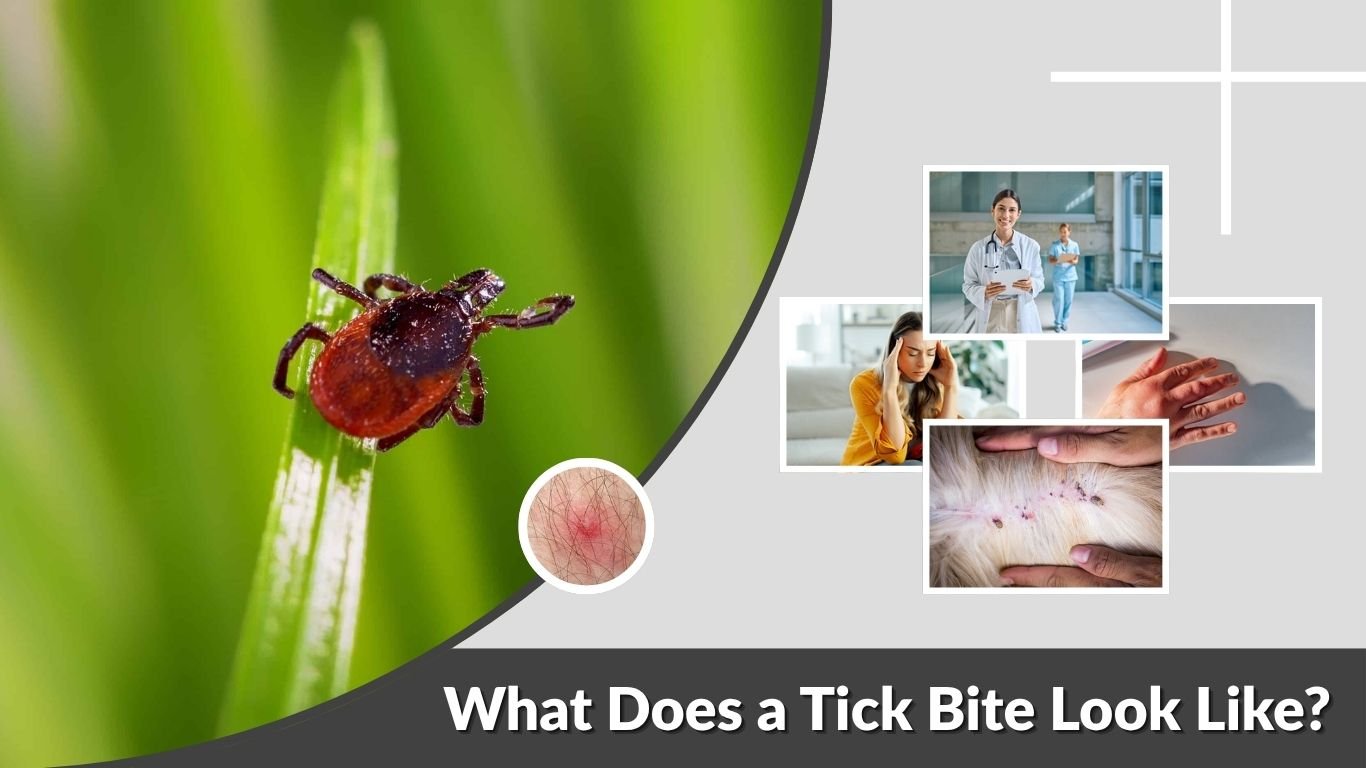
A tick bite may initially look like a small red bump similar to a mosquito bite. Some people notice little or no skin reaction, especially while the tick is still attached. After removal, mild redness, tenderness, or itching can remain for a short time. More concerning changes include an expanding rash, worsening swelling, fever, headache, or other illness. Because ticks can transmit several diseases, knowing what a normal bite looks like—and how it changes after 24 hours or a week—can help you decide when medical attention is needed.
What Does a Tick Bite Look Like?
A typical tick bite is usually small and localized. If the tick is still attached, it may look like a tiny dark bump fixed firmly to the skin. After removal, the bite itself may resemble many other minor insect bites.
Common characteristics include:
- Small red or pink bump
- Tiny central puncture mark
- Mild swelling
- Slight tenderness
- Mild itching
- Small area of redness around the bite
A small bump or redness that appears immediately and disappears within one or two days can simply be irritation from the bite and does not by itself indicate Lyme disease.
What Does a Tick Bite Look Like at First?
Immediately after a tick bite, there may be almost nothing noticeable.
Ticks can remain attached while feeding without causing significant pain, which is why people sometimes discover the tick before noticing any skin reaction.
During the First Few Hours
You might see:
- A tick attached to the skin
- A tiny puncture
- Slight redness
- A small raised bump
- Mild itching or tenderness
After the tick is removed, a small irritated area may remain.
Avoid assuming every red mark after a tick bite represents infection. Local inflammation can occur simply from the tick’s mouthparts and saliva.
What Does a Tick Bite Look Like After 24 Hours?
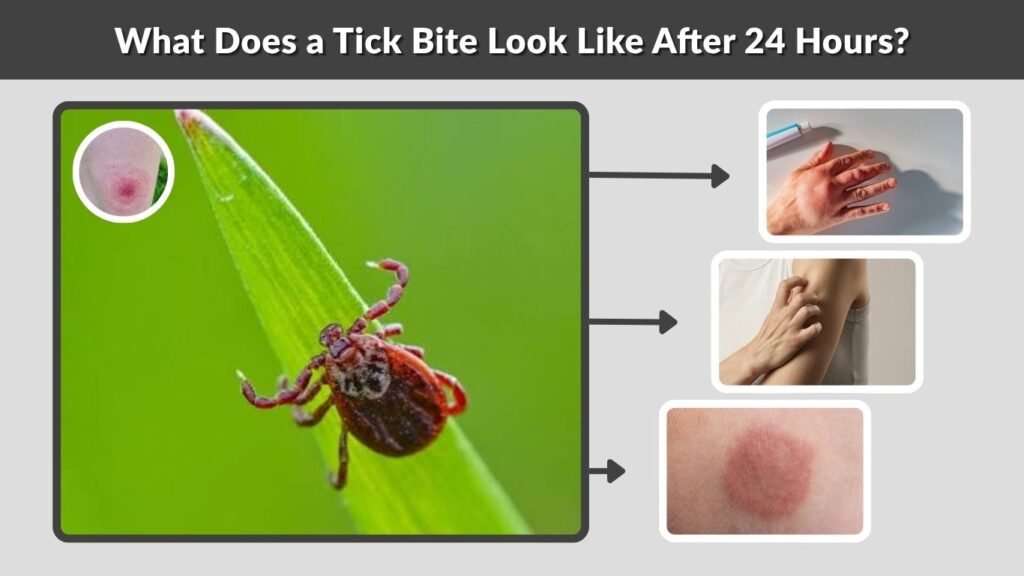
After about 24 hours, an uncomplicated bite may still appear as a small red bump.
The redness should generally remain limited rather than rapidly expanding.
A Normal Early Reaction May Include
- Small circular redness
- Mild swelling
- Slight itching
- Tenderness when touched
- A tiny scab at the attachment point
The mark may look similar to a mosquito or other insect bite.
If redness begins expanding significantly instead of remaining localized, particularly during the following days, monitor it carefully.
What Does a Tick Bite Look Like After a Week?
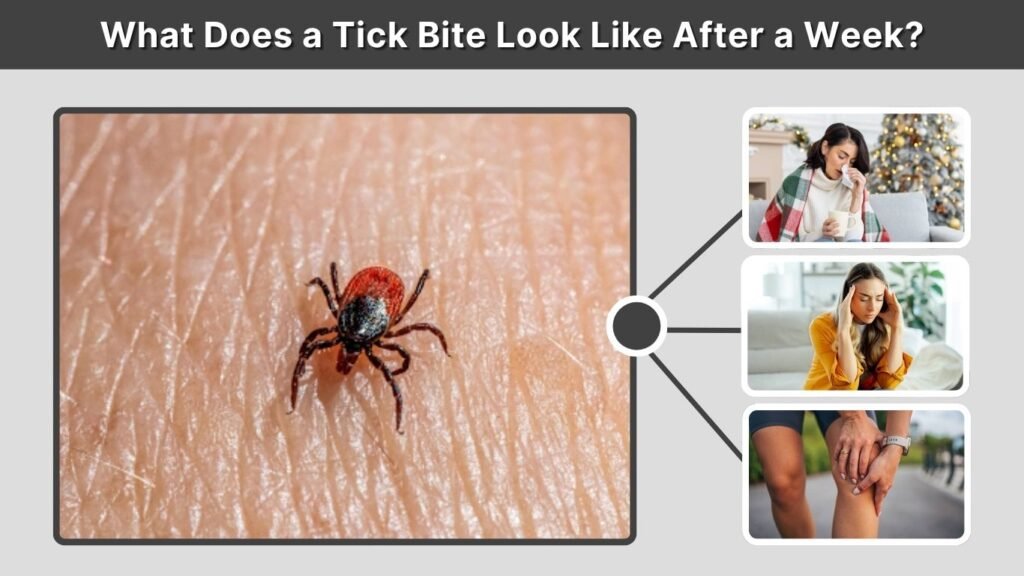
After a week, a simple local reaction will often be fading or healing.
You might see a small scab, faint discoloration, or minimal residual redness.
However, approximately a week after a bite is also when an erythema migrans rash associated with Lyme disease often begins to become noticeable. CDC guidance states that this rash can develop 3–30 days after an infected tick bite, with an average onset around seven days.
Concerning Changes After a Week
Watch for:
- An expanding circular or oval rash
- Redness becoming progressively larger
- Warm skin around the rash
- New fever or chills
- Headache
- Fatigue
- Muscle or joint aches
- Swollen lymph nodes
Contact a healthcare professional if these symptoms develop after possible tick exposure.
What Does a Lyme Disease Tick Bite Look Like?
The characteristic Lyme disease rash is called erythema migrans (EM).
It usually begins near the site of the bite and gradually expands over several days.
The rash may become very large—sometimes 12 inches or more across.
Lyme Rash Characteristics
It may:
- Expand gradually
- Look circular or oval
- Feel warm
- Have fairly uniform redness
- Develop central clearing
- Occasionally resemble a bullseye
- Be minimally itchy or painful
Importantly, a Lyme rash does not always look like a classic bullseye. CDC examples show many shapes and appearances.
What Does a Bullseye Tick Bite Look Like?
A bullseye rash has rings or central clearing that give it a target-like appearance.
It may show:
- A darker or red central area
- A paler region around the center
- An expanding reddish outer area
However, relying only on the bullseye pattern can cause Lyme disease rashes to be missed.
Some erythema migrans rashes are uniformly red, oval, bluish-red, or irregular rather than forming distinct rings.
What Does a Tick Bite Look Like on Black or Brown Skin?
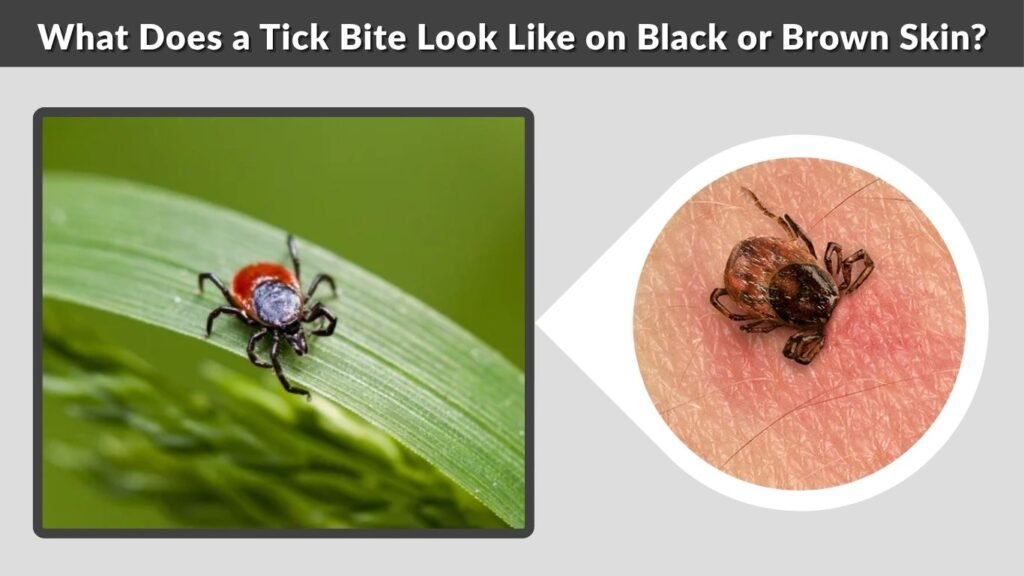
Tick bites and associated rashes can be more difficult to recognize on darker skin because redness may be less obvious.
Instead of appearing bright red, inflammation or an erythema migrans rash may look:
- Purple
- Reddish-brown
- Bluish
- Darker than surrounding skin
- Slightly lighter in some areas
- Like an expanding area of altered skin tone
The CDC documents erythema migrans in different skin tones, including lesions without obvious central clearing.
Feel can also provide clues. An affected area may feel warmer than surrounding skin.
Pay particular attention to progressive expansion, not just color.
What Does a Deer Tick Bite Look Like?
A deer tick, commonly called a blacklegged tick, can leave the same type of small red mark as other ticks.
You cannot reliably identify the tick species or determine whether it carried Lyme disease simply by looking at the bite.
The concern with blacklegged ticks is that infected individuals can transmit the bacteria responsible for Lyme disease.
After possible exposure, watch for an expanding rash or symptoms such as fever, headache, fatigue, and muscle or joint aches during the following weeks.
What Does a Lone Star Tick Bite Look Like?
A lone star tick bite can initially appear as a small red bump similar to other tick bites.
Some people develop a larger expanding rash after a lone star tick bite. This condition is known as Southern Tick-Associated Rash Illness (STARI).
STARI can resemble the erythema migrans rash associated with Lyme disease, although it is considered a different condition.
Lone star tick bites are also associated with alpha-gal syndrome in some people, which can cause allergic reactions to mammalian meat and related products.
What Does a Tick Bite Look Like After Removal?
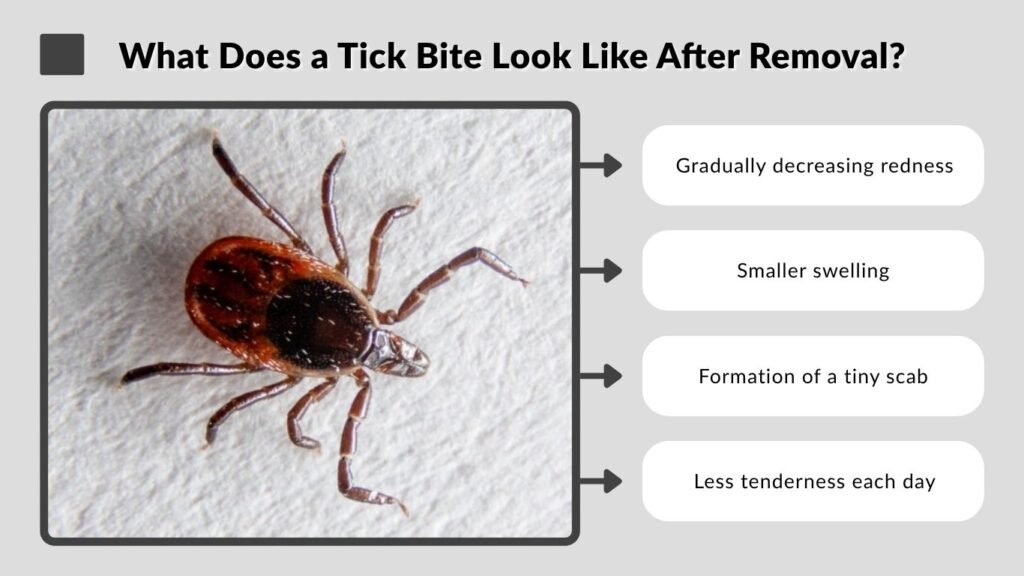
After proper removal, the site may show a small red bump with a central puncture or tiny scab.
Occasionally, irritation lasts longer if the skin was inflamed during attachment.
Normal Healing May Look Like
- Gradually decreasing redness
- Smaller swelling
- Formation of a tiny scab
- Less tenderness each day
- Fading discoloration
The area should generally improve rather than progressively worsen.
A small piece of a tick’s mouthparts can occasionally remain in the skin. If it cannot be removed easily, CDC guidance recommends allowing the skin to heal rather than aggressively digging into it.
What Does a Bad or Infected Tick Bite Look Like?
A worsening bite deserves more attention.
Signs that may indicate infection or another complication include:
- Increasing redness rather than improvement
- Significant swelling
- Increasing pain
- Pus or drainage
- Increasing warmth
- Red streaking
- Fever
An expanding rash following a tick bite may indicate a tick-borne illness rather than a simple skin infection.
Do not diagnose the cause based solely on appearance.
What Does a Tick Bite Look Like on a Dog?
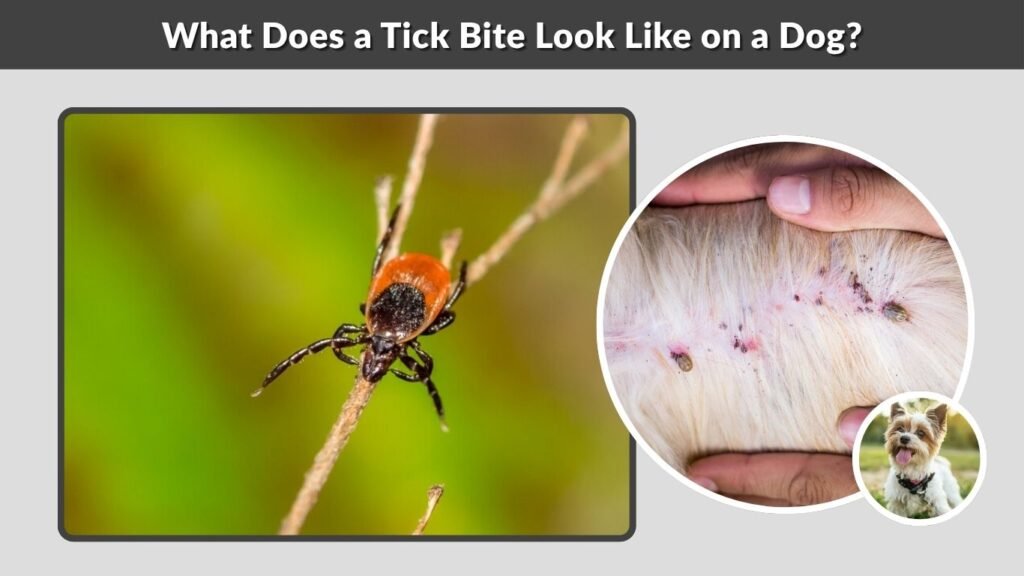
On dogs, a recent tick bite may appear as a small red or raised area beneath the fur.
After removal, there may be a tiny hole or irritated spot where the tick was attached.
Possible signs include:
- Small red bump
- Local swelling
- Tiny scab
- Mild irritation
- A small crater-like mark
Merck Veterinary Manual advises monitoring the site after tick removal and contacting a veterinarian if it becomes red or swollen.
Check commonly affected areas such as the ears, head, neck, between the toes, and beneath collars.
How to Remove an Attached Tick
If the tick is still attached, remove it promptly.
Correct Tick Removal
- Use clean, fine-tipped tweezers.
- Grasp the tick as close to the skin as possible.
- Pull upward using steady, even pressure.
- Do not twist or jerk it.
- Clean your hands and the bite area afterward.
Do not use petroleum jelly, nail polish, heat, or similar remedies to force the tick to detach. Prompt mechanical removal is recommended.
When Should You See a Doctor?
After a tick bite, monitor yourself for several weeks.
Seek medical advice if you develop:
- An expanding rash
- Fever or chills
- Severe headache
- Unusual fatigue
- Muscle or joint pain
- Joint swelling
- Facial weakness
- Dizziness
- Heart palpitations
- Other unexplained illness after tick exposure
CDC recommends watching for symptoms such as rash or fever in the weeks following a tick bite and informing your healthcare provider about when and where the exposure occurred.
FAQs
Does every tick bite leave a mark?
No. Some tick bites cause little visible reaction, and people may never notice the bite after the tick detaches.
Does a tick bite always cause a bullseye rash?
No. Most tick bites do not produce a bullseye rash, and even Lyme disease rashes do not always have the classic target appearance.
Does a tick bite itch?
A normal local reaction can itch mildly. Erythema migrans from Lyme disease is usually not intensely itchy or painful.
How long does a normal tick bite take to heal?
Minor redness or a small bump may begin improving within one or two days, although a small scab or irritation can sometimes persist longer.
When should I worry about a tick bite?
Be concerned about an expanding rash, fever, headache, unusual fatigue, joint or muscle pain, facial weakness, or other new symptoms developing in the days or weeks after the bite.
