
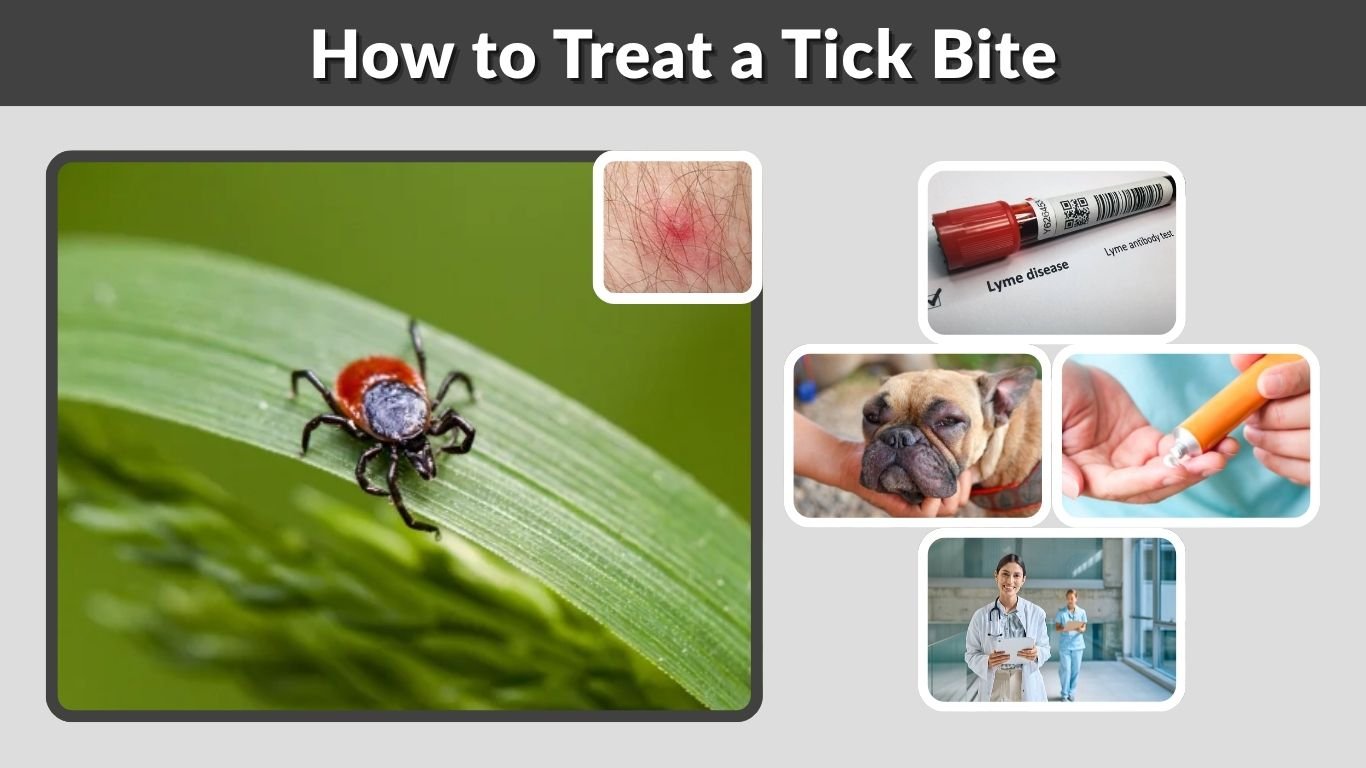
Knowing how to treat a tick bite starts with removing the tick correctly and as quickly as possible. After removal, most minor bites need only cleaning and simple home care while you monitor for unusual symptoms. The bigger concern is that some ticks can transmit illnesses such as Lyme disease, ehrlichiosis, or Rocky Mountain spotted fever. Treatment therefore depends on the tick, where the bite occurred, how long it was attached, and whether symptoms develop. Here’s what to do after a tick bite in humans, dogs, and cats.
How to Treat a Tick Bite Immediately
If a tick is still attached, removal is the first priority. CDC guidance says not to delay removal while waiting to see a healthcare professional because prompt removal can reduce exposure to tick-borne pathogens.
1. Remove the Tick With Tweezers
Use clean, fine-tipped tweezers and:
- Grasp the tick as close to the skin as possible.
- Avoid squeezing the swollen body.
- Pull upward with steady, even pressure.
- Do not twist or jerk the tick.
- Avoid crushing it with your fingers.
If small mouthparts remain and cannot easily be removed with clean tweezers, do not aggressively dig into the skin; it can usually be allowed to heal naturally.
2. Clean the Bite
After removing the tick, wash the bite area and your hands thoroughly with soap and water or an appropriate antiseptic.
3. Record the Exposure
It can be useful to note:
- The date of the bite
- Where you probably picked up the tick
- How long it may have been attached
- Whether it appeared flat or engorged
- What the tick looked like
This information may help a healthcare professional assess your risk if symptoms develop.
How to Treat a Tick Bite at Home
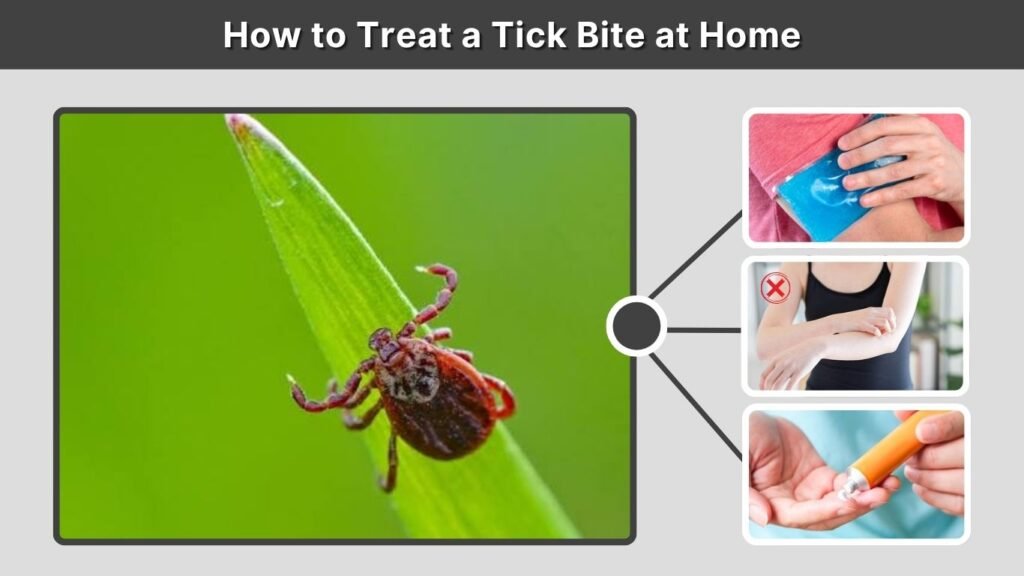
A normal local reaction may cause a small red bump, mild swelling, tenderness, or itching. Minor reactions often improve without special medical treatment.
Home Care for a Minor Bite
You can:
- Keep the site clean.
- Apply a cold compress if it is swollen.
- Avoid scratching.
- Elevate an affected arm or leg if swelling is bothersome.
- Consider an appropriate over-the-counter antihistamine for itching.
- Consider hydrocortisone cream for local itching or swelling.
- Use an appropriate pain reliever if needed.
General insect-bite guidance recommends cold therapy, elevation, antihistamines, and hydrocortisone for uncomplicated itching and swelling.
Avoid unproven remedies such as applying petroleum jelly, nail polish, heat, or chemicals to an attached tick. These methods can delay proper removal.
How to Treat a Tick Bite After Removal
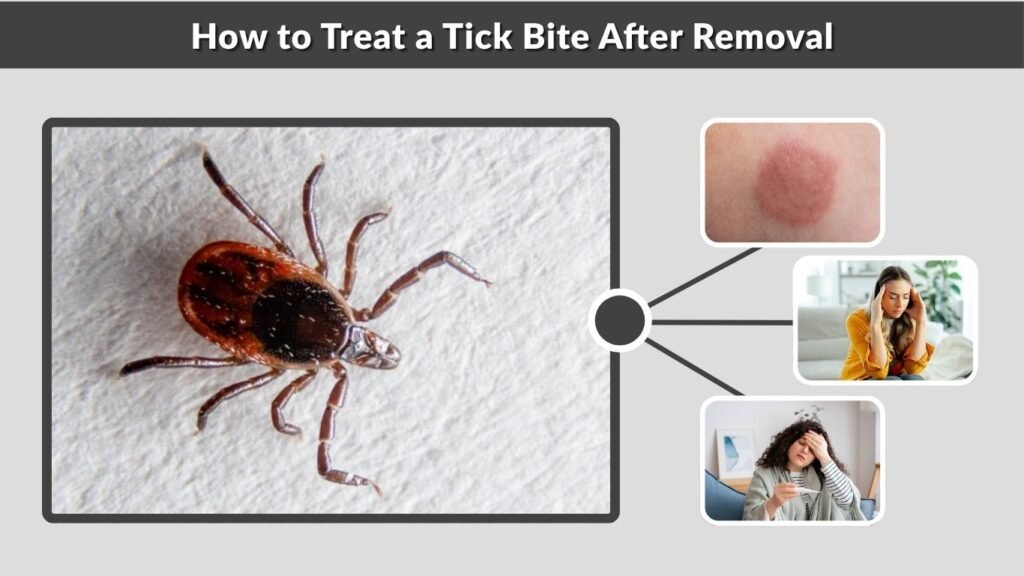
After the tick is gone, your main job is to keep the area clean and monitor yourself over the following days and weeks.
A small area of redness immediately after a bite is common and often resolves within one or two days. This alone is not considered a typical sign of Lyme disease.
Watch the Bite for Changes
Monitor for:
- Increasing redness
- Increasing swelling
- Pus or drainage
- Worsening pain
- Expanding rash
- Fever
- Headache
- Muscle or joint aches
- Unusual fatigue
Taking a photograph of the bite with the date can make it easier to see whether a rash is expanding.
How to Treat an Itchy or Swollen Tick Bite
Mild itching and swelling are usually caused by a local inflammatory reaction.
A wrapped cold pack can help reduce discomfort. Over-the-counter antihistamines or hydrocortisone may also help when appropriate.
When Swelling Is Concerning
Seek medical advice when redness or swelling:
- Continues expanding
- Becomes increasingly painful
- Produces pus
- Develops red streaks
- Is accompanied by fever
- Fails to improve
These changes can indicate infection or, particularly with an expanding rash, a tick-borne illness.
How to Treat an Infected Tick Bite
A tick bite can occasionally develop a secondary bacterial skin infection, especially when the area is scratched repeatedly.
Possible infection signs include increasing warmth, pain, swelling, redness, and drainage.
Do not try to treat a suspected infection with leftover antibiotics.
A healthcare professional can determine whether antibiotics or another treatment are actually needed.
An expanding rash after a tick bite should also not automatically be assumed to be an ordinary skin infection, because several tick-borne diseases can cause rashes.
How to Treat a Tick Bite to Prevent Lyme Disease
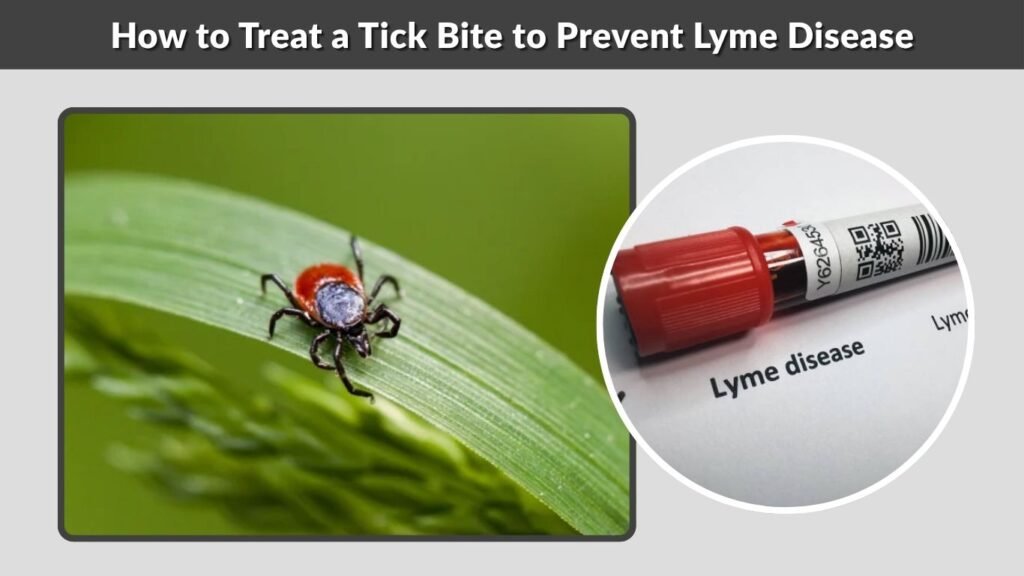
Most tick bites do not automatically require antibiotics.
However, preventive antibiotic treatment may be considered after certain higher-risk blacklegged tick bites in areas where Lyme disease is common. CDC guidance states that a single dose of doxycycline may lower Lyme disease risk in specific circumstances.
When Lyme Prevention May Be Considered
Clinical guidance has traditionally considered factors such as:
- The tick being an adult or nymphal blacklegged tick
- Exposure occurring in a Lyme-risk area
- Significant attachment or engorgement
- Estimated attachment of around 36 hours or longer
- Ability to begin prophylaxis within 72 hours of tick removal
- Whether doxycycline is medically appropriate
A healthcare professional should make this decision rather than taking antibiotics on your own.
Preventive antibiotics after a bite have not been shown to prevent every other tick-borne illness, including ehrlichiosis, babesiosis, anaplasmosis, and Rocky Mountain spotted fever.
What Does a Lyme Disease Rash Look Like?
Lyme disease can cause an expanding rash known as erythema migrans.
It generally develops 3 to 30 days after the bite, with an average onset around seven days.
Possible Lyme Rash Signs
The rash may:
- Gradually increase in size
- Feel warm
- Be circular or oval
- Develop central clearing
- Resemble a bullseye
- Remain uniformly red instead
A Lyme rash does not always form a classic bullseye and is usually not intensely itchy or painful.
Seek medical evaluation if you develop an expanding rash following possible tick exposure.
How to Treat a Deer Tick Bite
A deer tick, or blacklegged tick, should be removed immediately using fine-tipped tweezers.
Afterward, clean the skin and monitor yourself for several weeks.
Blacklegged ticks can transmit Lyme disease in certain regions, so contact a healthcare professional promptly if you develop:
- Expanding rash
- Fever
- Chills
- Fatigue
- Headache
- Joint or muscle pain
Early Lyme disease is usually treated successfully with antibiotics prescribed by a healthcare professional. CDC notes that commonly used treatments include doxycycline, amoxicillin, and cefuroxime, depending on individual circumstances.
How to Treat a Lone Star Tick Bite
Remove a lone star tick in the same way: grasp close to the skin and pull steadily upward.
A lone star tick bite can sometimes be followed by an expanding rash associated with Southern Tick-Associated Rash Illness (STARI).
Lone star tick bites are also strongly associated in the United States with alpha-gal syndrome, an allergy to alpha-gal found in mammalian meat and some other animal-derived products.
Alpha-gal symptoms may first appear weeks or months after the bite and can include hives, gastrointestinal symptoms, breathing problems, or even anaphylaxis after exposure to alpha-gal-containing foods or products.
How to Treat a Tick Bite on a Dog
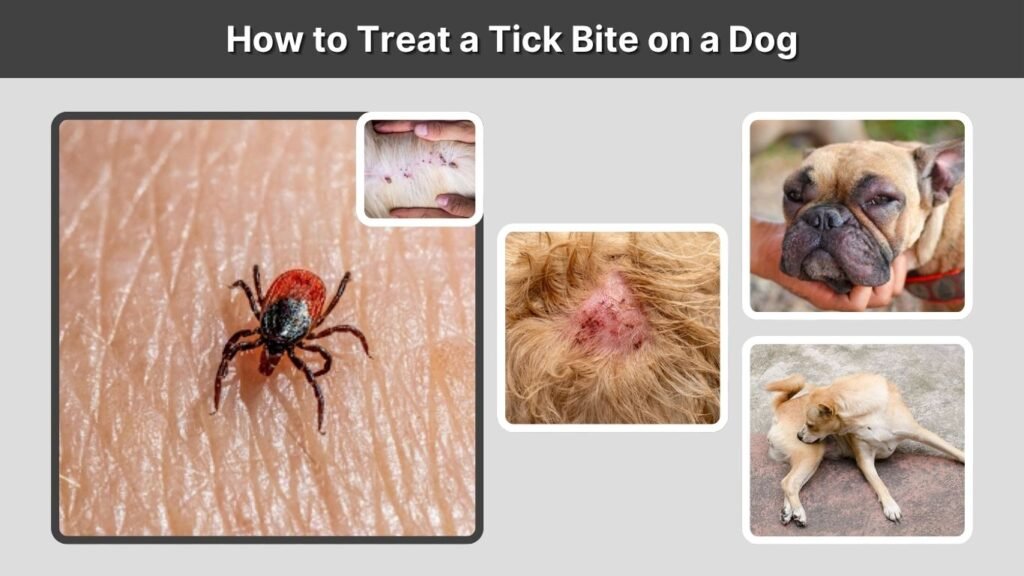
Ticks attached to dogs should also be removed promptly.
Use fine-tipped tweezers, grasp the tick close to the skin, and pull straight upward without squeezing or twisting the body.
After Removing the Tick
Check the bite for:
- Redness
- Swelling
- Discharge
- Increasing irritation
Merck Veterinary Manual recommends veterinary evaluation when a tick bite site becomes red or swollen.
Also watch your dog for illness such as fever, loss of appetite, unusual weakness, joint pain, or difficulty walking.
A heavy tick infestation deserves prompt veterinary attention because ticks can cause anemia, disease transmission, and other complications.
How to Treat a Tick Bite on a Cat
Remove an attached tick promptly using appropriate tweezers, then clean and monitor the area.
Contact your veterinarian if the bite becomes significantly red, swollen, painful, or infected, or if your cat becomes sick.
Be especially careful with tick-prevention products. Some products intended for dogs can be dangerous to cats. CDC advises discussing tick prevention with a veterinarian before applying products to cats.
When Should You See a Doctor After a Tick Bite?
CDC recommends seeking medical care if you develop a rash or fever within days to weeks after removing a tick.
Also seek evaluation for:
- Expanding rash
- Fever or chills
- Severe headache
- Extreme fatigue
- Muscle or joint pain
- Facial weakness
- Dizziness
- Unusual neurological symptoms
Many tick-borne illnesses can initially cause similar symptoms, including fever, headache, aches, fatigue, and rash.
FAQs
What is the best way to treat a tick bite?
Remove the tick immediately with fine-tipped tweezers, clean the area, manage minor swelling or itching, and monitor for rash, fever, or other symptoms.
How long after a tick bite should you watch for symptoms?
Monitor yourself for several weeks. Some tick-borne illnesses develop days or weeks after the original bite.
Do all tick bites need antibiotics?
No. Antibiotics are not routinely prescribed after every tick bite. Lyme prophylaxis may be appropriate for certain higher-risk blacklegged tick exposures.
What should I put on a tick bite?
After cleaning it, a cold compress can help with swelling. Hydrocortisone or an appropriate antihistamine may help itching when medically suitable.
When is a tick bite dangerous?
Seek medical care if an expanding rash, fever, severe headache, unusual weakness, joint or muscle pain, neurological symptoms, or other significant illness develops after a tick bite.
