
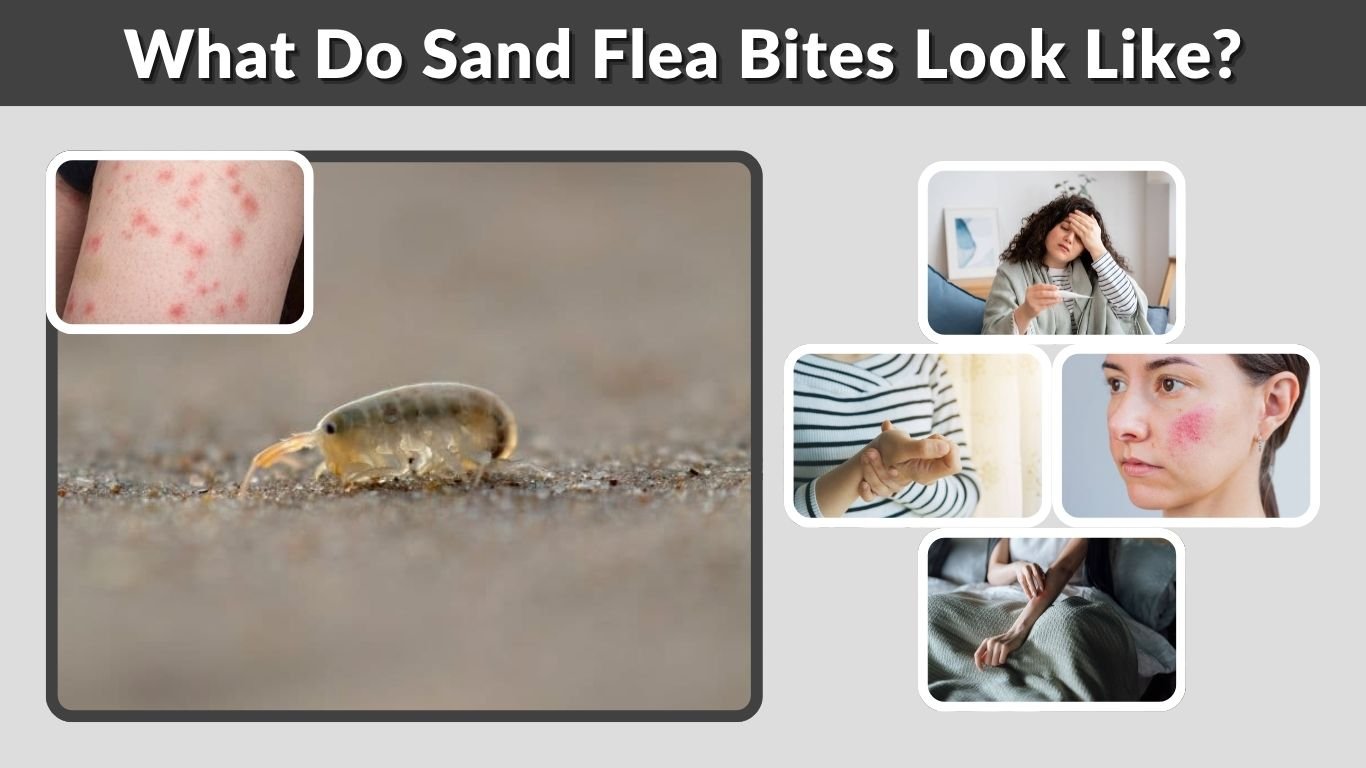
What do sand flea bites look like? They may appear as small, red, itchy bumps, often around the feet, ankles, or lower legs. However, “sand flea” can describe different organisms, so appearance varies. True chigoe sand fleas (Tunga penetrans) burrow into the skin and can create a small whitish raised lesion with a dark central point. Other beach-related bites may simply resemble ordinary flea or mosquito bites. Location, travel history, symptoms, and how the marks change over time can help identify the likely cause.
What Do Sand Flea Bites Look Like on the Skin?
Sand flea-related skin reactions are not always identical. Ordinary flea-type bites can look like clusters of tiny red, itchy bumps, while true tungiasis caused by a chigoe flea develops a more distinctive lesion. Because mosquitoes, bed bugs, chiggers, and other insects can produce similar marks, appearance alone should not be considered proof of a sand flea bite.
Common Appearance of Sand Flea Bites
Possible characteristics include:
- Small red or pink bumps
- Raised itchy spots
- Mild swelling around each bite
- Several bites close together
- Irritated or tender skin
- Bumps concentrated around ankles and feet
- Scratches or crusting from repeated itching
- Occasional blistering in stronger reactions
General flea bites often appear as multiple small itchy red spots, particularly around the feet and ankles because fleas tend to remain close to the ground.
Do Sand Flea Bites Have a Dark Center?
Ordinary insect bites do not necessarily develop a black center. However, a true chigoe sand flea lesion often does.
WHO describes an embedded flea as producing a whitish disc with a dark central point. That dark point corresponds to the exposed rear portion of the flea rather than a typical puncture mark from an ordinary insect bite.
What Do Chigoe Sand Flea Bites Look Like?
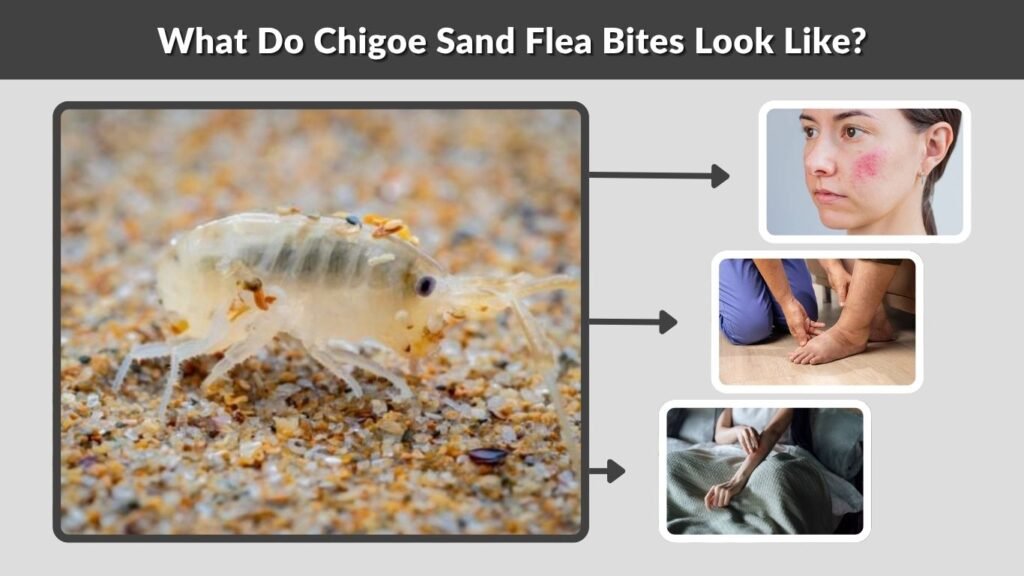
True sand flea infestation, called tungiasis, looks different from the temporary bumps many beachgoers call sand flea bites. A fertilized female Tunga penetrans penetrates the outer skin and expands as eggs develop. The resulting lesion changes through recognizable stages and most commonly occurs on the toes, soles, sides of the feet, or heels.
Early-Stage Appearance
An early tungiasis lesion may initially appear as a very small dark or itchy spot.
WHO guidance describes the early embedded flea as a dark spot roughly 1–2 mm wide, sometimes accompanied by itching, pain, redness, or other local inflammation. As the flea grows, the lesion becomes increasingly noticeable.
Mature Sand Flea Lesion
As the female enlarges, the lesion typically develops:
- A round shape
- A whitish or pale halo
- Slight elevation above surrounding skin
- A central black dot
- Redness around the lesion
- Swelling
- Itching
- Pain or tenderness
CDC describes typical tungiasis lesions as round, slightly raised, white areas approximately 5 mm in diameter with a tiny, often black opening in the center.
What Do Sand Flea Bites Look Like on Humans?
On humans, ordinary sand flea-like bites may look similar to other itchy insect bites. True tungiasis is more distinctive because the flea remains embedded. Human lesions are particularly concentrated on the feet because infection often occurs when someone walks barefoot on contaminated soil in regions where chigoe fleas occur.
Common Locations on Humans
Check areas such as:
- Between the toes
- Around toenails
- Soles of the feet
- Heels
- Sides of the feet
- Ankles
- Lower legs in ordinary flea-type exposures
WHO reports that approximately 99% of tungiasis lesions occur on the feet.
CDC also notes that embedded chigoe fleas are frequently found between toes or underneath toenails.
Can Sand Flea Bites Form Clusters?
Yes. Both ordinary flea bites and tungiasis can involve multiple nearby lesions.
With severe tungiasis, clustered lesions may eventually appear crusted, dirty, irritated, or draining. This is very different from a few uncomplicated itchy bumps and can indicate substantial inflammation or secondary infection.
How Sand Flea Bites Change Over Time
The appearance can change significantly over several days or weeks, particularly with tungiasis. An embedded chigoe flea grows as eggs develop inside its abdomen. The surrounding skin reacts with increasing inflammation, and scratching can further alter the lesion. Eventually, the flea dies, leaving a crust or residual mark that may persist while the skin heals.
Typical Tungiasis Progression
The appearance may progress from:
- Small dark spot: The flea begins penetrating the skin.
- Growing bump: Local itching, redness, or tenderness develops.
- White halo with black center: The embedded female enlarges.
- Brown-black crust: The flea eventually dies.
- Healing mark: A small circular residual lesion may remain.
WHO describes the mature lesion as approximately 3–10 mm wide with a white halo and central black dot. Later, the dead flea can appear as a brownish-black circular crust.
What Does an Infected Sand Flea Bite Look Like?
An infected lesion may become increasingly red, swollen, warm, painful, or draining.
Pustules, pus, ulcers, and larger abscesses can occur when bacteria enter damaged skin. WHO notes that scratching frequently contributes to secondary bacterial infection in tungiasis.
Sand Flea Bites vs Other Bug Bites
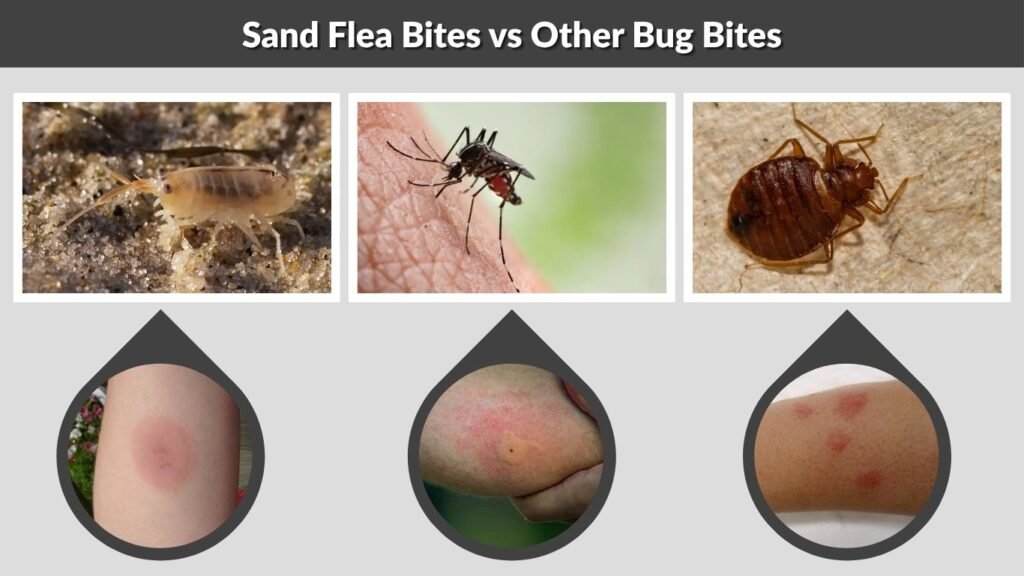
Identifying bites solely from photographs is difficult because many arthropod reactions overlap. Exposure history can provide stronger clues. For example, ordinary flea bites often occur near the ankles, bed bug bites are frequently noticed after sleeping, and mosquitoes can bite almost any exposed part of the body. True tungiasis is distinguished by an embedded flea and characteristic lesion.
Sand Flea vs Bed Bug Bites
Sand flea or flea-type bites often:
- Concentrate around feet and ankles
- Produce small itchy bumps
- Follow ground-level exposure
- Occur in clusters
Bed bug bites may:
- Appear after sleeping
- Affect arms, neck, face, or other exposed areas
- Occur in clusters or rough lines
- Develop after a delayed reaction
A central black opening with a pale halo after travel to a tungiasis-endemic region is more suggestive of a chigoe flea than a bed bug.
Sand Flea vs Mosquito Bites
Mosquito bites commonly produce round, raised, itchy bumps that can occur almost anywhere on exposed skin.
Ordinary flea bites tend to be smaller and more concentrated around the lower legs and ankles. Neither pattern alone provides a certain diagnosis, so consider the environment and whether other household or travel-related signs are present.
What Do Sand Flea Bites Look Like on Dogs?
Dogs can also be affected by fleas and, in areas where chigoe fleas occur, tungiasis can affect animals as well as humans. Skin problems in dogs should not automatically be labeled sand flea bites because ordinary fleas, mites, allergies, infections, and other conditions can produce very similar symptoms.
Signs to Look for on a Dog
Possible signs include:
- Red or irritated skin
- Small bumps
- Frequent scratching
- Excessive licking
- Hair loss
- Crusts or scabs
- Swelling
- Broken skin caused by scratching
Check areas around the abdomen, legs, feet, groin, and other regions with relatively thin hair.
When Should a Dog See a Vet?
Seek veterinary advice if the dog has severe itching, extensive hair loss, bleeding, pus, significant swelling, lethargy, or persistent skin lesions.
Do not diagnose an embedded parasite from a photograph alone or apply human medications without veterinary guidance.
When to Be Concerned About Sand Flea Bites
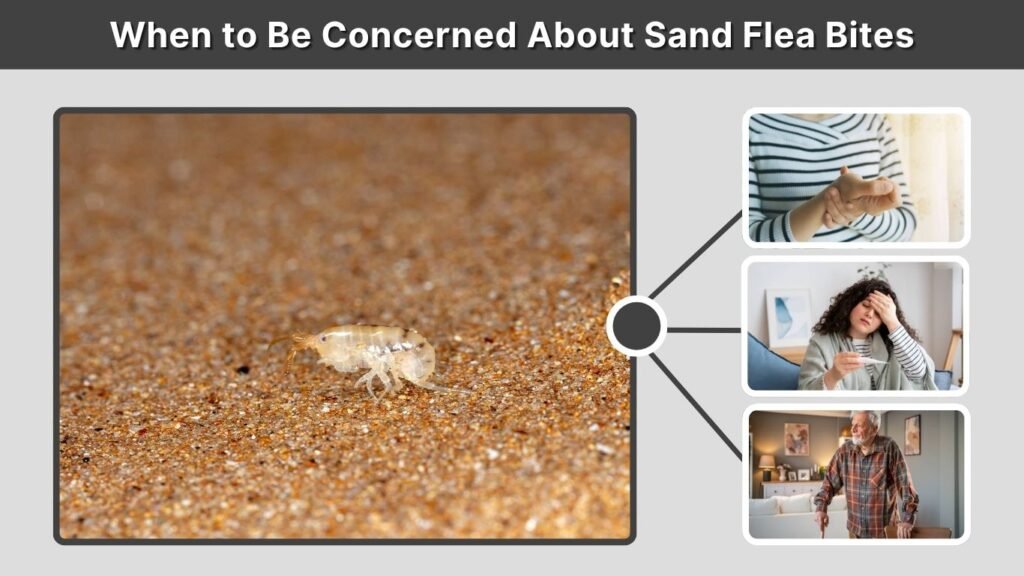
Most ordinary itchy insect bites settle without serious complications. True tungiasis deserves more attention because an embedded parasite damages the skin and can lead to bacterial infection. Multiple lesions may become painful enough to interfere with walking, particularly when they occur around toes or the soles of the feet.
Warning Signs
Seek medical care for:
- Rapidly increasing swelling
- Spreading redness
- Pus or drainage
- Severe pain
- Open ulcers
- Fever or feeling unwell
- Numerous lesions
- Difficulty walking
- A persistent white lesion with a black center
Do not use needles or other household tools to dig into a suspected tungiasis lesion. Nonsterile removal can increase the risk of complications.
FAQs
1. What do sand flea bites look like on a human?
Ordinary flea-type bites usually appear as small, itchy, red or raised bumps, often around the feet and ankles. True chigoe sand flea infestation can form a round, whitish raised lesion with a small black opening in its center and surrounding redness or swelling.
2. Are sand flea bites always red?
No. Redness may be obvious on some skin tones but subtle on others. A lesion may instead appear raised, darker, swollen, or irritated. True tungiasis commonly creates a whitish halo around a central dark spot, although its appearance changes as the embedded flea develops.
3. What does an early sand flea bite look like?
Early tungiasis may begin as a tiny dark spot approximately 1–2 mm across, sometimes accompanied by itching, pain, or inflammation. As the embedded flea enlarges, a pale or white halo develops around a central black point, making the lesion more characteristic.
4. What do sand flea bites look like on dogs?
Affected dogs may develop red bumps, itching, scratching, irritated skin, scabs, or hair loss. These symptoms are not specific to sand fleas, however, and many parasites and skin disorders look similar. Persistent or severe skin problems should be examined by a veterinarian rather than diagnosed from appearance alone.
5. How can I tell if a bite is from a sand flea?
Consider the bite location, exposure history, and lesion pattern. Small itchy ankle bumps can occur with several insects. A round pale lesion containing a central black opening after barefoot exposure in a region where tungiasis occurs is more characteristic of an embedded chigoe flea and warrants medical evaluation.
