
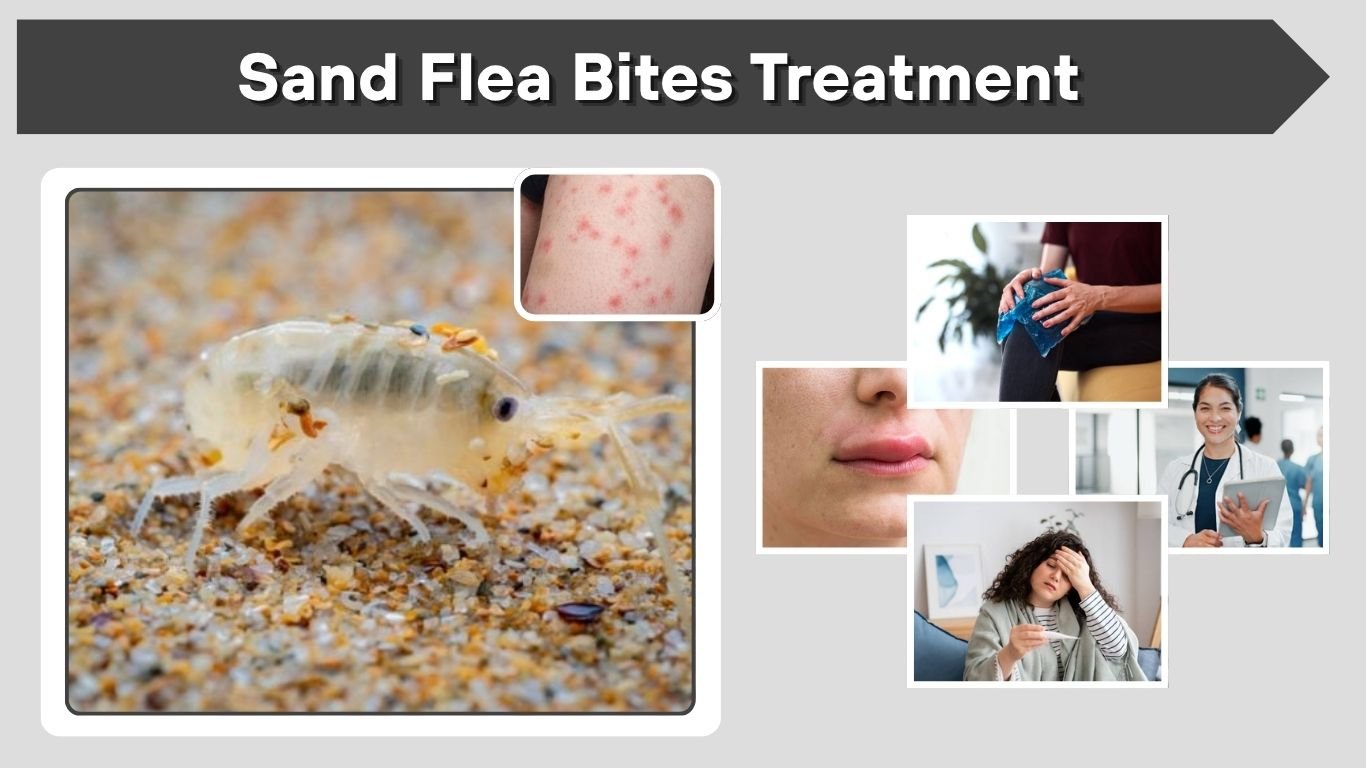
Sand flea bites treatment depends on what actually caused the skin reaction. Mild beach-related bites usually need simple care to reduce itching, redness, and swelling, while true chigoe sand fleas can burrow into the skin and cause tungiasis, which may require professional treatment. Washing the area, using cold compresses, calamine lotion, or appropriate anti-itch medication can help uncomplicated bites. However, embedded fleas, infected wounds, severe swelling, or allergic symptoms need greater attention to prevent complications and lasting skin damage.
What Is the Best Treatment for Sand Flea Bites?
For ordinary itchy bites, treatment focuses on keeping the skin clean and controlling inflammation while the reaction heals. Cleveland Clinic recommends options including cold packs, calamine lotion, antihistamines, and corticosteroid treatments for mild sand flea bite symptoms. True tungiasis is different because a female chigoe flea remains embedded in the skin and should not be dug out at home.
Basic Sand Flea Bite Treatment
For mild bites on humans:
- Wash the affected skin gently with soap and water.
- Apply a wrapped cold pack for about 10–20 minutes.
- Avoid scratching the bites.
- Apply calamine lotion to relieve itching.
- Consider an appropriate over-the-counter hydrocortisone cream.
- An oral antihistamine may help significant itching when appropriate.
- Keep scratched or broken skin clean.
- Watch for increasing redness, warmth, pain, or drainage.
Mayo Clinic recommends similar first-aid measures for uncomplicated insect bites, including cleansing, cold application, calamine or hydrocortisone, and oral antihistamines when needed.
How Long Does Treatment Take?
Mild sand flea-like bites generally improve within several days. Cleveland Clinic notes that common bites usually clear within a few days, although the exact duration varies with sensitivity and scratching.
True tungiasis lasts longer because the parasite remains embedded. Treatment should therefore be based on the type of lesion rather than assuming every beach-related bump is an ordinary insect bite.
How to Stop Sand Flea Bites From Itching
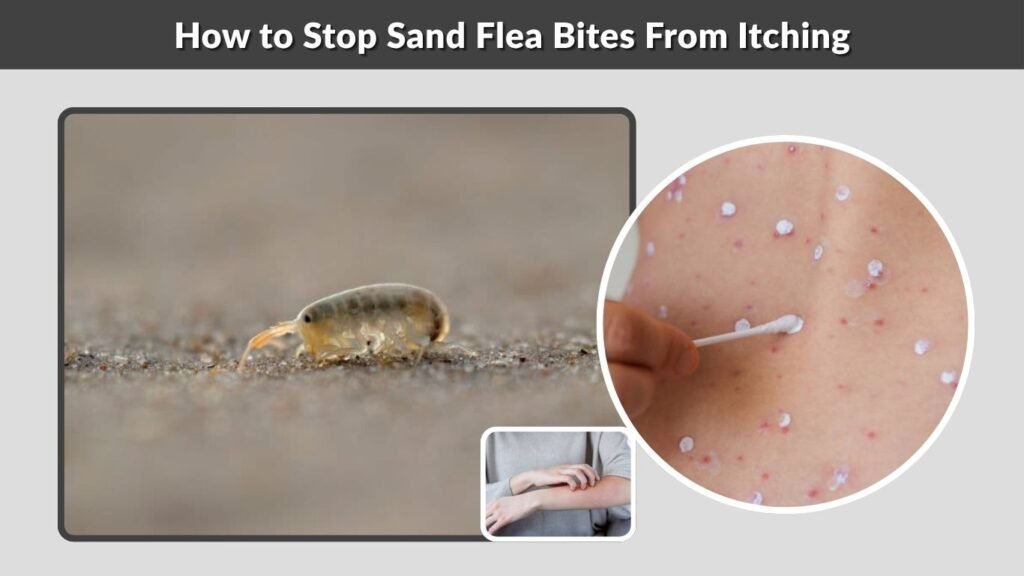
Itching is one of the most troublesome symptoms associated with flea-type bites. Scratching provides temporary relief but can damage the skin and increase the chance of bacterial infection. Cooling the area and using an appropriate anti-itch product are safer approaches. Persistent or severe itching may require advice from a healthcare professional, especially when swelling or widespread reactions occur.
Does Calamine Lotion Help?
Yes. Calamine lotion can help relieve mild itching and irritation caused by insect bites. Cleveland Clinic specifically includes calamine among treatments for sand flea bites.
Calamine should only be applied externally. Avoid getting it into the eyes, mouth, or other mucous membranes, and follow the product instructions.
Can Antihistamines Help?
Antihistamines may reduce itching in some people. Cleveland Clinic lists topical or oral antihistamines among options for mild sand flea reactions, but advises using one form rather than combining topical and oral antihistamines without appropriate guidance.
If you take other medicines, have medical conditions, are pregnant, or are treating a child, ask a healthcare professional or pharmacist which product is appropriate.
Sand Flea Bite Home Treatment
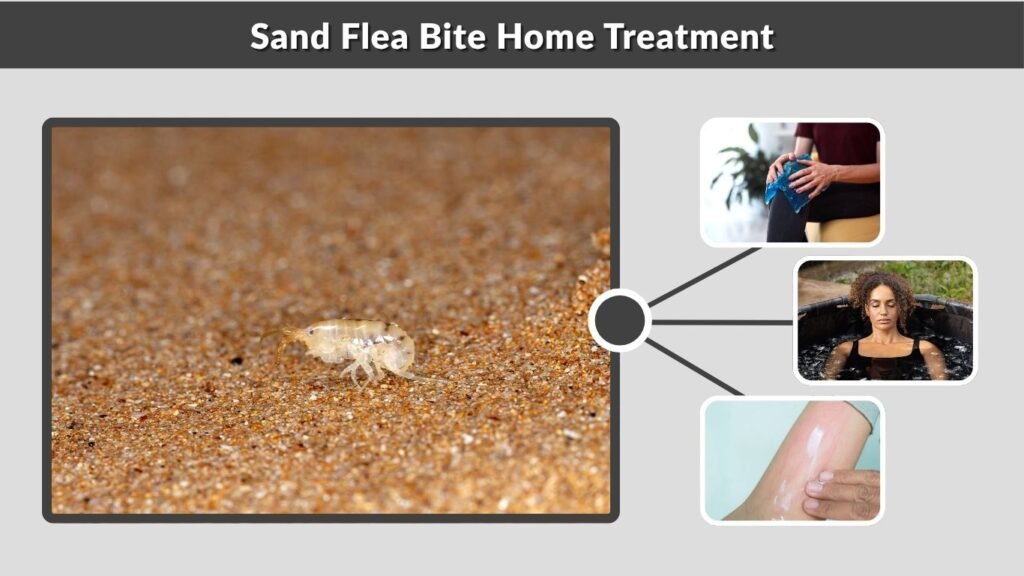
Home treatment is reasonable when the reaction consists only of small itchy bumps without an embedded parasite, serious allergy, or signs of infection. The goal is to calm irritated skin without introducing additional substances that could cause dermatitis. “Natural” does not automatically mean safer, so simple cooling and skin protection are generally preferable to unproven oils or harsh homemade mixtures.
Safe Home Remedies
Useful options include:
- A cool, damp compress
- A wrapped ice pack
- A lukewarm or cool bath
- Colloidal oatmeal for itchy skin
- Calamine lotion
- Appropriate nonprescription hydrocortisone
- Gentle cleansing with soap and water
- Covering badly scratched areas with a clean dressing
MedlinePlus recommends cold compresses, oatmeal baths, hydrocortisone, and avoiding scratching for general itchy skin, while Mayo Clinic also supports cold compresses and anti-itch treatments for insect bites.
What About Essential Oils?
Essential oils are frequently promoted online as natural sand flea treatments, but concentrated oils can irritate the skin or cause allergic contact reactions.
They are not necessary for treating uncomplicated bites. Cold compresses, calamine, and established anti-itch treatments have clearer medical guidance behind their use. Avoid putting irritating substances on open, blistered, or infected-looking skin.
Treatment for a Chigoe Sand Flea in the Skin
A chigoe sand flea (Tunga penetrans) requires a different approach from ordinary itchy beach bites. The fertilized female penetrates the skin and enlarges while producing eggs, causing tungiasis. Trying to remove it with household needles, scissors, pins, or similar objects can rupture the parasite, injure tissue, and introduce bacteria into the wound.
How Is Tungiasis Treated?
WHO identifies these approaches:
- Topical low-viscosity dimeticone formulations
- Sterile mechanical extraction when appropriate
- Proper wound cleaning and dressing
- Evaluation for secondary bacterial infection
- Review of tetanus vaccination status
- Appropriate treatment of complications
WHO reports that a formulation containing two low-viscosity dimeticone oils is highly effective and safe for tungiasis.
Do Not Dig Out the Flea Yourself
Mechanical removal should only be performed under sterile conditions by someone experienced with the procedure. WHO warns that nonsterile removal can rupture the parasite and introduce harmful bacteria; reused instruments can create additional infection risks.
A persistent whitish lesion with a dark central point, especially after travel to a region where tungiasis occurs, deserves medical assessment rather than home surgery.
Allergic Reaction to Sand Flea Bites Treatment
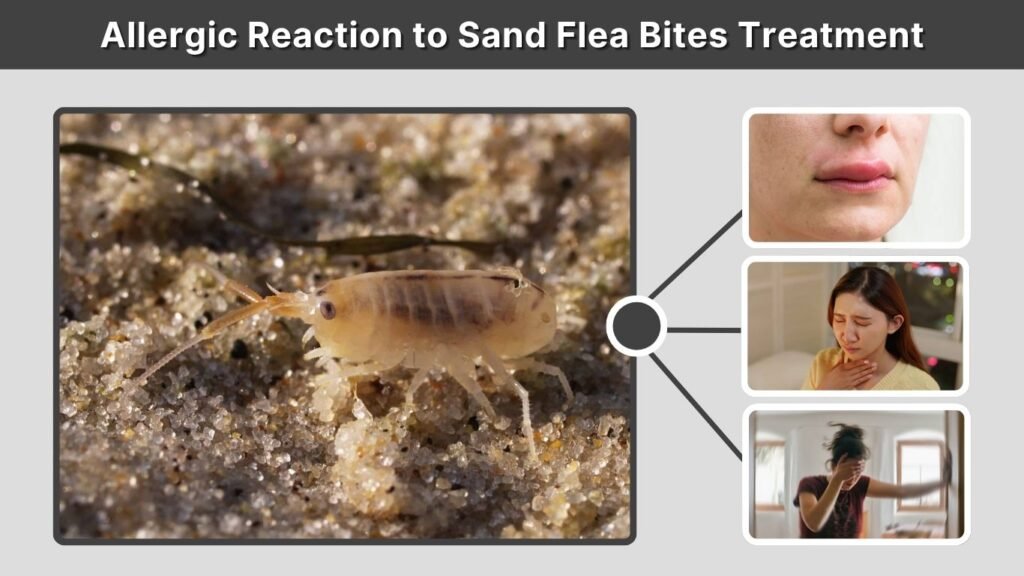
Some people react more strongly to insect bites than others. Larger areas of redness, itching, or swelling may represent an exaggerated local reaction rather than infection. Mild reactions can often be managed with cooling and appropriate anti-itch medicines, but body-wide symptoms require urgent care because severe allergic reactions can affect breathing and circulation.
Warning Signs of a Serious Reaction
Get urgent medical help for symptoms such as:
- Difficulty breathing
- Swelling of the lips, tongue, face, or throat
- Difficulty swallowing
- Widespread hives
- Severe dizziness or fainting
- Rapidly worsening body-wide symptoms
For a localized reaction that is simply itchy or swollen, cold packs, calamine, and appropriate antihistamines or corticosteroid creams may provide relief.
Is Swelling Always an Allergy?
No. Mild swelling is common after many insect bites.
Increasing warmth, tenderness, pus, spreading redness, or feeling ill can instead indicate infection. Mayo Clinic advises seeing a healthcare professional if swelling worsens or the bite develops signs of infection.
How to Treat Infected Sand Flea Bites
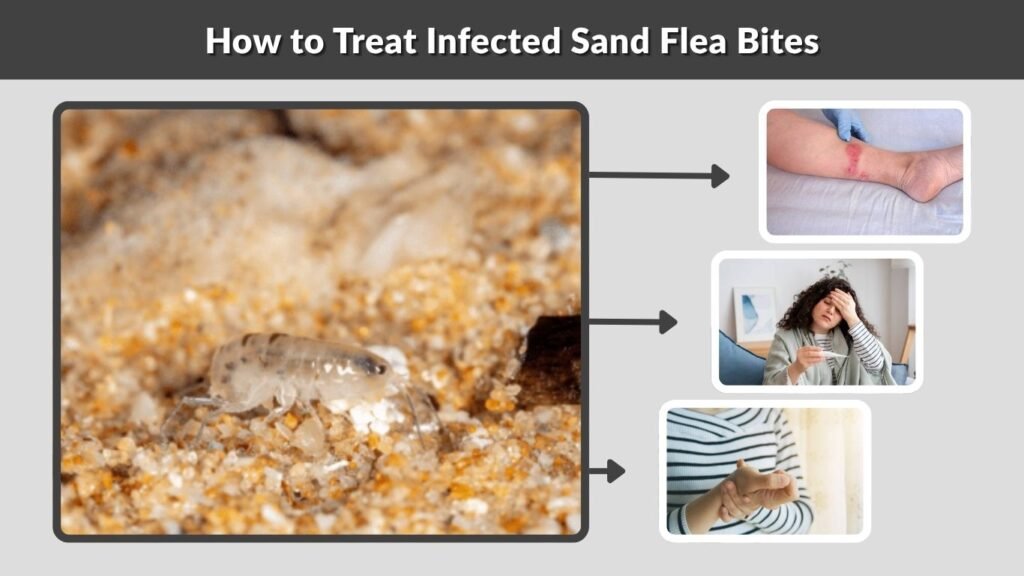
Scratching can open the skin and allow bacteria to enter. Tungiasis itself can also create wounds vulnerable to secondary infection. Infection should not be treated simply by adding more anti-itch cream. A healthcare professional may need to assess whether wound care, antibiotics, tetanus protection, or another treatment is necessary.
Signs of Infection
Watch for:
- Redness that continues spreading
- Increasing warmth around the lesion
- Pus or cloudy drainage
- Increasing pain instead of improvement
- Significant swelling
- Open ulcers
- Fever or feeling unwell
- Red streaks extending from the affected area
Avoid repeatedly squeezing, scratching, or cutting infected-looking lesions.
Can Sand Flea Bites Leave Scars?
Most uncomplicated bites heal without permanent marks. Scarring becomes more likely when the skin is repeatedly scratched, deeply injured, infected, or ulcerated.
Cleveland Clinic notes that complicated chigoe flea lesions can lead to scars, peeling skin, thickening of the skin or nails, and other problems.
Sand Flea Bites Treatment for Dogs
When people describe “sand flea bites” on a dog, ordinary fleas or another skin parasite may actually be responsible. Dogs can develop significant itching and flea-allergy dermatitis after flea exposure. Proper treatment therefore involves identifying the parasite, treating the animal with an appropriate veterinary flea-control product, and managing any environmental infestation.
Signs Your Dog Needs Veterinary Care
Contact a veterinarian if your dog has:
- Persistent intense scratching
- Hair loss
- Raw or bleeding skin
- Scabs or crusts
- Strong skin odor
- Pus or discharge
- Widespread redness
- Repeated flea infestations
Merck notes that flea allergy dermatitis can cause severe itching, self-trauma, hair loss, and secondary bacterial or yeast infections.
Do Not Use Human Treatment Automatically
Do not give a dog human antihistamines, steroids, creams, essential oils, or other medicines simply because they are used for human insect bites.
Veterinary treatment depends on the dog’s size, health, parasite involved, and other medications. Modern flea control generally requires treating the affected pet and preventing reinfestation rather than only soothing individual bites.
How to Prevent More Sand Flea Bites
Treatment provides relief after bites occur, but avoiding repeated exposure is equally important. Prevention depends on whether the problem involves biting beach insects, true chigoe fleas, or ordinary pet fleas. Travelers visiting tungiasis-endemic areas should be particularly careful about exposed feet because chigoe fleas commonly penetrate skin in contact with contaminated soil.
Prevention Tips
- Wear closed shoes in areas where tungiasis occurs.
- Avoid walking barefoot on contaminated sandy soil.
- Use an appropriate insect repellent when recommended.
- Wash and inspect feet after exposure.
- Avoid scratching existing bites.
- Treat household pets for fleas using veterinary guidance.
- Address environmental flea infestations when present.
- Seek treatment early for suspicious embedded lesions.
Preventing repeat exposure is especially important when new bites continue appearing despite treatment.
FAQs
1. What is the best treatment for sand flea bites?
Mild bites can usually be managed by washing the skin, using a cold compress, avoiding scratching, and applying an appropriate anti-itch product such as calamine or hydrocortisone. Antihistamines may also help some people. An embedded chigoe flea requires different treatment and should be medically assessed.
2. Can I use calamine lotion for sand flea bites?
Yes. Calamine lotion can reduce mild itching and discomfort from insect bites and is specifically listed by Cleveland Clinic as an option for sand flea bite symptoms. Apply it only to appropriate external skin areas and follow the package directions. It does not remove an embedded chigoe flea.
3. How long do sand flea bites take to heal with treatment?
Ordinary mild sand flea-like bites often clear within several days, although itching may last longer in sensitive people. True chigoe flea infestation can persist much longer because the parasite is embedded in the skin. Continued swelling, pain, drainage, or an unusual central dark spot warrants medical evaluation.
4. Should I squeeze a sand flea bite?
No. Squeezing an ordinary bite can increase irritation, and trying to squeeze or dig out an embedded chigoe flea can damage tissue and introduce bacteria. WHO recommends that mechanical extraction of tungiasis be performed with sterile surgical instruments by experienced healthcare personnel rather than attempted with household objects.
5. When should I see a doctor for sand flea bites?
Seek medical care for worsening swelling, spreading redness, pus, increasing pain, ulcers, fever, or suspected tungiasis. Emergency help is appropriate if you develop difficulty breathing, facial or throat swelling, faintness, or other signs of a severe allergic reaction. Early treatment can reduce the chance of infection and other complications.
