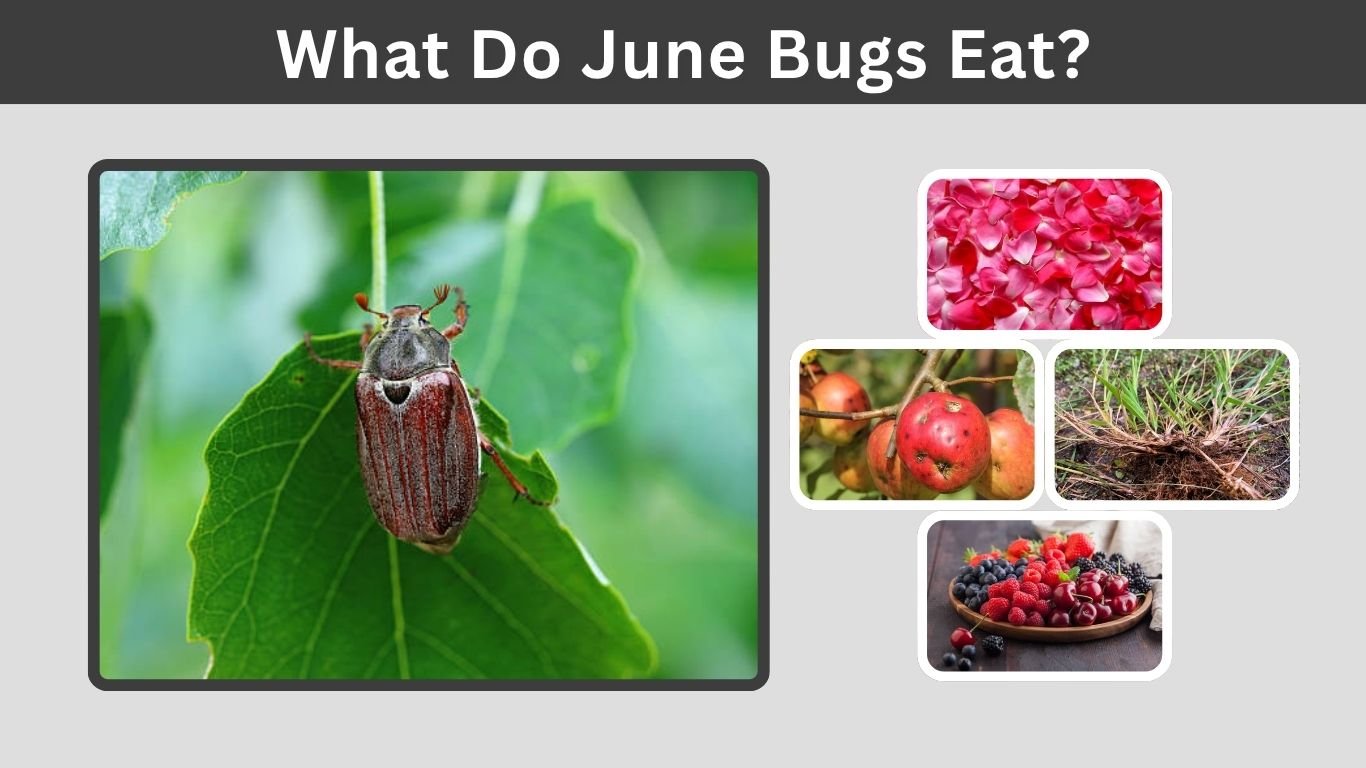
June bugs are common beetles that appear in late spring and early summer, often flying around porch lights at night. Many people notice them because they bump into windows, chew garden plants, or appear in lawns as white grubs. But what do June bugs eat? Adult June bugs usually feed on leaves, flowers, fruits, and soft plant tissue, while June bug grubs live underground and eat grass roots and plant roots.
What Do June Bugs Eat?
June bugs eat different foods depending on their life stage. Adult June bugs feed above ground, while larvae, also called grubs, feed below the soil.
| June Bug Stage | Main Food Source | Where They Feed |
| Adult June bugs | Leaves, flowers, fruit, plant tissue | Trees, shrubs, gardens |
| June bug grubs | Grass roots, plant roots, organic matter | Soil and lawns |
| Green June bugs | Ripe fruit, flowers, sap, decaying fruit | Gardens, orchards |
| Baby June bugs | Roots and soil organic matter | Underground |
Adult June bugs are mostly plant eaters. They do not usually eat insects, wood, fabric, or stored food inside homes.
What Do Adult June Bugs Eat?
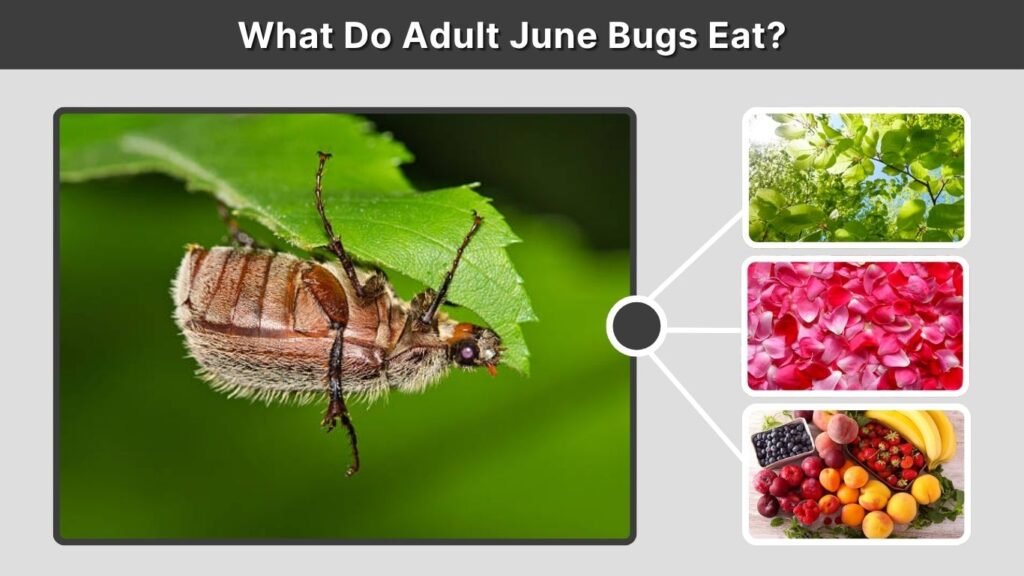
Adult June bugs mainly eat leaves from trees, shrubs, and garden plants. They often feed at night, which is why damage may appear suddenly by morning.
Common foods for adult June bugs include:
- Tree leaves
- Shrub leaves
- Flower petals
- Soft fruits
- Garden plant leaves
- Young plant growth
- Overripe fruit
- Plant sap
They may chew small holes in leaves or skeletonize parts of the leaf surface. Heavy feeding can make plants look ragged, but healthy mature plants often recover.
What Do June Bug Grubs Eat?
June bug grubs eat roots underground. This is usually the most damaging part of the June bug life cycle because grubs can weaken lawns and plants from below the soil.
Grass Roots
June bug larvae commonly feed on grass roots. When many grubs are present, lawns may develop brown patches because the grass can no longer absorb enough water and nutrients.
Signs of grub damage include:
- Brown or yellow lawn patches
- Grass that pulls up easily
- Spongy soil
- Increased birds, skunks, or raccoons digging in the lawn
- Weak turf growth
Plant Roots
June bug grubs may also feed on roots of garden plants, seedlings, and ornamental plants. Young plants are more vulnerable because they have smaller root systems.
Organic Matter
Some grubs may also consume decaying organic material in the soil, but roots are their main food source when they are damaging lawns or gardens.
What Do Green June Bugs Eat?
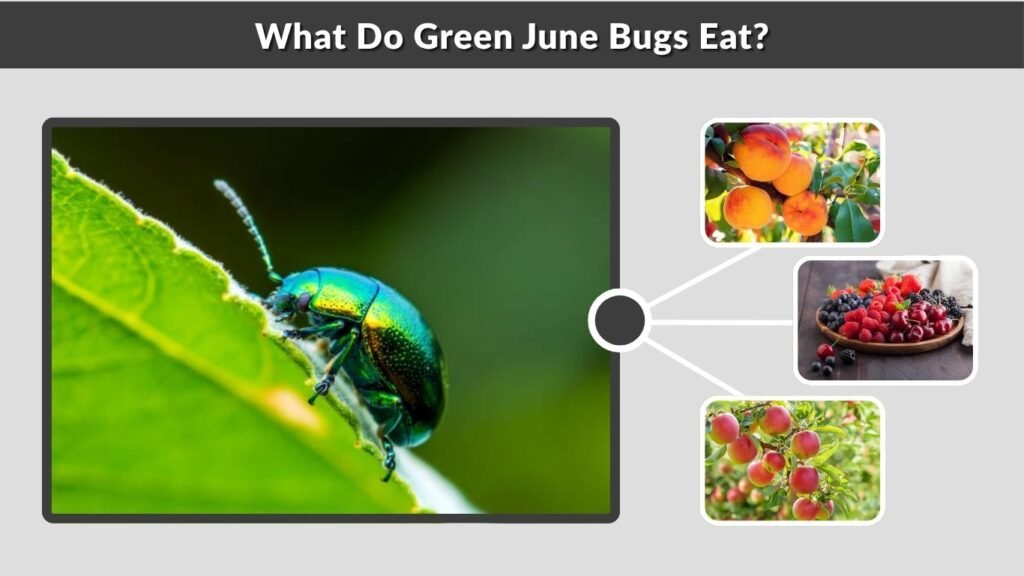
Green June bugs have a slightly different diet from many brown June bugs. Adult green June bugs are especially attracted to sweet, ripe, or decaying fruits.
Green June bugs may eat:
- Ripe peaches
- Grapes
- Berries
- Apples
- Figs
- Corn silk
- Flower nectar
- Sap
- Overripe or rotting fruit
They are often seen around orchards, compost piles, fruit trees, and gardens where sweet smells attract them.
What Plants Do June Bugs Eat?
June bugs feed on many different plants. They are not very picky, especially when adult beetles are active in large numbers.
| Plant Type | Examples June Bugs May Eat |
| Trees | Oak, maple, birch, fruit trees |
| Shrubs | Roses, ornamental shrubs |
| Garden plants | Beans, corn, tomatoes, lettuce |
| Flowers | Roses, marigolds, petunias |
| Fruits | Grapes, peaches, berries, apples |
June bugs usually prefer tender leaves, flowers, and fruit. Damage is often worse on young plants or stressed plants.
What Flowers Do June Bugs Eat?
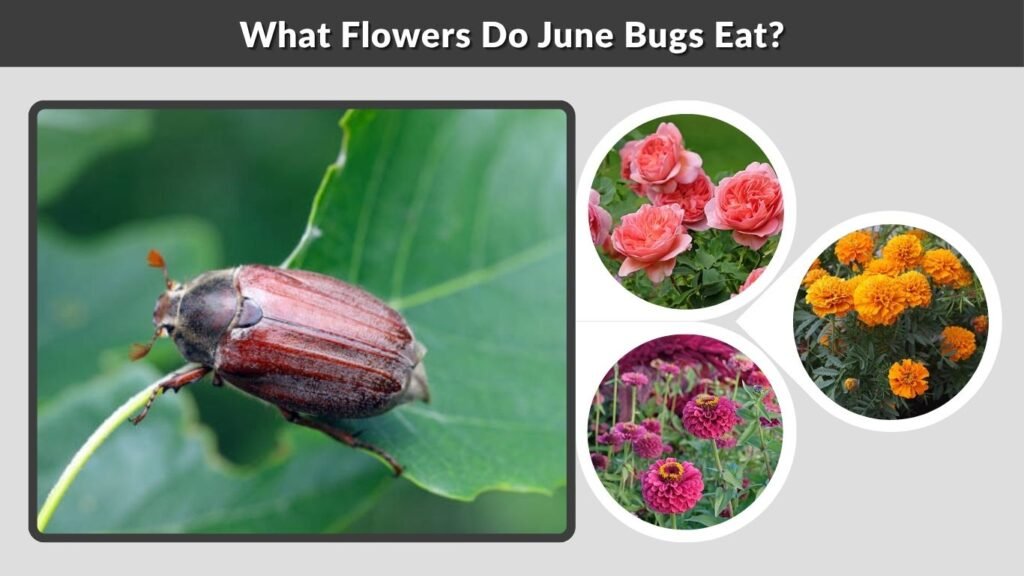
June bugs may eat flower petals, buds, and soft plant tissue. They can damage ornamental gardens by chewing ragged holes in flowers.
Flowers June bugs may feed on include:
- Roses
- Marigolds
- Petunias
- Dahlias
- Zinnias
- Fruit tree blossoms
- Other soft-petaled flowers
They are most active at night, so you may not see them feeding during the day.
What Do June Bugs Eat During the Day?
June bugs usually do not eat much during the day. Most adult June bugs hide in grass, soil, shrubs, mulch, or under leaves when the sun is out.
At night, they become active and feed on plants. This nighttime feeding behavior is why people often find them near porch lights, windows, and outdoor lamps.
What Do Baby June Bugs Eat?
Baby June bugs are the larval stage, commonly called white grubs. They live underground and eat grass roots, plant roots, and organic matter in the soil.
They do not look like adult beetles. June bug larvae are usually white or cream-colored, C-shaped, and soft-bodied with a brownish head.
What Do Brown June Bugs Eat?
Brown June bugs usually eat leaves, flowers, and plant material as adults. Their grubs feed on grass roots underground.
Brown June bugs are commonly attracted to lights at night and may gather near homes, patios, and gardens. They are annoying but not dangerous to people.
What Do June Bugs Drink?
June bugs get moisture from plants, fruit, sap, dew, and moist soil. Adult beetles may drink plant juices or moisture from soft fruit and leaves.
Grubs get moisture from the soil and the roots they feed on. They are more likely to survive in lawns and garden beds with enough soil moisture.
Are June Bugs Harmful to Plants?
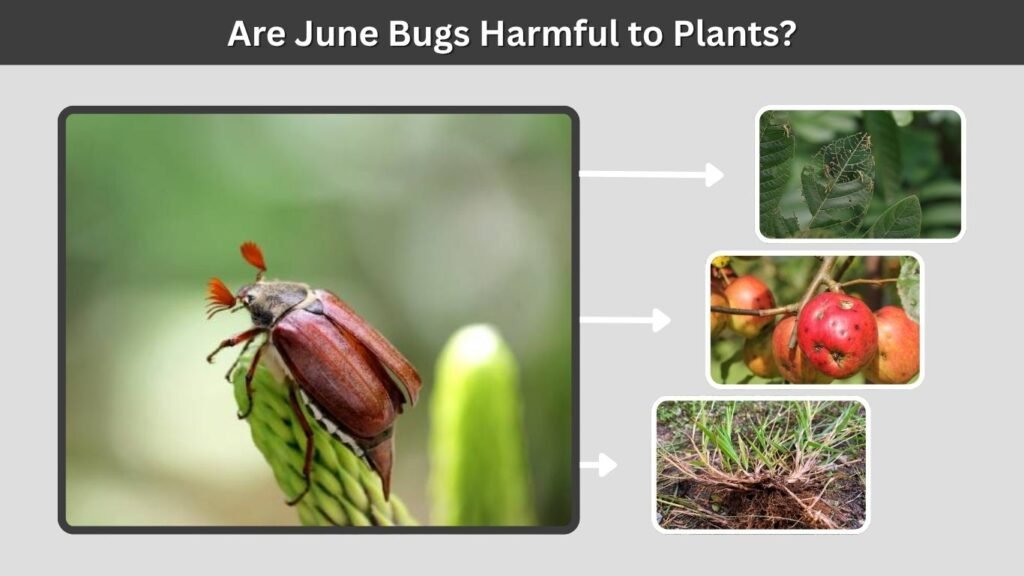
June bugs can harm plants, but the level of damage depends on how many are present.
A few adult June bugs usually cause minor leaf chewing. A large number can damage flowers, fruit trees, and garden plants. Grubs can be more serious because they damage roots and may create dead patches in lawns.
Common June Bug Damage
- Chewed leaves
- Ragged flower petals
- Damaged fruit
- Brown lawn patches
- Weak grass roots
- Seedlings that wilt or die
- Animals digging for grubs
My Dog Eats June Bugs: What Should I Do?
If your dog eats one or two June bugs, it is usually not a serious problem. June bugs are not poisonous, but their hard shells can upset a dog’s stomach if eaten in large numbers.
Possible symptoms include:
- Drooling
- Vomiting
- Diarrhea
- Mild stomach discomfort
- Loss of appetite
If your dog eats many June bugs, keeps vomiting, seems weak, or shows unusual symptoms, contact a veterinarian. Also avoid letting dogs eat beetles that may have been exposed to pesticides.
How to Reduce June Bug Feeding Damage
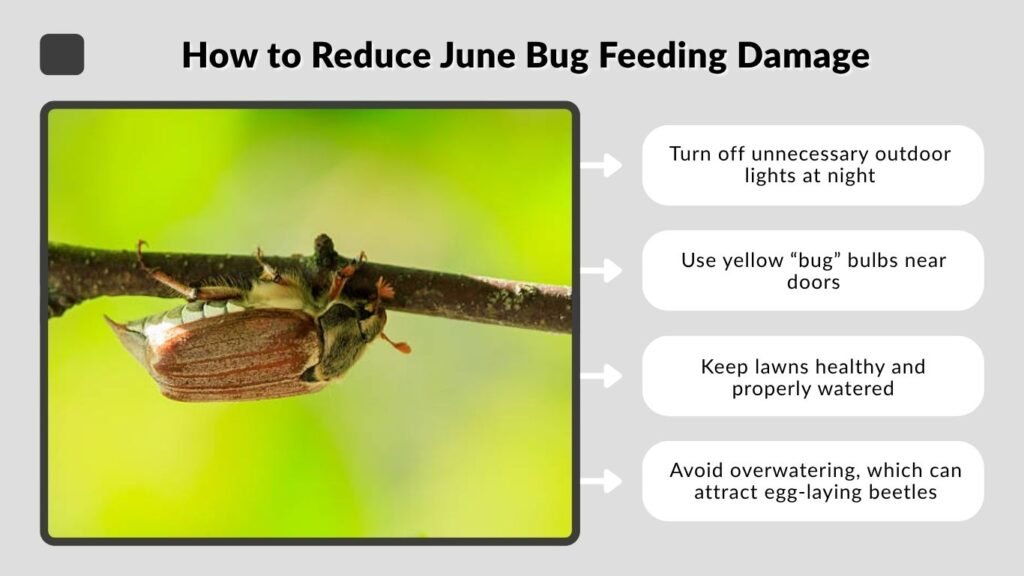
You can reduce June bug damage by targeting both adults and grubs. The best method depends on whether the problem is in your garden, lawn, or around outdoor lights.
Reduce Adult June Bugs
- Turn off unnecessary outdoor lights at night
- Use yellow “bug” bulbs near doors
- Shake beetles from plants into soapy water
- Remove fallen fruit from the ground
- Cover vulnerable plants with garden netting
- Keep compost and overripe fruit away from garden beds
Reduce June Bug Grubs
- Keep lawns healthy and properly watered
- Avoid overwatering, which can attract egg-laying beetles
- Apply beneficial nematodes for natural grub control
- Encourage birds that eat grubs
- Check soil before treating with grub control products
FAQs
What do June bugs like to eat most?
Adult June bugs mostly like leaves, flowers, soft fruit, and tender plant growth. Green June bugs are especially attracted to ripe and decaying fruit. Their grubs prefer grass roots and plant roots underground.
Do June bugs eat grass?
Adult June bugs usually do not eat much grass. However, June bug grubs feed on grass roots under the soil. This root feeding can cause brown patches and weak areas in lawns.
Do June bugs eat flowers?
Yes, adult June bugs may eat flowers. They can chew petals, buds, and soft flower parts, especially at night. Roses, marigolds, petunias, and other soft-petaled flowers may be damaged.
Do June bugs eat during the day?
June bugs are mostly active at night. During the day, they usually hide in grass, shrubs, mulch, or soil. Most feeding damage happens at night when adult beetles come out to eat.
Are June bugs dangerous to humans?
June bugs are not dangerous to humans. They do not sting, and they are not poisonous. They may feel annoying when they fly into people or lights, but their main problem is plant and lawn damage.