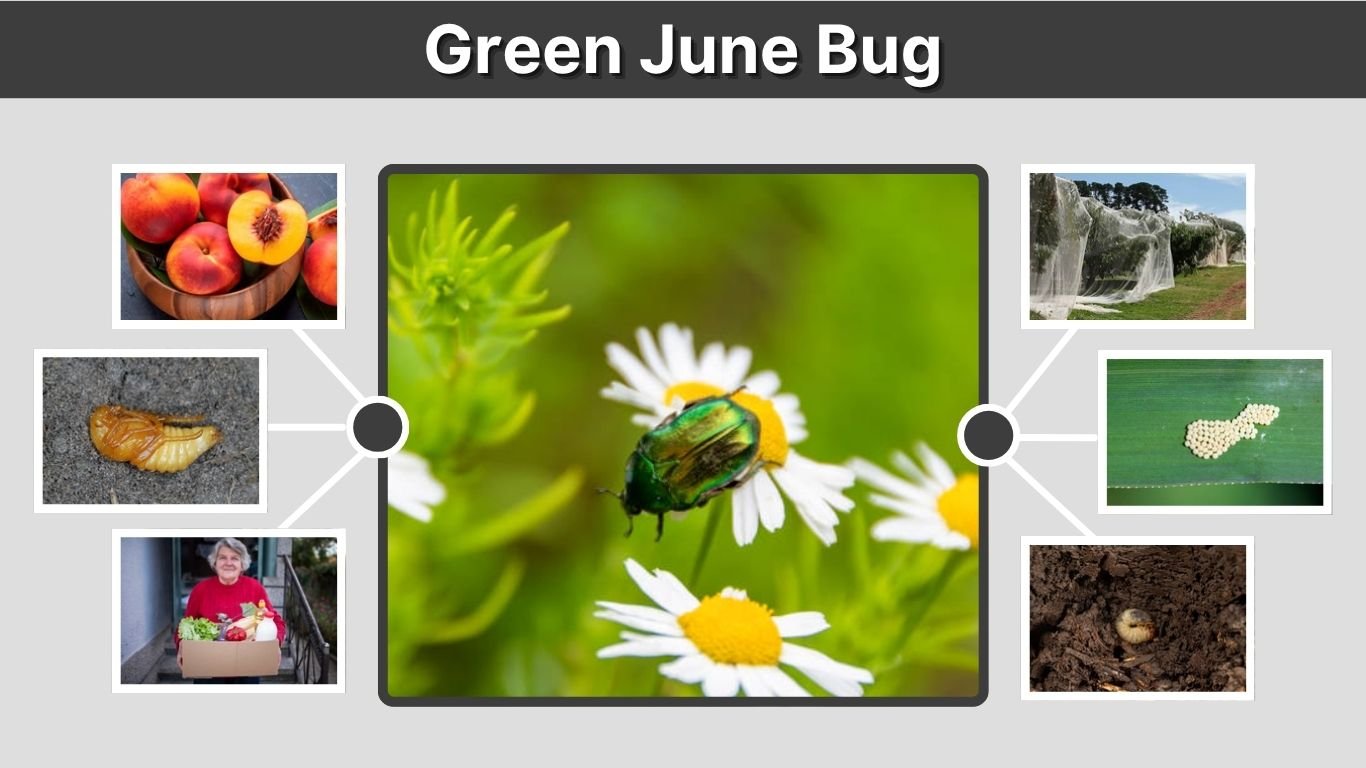
Green June bugs are large, shiny scarab beetles often seen flying low over lawns, gardens, fruit trees, and compost-rich areas in summer. Their metallic green body, loud buzzing flight, and clumsy movement make them easy to notice. The common green June beetle is Cotinis nitida, a species known for feeding on ripe fruit as an adult and living in soil as a grub during its larval stage.
What Is a Green June Bug?
A green June bug, also called a green June beetle, is a type of scarab beetle. It is usually larger and heavier than many other garden beetles.
Adult green June bugs are often metallic green with bronze, gold, or yellowish edges. Some look emerald green, while others may appear greenish-brown depending on light and age. They are strong but clumsy fliers and may sound like small buzzing bees when flying near grass or fruit trees. K-State notes that adults are about 1 inch long and are active during the day.
Green June Bug Identification
You can identify a green June bug by looking for:
- Large oval beetle body
- Metallic green or copper-green color
- Bronze or yellowish edges along the wing covers
- Shiny green underside
- Loud buzzing flight
- Daytime activity
- Attraction to ripe fruit, compost, and lawns
Unlike brown June bugs, green June bugs are usually active in daylight. Brown June bugs are more often seen flying around porch lights at night.
Green June Bug Size and Appearance
Green June bugs are considered big beetles. Adults are commonly close to 1 inch long, though size can vary. Their broad body and shiny color often make them look even larger when they are flying.
| Feature | Green June Bug |
| Color | Metallic green, bronze, gold, or copper-green |
| Size | Around 1 inch long |
| Shape | Broad, oval, heavy-bodied |
| Activity | Mostly daytime |
| Flight | Loud, low, buzzing, and clumsy |
| Main adult food | Ripe fruit, soft fruit, sap, pollen, leaves |
Their bright color is natural. Brown June bugs do not turn green; they are different beetles or different scarab groups.
Green June Bug Life Cycle
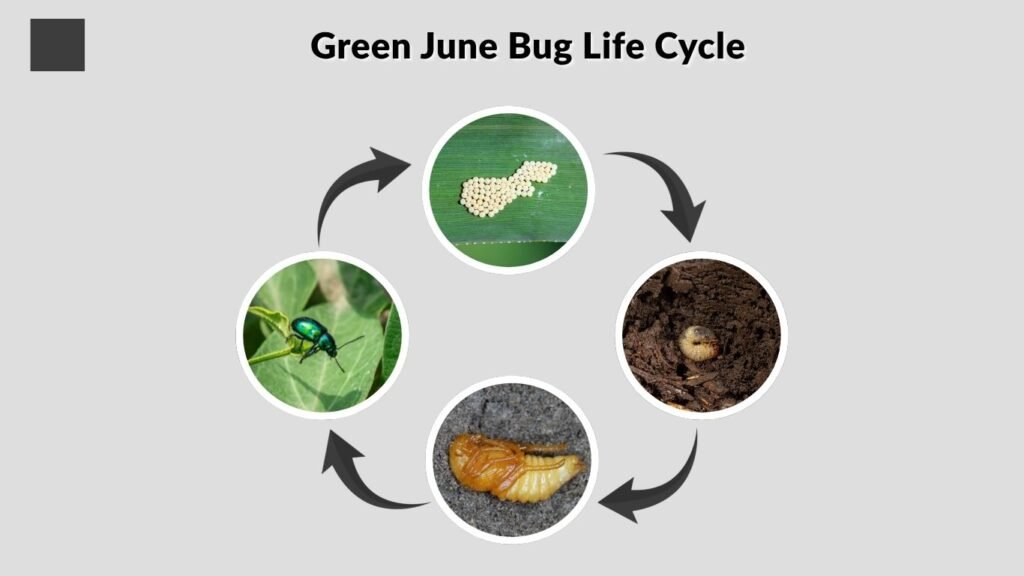
Green June beetles have a one-year life cycle in many areas. They overwinter as mature larvae or grubs in the soil, then pupate and emerge as adults in summer.
Eggs
Female green June bugs lay eggs in soil rich in organic matter. Lawns, pastures, compost-heavy soil, and areas with manure or decaying plant material may attract egg-laying females.
Larvae or Grubs
Green June bug larvae are large, cream-colored grubs. They live underground and feed on roots, decaying organic matter, and soil material. North Carolina Extension notes that green June beetles are common in older lawns and pastures with high organic content soils or manure fertilizers.
Pupae
After growing underground, the larvae pupate in the soil. This is the resting stage before they become adult beetles.
Adults
Adults usually appear in summer. They fly during the day, look for mates, and feed on fruit, plant sap, pollen, leaves, and other sweet plant materials.
What Do Green June Bugs Eat?
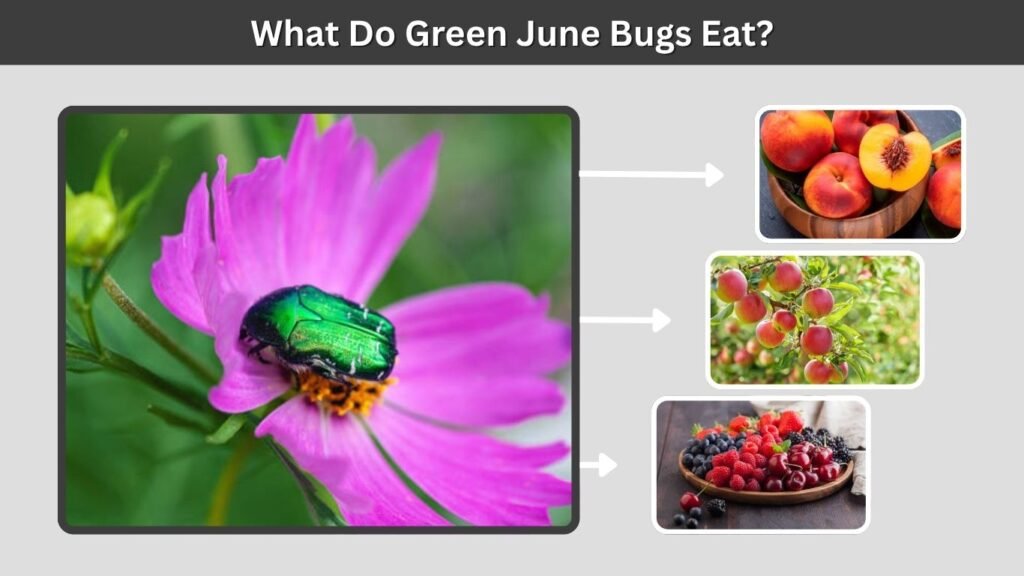
Green June bugs eat different foods depending on their stage. Adults feed above ground, while larvae live in soil.
Adult green June bugs eat ripe and rotting fruit such as peaches, berries, apples, grapes, and similar soft fruits. They may also feed on pollen, leaves, sap, and other sweet fluids.
Common adult foods include:
- Peaches
- Grapes
- Apples
- Berries
- Figs
- Plums
- Corn tassels
- Pollen
- Tree sap
- Soft leaves
- Overripe fruit
Green June bugs are especially attracted to sweet, fermenting, or damaged fruit. Once one beetle begins feeding, more may gather in the same area.
Do Green June Bugs Eat Leaves?
Yes, adult green June bugs may eat some leaves, but they are more strongly associated with ripe fruit, pollen, sap, and soft plant materials. They may feed on leaves of trees such as oak and maple, and they can also damage grapes and fruit crops when populations are high.
In home gardens, the most noticeable damage is often on ripe fruit rather than leaves.
Green June Bug Larvae: What Do the Grubs Look Like?
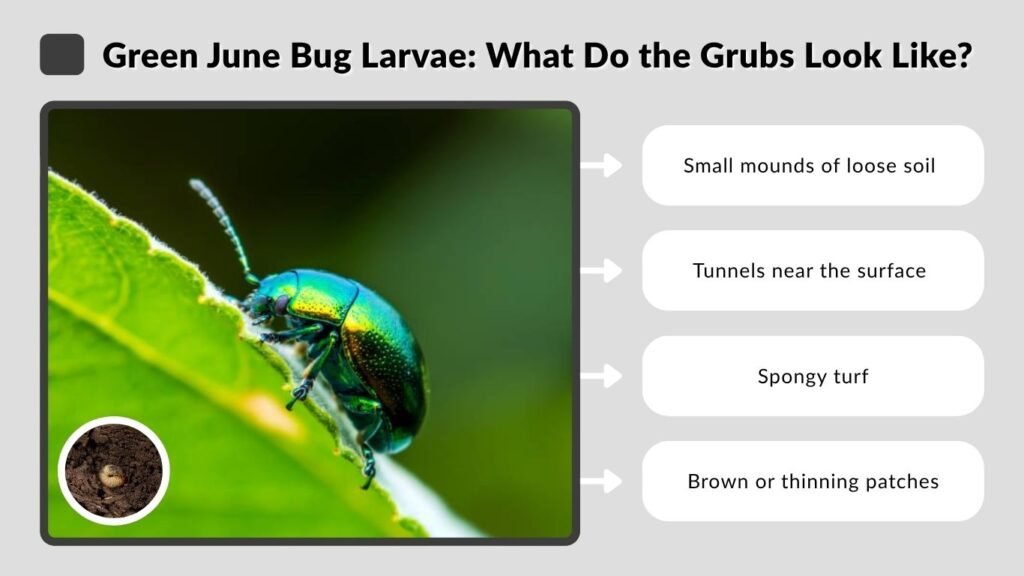
Green June bug larvae are white or cream-colored grubs. They are usually C-shaped, thick-bodied, and live in the soil. Some may crawl on their backs near the soil surface, which makes them different from many other white grubs.
The larvae can disturb turf by tunneling near the soil surface. They may also feed on roots of grasses and other plants. Large numbers can weaken lawns, especially in organic-rich soil.
Signs of Green June Bug Grubs
Look for these signs in lawns:
- Small mounds of loose soil
- Tunnels near the surface
- Spongy turf
- Brown or thinning patches
- Birds or animals digging for grubs
- Large white grubs in soil
If there is no turf damage, treatment may not be necessary. North Carolina Extension says action is not really needed when there is no sign of turf damage from grub tunneling.
Do Green June Bugs Bite?
Green June bugs do not bite people in a harmful way. They are not aggressive, do not sting, and are not venomous. Their legs may feel scratchy if they land on your skin, but they are not dangerous to handle gently.
They may bump into people while flying because they are large, noisy, and awkward in the air. This behavior can make them seem scary, but they are not trying to attack.
Are Green June Bugs Harmful?
Green June bugs can be harmful to lawns, fruit trees, and gardens when populations are large. Adults may damage ripe fruit, while larvae may disturb turf and feed around roots. However, a few beetles in the yard are usually not a serious problem.
They can also provide benefits in nature. Larvae help break down organic matter in soil, and birds, small mammals, and other animals may eat the grubs or adults.
Green June Bug vs Japanese Beetle
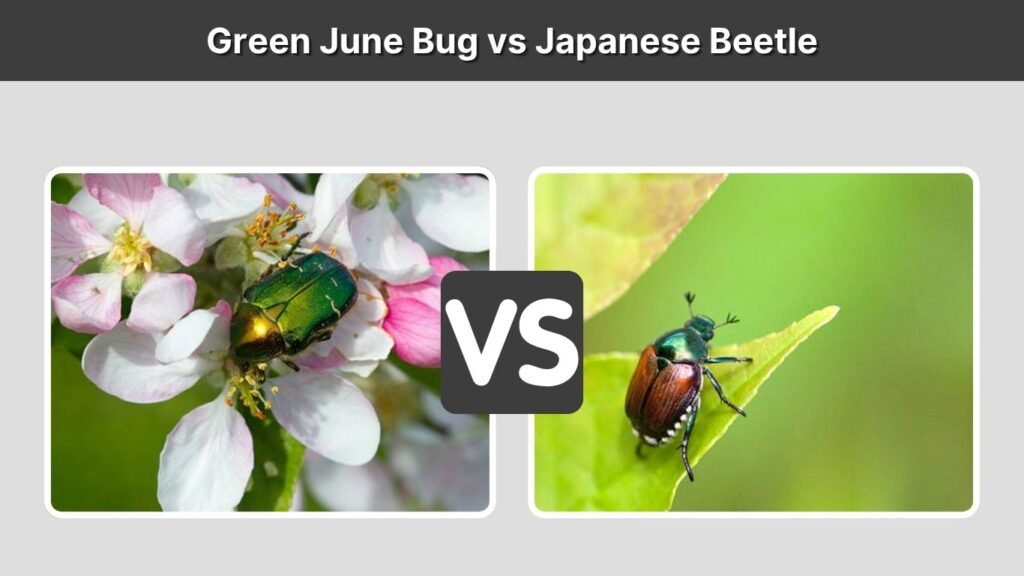
Green June bugs and Japanese beetles are often confused because both can have shiny green coloring. However, they are not the same insect.
| Feature | Green June Bug | Japanese Beetle |
| Size | Larger, about 1 inch | Smaller, about ⅜ to ½ inch |
| Color | Green to copper-green | Metallic green head, copper wing covers |
| White side tufts | No obvious row of white tufts | Has visible white hair tufts |
| Activity | Daytime, low buzzing flight | Daytime, often feeds in groups |
| Main damage | Ripe fruit, lawns, some leaves | Leaves, flowers, fruit |
| Native/invasive | Native in much of its range | Invasive in the U.S. |
K-State explains that green June beetles are much larger than Japanese beetles, while Japanese beetles have visible white tufts along the sides of the abdomen.
Brown June Bug vs Green June Bug
Brown June bugs and green June bugs are both scarab beetles, but they look and behave differently.
Brown June bugs are usually reddish-brown or dark brown and are most active at night. They are commonly seen around porch lights in late spring and summer. Green June bugs are larger-looking, metallic green, and more active during the day.
Key Differences
- Green June bugs are metallic green; brown June bugs are brown.
- Green June bugs often fly during the day; brown June bugs usually fly at night.
- Green June bugs are attracted to ripe fruit; brown June bugs often feed on leaves.
- Both can have grub stages that live in soil.
Green June Bug in California: Is It the Same Beetle?
In California, people often use “green June bug” to describe the green fruit beetle or figeater beetle, which is closely related but not always the same as the eastern green June beetle. UC IPM describes green fruit beetles as pests of ripe apricots, caneberries, figs, grapes, peaches, and plums; their grubs feed in decomposing organic matter rather than damaging fruit or plants.
So, if you search for “green June bug California,” you may be seeing information about the figeater beetle rather than Cotinis nitida.
What Attracts Green June Bugs?
Green June bugs are attracted to food, moisture, and organic-rich soil. Adults often gather around ripe or damaged fruit, while females may lay eggs in soil with plenty of decaying organic matter.
Things that attract green June bugs include:
- Overripe fruit
- Fallen fruit
- Compost piles
- Manure-rich soil
- Moist lawns
- Thick thatch
- Fruit trees
- Grapes and berries
- Fermenting plant material
Removing fallen fruit and reducing excess organic debris can help lower activity around gardens and patios.
How to Get Rid of Green June Bugs Naturally
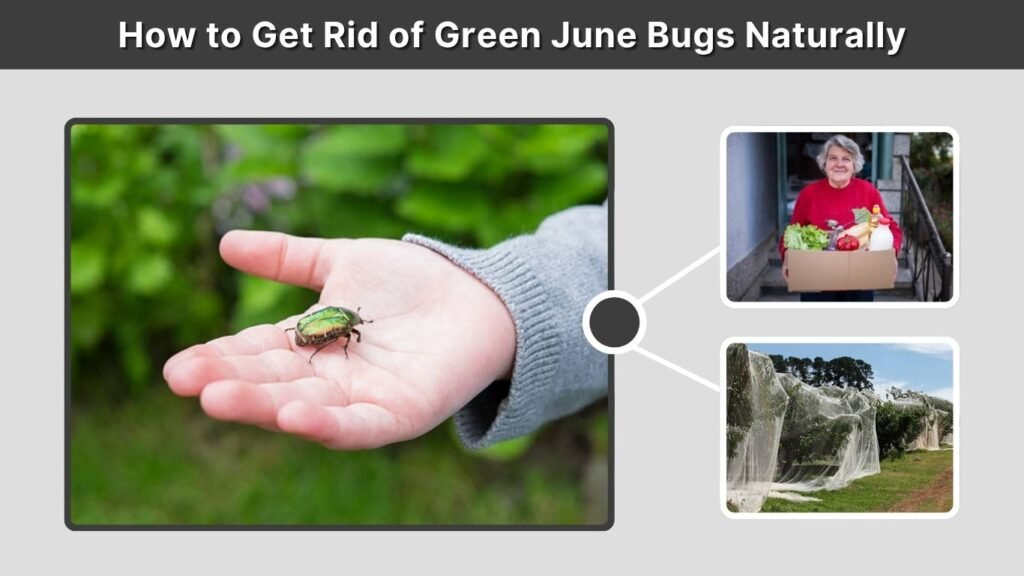
Natural control works best when you reduce what attracts them and manage the grub stage early.
Remove Food Sources
Pick ripe fruit quickly and clean up fallen fruit under trees. Green June bugs are strongly attracted to ripe, damaged, and rotting fruit.
Improve Lawn Care
Avoid overwatering and reduce heavy thatch. Green June beetles often favor lawns and pastures with high organic matter.
Handpick Adults
If only a few beetles are on fruit or plants, knock them into a bucket of soapy water. Do this early in the day when they are slower.
Use Barriers
Use fine garden netting around valuable fruit trees, grapes, or berry plants before fruit ripens.
Encourage Natural Predators
Birds and some mammals eat grubs, though digging animals can damage lawns while searching for them.
Green June Bug Traps: Do They Work?
Some traps may catch adult green June bugs, especially if they use fruit-based attractants. However, traps can sometimes draw more beetles into the area if placed too close to fruit trees or gardens.
For home gardens, sanitation is usually more useful than relying only on traps. Remove overripe fruit, harvest on time, and inspect soil for grubs if lawn damage appears.
Green June Bug Spiritual Meaning and Symbolism
Some people see green June bugs as symbols of renewal, growth, summer energy, or transformation because they emerge from the soil and appear during warm growing seasons. The green color is often associated with nature, abundance, and change.
These meanings are cultural or personal interpretations, not scientific facts. Scientifically, green June bugs are scarab beetles with an important role in soil and food-web activity.
FAQs
Are green June bugs dangerous?
Green June bugs are not dangerous to people. They do not sting or carry venom. They may damage ripe fruit or lawns when populations are high, but they are mostly a garden and turf pest rather than a human threat.
Do green June bugs bite?
Green June bugs do not normally bite people. If one lands on you, its legs may feel prickly or scratchy, but it is not attacking. They are clumsy fliers and may bump into people by accident.
What do green June bugs eat?
Adult green June bugs eat ripe and rotting fruit, pollen, sap, sweet fluids, and sometimes leaves. They are especially attracted to peaches, grapes, berries, apples, figs, and other soft fruits.
How long do green June bugs live?
Green June beetles often complete their life cycle in about one year. They spend much of that time as larvae in the soil, then emerge as adults in summer to feed, mate, and lay eggs.
Are green June bugs invasive?
The common green June beetle, Cotinis nitida, is native in much of the eastern and southern United States. However, similar green beetles in western states may be called green fruit beetles or figeater beetles, so identification depends on location.