
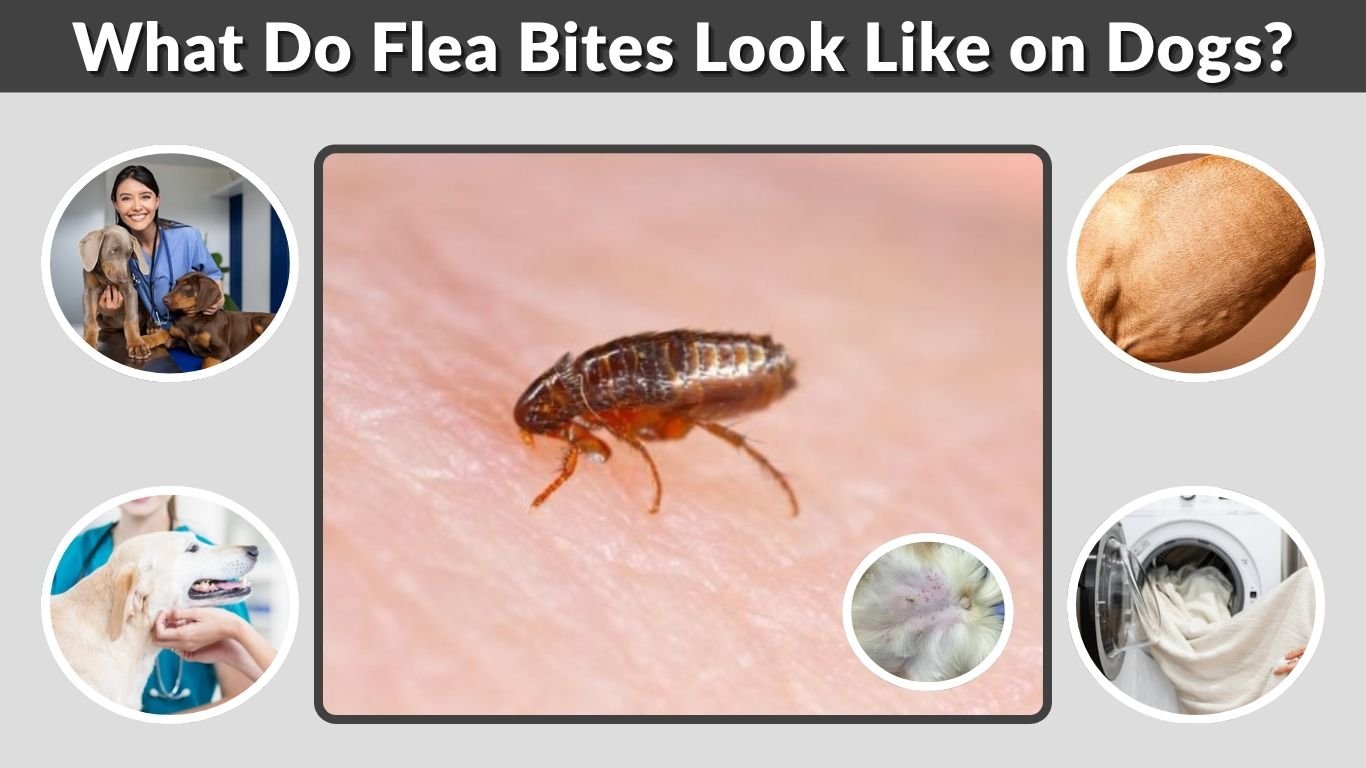
Flea bites on dogs usually appear as small, red, raised bumps that may develop into itchy scabs or irritated patches of skin. These bites commonly affect the lower back, belly, inner thighs, and base of the tail. However, thick fur can make individual bite marks difficult to see. Some dogs develop flea allergy dermatitis, causing intense scratching, hair loss, and inflammation even after a single bite. Understanding what flea bites look like on dogs helps owners recognize symptoms, provide appropriate treatment, and prevent future infestations.
What Do Flea Bites Look Like on a Dog?
Flea bites typically cause small, inflamed bumps that may be hidden beneath a dog’s coat. Their appearance depends on skin sensitivity, the number of bites, and whether the dog has scratched or chewed the affected areas. Some dogs experience only mild irritation, while others develop pronounced redness, crusted sores, or widespread skin inflammation.
Common Signs of Flea Bites on Dogs
Look for these recognizable symptoms:
- Small red bumps: Tiny raised spots beneath the fur.
- Intense itching: Frequent scratching, licking, or biting.
- Red skin: Inflammation around affected areas.
- Scabs: Crusted spots caused by scratching.
- Hair loss: Thinning fur around irritated skin.
- Darkened skin: Discoloration caused by ongoing inflammation.
- Open sores: Broken skin resulting from excessive chewing.
What Do Fresh Flea Bites Look Like?
Fresh flea bites may appear as tiny pink or red bumps surrounded by mild swelling.
However, individual bites are often difficult to distinguish from other skin irritations.
Dogs sensitive to flea saliva may develop noticeable itching before any obvious skin changes appear.
Where Do Fleas Usually Bite Dogs?
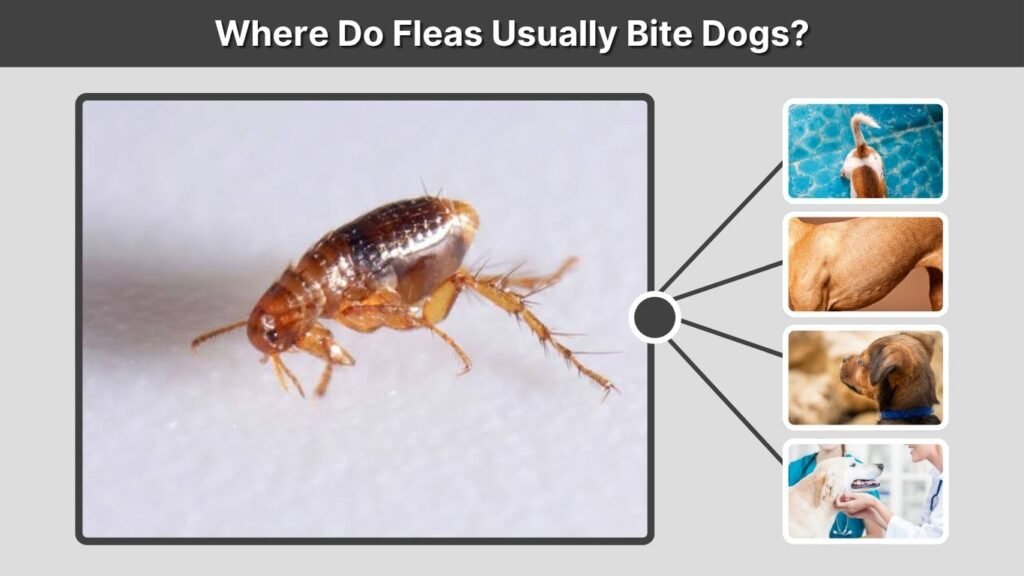
Fleas can bite dogs almost anywhere, but certain body areas are particularly vulnerable. The lower back, tail base, abdomen, and inner thighs are common locations for flea-related irritation. These areas may develop clusters of bumps or scabs. Understanding where fleas commonly feed helps owners inspect their dogs more effectively and recognize possible flea infestations early.
Common Flea Bite Locations
Check these areas when examining your dog:
- Base of the tail: A common location for flea allergy symptoms.
- Lower back: Frequently affected by itching and hair loss.
- Belly: Thin fur makes irritated bumps easier to notice.
- Inner thighs: Sensitive skin may become red or inflamed.
- Groin: Flea-related irritation can develop in sheltered areas.
- Neck: Some dogs develop scratching and skin irritation.
- Behind the ears: Fleas or other skin problems may cause discomfort.
How to Spot Flea Bites Under Thick Fur
Part your dog’s fur carefully and examine the skin for bumps, scabs, or redness.
A flea comb can help reveal adult fleas and flea dirt, which looks like tiny black specks.
When flea dirt is placed on a damp white tissue, it may dissolve into reddish-brown marks because it contains digested blood.
Flea Allergy Dermatitis in Dogs
Flea allergy dermatitis is an allergic skin condition caused by hypersensitivity to flea saliva. It is one of the common causes of severe itching in dogs. Unlike ordinary flea bite irritation, an allergic reaction can continue for days after exposure. Even a single bite may trigger substantial discomfort in a sensitive dog, sometimes requiring veterinary treatment.
What Does Flea Allergy Dermatitis Look Like?
Dogs with flea allergy dermatitis commonly develop intensely itchy skin around the lower back, tail base, and hind legs.
Repeated scratching may produce hair loss, crusted bumps, thickened skin, or open sores.
Severe cases can lead to secondary bacterial infections.
Some allergic dogs show considerable irritation even when no fleas are visible.
Flea Bites vs. Other Skin Conditions
Flea bites can resemble skin allergies, mite infestations, bacterial infections, or contact dermatitis.
A dog’s itching pattern and evidence of flea exposure provide useful clues, but appearance alone cannot confirm the diagnosis.
A veterinarian may examine the skin and recommend appropriate testing when necessary.
How to Treat Flea Bites on Dogs
Treating flea bites involves relieving irritation while eliminating the fleas responsible for the problem. Simply applying something to the affected skin will not prevent additional bites. Effective treatment usually includes veterinarian-approved flea control, appropriate skin care, and household cleaning. Dogs with severe inflammation, open sores, or persistent itching may require additional veterinary medications to recover comfortably.
Steps to Treat Flea Bites
Follow these practical steps:
- Check for fleas: Use a flea comb to inspect the coat.
- Consult your veterinarian: Choose an appropriate flea-control treatment.
- Clean irritated skin: Gently clean affected areas using veterinarian-approved products.
- Prevent scratching: Use a protective collar when necessary to reduce self-injury.
- Treat all household pets: Follow species-specific flea prevention recommendations.
- Clean the environment: Vacuum carpets and wash pet bedding.
- Monitor recovery: Watch for continued itching, swelling, or infection.
How to Soothe Flea Bites on Dogs Naturally
A cool, damp compress may temporarily relieve mild skin irritation.
Gentle grooming can also help remove fleas and debris from the coat.
Avoid concentrated essential oils, vinegar, alcohol, and other irritating home remedies.
Never give human antihistamines, hydrocortisone creams, or pain medications without veterinary guidance. Some human products are unsafe for dogs.
How Long Do Flea Bites Last on Dogs?
The duration of flea bite irritation varies depending on a dog’s sensitivity and the severity of exposure. Mild reactions may improve within several days once fleas are controlled. However, flea allergy dermatitis can cause prolonged itching, and damaged skin may need additional time to heal. Continued exposure can prevent improvement even when temporary skin treatments provide relief.
Normal Flea Bite Healing Time
Uncomplicated flea bite irritation may settle within a few days after effective flea treatment.
Dogs with allergic reactions may continue itching for days or longer, particularly when secondary infections develop.
Hair regrowth can take several weeks after inflammation resolves.
Persistent symptoms should be evaluated by a veterinarian.
Can Flea Bites Make Dogs Sick?
Yes. Heavy flea infestations can cause anemia because fleas feed on blood, especially in puppies and small or weakened dogs.
Fleas can also transmit certain parasites, including tapeworms when dogs swallow infected fleas.
Severe weakness, pale gums, collapse, or breathing difficulties require urgent veterinary attention.
Do Dog Fleas Bite Humans?

Dog fleas can bite humans when they encounter suitable opportunities, especially in homes with flea infestations. The cat flea, Ctenocephalides felis, is also commonly found on dogs and can feed on people. Human flea bites typically produce small, itchy bumps around the ankles and lower legs. Preventing flea infestations in pets helps protect household members from repeated exposure.
What Do Dog Flea Bites Look Like on Humans?
Flea bites on humans usually appear as small, itchy red or discolored bumps.
Several bites may develop close together or in short clusters.
Although fleas generally prefer animal hosts, they can bite people and occasionally transmit infectious diseases.
How to Prevent Flea Bites on Dogs and Humans
Prevention requires consistent pet care and environmental management.
- Use flea prevention: Follow veterinarian-recommended schedules.
- Wash pet bedding: Clean washable bedding regularly.
- Vacuum frequently: Focus on carpets, furniture, and floor edges.
- Inspect pets: Check for fleas and flea dirt during grooming.
- Treat infestations early: Address fleas before populations increase.
FAQs
Flea bites can cause different symptoms depending on a dog’s coat, skin sensitivity, and exposure. Owners frequently wonder whether fleas cause scabs, how long itching lasts, and whether human flea treatments are suitable for pets. The following answers address common concerns about recognizing flea bites and protecting dogs from unnecessary discomfort.
1. Can You See Flea Bites on Dogs?
Yes, although thick fur often conceals them. Parting the coat may reveal small red bumps, scabs, or irritated patches, especially near the tail base and belly.
2. Do Flea Bites Cause Hair Loss in Dogs?
Yes. Repeated scratching, licking, and chewing can cause hair loss. Flea allergy dermatitis is a common reason for thinning fur around the lower back and tail.
3. How Long Do Flea Bites Itch on Dogs?
Mild itching may improve within several days after fleas are controlled. Dogs with flea allergies may experience longer-lasting irritation and require veterinary treatment.
4. Can I Give My Dog Benadryl for Flea Bites?
Do not give Benadryl or other human medications without veterinary guidance. The appropriate treatment depends on your dog’s health, other medications, and the specific product ingredients.
5. Can a Dog Die From Flea Bites?
Severe flea infestations can cause life-threatening blood loss and anemia, especially in young puppies. Most ordinary flea bites are not life-threatening, but heavy infestations require prompt treatment.
