
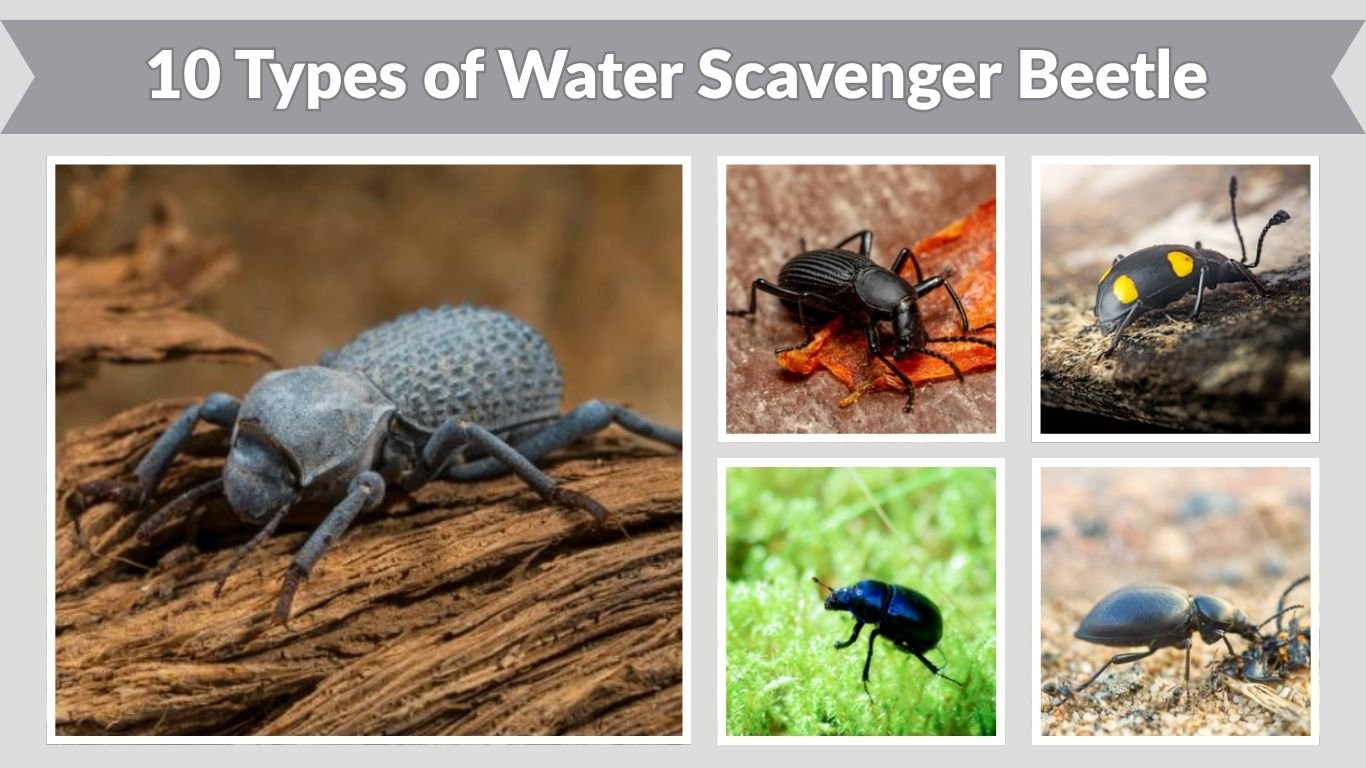
Water scavenger beetles are a diverse group of aquatic insects commonly found in ponds, marshes, and other freshwater habitats. Known for their role as natural cleaners, they feed on decaying organic matter and help maintain ecological balance. This guide highlights ten different types, making identification easier through their unique characteristics, habitats, and behaviors.
1. Giant Water Scavenger Beetle
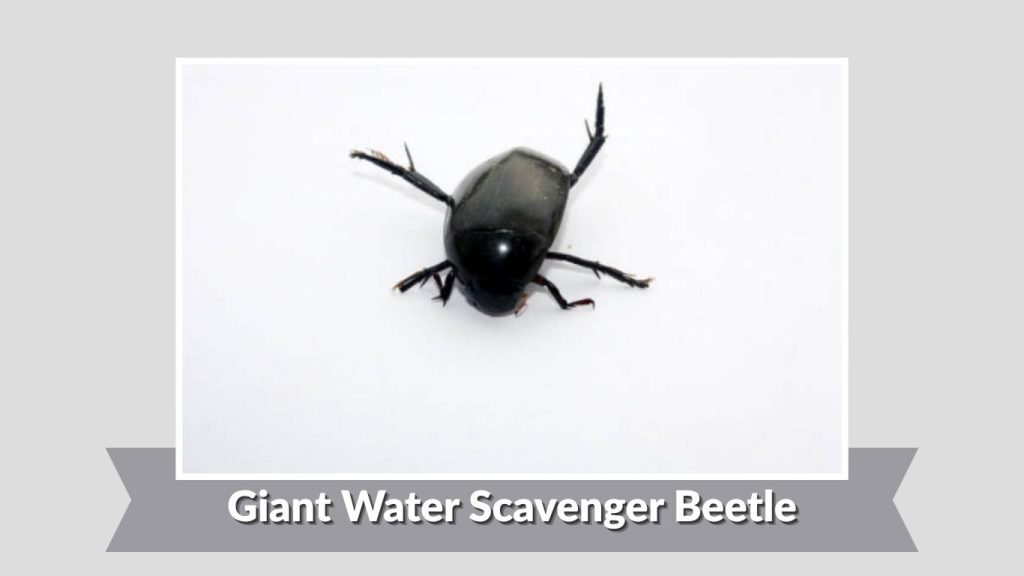
A large, slow-moving aquatic beetle commonly found in ponds, marshes, and stagnant water. Despite its intimidating size, it is mostly harmless and plays an important role in cleaning aquatic environments by feeding on decaying matter.
Characteristics
- One of the largest water scavenger beetles, often reaching up to 5 cm in length
- Dark brown to black, shiny body with a smooth, oval shape
- Long maxillary palps that are often mistaken for antennae
- Swims slowly using alternating hind leg movements
- Carries air under its body when diving
Habitat and Distribution
The Giant Water Scavenger Beetle is widely distributed across Europe, Asia, and parts of Africa. It prefers still or slow-moving freshwater habitats such as ponds, ditches, and wetlands. These beetles are often seen near vegetation where food sources are abundant and water conditions remain calm.
Behavior and Diet
This species is primarily scavenger-based in feeding habits, consuming decaying plant and animal material. However, it may occasionally feed on small aquatic organisms. It is more active at night and may come to light sources. Though aquatic, it frequently surfaces to replenish its air supply.
Life Cycle
The life cycle begins when females lay eggs in protective silk cases attached to aquatic plants. Larvae are more predatory than adults and actively hunt small invertebrates. After several growth stages, they leave the water to pupate in moist soil. Adults emerge and return to water to continue the cycle.
2. Oval Water Scavenger Beetle
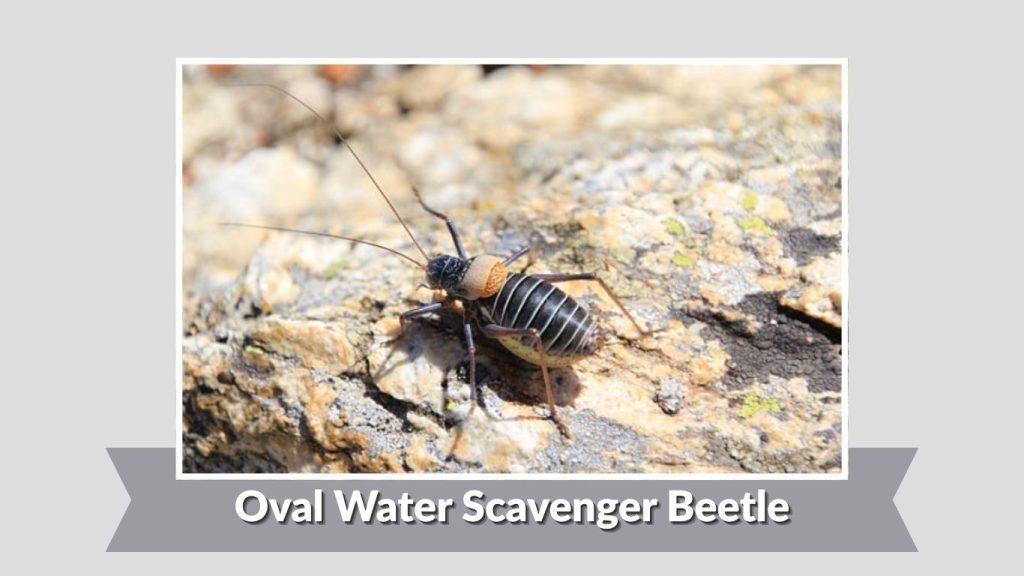
A medium-sized aquatic beetle commonly found in freshwater habitats like ponds and marshes. It is known for its smooth oval shape and calm behavior, contributing to ecosystem cleanliness by feeding on organic debris and plant matter.
Characteristics
- Medium-sized beetle with a rounded, oval body shape
- Smooth, shiny surface typically dark brown or black
- Short antennae with longer palps used for sensing food
- Hind legs adapted for steady swimming
- Capable of storing air beneath its body
Habitat and Distribution
The Oval Water Scavenger Beetle is found across parts of Europe and Asia, especially in still or slow-moving freshwater bodies. It prefers shallow waters rich in vegetation, where it can easily find food and shelter from predators.
Behavior and Diet
This beetle is primarily a scavenger, feeding on decaying plant material and organic debris. It may occasionally consume small aquatic organisms. It is generally slow-moving and often seen near the bottom or clinging to submerged plants during the day.
Life Cycle
Females lay eggs in protective cases attached to aquatic plants. The larvae are more active hunters, feeding on small aquatic life. After completing their larval stages, they leave the water to pupate in moist soil before emerging as adults.
3. Great Silver Water Beetle
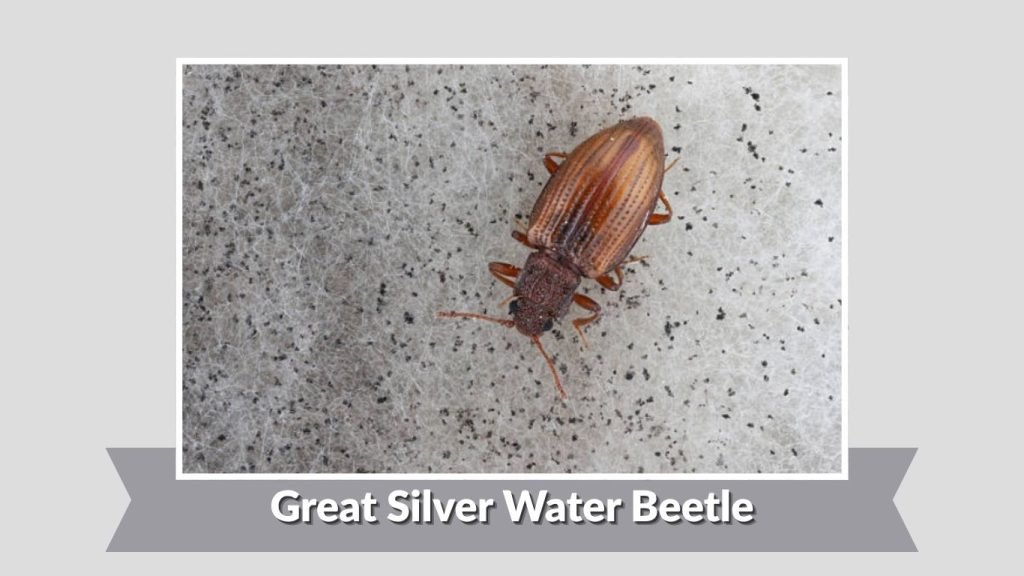
A large and noticeable aquatic beetle often recognized for its slightly glossy, dark body. It is commonly found in calm freshwater environments and plays a useful role in breaking down organic matter within aquatic ecosystems.
Characteristics
- Large body with an elongated oval shape
- Dark black or brown coloration with a subtle metallic sheen
- Prominent palps longer than antennae
- Strong hind legs adapted for swimming
- Carries an օդ bubble for underwater respiration
Habitat and Distribution
The Great Silver Water Beetle is widely distributed across Europe and parts of Asia. It prefers still or slow-moving water such as ponds, marshes, and ditches. It is often found in areas with dense aquatic vegetation.
Behavior and Diet
This beetle mainly feeds on decaying plant material and organic debris. Occasionally, it may consume small aquatic organisms. It is usually slow-moving and spends much of its time near the bottom or among plants, surfacing occasionally for air.
Life Cycle
Females lay eggs in silk-like cases attached to aquatic plants. The larvae are more active predators, feeding on small insects and invertebrates. After maturing, they leave the water to pupate in damp soil before emerging as adults.
4. Brown Water Scavenger Beetle
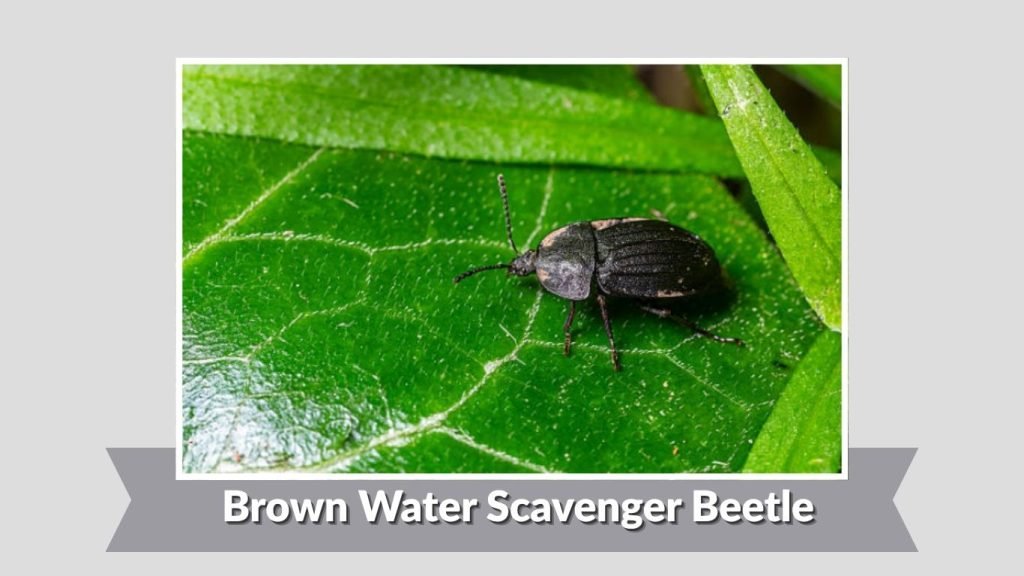
A moderately sized aquatic beetle known for its dull brown coloration and adaptability to various freshwater habitats. It is commonly seen in ponds and wetlands, where it helps maintain ecological balance by feeding on decomposing organic material.
Characteristics
- Medium-sized beetle with a broad, oval-shaped body
- Brown to dark brown coloration with a slightly matte appearance
- Smooth outer shell with a gently curved back
- Long palps that assist in detecting food sources
- Hind legs designed for slow but steady swimming
Habitat and Distribution
The Brown Water Scavenger Beetle is found in a wide range of regions, including Europe, Asia, and parts of Africa. It thrives in still or slow-moving freshwater bodies such as ponds, marshes, and drainage ditches. This species prefers shallow waters with abundant vegetation, which provides both food and shelter. It can tolerate varying water conditions, making it relatively widespread.
Behavior and Diet
This beetle is primarily a scavenger, feeding on decaying plant matter, algae, and organic debris. It occasionally consumes small aquatic organisms when available. The beetle is generally slow-moving and spends much of its time near the bottom or clinging to submerged plants. It surfaces periodically to trap air beneath its body for breathing. It is mostly active during low-light conditions or at night.
Life Cycle
The life cycle begins when females lay eggs in protective cases attached to aquatic plants. After hatching, the larvae become more active and predatory, feeding on small invertebrates. As they grow, they go through several developmental stages before leaving the water to pupate in moist soil nearby. Once metamorphosis is complete, the adult beetle emerges and returns to the water to continue its life cycle.
5. Red Margin Water Scavenger Beetle
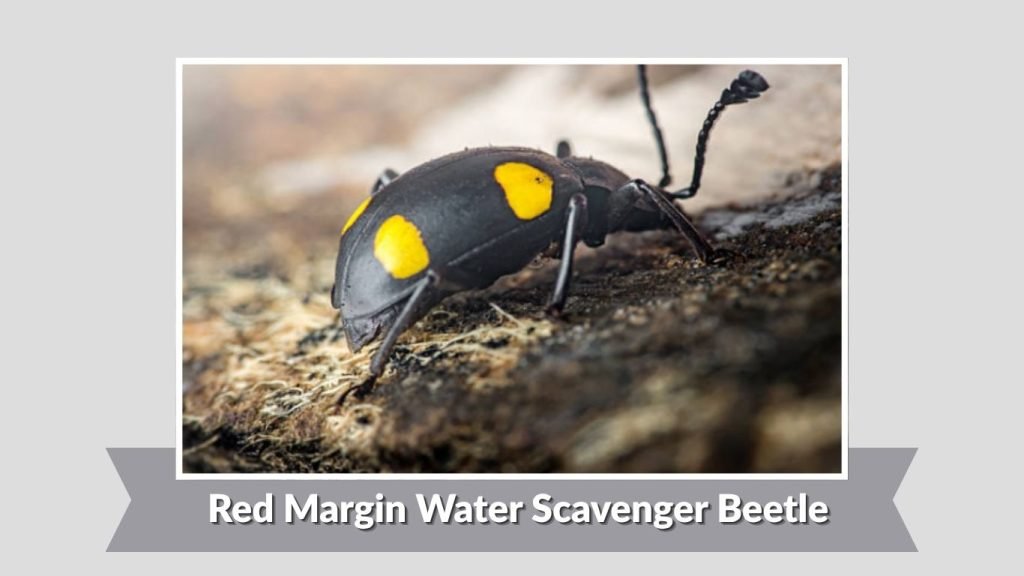
A small to medium-sized aquatic beetle easily recognized by its reddish or orange margins along the body. It is commonly found in freshwater habitats and plays a helpful role in breaking down organic matter in aquatic ecosystems.
Characteristics
- Medium-sized beetle with a slightly elongated oval shape
- Dark body with distinct reddish or orange edges
- Smooth and shiny outer surface
- Long palps that appear more noticeable than antennae
- Hind legs adapted for steady swimming movements
Habitat and Distribution
The Red Margin Water Scavenger Beetle is widely distributed across North and South America, particularly in warm regions. It is commonly found in ponds, marshes, lakes, and slow-moving streams. This species prefers shallow waters with abundant vegetation, where it can hide and easily access food. It is also known to tolerate temporary water bodies, making it quite adaptable.
Behavior and Diet
This beetle is mainly a scavenger, feeding on decaying plant material, algae, and organic debris. It may occasionally consume small aquatic insects or larvae. The beetle is relatively calm and slow-moving, often seen crawling along submerged plants or resting near the bottom. It surfaces periodically to capture air, storing it beneath its body for underwater respiration.
Life Cycle
Females lay eggs in silk-like cases that are attached to aquatic plants or floating debris. After hatching, the larvae become more active and predatory, feeding on small aquatic organisms. As they develop through several stages, they eventually leave the water to pupate in moist soil. Once fully developed, adult beetles emerge and return to the water to continue the cycle.
6. Collar Water Scavenger Beetle
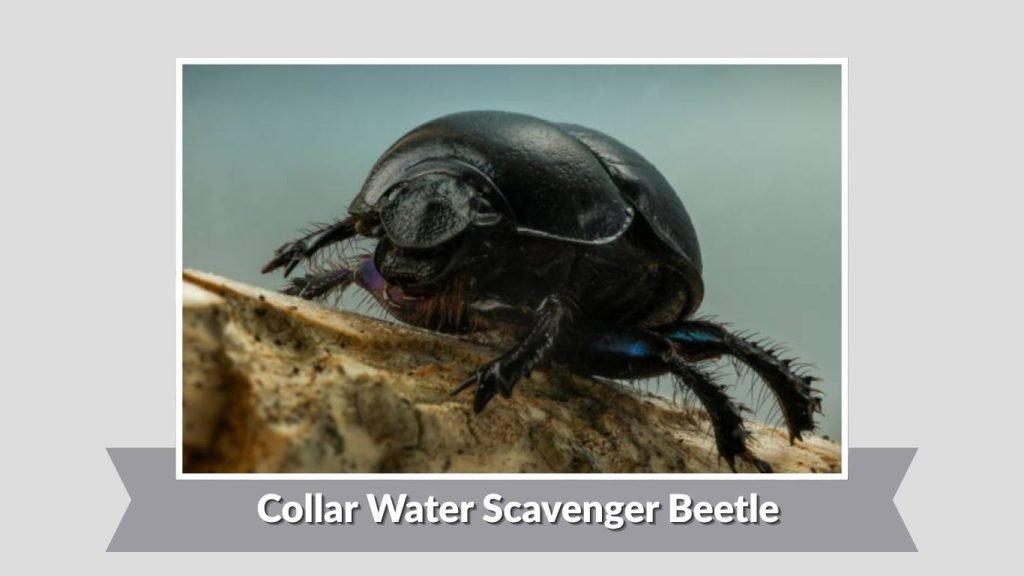
A small aquatic beetle distinguished by a lighter-colored band or “collar” behind its head. It is commonly found in quiet freshwater habitats and contributes to maintaining water quality by feeding on decaying organic materials.
Characteristics
- Small to medium-sized beetle with an oval, compact body
- Dark brown or black coloration with a pale band near the thorax
- Smooth, slightly glossy outer surface
- Noticeable palps longer than the antennae
- Hind legs adapted for slow, controlled swimming
Habitat and Distribution
The Collar Water Scavenger Beetle is widely distributed across the Americas and can be found in a variety of freshwater habitats. It prefers ponds, marshes, and slow-moving streams with plenty of vegetation. These environments provide both food and protection from predators. It is often seen near the edges of water bodies where plant life is dense.
Behavior and Diet
This species primarily feeds on decaying plant material, algae, and organic debris, making it an important part of the aquatic cleanup process. It may occasionally consume tiny aquatic organisms. The beetle is generally slow-moving and spends much of its time clinging to submerged plants or crawling along the bottom. It surfaces regularly to trap air for breathing.
Life Cycle
Females lay eggs in protective cases attached to aquatic plants. After hatching, the larvae are more active and predatory, feeding on small invertebrates. They pass through several growth stages before leaving the water to pupate in moist soil. After metamorphosis, adults return to the water and continue their life cycle.
7. Slender Water Scavenger Beetle
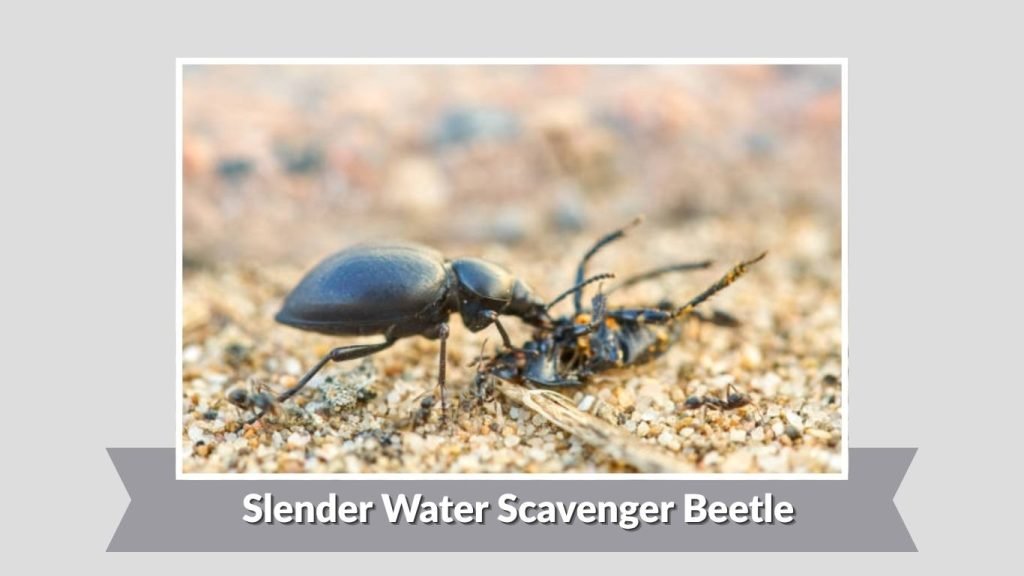
A relatively small and narrow-bodied aquatic beetle known for its streamlined appearance. It is commonly found in freshwater habitats and plays a role in breaking down organic debris, helping to keep aquatic environments clean and balanced.
Characteristics
- Small, elongated body with a more slender shape than other species
- Light to dark brown coloration with a smooth surface
- Narrow profile that aids in moving through vegetation
- Long palps used for sensing food and surroundings
- Hind legs adapted for gentle, controlled swimming
Habitat and Distribution
The Slender Water Scavenger Beetle is found in various regions across Europe, Asia, and parts of North America. It prefers shallow freshwater habitats such as ponds, marshes, and ditches. This species is often associated with areas that have dense aquatic vegetation, which provides both shelter and feeding opportunities.
Behavior and Diet
This beetle mainly feeds on decaying plant material, algae, and organic debris. It occasionally consumes very small aquatic organisms. Due to its slender body, it can easily navigate tight spaces among plants. It is generally slow-moving and spends much of its time near the bottom or attached to submerged vegetation, surfacing periodically for air.
Life Cycle
Females lay eggs in small protective cases attached to aquatic plants. The larvae are more active and predatory, feeding on tiny aquatic invertebrates. After passing through several developmental stages, they leave the water to pupate in damp soil. Once they emerge as adults, they return to the water to continue their life cycle.
8. Small Marsh Water Scavenger Beetle
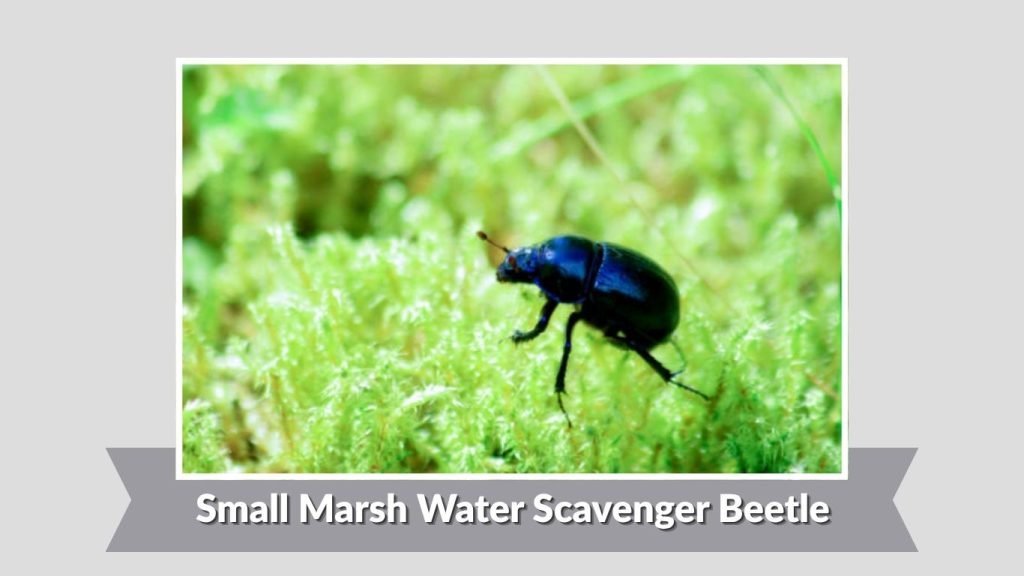
A tiny aquatic beetle commonly found in marshy and shallow freshwater environments. Despite its small size, it plays an important ecological role by feeding on organic debris and helping maintain water quality in wetland ecosystems.
Characteristics
- Very small beetle with a compact, oval-shaped body
- Light brown to dark brown coloration
- Smooth and slightly shiny outer surface
- Short antennae with relatively longer palps
- Hind legs suited for slow and steady swimming
Habitat and Distribution
The Small Marsh Water Scavenger Beetle is widely distributed across various regions, including Europe, Asia, and the Americas. It thrives in shallow, marshy areas such as wetlands, pond edges, and temporary water pools. These beetles prefer environments rich in decaying plant material, where food is readily available. They are often found among dense aquatic vegetation.
Behavior and Diet
This species primarily feeds on decaying organic matter, algae, and plant debris. It may occasionally consume microscopic aquatic organisms. Due to its small size, it tends to remain hidden within vegetation or at the bottom of water bodies. It is generally slow-moving and surfaces occasionally to trap air for breathing, storing it beneath its body.
Life Cycle
Females lay eggs in small, protective cases attached to aquatic plants or debris. After hatching, the larvae become more active and slightly predatory, feeding on tiny invertebrates. They go through several growth stages before leaving the water to pupate in moist soil. Adult beetles emerge after metamorphosis and return to aquatic habitats to continue their life cycle.
9. Ocher Water Scavenger Beetle

A small aquatic beetle recognized for its lighter, ocher or yellowish-brown coloration. It is commonly found in shallow freshwater habitats and contributes to the breakdown of organic material, supporting a healthy aquatic ecosystem.
Characteristics
- Small-sized beetle with an oval, slightly flattened body
- Distinct ocher or yellow-brown coloration
- Smooth, somewhat glossy outer surface
- Prominent palps longer than the antennae
- Hind legs adapted for slow, controlled swimming
Habitat and Distribution
The Ocher Water Scavenger Beetle is distributed across parts of Europe, Asia, and Africa. It prefers shallow, still waters such as ponds, marshes, and ditches. This species is often found in areas rich in decaying vegetation, where it can easily access food and remain concealed from predators.
Behavior and Diet
This beetle mainly feeds on decaying plant matter, algae, and organic debris. It may occasionally consume very small aquatic organisms. It is generally slow-moving and spends much of its time near the bottom or among submerged plants. Like other scavenger beetles, it surfaces periodically to collect air, which it stores under its body for breathing underwater.
Life Cycle
Females lay eggs in protective cases attached to aquatic plants or debris. Once hatched, the larvae become more active and feed on small aquatic invertebrates. They pass through several developmental stages before leaving the water to pupate in moist soil. After completing metamorphosis, adults return to the water to continue their life cycle.
10. Four-Spotted Water Scavenger Beetle

A small aquatic beetle known for the distinct dark spots on its body. It is commonly found in freshwater habitats and plays a useful role in recycling organic matter, helping maintain ecological balance in aquatic environments.
Characteristics
- Small beetle with a rounded, oval body shape
- Light brown to dark coloration with four noticeable spots
- Smooth and slightly shiny outer surface
- Long palps that are more prominent than antennae
- Hind legs adapted for slow and steady swimming
Habitat and Distribution
The Four-Spotted Water Scavenger Beetle is found across various regions, including Europe, Asia, and parts of Africa. It prefers shallow freshwater habitats such as ponds, marshes, and slow-moving streams. These beetles are often associated with areas that have abundant aquatic vegetation, providing both food and shelter.
Behavior and Diet
This species primarily feeds on decaying plant material, algae, and organic debris. It may occasionally consume tiny aquatic organisms. It is generally slow-moving and spends much of its time near the bottom or among submerged plants. It surfaces regularly to trap air beneath its body, which helps it breathe while underwater.
Life Cycle
Females lay eggs in small protective cases attached to aquatic plants or floating debris. After hatching, the larvae are more active and predatory, feeding on small aquatic invertebrates. They go through several growth stages before leaving the water to pupate in moist soil. Once fully developed, adults emerge and return to aquatic habitats to continue their life cycle.
FAQs
What are water scavenger beetles?
Water scavenger beetles are aquatic insects belonging to the family Hydrophilidae. They are commonly found in freshwater habitats and are known for feeding on decaying organic matter. This behavior helps clean water environments and supports a balanced ecosystem.
Are water scavenger beetles harmful to humans?
No, water scavenger beetles are generally harmless to humans. They do not bite or sting and are not dangerous. Although they may look intimidating due to their size or appearance, they mostly focus on feeding on organic debris in water.
What do water scavenger beetles eat?
Most water scavenger beetles are scavengers that feed on decaying plants, algae, and organic matter. Some species may occasionally consume small aquatic organisms, especially during their larval stage, which tends to be more predatory than adults.
Where can water scavenger beetles be found?
They are commonly found in ponds, lakes, marshes, ditches, and slow-moving streams. These beetles prefer calm, shallow waters with plenty of vegetation, which provides both food sources and shelter from predators.
How do water scavenger beetles breathe underwater?
Water scavenger beetles carry a supply of air with them when they dive. They trap air beneath their bodies or around their underside and periodically come to the surface to replenish it, allowing them to stay underwater for extended periods.
