

Swallowtail butterflies are among the most stunning and diverse butterflies in the world, known for their large size, vibrant colors, and distinctive tail-like extensions on their wings. They are found across many regions, from tropical forests to temperate gardens.
In this guide, you’ll explore 17 different types of swallowtail butterflies, each identified by its unique features, color patterns, diet, and behavior. This will help you easily recognize and understand these beautiful butterfly species in nature.
1. Eastern Tiger Swallowtail
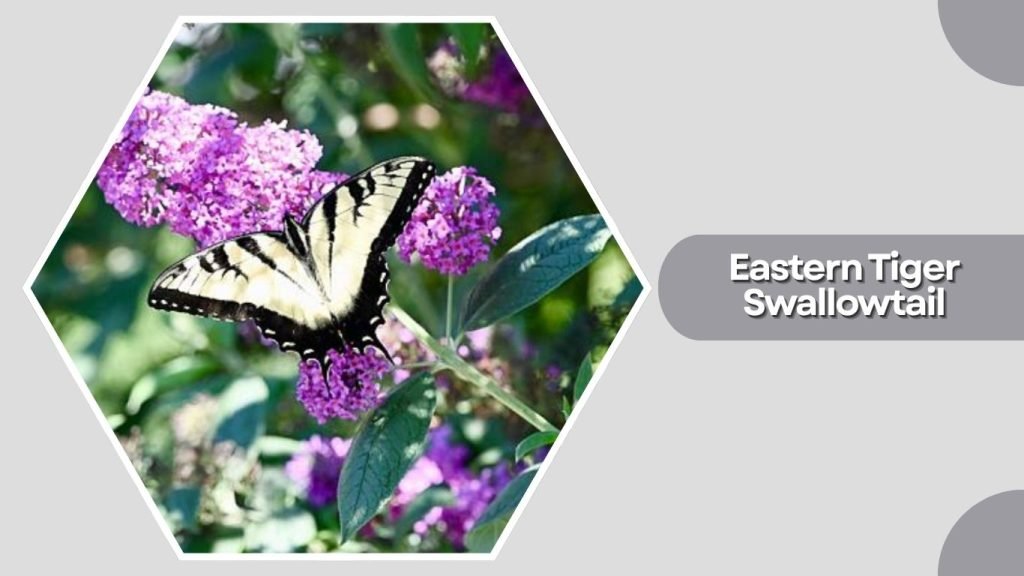
The Eastern Tiger Swallowtail is one of the most recognizable and widespread swallowtail butterflies in North America. Known for its bold striped pattern and graceful flight, it is commonly seen in gardens, forests, and near rivers.
Identification
- Yellow wings with black tiger-like stripes
- Tail-like extensions on hindwings
- Wingspan ranges from 7.9 to 14 cm
- Females may appear darker in some forms
Color Pattern
The Eastern Tiger Swallowtail displays bright yellow wings crossed by bold black stripes, resembling a tiger’s pattern. Some females show a darker, almost black coloration. Blue and orange spots near the hindwings add extra contrast and beauty.
Diet
Caterpillars feed on leaves of trees such as tulip tree, cherry, and willow. Adult butterflies consume nectar from flowers like lilac, milkweed, and wild cherry blossoms, supporting their active lifestyle.
Migration
Eastern Tiger Swallowtails are generally non-migratory. They remain within their local habitats, although they may move short distances depending on seasonal changes and availability of food sources.
2. Western Tiger Swallowtail
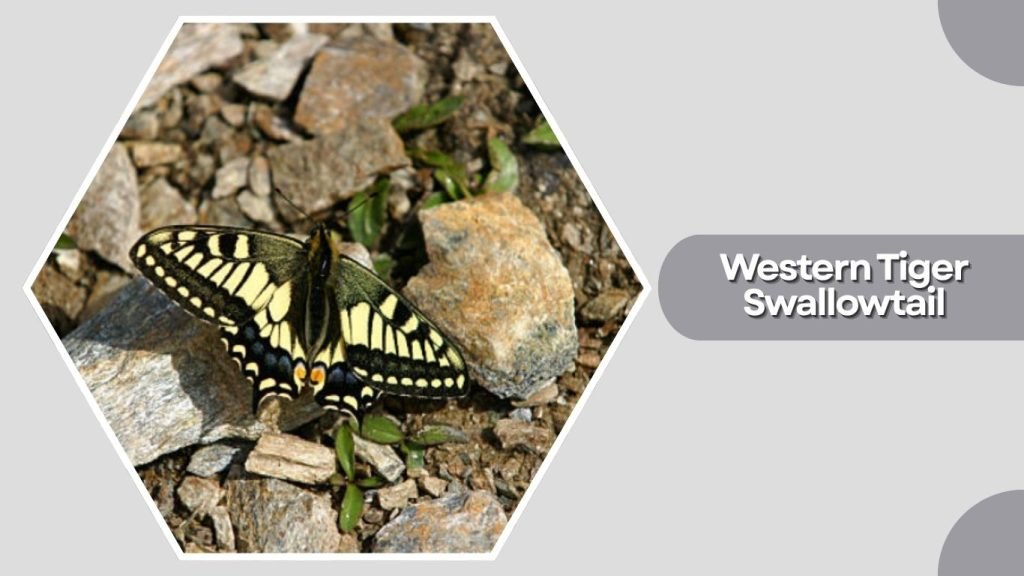
The Western Tiger Swallowtail is a close relative of the Eastern Tiger Swallowtail, found mainly in western North America. It prefers open woodlands, riversides, and urban areas where host plants are available.
Identification
- Yellow wings with bold black stripes
- Tail-like extensions on hindwings
- Wingspan ranges from 7 to 10.5 cm
- Slimmer body compared to Eastern species
Color Pattern
This butterfly features bright yellow wings marked with black tiger-like stripes. The hindwings often show blue and orange spots, adding to its striking appearance. The pattern is similar to its eastern counterpart but slightly lighter in tone.
Diet
Caterpillars feed on trees such as willow, cottonwood, and alder. Adult butterflies consume nectar from flowers like thistle, milkweed, and lilac, providing energy for daily activity.
Migration
Western Tiger Swallowtails are generally non-migratory. They remain within local habitats but may move short distances in response to seasonal changes and food availability.
3. Black Swallowtail
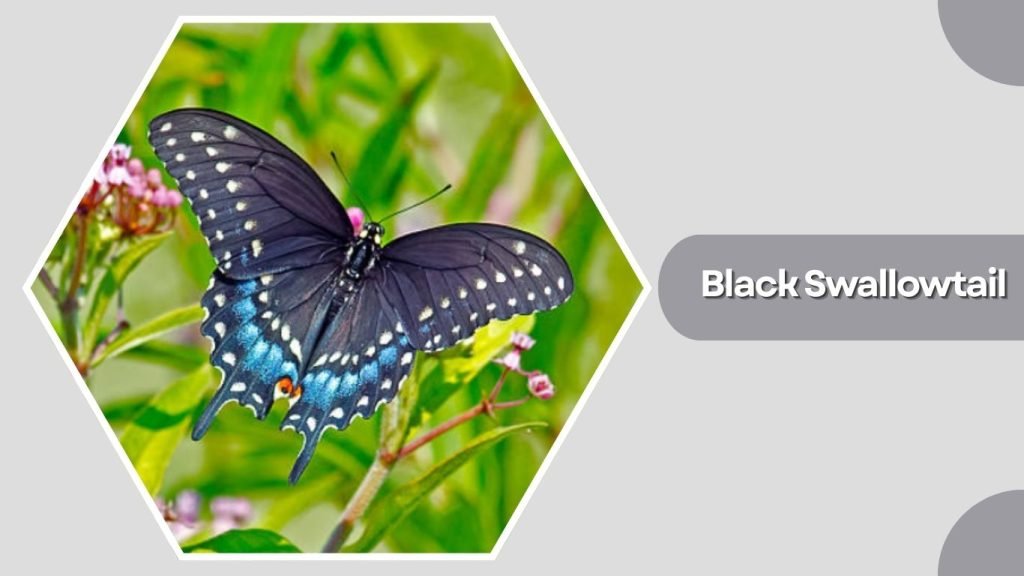
The Black Swallowtail is a common and attractive butterfly often found in gardens and open fields. It is especially known for visiting herb plants and is a frequent sight in home gardens.
Identification
- Black wings with yellow spots and blue markings
- Red-orange eye spots on hindwings
- Wingspan ranges from 6.5 to 10.5 cm
- Tail-like extensions on hindwings
Color Pattern
The Black Swallowtail has dark wings highlighted with rows of yellow spots. The hindwings display blue shading along with small red-orange spots, creating a vivid contrast. The underside is lighter but still patterned for camouflage.
Diet
Caterpillars feed on plants such as parsley, dill, fennel, and carrot leaves. Adult butterflies consume nectar from flowers like clover, milkweed, and thistle.
Migration
Black Swallowtails are generally non-migratory. They stay within their local habitats, though they may expand their range during warmer seasons.
4. Giant Swallowtail
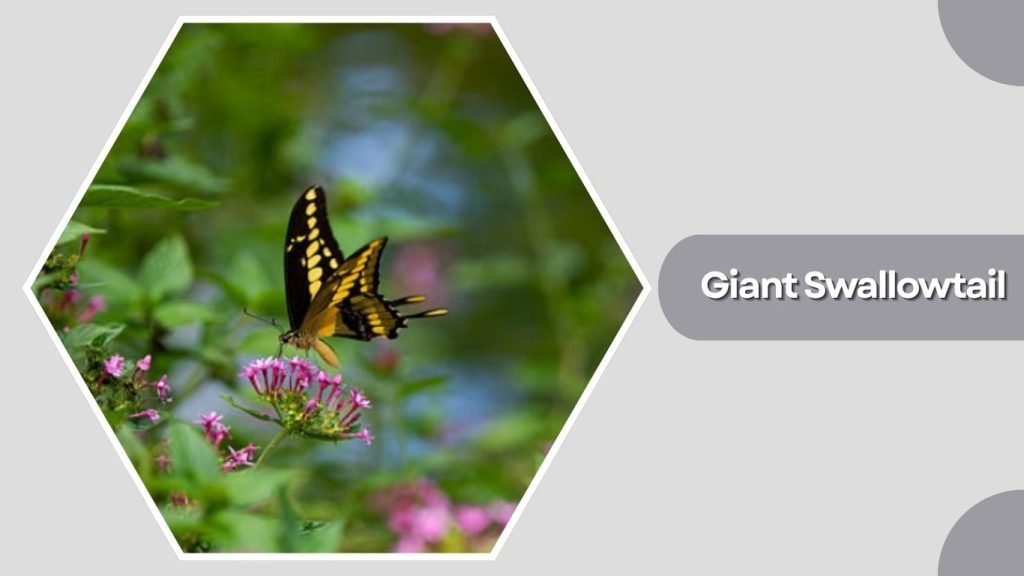
The Giant Swallowtail is the largest butterfly in North America, known for its impressive size and striking dark coloration. It is commonly found in gardens, citrus groves, and wooded areas.
Identification
- Dark brown to black wings with yellow markings
- Tail-like extensions on hindwings
- Wingspan ranges from 10 to 16 cm
- Strong and powerful flight
Color Pattern
The Giant Swallowtail features dark wings with bold yellow bands forming a cross-like pattern. The underside often shows a mix of yellow and brown, helping with camouflage when resting on tree bark or leaves.
Diet
Caterpillars feed on citrus plants such as orange, lemon, and lime. Adult butterflies consume nectar from flowers like azalea, bougainvillea, and lantana.
Migration
Giant Swallowtails are generally non-migratory. They remain in their local habitats but may move short distances depending on seasonal conditions.
5. Spicebush Swallowtail
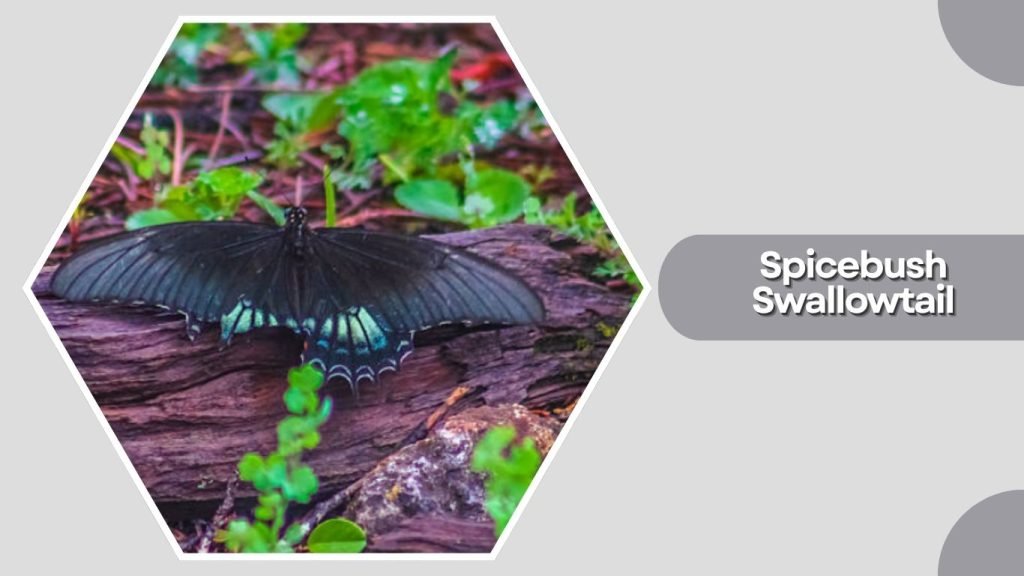
The Spicebush Swallowtail is a beautiful butterfly commonly found in forests and shaded areas. It is known for its unique caterpillar that mimics a snake to avoid predators.
Identification
- Dark wings with light blue or greenish spots
- Orange spots on underside of hindwings
- Wingspan ranges from 7.5 to 10 cm
- Tail-like extensions on hindwings
Color Pattern
The Spicebush Swallowtail has mostly dark wings with subtle blue or greenish scaling. The underside features bright orange spots, creating a striking contrast. This coloration helps warn predators and adds to its distinct look.
Diet
Caterpillars feed on spicebush and sassafras plants. Adult butterflies consume nectar from flowers such as honeysuckle, thistle, and azalea.
Migration
Spicebush Swallowtails are not strong migrants. They typically remain in wooded habitats, with only short-distance movement influenced by seasonal changes.
6. Pipevine Swallowtail
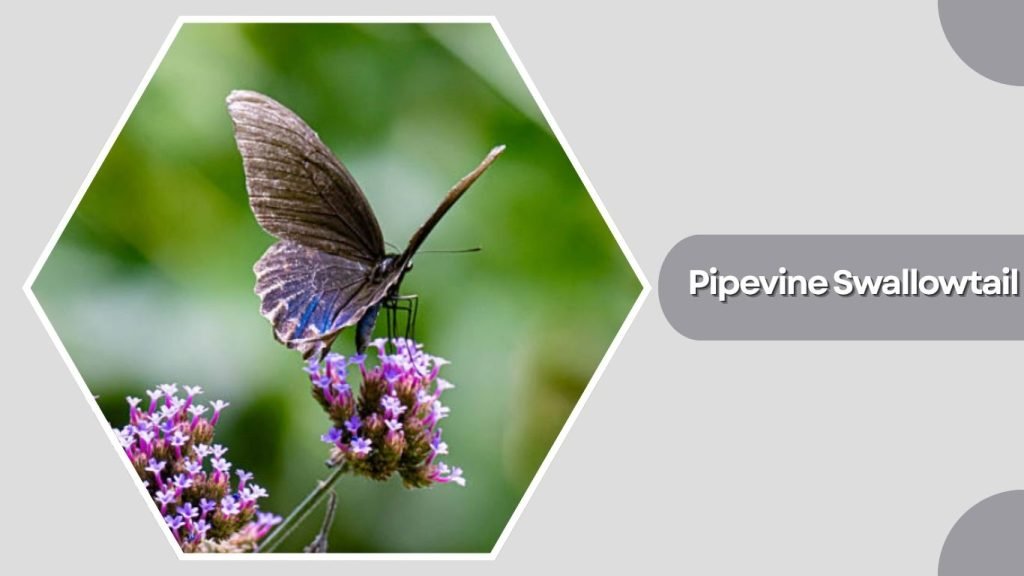
The Pipevine Swallowtail is a striking butterfly known for its dark, iridescent wings and toxic nature. It is commonly found in woodlands, gardens, and areas where pipevine plants grow.
Identification
- Dark blue to black wings with iridescent sheen
- Row of bright orange spots on hindwings underside
- Wingspan ranges from 7 to 13 cm
- Tail-like extensions on hindwings
Color Pattern
The Pipevine Swallowtail has deep black or bluish wings that shimmer in sunlight. The underside displays vivid orange spots, creating a strong contrast. This bold coloration serves as a warning to predators about its toxicity.
Diet
Caterpillars feed on pipevine plants containing toxic compounds. Adult butterflies consume nectar from flowers such as lantana, thistle, and petunia, supporting their active lifestyle.
Migration
Pipevine Swallowtails are generally non-migratory. They stay within local habitats but may move short distances in search of food and suitable breeding sites.
7. Zebra Swallowtail
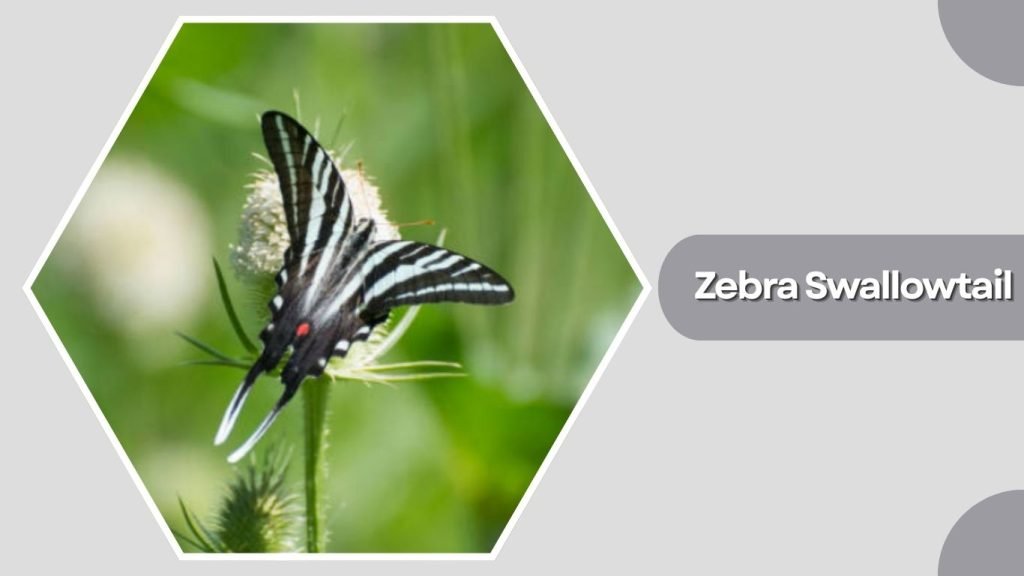
The Zebra Swallowtail is a unique and elegant butterfly recognized for its long tails and bold striped pattern. It is commonly found near rivers, forests, and open woodlands.
Identification
- White wings with black zebra-like stripes
- Long tail extensions on hindwings
- Wingspan ranges from 6.4 to 10.4 cm
- Light and fluttering flight
Color Pattern
The Zebra Swallowtail features striking black and white stripes across its wings, resembling a zebra pattern. Red and blue markings near the hindwings add extra detail. Its long tails give it a graceful and distinctive appearance.
Diet
Caterpillars feed mainly on pawpaw plants. Adult butterflies consume nectar from flowers such as milkweed, verbena, and blackberry blossoms.
Migration
Zebra Swallowtails are non-migratory. They remain within their local habitats, with movement mainly influenced by seasonal availability of host plants.
8. Two-Tailed Swallowtail
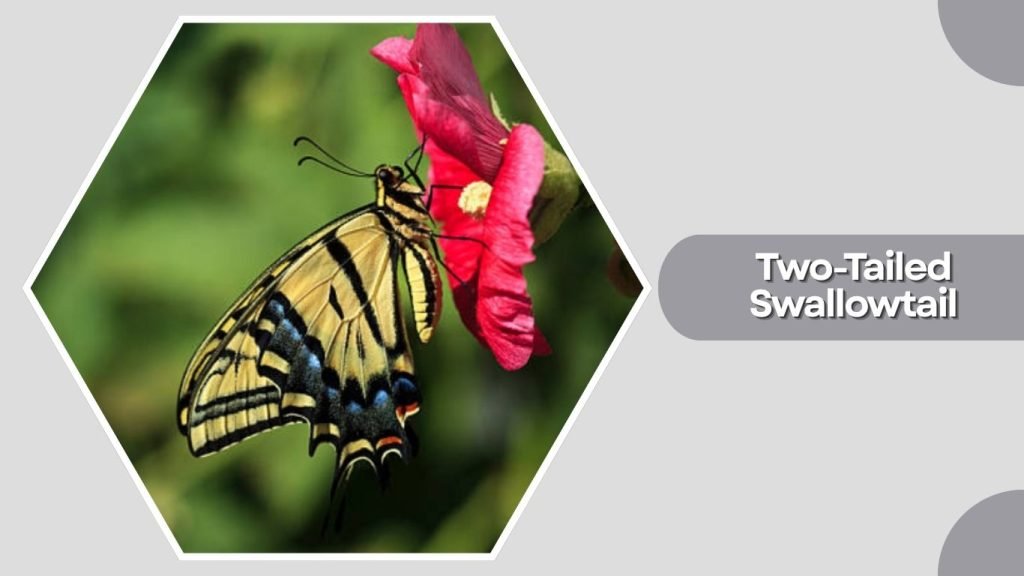
The Two-Tailed Swallowtail is a large and eye-catching butterfly known for having two tails on each hindwing. It is commonly found in open areas, woodlands, and near water sources in western regions.
Identification
- Yellow wings with black stripes
- Two tail extensions on each hindwing
- Wingspan ranges from 9 to 14 cm
- Blue and orange spots near hindwings
Color Pattern
This butterfly displays bright yellow wings with bold black tiger-like stripes. The presence of two tails on each hindwing makes it unique. Blue and orange markings add extra contrast, enhancing its overall appearance.
Diet
Caterpillars feed on plants such as ash and cherry trees. Adult butterflies consume nectar from flowers like thistle, milkweed, and lilac, supporting their active flight.
Migration
Two-Tailed Swallowtails are generally non-migratory. They stay within their local habitats, with only short-distance movement influenced by seasonal changes.
9. Palamedes Swallowtail
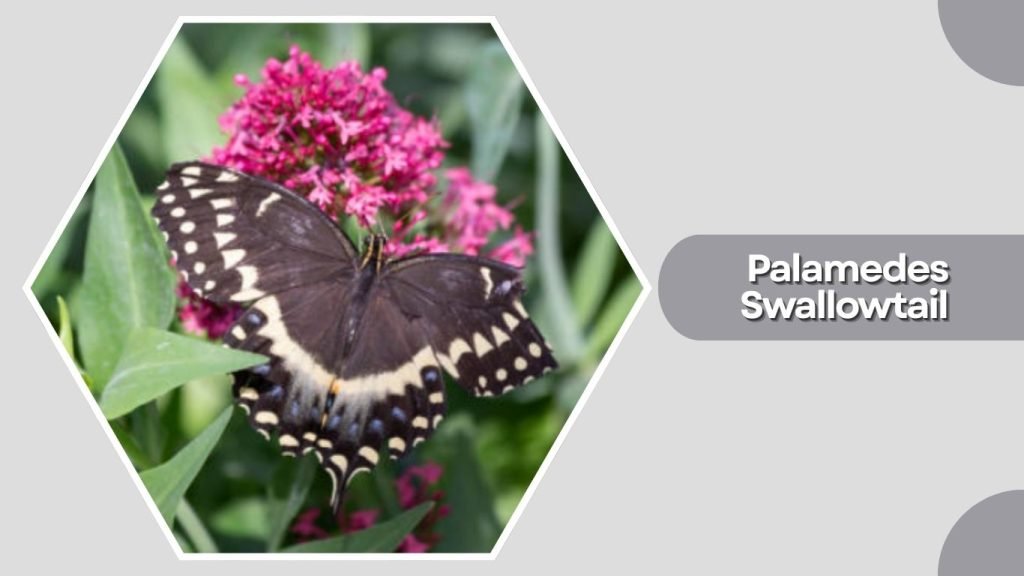
The Palamedes Swallowtail is a dark-colored butterfly commonly found in southeastern regions, especially near swamps and coastal forests. It is closely associated with bay trees.
Identification
- Dark brown to black wings with yellow markings
- Tail-like extensions on hindwings
- Wingspan ranges from 11 to 13 cm
- Smooth and gliding flight
Color Pattern
The Palamedes Swallowtail has dark wings with bold yellow bands and spots. The underside often shows additional markings that help with camouflage. Its coloration is similar to the Black Swallowtail but with distinct pattern differences.
Diet
Caterpillars feed mainly on red bay and swamp bay plants. Adult butterflies consume nectar from flowers such as thistle, pickerelweed, and buttonbush.
Migration
Palamedes Swallowtails are non-migratory. They remain in their native habitats year-round, especially in warm and humid environments near water bodies.
10. Anise Swallowtail
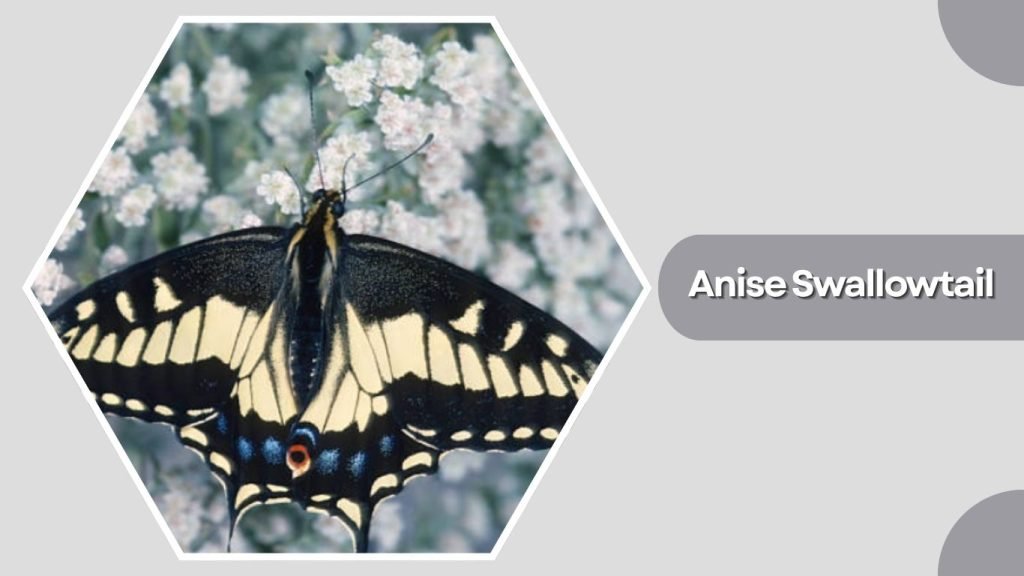
The Anise Swallowtail is a widespread butterfly found mainly in western North America. It is often seen in open fields, gardens, and coastal areas, especially where its host plants grow.
Identification
- Yellow wings with black stripes
- Tail-like extensions on hindwings
- Wingspan ranges from 5.2 to 8 cm
- Similar in appearance to Black Swallowtail
Color Pattern
The Anise Swallowtail displays bright yellow wings crossed by bold black stripes. The hindwings often feature blue and orange spots, adding contrast. Its pattern closely resembles other swallowtails but is slightly lighter in tone.
Diet
Caterpillars feed on plants such as fennel, parsley, and anise. Adult butterflies consume nectar from flowers like milkweed, thistle, and lilac, supporting their active behavior.
Migration
Anise Swallowtails are generally non-migratory. They remain within their local habitats, although they may move short distances depending on seasonal conditions.
11. Old World Swallowtail
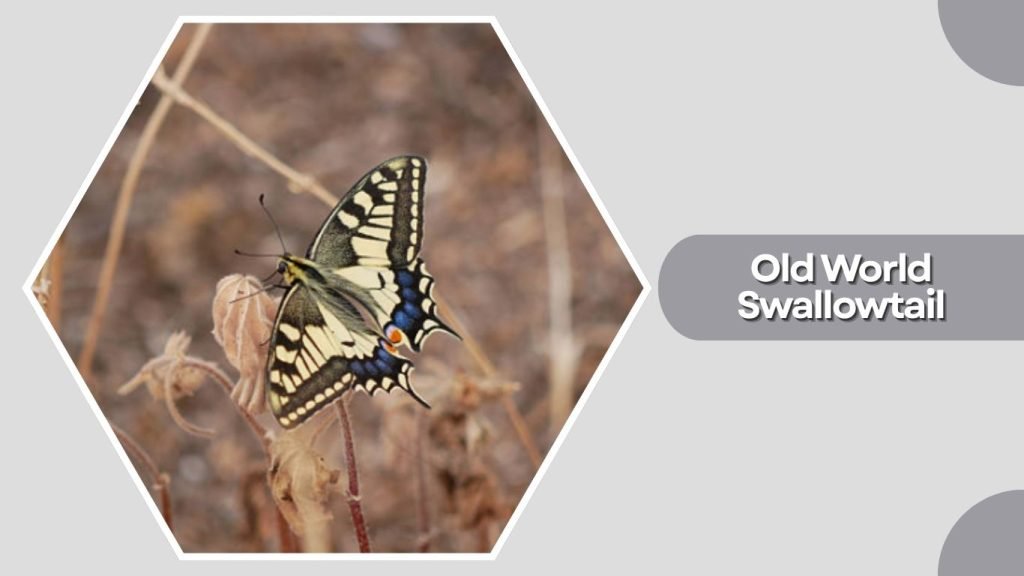
The Old World Swallowtail is a widely distributed species found across Europe, Asia, and parts of North Africa. It is one of the most well-known swallowtail butterflies due to its wide range.
Identification
- Yellow wings with black markings and blue spots
- Red eye spot near hindwings
- Wingspan ranges from 6.5 to 8.6 cm
- Tail-like extensions on hindwings
Color Pattern
This butterfly has bright yellow wings with bold black patterns and a row of blue spots near the hindwings. A small red eye spot adds a striking detail. The combination of colors makes it highly recognizable.
Diet
Caterpillars feed on plants such as fennel, dill, and carrot. Adult butterflies consume nectar from flowers like thistle, lavender, and clover.
Migration
Old World Swallowtails are generally non-migratory. However, in some regions, they may move short distances in response to seasonal changes and environmental conditions.
12. Emerald Swallowtail
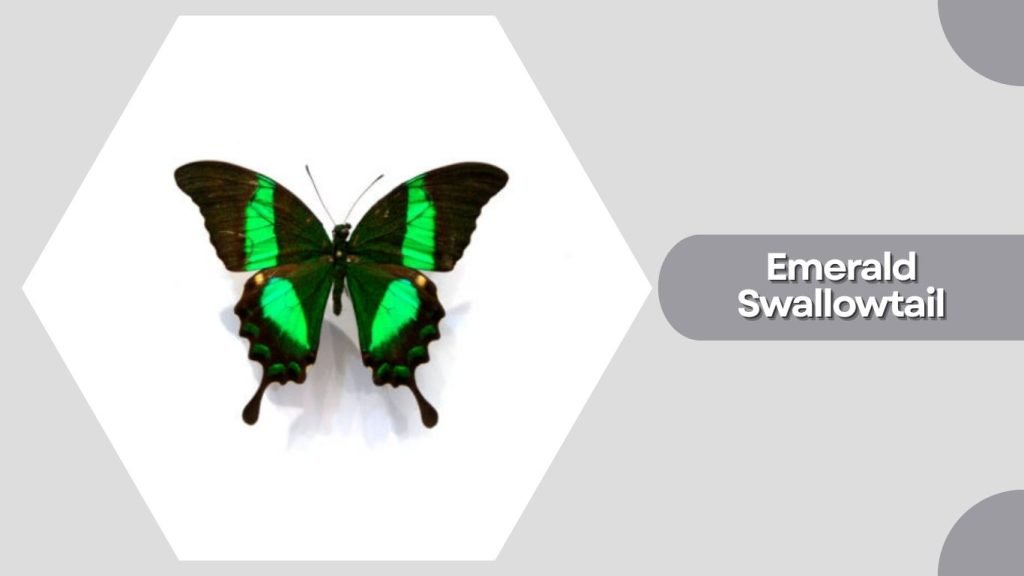
The Emerald Swallowtail is a dazzling butterfly known for its shimmering green patches and dark wings. It is commonly found in Southeast Asia, especially in forested and tropical regions.
Identification
- Dark wings with bright metallic green patches
- Tail-like extensions on hindwings
- Wingspan ranges from 8 to 10 cm
- Fast and agile flight
Color Pattern
The Emerald Swallowtail features deep black wings highlighted by iridescent green bands that glow in sunlight. This metallic sheen gives it a jewel-like appearance, making it one of the most visually striking swallowtails.
Diet
Caterpillars feed on citrus plants and related species. Adult butterflies consume nectar from a variety of tropical flowers, supporting their energetic flight.
Migration
Emerald Swallowtails are non-migratory. They remain within tropical forest habitats, moving locally in search of food and breeding sites.
13. Blue Mormon
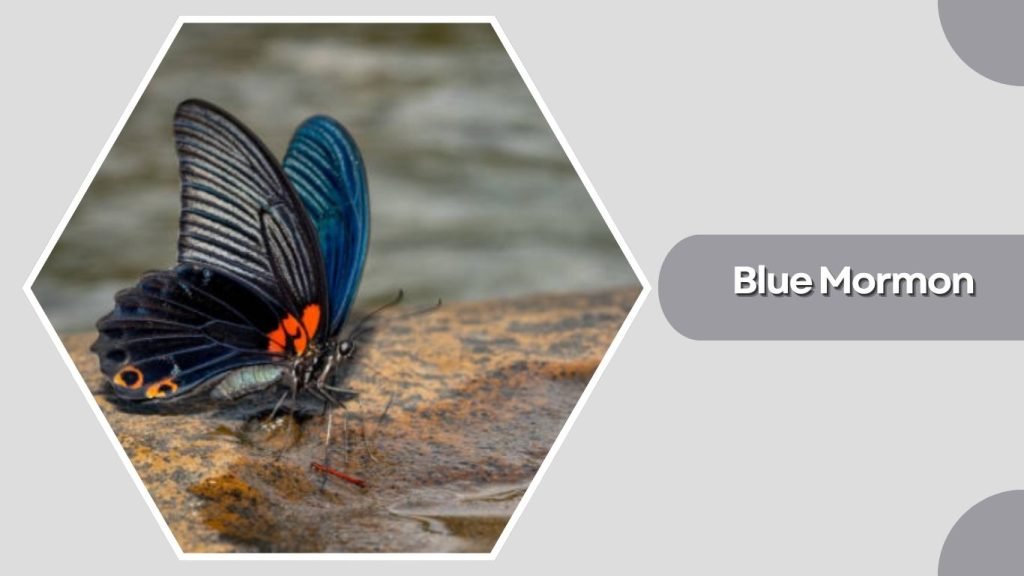
The Blue Mormon is a large and impressive swallowtail butterfly found mainly in South and Southeast Asia. It is known for its size and striking blue coloration.
Identification
- Black wings with bright blue patches
- No prominent tails compared to other swallowtails
- Wingspan ranges from 12 to 15 cm
- Strong and fast flight
Color Pattern
The Blue Mormon displays dark wings with vivid blue markings that stand out in sunlight. The contrast between black and blue gives it a bold and elegant appearance. Females may show variation in pattern intensity.
Diet
Caterpillars feed on citrus plants such as lemon and orange. Adult butterflies consume nectar from flowers like jasmine and lantana, making them common in gardens.
Migration
Blue Mormons are generally non-migratory. They stay within their local habitats, with movement mainly influenced by availability of food and suitable breeding conditions.
14. Common Mormon
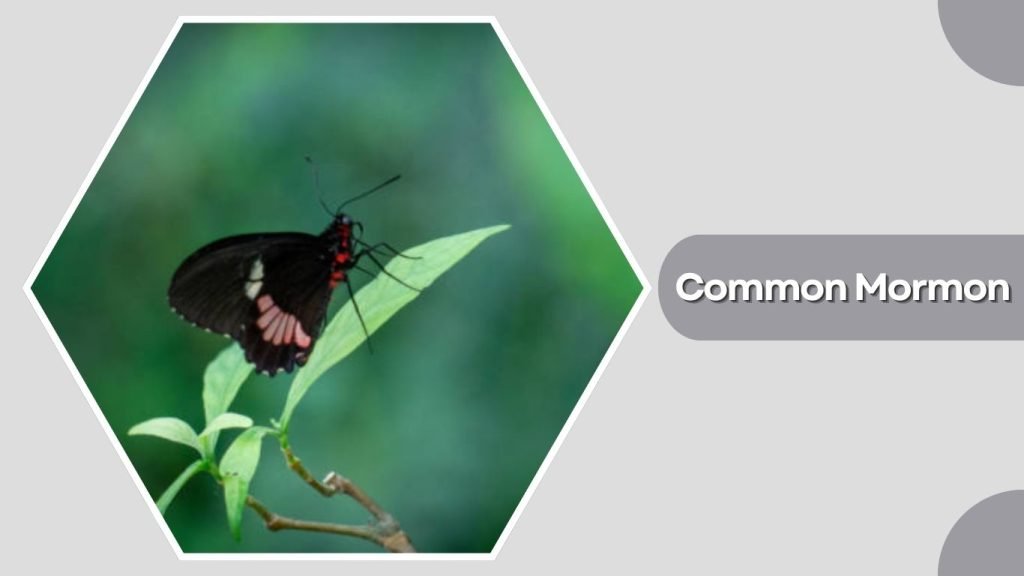
The Common Mormon is a highly adaptable swallowtail butterfly found across South and Southeast Asia. It is well known for its variation in appearance, especially among females that mimic other toxic species for protection.
Identification
- Black wings with white or pale markings
- Tail-like extensions on hindwings
- Wingspan ranges from 9 to 10 cm
- Females show multiple forms
Color Pattern
The Common Mormon typically has dark wings with subtle white markings. Females may display different patterns to mimic toxic butterflies, helping them avoid predators. This variation makes it one of the most unique swallowtail species.
Diet
Caterpillars feed on citrus plants such as lemon and orange leaves. Adult butterflies consume nectar from a wide variety of flowers, often seen in gardens and forest edges.
Migration
Common Mormons are generally non-migratory. They remain within local habitats and may move short distances depending on environmental conditions.
15. Crimson Rose
The Crimson Rose is a striking swallowtail butterfly known for its bold red and black coloration. It is commonly found in tropical regions and is easily recognizable due to its vivid appearance.
Identification
- Black wings with white patches
- Bright red body and red spots on hindwings
- Wingspan ranges from 9 to 10 cm
- Long tail-like extensions
Color Pattern
The Crimson Rose displays a dramatic contrast of black wings with white patches and bright red markings. This bold coloration serves as a warning to predators about its toxicity.
Diet
Caterpillars feed on Aristolochia plants, which contain toxic compounds. Adult butterflies consume nectar from flowers such as lantana and hibiscus.
Migration
Crimson Rose butterflies are non-migratory. They stay within their local habitats, with only short-distance movement in search of food and breeding sites.
16. Golden Birdwing
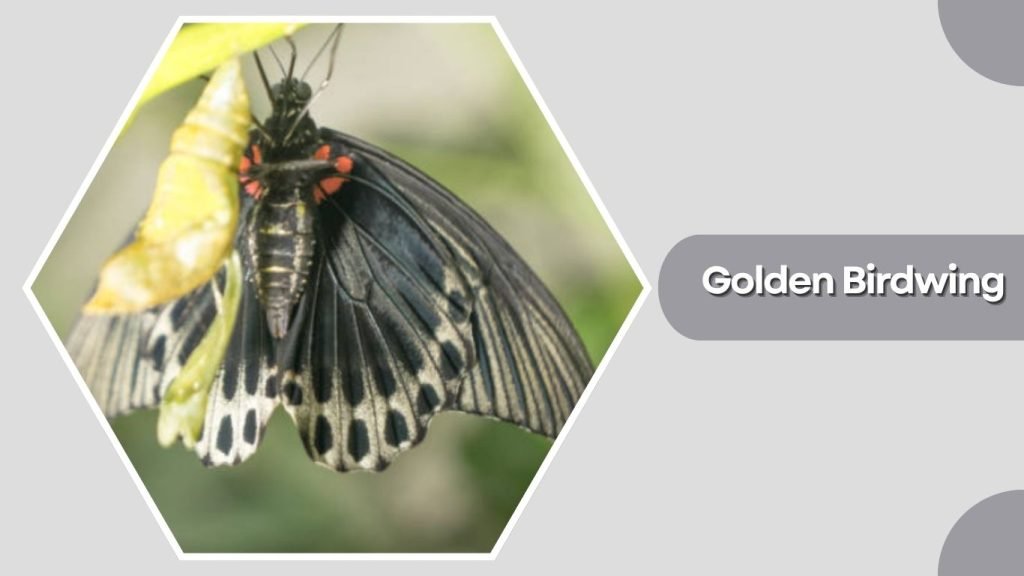
The Golden Birdwing is one of the largest and most spectacular swallowtail butterflies in the world. It is native to Southeast Asia and is admired for its impressive size and bright golden coloration.
Identification
- Large wings with golden-yellow and black patterns
- Tail-like extensions on hindwings
- Wingspan ranges from 15 to 19 cm
- Strong and powerful flight
Color Pattern
The Golden Birdwing displays brilliant golden-yellow wings contrasted with bold black markings. Males are usually more vibrant, while females are larger and darker. The striking coloration makes it highly noticeable in its natural habitat.
Diet
Caterpillars feed on Aristolochia plants, which contain toxic compounds. Adult butterflies consume nectar from various tropical flowers, supporting their large size and energy needs.
Migration
Golden Birdwings are non-migratory. They remain within tropical forest habitats, moving locally in search of food and suitable breeding areas.
17. Rajah Brooke’s Birdwing
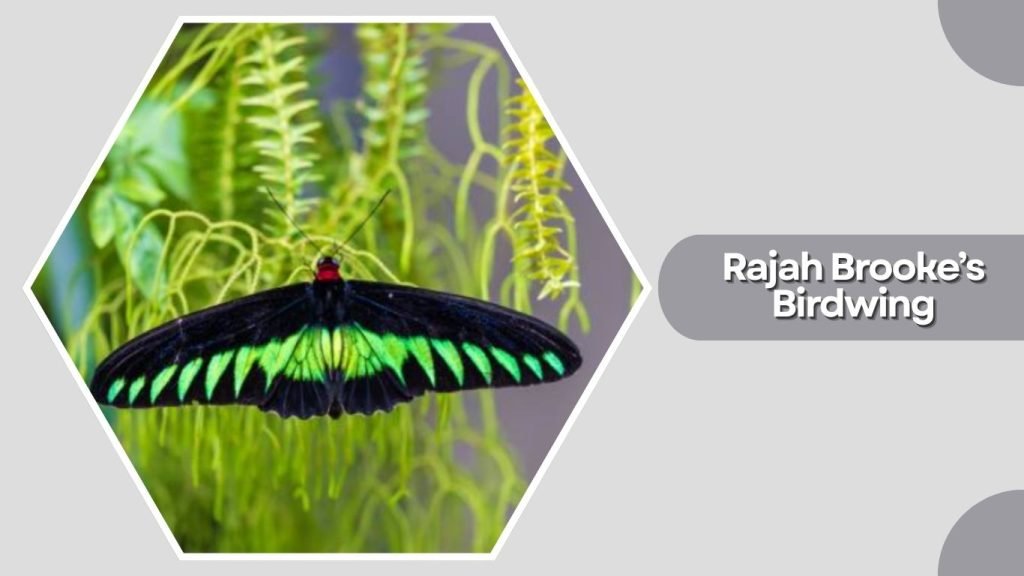
Rajah Brooke’s Birdwing is a stunning and iconic swallowtail butterfly native to Southeast Asia. It is especially famous for its bold green and black coloration and is often associated with tropical rainforests and riverbanks.
Identification
- Black wings with bright green bands
- Tail-like extensions on hindwings
- Wingspan ranges from 15 to 17 cm
- Strong and gliding flight
Color Pattern
This butterfly features deep black wings highlighted by vivid green bands that glow in natural light. The contrast between the dark background and bright markings creates a striking visual effect, making it one of the most beautiful swallowtails.
Diet
Caterpillars feed on Aristolochia plants, which contain toxic compounds. Adult butterflies consume nectar from various tropical flowers, supporting their active lifestyle.
Migration
Rajah Brooke’s Birdwing butterflies are non-migratory. They remain within rainforest habitats, often gathering near rivers and streams, with only short-distance movement for feeding and breeding.
