
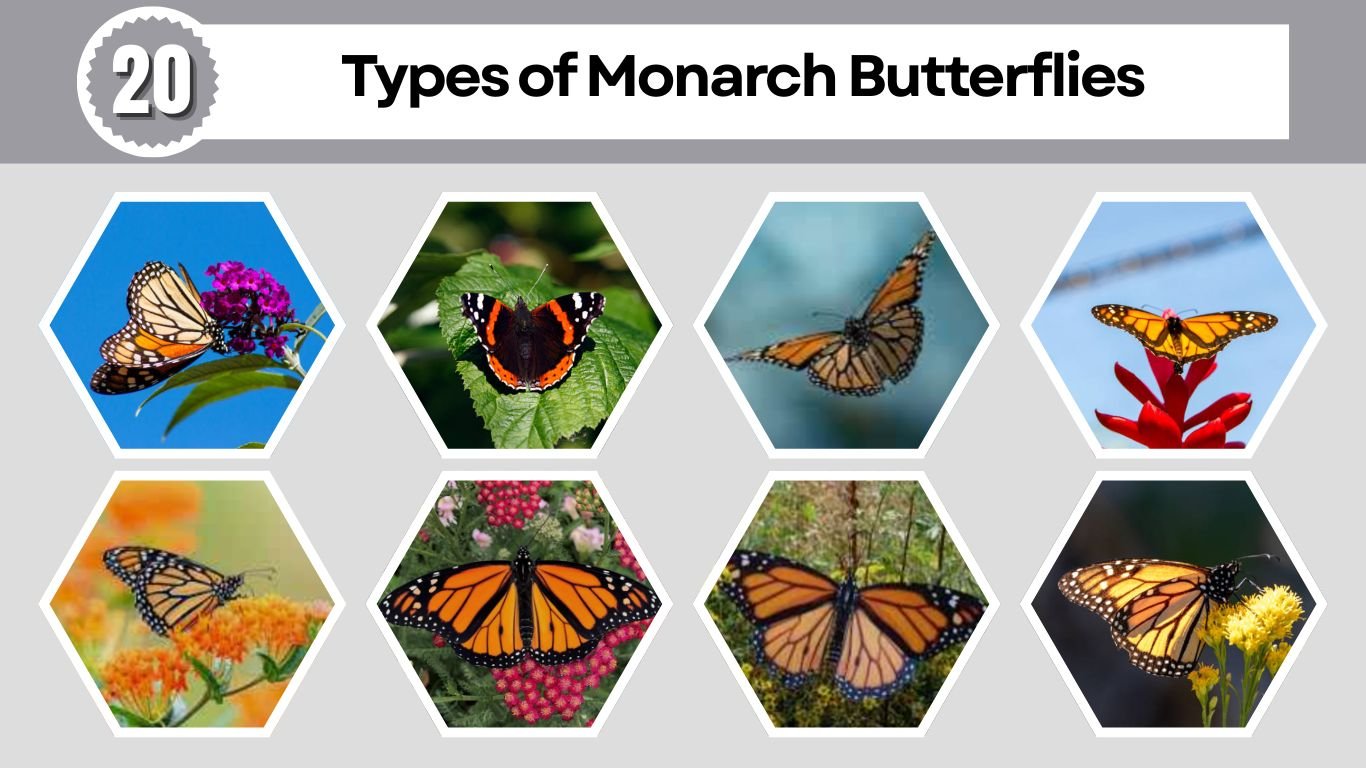
Monarch butterflies are among the most iconic insects, admired for their bright orange wings and remarkable life cycle. While they belong to the same species, Monarchs can vary in color, size, and behavior depending on their region and environmental conditions.
In this guide, you’ll explore 20 types of Monarch butterflies identified by their color variations and size differences. Each type helps you better understand how Monarchs adapt to different habitats, whether migratory or resident populations.
1. North American Monarch

The North American Monarch is the most well-known population of Monarch butterflies, famous for its incredible long-distance migration across the United States, Canada, and Mexico. It is widely studied and recognized for its ecological importance and striking appearance.
Identification
- Bright orange wings with bold black veins
- White spots along black wing borders
- Wingspan ranges from 8.9 to 10.2 cm
- Males have black scent spots on hindwings
Color Pattern
This Monarch displays a vivid orange color contrasted by thick black veins, creating a stained-glass effect. The outer edges are lined with white spots on a black border. This bold coloration acts as a warning to predators due to its toxicity.
Diet
Caterpillars feed exclusively on milkweed plants, which contain toxic compounds. Adult butterflies consume nectar from flowers such as goldenrod, asters, and milkweed, helping them gain energy for flight and migration.
Migration
The North American Monarch is famous for its multi-generational migration. Each year, millions travel thousands of kilometers from Canada and the United States to central Mexico for overwintering, guided by environmental cues like temperature and daylight.
2. South American Monarch

The South American Monarch is a widespread population found across tropical and subtropical regions of South America. It shares many similarities with other Monarchs but is adapted to warmer climates and more stable environments.
Identification
- Bright orange wings with black veins
- White spots along the wing borders
- Wingspan ranges from 8 to 10 cm
- Slightly thinner vein patterns than North American Monarch
Color Pattern
This Monarch shows the classic orange and black coloration, though it may appear slightly deeper in tone due to its tropical habitat. The contrast between the orange wings and black veins remains strong, helping signal its toxicity to predators.
Diet
Caterpillars feed on various milkweed species available in tropical regions. Adult butterflies consume nectar from a wide range of flowering plants, supporting their continuous breeding cycles in warm climates.
Migration
Unlike the North American Monarch, this population is mostly non-migratory. It tends to remain within its local habitat year-round, with only short-distance movements based on seasonal changes.
3. Hawaiian Monarch

The Hawaiian Monarch is a localized population found in the Hawaiian Islands. It has adapted well to island ecosystems and is commonly seen in gardens and coastal areas.
Identification
- Orange wings with black veins and white spots
- Wingspan ranges from 7.5 to 9.5 cm
- Slightly smaller size compared to mainland Monarchs
- Smooth and steady flight
Color Pattern
The Hawaiian Monarch maintains the typical orange and black pattern but may appear slightly lighter in some individuals. The wing markings are clear and well-defined, helping it stand out in bright island environments.
Diet
Caterpillars feed on introduced milkweed species found across the islands. Adult butterflies consume nectar from tropical flowers such as lantana and hibiscus, which are abundant in Hawaii.
Migration
Hawaiian Monarchs are non-migratory. Due to the island environment, they remain in localized areas year-round, moving only short distances in search of food and breeding sites.
4. Australian Monarch (Wanderer)

The Australian Monarch, also known as the Wanderer, is a well-known butterfly in Australia and nearby regions. It is similar to other Monarchs but adapted to local climates and environments.
Identification
- Bright orange wings with black veins
- White spots along the black borders
- Wingspan ranges from 8 to 10 cm
- Strong and steady flight
Color Pattern
The Australian Monarch displays the classic orange and black Monarch pattern, often appearing slightly richer in color. The bold veins and white-spotted borders provide a clear warning to predators about its toxicity.
Diet
Caterpillars feed on milkweed and related plants found in Australia. Adult butterflies consume nectar from a variety of flowers, including native and garden plants.
Migration
Australian Monarchs show partial migratory behavior. In some regions, they move seasonally to warmer areas, while in others they remain resident depending on climate conditions.
5. Caribbean Monarch

The Caribbean Monarch is commonly found across the Caribbean islands, thriving in warm, tropical climates. It is often seen in gardens, coastal areas, and open landscapes.
Identification
- Orange wings with black veins and white spots
- Wingspan ranges from 8 to 10 cm
- Slightly smaller and more compact body
- Smooth, gliding flight
Color Pattern
This Monarch has the familiar orange and black coloration, sometimes appearing slightly darker due to intense sunlight exposure. The wing patterns remain bold and clearly defined, aiding in predator deterrence.
Diet
Caterpillars feed on milkweed species common in tropical regions. Adult butterflies consume nectar from flowers such as lantana, hibiscus, and other island plants.
Migration
Caribbean Monarchs are generally non-migratory. They stay within their island habitats year-round, with only short local movements influenced by food availability and weather conditions.
6. Florida Monarch

The Florida Monarch is a resident population found in the warm climate of Florida. Unlike migratory Monarchs, it thrives year-round in stable environments with abundant food sources.
Identification
- Bright orange wings with black veins
- White spots along the wing edges
- Wingspan ranges from 8 to 10 cm
- Slightly smaller and less robust than migratory forms
Color Pattern
The Florida Monarch has the classic orange and black pattern, often appearing vibrant due to constant sunlight. The markings are clear and bold, helping warn predators of its toxicity.
Diet
Caterpillars feed on tropical milkweed, which grows year-round in Florida. Adult butterflies consume nectar from flowers such as lantana, milkweed, and pentas, supporting continuous breeding.
Migration
Florida Monarchs are mostly non-migratory. They remain in the region throughout the year, with only minor local movements influenced by weather and food availability.
7. Western Monarch

The Western Monarch is a migratory population found in the western parts of North America. It is known for its seasonal movement between inland regions and coastal overwintering sites.
Identification
- Orange wings with black veins and white spots
- Wingspan ranges from 8.5 to 10 cm
- Similar appearance to Eastern Monarch
- Strong and sustained flight
Color Pattern
The Western Monarch shows the typical bright orange wings with bold black veins. The white-spotted borders remain a key feature, providing a clear warning to predators.
Diet
Caterpillars feed on milkweed species found across western regions. Adult butterflies consume nectar from wildflowers such as goldenrod and milkweed, which fuel their migration.
Migration
Western Monarchs migrate shorter distances compared to Eastern populations. They travel to coastal California during winter, where they cluster in large groups before returning inland in spring.
8. Eastern Monarch

The Eastern Monarch is the largest and most famous migratory population of Monarch butterflies. It is widely known for its incredible journey across North America to overwintering sites in Mexico.
Identification
- Bright orange wings with thick black veins
- White spots along black wing borders
- Wingspan ranges from 9 to 10.5 cm
- Slightly larger than Western Monarch
Color Pattern
The Eastern Monarch displays a vivid orange color with bold black veins, creating a striking contrast. The edges are lined with white spots, enhancing its warning coloration. This pattern helps signal its toxicity to predators.
Diet
Caterpillars feed exclusively on milkweed plants. Adult butterflies consume nectar from flowers such as asters, goldenrod, and milkweed, which provide energy for long-distance travel.
Migration
Eastern Monarchs are famous for their long-distance migration. They travel thousands of kilometers from Canada and the United States to central Mexico, forming large overwintering colonies in mountain forests.
9. Mexican Monarch

The Mexican Monarch refers to Monarch populations associated with central Mexico, especially in overwintering regions. It plays a key role in the Monarch’s life cycle and migration story.
Identification
- Orange wings with black veins and white spots
- Wingspan ranges from 8.5 to 10 cm
- Robust body suited for migration survival
- Similar appearance to Eastern Monarch
Color Pattern
The Mexican Monarch has the classic orange-and-black pattern, often appearing slightly darker due to environmental factors. The bold markings remain consistent, providing effective warning coloration.
Diet
During the breeding phase, caterpillars feed on milkweed. In overwintering areas, adult butterflies rely less on nectar and conserve energy, occasionally feeding on available plant sources and moisture.
Migration
Mexican Monarchs are part of the migratory cycle of Eastern Monarchs. They gather in large numbers in central Mexico during winter, forming dense clusters on trees before migrating north again in spring.
10. Pacific Monarch

The Pacific Monarch is a regional population found around Pacific coastal areas and islands. It is adapted to milder climates and is often seen in coastal habitats and nearby inland regions.
Identification
- Orange wings with black veins and white spots
- Wingspan ranges from 8 to 10 cm
- Similar to other Monarch populations
- Smooth and gliding flight
Color Pattern
The Pacific Monarch shows the classic orange and black pattern with clearly defined veins and white-spotted borders. The coloration may appear slightly lighter due to coastal environmental conditions and sunlight exposure.
Diet
Caterpillars feed on milkweed species available in coastal regions. Adult butterflies consume nectar from a variety of flowers, including coastal plants and garden species.
Migration
Pacific Monarchs may show partial migratory behavior. Some populations move short distances along the coast, while others remain resident depending on climate stability.
11. Island Monarch Variant

The Island Monarch Variant refers to Monarch populations found on isolated islands, where they adapt to limited habitats and unique environmental conditions.
Identification
- Orange wings with black veins
- White spots along the wing edges
- Wingspan ranges from 7.5 to 9.5 cm
- Slightly smaller size due to island adaptation
Color Pattern
This variant maintains the typical Monarch orange and black pattern but may show slight variations in brightness or contrast. The markings are still bold enough to serve as a warning to predators.
Diet
Caterpillars feed on local milkweed species or closely related plants available on islands. Adult butterflies consume nectar from native flowers, often depending on limited plant diversity.
Migration
Island Monarch variants are non-migratory. Due to geographic isolation, they remain within their island habitats year-round, with only short-distance movement for feeding and breeding.
12. Giant Monarch

The Giant Monarch is a larger form of Monarch butterfly, noted for its increased wingspan and slightly more robust body. It is often found in regions with abundant food and favorable environmental conditions.
Identification
- Larger orange wings with bold black veins
- White spots along the borders
- Wingspan ranges from 10 to 12 cm
- Strong and powerful flight
Color Pattern
The Giant Monarch displays the same classic orange and black pattern but appears more striking due to its larger wing surface. The bold veins and bright coloration enhance its visibility and warning signal to predators.
Diet
Caterpillars feed on milkweed plants, similar to other Monarchs. Adult butterflies consume nectar from flowers such as milkweed, asters, and goldenrod, which provide energy for their size and activity.
Migration
Giant Monarchs may participate in migration if part of migratory populations. Their larger size can help in long-distance travel, although behavior depends on regional conditions.
13. Small Monarch Variant

The Small Monarch Variant is a slightly smaller form of Monarch butterfly, often found in areas with limited resources or specific environmental pressures.
Identification
- Smaller orange wings with black veins
- White-spotted black borders
- Wingspan ranges from 7 to 8.5 cm
- More compact body structure
Color Pattern
This variant maintains the typical Monarch coloration but may appear slightly lighter or less intense. The pattern remains consistent, ensuring it still serves as an effective warning to predators.
Diet
Caterpillars feed on available milkweed species. Adult butterflies consume nectar from a variety of flowers, adapting to local plant availability.
Migration
Small Monarch variants may migrate if they belong to migratory populations. However, in some regions, they remain resident and show only short-distance seasonal movement.
14. Dark Morph Monarch
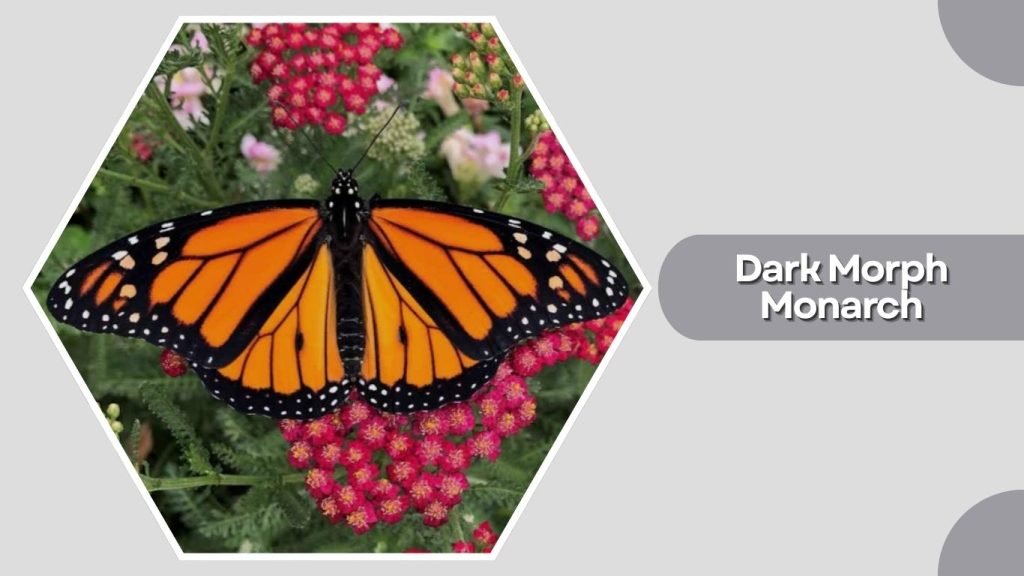
The Dark Morph Monarch is a variation known for its deeper and richer wing coloration. It appears darker than typical Monarchs, which may help it adapt to certain environmental conditions.
Identification
- Darker orange to reddish-brown wings
- Thick black veins and borders
- White spots along edges
- Wingspan ranges from 8 to 10 cm
Color Pattern
This variant has a more intense and darker tone compared to the standard Monarch. The deeper orange or reddish hue, combined with bold black veins, gives it a stronger contrast. This coloration still functions as a warning signal to predators.
Diet
Caterpillars feed on milkweed plants, absorbing toxic compounds. Adult butterflies consume nectar from flowers such as asters, milkweed, and goldenrod, providing energy for survival and reproduction.
Migration
Dark Morph Monarchs may migrate if part of migratory populations. Their behavior is similar to standard Monarchs, with movement influenced by climate and seasonal changes.
15. Pale Monarch Variant

The Pale Monarch Variant is a lighter-colored form of the Monarch butterfly. It is less common and may be influenced by environmental or genetic factors.
Identification
- Light orange to yellowish wings
- Fainter black veins and markings
- White spots along wing edges
- Wingspan ranges from 8 to 10 cm
Color Pattern
This variant shows a softer and lighter coloration compared to typical Monarchs. The orange appears faded or yellowish, and the black veins are less bold. Despite this, the overall pattern remains recognizable.
Diet
Caterpillars feed on milkweed species, just like other Monarchs. Adult butterflies consume nectar from various flowering plants, adapting to available food sources in their habitat.
Migration
Pale Monarchs follow similar migration patterns as other Monarch populations. If part of migratory groups, they travel long distances; otherwise, they remain resident in stable climates.
16. High-Altitude Monarch
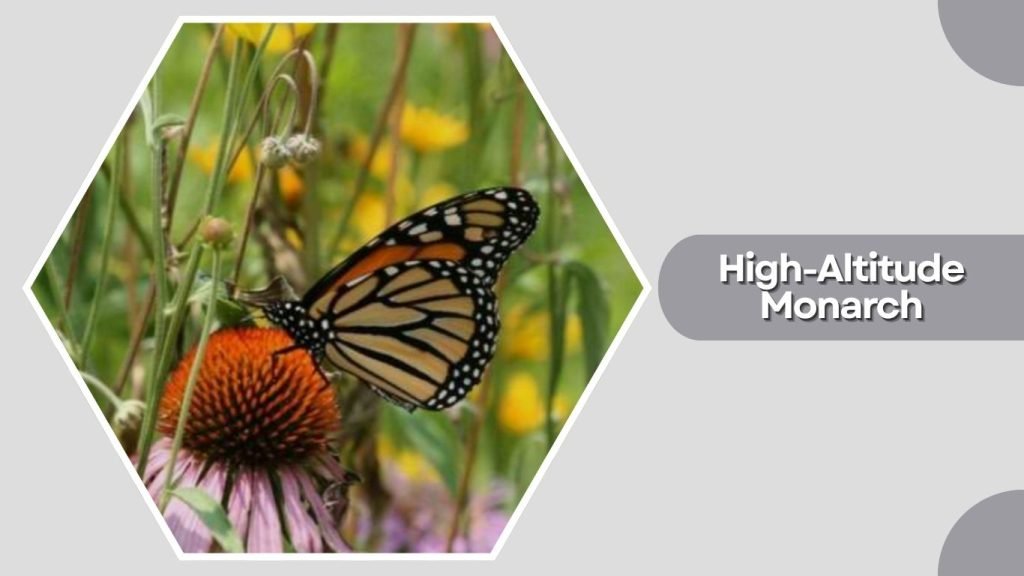
The High-Altitude Monarch is a population adapted to mountainous regions, where cooler temperatures and thinner air influence its behavior and physical traits. It is often found in elevated habitats with suitable host plants.
Identification
- Orange wings with black veins and white spots
- Wingspan ranges from 8 to 10 cm
- Slightly thicker body for cooler climates
- Strong and steady flight
Color Pattern
The High-Altitude Monarch retains the classic orange and black pattern but may appear slightly darker. This deeper coloration can help absorb heat in cooler environments, supporting survival at higher elevations.
Diet
Caterpillars feed on milkweed species that grow in mountainous areas. Adult butterflies consume nectar from alpine and highland flowers, which provide essential energy in cooler conditions.
Migration
These Monarchs may migrate vertically rather than over long distances. They move between higher and lower elevations depending on seasonal temperature changes and food availability.
17. Coastal Monarch

The Coastal Monarch is found in regions near oceans and coastal plains. It thrives in mild climates with consistent temperatures and abundant flowering plants.
Identification
- Orange wings with black veins
- White spots along wing edges
- Wingspan ranges from 8 to 10 cm
- Smooth and gliding flight
Color Pattern
The Coastal Monarch displays the standard bright orange and black pattern. In some cases, the colors may appear slightly lighter due to strong sunlight and coastal conditions. The markings remain bold and clearly visible.
Diet
Caterpillars feed on milkweed plants commonly found in coastal habitats. Adult butterflies consume nectar from a wide range of coastal and garden flowers, supporting their active lifestyle.
Migration
Coastal Monarchs are often non-migratory or show limited movement. In stable climates, they remain year-round, while in some regions they may shift slightly along the coast in response to seasonal changes.
18. Tropical Monarch
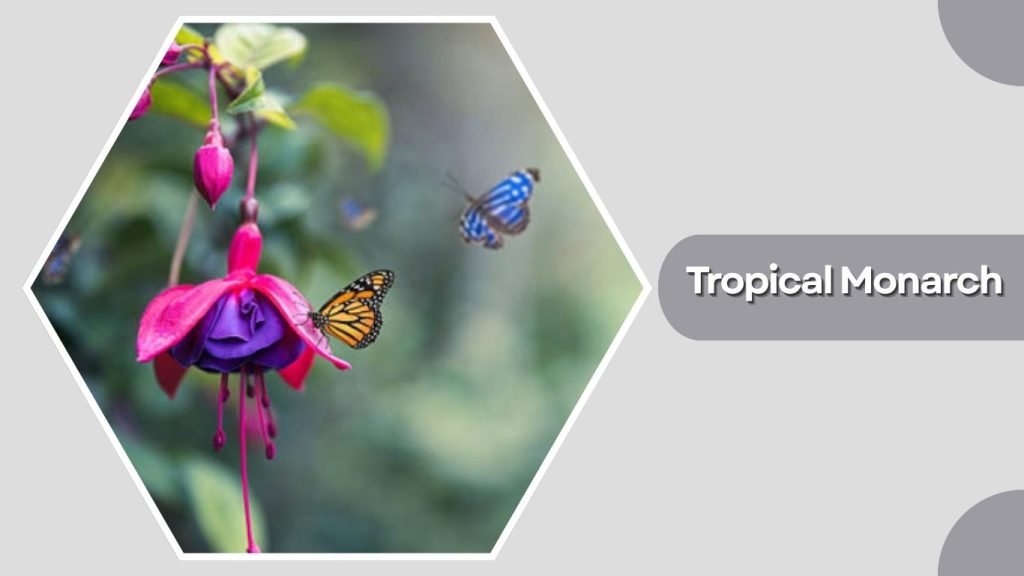
The Tropical Monarch is commonly found in warm, tropical regions where temperatures remain stable throughout the year. It is closely associated with year-round breeding and abundant plant life.
Identification
- Bright orange wings with black veins
- White spots along the borders
- Wingspan ranges from 8 to 10 cm
- Active and steady flight
Color Pattern
The Tropical Monarch shows the classic vivid orange and black pattern, often appearing more intense due to strong sunlight. The bold veins and white-spotted edges create a clear warning signal to predators.
Diet
Caterpillars feed on tropical milkweed species that grow continuously in warm climates. Adult butterflies consume nectar from a wide variety of flowers such as lantana, hibiscus, and other tropical plants.
Migration
Tropical Monarchs are generally non-migratory. Because of stable weather and constant food supply, they remain in the same region year-round with only short local movements.
19. Migratory Monarch
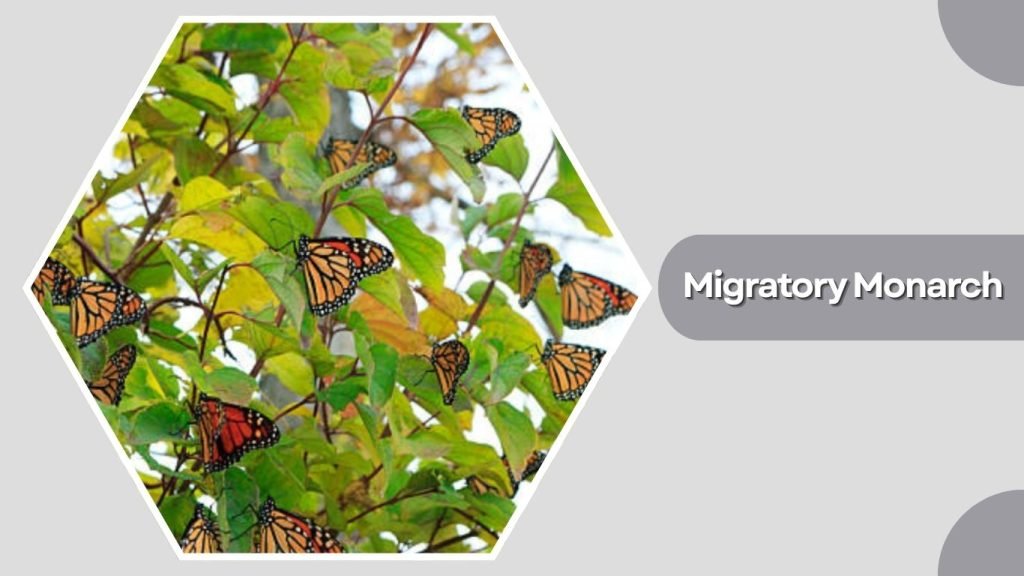
The Migratory Monarch refers to populations that undertake long-distance seasonal journeys. These butterflies are known for their endurance and ability to travel across vast regions.
Identification
- Orange wings with bold black veins
- White spots along wing edges
- Wingspan ranges from 8.5 to 10.5 cm
- Strong, sustained flight
Color Pattern
Migratory Monarchs display the typical bright orange and black coloration. Their wings are often slightly larger and stronger, which supports long-distance travel. The bold pattern continues to act as a warning to predators.
Diet
Caterpillars feed on milkweed plants during the breeding season. Adult butterflies rely on nectar from flowers such as asters and goldenrod to build energy reserves for migration.
Migration
These Monarchs are famous for traveling thousands of kilometers between breeding and overwintering sites. Their migration is guided by environmental cues like temperature, sunlight, and seasonal changes.
20. Resident Monarch

The Resident Monarch is a non-migratory population that lives in regions with stable climates and year-round food availability. Unlike migratory Monarchs, it completes its entire life cycle within a limited geographic area.
Identification
- Bright orange wings with black veins
- White spots along the wing borders
- Wingspan ranges from 8 to 10 cm
- Consistent size and shape throughout generations
Color Pattern
The Resident Monarch displays the classic orange and black coloration seen in most Monarch butterflies. The bold veins and white-spotted edges remain clearly visible, serving as a warning to predators about its toxicity.
Diet
Caterpillars feed on milkweed plants that grow continuously in warm regions. Adult butterflies consume nectar from a variety of flowers such as lantana, milkweed, and tropical blooms, supporting year-round activity.
Migration
Resident Monarchs do not migrate. They remain in the same area throughout the year due to stable environmental conditions. Their movement is limited to short distances in search of food and breeding sites.
