
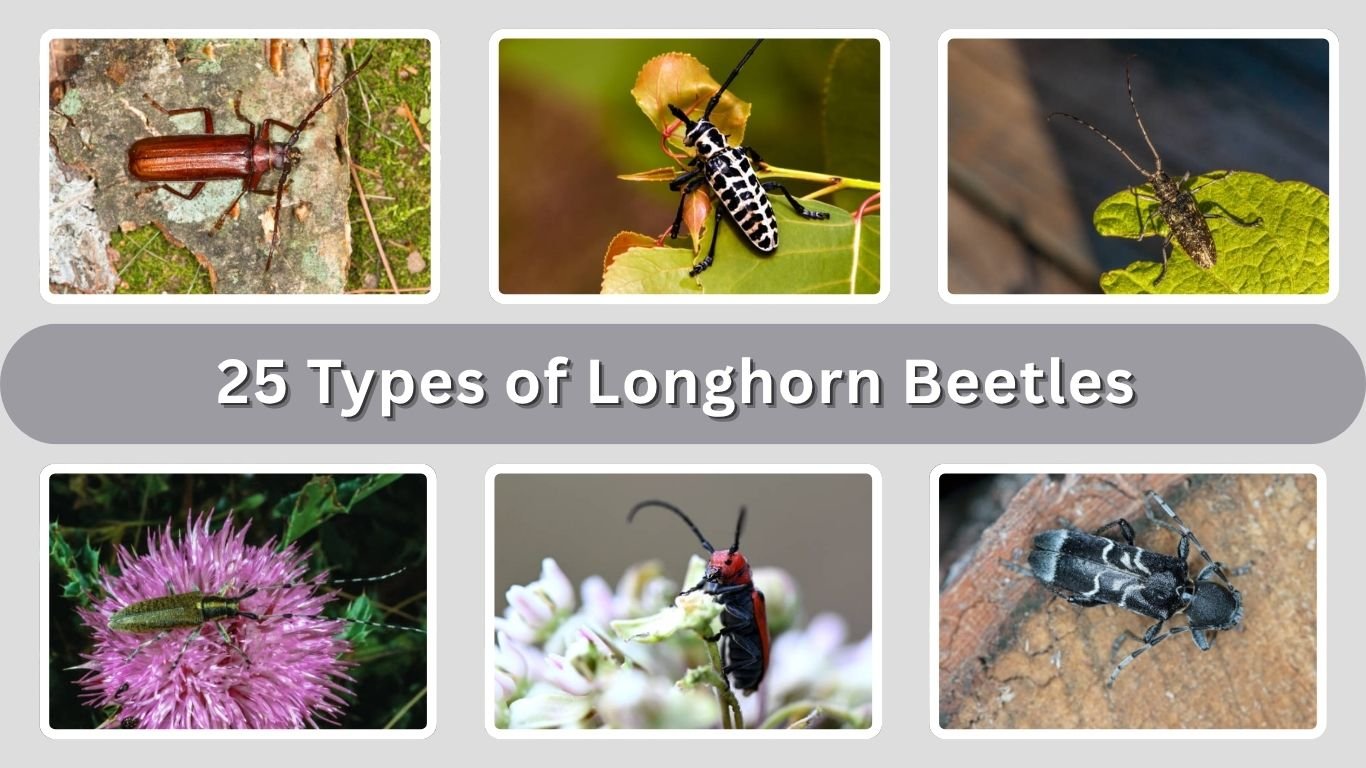
Longhorn beetles are a diverse group of insects known for their extremely long antennae and wood-boring larvae. Found in forests, gardens, and agricultural areas worldwide, these beetles play both beneficial and harmful roles in ecosystems. While many species help break down dead wood and recycle nutrients, others can become serious pests by damaging trees, crops, and timber.
This guide covers 25 common types of longhorn beetles, helping you identify them based on their appearance, habitat, and behavior. Understanding these species can help you recognize potential infestations, protect plants and trees, and appreciate their role in nature.
1. Asian Longhorned Beetle
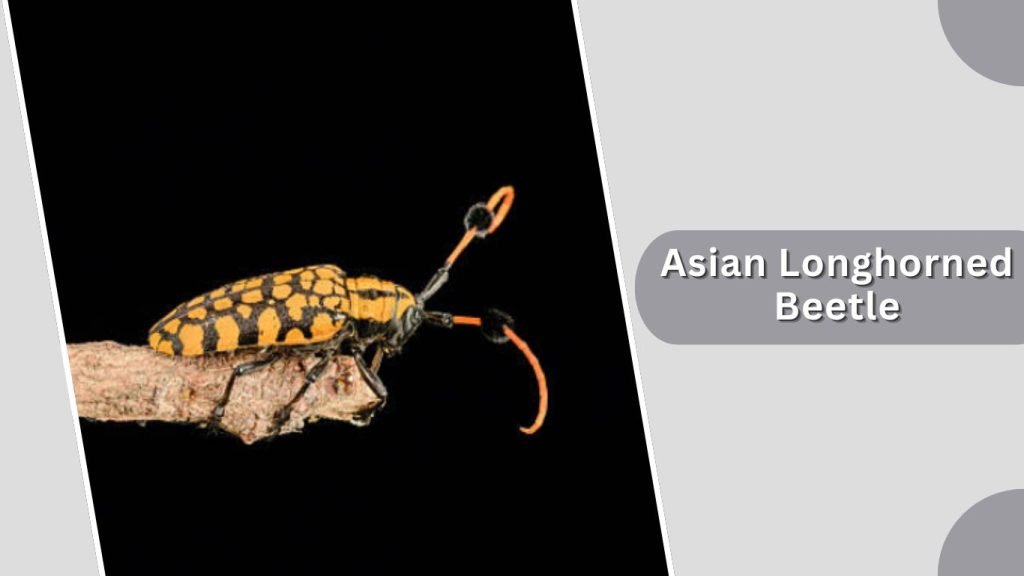
The Asian longhorned beetle is a highly destructive wood-boring insect known for attacking a wide range of hardwood trees. Native to Asia, it has become an invasive species in several countries, causing serious damage to urban forests and natural ecosystems. Its ability to kill healthy trees makes it a major concern for environmental management.
Identification
This beetle is large, typically measuring 20–35 mm in length. It has a shiny black body with distinctive white spots scattered across its wing covers. One of its most recognizable features is its long, black-and-white banded antennae, which can be longer than its body.
Habitat and Distribution
Originally from China and Korea, the Asian longhorned beetle has spread to parts of North America and Europe. It is commonly found in urban areas, parks, and forests where hardwood trees like maple, birch, and elm are present.
Key Characteristics
- Glossy black body with white spots
- Very long, banded antennae
- Targets hardwood trees
- Larvae bore deep into wood
Damage and Impact
The larvae tunnel inside tree trunks and branches, disrupting the flow of nutrients and weakening the tree structure. Infested trees often show signs like exit holes, sawdust-like frass, and dying branches. Severe infestations can lead to tree death, making this beetle a serious ecological and economic threat.
2. Citrus Longhorned Beetle
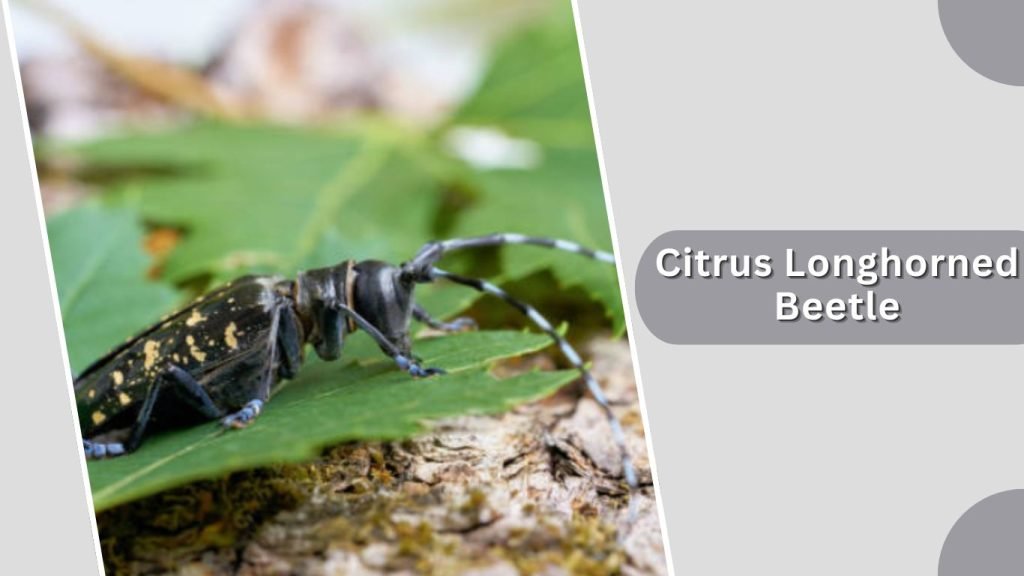
The citrus longhorned beetle is a destructive wood-boring pest that affects a wide range of hardwood trees, including citrus, maple, oak, and willow. Native to East Asia, it has spread to parts of Europe and North America, where it is considered an invasive species. Its ability to infest many types of trees and survive in different environments makes it a serious threat to both agriculture and natural ecosystems.
Identification
Citrus longhorned beetles are medium to large in size, typically measuring 20–40 mm in length. They have a glossy black body covered with irregular white spots. One of their most distinctive features is their long antennae, which are banded in black and white and can exceed the length of the body. Their legs may have a bluish tint, adding to their striking appearance. The larvae are creamy white, legless grubs that live داخل tree wood.
Habitat and Distribution
This beetle is native to countries such as China, Japan, and Korea but has been introduced to parts of Europe and North America through international trade, especially via infested wood packaging materials. It thrives in urban areas, orchards, forests, and gardens where host trees are available. Because it can attack many tree species, it adapts well to different environments, increasing its spread potential.
Key Characteristics
- Black body with irregular white spots
- Very long, banded antennae
- Broad host range including citrus and hardwood trees
- Larvae develop inside tree trunks and branches
Damage and Impact
The citrus longhorned beetle causes severe internal damage to trees. Females lay eggs in the bark, and once the larvae hatch, they tunnel deep into the wood, feeding on internal tissues. This disrupts the flow of water and nutrients, weakening the tree over time. Visible signs of infestation include round exit holes, sawdust-like frass, sap leakage, and dieback of branches. Unlike surface-feeding pests, the internal feeding makes early detection difficult.
Heavy infestations can lead to the complete death of trees, especially younger or stressed ones. In agricultural settings, citrus orchards may suffer reduced yields or tree loss, while in urban environments, infested trees may become hazardous and require removal. Because of its invasive nature and high destructive potential, strict quarantine and eradication measures are often implemented when this beetle is detected.
3. Banded Alder Borer
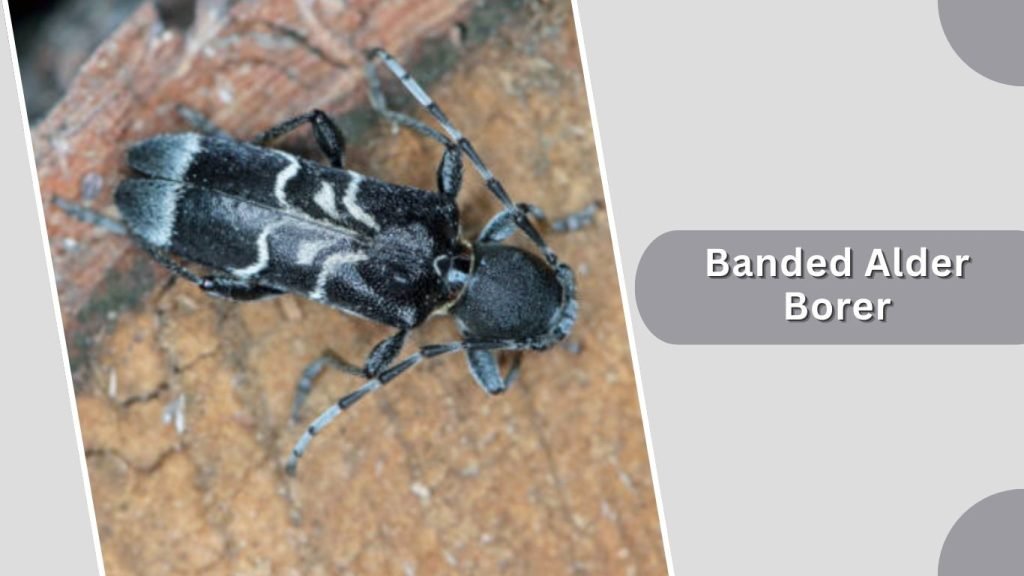
The banded alder borer is a visually striking longhorn beetle commonly found in North America. Unlike many other wood-boring beetles, it is generally considered less harmful because it mainly targets weakened, dead, or recently cut trees rather than healthy ones. However, it still plays an important ecological role in breaking down wood and recycling nutrients.
Identification
This beetle is medium-sized, usually measuring 12–25 mm in length. It has a dark body marked with distinct pale or yellowish bands across its wing covers, giving it a banded appearance. Its antennae are moderately long and segmented, typical of longhorn beetles. The larvae are white, cylindrical grubs that live under the bark or inside wood.
Habitat and Distribution
Banded alder borers are widely distributed across North America. They are commonly found in forests, woodlands, and areas with abundant dead or dying hardwood trees, especially alder, birch, and willow. They are also frequently seen around freshly cut logs, firewood piles, and lumber.
Key Characteristics
- Dark body with clear pale band patterns
- Prefers weakened or dead hardwood trees
- Larvae live under bark or inside wood
- Plays a role in wood decomposition
Damage and Impact
Unlike invasive longhorn beetles, the banded alder borer does not typically attack healthy trees. Instead, it targets stressed or dead wood, where females lay eggs in cracks or under loose bark. The larvae tunnel through the wood, helping to break it down over time. This activity contributes to natural decomposition and nutrient cycling in forest ecosystems.
However, in certain situations, such as lumber storage or wood products, infestations can be undesirable. The tunneling larvae can weaken wood structure and reduce its commercial value. In homes, they may emerge from firewood or untreated lumber, which can be alarming but generally does not pose a structural threat. Overall, while not a major pest, the banded alder borer is an important part of the natural environment and is more beneficial than harmful in most cases.
4. Cottonwood Borer
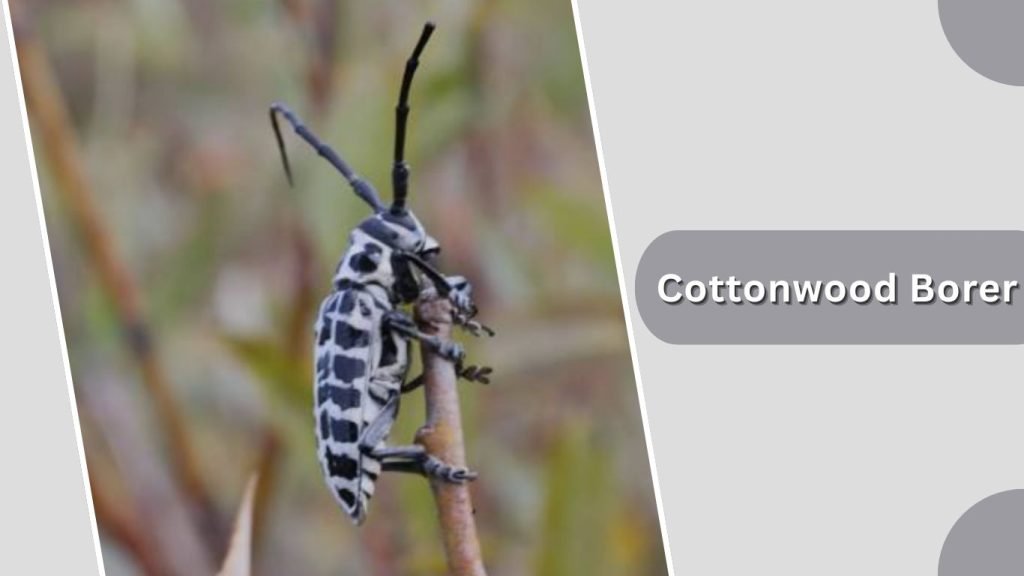
The cottonwood borer is a large and striking longhorn beetle known for its association with cottonwood trees. It is commonly found in North America and is considered a significant pest in both natural forests and landscaped areas. While adults are easily noticeable due to their bold appearance, it is the larval stage that causes the most serious damage.
Identification
Cottonwood borers are large beetles, typically measuring 25–40 mm in length. They have a distinctive black-and-white pattern, with a white body marked by bold black spots and bands. Their antennae are long and banded, often extending beyond the body length. Larvae are large, white, and legless grubs that live inside tree roots and lower trunks.
Habitat and Distribution
These beetles are widely distributed across North America, especially in areas where cottonwood and poplar trees grow. They are commonly found in forests, riverbanks, parks, and urban landscapes with suitable host trees.
Key Characteristics
- Large size with bold black-and-white markings
- Long, banded antennae
- Strong association with cottonwood and poplar trees
- Larvae develop in roots and lower trunks
Damage and Impact
The larvae bore into the roots and base of trees, creating tunnels that weaken the structural stability. This can make trees more prone to breakage and reduce their overall health. Infested trees may show signs such as frass (sawdust-like material) near the base and reduced vigor.
5. Red Milkweed Beetle
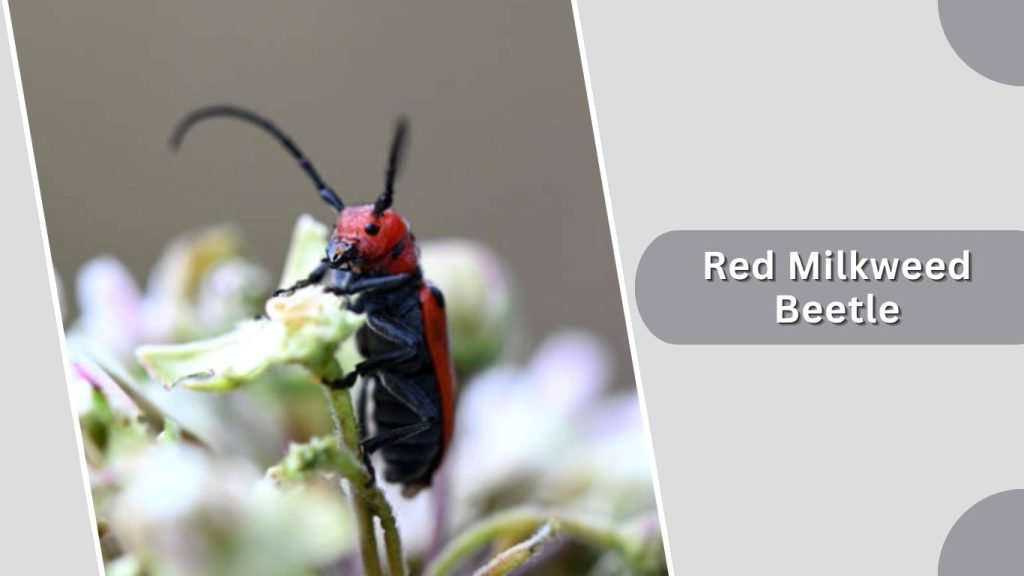
The red milkweed beetle is a brightly colored longhorn beetle commonly found on milkweed plants. Unlike many wood-boring species, this beetle primarily feeds on herbaceous plants, making it less destructive to trees but still important in its ecosystem.
Identification
This beetle is medium-sized, about 10–20 mm long, with a vivid red or orange body. It has black legs, antennae, and underside. Its antennae are long and slightly curved, typical of longhorn beetles. The larvae are pale and live in plant roots.
Habitat and Distribution
Red milkweed beetles are widely distributed across North America. They are commonly found in fields, meadows, roadsides, and gardens where milkweed plants grow.
Key Characteristics
- Bright red or orange body with black legs
- Long antennae typical of longhorn beetles
- Strong association with milkweed plants
- Larvae develop in roots
Damage and Impact
Adult beetles feed on milkweed leaves, stems, and flowers, while larvae feed on the roots. Although they can damage individual plants, they rarely cause serious economic harm. In fact, they are often considered part of the natural ecosystem, contributing to plant–insect interactions and biodiversity.
6. Ivory-marked Beetle
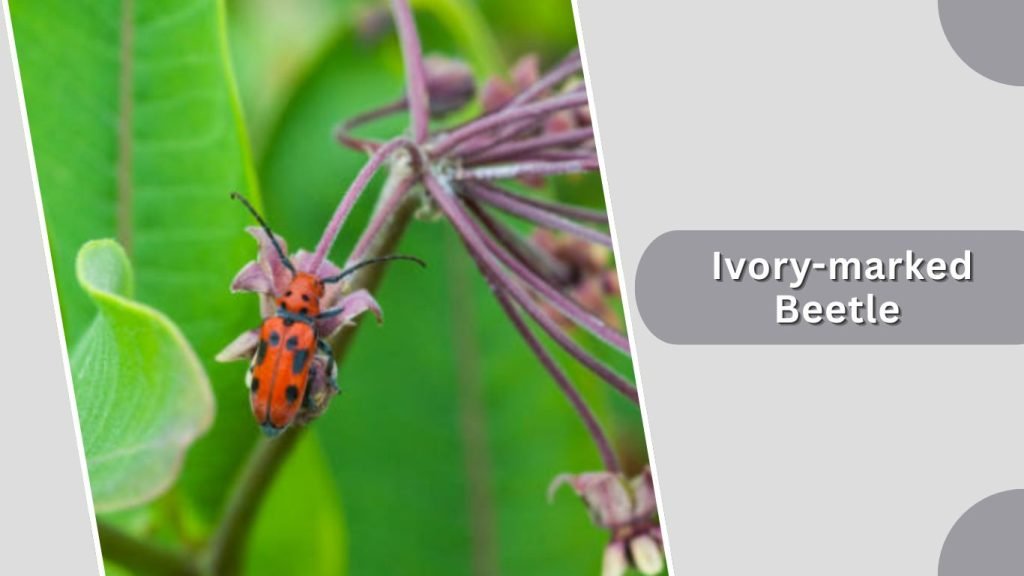
The ivory-marked beetle is a distinctive longhorn beetle known for its attractive markings and its role in breaking down dead or weakened hardwood trees. It is commonly found in North America and is often seen during the warmer months. Although it is a wood-boring species, it rarely poses a serious threat to healthy trees.
Identification
Ivory-marked beetles are medium to large, usually measuring 12–25 mm in length. They have a dark brown to black body with creamy white or ivory-colored markings across their wing covers. Their antennae are moderately long, and their overall appearance is bold and easy to recognize. The larvae are white, cylindrical grubs that develop inside wood.
Habitat and Distribution
These beetles are widely distributed across North America. They are typically found in forests, woodlands, and suburban areas where hardwood trees such as oak, maple, and elm are present. They are often seen on recently dead or dying trees.
Key Characteristics
- Dark body with ivory-colored markings
- Moderately long antennae
- Prefers dead or weakened hardwood trees
- Active during warm seasons
Damage and Impact
Ivory-marked beetles mainly target dead or stressed trees, where females lay eggs under bark. The larvae tunnel through the wood, helping in decomposition. While they may occasionally infest weakened trees, they are generally beneficial as decomposers and do not significantly harm healthy forests.
7. Pine Sawyer Beetle
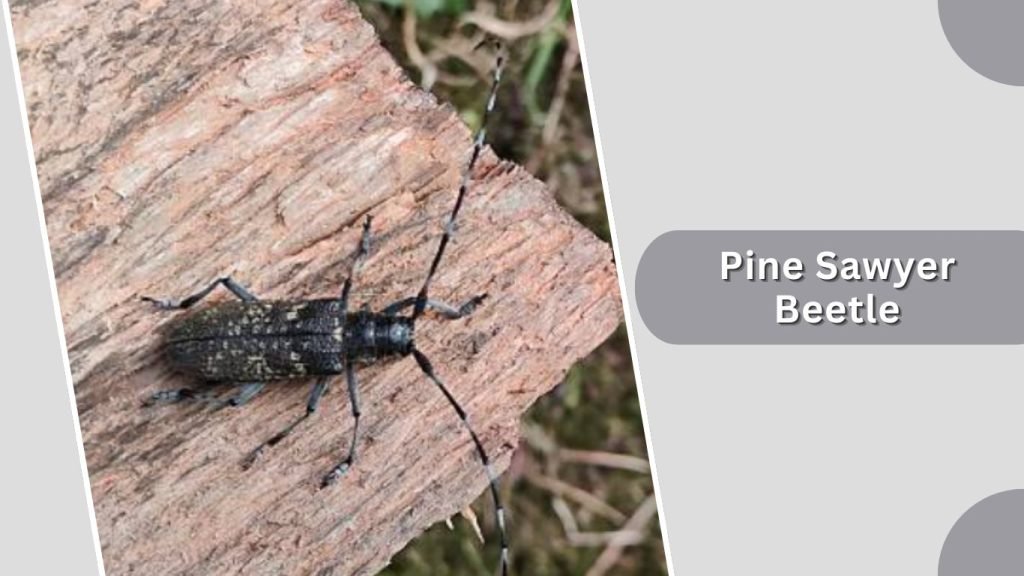
The pine sawyer beetle is a well-known longhorn beetle associated with coniferous forests. It is particularly important because some species are linked to the spread of pine wilt disease, making them a concern in forestry management.
Identification
Pine sawyer beetles are large, typically 15–30 mm long. They have a grayish-brown body with mottled patterns that help them blend into tree bark. Their antennae are extremely long, often several times the length of their body, especially in males. Larvae are large, white, and found داخل wood.
Habitat and Distribution
These beetles are found across North America, Europe, and Asia. They inhabit pine forests and areas with other conifer trees. They are commonly seen on recently cut logs, dead trees, and weakened conifers.
Key Characteristics
- Large size with very long antennae
- Mottled gray-brown body for camouflage
- Strong association with pine trees
- Linked to pine wilt disease transmission
Damage and Impact
Adult beetles feed on bark and twigs, but the main concern is their larvae, which bore into wood. This tunneling weakens trees and reduces timber quality. Additionally, some pine sawyer species can carry and spread nematodes that cause pine wilt disease, leading to rapid tree death in affected areas.
8. White-spotted Sawyer Beetle
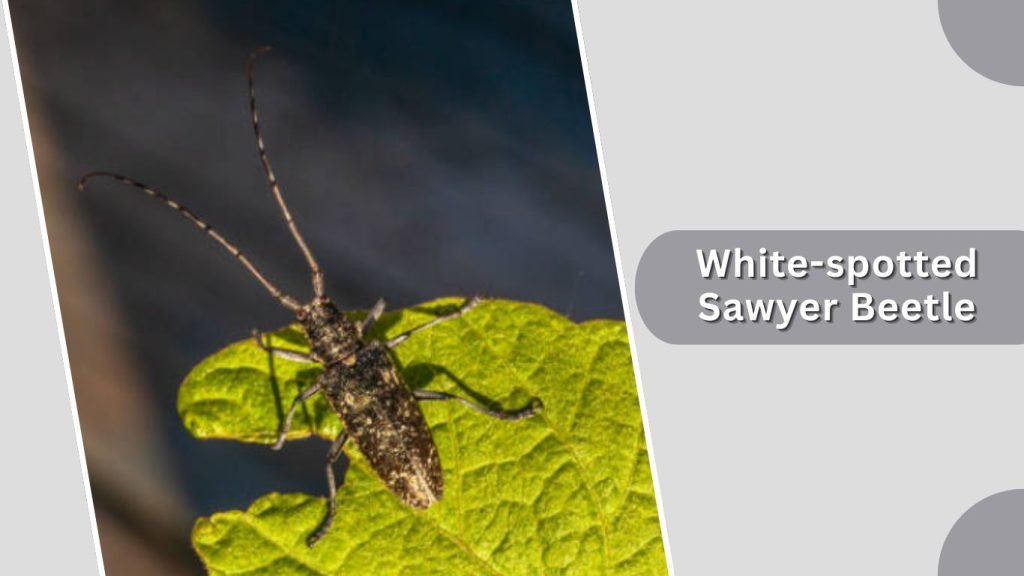
The white-spotted sawyer beetle is a large and recognizable longhorn beetle commonly found in coniferous forests. It plays an important ecological role by breaking down dead or weakened trees, although it is sometimes mistaken for more harmful invasive species due to its similar appearance.
Identification
This beetle is quite large, typically measuring 18–28 mm in length. It has a dark brown to black body with a distinct white spot at the base of its wing covers. Its antennae are extremely long, especially in males, often exceeding twice the body length. The larvae are large, white, and legless, living inside wood.
Habitat and Distribution
White-spotted sawyer beetles are widely distributed across North America. They are commonly found in pine forests, wooded areas, and places with recently cut or fallen conifer trees.
Key Characteristics
- Large body with a single white spot near the head
- Very long antennae
- Strong association with conifer trees
- Larvae develop inside dead or weakened wood
Damage and Impact
These beetles typically infest dead, dying, or recently cut trees rather than healthy ones. The larvae tunnel through wood, aiding decomposition. While they can reduce timber quality, they are generally beneficial in forest ecosystems and are not considered major pests.
9. Spotted Tree Borer
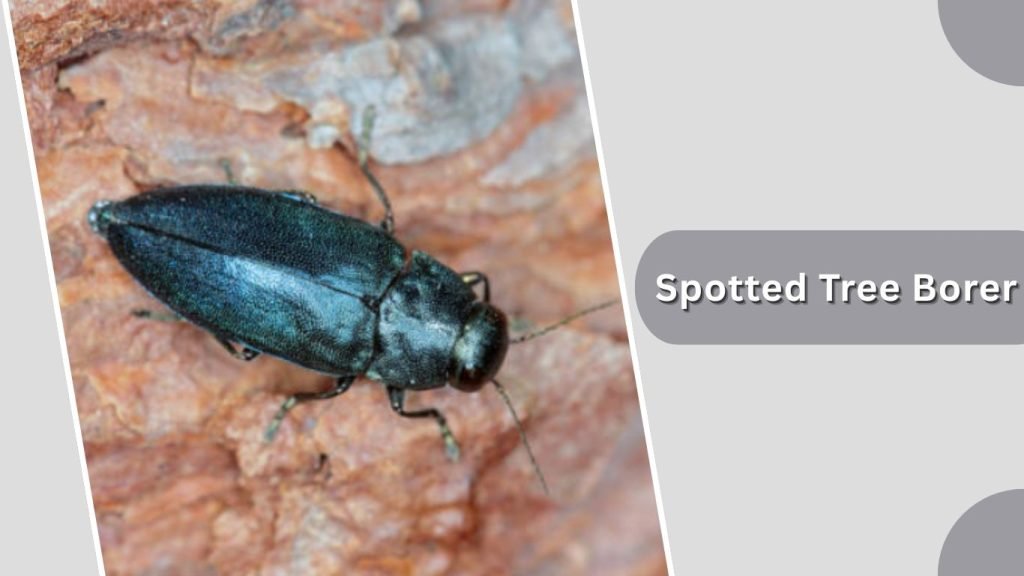
The spotted tree borer is a general term used for several longhorn beetle species with spotted patterns that bore into trees. These beetles can affect a variety of hardwood and softwood species, depending on the specific type.
Identification
Spotted tree borers are medium-sized beetles, usually ranging from 10–25 mm long. They have a dark body with light-colored spots or markings across their wing covers. Their antennae are long and segmented, typical of longhorn beetles. Larvae are white, soft-bodied grubs that live inside wood.
Habitat and Distribution
They are found in many regions worldwide, especially in forests, orchards, and landscaped areas with trees. They are commonly associated with weakened, stressed, or recently cut trees.
Key Characteristics
- Dark body with visible spot patterns
- Long antennae
- Infests a variety of tree species
- Larvae tunnel inside wood
Damage and Impact
Spotted tree borers lay eggs on tree bark, and the larvae bore into the wood after hatching. This tunneling can weaken branches and trunks, sometimes leading to breakage. While many species prefer stressed trees, some can attack healthy ones, making them potential pests in forestry and landscaping.
10. Eucalyptus Longhorn Beetle
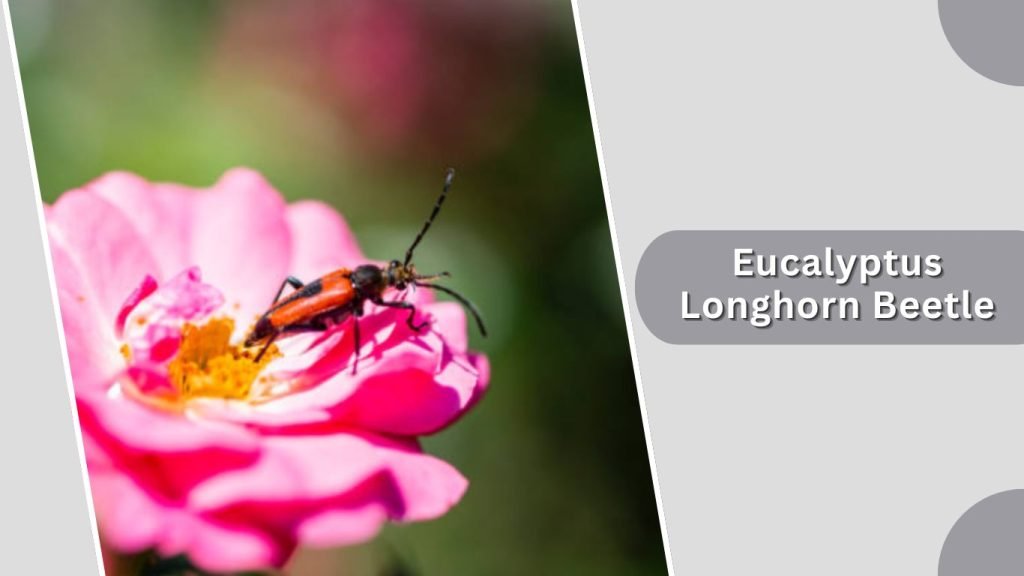
The eucalyptus longhorn beetle is a significant pest that targets eucalyptus trees, which are widely planted for timber, paper production, and ornamental use. Native to Australia, this beetle has spread to other regions, where it can become invasive and cause serious damage to plantations and urban trees.
Identification
This beetle is medium-sized, typically measuring 10–25 mm in length. It has a slender body that ranges from brown to reddish-brown, sometimes with subtle patterns. Its antennae are long and segmented, characteristic of longhorn beetles. The larvae are pale, legless grubs that develop inside wood.
Habitat and Distribution
Originally from Australia, the eucalyptus longhorn beetle is now found in parts of Europe, Africa, and the Americas. It thrives in areas where eucalyptus trees are grown, including plantations, forests, and urban landscapes.
Key Characteristics
- Slender brown to reddish body
- Long antennae typical of longhorn beetles
- Strong association with eucalyptus trees
- Larvae bore into trunks and branches
Damage and Impact
Females lay eggs in cracks or under bark. After hatching, larvae tunnel deep into the wood, feeding on internal tissues. This weakens the tree structure, causes branch dieback, and may eventually lead to tree death. Infestations can reduce timber quality and plantation productivity.
11. Black Longhorn Beetle
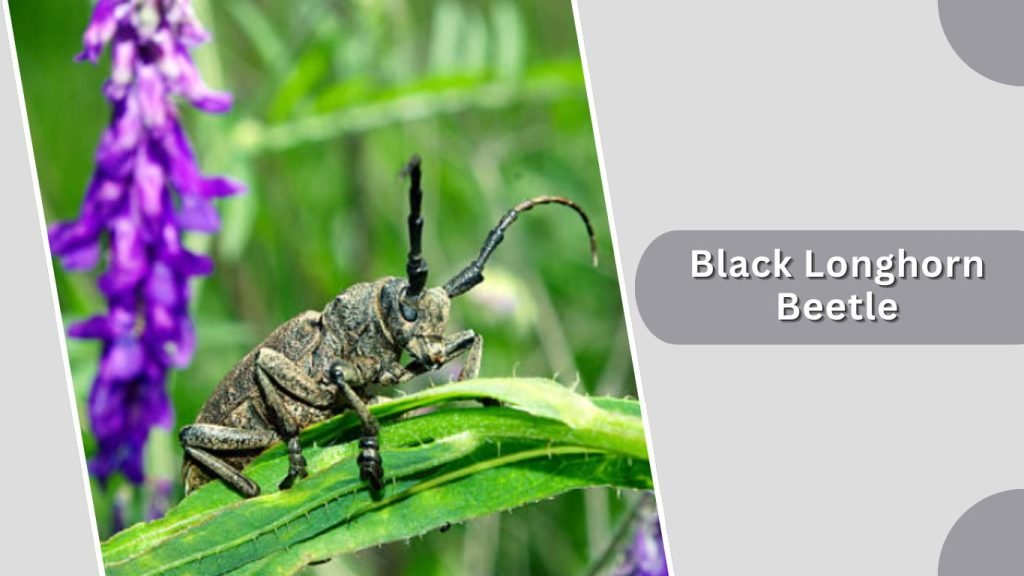
The black longhorn beetle is a general name used for several dark-colored longhorn beetle species. These beetles are commonly found in forests and wooded areas and are known for their wood-boring larvae, which contribute to decomposition but can also damage timber.
Identification
Black longhorn beetles are usually medium to large in size, ranging from 10–30 mm long. They have a solid black or very dark brown body with a smooth or slightly textured surface. Their antennae are long and often equal to or longer than the body. Larvae are white, cylindrical grubs.
Habitat and Distribution
They are widely distributed across many regions, including North America, Europe, and Asia. These beetles are commonly found in forests, woodlands, and areas with dead or decaying trees.
Key Characteristics
- Dark black or brown body
- Long, prominent antennae
- Common in forest environments
- Larvae develop inside wood
Damage and Impact
Most black longhorn beetles prefer dead or weakened trees, where they lay eggs and their larvae tunnel through wood. This helps in natural decomposition. However, in some cases, they can infest cut timber or wooden structures, reducing wood quality and causing economic losses.
12. Brown Prionid Beetle
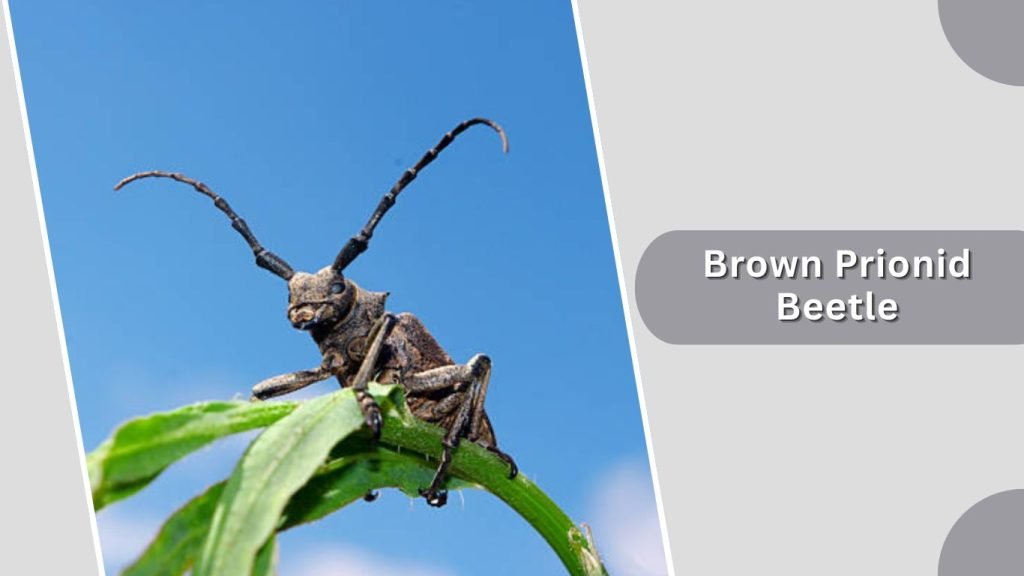
The brown prionid beetle is a large and robust longhorn beetle known for its strong jaws and underground larval stage. It is commonly found in forested and rural areas and is especially notable for the damage its larvae can cause to tree roots and woody plants.
Identification
Brown prionid beetles are large, typically measuring 25–50 mm in length. They have a reddish-brown to dark brown body with a smooth, hardened surface. Their antennae are shorter than many other longhorn beetles but still clearly segmented. The larvae are thick, white grubs with strong mandibles.
Habitat and Distribution
These beetles are found across North America and parts of Europe. They prefer forests, orchards, and areas with decaying wood or tree roots. Adults are often attracted to lights at night.
Key Characteristics
- Large, heavy-bodied beetle
- Reddish to dark brown coloration
- Strong jaws and underground larvae
- Associated with tree roots and decaying wood
Damage and Impact
The larvae live in soil and feed on roots of trees and woody plants. This root damage can weaken or even kill young trees. In orchards and nurseries, infestations may reduce plant health and productivity, making them a concern for growers.
13. Palo Verde Beetle
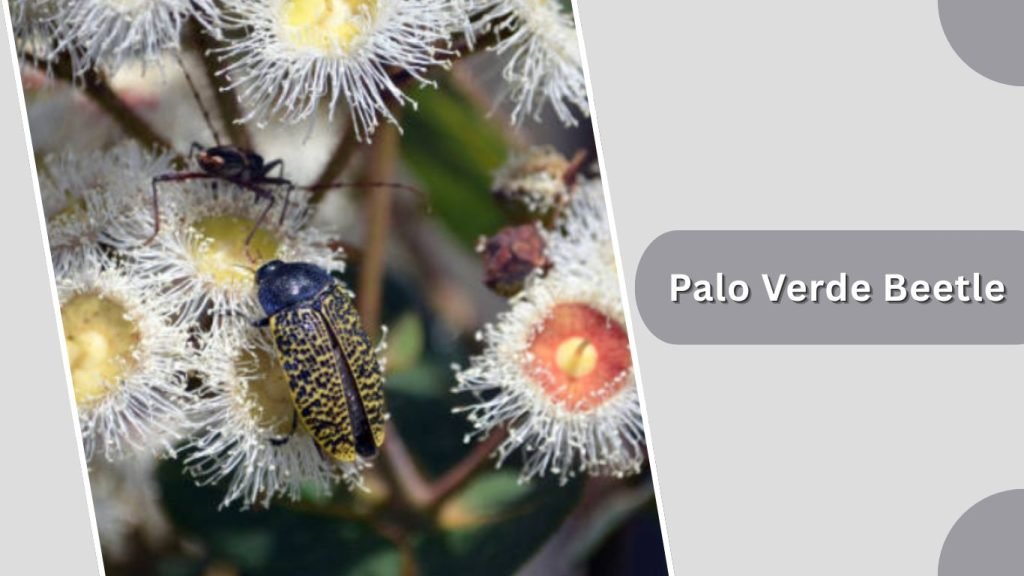
The palo verde beetle is one of the largest longhorn beetles in North America. It is commonly associated with desert environments and is known for its impressive size and strong flying ability. While adults are often seen as harmless, the larval stage can cause damage to trees.
Identification
Palo verde beetles are very large, typically measuring 30–75 mm long. They have a dark brown to black body with a glossy appearance. Their antennae are long but not as exaggerated as some other longhorn beetles. Larvae are large, white grubs found underground.
Habitat and Distribution
These beetles are commonly found in the southwestern United States and parts of Mexico. They thrive in desert and semi-arid regions, especially where palo verde and other desert trees grow.
Key Characteristics
- Very large body size
- Dark brown or black coloration
- Strong flying ability
- Larvae live underground and feed on roots
Damage and Impact
Larvae feed on the roots of trees, particularly palo verde, citrus, and other ornamental plants. This feeding can weaken trees, especially young or stressed ones. While healthy, mature trees often tolerate the damage, severe infestations can impact growth and stability.
14. Locust Borer
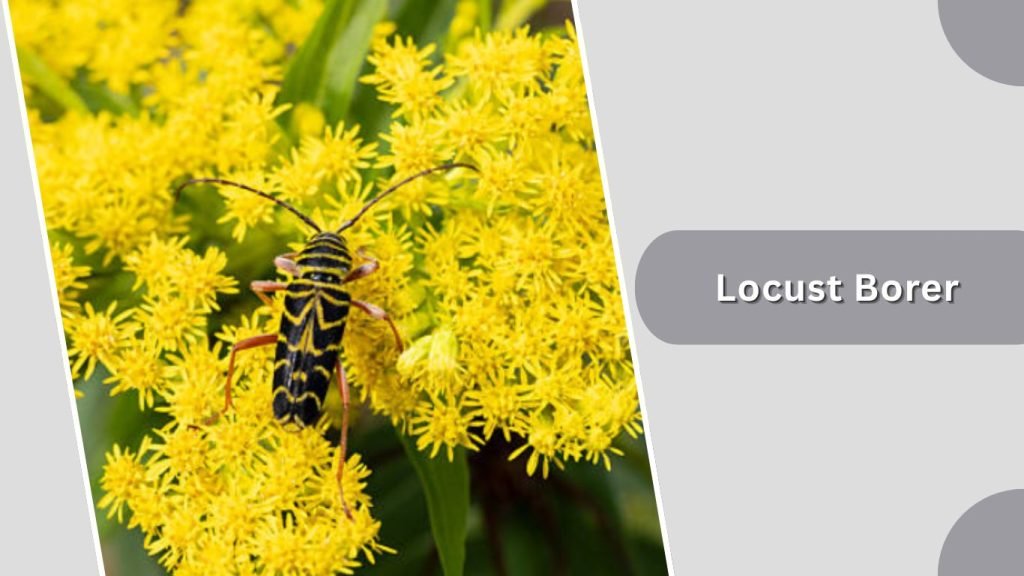
The locust borer is a well-known longhorn beetle that primarily targets black locust trees. It is both visually striking and economically important, as it can cause serious structural damage to trees used for timber, fencing, and landscaping. While adult beetles are often seen feeding on flowers, it is the larval stage that poses the greatest threat to tree health.
Identification
Locust borers are medium-sized beetles, typically measuring 12–25 mm in length. They have a distinctive black body marked with bright yellow bands that resemble a wasp, which helps deter predators. Their antennae are moderately long and dark in color. The larvae are white, cylindrical grubs that live داخل tree wood. Adults are often active during late summer and early fall and are frequently seen on goldenrod flowers.
Habitat and Distribution
This species is widely distributed across North America, especially in regions where black locust trees grow. It thrives in forests, rural landscapes, and urban areas where these trees are used for ornamental or practical purposes. Locust borers are particularly common in areas with stressed or damaged trees, as these provide ideal conditions for egg-laying.
Key Characteristics
- Black body with bright yellow, wasp-like bands
- Moderately long antennae
- Strong association with black locust trees
- Adults commonly found on flowering plants
Damage and Impact
Female locust borers lay eggs in cracks in the bark of host trees. Once the larvae hatch, they bore into the wood and create extensive tunnels within the trunk and branches. This internal feeding weakens the structural integrity of the tree, making it more susceptible to breakage, especially during storms or high winds.
Infested trees often show signs such as sap oozing, frass (sawdust-like material), and small holes in the bark. Over time, repeated infestations can significantly reduce the strength and value of the wood. In commercial settings, this can lead to economic losses, particularly where black locust is grown for durable timber. Additionally, weakened trees are more vulnerable to disease and environmental stress.
Despite their destructive potential, locust borers tend to prefer already stressed or injured trees rather than completely healthy ones. Proper tree care, including minimizing damage and maintaining tree health, can help reduce the risk of infestation. Monitoring adult activity during their active season is also important for early detection and management.
15. Hickory Borer
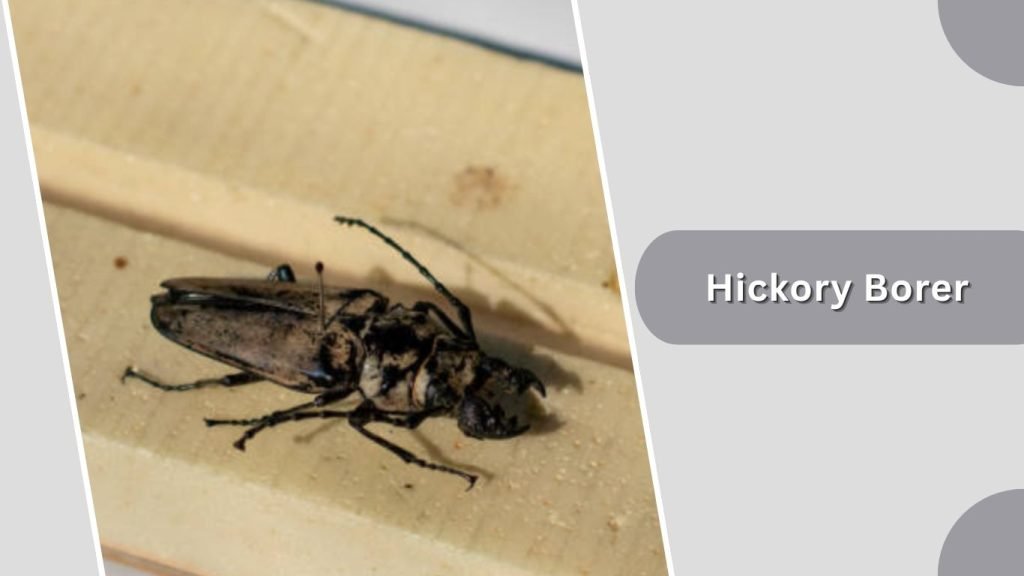
The hickory borer is a longhorn beetle species that primarily attacks hickory trees and other hardwoods. It is considered a secondary pest in many cases, meaning it often targets weakened or stressed trees. However, under certain conditions, it can still cause significant damage, particularly in forests and woodlots.
Identification
Hickory borers are medium-sized beetles, generally ranging from 15–30 mm in length. They have a brown to grayish body with subtle patterns that help them blend into tree bark. Their antennae are long and segmented, typical of longhorn beetles, though not as exaggerated as in some species. The larvae are white, elongated grubs that develop inside wood.
Habitat and Distribution
These beetles are commonly found in North America, particularly in regions where hickory trees are abundant. They inhabit forests, woodlands, and areas with hardwood trees. Hickory borers are often associated with dead or dying wood, as well as recently cut logs.
Key Characteristics
- Brown to gray body with camouflaged patterns
- Long antennae typical of longhorn beetles
- Strong preference for hickory and hardwood trees
- Larvae develop inside trunks and branches
Damage and Impact
Hickory borers lay eggs on the bark of host trees, usually in areas where the tree is already weakened. After hatching, larvae tunnel into the wood, feeding on inner tissues and creating galleries. This activity disrupts the movement of nutrients and water within the tree.
While healthy trees can sometimes withstand minor infestations, repeated attacks can weaken them over time. In timber production, larval tunneling reduces wood quality by creating structural defects. In forests, infestations may contribute to the gradual decline of already stressed trees, affecting overall forest health.
Although not always considered a primary pest, the hickory borer plays a role in both damage and natural decomposition processes. Its presence often indicates underlying stress in trees, making it an important species for monitoring forest conditions and tree health.
16. Elm Borer
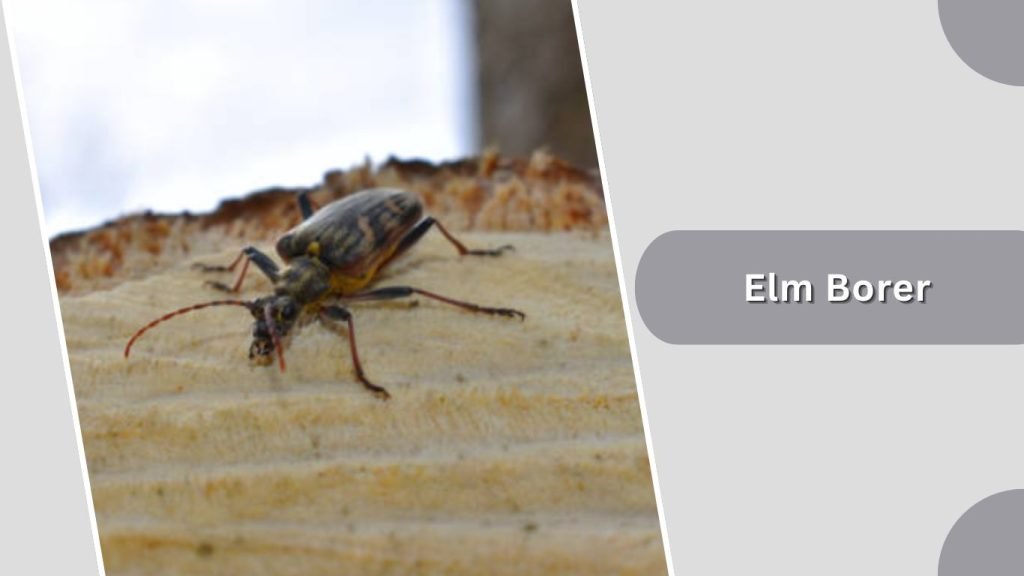
The elm borer is a longhorn beetle species that primarily targets elm trees and other hardwoods. It is commonly associated with weakened or dying trees, where it contributes to wood decay. Although it is not always a primary pest, it can still cause structural damage, especially in timber and urban landscapes.
Identification
Elm borers are medium-sized beetles, typically measuring 10–20 mm in length. They have a brown to grayish body with subtle markings that help them blend into tree bark. Their antennae are moderately long and segmented. The larvae are white, elongated grubs that live inside wood.
Habitat and Distribution
These beetles are found in North America and parts of Europe. They are commonly seen in forests, parks, and urban areas where elm trees and other hardwoods grow. They prefer weakened, dead, or recently cut trees.
Key Characteristics
- Brown or gray camouflaged body
- Moderately long antennae
- Associated with elm and hardwood trees
- Larvae develop inside wood
Damage and Impact
Elm borers lay eggs in bark crevices. The larvae tunnel into the wood, creating galleries that weaken the structure. While they often infest already stressed trees, heavy infestations can accelerate tree decline and reduce timber quality.
17. Willow Borer
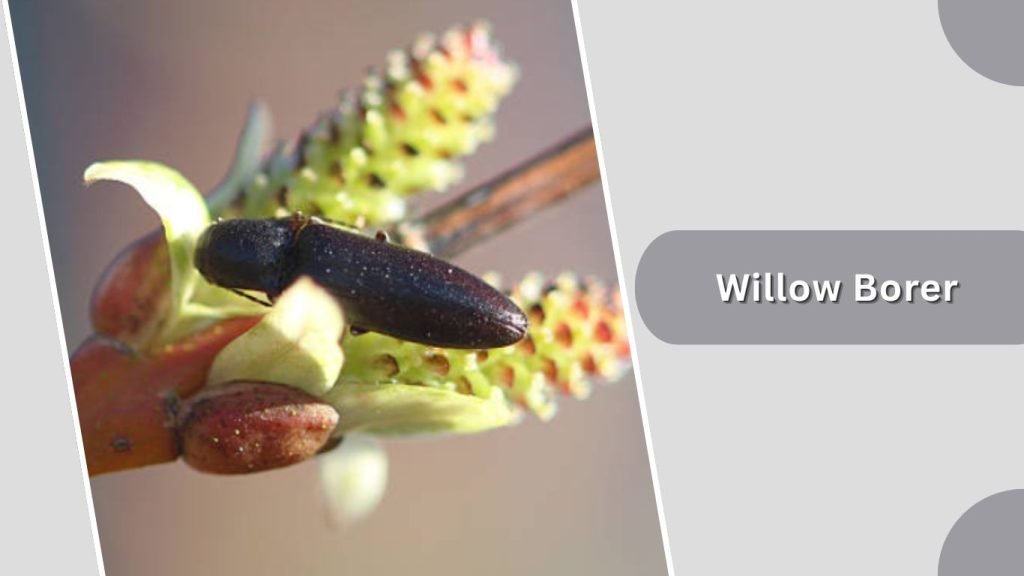
The willow borer is a longhorn beetle that mainly affects willow trees and other hardwood species. It is known for its wood-boring larvae, which can weaken branches and trunks over time.
Identification
Willow borers are medium-sized beetles, usually 12–25 mm long. They have a brown to dark gray body with a slightly rough texture. Their antennae are long and segmented, typical of longhorn beetles. The larvae are white, soft-bodied grubs.
Habitat and Distribution
They are widely distributed across temperate regions, especially in areas where willow trees grow. Willow borers are commonly found near rivers, wetlands, and moist environments where host trees are abundant.
Key Characteristics
- Brown to gray body with rough texture
- Long antennae
- Strong association with willow trees
- Larvae tunnel inside wood
Damage and Impact
Larvae bore into the wood of willow trees, creating tunnels that weaken branches and trunks. This can lead to breakage and reduced tree health. While they often target stressed trees, repeated infestations can cause significant structural damage over time.
18. Oak Borer
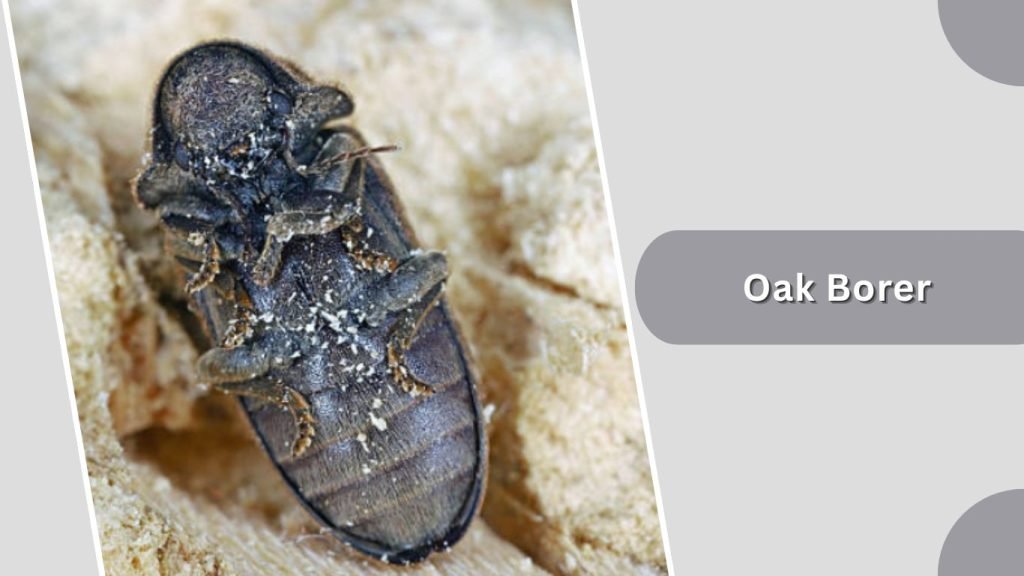
The oak borer is a longhorn beetle that primarily targets oak trees, although it may also infest other hardwood species. It is commonly found in forested areas and plays a dual role as both a pest and a natural decomposer, depending on the condition of the host tree.
Identification
Oak borers are medium-sized beetles, typically measuring 12–25 mm in length. They have a brown to grayish body with mottled patterns that help them blend into tree bark. Their antennae are long and segmented, a typical feature of longhorn beetles. The larvae are white, elongated grubs that live inside wood.
Habitat and Distribution
These beetles are widely distributed across North America, Europe, and parts of Asia. They are commonly found in oak forests, woodlands, and areas where oak trees are abundant, especially where trees are stressed or damaged.
Key Characteristics
- Mottled brown or gray body
- Long antennae
- Strong association with oak trees
- Larvae develop inside trunks and branches
Damage and Impact
Oak borers lay eggs in bark crevices, and the larvae tunnel into the wood after hatching. This feeding disrupts the flow of nutrients and weakens the tree structure. While they often target stressed or dying trees, heavy infestations can accelerate decline and reduce timber value.
19. Poplar Borer
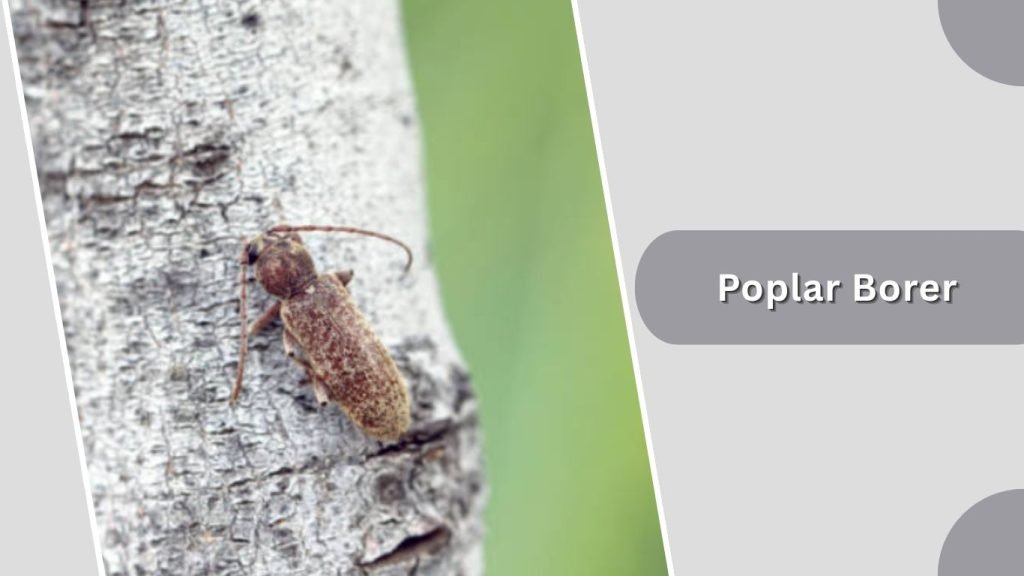
The poplar borer is a longhorn beetle that mainly affects poplar and aspen trees. It is known for its wood-boring larvae, which can weaken trees and reduce their overall health, especially in managed landscapes and plantations.
Identification
Poplar borers are medium-sized beetles, usually 15–30 mm long. They have a light-colored body with black markings, often resembling wasps in appearance. Their antennae are long and segmented, and their larvae are white, cylindrical grubs.
Habitat and Distribution
These beetles are found in North America and parts of Europe. They are commonly seen in forests, parks, and urban areas where poplar, aspen, and related trees grow.
Key Characteristics
- Light body with black, wasp-like markings
- Long antennae
- Strong association with poplar and aspen trees
- Larvae tunnel inside wood
Damage and Impact
Larvae bore into trunks and branches, creating tunnels that weaken the tree. Infested trees may show signs such as frass, exit holes, and reduced growth. Over time, repeated infestations can lead to structural weakness and increased susceptibility to environmental stress.
20. Maple Borer
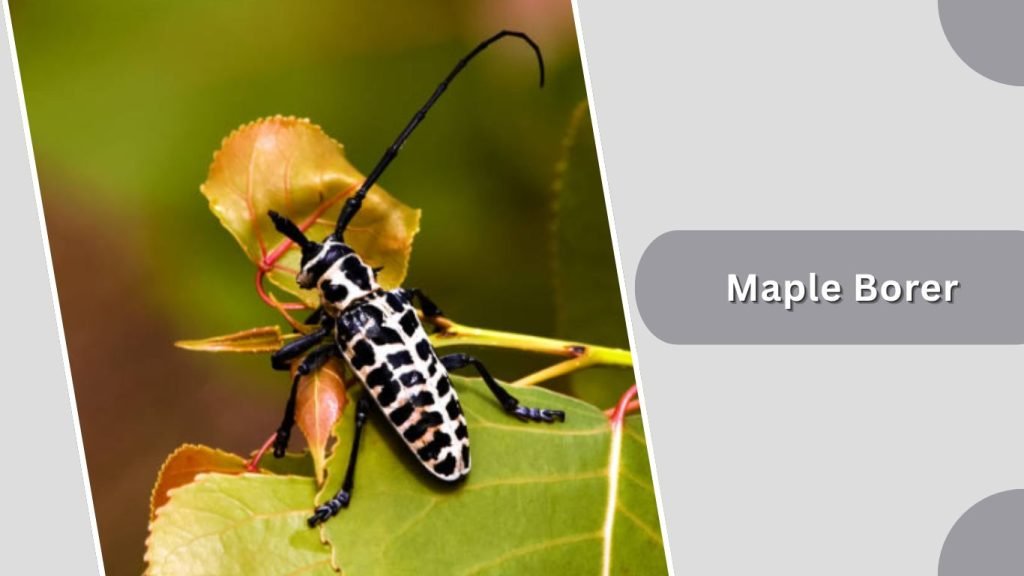
The maple borer is a longhorn beetle that primarily affects maple trees and occasionally other hardwood species. It is commonly found in forested areas and urban landscapes where maples are widely planted. While often considered a secondary pest, it can still contribute to tree decline under certain conditions.
Identification
Maple borers are medium-sized beetles, typically measuring 10–25 mm in length. They have a brown to grayish body with subtle markings that provide camouflage against tree bark. Their antennae are long and segmented, characteristic of longhorn beetles. The larvae are white, elongated grubs that live inside wood.
Habitat and Distribution
These beetles are widely distributed across North America and parts of Europe. They are commonly found in forests, parks, and residential areas where maple trees grow, especially where trees are stressed or damaged.
Key Characteristics
- Brown or gray camouflaged body
- Long, segmented antennae
- Strong association with maple trees
- Larvae develop inside wood
Damage and Impact
Larvae tunnel into the trunks and branches of maple trees, disrupting the flow of water and nutrients. This can weaken the tree structure and lead to branch dieback. While healthy trees can sometimes tolerate minor infestations, repeated attacks may reduce tree vigor and wood quality.
21. Redwood Borer
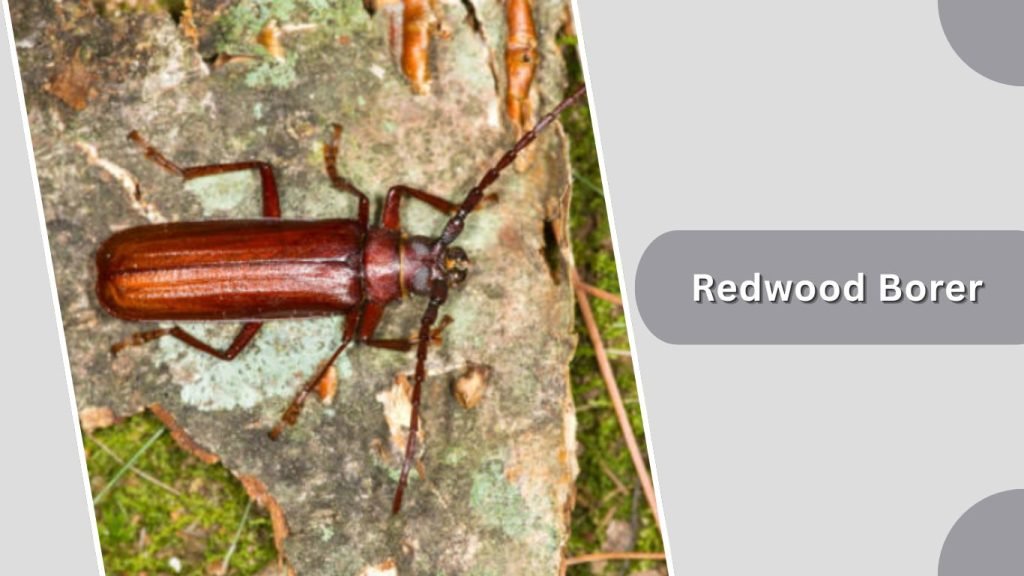
The redwood borer is a large longhorn beetle known for its association with redwood trees. It is considered one of the largest wood-boring beetles in North America and plays a role in both forest ecology and timber concerns.
Identification
Redwood borers are large beetles, typically measuring 20–50 mm in length. They have a reddish-brown body with a somewhat rough texture. Their antennae are moderately long, and their larvae are large, white grubs that develop deep within wood.
Habitat and Distribution
This species is primarily found along the western coast of North America, especially in regions where redwood forests are present. It inhabits natural forests as well as managed timber areas.
Key Characteristics
- Large size with reddish-brown coloration
- Moderately long antennae
- Strong association with redwood trees
- Larvae tunnel deep בתוך wood
Damage and Impact
The larvae bore deep into the trunks of redwood trees, creating extensive tunnels. While they often target older or weakened trees, their activity can weaken wood structure and reduce timber value. In natural forests, they contribute to decomposition, but in commercial settings, they can cause economic losses.
22. Golden-bloomed Grey Longhorn Beetle
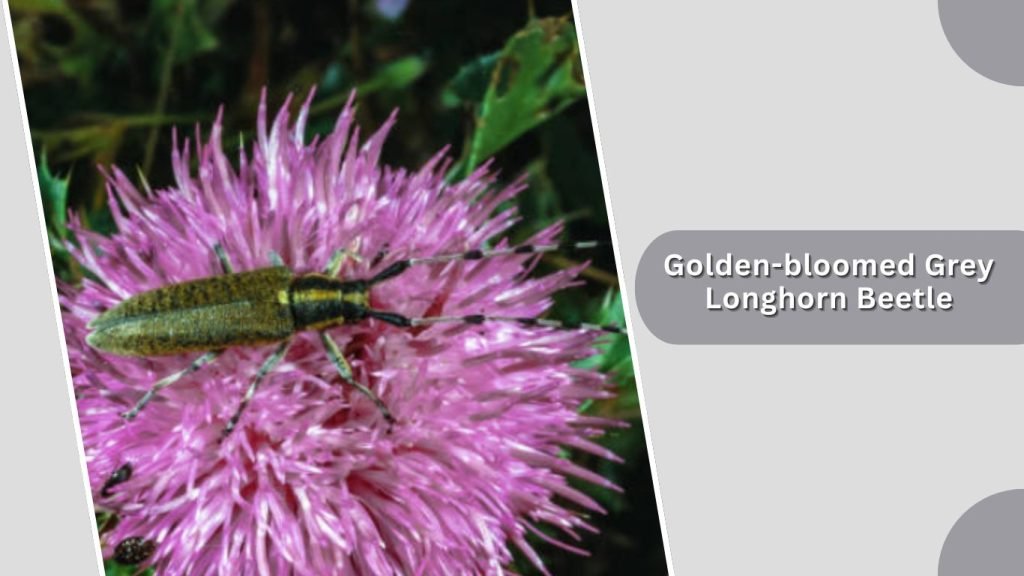
The golden-bloomed grey longhorn beetle is a visually distinctive species known for its soft, dusty appearance and association with flowering plants. Unlike many wood-boring longhorn beetles, adults are often seen visiting flowers, making them an interesting and noticeable part of their ecosystem.
Identification
These beetles are medium-sized, typically measuring 10–18 mm in length. They have a grayish body covered with fine golden or yellowish hairs, giving them a “dusty” or frosted look. Their antennae are moderately long and segmented, and their overall shape is slightly elongated.
Habitat and Distribution
Golden-bloomed grey longhorn beetles are commonly found in Europe and parts of Asia. They inhabit meadows, grasslands, woodland edges, and gardens where flowering plants are abundant.
Key Characteristics
- Gray body with golden, dusty appearance
- Moderately long antennae
- Often found on flowers
- Larvae develop in decaying wood
Damage and Impact
Adults mainly feed on pollen and nectar, playing a role in pollination. The larvae develop in dead or decaying wood, contributing to decomposition. They are generally not harmful to healthy plants and are considered beneficial in natural ecosystems.
23. Flower Longhorn Beetle
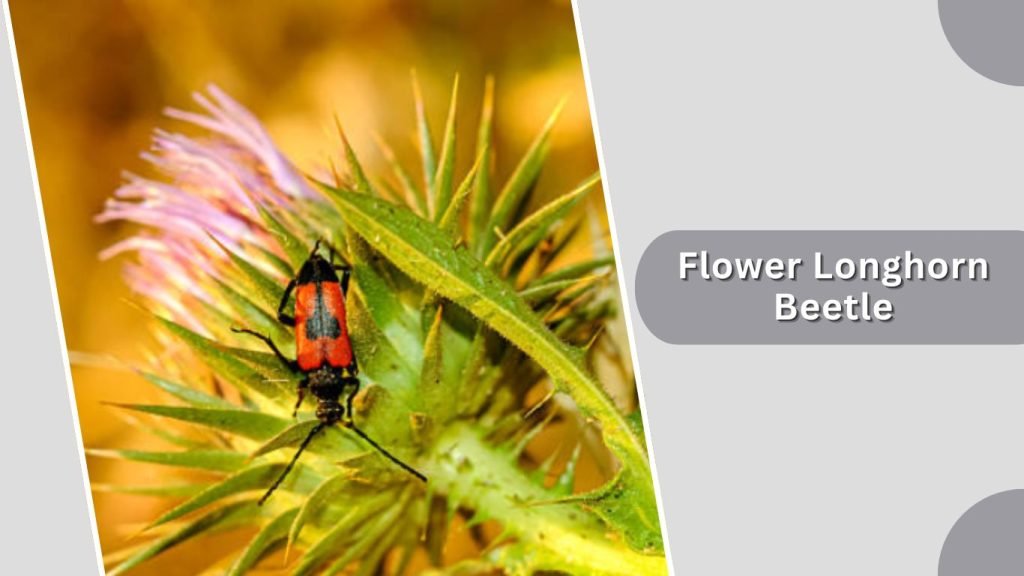
The flower longhorn beetle refers to a group of longhorn beetles that are commonly found on flowers. These beetles are known for their slender bodies and active daytime behavior, often seen feeding on nectar and pollen.
Identification
Flower longhorn beetles are usually small to medium-sized, ranging from 8–20 mm long. They often have bright or contrasting colors, including yellow, black, or reddish tones. Their bodies are more slender than typical longhorn beetles, and their antennae are moderately long.
Habitat and Distribution
They are widely distributed across North America, Europe, and Asia. These beetles are commonly found in meadows, gardens, forest edges, and other areas rich in flowering plants.
Key Characteristics
- Slender body with varied coloration
- Active during the day
- Frequently seen on flowers
- Larvae develop in wood or plant stems
Damage and Impact
Adult flower longhorn beetles feed on pollen and nectar, making them important pollinators. The larvae usually develop in decaying wood or plant material, contributing to natural recycling processes. They are not considered pests and generally have a positive ecological role.
24. Flat-faced Longhorn Beetle
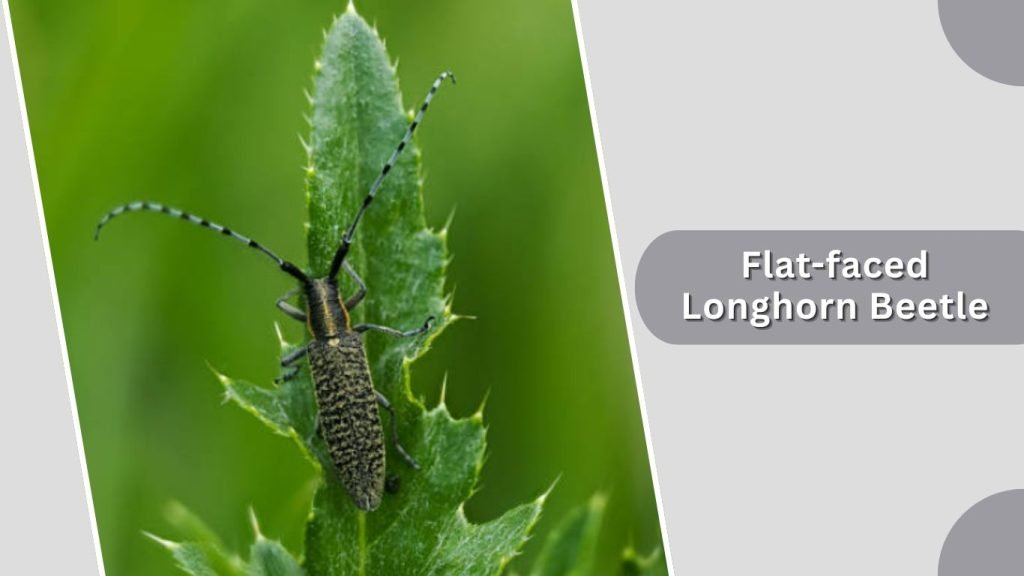
The flat-faced longhorn beetle is a unique member of the longhorn beetle family, known for its somewhat flattened head and elongated body. It is less commonly discussed than other species but plays a role in forest ecosystems, particularly in wood decomposition and nutrient cycling.
Identification
Flat-faced longhorn beetles are medium-sized, usually measuring 10–25 mm in length. They have a flattened facial structure compared to other longhorn beetles, along with a brown to dark gray body. Their antennae are long and segmented, though not as exaggerated as in some larger species. The larvae are white, soft-bodied grubs.
Habitat and Distribution
These beetles are found in various regions, including North America and parts of Europe. They typically inhabit forests, wooded areas, and locations with dead or decaying trees, where suitable breeding material is available.
Key Characteristics
- Flattened face compared to other longhorn beetles
- Brown to gray body coloration
- Long, segmented antennae
- Associated with decaying wood
Damage and Impact
Flat-faced longhorn beetles usually infest dead or weakened wood. Their larvae tunnel through the material, aiding in decomposition. They rarely pose a threat to healthy trees and are generally considered beneficial in maintaining forest health.
25. Giant Longhorn Beetle
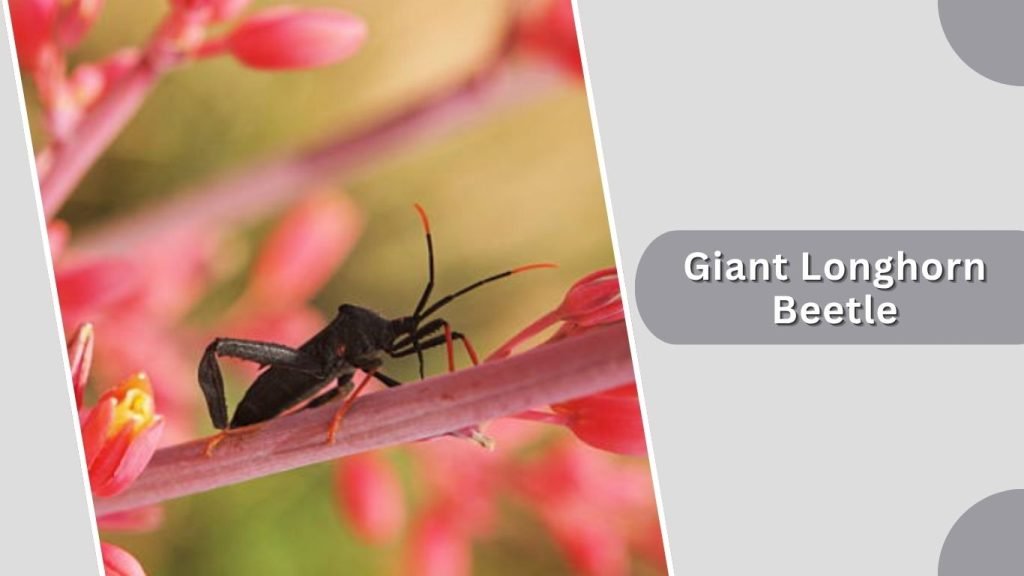
The giant longhorn beetle is one of the largest members of the longhorn beetle family. Known for its impressive size and powerful build, it is often found in tropical and subtropical regions. Despite its intimidating appearance, it plays an important ecological role.
Identification
Giant longhorn beetles can grow up to 50–100 mm in length, making them among the largest beetles in the world. They have a strong, elongated body that is typically dark brown to black. Their antennae are long but proportionate to their large size. The larvae are thick, white grubs that develop inside wood.
Habitat and Distribution
These beetles are commonly found in tropical regions of South America, Africa, and Asia. They inhabit dense forests where large trees provide suitable breeding sites.
Key Characteristics
- Extremely large body size
- Dark brown or black coloration
- Strong, elongated structure
- Larvae develop deep inside wood
Damage and Impact
The larvae bore into large tree trunks, feeding on internal tissues. While they can weaken wood structure, they mainly target dead or decaying trees. As a result, they contribute to the natural breakdown of wood and nutrient recycling, making them important for forest ecosystems.
