
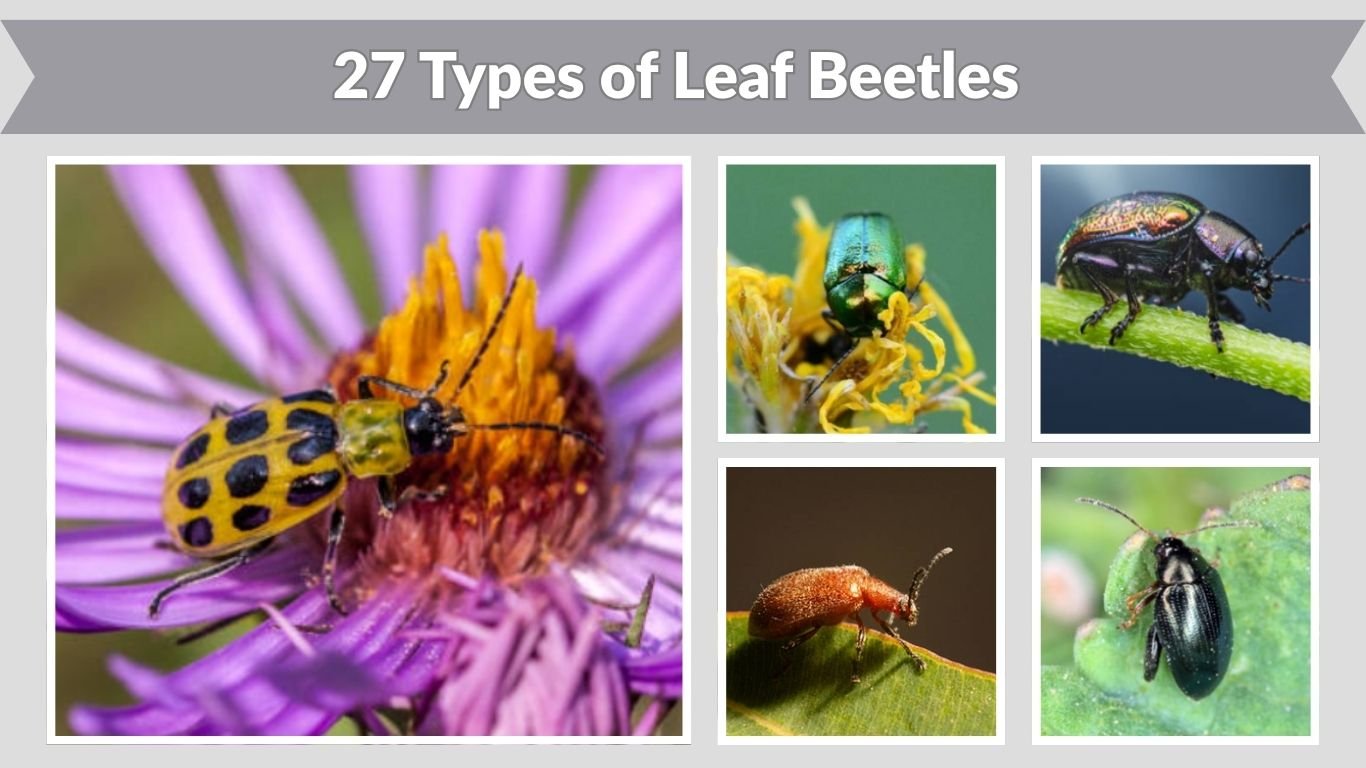
Leaf beetles are a large and diverse group of insects known for their vibrant colors and plant-feeding habits. Found in gardens, forests, farms, and wild landscapes, these beetles can range from harmless species to serious agricultural pests. Many are easily recognized by their bright patterns, metallic sheen, and oval-shaped bodies.
This guide covers 27 common types of leaf beetles, highlighting their color, habitat, diet, and identification features. Understanding these beetles helps with early detection, proper identification, and effective management—whether you’re protecting crops, maintaining a garden, or simply learning about these fascinating insects.
1. Colorado Potato Beetle
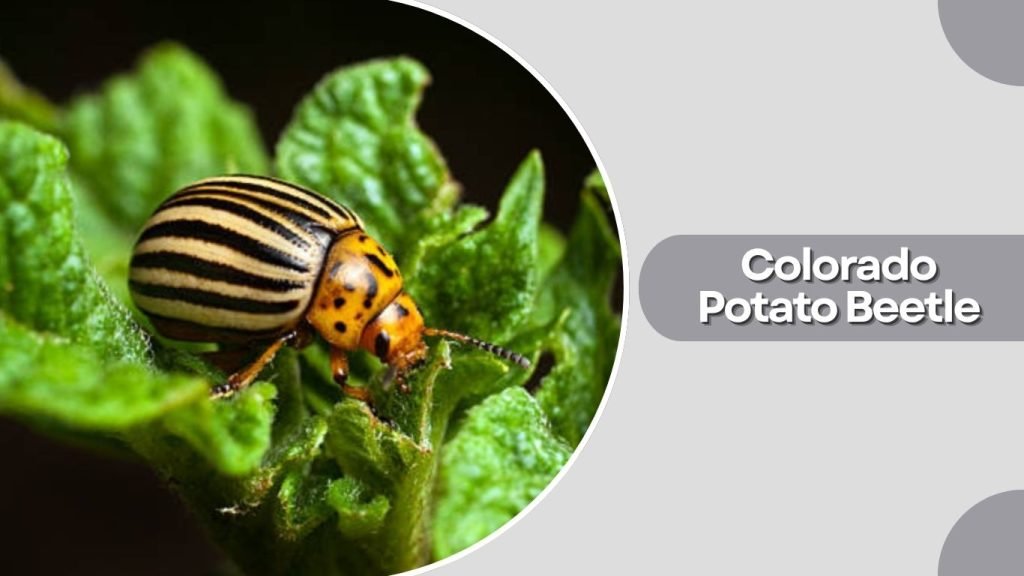
The Colorado potato beetle is one of the most well-known and destructive leaf beetles, especially in agriculture. It primarily targets potato plants but can also affect other crops in the nightshade family. Due to its rapid reproduction and strong resistance to pesticides, it is a major concern for farmers worldwide.
Identification
The Colorado potato beetle is easily recognized by its bright yellow-orange body with ten distinct black stripes running lengthwise along its wing covers. It measures about 8–12 mm in length and has a rounded, dome-shaped body.
Habitat and Distribution
This beetle is widely found across North America, Europe, and Asia. It thrives in agricultural fields, gardens, and areas where potato, tomato, and eggplant crops are grown.
Key Characteristics
- Bright yellow-orange body with black stripes
- Oval, dome-shaped appearance
- Strong association with potato plants
- High resistance to many insecticides
Diet and Damage
Both adult beetles and larvae feed on plant leaves, often stripping them completely. Heavy infestations can defoliate entire plants, leading to reduced crop yield or total crop failure if not controlled.
2. Lily Beetle
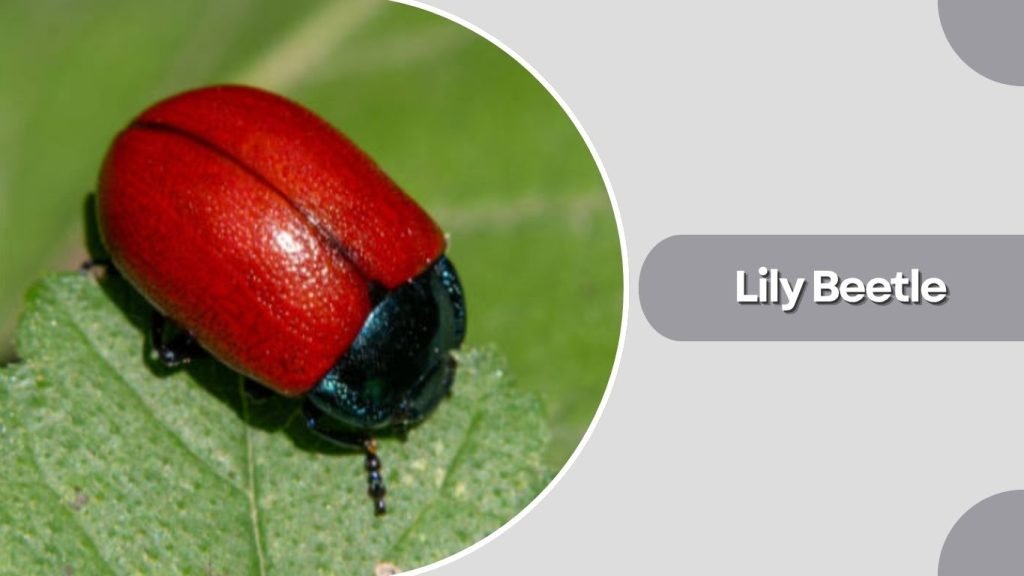
The lily beetle is a striking and destructive pest that mainly targets lilies and related ornamental plants. Despite its attractive appearance, it can cause severe damage in gardens, quickly defoliating plants if left unchecked.
Identification
Lily beetles are small, about 6–9 mm long, with a bright red, shiny body. Their wing covers are smooth and vivid, while the head, legs, and underside are black. Larvae are slug-like, often covered in their own dark excrement.
Habitat and Distribution
They are commonly found in Europe and North America, especially in gardens, flower beds, and areas where lilies are cultivated. They thrive in temperate climates.
Key Characteristics
- Bright red, glossy wing covers
- Black head and legs
- Larvae covered in protective fecal layer
- Strong preference for lily plants
Diet and Damage
Both adults and larvae feed on leaves, stems, and buds of lily plants. Severe infestations can skeletonize leaves and destroy flowers, significantly reducing the plant’s health and ornamental value.
3. Asparagus Beetle
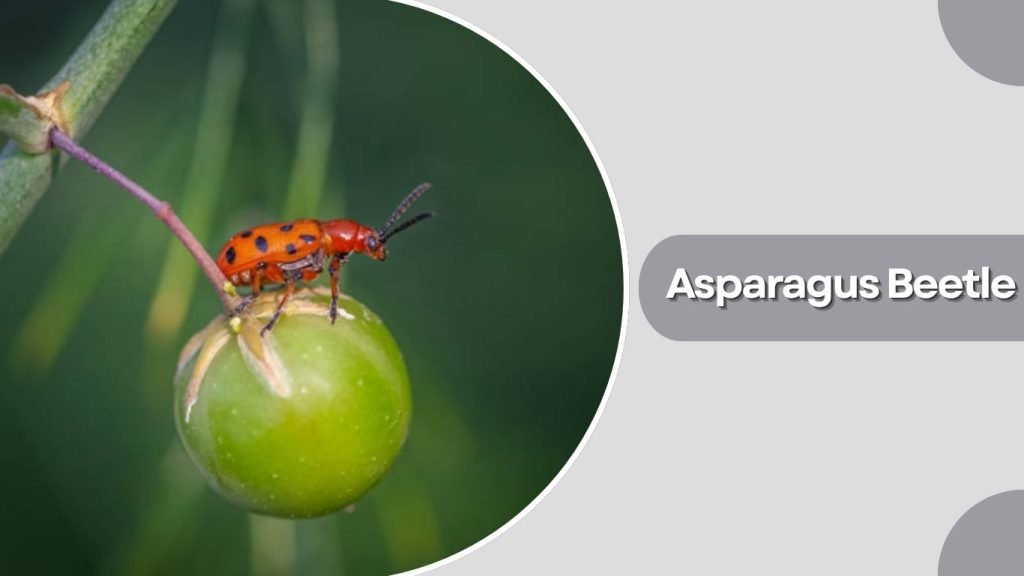
The asparagus beetle is a common pest that primarily affects asparagus plants. It is known for damaging both wild and cultivated asparagus, making it a concern for gardeners and commercial growers.
Identification
Asparagus beetles are small, about 6–8 mm long. The common species has a bluish-black body with cream-colored spots and a reddish border on its wing covers. Its body is elongated and slightly rectangular.
Habitat and Distribution
They are widely distributed across Europe, North America, and other regions where asparagus is grown. They are commonly found in gardens, farms, and wild areas with asparagus plants.
Key Characteristics
- Dark body with light spots and reddish edges
- Elongated, narrow shape
- Strong association with asparagus plants
- Active during the growing season
Diet and Damage
Adult beetles feed on asparagus spears and foliage, while larvae consume leaves. Feeding damage can reduce plant vigor, affect spear quality, and lower overall yield, especially during heavy infestations.
4. Elm Leaf Beetle
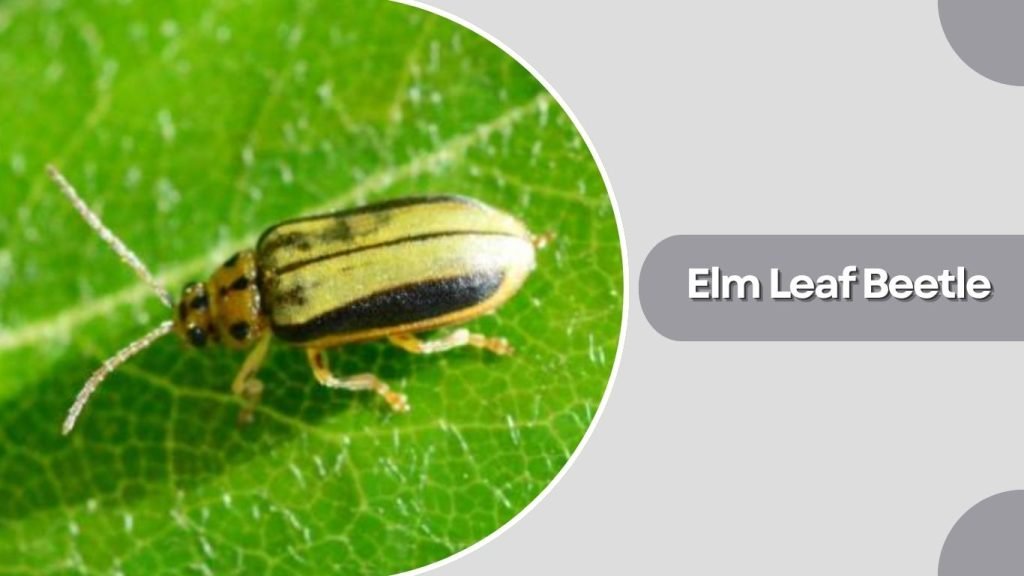
The elm leaf beetle is a common pest that specifically targets elm trees. It is well known for causing widespread defoliation, especially in urban landscapes where elm trees are planted for shade and ornament.
Identification
Elm leaf beetles are small, about 6–8 mm long, with a yellow to olive-green body. They typically have dark stripes or spots along their wing covers. Their larvae are black and slug-like in appearance.
Habitat and Distribution
They are widely found in North America, Europe, and parts of Asia. Elm leaf beetles thrive in cities, parks, and forests where elm trees are present.
Key Characteristics
- Yellow-green body with dark markings
- Larvae are dark and slug-like
- Strong preference for elm trees
- Common in urban environments
Diet and Damage
Both adults and larvae feed on elm leaves. Larvae skeletonize the leaves, while adults chew holes. Heavy infestations can lead to complete defoliation, weakening trees and making them more susceptible to disease.
5. Viburnum Leaf Beetle
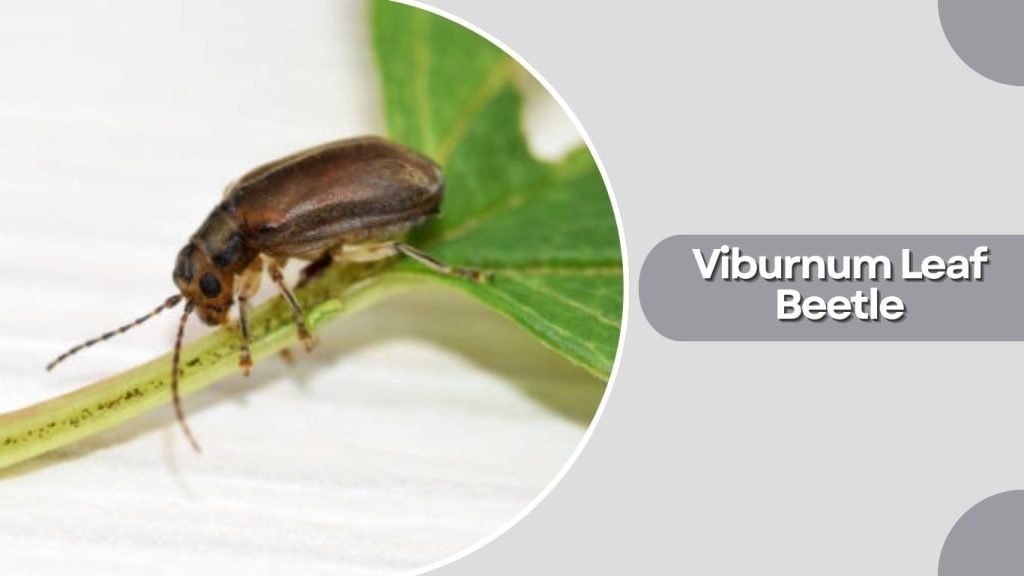
The viburnum leaf beetle is a destructive pest that primarily affects viburnum shrubs. It is especially damaging in ornamental landscapes where these plants are widely used.
Identification
These beetles are about 4–6 mm long with a brown to golden-brown body. They have a slightly elongated shape and a smooth surface. The larvae are greenish-yellow with black spots.
Habitat and Distribution
Viburnum leaf beetles are found mainly in North America and Europe. They are commonly seen in gardens, parks, and landscaped areas with viburnum plants.
Key Characteristics
- Brown to golden body
- Larvae with black spots
- Strong association with viburnum shrubs
- Seasonal life cycle
Diet and Damage
Both larvae and adults feed on leaves. Larvae cause heavy early-season damage by skeletonizing leaves, while adults continue feeding later. Severe infestations can completely defoliate shrubs, reducing plant health and appearance.
6. Flea Beetle
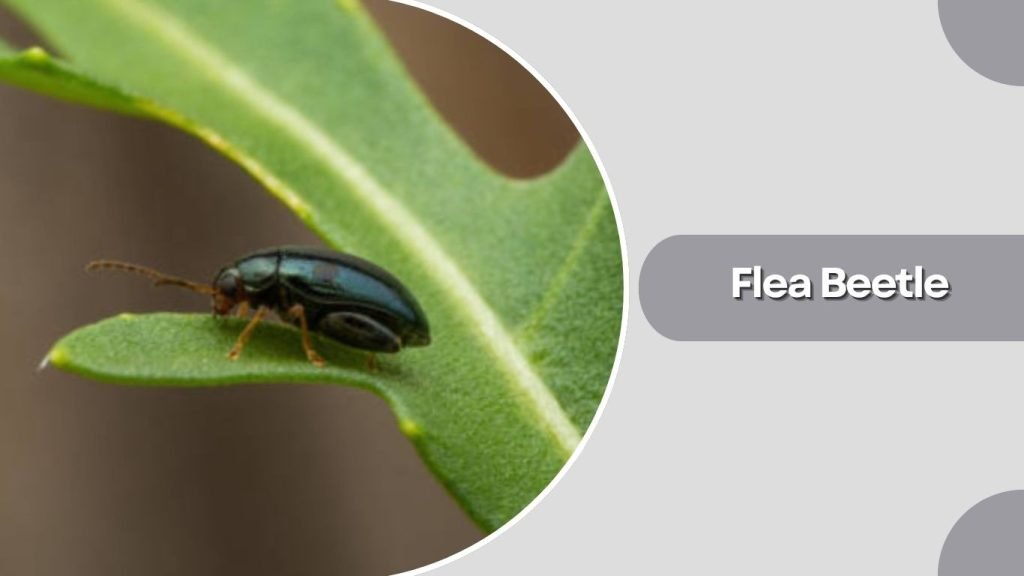
Flea beetles are a diverse group of small leaf beetles known for their jumping ability and their tendency to attack a wide variety of garden and agricultural crops. They are especially problematic for young plants, where even minor feeding can cause significant damage. Due to their size and quick movement, they can be difficult to spot and manage effectively.
Identification
Flea beetles are tiny, usually about 1.5–3 mm long, with a shiny black, brown, or metallic-colored body. Some species may have stripes or spots. Their most distinctive feature is their enlarged hind legs, which allow them to jump like fleas when disturbed. Their bodies are oval and smooth, giving them a glossy appearance. Larvae are small, white, and live in the soil, feeding on roots.
Habitat and Distribution
Flea beetles are found worldwide and thrive in a wide range of environments, including gardens, farms, and wild vegetation areas. They prefer warm, dry conditions and are especially active during the growing season. Common host plants include cabbage, radish, eggplant, potato, and tomato, making them a frequent pest in vegetable gardens and crop fields.
Key Characteristics
- Very small, shiny body
- Enlarged hind legs for jumping
- Wide range of host plants
- Active during warm weather
Diet and Damage
Adult flea beetles feed on leaves, creating numerous small holes that give the foliage a “shot-hole” appearance. This type of damage can severely affect seedlings, sometimes killing them before they are fully established. Larvae feed on roots, which can further weaken plants. In large numbers, flea beetles can stunt plant growth, reduce yields, and increase plant vulnerability to diseases. Effective control often requires early detection and protective measures, especially during the seedling stage.
7. Golden Tortoise Beetle
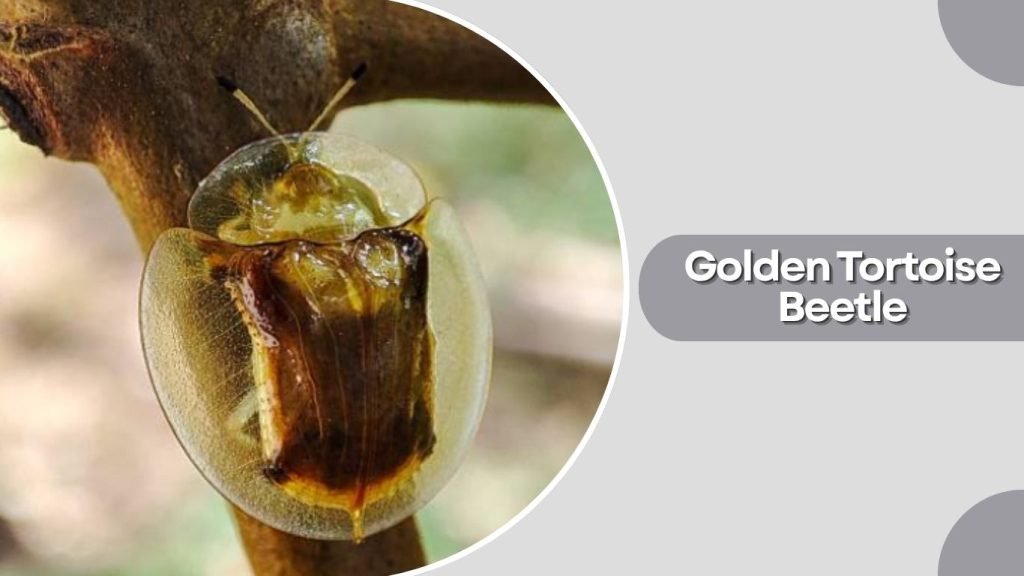
The golden tortoise beetle is a visually striking leaf beetle known for its shiny, metallic appearance. It is often considered one of the most beautiful beetles due to its reflective, gold-like shell. Despite its appealing look, it can still cause minor damage to certain plants.
Identification
Golden tortoise beetles are small, about 5–7 mm long, with a rounded, shield-like body. Their most distinctive feature is their metallic golden color, which can sometimes change to reddish or bronze depending on environmental conditions or stress. The edges of their bodies are transparent, giving them a unique, almost glass-like border.
Habitat and Distribution
These beetles are commonly found in North and South America. They inhabit gardens, fields, and wild areas where host plants such as morning glory and sweet potato are present. They prefer warm climates and are often seen during the growing season.
Key Characteristics
- Metallic gold, reflective body
- Rounded, shield-like shape
- Transparent margins around the body
- Color may change under stress
Diet and Damage
Golden tortoise beetles feed on the leaves of their host plants, creating small holes or irregular feeding patterns. While their damage is usually not severe, heavy infestations can lead to noticeable defoliation. In most cases, they are considered minor pests, but their presence can still affect the appearance and health of ornamental or garden plants.
8. Milkweed Leaf Beetle
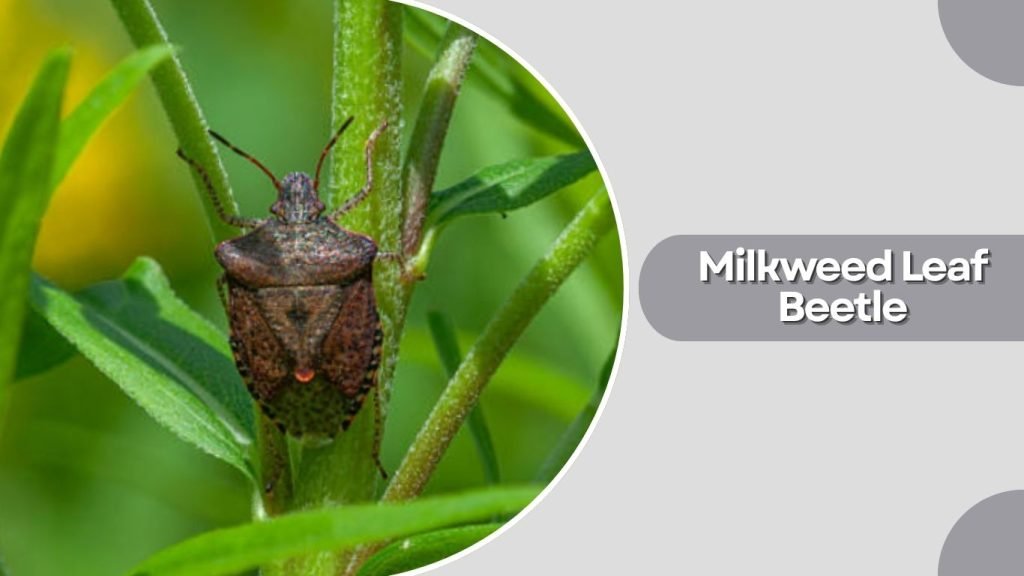
The milkweed leaf beetle is a brightly colored insect commonly found on milkweed plants. It is closely associated with these plants, which are also important for monarch butterflies. While visually appealing, this beetle can cause noticeable damage when present in large numbers.
Identification
Milkweed leaf beetles are medium-sized, about 8–12 mm long, with a striking red to orange body and black markings. Some species have solid red wing covers, while others may display black spots or patches. Their bodies are oval and slightly domed, with a smooth, glossy surface. The larvae are dark-colored, soft-bodied, and often found feeding alongside adults.
Habitat and Distribution
These beetles are widely distributed across North America and can also be found in parts of Central America. They are most commonly seen in open fields, meadows, roadsides, and gardens where milkweed plants grow. They prefer sunny environments and are especially active during the warmer months.
Key Characteristics
- Bright red or orange coloration with black markings
- Oval, smooth, and slightly domed body
- Strong dependence on milkweed plants
- Often found in groups on host plants
Diet and Damage
Milkweed leaf beetles feed almost exclusively on milkweed leaves, stems, and buds. Both adults and larvae consume plant tissue, creating irregular holes and sometimes skeletonizing leaves. While individual plants can tolerate some feeding, heavy infestations may weaken the plant and reduce its ability to support other wildlife, including monarch caterpillars. However, they are generally considered moderate pests and are often part of the natural ecosystem.
9. Dogbane Beetle
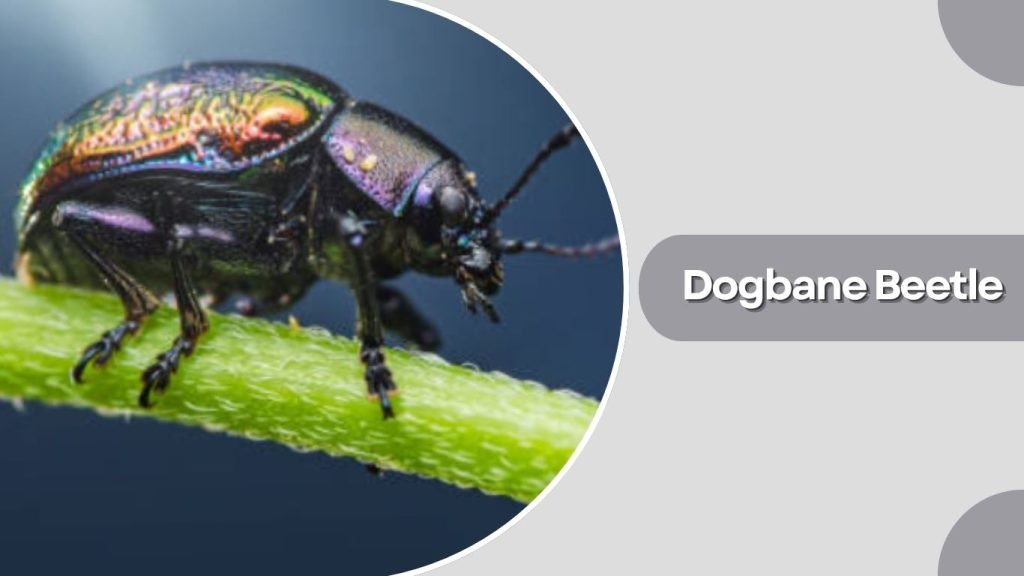
The dogbane beetle is a highly attractive leaf beetle known for its iridescent coloration. It is commonly found on dogbane plants and is often admired for its metallic sheen. Despite its beauty, it still feeds on plant foliage, though usually not in damaging numbers.
Identification
Dogbane beetles are small to medium-sized, typically about 7–11 mm long. They are easily recognized by their brilliant metallic coloration, which can appear blue, green, gold, or copper depending on the angle of light. Their bodies are elongated and smooth, with a shiny, reflective surface. The larvae are less noticeable, with a soft body and darker coloration.
Habitat and Distribution
These beetles are found primarily in North America. They inhabit fields, meadows, forest edges, and gardens where dogbane and related plants are present. They prefer warm, sunny environments and are most active during late spring and summer.
Key Characteristics
- Iridescent metallic coloration
- Smooth, elongated body
- Strong association with dogbane plants
- Often seen in sunny, open areas
Diet and Damage
Dogbane beetles feed on the leaves of dogbane plants, creating small holes and chewing patterns. While both adults and larvae consume foliage, the damage is usually minimal and does not significantly harm the plant. In most cases, they are not considered serious pests and are more valued for their striking appearance than for their impact on vegetation.
10. Cucumber Beetle
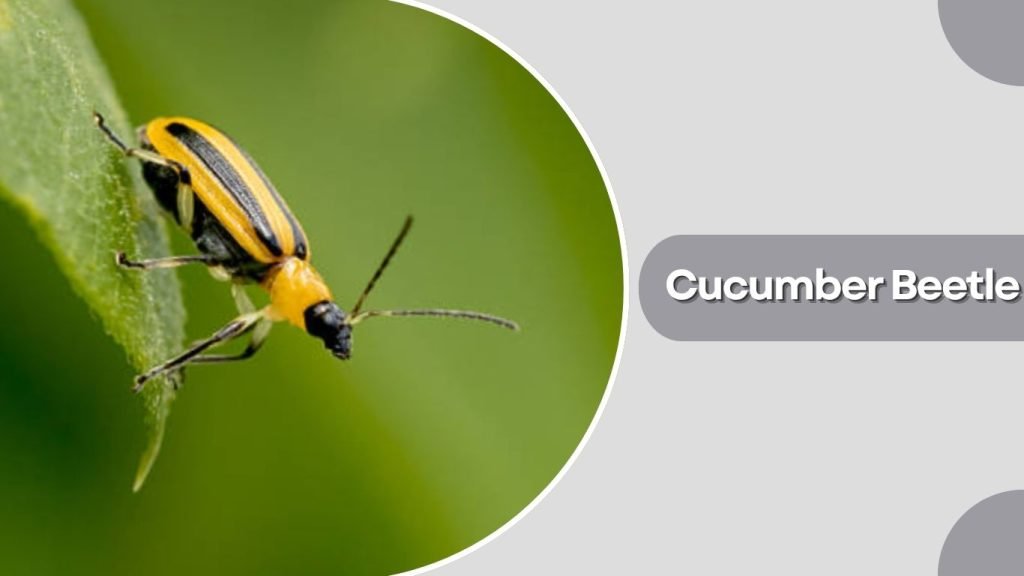
The cucumber beetle is a well-known agricultural pest that affects cucurbit crops such as cucumbers, squash, melons, and pumpkins. It is particularly harmful not only because of its feeding habits but also due to its ability to spread plant diseases.
Identification
Cucumber beetles are small, about 5–6 mm long, with a bright yellow body. Depending on the species, they may have black stripes (striped cucumber beetle) or black spots (spotted cucumber beetle) on their wing covers. Their bodies are oval and slightly elongated.
Habitat and Distribution
They are widely distributed across North America and other regions where cucurbit crops are grown. These beetles thrive in gardens, farms, and agricultural fields, especially during warm growing seasons.
Key Characteristics
- Yellow body with black stripes or spots
- Small, oval-shaped beetle
- Strong association with cucurbit plants
- Known carrier of plant diseases
Diet and Damage
Adult cucumber beetles feed on leaves, flowers, and fruits, creating holes and weakening the plant. More importantly, they can transmit bacterial wilt and other diseases, which can quickly kill plants and cause major crop losses.
11. Spinach Leaf Beetle
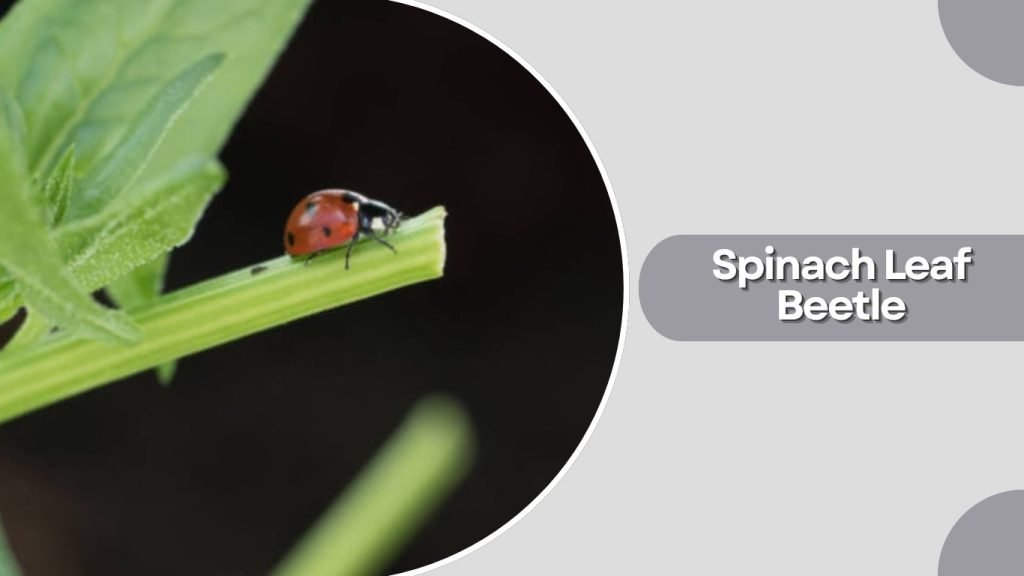
The spinach leaf beetle is a common pest that targets leafy vegetables, particularly spinach and related crops. It can be a problem in both home gardens and commercial farms due to its feeding habits.
Identification
Spinach leaf beetles are medium-sized, about 6–8 mm long, with a dark green to black body. They have a slightly oval shape and a smooth surface. Larvae are soft-bodied, greenish, and often found on the undersides of leaves.
Habitat and Distribution
They are found in many temperate regions around the world. Spinach leaf beetles thrive in gardens, vegetable fields, and areas where leafy greens are cultivated.
Key Characteristics
- Dark green to black body
- Oval, smooth shape
- Strong preference for leafy vegetables
- Active during growing seasons
Diet and Damage
Both adults and larvae feed on leaves, creating holes and irregular feeding patterns. Heavy infestations can lead to significant defoliation, reducing plant growth and making crops less marketable.
12. Mustard Leaf Beetle
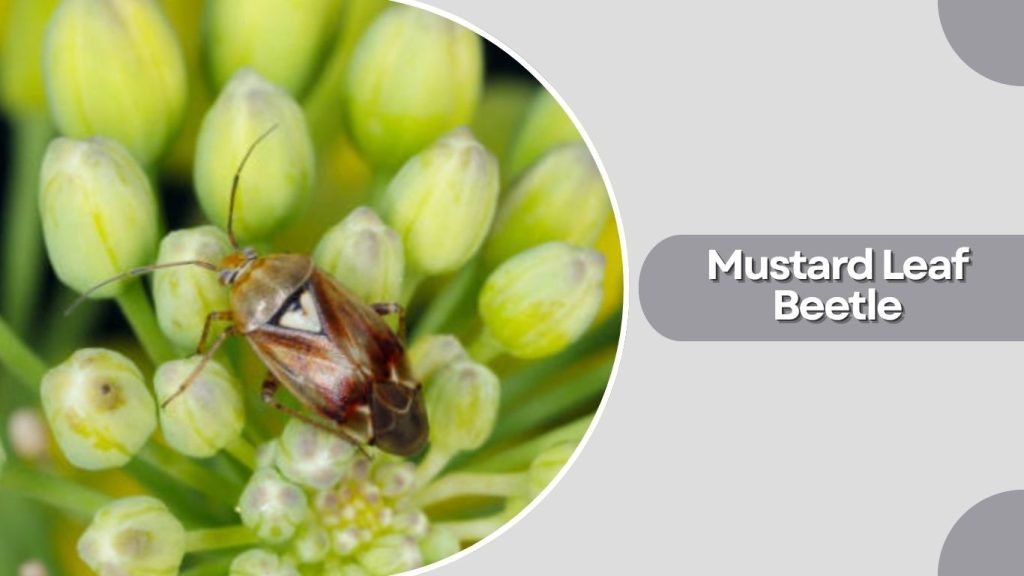
The mustard leaf beetle is a common pest that primarily targets plants in the mustard family, including cabbage, kale, and radish. It is known for its rapid feeding and ability to damage crops quickly, especially during the early growth stages.
Identification
Mustard leaf beetles are small to medium-sized, about 5–8 mm long, with a dark blue or green metallic sheen. Their bodies are oval and smooth, often reflecting light. Larvae are soft-bodied, dark-colored, and typically found feeding on leaves.
Habitat and Distribution
They are widely distributed across Europe, Asia, and other temperate regions. Mustard leaf beetles are commonly found in vegetable gardens, farms, and wild areas where cruciferous plants grow.
Key Characteristics
- Metallic blue or green body
- Oval, smooth shape
- Strong association with mustard-family plants
- Active during warm growing seasons
Diet and Damage
Both adults and larvae feed on leaves, creating holes and irregular damage patterns. Heavy infestations can lead to severe defoliation, weakening plants and reducing crop yield and quality.
13. Alder Leaf Beetle
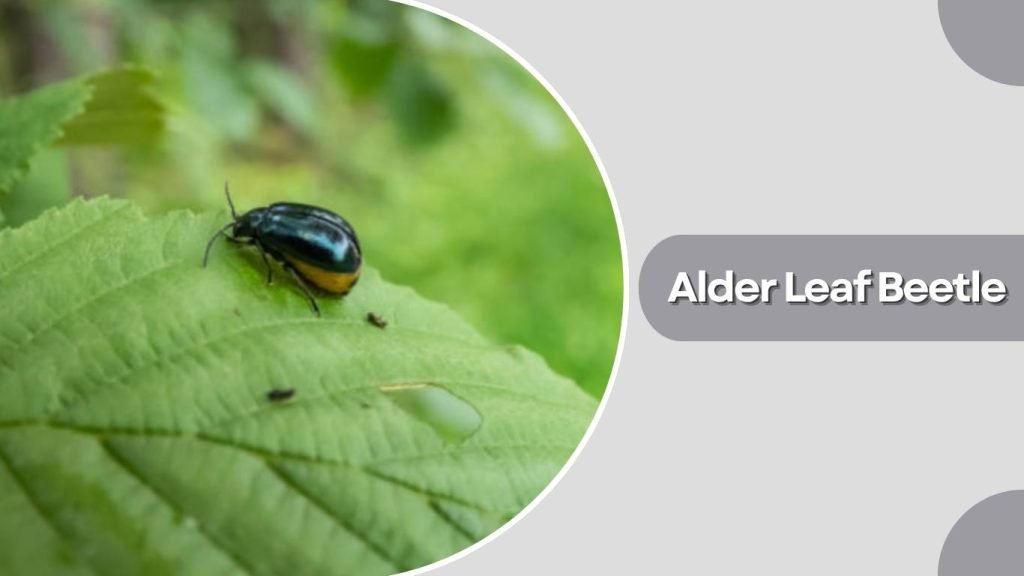
The alder leaf beetle is a notable pest that specifically targets alder trees. It is known for causing significant defoliation, especially in natural and urban landscapes where alder trees are present.
Identification
Alder leaf beetles are medium-sized, about 6–9 mm long, with a dark bluish-black body and a slightly shiny surface. They have an oval shape and smooth texture. Larvae are black and slug-like in appearance.
Habitat and Distribution
They are commonly found in Europe, North America, and parts of Asia. Alder leaf beetles thrive in forests, riverbanks, and wetland areas where alder trees grow.
Key Characteristics
- Dark bluish-black body
- Smooth, oval shape
- Strong preference for alder trees
- Larvae resemble small black slugs
Diet and Damage
Both adults and larvae feed on alder leaves. Larvae typically skeletonize leaves, while adults chew larger holes. Severe infestations can lead to complete defoliation, weakening trees and affecting their growth.
14. Willow Leaf Beetle
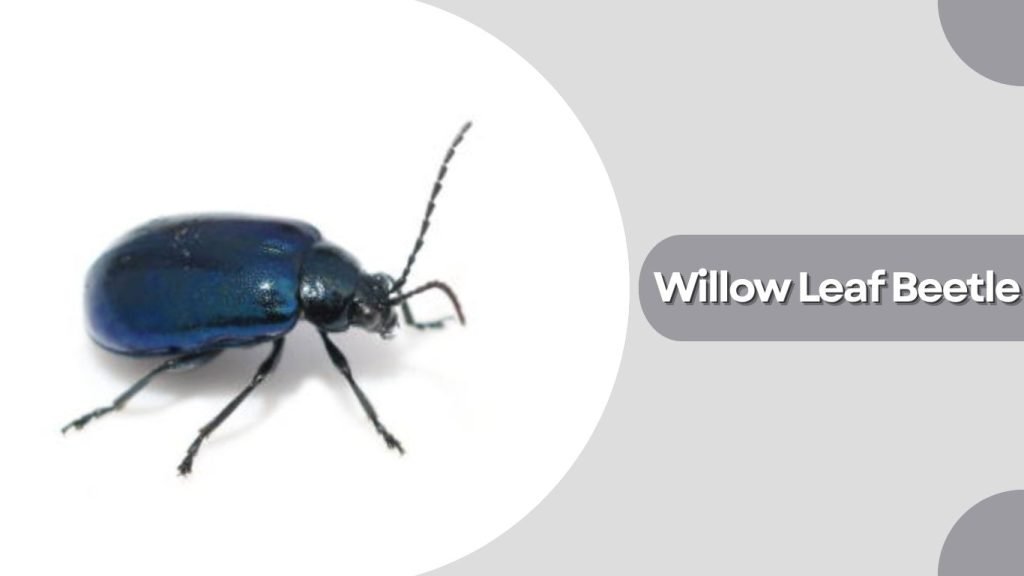
The willow leaf beetle is a specialized pest that primarily feeds on willow trees and closely related species such as poplar. It is well known for causing repeated defoliation, which can weaken trees over time. While mature trees may survive infestations, young or stressed trees are more vulnerable to long-term damage.
Identification
Willow leaf beetles are small to medium-sized, typically measuring about 5–7 mm in length. They often have a metallic blue, green, or bronze coloration, giving them a shiny appearance. Their bodies are oval and smooth, with a slightly domed shape. The larvae are dark, soft-bodied, and somewhat slug-like, usually found feeding in groups on leaves.
Habitat and Distribution
These beetles are widely distributed across Europe, Asia, and North America. They are commonly found in wetlands, riverbanks, forests, and urban landscapes where willow and poplar trees grow. Willow leaf beetles prefer moist environments and are especially active during spring and early summer.
Key Characteristics
- Metallic blue, green, or bronze body
- Oval, smooth, and slightly domed shape
- Strong association with willow and poplar trees
- Larvae often feed in clusters on leaves
Diet and Damage
Both adult beetles and larvae feed on the leaves of willow trees. Larvae tend to skeletonize leaves by eating the soft tissue between veins, while adults chew larger holes through the foliage. Repeated heavy infestations can lead to significant defoliation, reducing the tree’s ability to photosynthesize effectively. Over time, this can weaken the tree, making it more susceptible to environmental stress and disease
15. Cottonwood Leaf Beetle
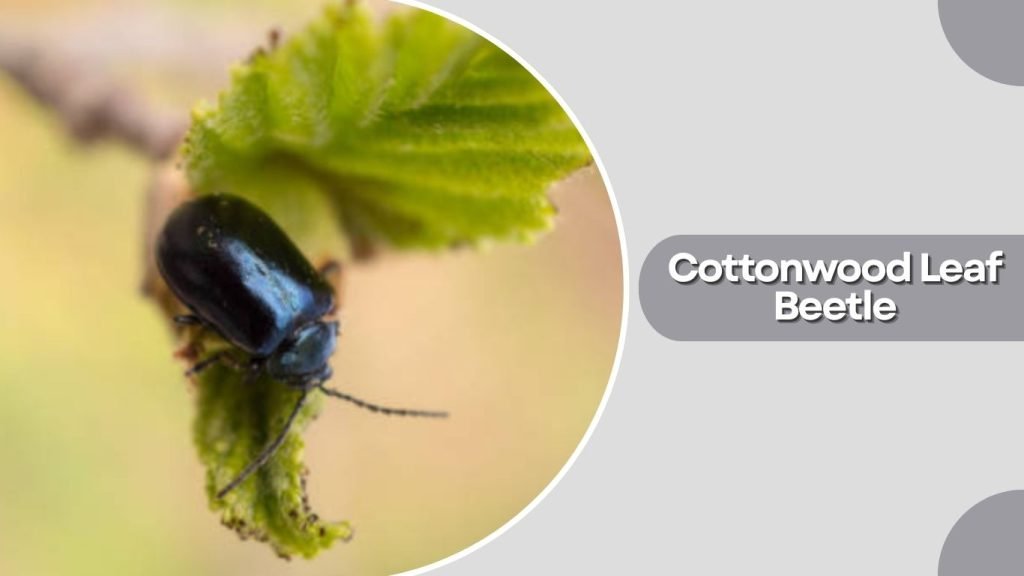
The cottonwood leaf beetle is a common pest that targets cottonwood, poplar, and willow trees. It is particularly known for its rapid population growth and ability to defoliate trees in a short period, especially during peak breeding seasons.
Identification
Cottonwood leaf beetles are medium-sized, about 6–10 mm long, with a striking yellow to orange body marked by black stripes or spots. Their bodies are oval and slightly elongated, with a smooth surface. The larvae are dark-colored with black heads and are often found feeding on leaves in groups.
Habitat and Distribution
This species is widely found across North America and parts of Europe and Asia. It thrives in forests, riverbanks, parks, and urban areas where cottonwood and poplar trees are present. Cottonwood leaf beetles prefer warm climates and are most active during late spring and summer.
Key Characteristics
- Bright yellow or orange body with black markings
- Oval and slightly elongated shape
- Strong association with cottonwood and poplar trees
- Rapid reproduction and population growth
Diet and Damage
Both adults and larvae feed heavily on leaves. Larvae skeletonize foliage, while adults create holes and chew larger sections. Severe infestations can lead to complete defoliation, which weakens trees and reduces their growth. Although mature trees may recover, repeated damage can significantly impact tree health and appearance, especially in landscaped or managed environments.
16. Eucalyptus Leaf Beetle
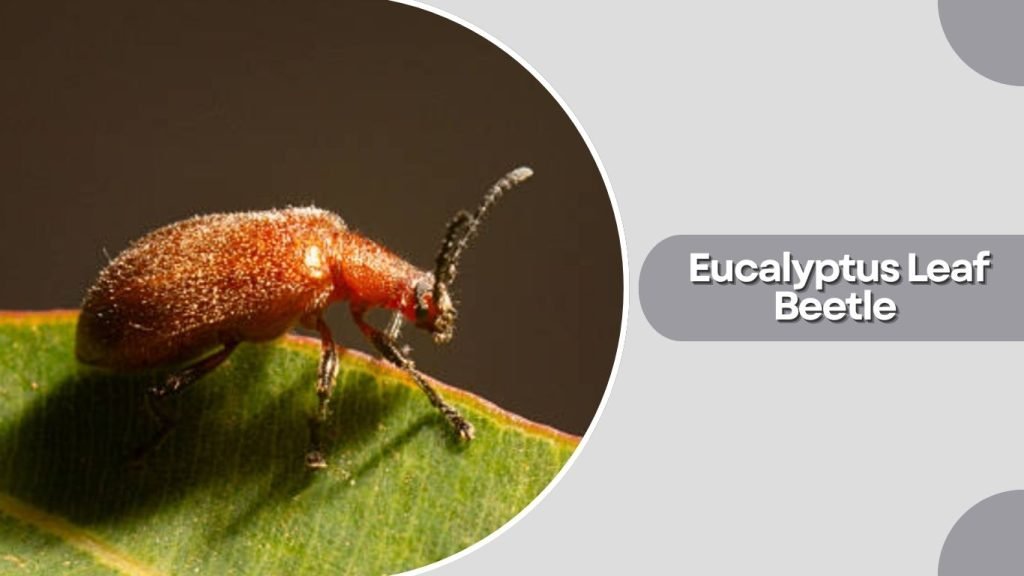
The eucalyptus leaf beetle is a pest that mainly affects eucalyptus trees, which are widely grown for timber, paper production, and ornamental use. It is especially problematic in regions where eucalyptus has been introduced outside its native habitat.
Identification
Eucalyptus leaf beetles are small to medium-sized, about 5–8 mm long. They typically have a pale yellow, cream, or light brown body, sometimes with darker markings. Their bodies are oval and smooth. Larvae are slug-like, soft-bodied, and often greenish or yellowish.
Habitat and Distribution
Native to Australia, these beetles have spread to many parts of the world, including Europe, Africa, and the Americas. They are commonly found in plantations, forests, and urban areas where eucalyptus trees grow.
Key Characteristics
- Pale yellow or light brown body
- Oval, smooth shape
- Strong association with eucalyptus trees
- Larvae resemble small slugs
Diet and Damage
Both adults and larvae feed on eucalyptus leaves. Larvae often skeletonize leaves, while adults chew irregular holes. Heavy infestations can lead to defoliation, reducing tree growth and overall health, especially in young plantations.
17. Rosemary Beetle
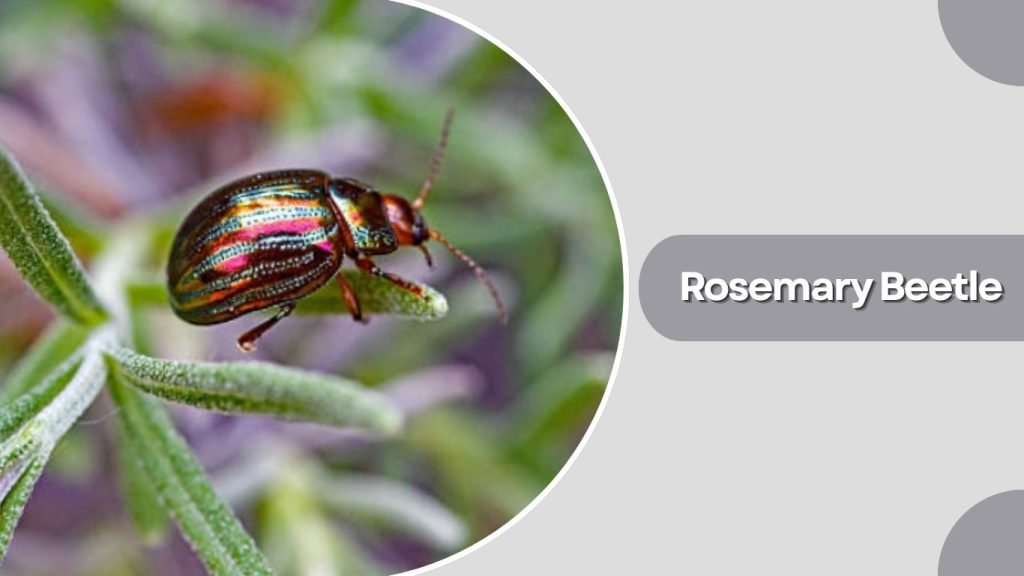
The rosemary beetle is a colorful leaf beetle that primarily targets aromatic herbs like rosemary and lavender. It is considered both a garden pest and an attractive insect due to its metallic coloration.
Identification
Rosemary beetles are small, about 6–8 mm long, with a shiny metallic green and purple striped body. Their oval shape and glossy surface make them easy to recognize. Larvae are grayish-white with darker markings.
Habitat and Distribution
Originally from southern Europe, rosemary beetles have spread to other regions, including parts of the UK and surrounding areas. They are commonly found in herb gardens, nurseries, and landscaped spaces.
Key Characteristics
- Metallic green and purple striped body
- Oval, shiny appearance
- Strong preference for rosemary and lavender
- Active in mild climates
Diet and Damage
Both adults and larvae feed on leaves and stems of herb plants. They create irregular holes and chew on soft plant tissues. Severe infestations can weaken plants and reduce their growth, particularly in cultivated herb gardens.
18. Blue Mint Beetle
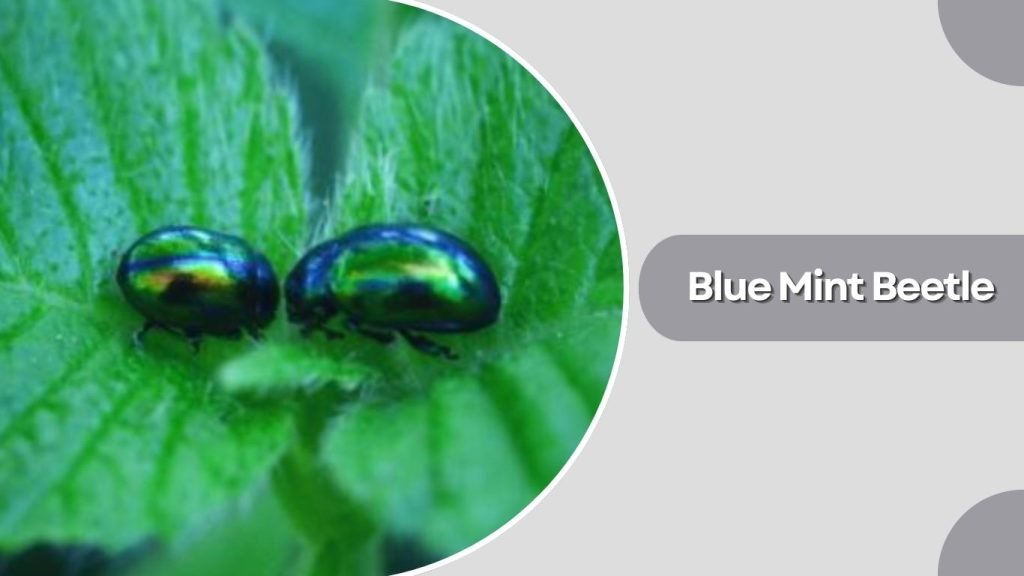
The blue mint beetle is a striking leaf beetle commonly associated with mint plants and other herbs. Although attractive due to its vibrant color, it can become a nuisance in herb gardens where it feeds on foliage.
Identification
Blue mint beetles are small, about 5–7 mm long, with a shiny metallic blue body that may sometimes appear greenish under certain lighting. They have an oval, slightly domed shape with a smooth, reflective surface. The larvae are soft-bodied, usually dark-colored, and found on leaves.
Habitat and Distribution
They are widely distributed across Europe and parts of Asia. Blue mint beetles are commonly found in gardens, meadows, and areas where mint and related plants grow. They prefer warm, sunny environments.
Key Characteristics
- Metallic blue or blue-green body
- Smooth, oval shape
- Strong association with mint plants
- Often found in herb gardens
Diet and Damage
Both adults and larvae feed on mint leaves, creating small holes and irregular feeding patterns. While damage is usually minor, heavy infestations can weaken plants and reduce leaf production, affecting herb quality.
19. Green Dock Beetle
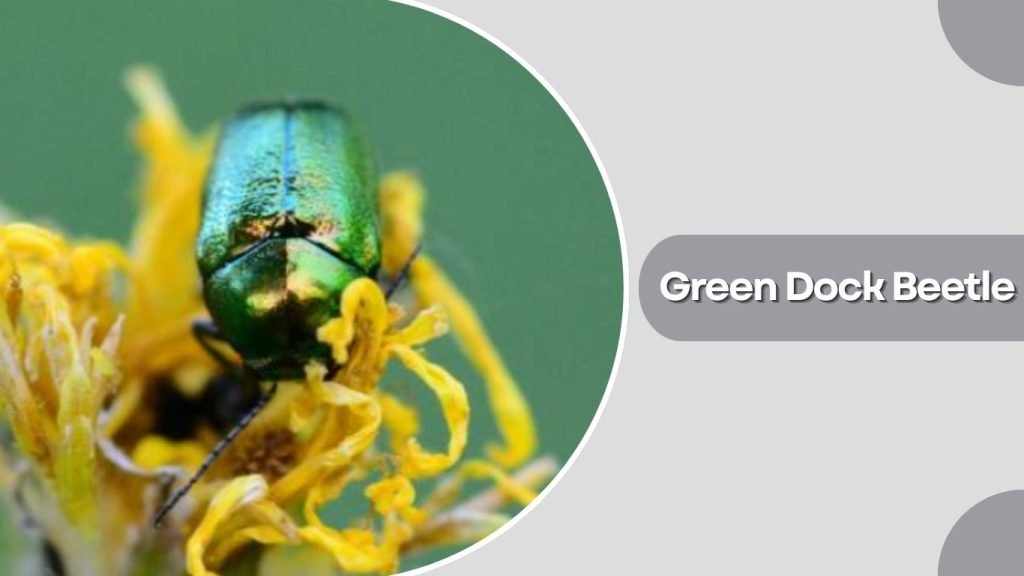
The green dock beetle is a common leaf beetle known for feeding on dock and sorrel plants. It is often found in wild vegetation but can also appear in gardens, especially where host plants are present.
Identification
Green dock beetles are medium-sized, about 6–10 mm long, with a bright metallic green body. Their smooth, oval shape and glossy finish make them easy to recognize. Larvae are dark, somewhat slug-like, and usually found on leaves.
Habitat and Distribution
They are widely found across Europe, Asia, and North America. Green dock beetles thrive in grasslands, meadows, roadsides, and gardens where dock plants grow abundantly.
Key Characteristics
- Bright metallic green coloration
- Smooth, oval body
- Strong association with dock and sorrel plants
- Common in open grassy areas
Diet and Damage
Adults and larvae feed on the leaves of dock plants, often creating holes and irregular patterns. In most cases, their feeding helps control weed populations, so they are not considered major pests.
20. Ambrosia Leaf Beetle
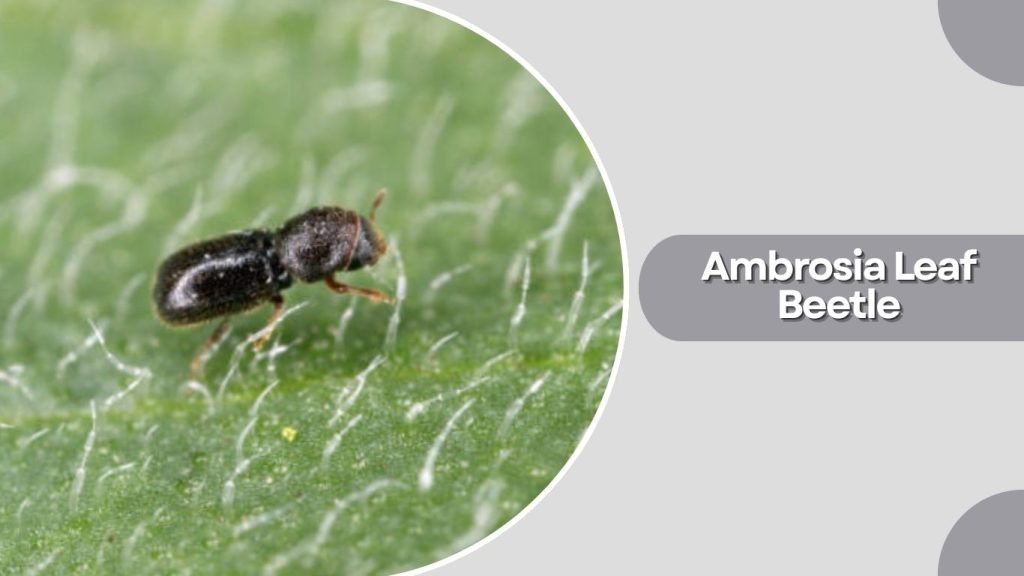
The ambrosia leaf beetle is a lesser-known species within the leaf beetle group, often associated with forest vegetation and certain host plants. While not as destructive as some agricultural pests, it still contributes to leaf damage in natural and managed environments.
Identification
Ambrosia leaf beetles are small to medium-sized, typically around 4–7 mm long. They usually have a brown to dark brown body with a slightly rough or textured surface. Their shape is oval and compact, and their coloration helps them blend into tree bark and foliage. Larvae are soft-bodied, pale, and found on leaves or nearby plant surfaces.
Habitat and Distribution
These beetles are found in forested regions across various parts of the world, including North America and Asia. They inhabit woodlands, tree canopies, and areas with dense vegetation. They are most active during warmer months when plant growth is abundant.
Key Characteristics
- Brown, textured body
- Oval and compact shape
- Common in forested environments
- Associated with tree foliage
Diet and Damage
Ambrosia leaf beetles feed on leaves, creating small holes and irregular chewing patterns. While their feeding usually does not cause severe damage, repeated infestations may weaken plant foliage and reduce overall plant vigor in localized areas.
21. Ragweed Leaf Beetle
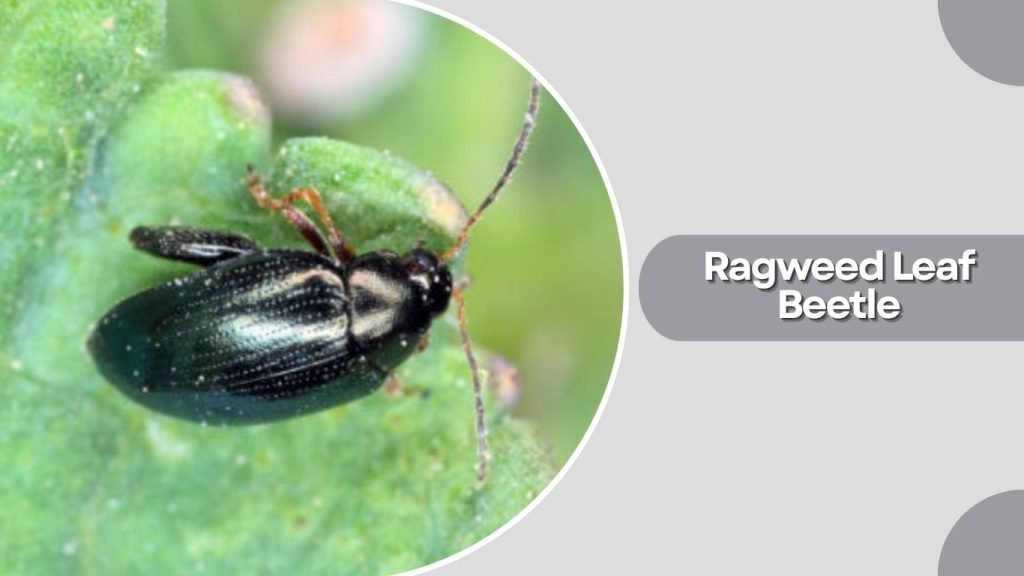
The ragweed leaf beetle is a beneficial leaf beetle species often known for feeding on ragweed plants, which are common allergens. It is sometimes considered helpful because it can reduce ragweed populations naturally.
Identification
Ragweed leaf beetles are medium-sized, about 6–10 mm long, with a yellow to orange body marked by black stripes along their wing covers. Their shape is oval and slightly elongated. Larvae are dark and soft-bodied, typically found feeding on leaves.
Habitat and Distribution
They are commonly found in North America and are associated with fields, roadsides, and disturbed areas where ragweed grows. These beetles prefer open, sunny environments.
Key Characteristics
- Yellow-orange body with black stripes
- Oval, elongated shape
- Strong association with ragweed plants
- Often found in open fields and roadsides
Diet and Damage
Both adults and larvae feed heavily on ragweed leaves, often skeletonizing them. This feeding can significantly reduce ragweed growth and pollen production. Because ragweed is a major source of seasonal allergies, these beetles are sometimes viewed as beneficial insects rather than harmful pests.
22. Grape Flea Beetle
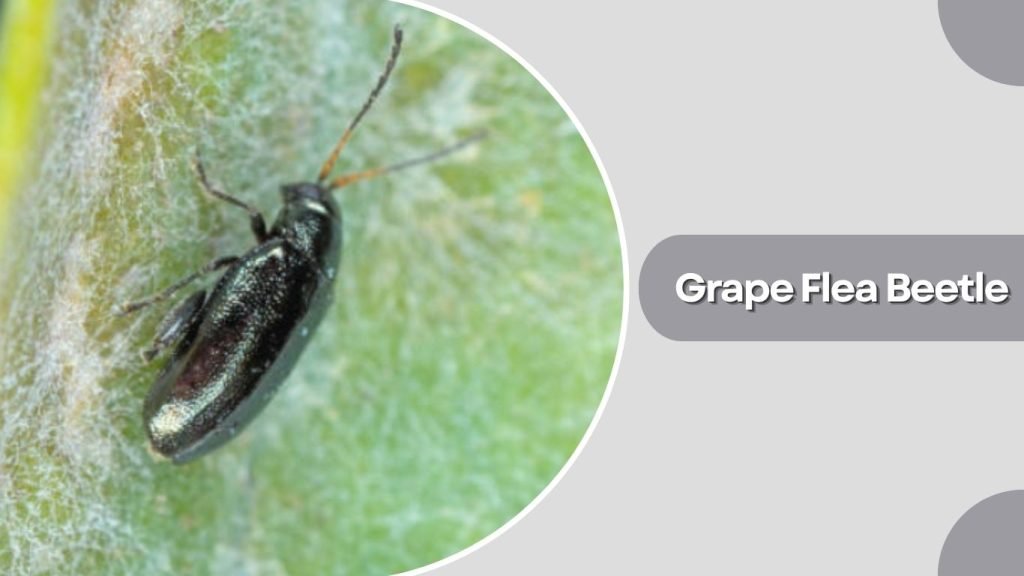
The grape flea beetle is an important pest of grapevines, especially during early spring when buds begin to develop. It can cause significant damage to vineyards by feeding on young buds before they fully open.
Identification
Grape flea beetles are small, about 3–5 mm long, with a shiny dark blue or black body. They have an oval shape and strong hind legs that allow them to jump when disturbed, similar to other flea beetles.
Habitat and Distribution
They are commonly found in North America and other grape-growing regions. Grape flea beetles thrive in vineyards, gardens, and areas where wild or cultivated grapevines are present.
Key Characteristics
- Shiny dark blue or black body
- Small size with jumping ability
- Strong association with grapevines
- Active in early spring
Diet and Damage
Adult beetles feed on developing buds, often hollowing them out before they can grow. This reduces the number of shoots and ultimately lowers grape yield. Early infestations can have a major impact on crop production.
23. Bean Leaf Beetle
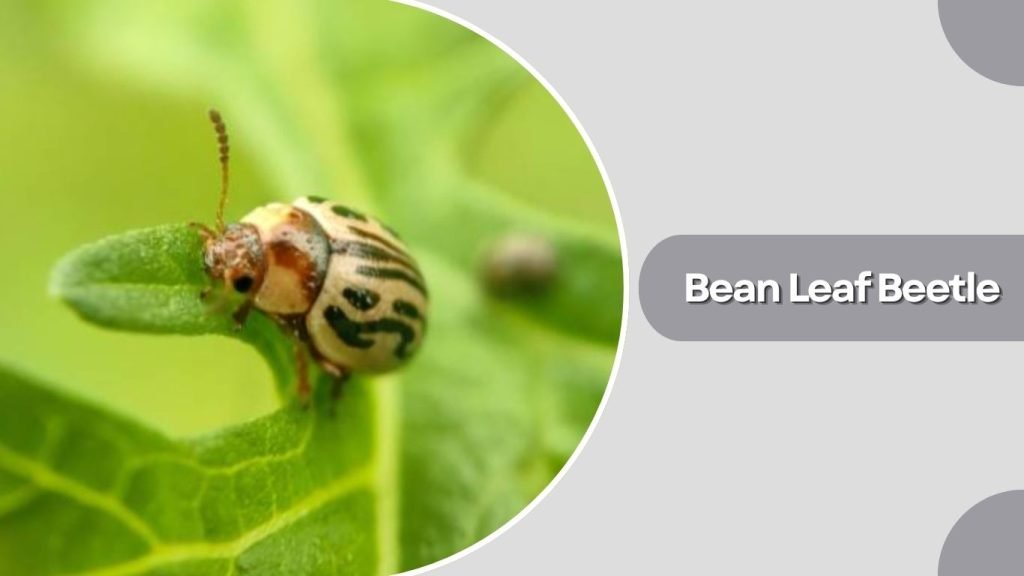
The bean leaf beetle is a common agricultural pest that primarily affects beans and other legume crops. It is known for both direct feeding damage and its ability to transmit plant diseases.
Identification
Bean leaf beetles are small, about 5–7 mm long, with a yellow, orange, or red body. They often have black spots and a distinct black triangle behind the head. Their bodies are oval and smooth.
Habitat and Distribution
They are widely found across North America and other regions where soybean and bean crops are grown. They are common in agricultural fields, gardens, and rural landscapes.
Key Characteristics
- Variable coloration with black spots
- Distinct triangular marking behind the head
- Strong association with bean crops
- Active during the growing season
Diet and Damage
Adults feed on leaves, creating round holes, while larvae feed on roots and nodules. They can also transmit plant viruses, making them particularly harmful. Heavy infestations can reduce plant health and crop yield significantly.
24. Pumpkin Beetle
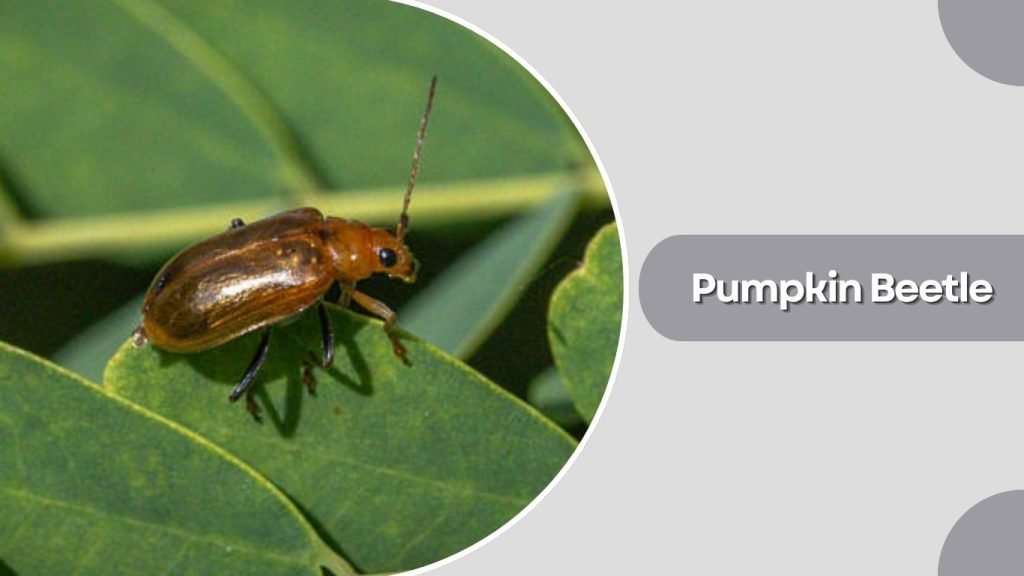
The pumpkin beetle is a common pest that targets cucurbit crops such as pumpkins, squash, gourds, and melons. It is especially problematic in warm regions where these crops are widely cultivated.
Identification
Pumpkin beetles are medium-sized, about 6–8 mm long, with a bright orange to reddish body. Some species may have black spots or markings. Their bodies are oval and slightly elongated, with a smooth surface.
Habitat and Distribution
They are widely distributed in Asia, Africa, and other tropical and subtropical regions. Pumpkin beetles are commonly found in farms, gardens, and fields where cucurbit plants are grown.
Key Characteristics
- Bright orange or reddish body
- Oval, smooth shape
- Strong association with cucurbit plants
- Active in warm climates
Diet and Damage
Both adults and larvae feed on leaves, flowers, and fruits. Adults chew holes in foliage, while larvae attack roots. Severe infestations can stunt plant growth and reduce fruit production.
25. Sunflower Leaf Beetle
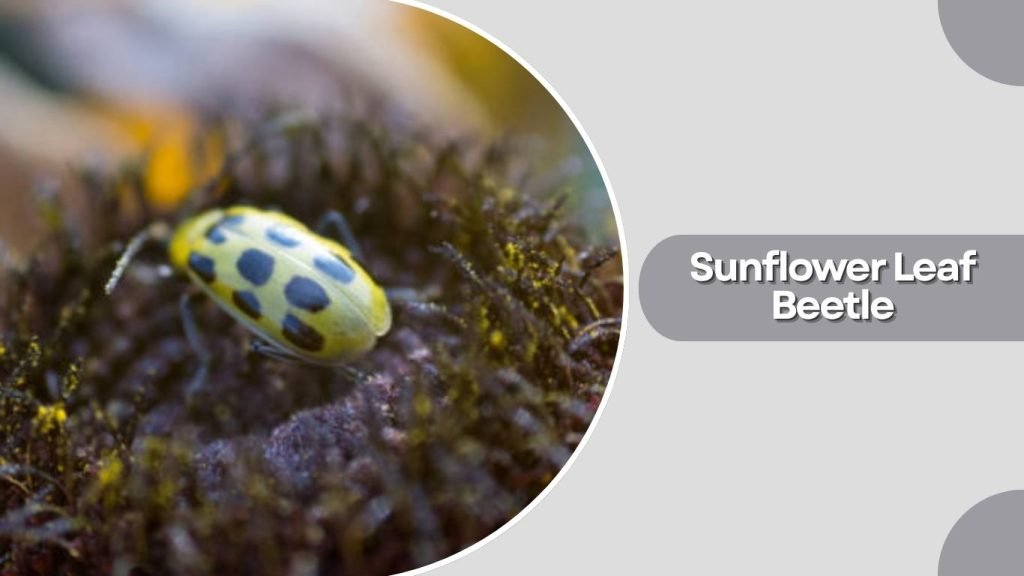
The sunflower leaf beetle is a significant pest of sunflower crops, particularly in regions where sunflowers are grown on a large scale. It can cause extensive defoliation if not properly managed.
Identification
Sunflower leaf beetles are medium-sized, about 6–8 mm long, with a yellow body and brown or reddish stripes along their wing covers. Their shape is oval and slightly elongated. Larvae are pale yellow to green with darker heads.
Habitat and Distribution
They are commonly found in North America and other sunflower-growing regions. These beetles thrive in agricultural fields, especially during the growing season.
Key Characteristics
- Yellow body with brown or reddish stripes
- Oval, slightly elongated shape
- Strong association with sunflower plants
- Active during crop growth stages
Diet and Damage
Both adults and larvae feed on sunflower leaves. Larvae often skeletonize the foliage, while adults chew larger holes. Heavy infestations can significantly reduce plant vigor and lower seed production.
26. Horsenettle Leaf Beetle
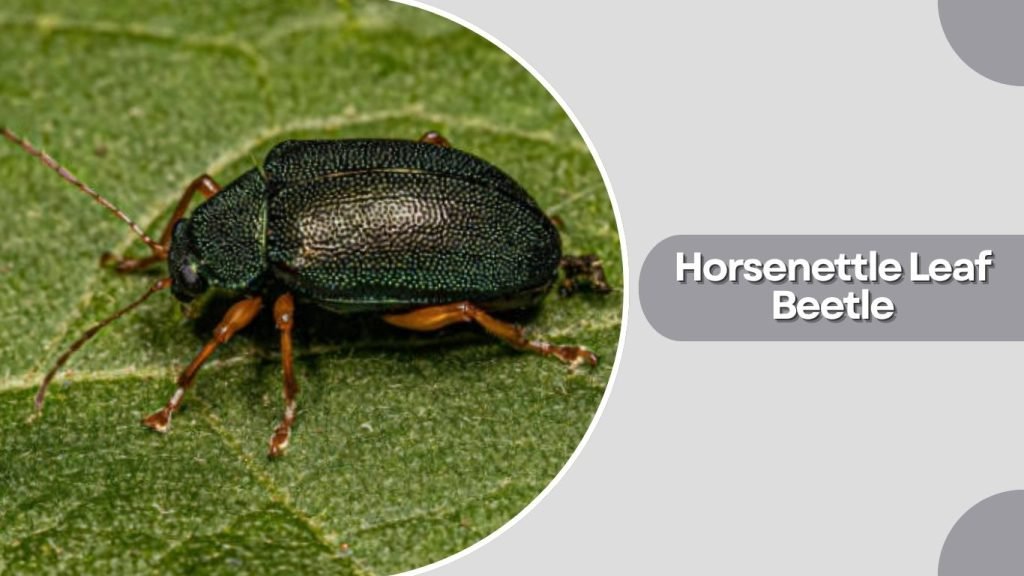
The horsenettle leaf beetle is a specialized species that primarily feeds on horsenettle and other plants in the nightshade family. It is often found in wild areas but can occasionally appear in agricultural settings where related crops are grown.
Identification
Horsenettle leaf beetles are small to medium-sized, about 6–9 mm long. They typically have a yellow to orange body with multiple black spots on their wing covers. Their oval shape and distinct spotted pattern make them relatively easy to identify.
Habitat and Distribution
They are commonly found in North America, particularly in fields, roadsides, and open areas where horsenettle grows. These beetles prefer sunny environments and are most active during warm months.
Key Characteristics
- Yellow-orange body with black spots
- Oval and smooth shape
- Strong association with horsenettle plants
- Common in open, sunny habitats
Diet and Damage
Both adults and larvae feed on horsenettle leaves, often creating holes and irregular feeding patterns. While they mainly target wild plants, they can occasionally affect related crops, though damage is usually limited.
27. Chrysomela Beetle
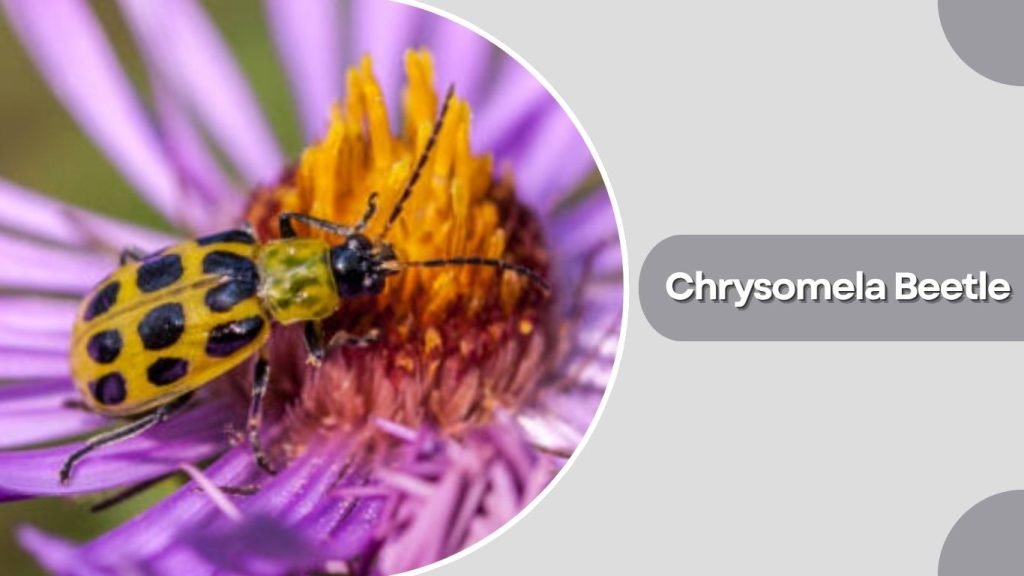
Chrysomela beetles are a group of colorful leaf beetles known for their association with trees like willows and poplars. They are often found in natural environments and can sometimes become pests when present in large numbers.
Identification
Chrysomela beetles are medium-sized, about 6–10 mm long, with bright coloration that may include red, orange, or yellow combined with black markings. Their bodies are oval, smooth, and slightly domed, often with a glossy finish.
Habitat and Distribution
They are widely distributed across Europe, Asia, and North America. These beetles are commonly found in forests, riverbanks, and areas where their host trees, such as willow and poplar, are abundant.
Key Characteristics
- Brightly colored body with contrasting markings
- Oval, smooth, and domed shape
- Associated with willow and poplar trees
- Often found in natural wooded areas
Diet and Damage
Both adults and larvae feed on leaves, creating holes and sometimes skeletonizing foliage. While occasional feeding is not highly damaging, large populations can cause noticeable defoliation and weaken trees over time.
