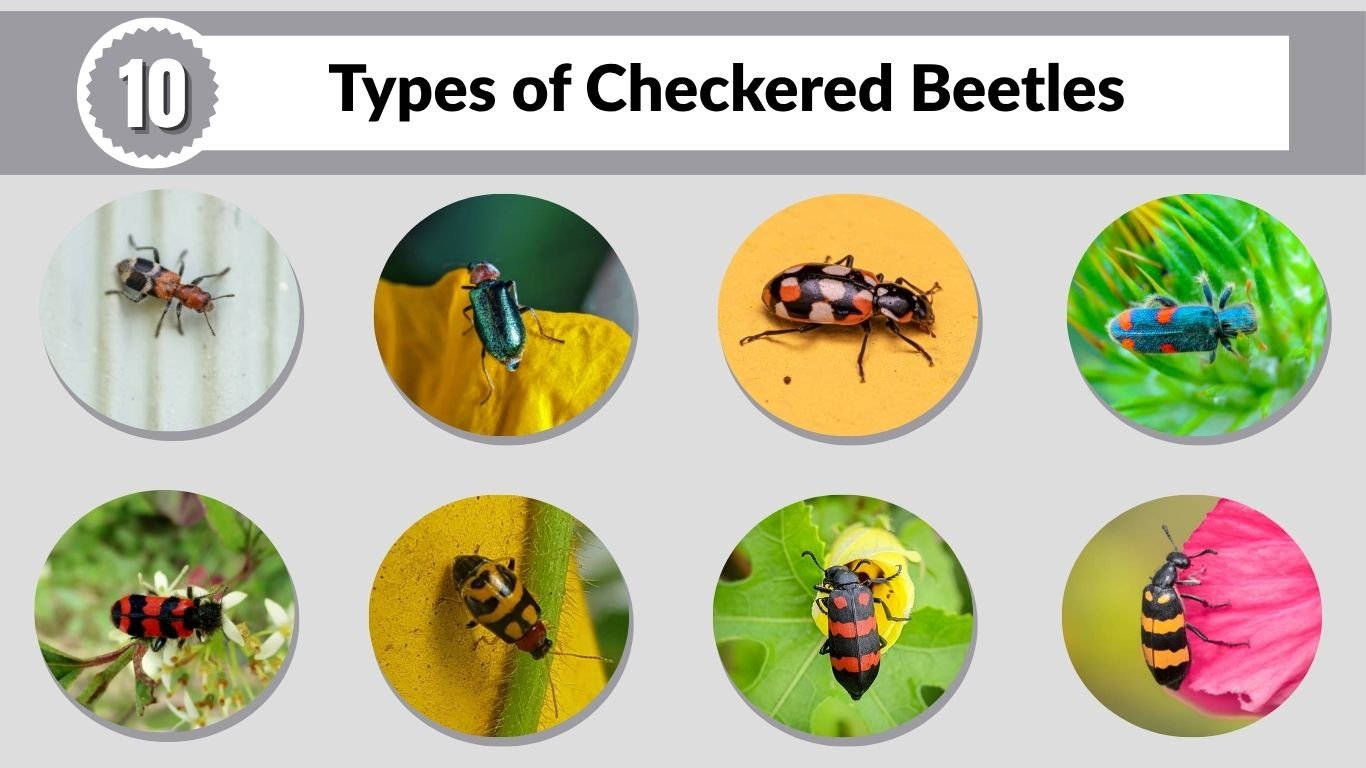
Checkered beetles are a diverse group of predatory insects known for their bright patterns and active hunting behavior. Commonly found on trees, flowers, and decaying wood, they play an important role in controlling insect populations. This guide introduces ten different types to help with easy identification through their key features, habitats, and behaviors.
1. Red-bellied Checkered Beetle
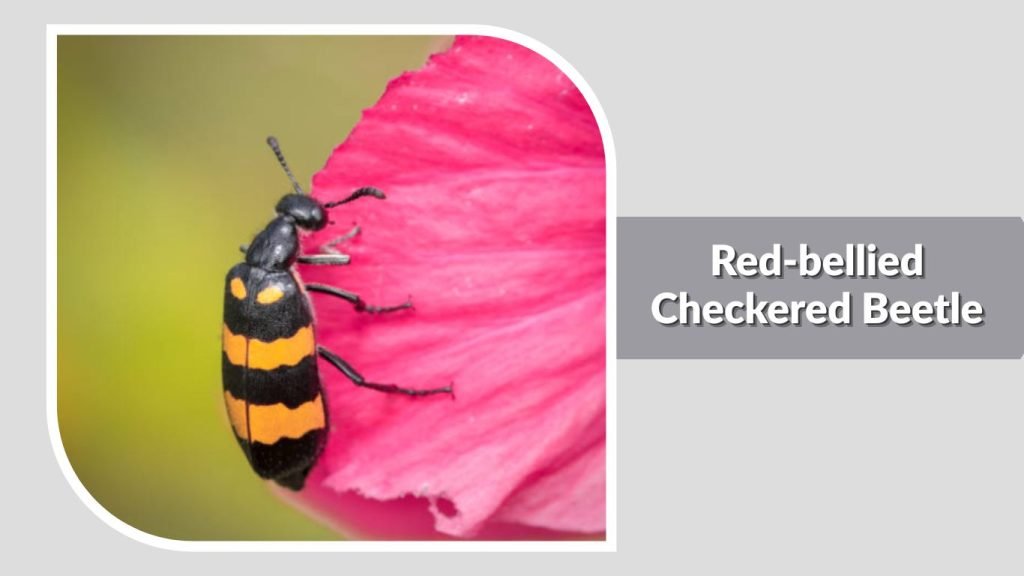
A striking beetle known for its contrasting coloration and active predatory behavior. It is commonly found on flowers, tree bark, or near wood-boring insects, where it helps control pest populations in natural ecosystems.
Characteristics
- Medium-sized beetle with an elongated body
- Black and red coloration with a distinct red underside
- Fine hairs covering parts of the body
- Strong legs adapted for quick movement
- Clubbed antennae typical of checkered beetles
Habitat and Distribution
The Red-bellied Checkered Beetle is found in various regions, especially in North America. It prefers forests, gardens, and areas with dead or dying wood. It is often seen on tree trunks or visiting flowers where prey insects are present.
Behavior and Diet
This beetle is an active predator, feeding mainly on wood-boring insects, larvae, and other small insects. It is often observed moving quickly across bark or flowers in search of prey. It may also feed on pollen occasionally.
Life Cycle
Females lay eggs in crevices of bark or near wood where prey insects are abundant. The larvae develop by feeding on other insect larvae, particularly those inside wood. After completing development, they pupate and emerge as adults ready to continue the cycle.
2. Hairy Checkered Beetle
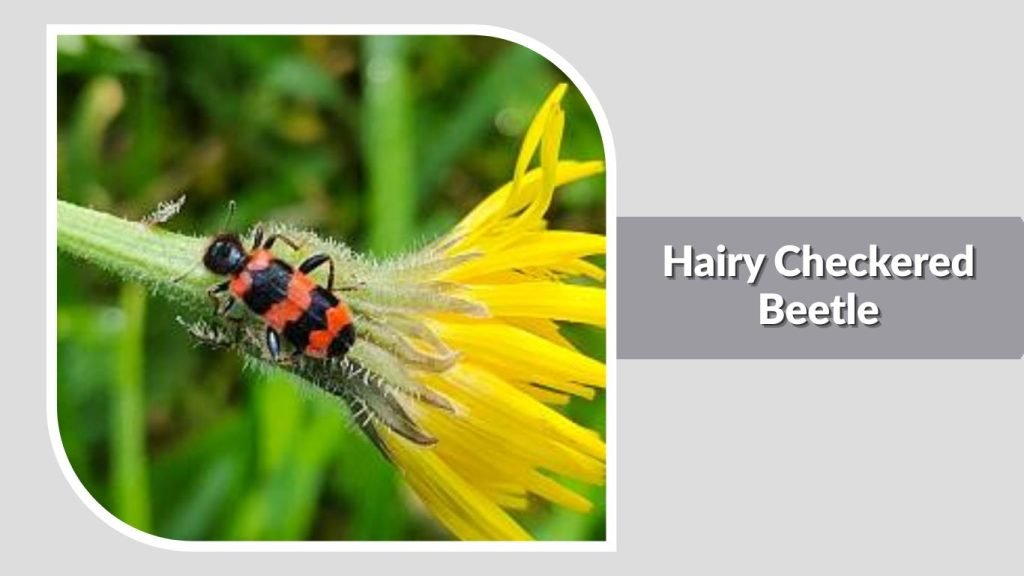
A distinctive species of checkered beetle recognized for its fine hair-like covering across the body. It is an active predator often found on tree bark or near decaying wood, where it helps control populations of wood-boring insects and other small arthropods.
Characteristics
- Medium-sized beetle with an elongated, slightly flattened body
- Covered with fine hairs giving it a fuzzy or textured appearance
- Dark coloration, often black or brown with subtle patterns
- Strong legs that allow quick and agile movement
- Clubbed antennae used for sensing prey and surroundings
Habitat and Distribution
The Hairy Checkered Beetle is commonly found in forests, woodlands, and areas with dead or decaying trees. It is distributed across regions of North America, Europe, and parts of Asia. This beetle prefers habitats where wood-boring insects are present, as these serve as a primary food source. It is often seen on tree trunks, under bark, or around fallen logs. During warmer months, it may also appear on flowers while searching for prey or additional food sources.
Behavior and Diet
This beetle is a fast-moving predator that actively hunts for insects. Its diet mainly consists of larvae and adult stages of wood-boring beetles, as well as other small insects found on bark or within decaying wood. It uses its keen sense of smell and touch to locate prey. Although primarily carnivorous, it may occasionally feed on pollen or nectar when available. It is most active during the day and can often be seen moving quickly across surfaces.
Life Cycle
Females lay eggs in cracks or crevices of tree bark, usually near areas where prey insects are abundant. After hatching, the larvae tunnel into wood or bark, feeding on other insect larvae. They go through several developmental stages before pupating within the wood. Once metamorphosis is complete, adult beetles emerge and continue their predatory lifestyle, contributing to natural pest control.
3. Two-spotted Checkered Beetle
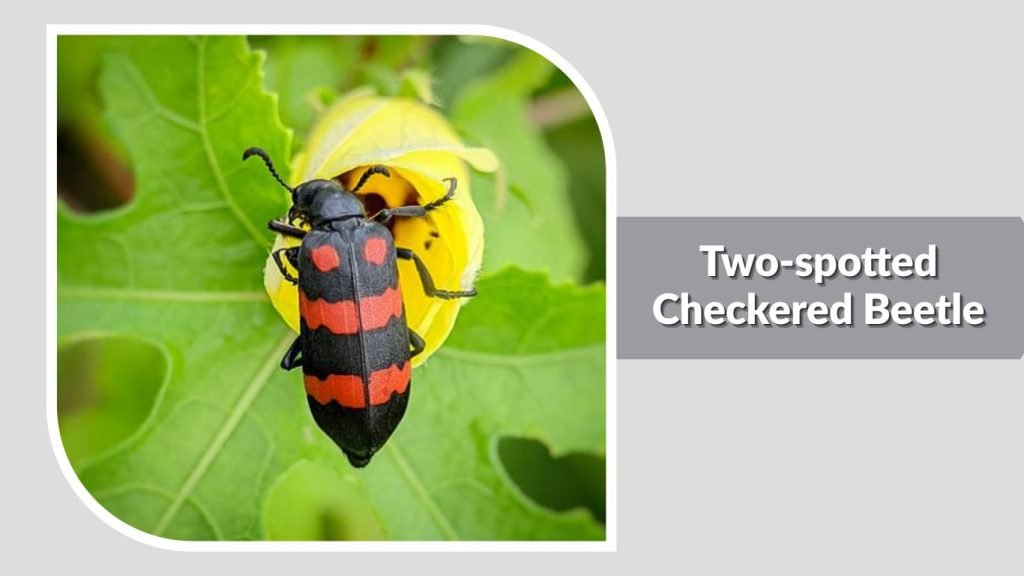
A visually distinctive checkered beetle recognized by the presence of two noticeable spots on its wing covers. It is an active predator commonly found on trees and vegetation, where it helps regulate populations of other insects, especially wood-boring species.
Characteristics
- Medium-sized beetle with an elongated, narrow body
- Dark base color with two distinct light or reddish spots on the elytra
- Smooth to slightly textured outer surface
- Strong legs adapted for rapid movement across bark and plants
- Clubbed antennae used for detecting prey and environmental cues
Habitat and Distribution
The Two-spotted Checkered Beetle is found in forests, woodlands, and garden areas across parts of North America and Europe. It prefers habitats with plenty of trees, especially those that are dead, dying, or infested with insects. It is often seen on tree trunks, branches, and occasionally on flowers where prey is abundant. This species thrives in warm conditions and is most visible during the active growing season.
Behavior and Diet
This beetle is a highly active predator, constantly moving in search of food. It primarily feeds on wood-boring beetles, larvae, and other small insects found on bark or within plant material. Its quick movements and sharp sensory abilities make it an efficient hunter. Although it mainly consumes insects, it may occasionally visit flowers and feed on pollen or nectar when prey is scarce.
Life Cycle
Females lay eggs in crevices of tree bark, particularly in areas where insect activity is high. After hatching, the larvae burrow into the wood or bark and feed on other insect larvae. They develop through several stages before pupating within protected spaces. Adult beetles emerge after metamorphosis and continue the cycle, contributing to natural pest control in their environment.
4. Banded Checkered Beetle
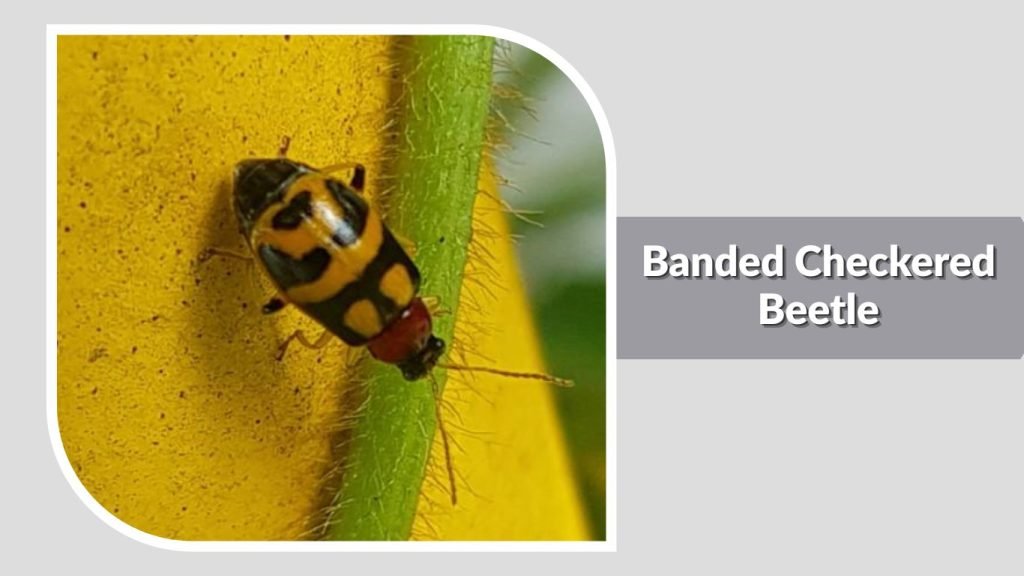
A colorful and active beetle known for the band-like patterns across its body. It is commonly found on flowers and tree bark, where it hunts other insects and contributes to natural pest control in forests and garden ecosystems.
Characteristics
- Medium-sized beetle with an elongated, cylindrical body
- Bright banded patterns, often red, yellow, or orange against a dark background
- Fine hairs covering parts of the body
- Strong legs for quick movement and gripping surfaces
- Clubbed antennae used to detect prey and surroundings
Habitat and Distribution
The Banded Checkered Beetle is widely distributed across North America and parts of Europe. It is commonly found in forests, meadows, gardens, and areas with flowering plants. This species is frequently seen on flowers, tree trunks, and shrubs, especially in warm seasons when insect activity is high. It prefers habitats where both prey insects and flowering plants are abundant.
Behavior and Diet
This beetle is an active predator, feeding mainly on small insects such as beetle larvae, flies, and other soft-bodied insects. It is often seen moving quickly across flowers or bark in search of prey. In addition to hunting, it may also consume pollen and nectar, especially when insect prey is limited. Its bright coloration may serve as a warning to predators.
Life Cycle
Females lay eggs in crevices of bark or near areas rich in insect activity. After hatching, the larvae develop by feeding on other insect larvae, often within wood or plant material. They pass through several growth stages before pupating in protected locations. Adult beetles emerge after metamorphosis and continue their predatory role in the ecosystem.
5. Blue Checkered Beetle
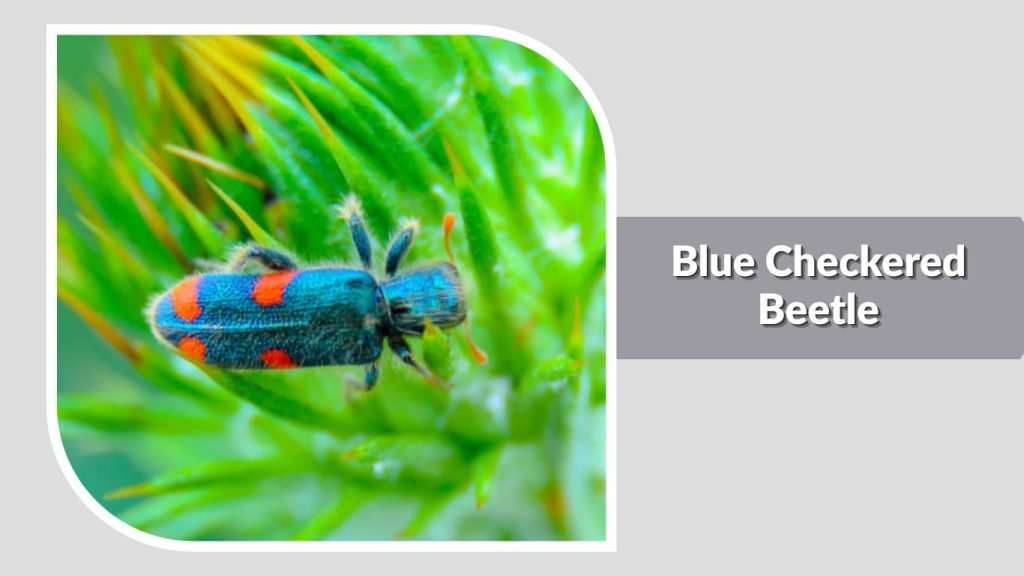
A striking checkered beetle known for its metallic blue coloration and active predatory nature. It is often seen on tree bark, logs, and sometimes flowers, where it hunts small insects and contributes to controlling pest populations in natural habitats.
Characteristics
- Medium-sized beetle with an elongated, slightly narrow body
- Metallic blue or bluish-green coloration with a shiny appearance
- Smooth outer surface with subtle texture
- Strong legs designed for quick and agile movement
- Clubbed antennae used for detecting prey
Habitat and Distribution
The Blue Checkered Beetle is commonly found in forests, woodlands, and areas with decaying or dead trees. It is distributed across parts of North America, Europe, and Asia. This species prefers habitats where wood-boring insects are present, as these provide a steady food source. It is often observed on tree trunks, fallen logs, and occasionally on flowering plants during warm seasons.
Behavior and Diet
This beetle is an active daytime predator, constantly searching for prey. It mainly feeds on wood-boring beetles, larvae, and other small insects found on bark or within decaying wood. Its bright metallic color can act as a warning to predators. In some cases, it may visit flowers and feed on pollen or nectar when insect prey is less available.
Life Cycle
Females lay eggs in cracks or crevices of tree bark, usually in areas with high insect activity. After hatching, the larvae burrow into wood or under bark, where they feed on other insect larvae. They go through several developmental stages before pupating in protected areas. Adult beetles emerge after metamorphosis and continue their predatory lifestyle, helping maintain ecological balance.
6. Striped Checkered Beetle
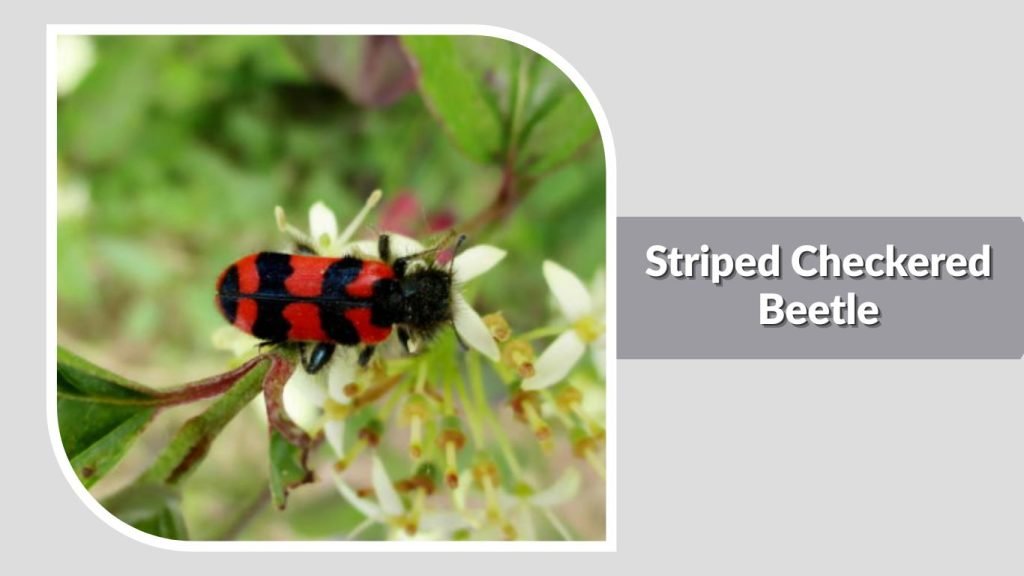
A visually appealing beetle known for its striped patterns and active hunting behavior. It is commonly found on tree bark, logs, and flowering plants, where it preys on small insects and helps maintain ecological balance.
Characteristics
- Medium-sized beetle with an elongated, slightly flattened body
- Distinct stripe patterns running along the wing covers
- Coloration often includes combinations of black, yellow, or reddish tones
- Smooth to lightly textured outer surface
- Strong legs for fast movement and gripping surfaces
- Clubbed antennae adapted for sensing prey
Habitat and Distribution
The Striped Checkered Beetle is widely distributed across forests, grasslands, and wooded areas in North America, Europe, and parts of Asia. It prefers habitats with dead or decaying wood, as these areas attract wood-boring insects. This beetle is often seen on tree trunks, fallen logs, and occasionally on flowers during warm seasons when insect activity is high.
Behavior and Diet
This beetle is an active predator, constantly moving in search of food. It mainly feeds on wood-boring beetles, larvae, and other small insects found on bark or within wood. It uses its keen senses to locate prey and capture it quickly. In addition to its predatory habits, it may occasionally visit flowers and feed on pollen or nectar when insect prey is limited.
Life Cycle
Females lay eggs in cracks and crevices of tree bark, particularly in areas where prey insects are abundant. After hatching, the larvae develop by feeding on other insect larvae inside wood or under bark. They pass through several stages before pupating in protected spaces. Once metamorphosis is complete, adult beetles emerge and continue their role as active predators in the ecosystem.
7. Spotted Checkered Beetle
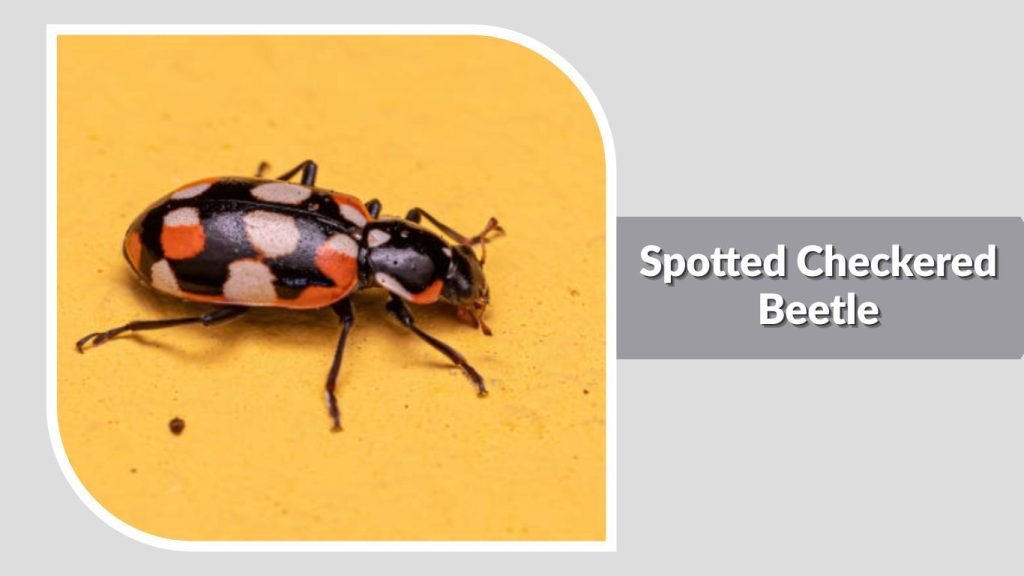
A distinctive beetle recognized for its spotted pattern across the body. It is an active predator often seen on tree bark, logs, and flowering plants, where it hunts small insects and contributes to natural pest control in various ecosystems.
Characteristics
- Medium-sized beetle with an elongated, oval body
- Dark base color with clearly visible light or reddish spots
- Smooth to slightly textured outer surface
- Strong legs that allow quick and agile movement
- Clubbed antennae used for detecting prey and surroundings
Habitat and Distribution
The Spotted Checkered Beetle is found in forests, woodlands, and garden environments across North America, Europe, and parts of Asia. It prefers habitats with dead or decaying wood, as these areas attract wood-boring insects. It is often observed on tree trunks, fallen logs, and occasionally on flowers during warm seasons.
Behavior and Diet
This beetle is an active predator that spends much of its time searching for prey. It primarily feeds on wood-boring beetles, larvae, and other small insects found on bark or within decaying wood. Its quick movements and strong sensory abilities make it an efficient hunter. It may also visit flowers and feed on pollen or nectar when prey is less available.
Life Cycle
Females lay eggs in cracks or crevices of bark, usually near areas rich in insect activity. After hatching, the larvae develop by feeding on other insect larvae inside wood or under bark. They go through several growth stages before pupating in protected areas. Adult beetles emerge after metamorphosis and continue their predatory role in the ecosystem.
8. Metallic Checkered Beetle
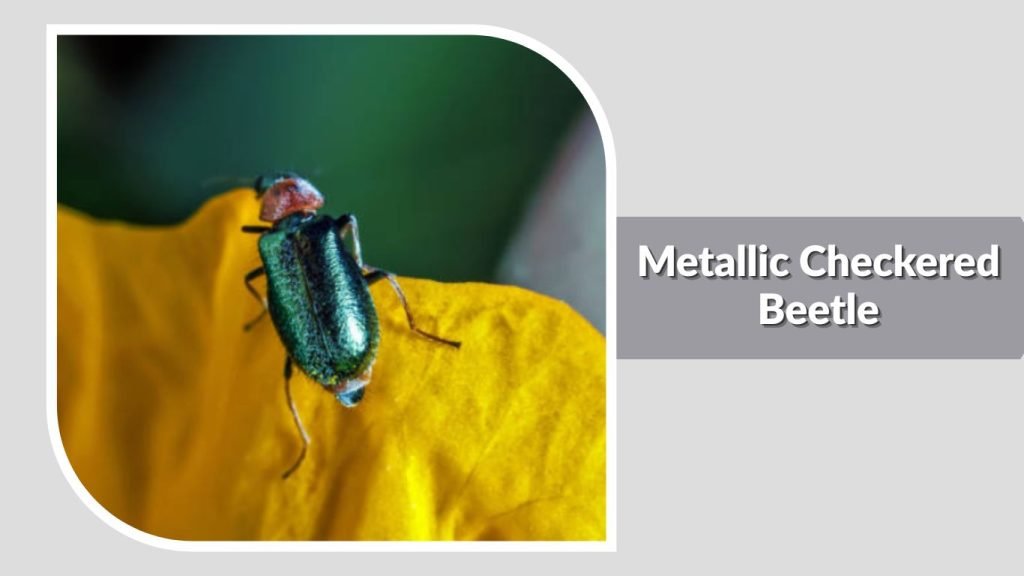
A visually striking beetle known for its shiny, metallic appearance and active predatory behavior. It is commonly found on tree bark, logs, and occasionally flowers, where it hunts small insects and helps control pest populations in natural ecosystems.
Characteristics
- Medium-sized beetle with an elongated, narrow body
- Bright metallic coloration, often blue, green, or bronze
- Smooth and glossy outer surface that reflects light
- Strong legs adapted for fast and agile movement
- Clubbed antennae used for sensing prey and surroundings
Habitat and Distribution
The Metallic Checkered Beetle is widely distributed across forests, woodlands, and open natural areas in North America, Europe, and parts of Asia. It prefers habitats with dead or decaying wood, which attract wood-boring insects. This beetle is often seen on tree trunks, fallen logs, and sometimes on flowering plants, especially during warm seasons when insect activity is high.
Behavior and Diet
This species is an active daytime predator, constantly searching for prey. It mainly feeds on wood-boring beetles, larvae, and other small insects found on bark or within wood. Its metallic coloration may serve as a warning to predators. In addition to hunting, it may occasionally feed on pollen or nectar when insect prey is scarce.
Life Cycle
Females lay eggs in crevices of tree bark, particularly in areas where prey insects are abundant. After hatching, the larvae burrow into wood or under bark and feed on other insect larvae. They pass through several developmental stages before pupating in protected areas. Adult beetles emerge after metamorphosis and continue their role as active predators in the ecosystem.
9. Black Checkered Beetle

A common and adaptable checkered beetle known for its dark coloration and strong predatory behavior. It is frequently found on tree bark, logs, and vegetation, where it actively hunts insects and helps control pest populations in natural environments.
Characteristics
- Medium-sized beetle with an elongated, slightly cylindrical body
- Uniform black or very dark brown coloration
- Smooth to lightly textured outer surface
- Strong legs designed for fast and agile movement
- Clubbed antennae used for detecting prey
Habitat and Distribution
The Black Checkered Beetle is widely distributed across forests, woodlands, and grasslands in North America, Europe, and parts of Asia. It prefers habitats with dead or decaying wood, where wood-boring insects are abundant. It is often found on tree trunks, under bark, or on fallen logs. During warmer months, it may also appear on flowers where insect activity is high.
Behavior and Diet
This beetle is an active predator, constantly moving in search of prey. It primarily feeds on wood-boring beetles, larvae, and other small insects found on bark or within wood. Its dark coloration provides camouflage against tree bark, helping it approach prey unnoticed. It may occasionally consume pollen or nectar when insect prey is scarce.
Life Cycle
Females lay eggs in cracks or crevices of bark, especially in areas rich in insect activity. After hatching, the larvae develop by feeding on other insect larvae inside wood or beneath bark. They pass through several developmental stages before pupating in protected areas. Adult beetles emerge after metamorphosis and continue their predatory role in the ecosystem.
10. Orange-marked Checkered Beetle
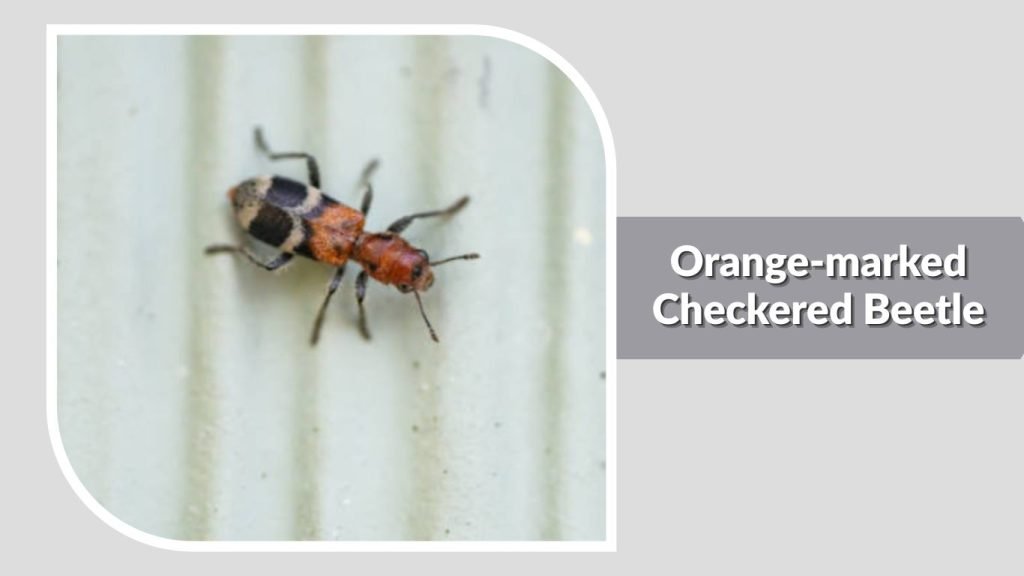
A colorful and easily recognizable checkered beetle known for its bright orange markings contrasted against a darker body. It is commonly found on trees and flowering plants, where it actively hunts insects and contributes to natural pest control.
Characteristics
- Medium-sized beetle with an elongated, slightly narrow body
- Dark base color with distinct orange or reddish markings
- Smooth to slightly textured outer surface
- Strong legs for quick movement and firm grip on surfaces
- Clubbed antennae used to detect prey and environmental cues
Habitat and Distribution
The Orange-marked Checkered Beetle is found across forests, woodlands, and garden environments in North America and parts of Europe. It prefers habitats with dead or decaying wood, as these areas attract wood-boring insects. It is often seen on tree trunks, branches, and sometimes on flowers, especially during warm seasons when insect activity is high.
Behavior and Diet
This beetle is an active predator, constantly searching for prey. It mainly feeds on wood-boring beetles, larvae, and other small insects found on bark or within wood. Its bright markings may serve as a warning to predators. In addition to hunting, it may occasionally feed on pollen or nectar when prey is limited.
Life Cycle
Females lay eggs in crevices of bark or near areas with high insect activity. After hatching, the larvae develop by feeding on other insect larvae within wood or under bark. They go through several growth stages before pupating in protected spaces. Adult beetles emerge after metamorphosis and continue their role as effective predators in the ecosystem.
FAQs
What are checkered beetles?
Checkered beetles belong to the family Cleridae and are known for their brightly patterned bodies and predatory nature. They are often found on tree bark, flowers, and wood, where they hunt other insects and help maintain ecological balance.
Are checkered beetles harmful to humans?
Checkered beetles are not harmful to humans. They do not bite or sting and are generally harmless. In fact, they are beneficial because they help control populations of pest insects, especially those that damage wood or plants.
What do checkered beetles eat?
Most checkered beetles are predators that feed on other insects, including larvae and wood-boring beetles. Some species may also consume pollen or nectar when prey is scarce, but their primary diet consists of small insects.
Where can checkered beetles be found?
They are commonly found in forests, gardens, and areas with trees or decaying wood. Many species are seen on tree trunks, logs, or flowers, especially during warm seasons when insect activity is high.
Why are checkered beetles important?
Checkered beetles are important because they act as natural pest controllers. By feeding on harmful insects like wood-borers and larvae, they help protect trees and plants, contributing to healthier ecosystems.