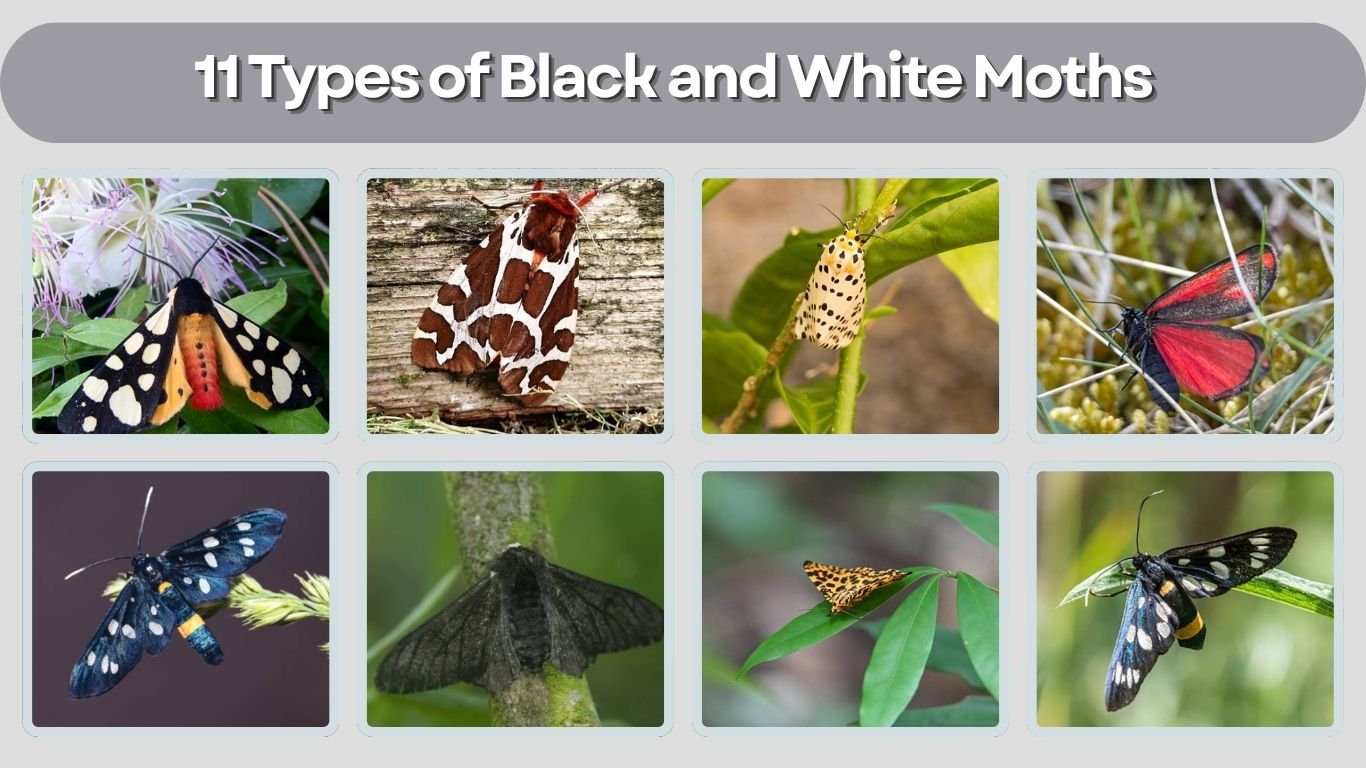
Black and white moths are some of the most visually striking insects, known for their bold contrasts and unique patterns. These moths often use their coloration for camouflage, blending into tree bark, leaves, or light surfaces, while others display high-contrast markings to warn or confuse predators.
In this guide, you’ll explore 11 types of black and white moths, along with key details about their identification, color patterns, habitat, diet, and behavior. This will help you easily recognize these beautiful and diverse species in nature.
1. Black Arches Moth
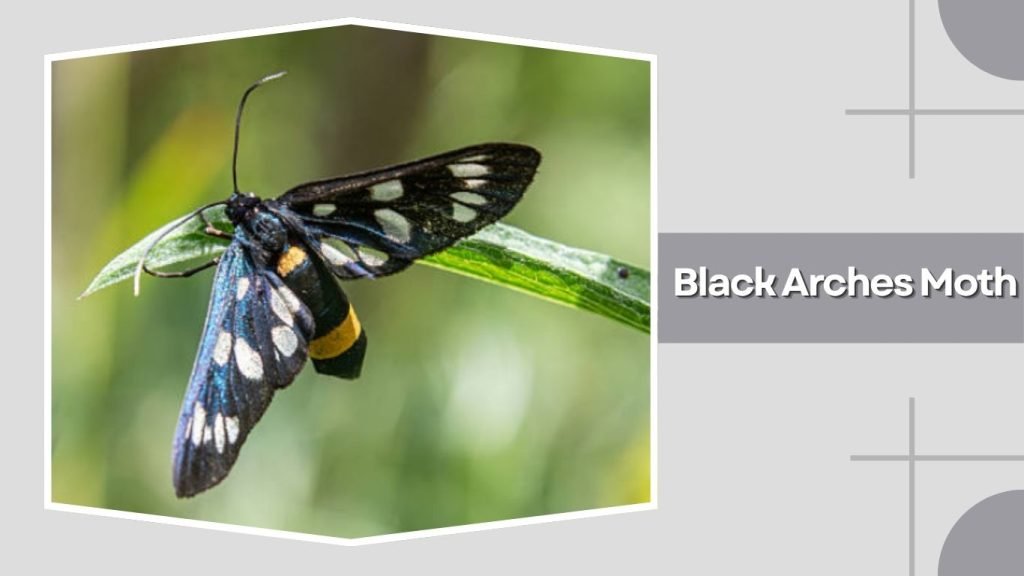
The Black arches moth is a striking black and white species known for its bold contrast and patterned wings. It is commonly found in forested regions and is easily recognizable due to its unique markings.
Identification
- Wingspan ranges from 4–6 cm
- White wings with strong black zigzag or arch-like patterns
- Males are usually darker than females
- Slender body with fine hairs
Color Pattern
The wings display a high-contrast black and white design, with irregular dark arches and bands across a pale background. This pattern helps the moth blend into tree bark and lichen, providing effective camouflage against predators.
Habitat
Black arches moths are typically found in woodlands, forests, and sometimes parks. They prefer areas with both coniferous and deciduous trees, which support their life cycle.
Diet
Adult moths do not feed. The caterpillars feed on the leaves and needles of trees such as pine, spruce, and birch, allowing them to grow and develop before pupation.
2. White Ermine Moth
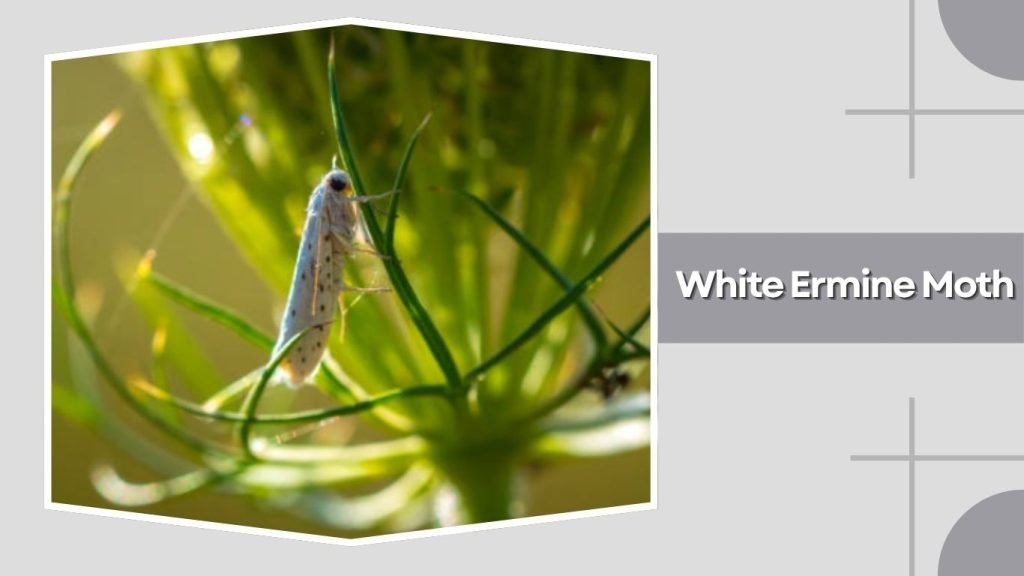
The White ermine moth is a beautiful black and white species known for its clean appearance and scattered dark spots. It belongs to the tiger moth family and is commonly seen in a variety of natural habitats.
Identification
- Wingspan ranges from 4–6 cm
- White wings with small black spots
- Yellowish or orange body with black markings
- Soft, slightly hairy body
Color Pattern
This moth features a bright white background with evenly distributed black dots across its wings. The simple yet bold contrast helps it stand out while also providing some camouflage against light surfaces like flowers or pale bark.
Habitat
White ermine moths are found in gardens, meadows, woodlands, and hedgerows. They adapt well to both rural and urban environments where vegetation is available.
Diet
Adult moths feed on nectar from flowers. The caterpillars feed on a wide range of low-growing plants, including dandelion, nettle, and dock.
3. Magpie Moth
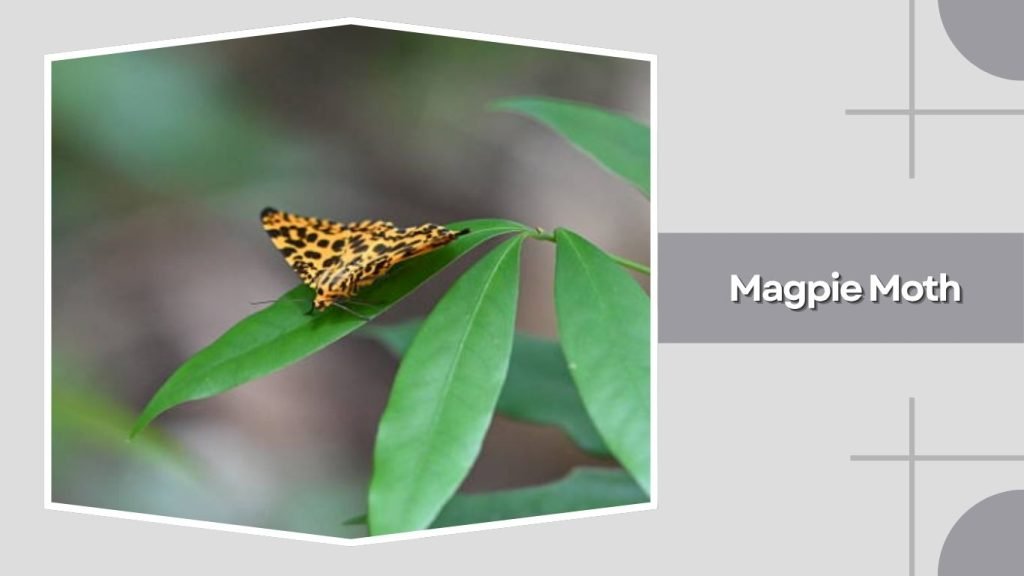
The Magpie moth is a distinctive black and white species known for its bold markings and daytime activity. It is easily recognizable and commonly found in gardens and countryside areas.
Identification
- Wingspan ranges from 3–5 cm
- White wings with bold black spots and irregular patches
- Slender body with a mix of black, white, and yellow markings
- Delicate, broad wings
Color Pattern
The wings display a striking combination of black spots and patches on a white background, often with yellow accents on the body. This high-contrast pattern makes the moth resemble a magpie bird, which is how it gets its name.
Habitat
Magpie moths are commonly found in gardens, hedgerows, woodlands, and open countryside. They prefer areas with shrubs and bushes where their larvae can feed.
Diet
Adult moths feed on nectar from flowers. The caterpillars feed on plants such as currant, gooseberry, and other shrubs.
4. Peppered Moth
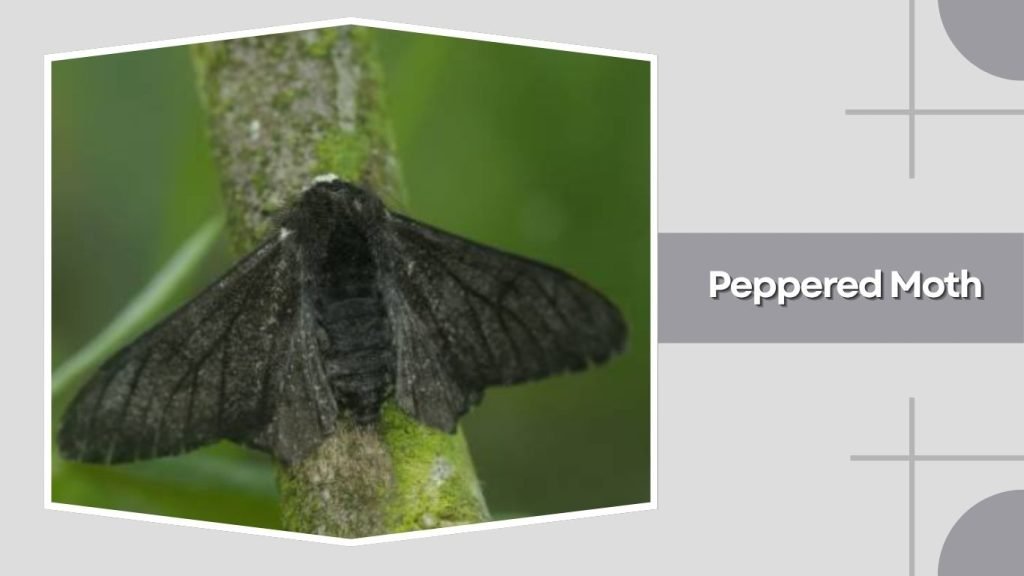
The Peppered moth is a well-known black and white species, famous for its role in demonstrating natural selection. Its speckled appearance allows it to blend effectively into its surroundings.
Identification
- Wingspan ranges from 3–5 cm
- Light-colored wings with black speckled markings
- Also exists in a darker (melanic) form
- Slender body with subtle patterns
Color Pattern
The wings have a “peppered” look, with numerous small black dots scattered across a pale background. This pattern provides excellent camouflage on lichen-covered tree bark, helping the moth avoid predators.
Habitat
Peppered moths are found in woodlands, parks, and urban areas across Europe, Asia, and North America. They are commonly seen resting on tree trunks.
Diet
Adult moths feed on nectar, while the caterpillars feed on leaves of deciduous trees such as oak, birch, and willow.
5. Black-veined Moth
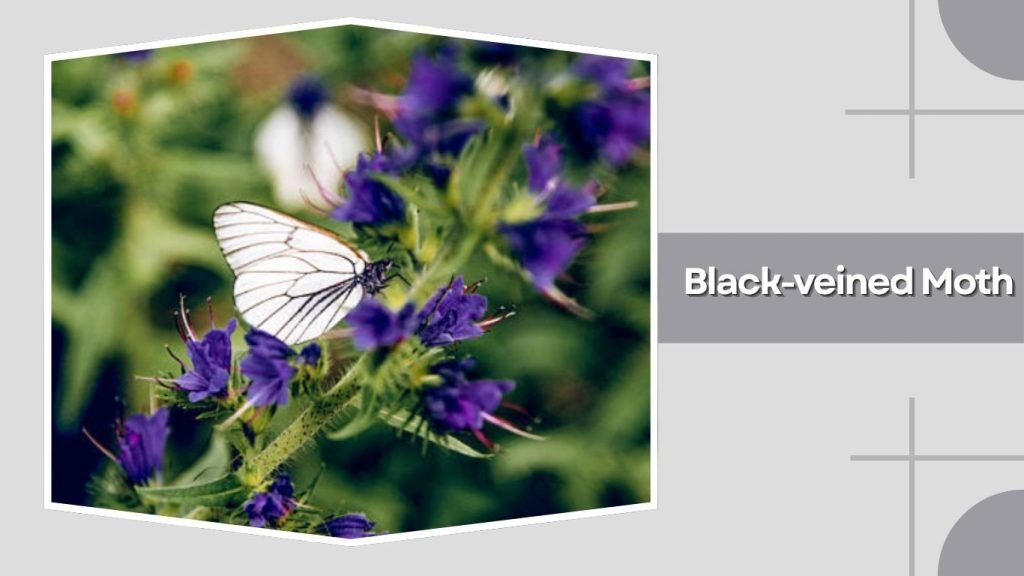
The Black-veined moth is a striking black and white species recognized for its delicate appearance and bold vein-like patterns on its wings. It is often found in open natural environments where it can easily blend in.
Identification
- Wingspan ranges from 4–6 cm
- Pale or white wings with strong black vein markings
- Semi-transparent wing texture
- Slender body with fine scales
Color Pattern
This moth features a clean white or pale background with prominent black veins running across the wings, creating a net-like appearance. The contrast gives it a refined look while also helping it blend into light-colored surroundings.
Habitat
Black-veined moths are commonly found in meadows, woodlands, and open countryside. They prefer areas rich in vegetation and flowering plants.
Diet
Adult moths feed on nectar from flowers. The caterpillars feed on leaves of shrubs and small trees, depending on the species.
6. Eight-spotted Forester Moth
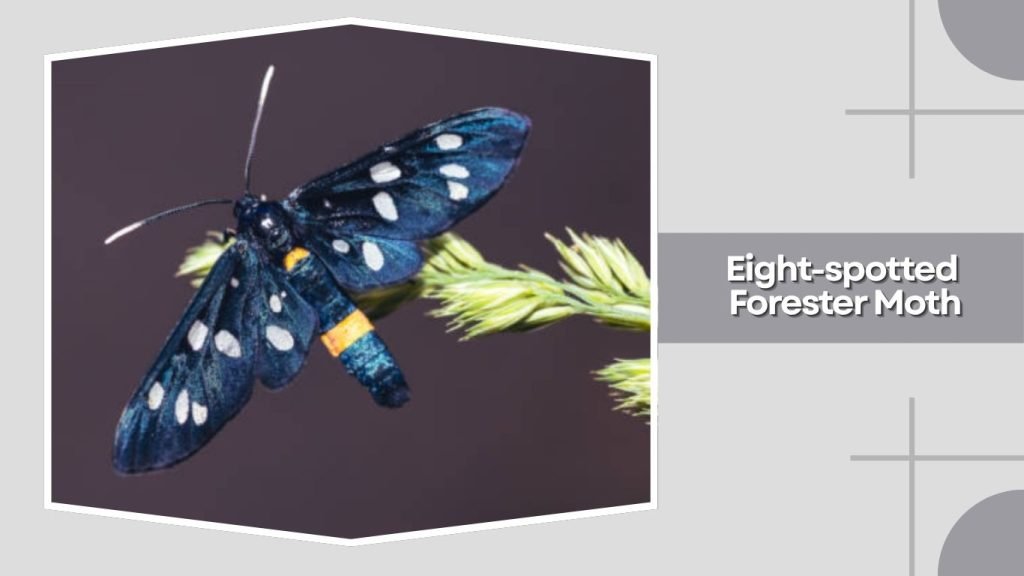
The Eight-spotted forester moth is a unique black and white species known for its dark wings marked with bright white spots. It is active during the day and is often mistaken for a butterfly.
Identification
- Wingspan ranges from 3–4 cm
- Dark black wings with distinct white spots
- Typically has four white spots on each forewing
- Slender body with a slight metallic sheen
Color Pattern
This moth features deep black wings contrasted with bright white spots, creating a bold and easily recognizable pattern. The symmetrical placement of spots gives it a clean and striking appearance.
Habitat
Eight-spotted forester moths are commonly found in fields, meadows, gardens, and woodland edges. They prefer sunny areas with plenty of flowering plants.
Diet
Adult moths feed on nectar from flowers. The caterpillars feed on plants such as grapevine and Virginia creeper.
7. Cinnabar Moth
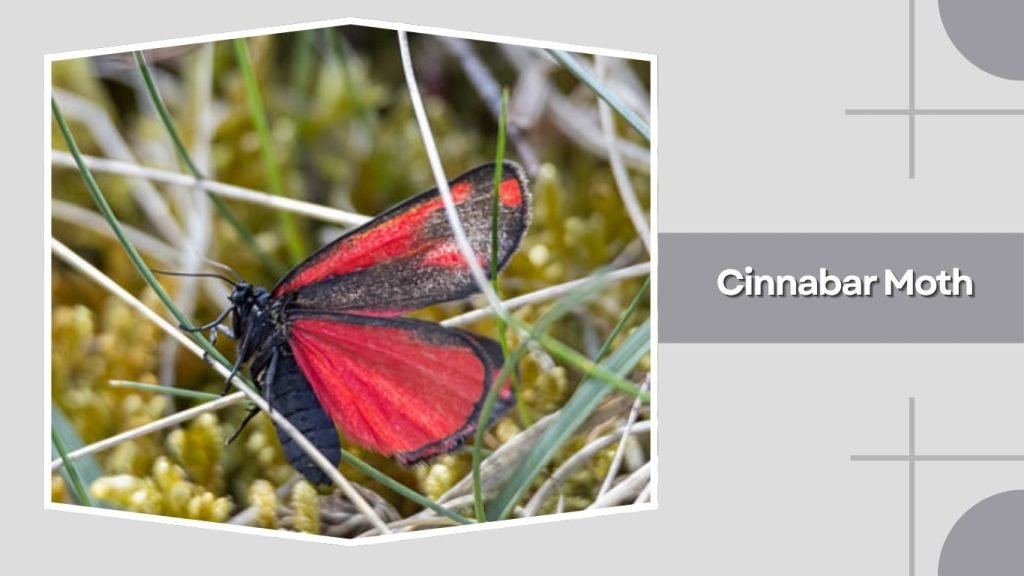
The Cinnabar moth is a striking species known for its bold contrast of black and bright markings. Although it includes vivid accents, its strong black and white contrast makes it easy to identify.
Identification
- Wingspan ranges from 3–4 cm
- Dark forewings with contrasting markings
- Brightly colored hindwings (often hidden at rest)
- Slender body with simple structure
Color Pattern
The forewings are primarily dark with lighter contrasting streaks, creating a sharp visual contrast. While the hindwings are brightly colored, the black portions dominate its appearance, especially when the moth is at rest.
Habitat
Cinnabar moths are commonly found in grasslands, meadows, coastal areas, and gardens. They prefer open habitats with plenty of wild plants.
Diet
Adult moths feed on nectar from flowers. The caterpillars feed mainly on ragwort plants, which are toxic, making the larvae unpalatable to predators.
8. Small Magpie Moth
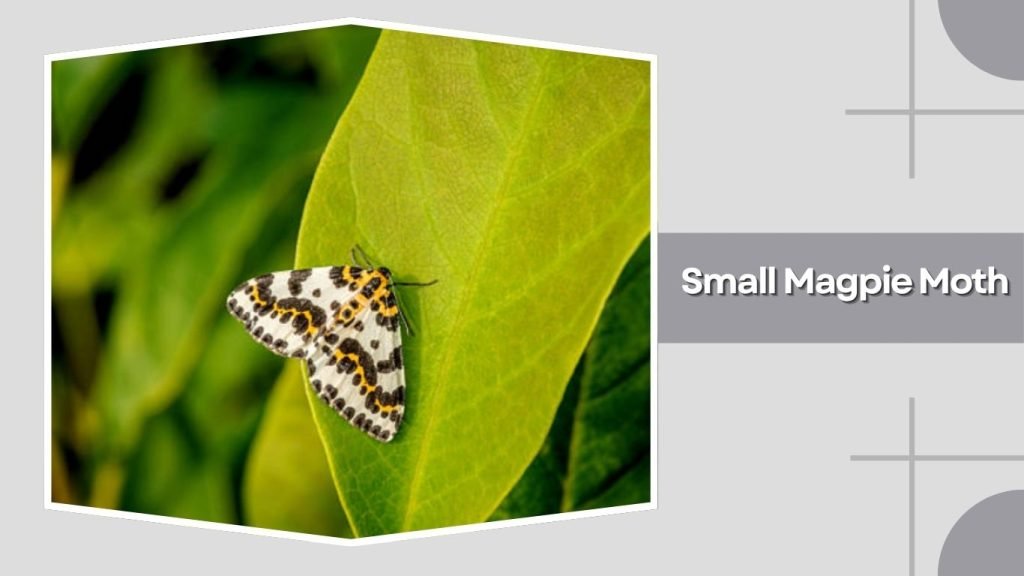
The Small magpie moth is a delicate black and white species known for its elegant patterns and smaller size compared to the common magpie moth. It is often seen in woodland edges and gardens.
Identification
- Wingspan ranges from 2–3 cm
- White wings with fine black spots and wavy lines
- Slender, delicate body
- Smaller and more refined than the common magpie moth
Color Pattern
The wings feature a soft white background covered with thin black lines and small spots, forming a subtle yet attractive pattern. This gives the moth a lighter and more delicate appearance compared to bolder black-and-white species.
Habitat
Small magpie moths are found in woodlands, hedgerows, and gardens. They prefer areas with shrubs and low vegetation that support their life cycle.
Diet
Adult moths feed on nectar from flowers. The caterpillars feed on plants such as currant and gooseberry, similar to their larger relatives.
9. Giant Leopard Moth
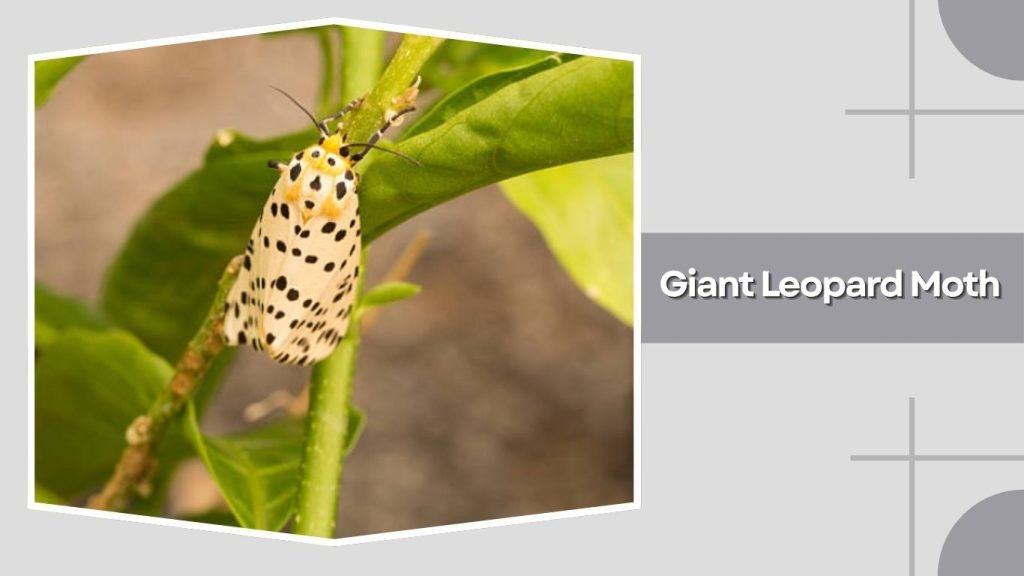
The Giant leopard moth is a bold and eye-catching black and white species known for its striking spotted pattern and large size. It is one of the most recognizable moths in North America.
Identification
- Wingspan ranges from 6–8 cm
- White wings covered with bold black spots
- Furry white body with black markings
- Bright blue and orange coloration visible on the abdomen
Color Pattern
This moth features a bright white background with large, irregular black spots scattered across its wings. The contrast is strong and dramatic, making it stand out clearly. The hidden blue and orange markings on the body add extra visual interest when exposed.
Habitat
Giant leopard moths are commonly found in forests, gardens, and suburban areas. They prefer environments with plenty of vegetation and shelter.
Diet
Adult moths feed on nectar from flowers. The caterpillars feed on a wide range of plants, including dandelion, violet, and other low-growing vegetation.
10. Wood Tiger Moth
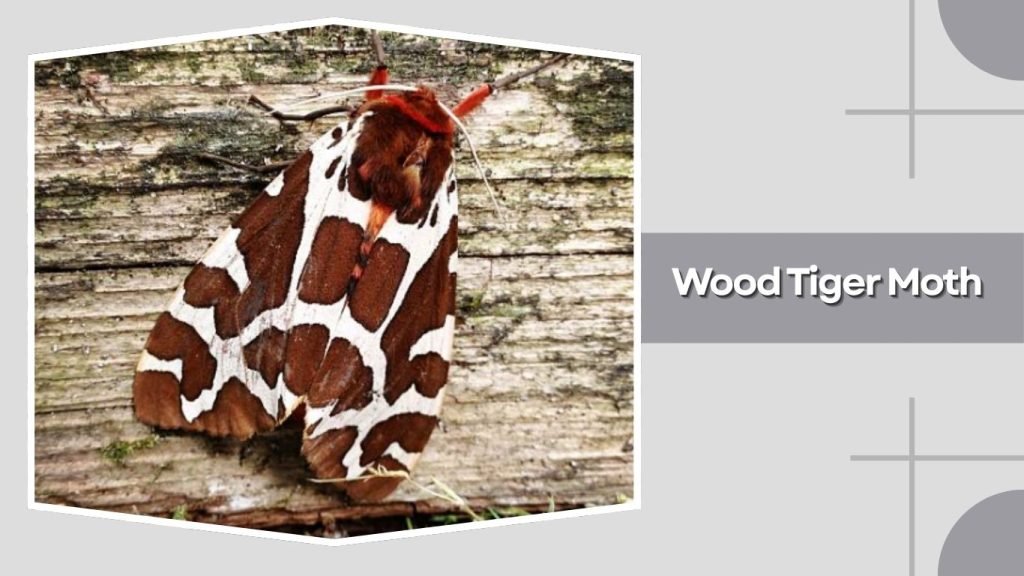
The Wood tiger moth is a striking black and white species known for its bold wing patterns and variability in coloration. It is commonly found in cooler regions and open habitats.
Identification
- Wingspan ranges from 4–6 cm
- Dark forewings with pale or white streaks
- Bright hindwings, often hidden at rest
- Hairy body with contrasting colors
Color Pattern
The forewings are mostly dark with bold white or cream streaks, creating a strong contrast. This pattern helps the moth blend into natural backgrounds like tree bark while also making it visually distinctive.
Habitat
Wood tiger moths are found in grasslands, meadows, and woodland edges across Europe, Asia, and parts of North America. They prefer open areas with plenty of low vegetation.
Diet
Adult moths feed on nectar from flowers. The caterpillars feed on a variety of low-growing plants, including dandelions and plantains.
11. Silver-spotted Tiger Moth
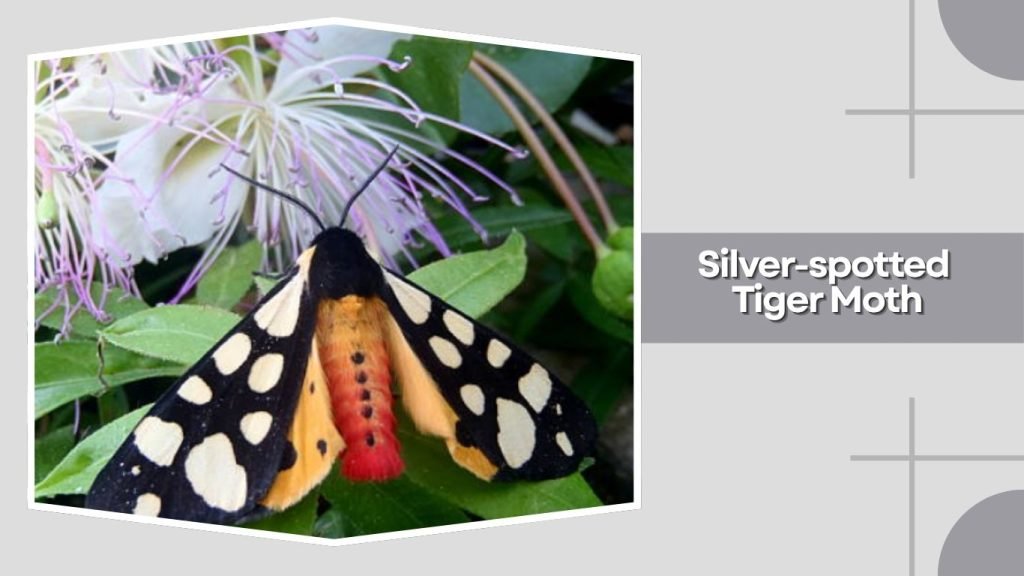
The Silver-spotted tiger moth is a visually appealing black and white species known for its dark wings marked with pale or silvery spots. It belongs to the tiger moth group and is appreciated for its distinctive contrast.
Identification
- Wingspan ranges from 3–5 cm
- Dark wings with small white or silvery spots
- Hairy body typical of tiger moths
- Medium-sized with broad wings
Color Pattern
The wings are primarily black or very dark brown, decorated with small white or silvery spots scattered across the surface. This pattern creates a subtle yet elegant contrast that helps in camouflage and identification.
Habitat
Silver-spotted tiger moths are found in woodlands, grasslands, and sometimes gardens. They prefer areas with abundant vegetation and flowering plants.
Diet
Adult moths feed on nectar from flowers. The caterpillars feed on a variety of plants, including low-growing herbs and shrubs.
FAQs
What are black and white moths called?
Black and white moths are not a single group but include many species across different families. Common examples include the Magpie moth, Peppered moth, and Giant leopard moth. Their black and white patterns vary widely and are used for camouflage or warning signals.
Are black and white moths rare?
Most black and white moths are not rare and can be found in many regions around the world. Some species are quite common in gardens and forests, while others may be less frequently seen depending on habitat and season.
Why do moths have black and white patterns?
Black and white patterns help moths survive by providing camouflage or confusing predators. Some patterns mimic bird droppings or tree bark, while others create strong contrasts that can startle or deter potential threats.
Are black and white moths harmful?
Most black and white moths are harmless to humans. However, their caterpillars may feed on plants, and in some cases, they can become minor pests in gardens or agriculture. They generally do not pose any direct danger.
When are black and white moths most active?
Most black and white moths are nocturnal and active at night. However, some species, like the Magpie moth, can be seen during the day. Their activity often depends on temperature, season, and environmental conditions.