
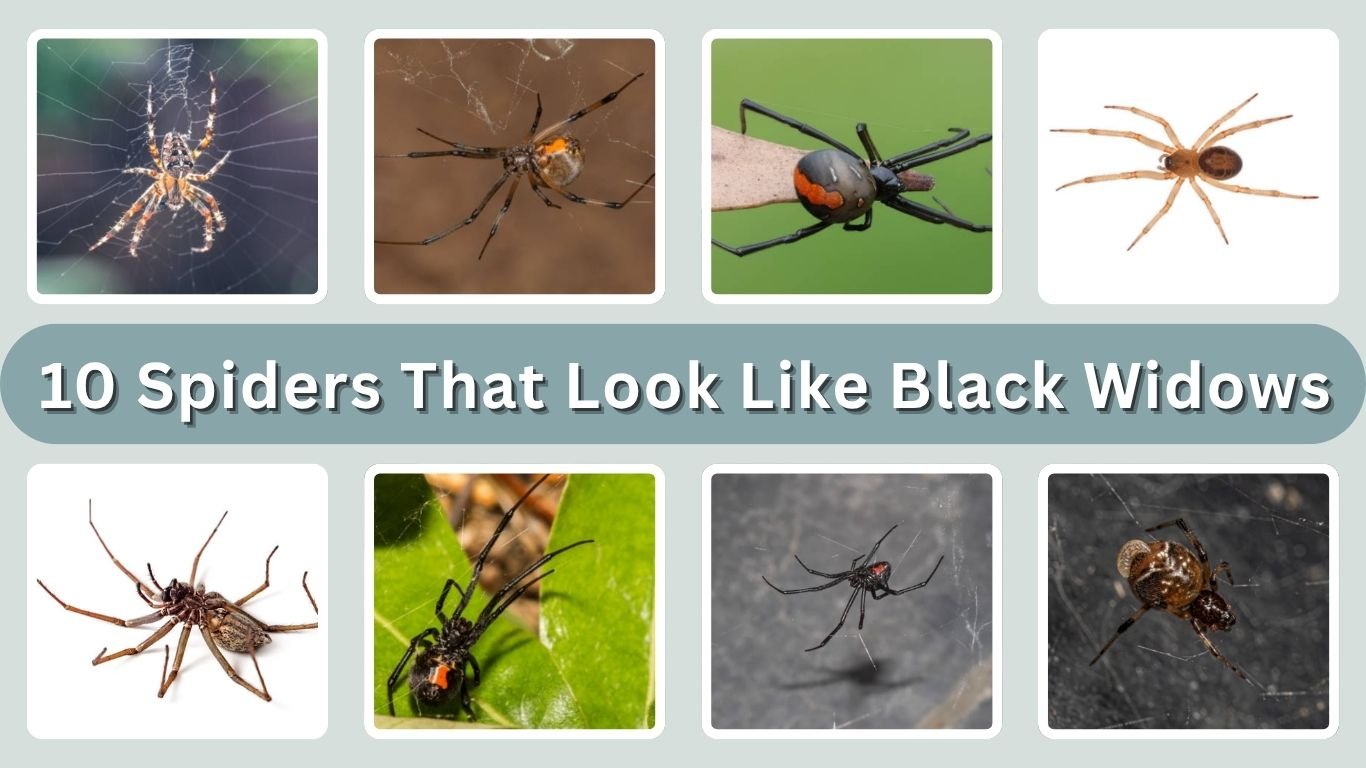
Many spiders share a similar dark color, rounded abdomen, and web style that can make them look like the infamous black widow. This resemblance often causes unnecessary fear, as most of these spiders are far less dangerous and prefer to avoid humans altogether. From false widows to common house spiders, these lookalikes can be found in homes, gardens, and outdoor structures around the world.
In this guide, we’ll explore 10 spiders that closely resemble black widows, highlighting how to recognize them and understand the key differences.
1. False Widow Spider (Steatoda spp.)
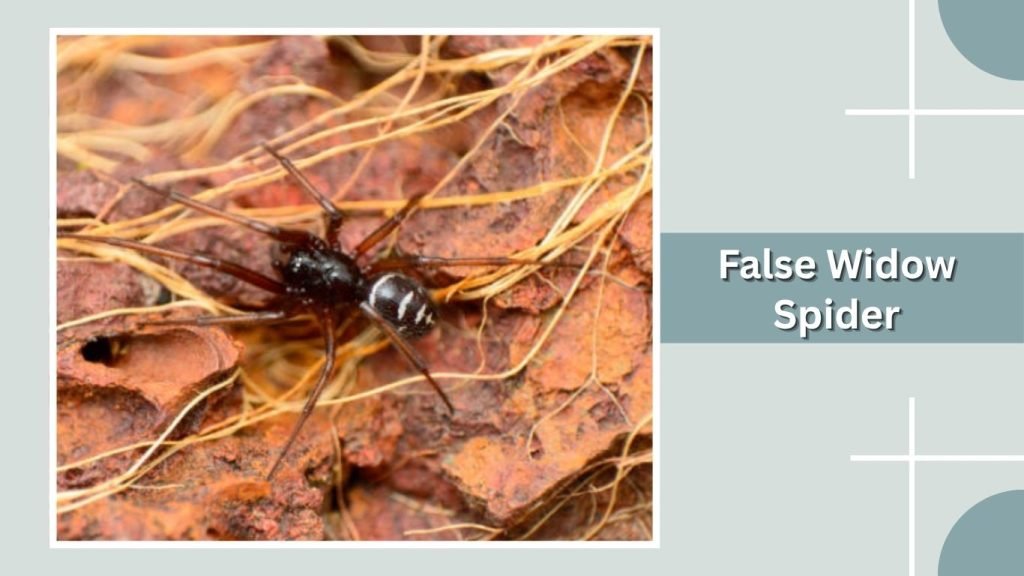
The False Widow Spider is one of the most common spiders mistaken for a black widow due to its dark coloration and rounded abdomen. Despite its intimidating appearance, it is significantly less dangerous and rarely poses serious harm to humans. These spiders are widely distributed and often found living close to human environments, which increases the chances of encounters.
Identification
- Dark brown to purplish-black body
- Smooth, shiny, and bulbous abdomen
- Faint cream, beige, or lighter markings on the abdomen
- Typically smaller than true black widows
- No red hourglass marking on the underside
- Slender legs with a slightly lighter tone than the body
Habitat
False widow spiders commonly inhabit both indoor and outdoor environments. Indoors, they are often found in quiet, undisturbed areas such as basements, attics, cupboards, and behind furniture. Outdoors, they prefer sheltered spaces like under rocks, tree bark, garden sheds, and fences. Their adaptability allows them to thrive in urban, suburban, and rural settings. They tend to build webs in corners where insects are likely to pass, making human structures an ideal location for feeding.
Behavior
These spiders are generally non-aggressive and prefer to remain hidden. They build messy, irregular cobwebs rather than symmetrical webs. False widows spend most of their time waiting for prey to become trapped in their webs. When disturbed, they are more likely to retreat than attack. They are mostly active at night and rely on vibrations in their web to detect prey. Their calm nature makes them less threatening compared to more defensive spider species.
Bite & Risk
False widow bites are uncommon and usually occur only when the spider is accidentally pressed against the skin. Symptoms may include mild pain, redness, swelling, and sometimes slight blistering. In rare cases, individuals may experience more pronounced reactions, but these are typically not dangerous. The venom is much weaker than that of true black widows. Most bites do not require medical treatment beyond basic first aid, and symptoms usually resolve within a few hours to a couple of days.
Unique Features
One of the most notable features of the false widow spider is its resemblance to the black widow without possessing the same level of toxicity. This mimicry often causes unnecessary fear. Unlike black widows, their markings are subtle and less defined. They are also more adaptable to human environments, which explains their frequent presence indoors. Their resilience and ability to survive in various conditions make them one of the most commonly encountered widow-like spiders worldwide.
2. Noble False Widow (Steatoda nobilis)
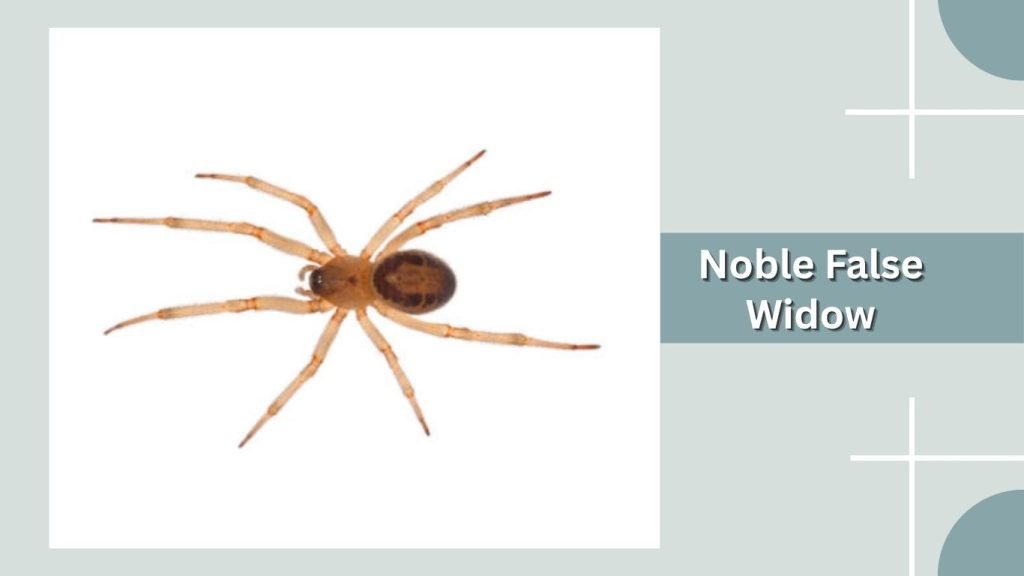
The Noble False Widow is a well-known species often confused with black widows due to its glossy, dark body and rounded abdomen. Originally native to the Canary Islands, it has spread to many parts of the world. Although its appearance can be alarming, it is not considered highly dangerous to humans.
Identification
- Dark brown to black body with a glossy appearance
- Large, rounded abdomen
- Cream or skull-like pattern on the upper abdomen
- Slightly larger than many other false widows
- No red hourglass marking underneath
- Long, slender legs with a reddish or brown tint
Habitat
Noble false widows thrive in both indoor and outdoor environments. They are commonly found in homes, especially around window frames, ceilings, and corners of rooms. Outdoors, they prefer walls, fences, garden sheds, and under outdoor furniture. They are highly adaptable and often settle in urban areas where there is a steady supply of insects. Their webs are usually built in sheltered locations where they can remain undisturbed while waiting for prey.
Behavior
This species is generally calm and non-aggressive, choosing to hide rather than confront threats. Noble false widows build irregular, tangled webs and remain in them most of the time. They are primarily nocturnal and become more active at night when hunting. If disturbed, they may move quickly to a hiding spot. They rely on vibrations in their web to detect prey and will wrap insects efficiently once captured.
Bite & Risk
Bites from noble false widows are rare but can occur if the spider is handled or trapped against the skin. Symptoms may include localized pain, swelling, redness, and occasionally mild systemic effects such as headache or nausea. While the bite can be more noticeable than other false widows, it is still far less severe than a true black widow bite. Most cases resolve without serious medical treatment.
Unique Features
The Noble False Widow is easily recognized by its distinctive pale markings that often resemble a skull or leaf pattern. It is one of the few false widows known for spreading beyond its native range and adapting well to human environments. Its increasing presence in urban areas has made it one of the most talked-about widow-like spiders in recent years.
3. Cupboard Spider (Steatoda grossa)
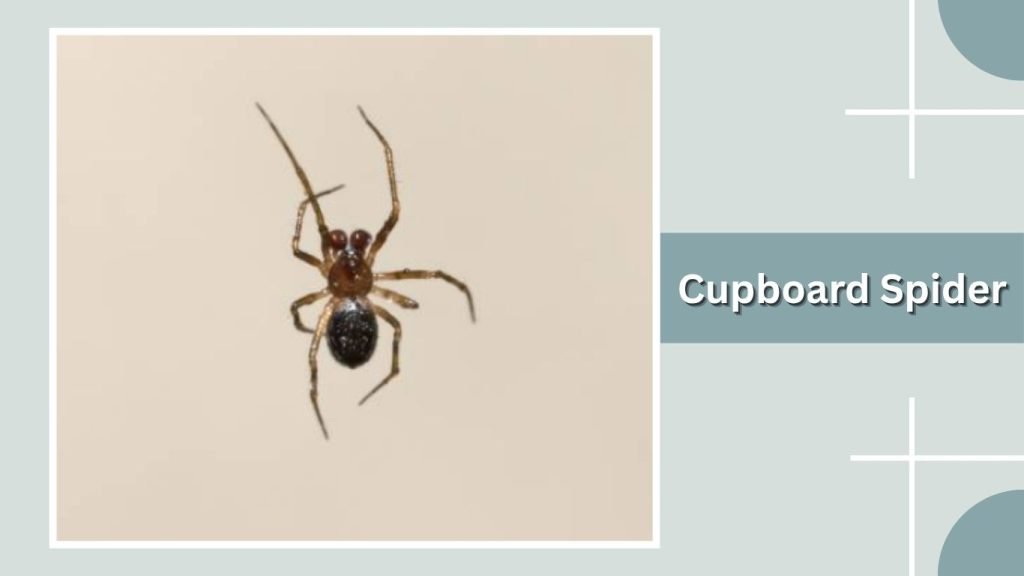
The Cupboard Spider is another member of the false widow group and is frequently mistaken for a black widow due to its dark, shiny body. It is widely distributed across the world and is commonly found in homes. Despite its intimidating look, it is generally harmless and not aggressive.
Identification
- Dark brown to nearly black body
- Smooth, glossy, and oval-shaped abdomen
- Usually lacks noticeable markings (sometimes faint patterns)
- Medium-sized spider with a robust appearance
- No red hourglass marking
- Legs are slightly lighter brown than the body
Habitat
Cupboard spiders prefer indoor environments, which is how they earned their name. They are often found in cupboards, closets, basements, and storage areas. These spiders favor dark, quiet places where they are unlikely to be disturbed. Outdoors, they may live under rocks, logs, or within cracks in walls. Their ability to thrive in human-made structures makes them a common household spider in many regions.
Behavior
This spider is shy and tends to avoid contact with humans. It builds messy, irregular webs in corners and hidden spaces. The cupboard spider usually stays in its web, waiting for prey to become trapped. It is mostly nocturnal and becomes more active at night. When disturbed, it prefers to retreat rather than defend itself, making encounters with humans relatively uneventful.
Bite & Risk
Bites are uncommon and typically occur only when the spider is accidentally pressed against the skin. The bite may cause mild pain, redness, and slight swelling. In rare cases, symptoms can be a bit more noticeable but are still not considered dangerous. The venom is much weaker compared to that of black widows, and most bites do not require medical attention.
Unique Features
The Cupboard Spider is notable for its plain, dark appearance, which closely resembles a black widow but without any distinctive markings. Its preference for indoor spaces makes it one of the most commonly encountered false widows. Unlike some other species, it often lacks clear abdominal patterns, which can make identification slightly more challenging.
4. Triangulate Cobweb Spider (Steatoda triangulosa)
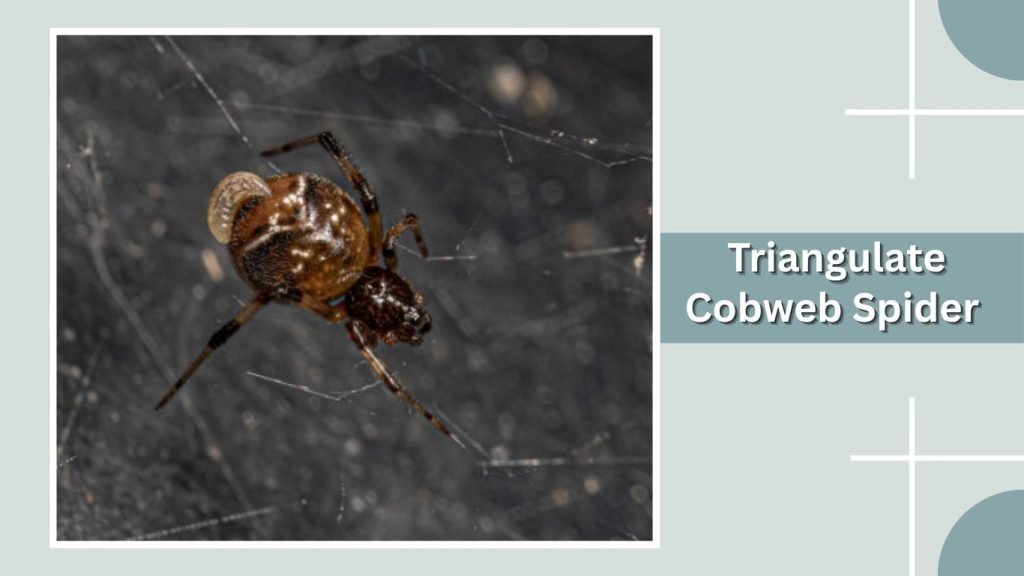
The Triangulate Cobweb Spider is a small, harmless species that is often confused with juvenile black widows due to its body shape and web style. While it shares some visual similarities, its lighter patterns and smaller size make it less intimidating upon closer inspection.
Identification
- Light brown to yellowish body color
- Distinct triangular or zigzag patterns on the abdomen
- Smaller and slimmer than black widows
- Rounded abdomen but less glossy
- No red hourglass marking
- Thin, delicate legs with light banding
Habitat
This spider is commonly found indoors, especially in homes, apartments, and buildings. It prefers quiet corners such as basements, attics, behind furniture, and along ceilings. Outdoors, it may inhabit sheltered areas like under rocks or debris. It thrives in human environments where insects are plentiful, making it a frequent but unnoticed house guest.
Behavior
Triangulate cobweb spiders are non-aggressive and spend most of their time in their webs. They create irregular, tangled webs similar to other cobweb spiders. These spiders are active hunters within their webs and feed on small insects, including ants and flies. They are generally nocturnal and tend to remain hidden during the day. When disturbed, they are more likely to retreat than confront.
Bite & Risk
Bites from this species are extremely rare and usually occur only if the spider is directly handled. Even when bites happen, they are mild and cause minimal symptoms such as slight irritation or redness. Their venom is not considered harmful to humans, and medical attention is rarely needed.
Unique Features
The most distinctive feature of this spider is its triangular patterning on the abdomen, which gives it its name. Unlike darker widow-like spiders, its lighter coloration makes it easier to distinguish upon close inspection. It is also beneficial indoors, as it helps control populations of small household pests.
5. Brown Widow Spider (Latrodectus geometricus)
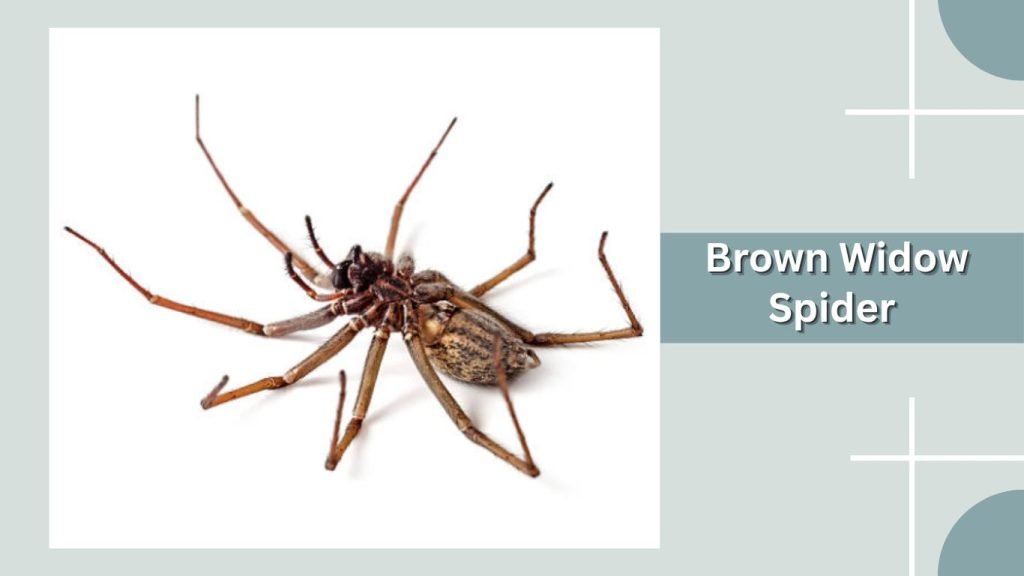
The Brown Widow Spider is a close relative of the black widow and shares a similar body shape, making it easy to confuse the two. However, it is generally less dangerous and has distinct coloration that sets it apart. This species has spread widely across many parts of the world, especially in warmer climates.
Identification
- Light to dark brown body with mottled patterns
- Orange or yellowish hourglass marking on the underside
- Spiky, egg sacs (a key distinguishing feature)
- Slender legs with dark banding
- Smaller and less glossy than black widows
- Abdomen often shows geometric or patchy patterns
Habitat
Brown widow spiders are commonly found in outdoor environments around human structures. They prefer locations such as fences, railings, mailboxes, outdoor furniture, and under eaves. They may also enter garages or sheds but are less commonly found deep inside homes. Their webs are usually built in sheltered spots where they can catch flying insects. They thrive in warm climates and are often seen in suburban and urban areas.
Behavior
These spiders are shy and non-aggressive, often retreating when disturbed. They build irregular cobwebs and spend most of their time hanging upside down in their webs. Brown widows are active hunters within their web structure and quickly wrap prey in silk. They are mostly nocturnal and tend to remain hidden during the day.
Bite & Risk
Although related to black widows, brown widow bites are typically less severe. Symptoms may include mild to moderate pain, redness, and swelling. Serious reactions are rare. Like other widow species, they will only bite in self-defense. Most bites do not require significant medical treatment and resolve on their own.
Unique Features
The Brown Widow is best known for its spiky egg sacs, which are unlike the smooth sacs of black widows. Its lighter, patterned coloration also makes it easier to distinguish from true black widows. Despite being a widow species, it is considered less medically significant and more reclusive in behavior.
6. Redback Spider (Latrodectus hasselti)
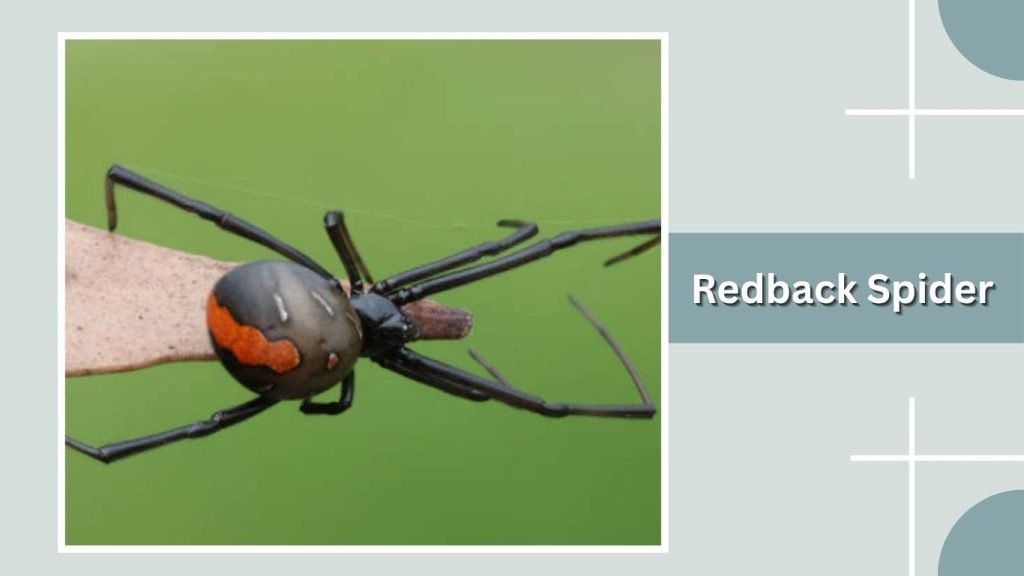
The Redback Spider is a close relative of the black widow and is often mistaken for it due to its similar body shape and glossy appearance. Native to Australia, it has also spread to other regions. While it is medically significant, it is still distinct from true black widows in both markings and distribution.
Identification
- Shiny black body with a rounded abdomen
- Distinct red or orange stripe running along the top of the abdomen
- Sometimes a faint hourglass marking on the underside
- Slender, long legs
- Females are larger and more noticeable than males
- Juveniles may have lighter markings or patterns
Habitat
Redback spiders prefer dry, sheltered environments and are commonly found around human structures. They often build webs in places such as sheds, garages, outdoor furniture, mailboxes, and under rocks or debris. These spiders favor areas where they can remain hidden during the day and come out at night to feed. They adapt well to urban environments and are frequently found in backyards and storage areas. Their webs are usually messy and located close to the ground or in low-lying spaces.
Behavior
Redbacks are generally shy but can be defensive if disturbed. They spend most of their time hanging upside down in their webs, waiting for prey. These spiders are nocturnal and rely on vibrations to detect insects caught in their web. Unlike many spiders, female redbacks may remain in the same web for long periods. Males are much smaller and less commonly seen. When threatened, they may stay still or retreat rather than attack immediately.
Bite & Risk
The redback spider is venomous and can deliver a medically significant bite. Symptoms may include intense pain, sweating, nausea, and muscle weakness. However, serious complications are rare with proper medical care. Antivenom is available and effective. Bites typically occur when the spider is accidentally disturbed, such as when reaching into hidden spaces.
Unique Features
The most recognizable feature of the redback spider is the bright red stripe on its back, which distinguishes it from black widows that typically have a red hourglass underneath. Another unique trait is its mating behavior, where males may sacrifice themselves during reproduction. Its strong association with human structures and distinctive marking make it one of the most easily identified widow-like spiders.
7. Northern Black Widow (Latrodectus variolus)
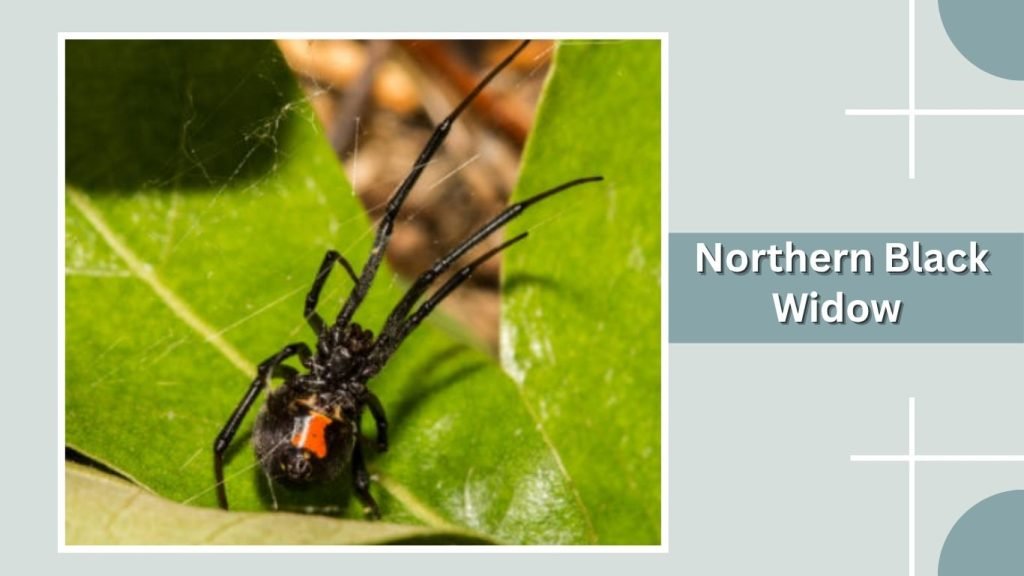
The Northern Black Widow is a true widow species and closely resembles other black widows, making it difficult to distinguish at first glance. It is often confused with its southern and western relatives due to its similar dark, glossy body. While it is venomous, it is not aggressive and usually avoids human interaction.
Identification
- Glossy black body with a rounded abdomen
- Red hourglass marking on the underside (often broken or separated)
- Additional red or orange spots on the top of the abdomen
- Long, slender black legs
- Females are significantly larger than males
- Juveniles may display more colorful patterns
Habitat
Northern black widows are typically found in outdoor environments such as woodpiles, tree stumps, stone walls, and under logs. They prefer secluded, protected areas where they can build their webs undisturbed. Occasionally, they may enter garages, sheds, or basements. These spiders thrive in temperate climates and are more commonly found in wooded or rural areas rather than densely populated urban environments.
Behavior
These spiders are shy and reclusive, spending most of their time hidden in their webs. They build irregular, tangled webs close to the ground. Northern black widows are primarily nocturnal and become active at night when hunting. When disturbed, they tend to retreat rather than attack. They rely on vibrations in their web to detect prey and will quickly immobilize captured insects.
Bite & Risk
The Northern Black Widow is venomous, and its bite can cause symptoms such as pain, muscle cramps, and sweating. However, bites are rare and usually occur only when the spider is accidentally pressed against the skin. While the venom is potent, serious complications are uncommon with prompt medical care. Most people recover fully with proper treatment.
Unique Features
One of the key features of the Northern Black Widow is its broken or irregular hourglass marking, which helps distinguish it from other widow species. The presence of additional red spots on the upper abdomen is another identifying trait. Despite its reputation, it plays an important role in controlling insect populations in its natural habitat.
8. Southern Black Widow (Latrodectus mactans)
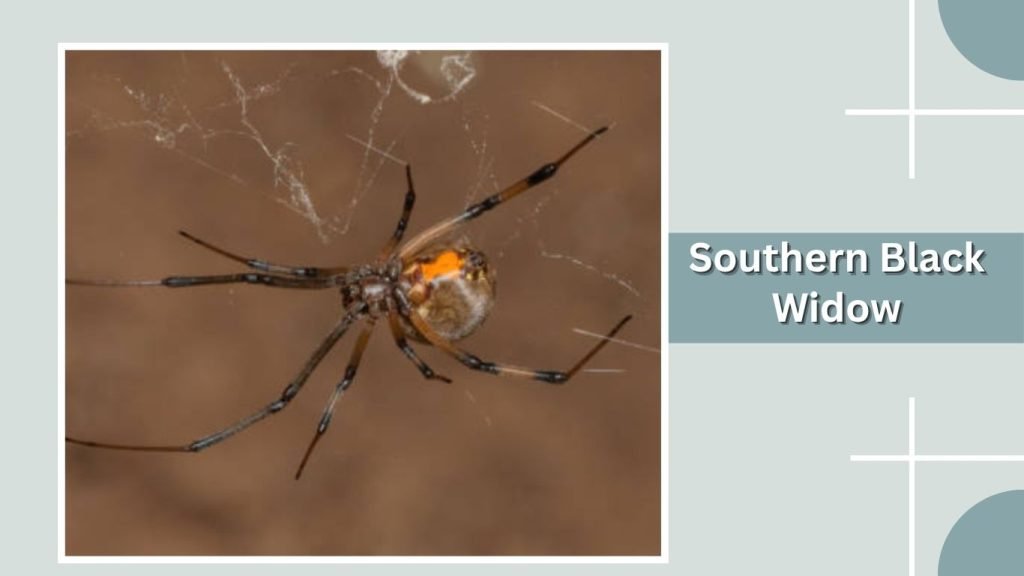
The Southern Black Widow is one of the most well-known widow spiders and is often considered the classic example of a black widow. Its shiny black body and distinctive red hourglass marking make it easily recognizable. Although venomous, it is not aggressive and typically avoids human contact.
Identification
- Glossy jet-black body
- Prominent red hourglass marking on the underside of the abdomen
- Smooth, rounded abdomen
- Long, slender black legs
- Females are larger and more robust than males
- Juveniles may have orange, white, or yellow markings
Habitat
Southern black widows prefer warm, humid environments and are commonly found in the southeastern regions of their range. They inhabit outdoor spaces such as woodpiles, tree hollows, under rocks, and in dense vegetation. They are also frequently found around human structures like sheds, garages, crawl spaces, and basements. These spiders favor dark, undisturbed areas where they can build their webs close to the ground and remain hidden during the day.
Behavior
These spiders are reclusive and spend most of their time hanging upside down in their webs. They build irregular, tangled webs designed to trap crawling insects. Southern black widows are nocturnal and become more active at night when hunting. When disturbed, they usually retreat or remain still rather than attack. They rely on web vibrations to detect prey and quickly immobilize it with venom.
Bite & Risk
The Southern Black Widow has potent venom, and its bite can cause symptoms such as severe pain, muscle cramps, sweating, and nausea. However, bites are rare and typically occur only when the spider is accidentally disturbed. While the bite can be serious, fatalities are extremely uncommon with modern medical treatment. Most people recover fully with proper care.
Unique Features
The most distinctive feature of the Southern Black Widow is its clear, bright red hourglass marking, which is more complete and vivid than in other widow species. It is often regarded as the “classic” black widow due to its iconic appearance. Despite its reputation, it plays an important ecological role by controlling insect populations.
9. Western Black Widow (Latrodectus hesperus)
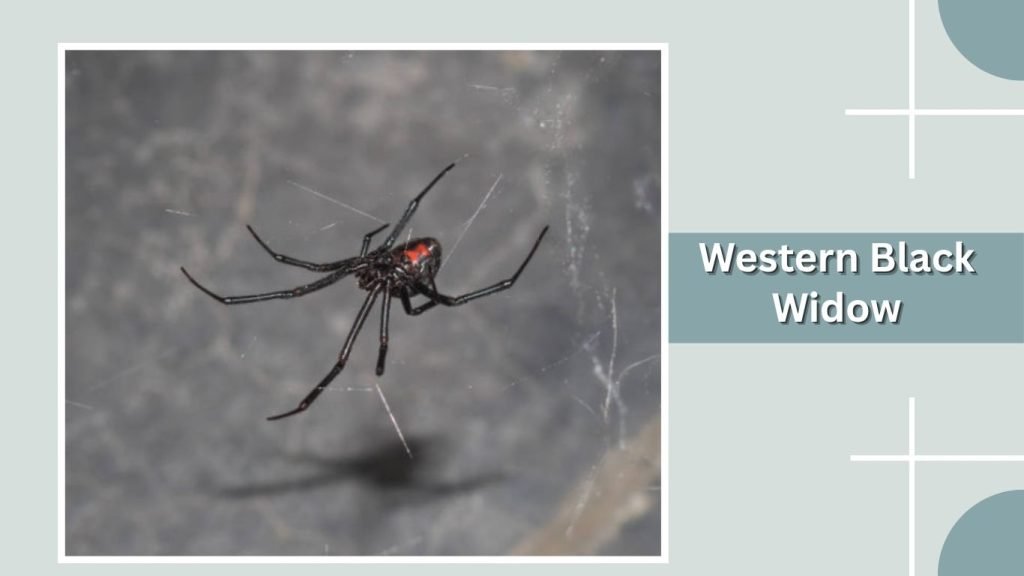
The Western Black Widow is another true widow species that closely resembles the Southern Black Widow in both appearance and behavior. It is commonly found in western regions and is often mistaken for other widow spiders due to its nearly identical glossy black body and red hourglass marking. Despite its fearsome reputation, it is generally shy and avoids human contact.
Identification
- Shiny black body with a smooth, rounded abdomen
- Bright red hourglass marking on the underside
- Long, thin black legs
- Females are larger and more prominent than males
- Juveniles may show lighter patterns or stripes
- Overall appearance very similar to other black widow species
Habitat
Western black widows are commonly found in dry, warm environments. They prefer outdoor habitats such as woodpiles, rock crevices, under logs, and in shrubs. They are also frequently found near human structures, including garages, sheds, crawl spaces, and outdoor furniture. These spiders favor dark, sheltered areas where they can build their webs close to the ground. Their adaptability allows them to live in both rural and urban environments.
Behavior
These spiders are reclusive and non-aggressive. They spend most of their time hanging upside down in their irregular, tangled webs. Western black widows are nocturnal and become active at night when hunting for prey. When disturbed, they typically retreat or remain motionless rather than attack. They rely on vibrations in their web to detect insects and quickly immobilize them with venom.
Bite & Risk
The Western Black Widow is venomous, and its bite can cause symptoms such as sharp pain, muscle cramps, abdominal discomfort, and sweating. However, bites are uncommon and usually happen only when the spider is accidentally pressed against the skin. With proper medical treatment, most people recover without complications.
Unique Features
The Western Black Widow is known for its strong resemblance to other black widow species, making identification difficult without considering location. Its bright red hourglass marking is usually well-defined. It is an important predator in its ecosystem, helping to control insect populations despite its intimidating reputation.
10. Common House Spider (Parasteatoda tepidariorum)
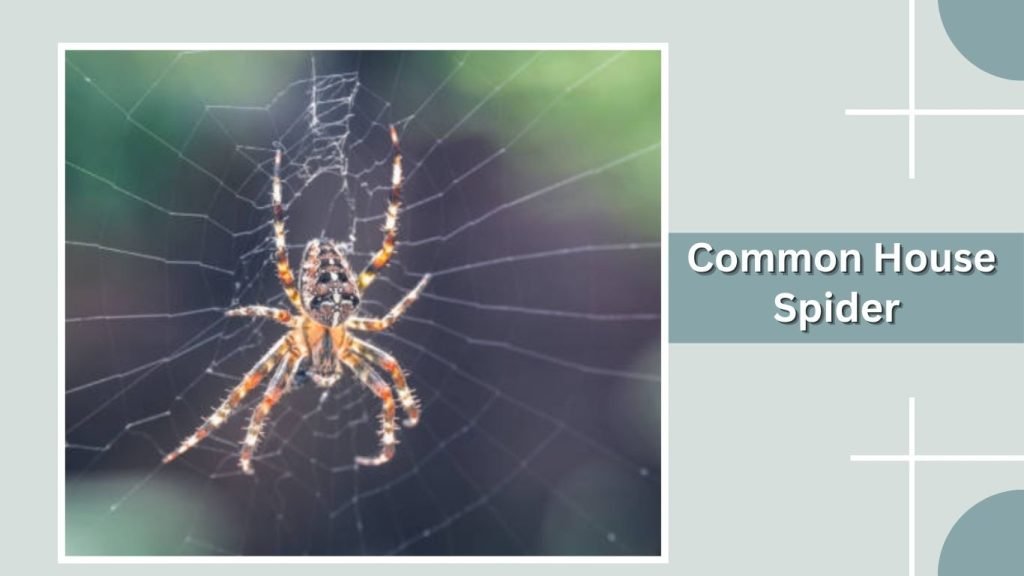
The Common House Spider is a widespread species often mistaken for a black widow due to its general body shape and web style. Although it lacks the glossy black appearance and distinct markings of a true widow, its presence in homes and messy cobwebs can lead to confusion. It is harmless and actually beneficial for controlling household pests.
Identification
- Light brown to dark brown body
- Rounded abdomen with mottled or patterned markings
- Smaller and less shiny than black widows
- Legs are long, thin, and slightly banded
- No red hourglass marking
- Overall appearance is less uniform and more textured
Habitat
Common house spiders are frequently found indoors, especially in corners of ceilings, windows, basements, and behind furniture. They thrive in human dwellings where insects are readily available. Outdoors, they may live in sheds, under eaves, or in garden structures. Their webs are often seen in quiet, undisturbed areas where they can remain in place for long periods. These spiders are highly adaptable and can live comfortably in a wide range of environments.
Behavior
These spiders are non-aggressive and tend to stay in their webs most of the time. They build messy, tangled cobwebs to trap flying and crawling insects. The common house spider is typically inactive during the day and becomes more active at night. When disturbed, it usually retreats quickly rather than attempting to bite. It plays an important role in reducing indoor insect populations.
Bite & Risk
Bites from common house spiders are extremely rare and generally harmless. If a bite does occur, it may cause mild irritation, redness, or slight swelling. There are no serious medical concerns associated with their venom, and most people never experience any negative effects from their presence.
Unique Features
The Common House Spider is known for its adaptability and close association with human homes. Unlike black widows, it lacks any bold warning markings and has a more patterned, less glossy appearance. Its ability to control pests makes it beneficial rather than harmful in most situations.
FAQs
Are all spiders that look like black widows dangerous?
No, most spiders that resemble black widows are not dangerous. Many, like false widows and house spiders, have much weaker venom and are generally harmless to humans.
How can I tell a real black widow from a lookalike?
The most reliable sign of a true black widow is the red hourglass marking on the underside of its abdomen. Lookalikes usually lack this marking or have different patterns and colors.
Do black widow lookalikes bite humans?
Most of these spiders rarely bite and usually only do so in self-defense. They prefer to avoid humans and will retreat if given the chance.
Where are these spiders commonly found?
They are often found in dark, quiet places such as basements, garages, sheds, woodpiles, and corners of homes. Outdoor areas like gardens and fences are also common habitats.
Should I remove spiders that look like black widows?
In most cases, it’s not necessary. Many of these spiders help control insect populations. However, if you’re unsure or feel uncomfortable, it’s best to safely remove them or contact pest control.
