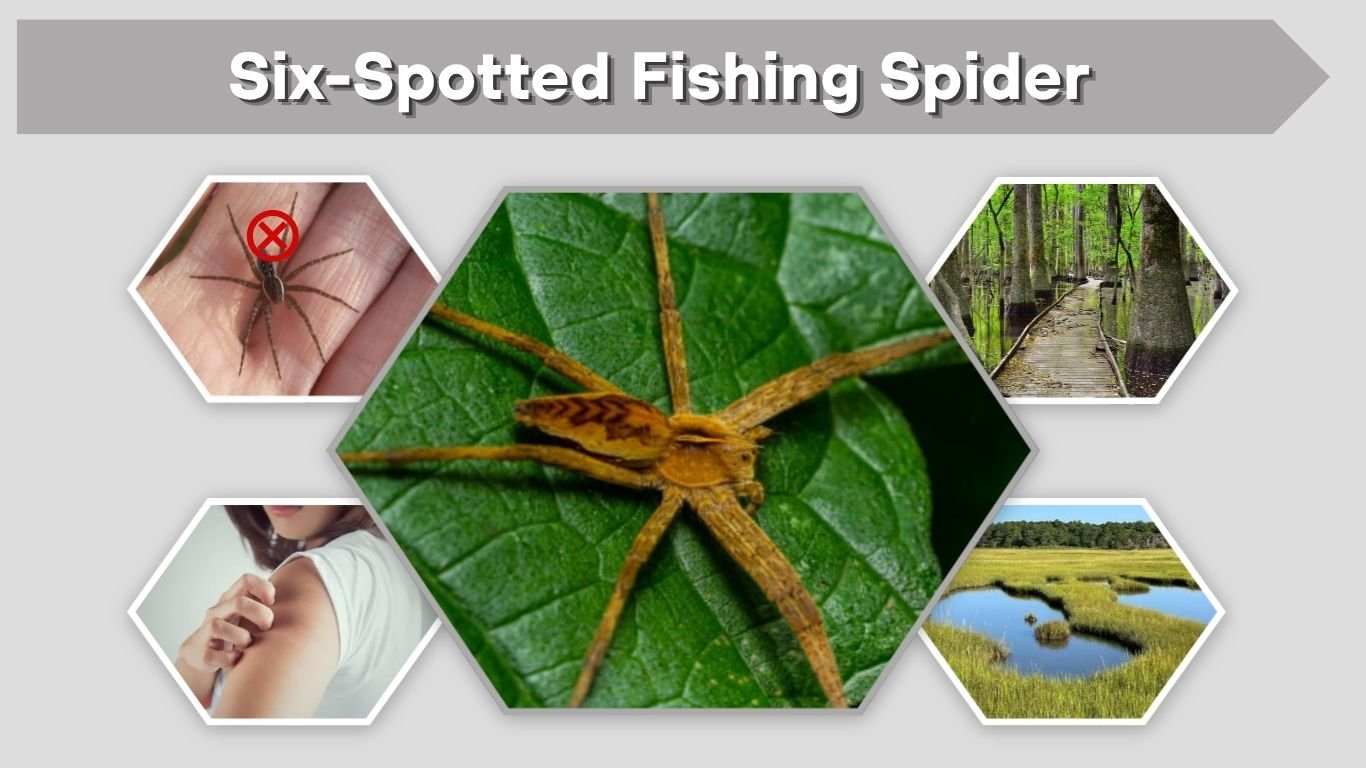
The six-spotted fishing spider is a large semi-aquatic spider often seen near ponds, lakes, marshes, and slow-moving streams. Its scientific name is Dolomedes triton, and it belongs to the fishing spider group. Although its size and fast movement can look frightening, this spider is not aggressive toward people. It is best known for running across water, diving below the surface, and catching insects or small aquatic prey.
What Is a Six-Spotted Fishing Spider?
The six-spotted fishing spider is a hunting spider that lives close to freshwater. Unlike web-building spiders that wait in sticky webs, this species actively hunts on plants, rocks, docks, and the water surface. It uses vibration to detect prey and can move quickly when an insect touches the water.
This spider is sometimes called a dock spider because it may rest on boat docks, wooden posts, shoreline plants, and other structures near water. It is most active during warm months and is often noticed when it suddenly runs across the surface of a pond or hides under floating vegetation.
Despite the name, the spider does not always show exactly six visible spots from above. The “six-spotted” name mainly refers to pale spots on the underside of the abdomen, though markings can vary between individuals.
Six-Spotted Fishing Spider Size
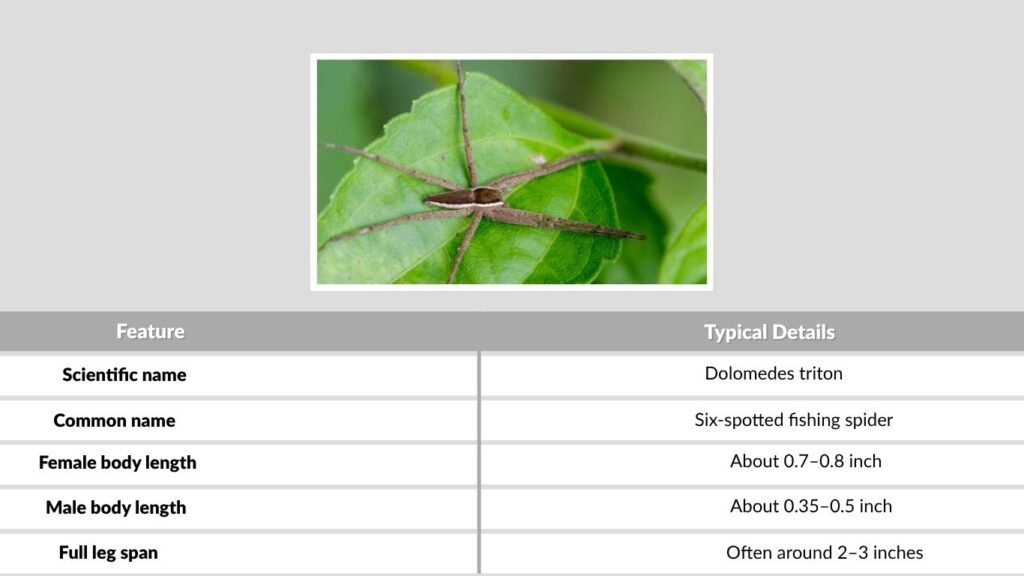
The six-spotted fishing spider is one of the larger spiders commonly found around freshwater habitats. Females are usually bigger than males and may look more robust, especially when carrying an egg sac.
Adult females usually have a body length of about 0.7 to 0.8 inch, while males are often smaller, around 0.35 to 0.5 inch in body length. With the legs spread out, the spider can appear much larger. Its full leg span may reach around 2 to 3 inches, which is why many people mistake it for a more dangerous spider.
Juvenile six-spotted fishing spiders are smaller and lighter. As they grow, they molt several times and gradually develop stronger markings, longer legs, and a more adult body shape.
| Feature | Typical Details |
|---|---|
| Scientific name | Dolomedes triton |
| Common name | Six-spotted fishing spider |
| Female body length | About 0.7–0.8 inch |
| Male body length | About 0.35–0.5 inch |
| Full leg span | Often around 2–3 inches |
| Main habitat | Ponds, lakes, marshes, streams, docks |
| Danger to humans | Low; bites are uncommon |
Color and Markings
The six-spotted fishing spider usually has a brown, grayish-brown, or greenish-brown body. Its color helps it blend with wetland plants, wood, rocks, mud, and floating vegetation. This camouflage is important because the spider hunts in open areas near water and also needs protection from birds, frogs, fish, and other predators.
The body often has pale stripes along the sides of the carapace and abdomen. The legs may appear banded with lighter and darker sections. Some individuals have a pale border around the body, which can make them easier to recognize when viewed from above.
The underside is one of the most useful identification features. Many six-spotted fishing spiders have pale or white spots underneath the abdomen. These markings are part of the reason for the common name, though the number and visibility of the spots can vary.
How to Identify a Six-Spotted Fishing Spider
Identification is easiest when you look at the spider’s shape, markings, behavior, and habitat together. This species is long-legged, flattened-looking, and strongly associated with freshwater. It often rests with its legs spread wide on floating plants, rocks, docks, or shoreline vegetation.
Identification
- Large, long-legged spider with a flattened resting posture
- Brown, grayish-brown, or greenish-brown body
- Pale stripes or borders along the sides of the body
- Banded legs with light and dark sections
- Pale spots on the underside of the abdomen
- Usually found beside ponds, marshes, lakes, or slow streams
- Can run across the water surface
- May dive underwater when threatened
- Does not build a round web to catch prey
- Females may carry a round egg sac in their jaws
Habitat and Range

The six-spotted fishing spider lives in wetland and freshwater habitats. It is commonly found around ponds, lakes, marshes, swamps, slow-moving streams, and quiet edges of rivers. It prefers places with aquatic plants, floating vegetation, shoreline grasses, wooden docks, rocks, and other surfaces where it can rest and hunt.
This spider is widely found across North America. It is often reported in states such as Michigan, Ohio, Georgia, Maine, North Carolina, and many other areas where suitable freshwater habitats exist. It may also occur in moist environments farther south.
Around homes, it is most likely to appear near ponds, garden water features, swimming pools, docks, sheds, boathouses, and damp outdoor areas. It may accidentally enter buildings, but it is not a typical indoor pest. If one appears inside, it likely wandered in from a nearby wet or wooded area.
Diet and Hunting Behavior
The six-spotted fishing spider is a skilled predator. It does not rely on sticky webs to trap prey. Instead, it waits near the water and uses vibration to detect movement. When an insect lands on the surface or an aquatic animal moves nearby, the spider quickly rushes forward.
Its diet mainly includes insects and other small invertebrates. Common prey includes mosquitoes, flies, moths, small beetles, aquatic insects, and other spiders. Larger individuals may also catch tadpoles, tiny fish, and small aquatic animals when the opportunity appears.
This spider can place its front legs on the water to sense ripples. It can also move across the water by using surface tension. If threatened, it may dive below the surface and stay hidden for a short time. Tiny hairs on its body help trap air, allowing it to survive underwater briefly.
Does the Six-Spotted Fishing Spider Bite?
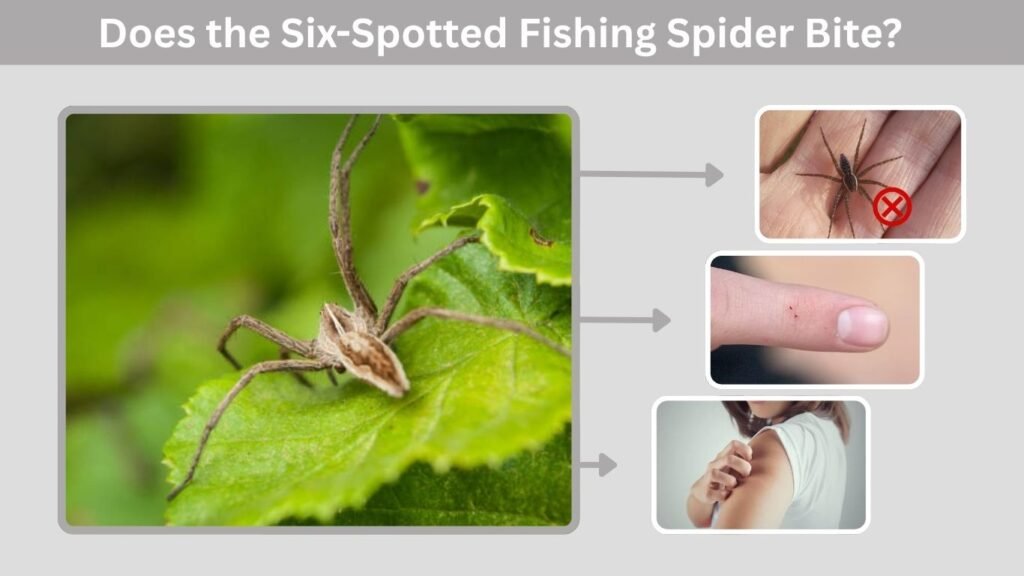
Yes, the six-spotted fishing spider can bite, but bites are uncommon. It is not aggressive toward humans and usually runs away when disturbed. A bite is most likely to happen if the spider is trapped against the skin, handled roughly, or accidentally squeezed.
Most bites cause mild local symptoms, such as temporary pain, redness, swelling, or itching. The discomfort is often compared with a bee sting. Serious reactions are rare, but anyone who develops strong swelling, breathing trouble, dizziness, spreading redness, or signs of infection should seek medical help.
The safest approach is not to handle the spider. If you find one indoors, use a cup and stiff paper to capture it gently and release it outside near a suitable natural area.
Is the Six-Spotted Fishing Spider Poisonous or Venomous?
The six-spotted fishing spider is venomous, not poisonous. Venomous animals inject venom through a bite or sting, while poisonous animals cause harm when touched or eaten. This spider uses venom to subdue insects and small aquatic prey.
For humans, its venom is not considered medically dangerous in normal encounters. The spider does not seek out people and does not bite unless threatened. Its presence near water is usually beneficial because it helps control insects, including mosquitoes and other small pests.
Male, Female, and Juvenile Differences
Female six-spotted fishing spiders are usually larger than males. They often have a wider body and may be seen carrying an egg sac. A female carries the egg sac in her jaws before attaching it to a nursery web in a protected place near vegetation.
Males are smaller and slimmer. They are usually less noticeable because they do not reach the same size as adult females. During the breeding season, males search for females near suitable wetland habitats.
Juvenile six-spotted fishing spiders look like smaller versions of adults, though their markings may be less bold. Young spiders stay near the nursery area for a short time after hatching, then disperse and begin hunting small prey.
Life Cycle and Reproduction
The life cycle begins when the female produces eggs inside a silk egg sac. She carries the egg sac with her mouthparts, which is an important clue for separating fishing spiders from wolf spiders. Wolf spiders carry their egg sacs attached to the rear of the abdomen, while fishing spiders hold the sac near the front.
Before the eggs hatch, the female creates a nursery web among plants or other protected surfaces. She places the egg sac there and guards the spiderlings after they emerge. The young spiders remain together briefly before spreading out.
As they grow, they molt several times. Their lifespan is commonly around one to two years, depending on food, climate, predators, and environmental conditions. Females often live longer than males.
Six-Spotted Fishing Spider vs Wolf Spider
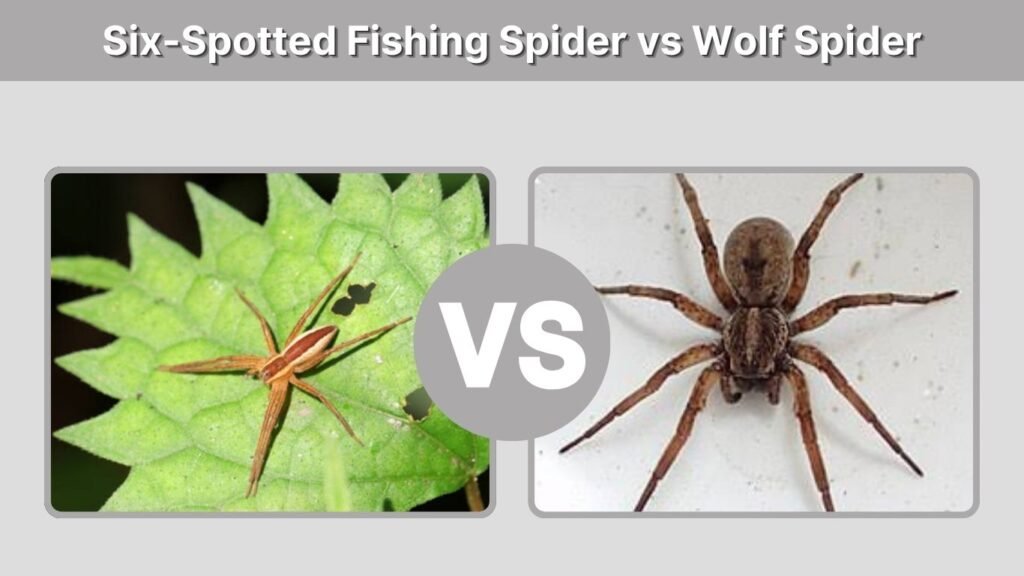
The six-spotted fishing spider is often confused with wolf spiders because both can be large, brown, and fast-moving. However, their habits are different. Six-spotted fishing spiders are strongly connected to water and are often found on ponds, floating plants, docks, and wetland vegetation.
Wolf spiders are more common on the ground in lawns, fields, gardens, and leaf litter. They do not usually run across water like fishing spiders. Female wolf spiders also carry egg sacs from the rear of the body, while female fishing spiders carry egg sacs in their jaws.
Is It Dangerous Around Homes?
The six-spotted fishing spider is not dangerous around homes. In most cases, it is only passing through or living near a water source. It does not infest houses like some household pests, and it does not damage wood, clothing, stored food, or furniture.
If you see one outside, leaving it alone is usually the best choice. It helps reduce insects and plays a useful role in the local ecosystem. If you do not want them near your home, reduce outdoor insects, seal gaps around doors and windows, remove clutter near water features, and keep damp storage areas clean.
FAQs
What does a six-spotted fishing spider eat?
A six-spotted fishing spider eats insects, aquatic bugs, small spiders, tadpoles, and sometimes tiny fish. It hunts actively instead of using a sticky web. The spider waits near water and senses vibrations from prey moving on the surface, then rushes forward to capture it.
Where does the six-spotted fishing spider live?
The six-spotted fishing spider lives near freshwater habitats such as ponds, lakes, marshes, swamps, slow streams, and river edges. It often rests on floating plants, rocks, docks, shoreline vegetation, and wooden structures. It is widely found across North America where wetland habitats are available.
Is the six-spotted fishing spider venomous?
Yes, the six-spotted fishing spider is venomous because it uses venom to immobilize prey. However, its venom is not considered dangerous to most humans. Bites are rare and usually cause mild local pain, redness, or swelling when they happen.
Can a six-spotted fishing spider go underwater?
Yes, this spider can dive underwater when escaping danger or hunting near the surface. Fine body hairs help trap a thin layer of air, allowing it to stay submerged briefly. This ability helps it survive in wetland habitats and avoid predators.
Should I kill a six-spotted fishing spider?
It is better not to kill a six-spotted fishing spider. It is beneficial because it controls insects and supports the balance of freshwater ecosystems. If one enters your home, capture it gently with a container and release it outside near vegetation or water.