
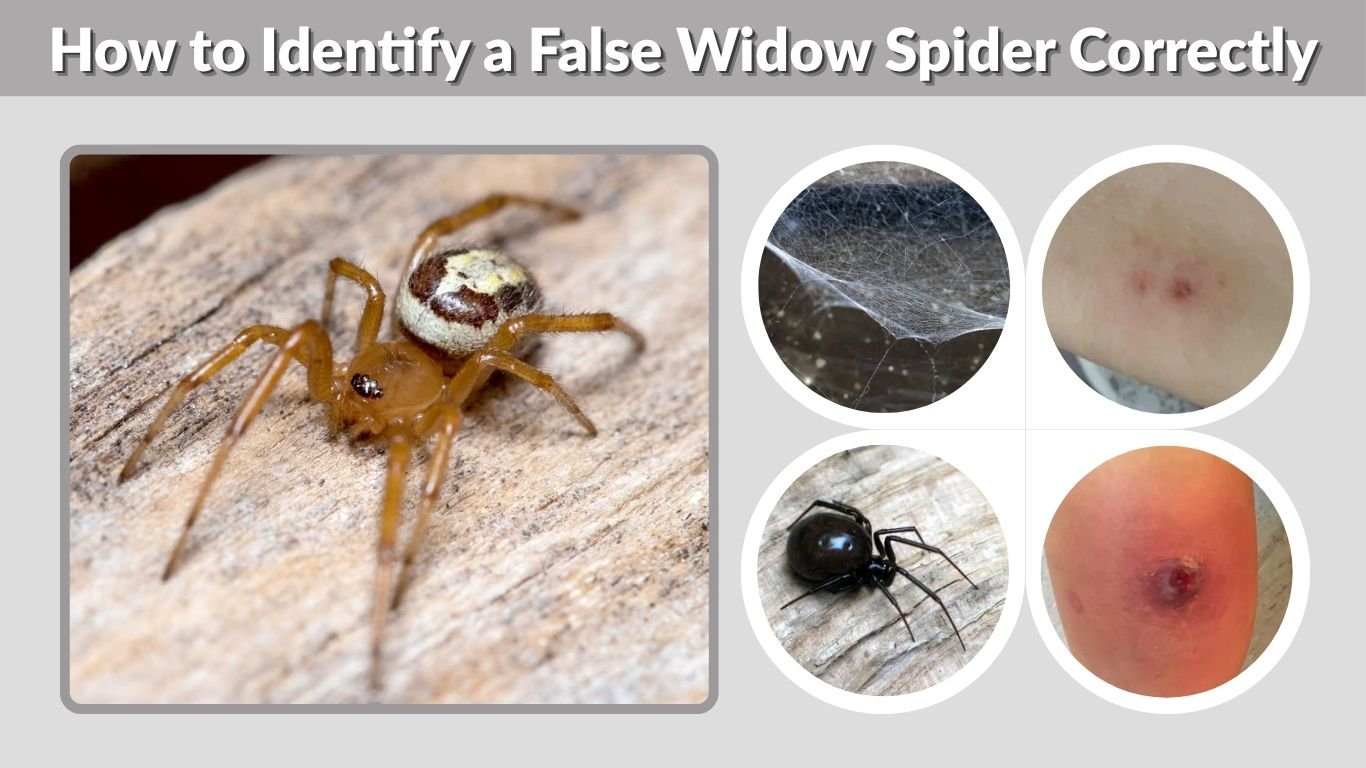
False widow spiders are often mistaken for black widows because of their rounded body, glossy colour, and indoor hiding habits. However, they have clear identification clues when you look at body shape, markings, web style, size, and location. Learning these features helps you avoid panic, recognise a noble false widow, and know when a bite-like mark needs proper attention.
What Is a False Widow Spider?
A false widow spider is a spider from the Steatoda group. These spiders are called “false widows” because they look somewhat similar to true black widow spiders, but they are not the same. They are commonly found around houses, sheds, garages, gardens, walls, fences, and sheltered corners.
The noble false widow is one of the best-known species. It has become common in parts of the UK and is often discussed because it can bite if trapped or handled. Still, false widow spiders are not aggressive hunters of people. Most encounters happen when they hide in quiet places and are accidentally disturbed.
False widow identification should not rely on one feature only. Colour, markings, body shape, leg pattern, web type, and behaviour all help confirm the spider more accurately.
Key Features of a False Widow Spider
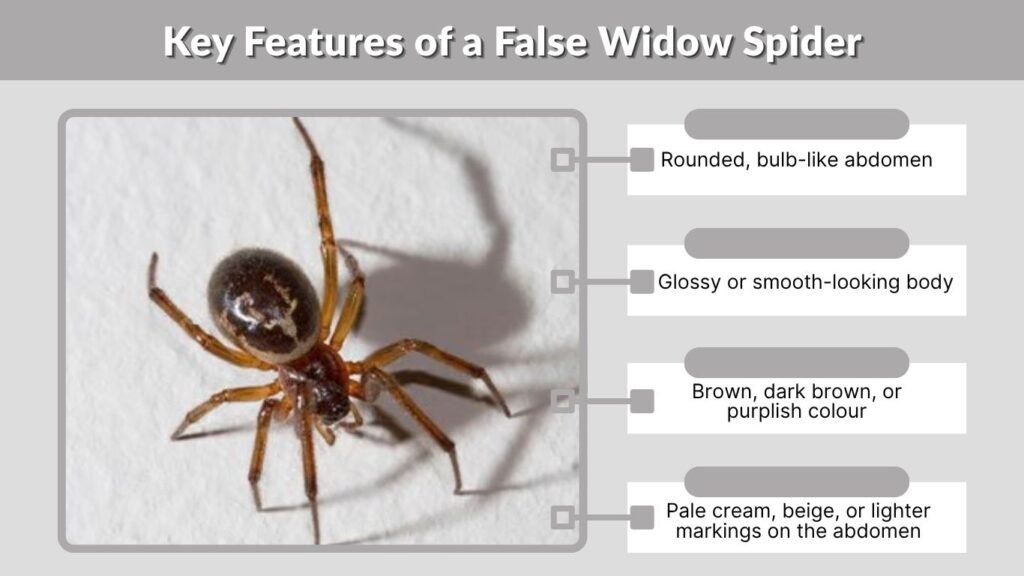
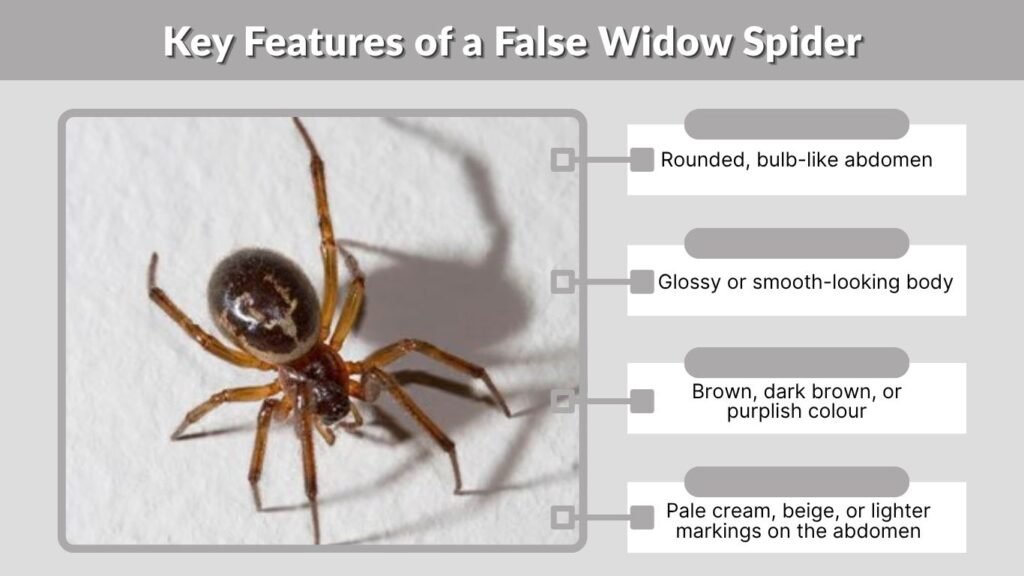
False widow spiders usually have a rounded abdomen, shiny body, and relatively slim legs. Their colour can vary from dark brown to purplish brown, and some individuals look almost black. The markings may be clear in some spiders and faded in others.
Main Identification Signs
Look for these features when identifying a false widow spider:
- Rounded, bulb-like abdomen
- Glossy or smooth-looking body
- Brown, dark brown, or purplish colour
- Pale cream, beige, or lighter markings on the abdomen
- Slender legs, often reddish brown or orange-brown
- Small to medium body size
- Messy, tangled web
- Hiding in sheltered corners
- More visible around homes and buildings
- Female often larger and rounder than male
A single spider may not show every feature clearly. Older females can have faded markings, while younger spiders may look lighter or more patterned.
How to Identify a Noble False Widow Spider
The noble false widow is often the species people mean when they say “false widow spider.” It has a glossy, rounded abdomen with pale markings that may look like a skull, shield, or cream-coloured pattern. These markings are not always sharp, so do not depend only on the “skull” shape.
Female noble false widows are usually larger and rounder. Males are often slimmer, with longer-looking legs and a smaller abdomen. The body colour may be dark brown, reddish brown, or purplish. The legs are usually brown to orange-brown and may appear darker at the joints.
A noble false widow often sits in a messy web near window frames, roof spaces, garages, sheds, outdoor furniture, bins, and wall gaps. It prefers sheltered areas where insects pass by.
False Widow Spider Size and Shape
Size is useful, but it should not be the only clue. Many small house spiders can look similar at first glance. False widows are usually not huge, but their rounded abdomen can make them look larger than they are.
| Feature | False Widow Spider | Common House Spider | True Black Widow |
| Abdomen shape | Round, glossy, bulb-like | Less glossy, often flatter or longer | Round and glossy |
| Colour | Brown to dark brown | Brown, tan, grey, or patterned | Usually black |
| Markings | Pale cream or beige patterns | Varied stripes or mottling | Red hourglass on underside |
| Web type | Messy, tangled web | Sheet-like or funnel-like webs | Irregular sticky web |
| Indoor presence | Common around buildings | Very common indoors | Rare in many regions |
Female false widows usually look more rounded than males. A baby false widow spider may be harder to identify because the body is smaller and markings may not be fully developed.
How to Identify a False Widow Spider Web
False widow spider webs are messy, irregular, and tangled. They do not make neat circular orb webs like garden orb-weavers. Their webs often look like loose threads in corners, gaps, frames, and sheltered areas.
Web Identification Clues
A false widow web may have these signs:
- Irregular, messy silk structure
- Tangled threads rather than a neat wheel shape
- Built in sheltered corners or cracks
- Often close to walls, windows, sheds, or fences
- Spider may hide in a retreat near the web
- Web may catch small flies, ants, moths, or other insects
- Usually not stretched across open garden spaces
False widow spiders prefer places where the web is protected from wind and disturbance. If you see a messy web in a warm, dry, hidden corner, check carefully before touching it.
Where False Widow Spiders Are Found
False widow spiders often live close to people because buildings provide warmth, shelter, and insects. They may be found indoors or outdoors, especially in places that are rarely cleaned or moved.
Common hiding places include garages, sheds, roof spaces, window frames, wall cracks, garden furniture, fences, bins, outdoor lights, storage boxes, and cluttered corners. Indoors, they may appear in utility rooms, cupboards, lofts, and behind furniture.
In the UK, the noble false widow is especially associated with built-up areas. It has spread in many regions and is now a familiar spider around houses and gardens. In cooler months, spiders may move into warmer sheltered areas.
False Widow vs False Black Widow
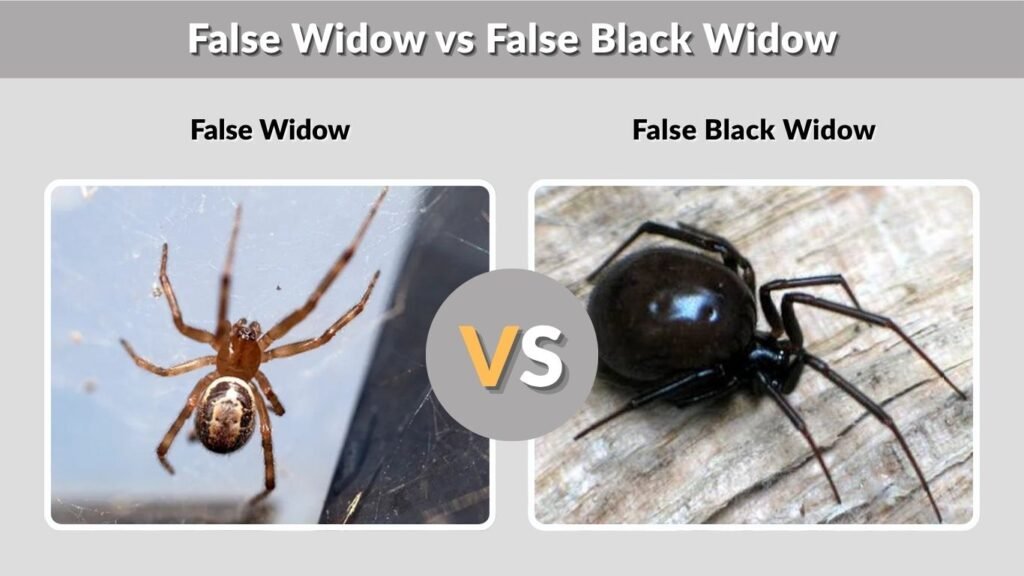
The phrase “false black widow spider” is often used for false widow spiders that look dark and glossy. It is not always a separate spider in casual use. Many people use “false widow” and “false black widow” to describe the same type of Steatoda spider.
A false black widow may appear dark brown or nearly black, with a rounded abdomen and pale markings. However, true black widows usually have a more distinct red hourglass marking on the underside of the abdomen. False widows do not have the classic red hourglass pattern.
If you cannot see the underside, do not try to pick up the spider. Use a container or take a photo from a safe distance.
Baby False Widow Spider Identification
Baby false widow spiders are more difficult to identify than adults. They are smaller, lighter, and may not show the same strong body shape. Their markings can be less developed, and they may resemble other young house spiders.
Young Spider Clues
A young false widow may show:
- Small rounded abdomen
- Light brown or tan body
- Fine pale markings
- Slender legs
- Small messy web
- Sheltered hiding place
- Similar shape to adult, but less obvious
Because young spiders are harder to confirm, it is better to identify them by a combination of web style, location, and body shape. If identification matters, a clear close-up photo can help an expert or local spider group confirm it.
How to Identify a False Widow Spider Bite
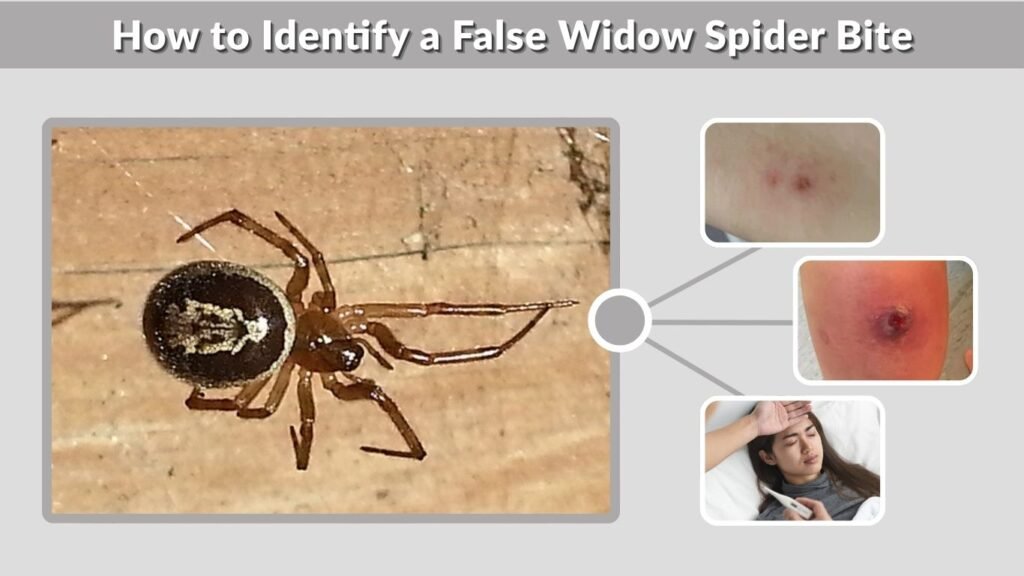
A bite mark alone cannot reliably identify a false widow spider. Many insect bites, skin infections, allergic reactions, and irritated hair follicles can look similar. A bite is more likely to be from a false widow if the spider was seen biting or found trapped against the skin.
A false widow bite may feel like a sharp sting or pinch. The area may become red, swollen, itchy, warm, or tender. Sometimes a small blister can form. Most mild reactions improve with basic care, but a worsening wound should be checked.
Bite Warning Signs
Seek medical advice if you notice:
- Spreading redness
- Increasing swelling
- Severe or worsening pain
- Pus or yellow fluid
- Fever or chills
- Red streaks from the bite
- Dizziness or breathing trouble
- A wound that becomes dark or open
Do not cut, squeeze, or scratch a suspected bite. Wash it gently, use a cold compress, and monitor changes.
Spiders Commonly Mistaken for False Widows
Many harmless spiders are confused with false widows because they are brown, round, or found indoors. Misidentification is common, especially when the spider is small or moving quickly.
Common lookalikes include cupboard spiders, common house spiders, lace-webbed spiders, missing-sector orb-weavers, and young orb-weavers. Some of these spiders also have rounded bodies or pale markings, but their web shape, body texture, and leg pattern may differ.
False widows tend to have a smoother, shinier abdomen and a more tangled web. House spiders often look hairier and may have longer, more obvious legs. Orb-weavers usually build circular webs, which false widows do not.
Safe Ways to Check a Spider
You should never handle an unknown spider with bare hands. Even if it is harmless, it may bite if trapped or squeezed. Identification can usually be done without touching the spider.
Safe Checking Steps
Use these steps if you find a possible false widow:
- Keep a safe distance.
- Use a phone camera with zoom.
- Look at body shape and markings.
- Check whether the web is messy or circular.
- Note where the spider was found.
- Avoid crushing it with bare hands.
- Use a glass and card if removal is needed.
- Release it away from high-contact areas if safe.
- Ask a local expert if unsure.
A clear photo from above and side view is more useful than a blurry close-up. Include the web or location if possible.
Are False Widow Spiders Dangerous?
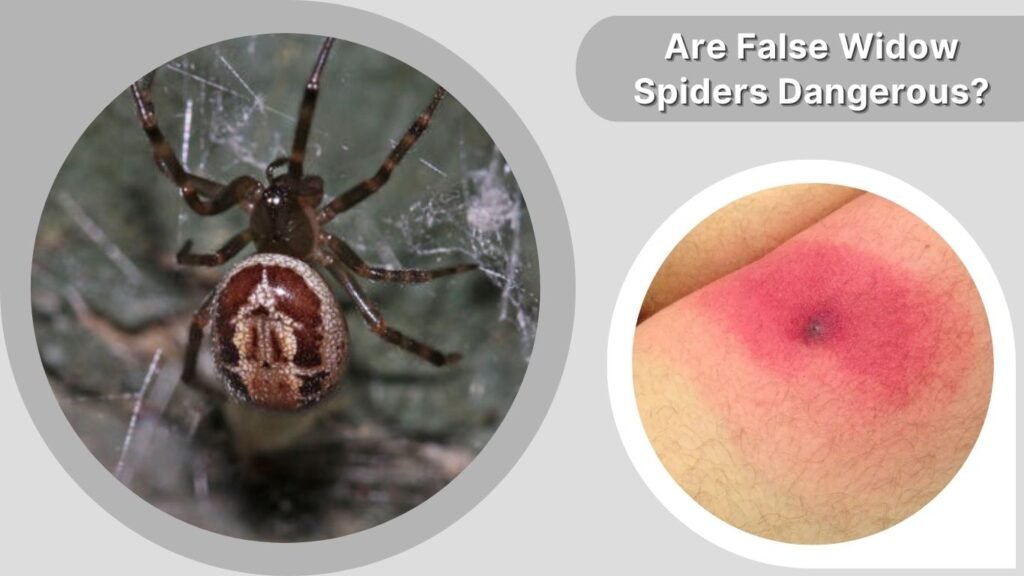
False widow spiders are venomous, but most are not dangerous to healthy adults. They may bite if trapped against the skin, but they do not usually attack people. The bite is often compared to a bee or wasp sting, though some people may have stronger reactions.
The main concern is not only venom but also irritation, allergic response, or infection after the skin is broken. Children, older adults, pregnant people, and people with weakened immune systems should be more cautious if bitten.
Correct identification can reduce unnecessary fear. False widows should be treated with respect, but they do not need panic or extreme pest control in most situations.
How to Prevent False Widow Spider Encounters
Prevention is simple: reduce hiding places and avoid accidental contact. False widow spiders prefer quiet, sheltered areas, so regular cleaning can lower the chance of surprise encounters.
Prevention Tips
- Shake out gloves, shoes, and clothing before wearing.
- Wear gloves when moving stored boxes or garden items.
- Clean window frames, sheds, and garage corners.
- Reduce clutter in storage areas.
- Seal cracks around doors and windows.
- Check outdoor furniture before sitting.
- Move bins and firewood away from doors.
- Vacuum webs from quiet corners.
- Keep bedding away from walls if spiders are common.
- Avoid leaving towels or clothes on the floor.
You do not need to remove every spider from your home. Focus on places where people sleep, dress, handle tools, or reach into storage.
FAQs
How do I identify a false widow spider?
Look for a glossy, rounded abdomen, brown to dark brown colour, pale markings, slender brown legs, and a messy tangled web. False widows often hide around sheds, garages, window frames, walls, and quiet indoor corners. Use several features together because colour and markings can vary.
How do I identify a noble false widow spider?
A noble false widow usually has a rounded, shiny abdomen with pale cream markings that may look like a skull or shield. Females are larger and rounder, while males are slimmer with longer-looking legs. They often build messy webs in sheltered places around buildings and gardens.
What does a false widow spider web look like?
A false widow spider web is messy, tangled, and irregular. It is not a neat circular web. You may find it in corners, cracks, window frames, sheds, garages, fences, or outdoor furniture. The spider often hides close to the web in a sheltered retreat.
Can you identify a false widow spider bite by appearance?
A bite mark alone is not enough to confirm a false widow spider bite. Many insect bites and skin infections look similar. A false widow bite may cause pain, redness, swelling, itching, or a small blister. Confirmation is more likely if the spider was seen biting or found trapped nearby.
What should I do if I find a false widow spider?
Do not handle it with bare hands. Take a clear photo if you need identification. If removal is needed, use a glass and card or another safe method. Clean cluttered corners, remove webs carefully, and check gloves, shoes, and stored items before use.
