
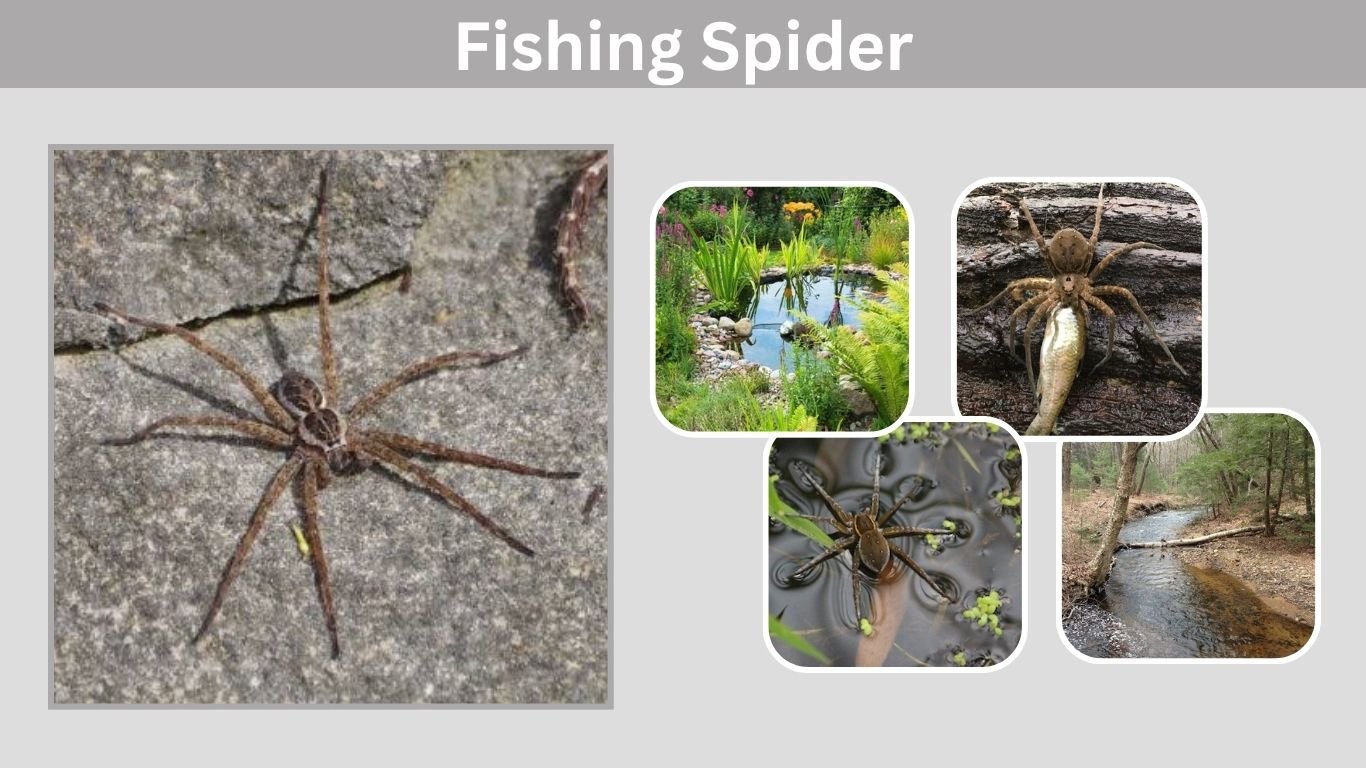
Fishing spiders are large, fast-moving spiders often found near ponds, streams, wetlands, and damp wooded areas. Their size can look intimidating, but these spiders are not aggressive toward people. They belong to the genus Dolomedes and are known for their ability to run across water, catch insects, and sometimes even prey on small aquatic animals. Understanding their size, color, habitat, diet, and identification features can help you recognize them safely.
What Is a Fishing Spider?
Fishing spiders are semi-aquatic spiders that often live close to water. They are sometimes confused with wolf spiders because both can be large, brown, and hairy-looking. However, fishing spiders have a stronger connection to wet habitats and can move across the surface of water using surface tension.
These spiders do not build classic round webs to catch flying insects. Instead, they actively hunt. Many species wait near water edges, docks, rocks, tree trunks, or vegetation, then rush toward prey when they sense movement. Some can even dive briefly underwater to escape danger or catch prey.
Fishing spiders are common in many parts of North America, especially in areas with ponds, lakes, marshes, creeks, and moist forests. They may also appear around homes, basements, sheds, and garages when moisture and insects are present.
Fishing Spider Size
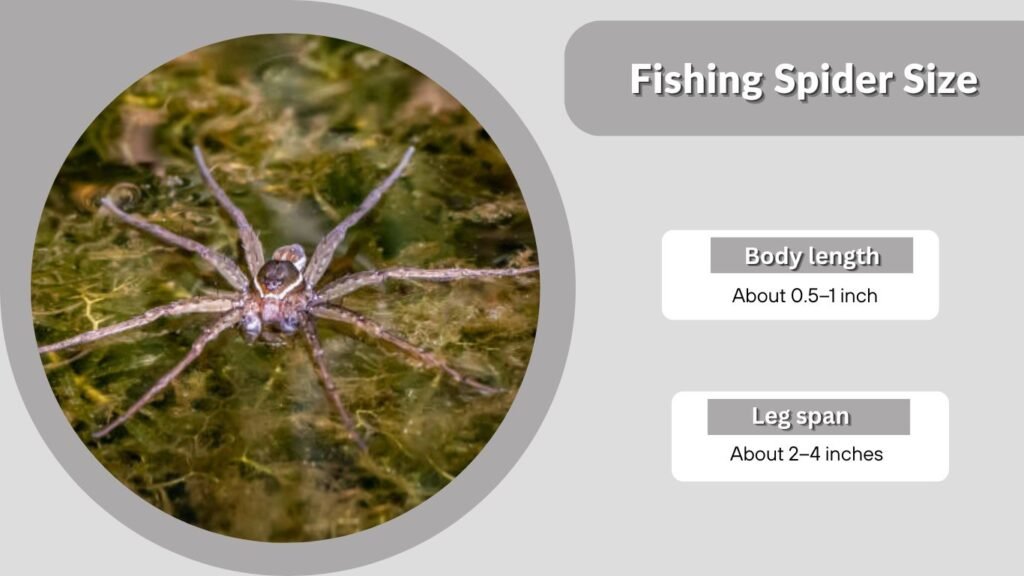
Fishing spiders are among the larger spiders people commonly notice around homes and natural water areas. Their body length is usually much smaller than their full leg span, which is why they can appear huge at first glance.
Adult fishing spiders usually have a body length of about 0.5 to 1 inch, but their leg span may reach 2 to 4 inches depending on the species and sex. Females are usually larger and heavier-bodied than males. A large female fishing spider resting on a wall, dock, or tree trunk can look especially impressive because of her long, spread-out legs.
Young fishing spiders are much smaller and may look like tiny versions of adults. As they grow, they molt several times, gradually developing longer legs, stronger markings, and a more noticeable body shape.
Size at a Glance
| Feature | Typical Measurement |
|---|---|
| Body length | About 0.5–1 inch |
| Leg span | About 2–4 inches |
| Female size | Usually larger than males |
| Young spiders | Much smaller, lighter, and less marked |
| Overall appearance | Large, long-legged, flattened posture |
Fishing Spider Color and Markings
Fishing spiders are usually brown, gray, tan, or dark brown. Their colors help them blend into bark, rocks, leaves, mud, and wetland plants. Most have stripes, bands, or mottled patterns across the body and legs.
Many fishing spiders have a pale stripe or marking along the side of the body. Some species show dark W-shaped or chevron-like markings on the abdomen. Their legs are often banded with alternating light and dark patches. These patterns help break up the spider’s outline when it rests on tree bark, logs, or stones.
Not all fishing spiders look exactly the same. Color can vary by species, age, sex, and habitat. A spider living on pale rocks may appear lighter, while one found on tree bark or near muddy water may look darker.
Common Color Features
- Brown, gray, tan, or dark brown body
- Long banded legs
- Pale side stripes on the body
- Dark markings on the abdomen
- Camouflage pattern that matches bark, rocks, or leaves
- Flattened resting posture that helps it hide on surfaces
How to Identify a Fishing Spider
Fishing spider identification is easiest when you look at body shape, leg posture, habitat, and behavior together. These spiders have long legs, a fairly flat body posture, and a habit of resting with their legs spread wide. They may sit on walls, docks, rocks, plants, or tree trunks near water.
Unlike orb-weaving spiders, fishing spiders do not sit in a round web. They are hunting spiders. They wait for prey and move quickly when disturbed. If near water, they may dash across the surface or hide among shoreline plants.
Fishing spiders may be mistaken for wolf spiders, nursery web spiders, or even brown recluse spiders. However, fishing spiders are usually larger than brown recluse spiders and do not have the same violin-shaped marking. They also have banded legs and more patterned bodies.
Key Identification Signs
- Large spider with long legs
- Brown, gray, or tan body with mottled markings
- Legs often show dark and light bands
- Body may look flattened when resting
- Often found near water, damp wood, or moist areas
- Can run across water
- Does not make a round prey-catching web
- Females may carry a round egg sac under the body
- Young spiderlings may gather near a nursery web after hatching
Fishing Spider Habitat
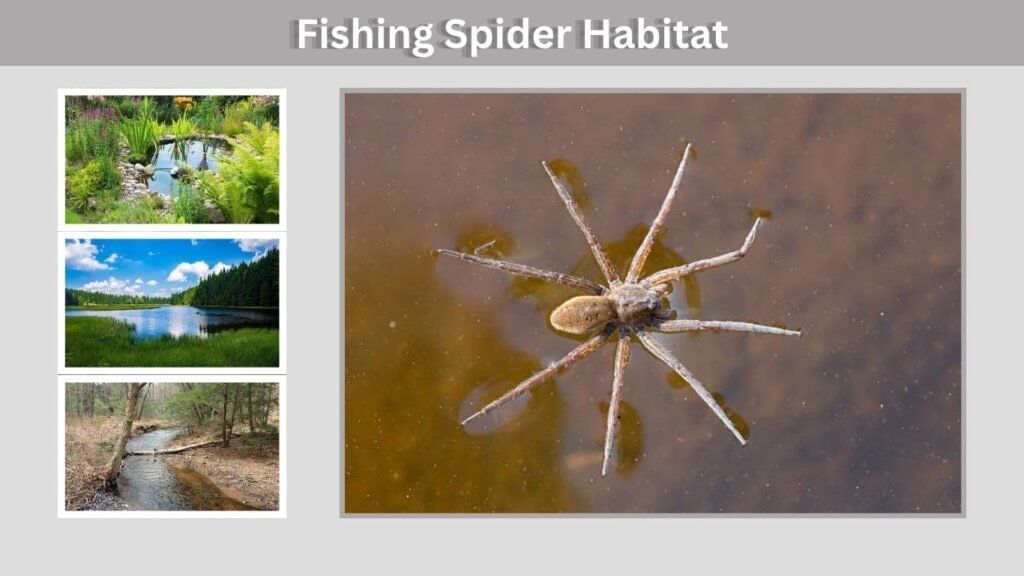
Fishing spiders prefer places where moisture, shelter, and prey are available. Many species live around ponds, lakes, streams, marshes, swamps, and wet meadows. They are also common near docks, boat houses, shoreline rocks, and aquatic plants.
Some fishing spiders live farther from open water. They may be found in damp forests, leaf litter, tree bark, rotting logs, wood piles, sheds, basements, and crawl spaces. Around homes, they are more likely to appear in areas with moisture problems or plenty of insects.
They often rest on vertical surfaces such as tree trunks, walls, or dock posts. Their flat posture and camouflage colors make them hard to notice until they move.
Where Fishing Spiders Live Around Homes
Fishing spiders may enter houses accidentally, especially in areas close to water or woods. They may also move indoors during seasonal changes or when searching for shelter. Basements, garages, bathrooms, laundry rooms, and crawl spaces are common indoor locations because these areas may be damp and attract insects.
Seeing one fishing spider indoors does not always mean there is an infestation. These spiders are solitary hunters, not colony-forming pests. However, frequent sightings may suggest moisture, gaps around doors and windows, or an insect problem that is attracting them.
To reduce indoor sightings, seal entry points, remove clutter, improve ventilation, and reduce moisture. Keeping outdoor lights off when not needed can also reduce insect activity near the home, which may make the area less attractive to hunting spiders.
Fishing Spider Diet
Fishing spiders are active predators. Their diet mainly includes insects and other small invertebrates, but some larger individuals can catch small aquatic animals. Their hunting style depends on vibration and movement. When prey moves on land, plants, or the water surface, the spider can detect it and rush forward.
Common prey includes flies, mosquitoes, moths, crickets, grasshoppers, beetles, aquatic insects, and small spiders. Near water, fishing spiders may catch tadpoles, small fish, or other tiny aquatic animals when the opportunity appears. This ability is one reason they are called fishing spiders.
They do not rely on sticky webs. Instead, they use speed, strong legs, and venom to subdue prey. After catching prey, they inject venom and digestive fluids, then consume the softened tissues.
Common Foods
- Flies and mosquitoes
- Moths and small beetles
- Crickets and grasshoppers
- Aquatic insects
- Small spiders
- Tadpoles in some cases
- Very small fish in some cases
- Other tiny invertebrates near water
Fishing Spider Behavior
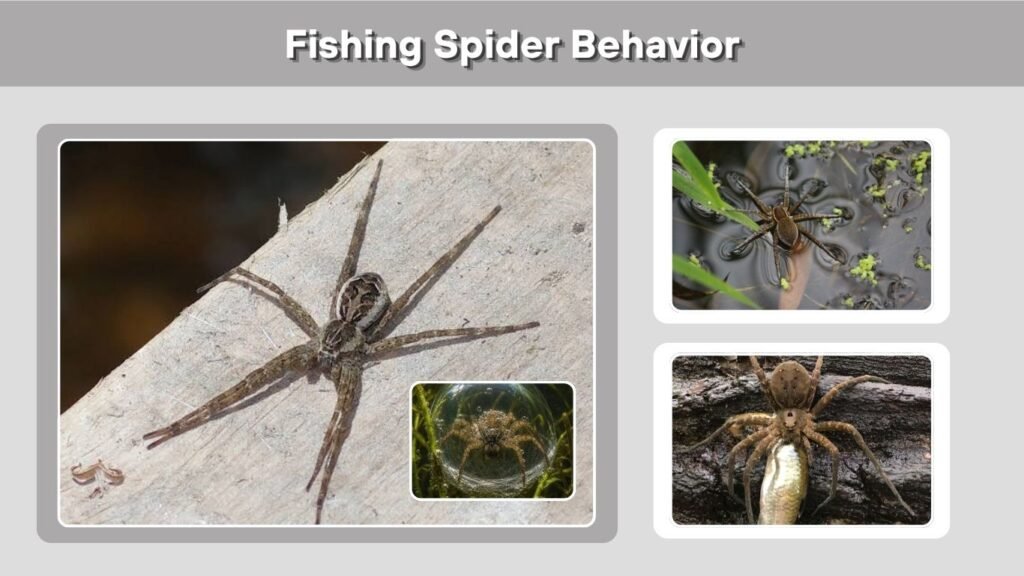
Fishing spiders are usually shy and avoid people. When disturbed, they often run away, hide in cracks, or move quickly toward shelter. Near water, some can skate across the surface. They may also dive underwater and remain submerged for a short time by trapping air around their body hairs.
Their hunting behavior is one of their most interesting traits. They may place their front legs on the water surface and wait for vibrations. When an insect falls onto the water or a small aquatic animal moves nearby, the spider senses the disturbance and attacks.
Fishing spiders are mostly solitary. They do not live in groups, although young spiderlings may remain near the nursery area for a short time after hatching.
Fishing Spider Life Cycle
Fishing spiders begin life as eggs inside a silk egg sac. Female fishing spiders are known for carrying their egg sacs with their mouthparts. This is different from wolf spiders, which carry egg sacs attached to their spinnerets at the rear of the body.
Before the eggs hatch, the female may build a nursery web in vegetation or a protected area. She places the egg sac there and guards it until the spiderlings emerge. The young spiders stay around the nursery web for a short time before dispersing.
As the young grow, they molt several times. Each molt allows the spider to increase in size. Males usually mature smaller and may live shorter lives than females. Adult females are often the ones people notice because of their larger body and egg-carrying behavior.
Are Fishing Spiders Dangerous?
Fishing spiders can bite, but bites are uncommon and usually happen only if the spider is trapped, handled, or pressed against the skin. They are not considered dangerous to most people. A bite may cause mild pain, redness, swelling, or irritation, similar to many other spider bites.
People with allergies, sensitive skin, or unusual symptoms should seek medical advice. It is also wise to clean the bite area, avoid scratching, and watch for signs of infection. Most encounters do not lead to bites because fishing spiders prefer escape over defense.
The best approach is to avoid handling them. If one is indoors, use a cup and paper to move it outside, or guide it into a container and release it away from doors and windows.
Fishing Spider vs Wolf Spider
Fishing spiders and wolf spiders are often confused because both are large, fast, brown hunting spiders. However, fishing spiders are more strongly associated with water and damp habitats. Wolf spiders are often found on the ground in lawns, gardens, fields, and leaf litter.
Fishing spiders usually have a flatter resting posture and longer-looking legs. Wolf spiders often have a more robust body and strong ground-running behavior. Female wolf spiders carry egg sacs from the rear of the abdomen, while female fishing spiders carry egg sacs in their mouthparts before attaching them to a nursery web.
Fishing Spider vs Brown Recluse
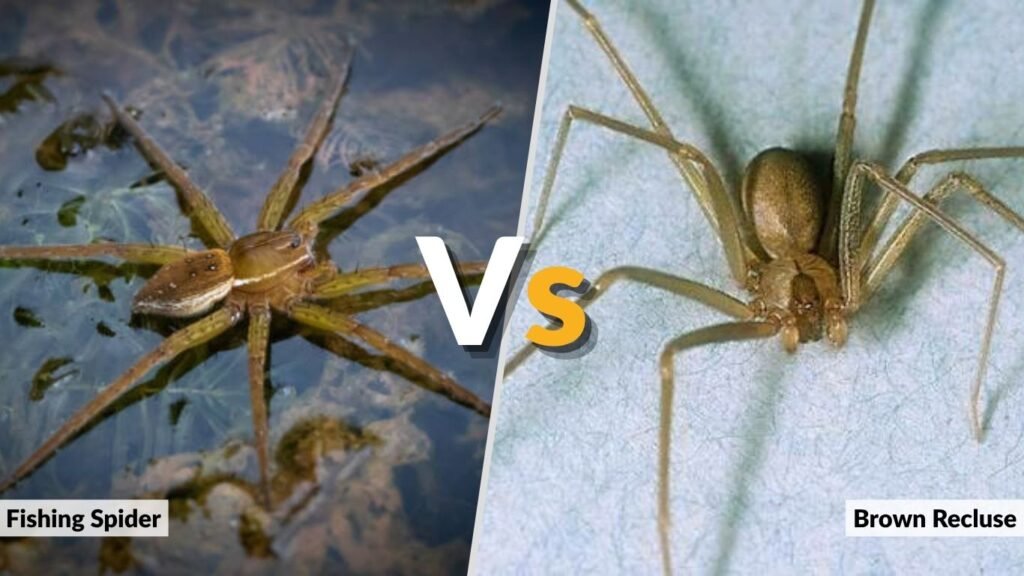
Fishing spiders are sometimes mistaken for brown recluse spiders, especially when found indoors. However, they are very different. Fishing spiders are usually larger, more patterned, and have banded legs. Brown recluse spiders are smaller, smoother-looking, and usually have a plain brown body with a violin-shaped marking near the front.
Fishing spiders also have more visible markings on the abdomen and legs. Brown recluse spiders do not have the same bold banding. Location can help too, but appearance and body structure are more reliable than guessing from where the spider was found.
How to Keep Fishing Spiders Away
Fishing spiders help control insects, so they are beneficial outdoors. Still, many people do not want large spiders inside the home. The best prevention method is to reduce the conditions that attract them.
Start by checking for moisture. Fix leaks, improve basement ventilation, use a dehumidifier if needed, and keep crawl spaces dry. Seal gaps around doors, windows, pipes, vents, and foundation cracks. Remove clutter where spiders can hide, such as cardboard boxes, wood piles, and stored items near walls.
Outdoor lighting can attract insects, which may attract spiders. Use lights only when needed or choose warm-colored bulbs that attract fewer insects. Keep vegetation trimmed away from the house and store firewood off the ground and away from exterior walls.
Prevention Tips
- Seal cracks and gaps around the home
- Reduce basement and crawl space moisture
- Fix leaking pipes or outdoor faucets
- Keep storage areas clean and uncluttered
- Move firewood away from the house
- Trim plants near walls and windows
- Reduce insects around outdoor lights
- Use screens on windows and vents
- Remove spiders gently instead of crushing them indoors
What to Do If You Find One
If you find a fishing spider outside, it is best to leave it alone. It is part of the natural ecosystem and helps reduce insects. If you find one indoors, stay calm. Use a glass or plastic container and a stiff piece of paper to trap and release it outside.
Avoid picking it up with your hands. Although fishing spiders are not aggressive, any spider may bite if squeezed or trapped. Release it in a shaded, sheltered outdoor area such as near shrubs, trees, or a damp natural space away from the house.
FAQs
Are fishing spiders poisonous?
Fishing spiders have venom, but they are not considered dangerous to most people. They use venom to control insect prey, not to attack humans. A bite may cause mild pain, redness, or swelling, but serious reactions are uncommon. Avoid handling them to reduce the chance of a defensive bite.
Do fishing spiders really catch fish?
Yes, some large fishing spiders can catch very small fish, tadpoles, and aquatic insects. However, fish are not their main food. Most of their diet includes insects, small invertebrates, and other prey found near water. Their name comes from their ability to hunt around the water surface.
Why are fishing spiders in my house?
Fishing spiders may enter homes by accident while searching for shelter, moisture, or prey. They are often found in basements, garages, laundry rooms, and crawl spaces. Frequent sightings may mean your home has damp areas, insect activity, or entry gaps that should be sealed.
Are fishing spiders the same as wolf spiders?
No, fishing spiders and wolf spiders are different. Both are large hunting spiders, but fishing spiders are more connected to wet habitats and can move across water. Wolf spiders are usually ground hunters. Female fishing spiders carry egg sacs with their mouthparts, while wolf spiders carry egg sacs at the rear.
Should I kill fishing spiders?
It is usually better not to kill fishing spiders. They help control insects and are not aggressive toward people. If one is indoors, capture it with a container and release it outside. Reducing moisture, sealing gaps, and controlling insects can help keep them from coming inside again.
