
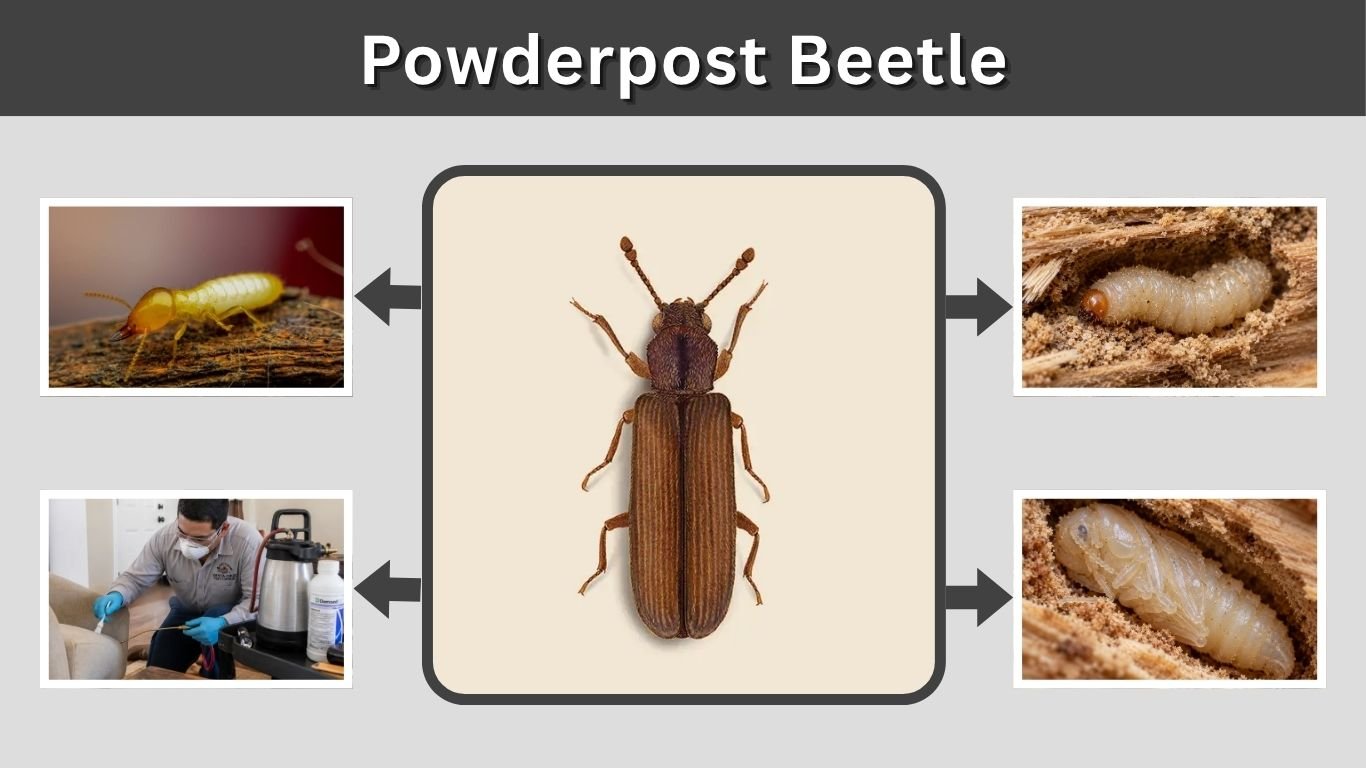
Powderpost beetles are small wood-boring insects that can quietly damage hardwood floors, furniture, bamboo, and wooden structures. Their larvae feed inside wood, leaving tunnels, tiny exit holes, and piles of fine dust known as frass. Because this activity remains hidden, an infestation may go unnoticed until adult beetles emerge. Identifying these insects correctly is essential because different powderpost beetle groups attack different types of wood and require different treatments. This guide explains their appearance, life cycle, infestation signs, treatment methods, and practical ways to prevent future damage.
What Is a Powderpost Beetle?
Powderpost beetles are wood-boring insects whose larvae feed inside dry or seasoned timber. The name describes several related beetle groups rather than one individual species. These insects are particularly troublesome because their feeding tunnels can gradually weaken wooden materials, sometimes leaving only a thin outer surface intact.
Where Do Powderpost Beetles Live?
Powderpost beetles occur in many regions worldwide, particularly where suitable timber is available. They commonly infest hardwood flooring, cabinets, furniture, decorative woodwork, and bamboo products.
Some species prefer newly processed hardwood, while others develop in older timber with elevated moisture levels.
Infestations sometimes originate in lumber or furniture before these materials enter a home.
What Do Powderpost Beetles Eat?
Powderpost beetle larvae consume nutrients within wood. True powderpost beetles particularly depend on starch found in the sapwood of susceptible hardwoods.
They commonly attack oak, ash, hickory, and certain other hardwood species. Bamboo can also support some powderpost beetles.
Most wood damage results from larval feeding, although adults of some groups also bore into timber.
Powderpost Beetle Identification
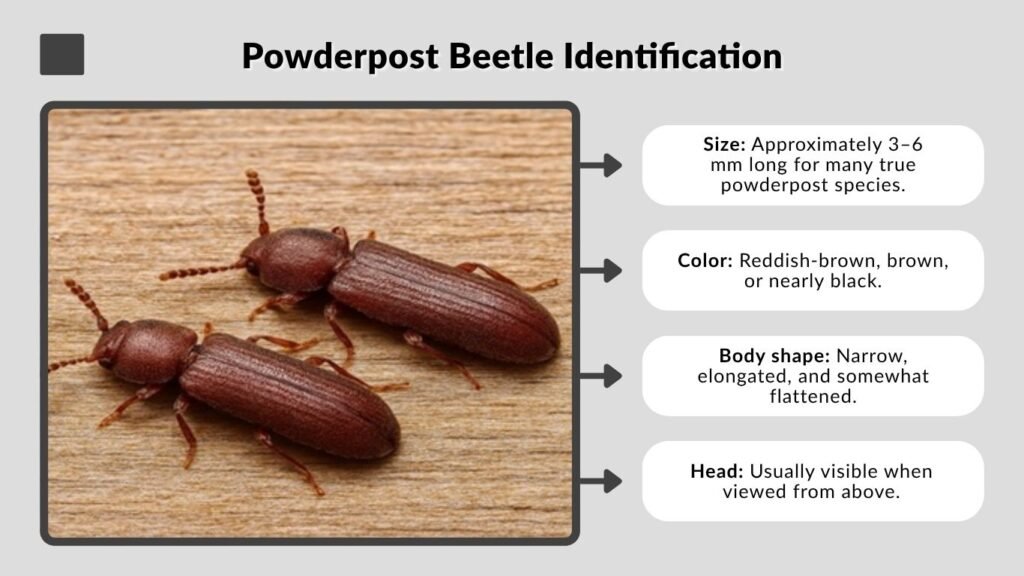
Identifying powderpost beetles involves examining their body shape, size, color, and distinctive physical features. Adults are often difficult to recognize because they resemble other small household beetles. Their larvae remain concealed within wood, making exit holes and frass important identification clues.
Adult Powderpost Beetle Appearance
True powderpost beetles are typically slender, somewhat flattened, and reddish-brown to dark brown.
Key identification features:
- Size: Approximately 3–6 mm long for many true powderpost species.
- Color: Reddish-brown, brown, or nearly black.
- Body shape: Narrow, elongated, and somewhat flattened.
- Head: Usually visible when viewed from above.
- Antennae: Often end in a distinct two-segmented club.
- Wings: Hardened wing covers protecting functional flight wings.
Appearance varies among beetle groups, so these characteristics primarily describe true powderpost beetles.
What Do Powderpost Beetle Larvae Look Like?
Powderpost beetle larvae are generally creamy-white, grub-like insects with darker heads.
Many have slightly curved or C-shaped bodies with small legs near the front.
They develop inside wooden tunnels and are rarely visible unless infested wood is broken open.
Larvae are responsible for the characteristic internal galleries and powdery debris associated with infestations.
Types of Powderpost Beetles
Three major groups of wood-boring beetles are commonly described as powderpost beetles. Although their damage can appear similar, they differ in body structure, wood preference, and infestation behavior. Identifying the correct group helps determine which control methods are appropriate.
Three Main Powderpost Beetle Groups
- True powderpost beetles (Lyctinae): Primarily infest hardwood sapwood, producing extremely fine, flour-like frass and small circular exit holes.
- False powderpost beetles (Bostrichidae): Usually have cylindrical bodies with concealed heads. Many attack hardwoods or bamboo and produce coarser, tightly packed frass.
- Anobiid powderpost beetles: Include several furniture and wood-boring beetles traditionally classified under Anobiidae, now generally included within Ptinidae. They can attack hardwoods and softwoods, often favoring timber with elevated moisture.
True vs. False Powderpost Beetles
True powderpost beetles usually produce fine, loose wood dust resembling talcum powder.
False powderpost beetles generally create larger tunnels containing more compacted, coarse debris.
Another difference is reinfestation. True powderpost beetles can repeatedly infest suitable hardwood, whereas many false powderpost species rarely reinfest seasoned wood.
Powderpost Beetle Life Cycle
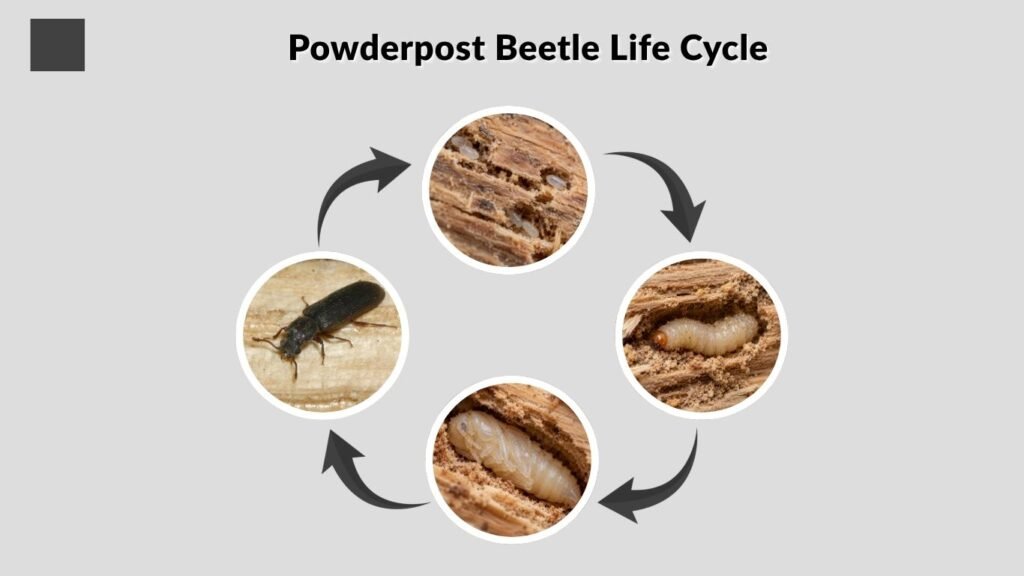
Powderpost beetles undergo complete metamorphosis through egg, larva, pupa, and adult stages. Development time varies significantly among species and environmental conditions. Most of the insect’s life occurs inside wood, where larvae feed and grow before emerging as adults.
Egg and Larval Development
Female beetles deposit eggs in suitable wood pores, cracks, or crevices, depending on the species.
After hatching, larvae burrow into timber and begin consuming available nutrients.
True powderpost beetles often complete development within several months to about a year. Other wood-boring groups may require several years.
Pupal and Adult Stages
Fully developed larvae pupate near the wood surface.
After transformation, adult beetles emerge through circular holes and search for mates.
Adults typically survive for a relatively short period. Many can fly, allowing them to disperse and locate new breeding sites.
Signs of Powderpost Beetle Infestation and Damage
Powderpost beetle infestations often remain hidden until visible evidence appears on wooden surfaces. Recognizing damage early helps homeowners determine whether an infestation is active and whether the affected material needs treatment or replacement.
Common Signs of Powderpost Beetles
- Exit holes: Small, round openings where adult beetles emerge.
- Powdery frass: Fine wood dust beneath or around infested timber.
- Adult beetles: Small brown insects appearing near wooden surfaces or windows.
- Internal tunnels: Narrow galleries exposed when damaged wood breaks.
- Weakened wood: Fragile flooring, furniture, or timber after extensive feeding.
These signs may indicate previous or ongoing activity. Exit holes alone cannot establish whether living beetles remain.
Powderpost Beetle Holes and Frass
True powderpost beetles commonly leave exit holes approximately 1–2 mm wide.
Their frass feels extremely fine, resembling flour or talcum powder.
Other groups may create larger holes and produce gritty or tightly packed debris.
Fresh powder accumulating beneath recently cleaned holes can suggest continuing beetle activity.
How to Identify an Active Infestation
Begin by removing loose dust and recording existing exit holes.
Check the affected wood periodically for newly appearing holes or fresh frass.
If fresh powder repeatedly accumulates, additional investigation is warranted.
However, old holes can remain visible long after an infestation has ended, making careful monitoring important.
Powderpost Beetle vs. Termite
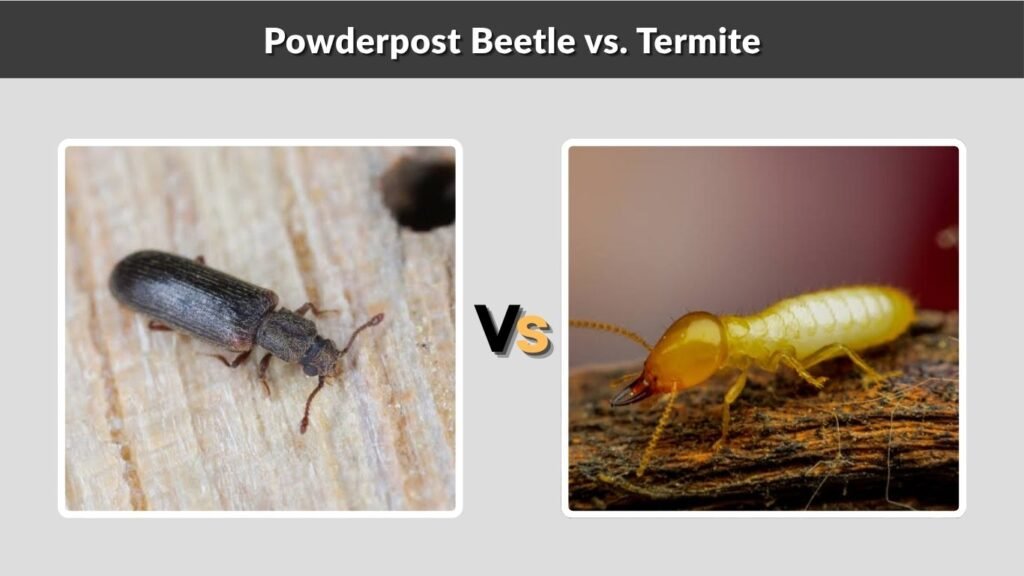
Powderpost beetles and termites both damage wood, but their feeding patterns and visible evidence differ. Correctly identifying the responsible insect is important because termite treatments and powderpost beetle treatments are not interchangeable.
How to Tell the Difference
Powderpost beetles generally leave distinct circular exit holes and fine wood dust.
Termites often create concealed galleries. Drywood termites produce characteristic hard, pellet-like droppings, while subterranean termites may construct mud tubes.
Unlike termites, powderpost beetles complete their larval development inside wood and emerge as adult beetles.
How to Get Rid of Powderpost Beetles
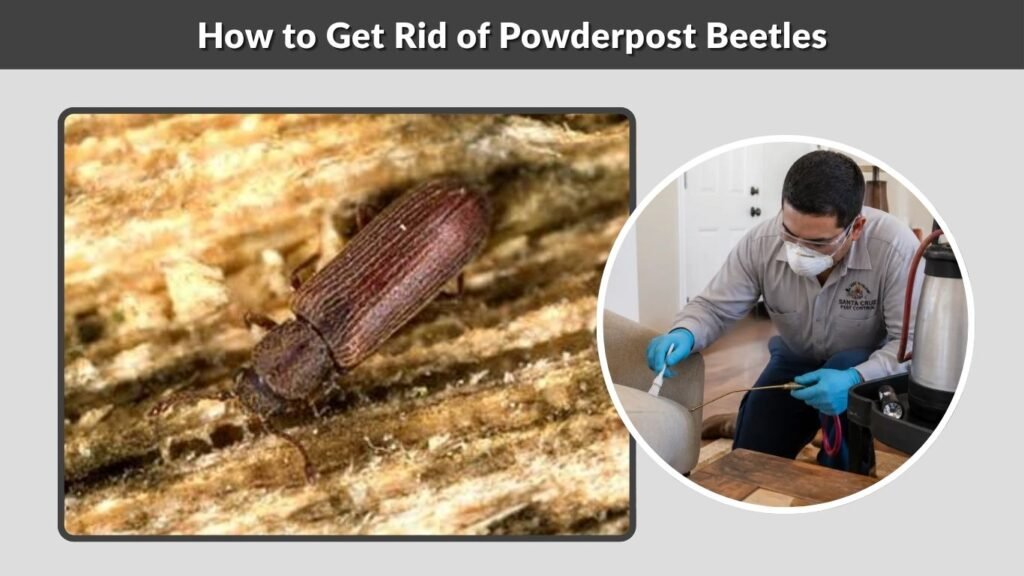
Successful powderpost beetle treatment begins with identifying the species and confirming active infestation. Control methods depend on the affected wood, accessibility, and severity of damage. Some infestations remain localized, while widespread activity may require professional treatment.
Effective Powderpost Beetle Treatment Methods
- Wood replacement: Remove and replace isolated, severely infested wooden components when practical.
- Borate treatment: Apply approved borate-based wood preservatives to suitable unfinished timber according to product instructions.
- Heat treatment: Professional controlled heating can eliminate beetles and larvae inside appropriate wooden objects.
- Fumigation: Licensed specialists may use fumigation for severe infestations or valuable furniture.
- Moisture management: Reduce excess timber moisture to discourage susceptible wood-boring species.
- Professional inspection: Seek expert assistance when infestation affects structural timber or multiple areas.
Does Powderpost Beetle Spray Work?
Certain registered wood-treatment products can help protect susceptible wood or control infestations.
However, surface sprays may not reach larvae hidden deep inside timber. Paint, varnish, and other finishes can further restrict penetration.
Products must be specifically approved for the intended application.
Treating Hardwood Floors and Log Homes
Powderpost beetles can affect hardwood flooring, wooden panels, and some timber used in log homes.
Treatment should begin with identifying affected areas and confirming whether beetles remain active.
Large infestations or weakened structural components require professional evaluation before repair.
How to Prevent Powderpost Beetles
Preventing powderpost beetles involves selecting properly processed timber, monitoring vulnerable wooden materials, and maintaining suitable indoor conditions. Different beetle species prefer different wood types, so preventive measures should consider the particular insect involved.
Protecting Wooden Furniture and Timber
Inspect hardwood furniture, flooring, and bamboo products before installation or purchase.
Use properly dried, insect-free lumber and maintain suitable protective finishes on vulnerable surfaces.
Control moisture problems in crawl spaces, basements, and poorly ventilated areas.
Regular inspections help reveal new exit holes and frass before extensive damage develops.
FAQs
1. Do Powderpost Beetles Bite Humans?
No. Powderpost beetles are not known to bite humans. Their primary concern is damage to wooden materials rather than direct harm to people.
2. Can Powderpost Beetles Fly?
Yes. Adult powderpost beetles have wings and can fly, allowing them to locate suitable wood for reproduction.
3. Do Powderpost Beetles Eat Drywall?
Powderpost beetles primarily feed on wood. They do not normally infest gypsum drywall, although wooden components behind walls may be affected.
4. How Long Do Powderpost Beetles Live?
Development varies by species. True powderpost beetles often complete their life cycle within a year, while some other groups take several years.
5. Can Powderpost Beetles Return After Treatment?
Yes. Reinfestation is possible when susceptible wood remains available. Effective treatment, inspections, and prevention help reduce future problems.
