
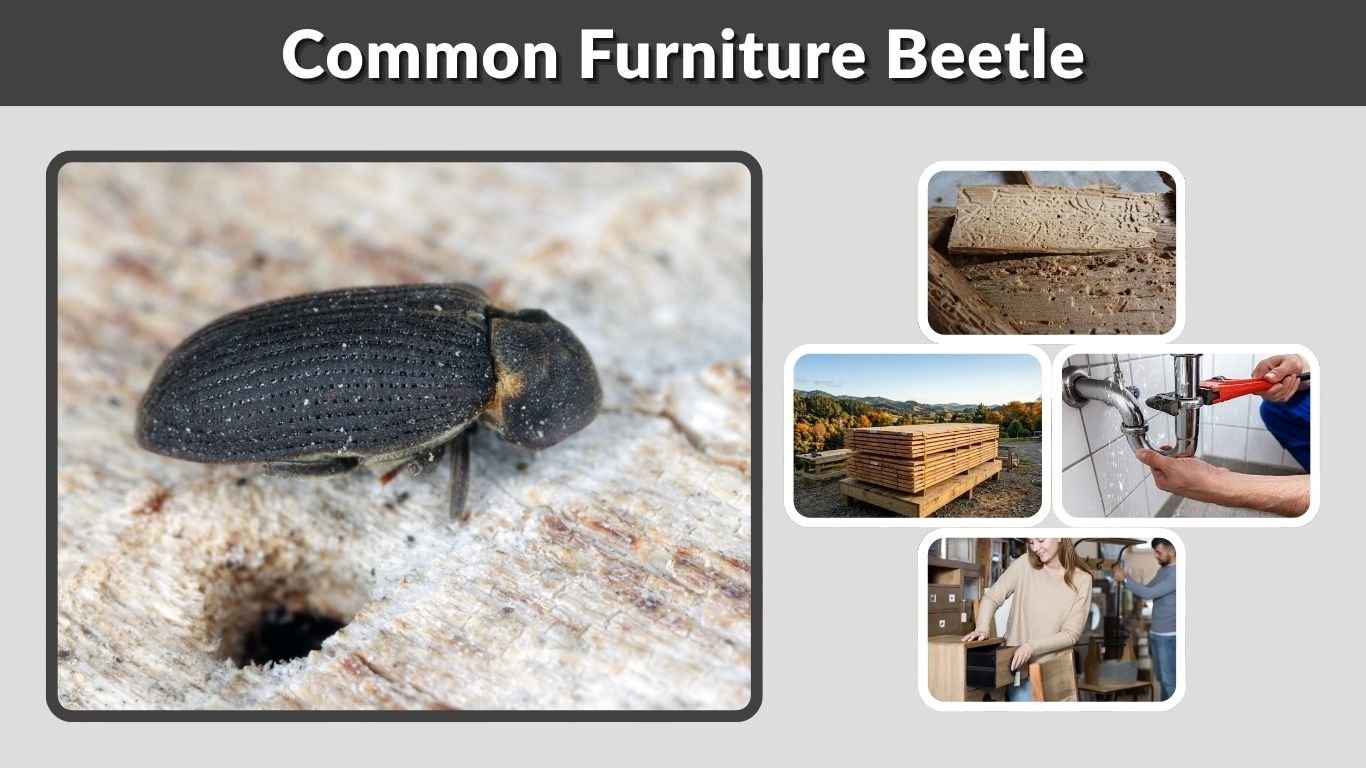
The common furniture beetle is a small wood-boring insect that can cause serious damage to furniture, flooring, and wooden structures. While adult beetles are relatively harmless, their larvae spend years feeding inside timber, creating hidden tunnels and weakening the wood. Homeowners often discover an infestation only after noticing tiny holes or fine wood dust. Understanding common furniture beetle identification, behavior, and treatment methods can help prevent costly repairs. This guide explains how to recognize infestations, identify larvae, understand their life cycle, and protect wooden furniture from further damage.
What Is a Common Furniture Beetle?
The common furniture beetle (Anobium punctatum) is a small, brown, wood-boring insect belonging to the family Ptinidae. It is commonly associated with woodworm infestations because its larvae develop inside timber. These beetles are particularly troublesome in buildings containing older wooden furniture, floorboards, and structural beams.
Where Do Common Furniture Beetles Live?
Common furniture beetles are widespread in Europe, particularly the United Kingdom, and occur in other temperate regions. They inhabit wooden furniture, roof timbers, flooring, and other untreated or vulnerable wooden materials.
Damp conditions encourage larval development, making poorly ventilated buildings more susceptible to infestation. Adult beetles may also appear around windows during warmer months because they are attracted to daylight.
What Do Common Furniture Beetles Eat?
Common furniture beetle larvae feed on wood, particularly susceptible sapwood. They digest components of timber while developing inside narrow tunnels.
Adult furniture beetles generally do not feed. Their primary purpose is reproduction, while larvae cause nearly all the damage associated with infestations.
Common Furniture Beetle Identification
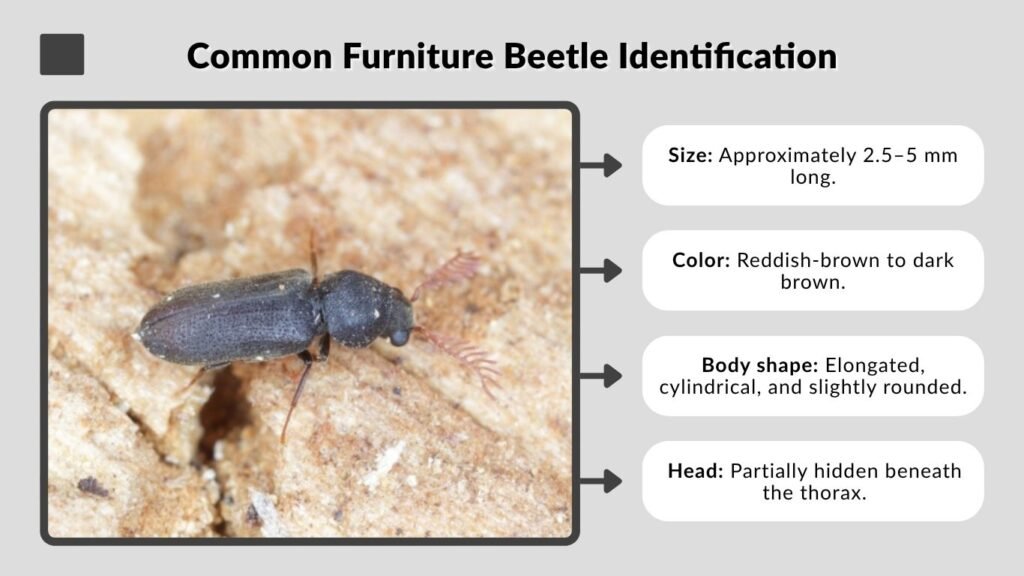
Identifying common furniture beetles requires examining their size, color, body shape, and physical characteristics. Adults are small enough to resemble several other household beetles. However, their distinctive thorax and grooved wing covers help distinguish them from similar species.
Adult Furniture Beetle Identification
Adult furniture beetles have small, cylindrical bodies with a rounded, hood-like thorax that partially conceals the head.
Key identification features:
- Size: Approximately 2.5–5 mm long.
- Color: Reddish-brown to dark brown.
- Body shape: Elongated, cylindrical, and slightly rounded.
- Head: Partially hidden beneath the thorax.
- Wings: Hardened wing covers featuring longitudinal grooves.
- Antennae: Short, with three enlarged terminal segments.
Adults can fly and are most noticeable during their emergence season, usually spring or summer.
What Do Common Furniture Beetle Larvae Look Like?
Common furniture beetle larvae are creamy-white, C-shaped grubs with brownish heads and small legs near the front of their bodies.
They remain concealed inside timber while feeding and growing. Their curved appearance resembles other wood-boring beetle larvae, making identification difficult without closer examination.
Because larvae rarely emerge from wood, homeowners generally notice damage before encountering the insects themselves.
Furniture Beetle vs. Biscuit Beetle
Furniture beetles and biscuit beetles look similar because both have small, brown bodies with hood-shaped thoraxes.
However, furniture beetle larvae develop inside wood, whereas biscuit beetle larvae infest stored foods such as flour, spices, and dried grains.
Examining the infestation location is often the easiest way to distinguish these insects.
Common Furniture Beetle Life Cycle
The common furniture beetle undergoes complete metamorphosis, developing through four stages: egg, larva, pupa, and adult. Its life cycle can take several years, depending on temperature, moisture, and timber quality. Most of this time is spent in the damaging larval stage.
Egg and Larval Development
Female furniture beetles deposit eggs in cracks, crevices, and existing wood holes. After hatching, larvae enter the timber and begin feeding.
The larval stage commonly lasts three to five years, although development can be shorter or longer under different conditions.
During this period, larvae create tunnels throughout susceptible timber, gradually weakening its internal structure.
Pupal and Adult Stages
Mature larvae pupate near the wood surface before transforming into adult beetles.
Adults emerge through small circular exit holes, usually measuring approximately 1–2 mm across.
Adult furniture beetles generally live for a few weeks. They mate, lay eggs, and complete the reproductive cycle.
Signs of Common Furniture Beetle Damage
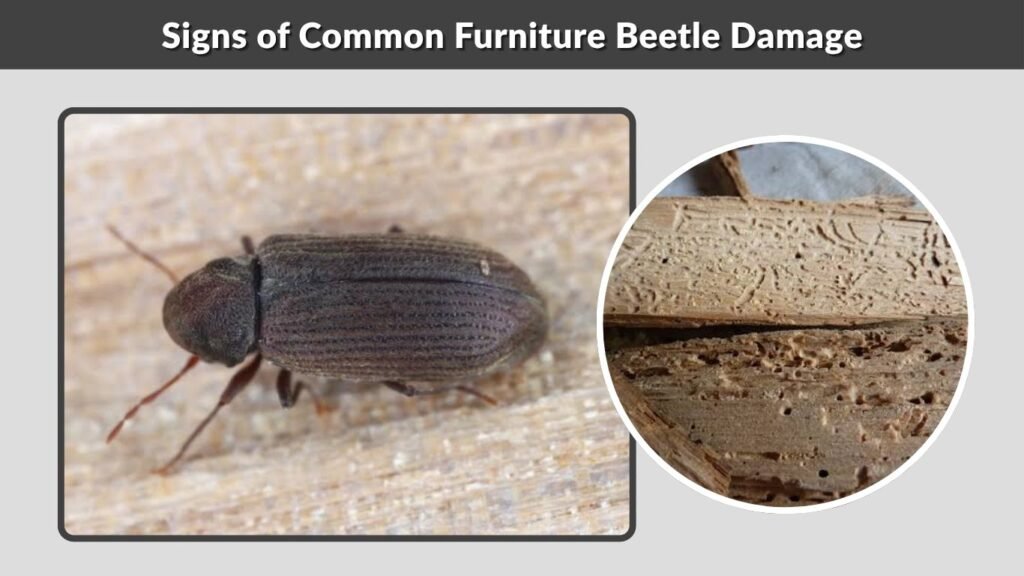
Furniture beetle infestations often remain unnoticed because the larvae feed inside timber. Visible evidence usually appears when adults emerge or damaged wood begins deteriorating. Recognizing these warning signs helps determine whether further inspection or treatment is necessary.
Common Signs of an Infestation
Several visible indicators may suggest furniture beetle activity.
- Exit holes: Small, round holes approximately 1–2 mm wide.
- Wood dust: Fine, granular frass around holes or beneath timber.
- Adult beetles: Small brown insects appearing near furniture or windows.
- Weak timber: Crumbling surfaces or unusually fragile wooden sections.
- Internal tunnels: Narrow galleries visible inside damaged or broken wood.
These signs indicate previous or possible current activity, but they do not always confirm a living infestation.
How to Identify an Active Infestation
Fresh frass and newly appearing exit holes are stronger indicators of active furniture beetles than old holes alone.
Clean the affected surface and check periodically for new dust or emergence holes. Monitoring through the adult emergence season can help establish whether activity continues.
Old holes may remain visible for decades after an infestation ends. Therefore, treatment should not be based solely on their presence.
Can Furniture Beetles Cause Structural Damage?
Yes. Severe infestations can weaken wooden beams, floorboards, and furniture components.
Repeated larval tunneling gradually reduces the amount of sound timber, potentially affecting structural strength.
If load-bearing wood shows extensive deterioration, a qualified professional should assess whether repair or replacement is necessary.
How to Get Rid of Common Furniture Beetles
Successful furniture beetle control requires identifying active infestations and addressing environmental conditions that support larval growth. Treatment effectiveness depends on the wood’s condition, infestation severity, and accessibility. Simply spraying visible holes may not eliminate larvae hidden deep inside timber.
Inspect the Affected Wood
Begin by examining furniture, floorboards, and timber beams for fresh frass, exit holes, and deteriorating surfaces.
Check for leaking pipes, condensation, and inadequate ventilation. Reducing timber moisture can make conditions less favorable for developing larvae.
Confirming active infestation before applying chemical treatments prevents unnecessary pesticide use.
Common Furniture Beetle Treatment Methods
Several approaches can help control confirmed infestations.
- Woodworm treatment: Apply locally approved insecticides specifically labeled for wood-boring beetles, following instructions.
- Moisture control: Repair leaks and improve ventilation to keep wood dry.
- Heat treatment: Use professional controlled heating to eliminate insects inside suitable wooden objects.
- Anoxic treatment: Professional low-oxygen treatment may protect valuable furniture and historical objects.
- Wood replacement: Replace severely damaged timber when structural integrity is compromised.
Professional assistance is advisable for extensive infestations or valuable wooden furniture.
Does Furniture Beetle Spray Work?
Some insecticidal woodworm sprays can help control furniture beetles when applied to suitable, accessible timber.
However, sprays may not penetrate deeply enough to kill every concealed larva, especially when wood has paint, varnish, or other finishes.
Treatment should always follow product instructions and safety requirements.
How to Prevent Common Furniture Beetles
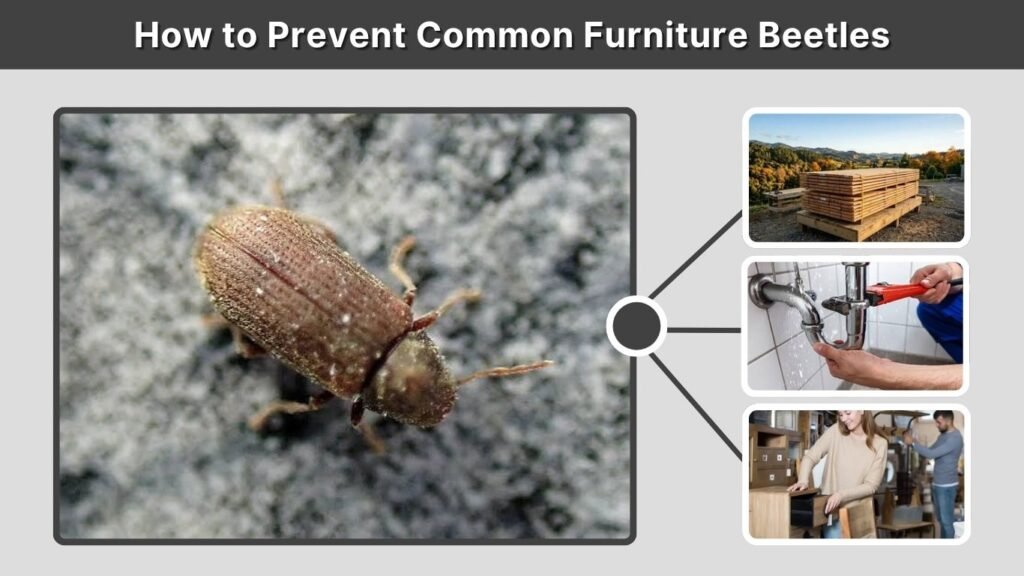
Preventing furniture beetle infestations involves keeping wooden materials in good condition and reducing moisture problems. Although no single method guarantees complete protection, regular inspections and proper timber maintenance significantly reduce the likelihood of serious infestations.
Furniture Beetle Prevention Tips
- Keep wooden furniture and structural timber dry.
- Repair plumbing leaks and other moisture problems promptly.
- Improve ventilation in damp rooms and storage spaces.
- Inspect secondhand wooden furniture before bringing it home.
- Maintain appropriate protective finishes on exposed wooden surfaces.
- Check previously affected timber for new holes or fresh frass.
Regular Monitoring and Maintenance
Inspect older furniture, floorboards, and exposed beams periodically, particularly during the warmer months.
Pay attention to fresh dust or recently formed exit holes. Early detection allows smaller infestations to be assessed before widespread damage develops.
FAQs
1. Do Common Furniture Beetles Bite Humans?
No. Common furniture beetles do not normally bite humans. Their larvae feed on wood rather than skin or blood.
2. Can Common Furniture Beetles Fly?
Yes. Adult common furniture beetles can fly, especially during spring and summer when they emerge to reproduce.
3. How Long Do Common Furniture Beetles Live?
Adults typically survive a few weeks, while larvae may remain inside timber for several years before emerging.
4. Can Furniture Beetles Infest Bedrooms?
Yes. They can infest wooden bed frames, furniture, floorboards, and other susceptible timber inside bedrooms.
5. Are Common Furniture Beetles Difficult to Eliminate?
Established infestations can be challenging because larvae remain hidden inside wood. Proper identification, moisture management, and suitable treatment improve control.
