
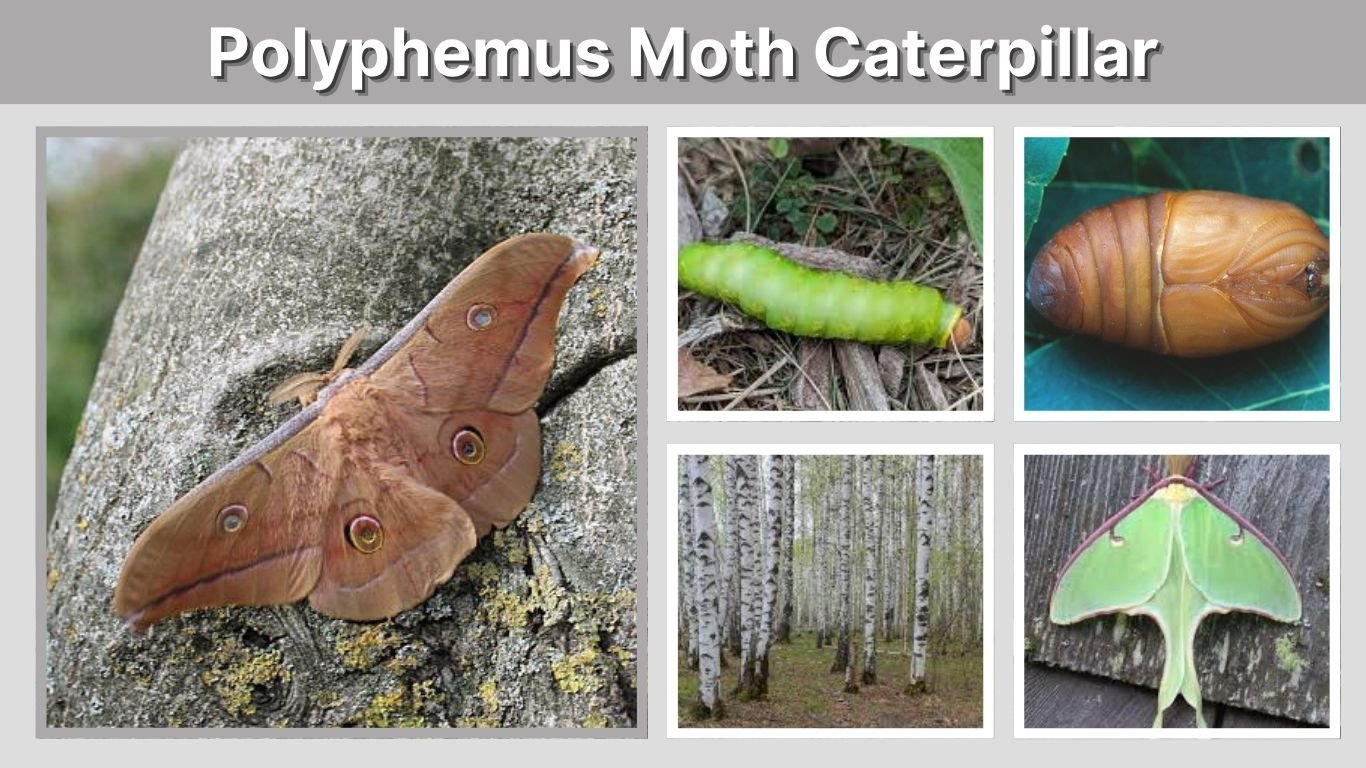
The Polyphemus moth caterpillar is the larval stage of Antheraea polyphemus, one of North America’s most impressive giant silk moths. Before it becomes a large tan moth with dramatic eyespots, it spends weeks as a bright green leaf-eating caterpillar. Many people find one on a tree, garden plant, or sidewalk and wonder what it eats, whether it is poisonous, and how to care for it safely.
What Is a Polyphemus Moth Caterpillar?
A Polyphemus moth caterpillar is the immature stage of the Polyphemus silk moth. It hatches from an egg, feeds heavily on leaves, grows through several molts, and eventually spins a cocoon where it transforms into an adult moth.
The scientific name of the species is Antheraea polyphemus. It belongs to the Saturniidae family, which includes giant silk moths such as Luna moths, Cecropia moths, and Promethea moths.
The caterpillar is usually green when mature and can look plump, soft, and segmented. It may be found on trees such as oak, maple, birch, willow, hickory, elm, walnut, and other leafy host plants.
Polyphemus Moth Caterpillar Identification
A mature Polyphemus moth caterpillar is easier to recognize than a newly hatched one. Young caterpillars may look small and pale, but older caterpillars become larger and more clearly marked.
Common identification features include:
- Bright green body
- Brownish head in later stages
- Rounded, plump body shape
- Small yellow-orange bumps or tubercles
- Fine short bristles
- Yellow side markings on some body segments
- Nearly 3 inches long when fully grown
The caterpillar does not look like the adult moth. The adult Polyphemus moth is tan or brown with large eyespots on the hindwings, while the caterpillar is mainly green and leaf-like.
Polyphemus Moth Caterpillar Life Cycle
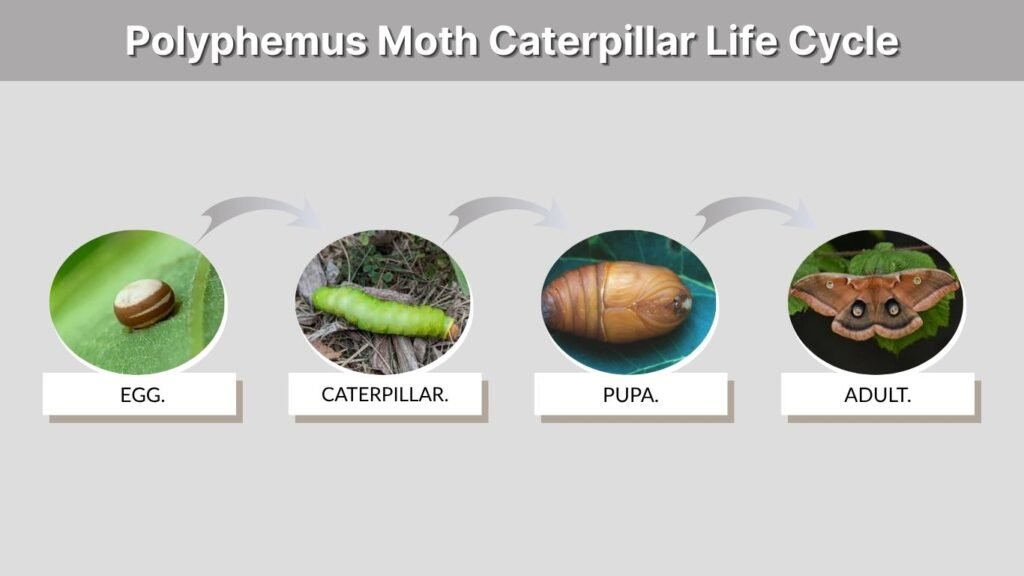
The Polyphemus moth caterpillar is only one stage in the full life cycle. Like other moths and butterflies, this species goes through complete metamorphosis.
That means it develops in four main stages: egg, caterpillar, pupa, and adult moth. Each stage has a different role in survival and reproduction.
| Life Cycle Stage | What Happens | Approximate Timing |
| Egg | Female lays eggs on or near host plants | Around 1–2 weeks before hatching |
| Caterpillar | Larva eats leaves and molts as it grows | About 5–6 weeks in many conditions |
| Cocoon/Pupa | Caterpillar spins silk cocoon and transforms | Weeks to months, depending on season |
| Adult moth | Moth emerges, mates, and lays eggs | Usually only several days |
Polyphemus Moth Caterpillar Stages
The caterpillar grows through several instars. An instar is the stage between molts. As the caterpillar eats, its body becomes too large for its outer skin. It then molts and continues growing.
During the early instars, the caterpillar is small and more vulnerable. As it matures, it becomes larger, greener, and easier to identify. By the final instar, it has stored enough energy to spin a cocoon and begin pupation.
What Do Polyphemus Moth Caterpillars Eat?
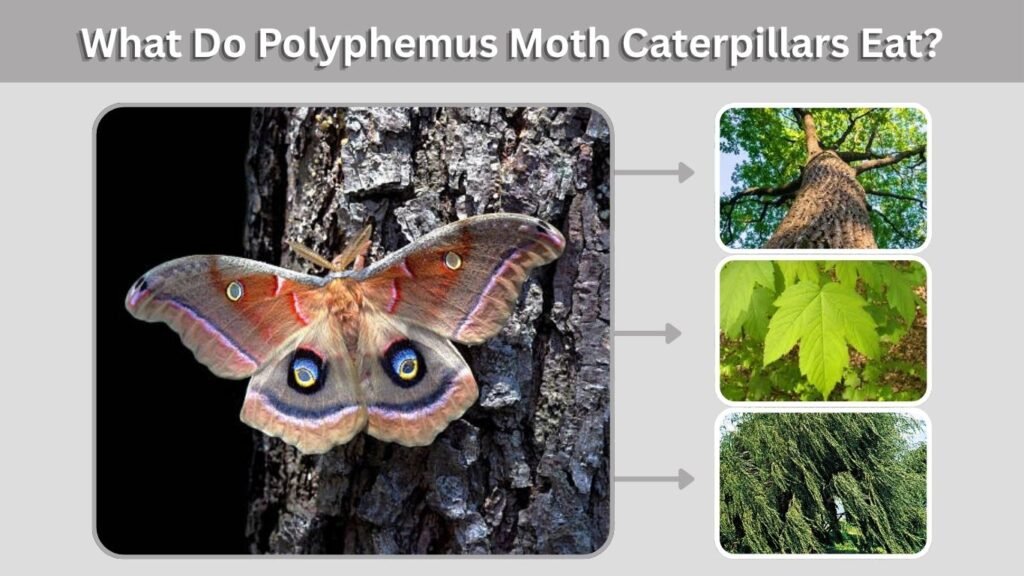
Polyphemus moth caterpillars eat leaves. They do not eat nectar, fruit, fabric, stored food, or household materials. Their diet is based on fresh foliage from suitable host plants.
They are considered generalist leaf feeders because they can use many different trees and shrubs. However, an individual caterpillar may prefer the type of plant it started eating after hatching.
Common Host Plants
Polyphemus moth caterpillar host plants include:
- Oak
- Maple
- Birch
- Willow
- Hickory
- Walnut
- Elm
- Ash
- Sycamore
- Basswood
- Hawthorn
- Apple
- Cherry
- Rose
- Grape
If you find a caterpillar on a plant, the safest food choice is usually fresh leaves from that same plant, as long as the plant is not treated with pesticides.
What to Feed a Polyphemus Moth Caterpillar
If you are caring for a Polyphemus moth caterpillar, feed it fresh leaves from a known host plant. Oak is often a reliable option, but it is best not to switch foods suddenly unless necessary.
Fresh leaves are important because wilted leaves dry out quickly and may not provide enough moisture. Caterpillars get much of their water from leaves, so they do not need a water dish. In fact, standing water can be dangerous because small caterpillars may drown.
How to Care for a Polyphemus Moth Caterpillar
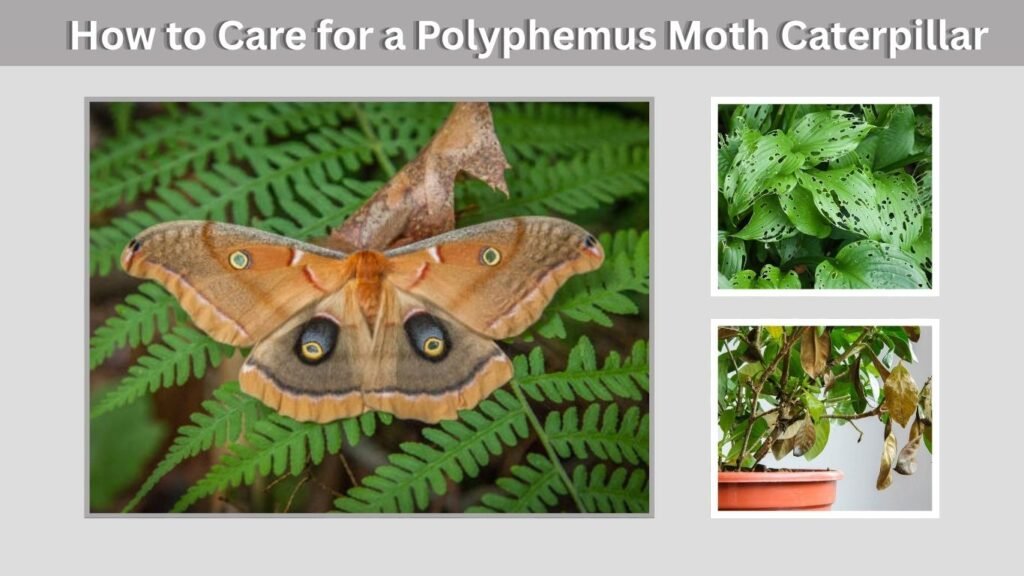
Caring for a Polyphemus moth caterpillar can be a rewarding nature project, but it requires daily attention. The goal is to provide clean air, fresh food, safe humidity, and enough space for the caterpillar to grow.
A simple setup can work if it is clean and well ventilated. A mesh enclosure, ventilated container, or small rearing cage can be used. Avoid airtight jars because poor airflow can lead to mold and disease.
Basic Care Tips
Use these care steps if you are raising one:
- Provide fresh host plant leaves daily
- Remove dried leaves and droppings often
- Keep the enclosure ventilated
- Avoid pesticide-treated plants
- Do not overcrowd caterpillars
- Keep the caterpillar out of direct hot sunlight
- Give it twigs or leaves for cocoon building
- Handle it as little as possible
The caterpillar will eat heavily before it is ready to pupate. When it slows down, wanders, or stops feeding, it may be preparing to spin a cocoon.
Polyphemus Moth Caterpillar Diet When Raising
When raising a Polyphemus moth caterpillar, consistency matters. Many caterpillars do best when they stay on the same host plant they were found eating. If you must change food, try a closely related or commonly accepted host plant and watch whether the caterpillar accepts it.
Never feed leaves from roadsides, recently sprayed yards, or unknown ornamental plants. Pesticides and herbicides can kill caterpillars even when the leaves look healthy.
Is the Polyphemus Moth Caterpillar Poisonous?
Polyphemus moth caterpillars are not considered poisonous to humans. They do not have the dangerous stinging spines seen on some other caterpillars. They are not aggressive and are not known for biting people.
That said, it is still best to avoid unnecessary handling. A caterpillar’s body is soft, and rough handling can injure it. Some people may also have mild skin sensitivity after touching insects or the plants they live on.
Does a Polyphemus Moth Caterpillar Bite or Sting?
A Polyphemus moth caterpillar does not sting. It does not have venomous spines. It may move or curl slightly when disturbed, but it is not dangerous.
A bite is also very unlikely. Caterpillars have mouthparts for chewing leaves, not for attacking people. If you need to move one, use a leaf or small twig rather than picking it up with your fingers.
Is It Safe to Touch?
It is generally safe, but not recommended unless necessary. If you must move one, be gentle. Let it crawl onto a leaf or stick, then place it back on a suitable host plant. Wash your hands afterward, especially if you have sensitive skin.
Polyphemus Moth Caterpillar Cocoon Phase
When the caterpillar is fully grown, it stops feeding and begins looking for a place to pupate. It then spins a silk cocoon, often using a leaf as part of the structure.
The cocoon is usually brown, oval, and tough. Inside, the caterpillar changes into a pupa. Later, the adult moth emerges from the cocoon.
How Long Is a Polyphemus Moth Caterpillar in a Cocoon?
The time in the cocoon depends on season and temperature. In warm conditions, the adult moth may emerge after several weeks. In colder regions, the pupa may remain inside the cocoon through winter and emerge the next spring or summer.
If a cocoon seems inactive, do not assume it is dead. Many silk moths naturally pause development during unfavorable seasons.
Should You Keep the Cocoon Indoors?
Keeping a cocoon indoors can cause the moth to emerge too early because indoor warmth may confuse its seasonal timing. If you are raising a cocoon, it is usually better to keep it in a protected outdoor area with natural temperatures, good airflow, and safety from predators.
When the adult moth emerges, release it outdoors in the evening near trees or shrubs.
Polyphemus Moth Caterpillar vs Luna Moth Caterpillar
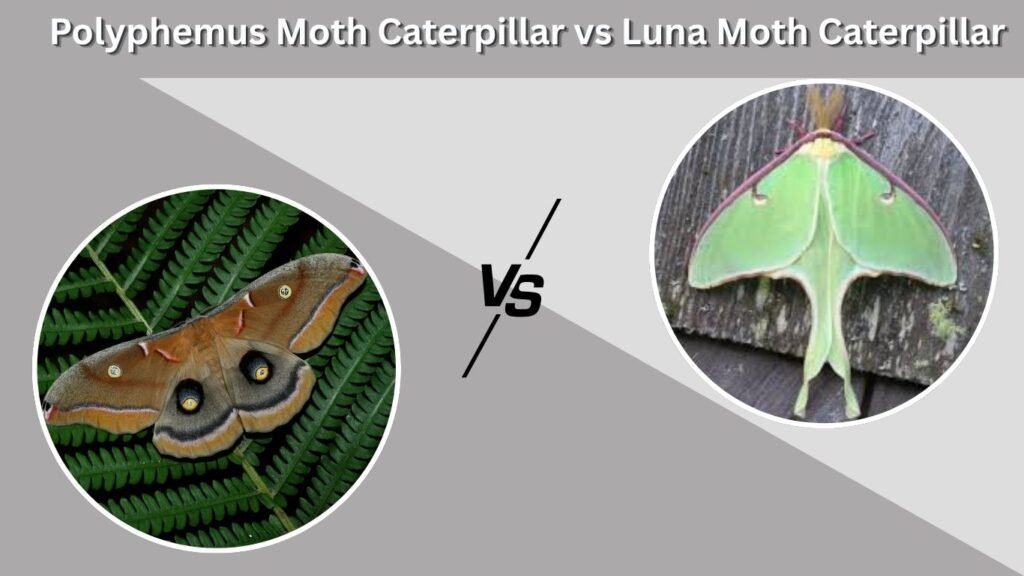
Polyphemus moth caterpillars and Luna moth caterpillars are often confused because both can be large, green, and found on trees. They also both belong to the giant silk moth family.
However, they become very different adult moths. The Polyphemus moth becomes a tan or brown moth with large eyespots, while the Luna moth becomes a pale green moth with long tail-like extensions on the hindwings.
Key Differences
Polyphemus caterpillars often have a plump green body, yellow-orange tubercles, and a brownish head in later stages. Luna moth caterpillars are also green, but their body markings and head capsule can differ depending on stage and region.
The host plant can offer clues too. Both species may use some similar trees, which is why identification is not always simple from the plant alone.
If you are unsure whether you found a Luna moth caterpillar or a Polyphemus moth caterpillar, take a clear photo from the side and top, note the host plant, and avoid disturbing it.
Polyphemus Moth Caterpillar Habitat and Range
The Polyphemus moth caterpillar lives wherever suitable host plants grow. It is found across much of North America in forests, woodland edges, orchards, parks, gardens, and suburban landscapes.
Because the caterpillar eats leaves from many trees, it can survive in different habitats. People commonly report Polyphemus moth caterpillars in states such as Missouri, Florida, Texas, and other parts of the United States.
Is It a Garden Friend or Foe?
A Polyphemus moth caterpillar is usually more of a garden friend than a serious pest. One or two caterpillars may chew some leaves, but they rarely cause major damage to healthy trees.
They are part of the natural ecosystem. They become beautiful native moths and also serve as food for birds, parasitic wasps, and other wildlife. Unless a plant is very small or heavily defoliated, the best choice is often to leave the caterpillar alone.
Can You Buy Polyphemus Moth Caterpillars for Sale?
Some people search for Polyphemus moth caterpillars for sale because they want to raise them. Before buying, check local laws and ethical guidelines. In some places, moving live insects across state or regional lines may be restricted because it can spread disease, parasites, or nonlocal genetics.
It is usually better to observe native caterpillars where they naturally occur. If you do raise them, use responsible care practices and release adults only in areas where the species is native and already present.
FAQs
What does a Polyphemus moth caterpillar eat?
A Polyphemus moth caterpillar eats fresh leaves from host trees and shrubs. Common foods include oak, maple, birch, willow, hickory, walnut, elm, ash, apple, cherry, rose, and grape. If you find one on a plant, use that same plant for feeding when possible.
Are Polyphemus moth caterpillars poisonous?
Polyphemus moth caterpillars are not considered poisonous to humans. They do not have venomous stinging spines and are not dangerous. Still, they should be handled gently or not at all because their soft bodies can be injured easily.
How do you care for a Polyphemus moth caterpillar?
Keep it in a clean, ventilated enclosure with fresh host plant leaves. Remove droppings and wilted leaves daily. Avoid pesticide-treated plants, direct heat, and overcrowding. When it is ready to pupate, provide leaves or twigs so it can spin a cocoon safely.
How long does a Polyphemus moth caterpillar stay in a cocoon?
The cocoon stage may last several weeks in warm conditions or several months if the pupa overwinters. Timing depends on temperature, season, and location. A quiet cocoon may still be alive, so it should not be opened or disturbed.
What is the difference between a Polyphemus caterpillar and a Luna moth caterpillar?
Both can be large and green, but they become different moths. Polyphemus moths are tan or brown with large eyespots, while Luna moths are pale green with long hindwing tails. Caterpillar markings, head shape, host plant, and location can help with identification.
