
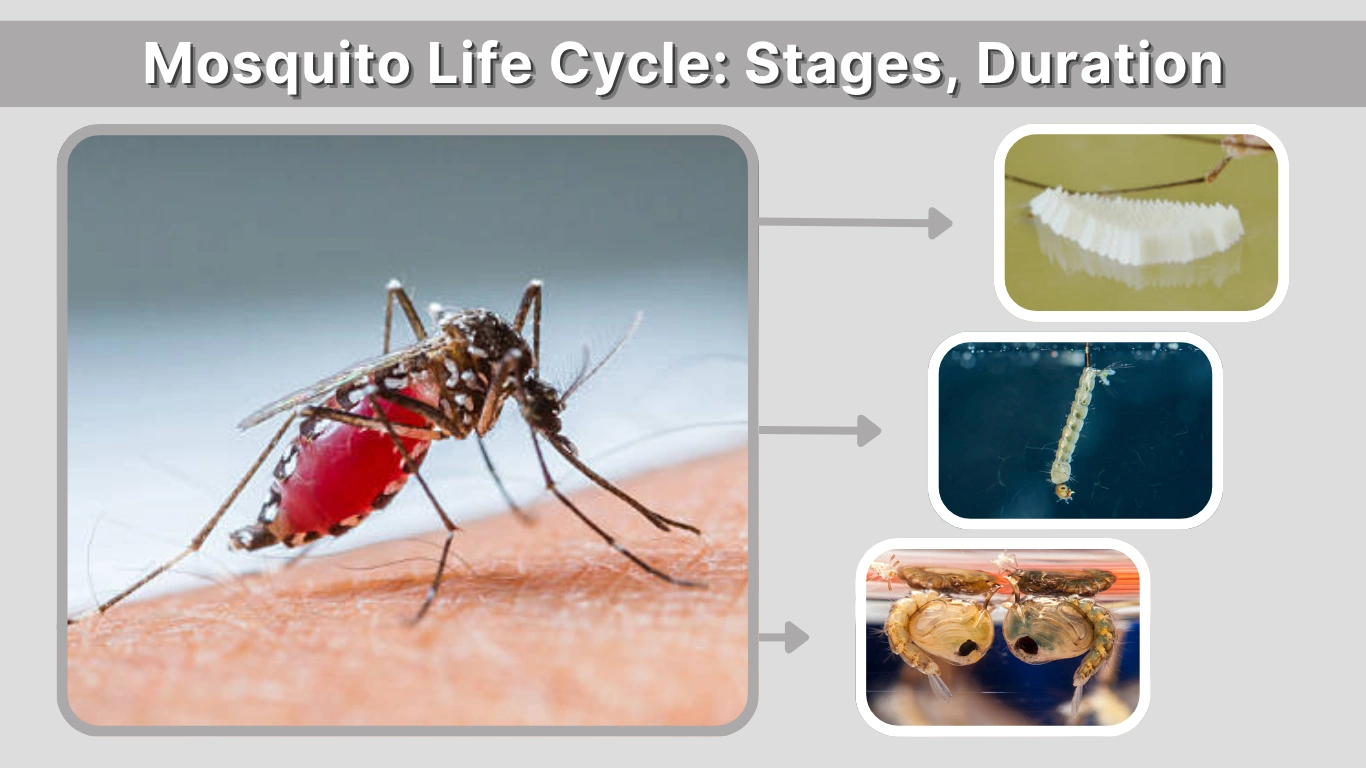
Mosquitoes are among the most common insects in the world and are known for spreading dangerous diseases such as malaria and dengue. Understanding the mosquito life cycle is essential for controlling their population and reducing health risks. Mosquitoes go through four distinct stages of development, each with unique characteristics. By learning how these stages work, we can take effective steps to prevent their growth and protect our surroundings from infestation.
What is the Mosquito Life Cycle?
Definition and Overview
The mosquito life cycle is a process of complete metamorphosis, meaning the insect passes through four separate stages: egg, larva, pupa, and adult. Each stage looks different and serves a specific purpose in development. The first three stages occur in water, while the adult mosquito is a flying insect.
This transformation allows mosquitoes to adapt to different environments at each stage, increasing their chances of survival. The cycle repeats continuously as adult females lay eggs, starting the process again.
Why the Life Cycle is Important
Understanding the mosquito life cycle is important because it helps in controlling their population. Since mosquitoes spread diseases, breaking their life cycle can reduce the risk of infection. Most control methods focus on stopping mosquitoes before they become adults, as this is when they begin to bite and transmit diseases.
Egg Stage of Mosquito
How and Where Eggs Are Laid
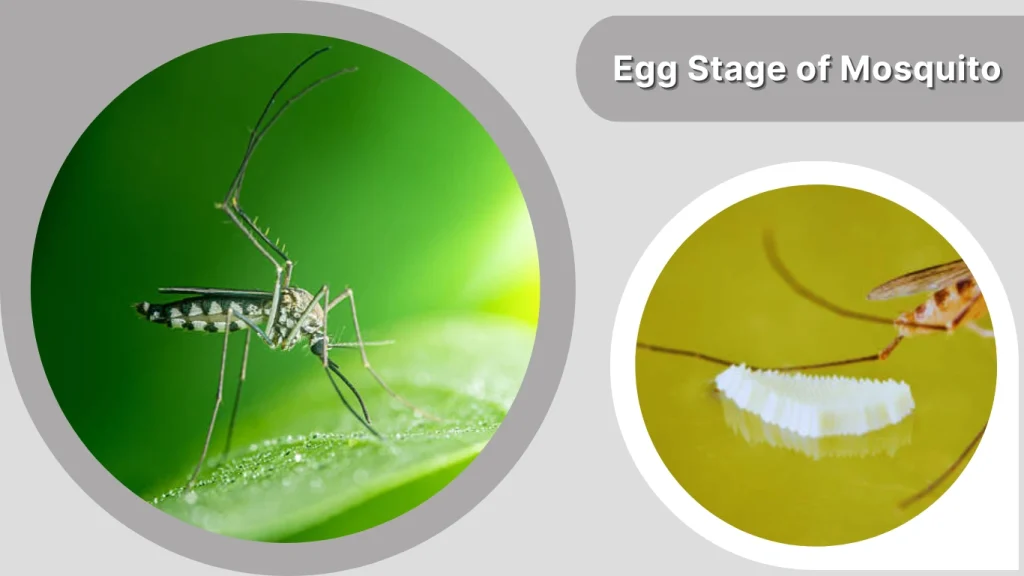
The life cycle begins when a female mosquito lays eggs. These eggs are usually placed on or near stagnant water. Different species lay eggs in different ways:
- Some lay eggs individually
- Others lay them in clusters
- Some species form floating egg rafts
Common places include ponds, drains, water containers, and even small puddles. This is why even a small amount of water can lead to mosquito breeding.
Conditions Required for Hatching
Mosquito eggs require moisture to survive and hatch. Stagnant water is the most important factor. Temperature and humidity also play a role in egg development. Warm and humid conditions help eggs hatch faster, while dry conditions can delay or prevent hatching.
Some mosquito eggs can survive dry conditions for a long time and hatch when they come into contact with water again.
Duration of Egg Stage
The egg stage is usually short. Under favorable conditions, eggs hatch within 1 to 3 days. However, this duration can vary depending on the species and environmental conditions such as temperature and water availability.
Larva Stage (Wriggler Stage)
Appearance and Movement
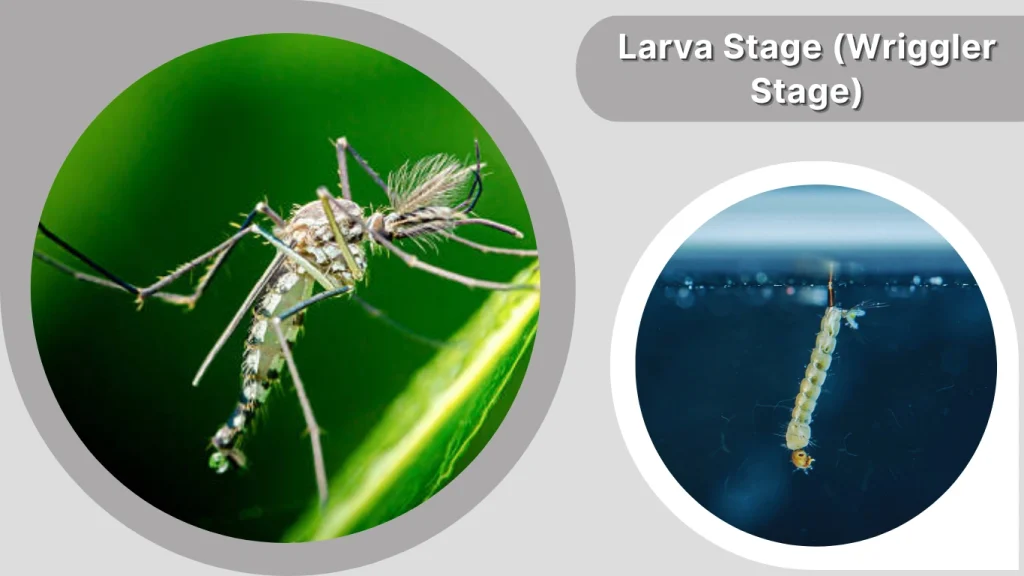
After hatching, mosquito larvae emerge and live in water. They are often called “wrigglers” because of their movement. Larvae have a long, worm-like body and move by wriggling through the water.
They are usually found near the surface of the water, where they can easily breathe.
Feeding Behavior
Larvae feed on microorganisms, algae, and organic matter present in water. This feeding helps them grow quickly. Since they depend on water for food, polluted or stagnant water often becomes an ideal breeding ground.
The availability of food directly affects how fast larvae develop into the next stage.
Breathing and Growth
Mosquito larvae breathe through a tube-like structure called a siphon, which they use to take in air from the water surface. Because of this, they frequently come to the surface to breathe.
During this stage, larvae go through several growth phases called molts. In each molt, they shed their outer skin and grow larger.
Duration of Larval Stage
The larval stage typically lasts 4 to 7 days, depending on environmental conditions. Warm temperatures and abundant food can speed up development, while unfavorable conditions may slow it down.
Pupa Stage (Tumbler Stage)
Characteristics of Pupa
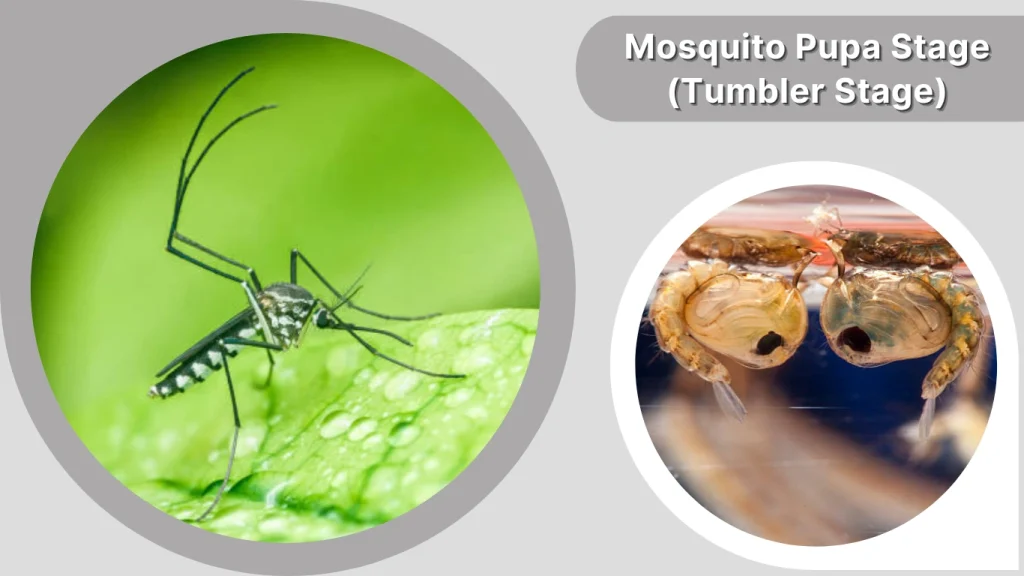
After the larval stage, mosquitoes enter the pupa stage. Pupae are comma-shaped and are often called “tumblers” because of their movement in water. Unlike larvae, they do not feed during this stage.
Although they do not eat, pupae remain active and respond quickly to movement or disturbances.
Transformation Process
The pupa stage is a period of transformation. Inside the pupal case, the mosquito undergoes major changes as it develops into an adult. This process is similar to how a caterpillar transforms into a butterfly.
During this stage, all the body parts of the adult mosquito are formed.
Duration of Pupal Stage
The pupal stage is short, usually lasting 1 to 3 days. After this, the adult mosquito emerges from the pupal case and rises to the surface of the water.
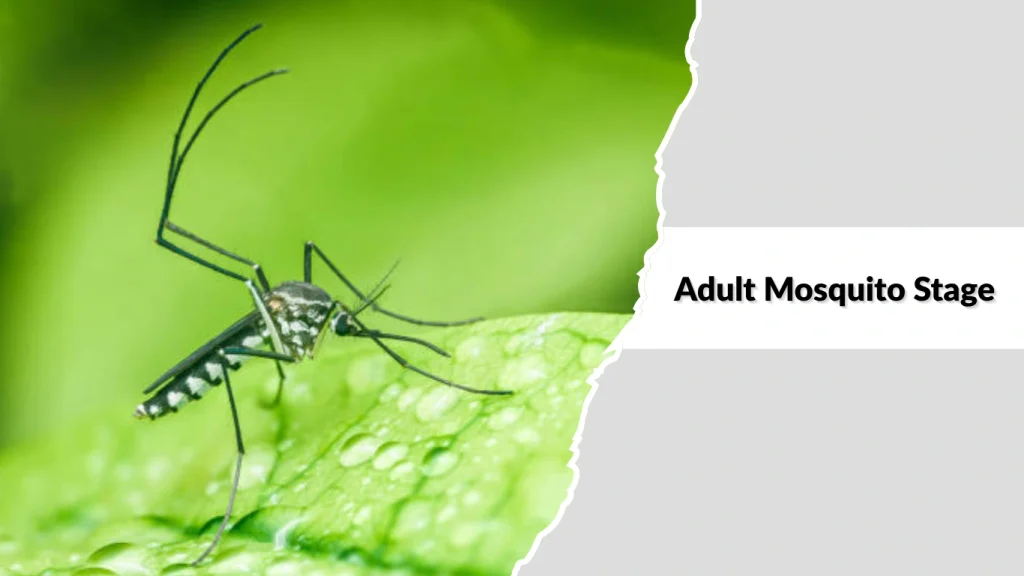
Adult Mosquito Stage
Emergence from Water
After the pupal stage, the adult mosquito emerges from the water. It slowly rises to the surface and rests while its wings dry and harden. This process takes a short time, but it is critical for survival. Once the wings are fully developed, the mosquito becomes capable of flying and searching for food.
Male vs Female Mosquito
Adult mosquitoes differ based on gender. Male mosquitoes feed on nectar and plant juices, while female mosquitoes require blood meals to produce eggs. This is why only female mosquitoes bite humans. The blood provides the necessary nutrients for egg development.
Reproduction Cycle
After mating, the female mosquito searches for a blood meal. Once she obtains it, she lays eggs in or near water, restarting the life cycle. This cycle can repeat multiple times during the female’s lifespan, leading to rapid population growth under favorable conditions.
Lifespan of Adult Mosquito
The lifespan of an adult mosquito depends on species and environment. On average, female mosquitoes live for about 2 to 4 weeks, while males usually survive for only a few days to a week. Warm and humid conditions tend to increase their lifespan and breeding frequency.
Duration of the Mosquito Life Cycle
Total Time Required
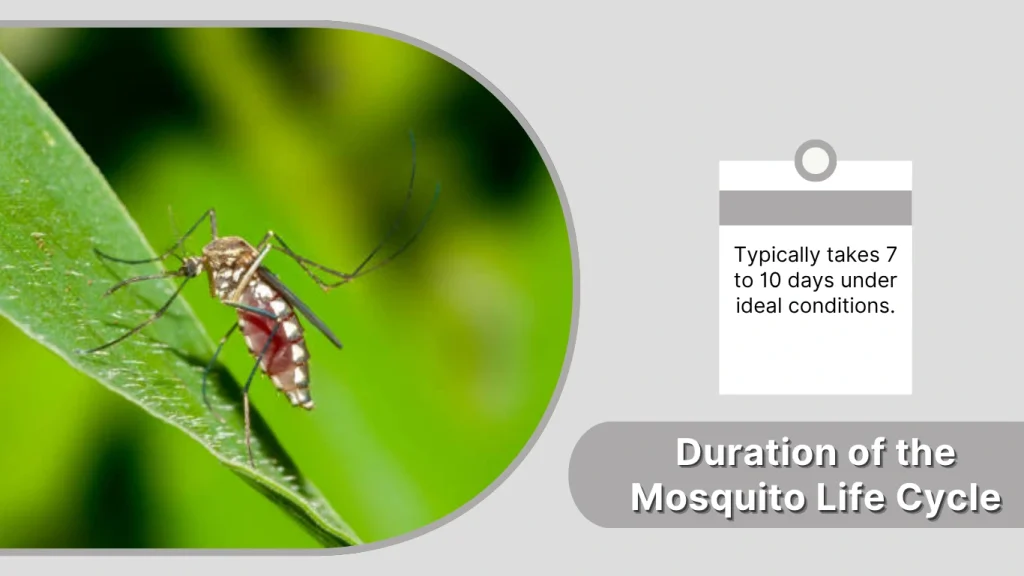
The complete mosquito life cycle—from egg to adult—typically takes 7 to 10 days under ideal conditions. This rapid development is one of the reasons mosquito populations can grow quickly.
Factors Affecting Duration
Several factors influence how fast mosquitoes develop:
- Temperature: Warmer temperatures speed up the life cycle
- Water availability: Essential for early stages
- Food supply: Affects larval growth
When conditions are ideal, mosquitoes can multiply rapidly within a short period.
Seasonal Variations
Mosquito populations are higher during summer and rainy seasons when water is abundant and temperatures are warm. In colder climates or during winter, their development slows down, and some species may even enter a dormant state.
Environmental Factors Affecting the Life Cycle
Role of Water
Water is the most important factor in the mosquito life cycle. Eggs, larvae, and pupae all depend on water for survival. Even small amounts of stagnant water—such as in containers, tires, or plant pots—can become breeding grounds.
Temperature and Climate
Mosquitoes thrive in warm and humid climates. Higher temperatures speed up their development, while colder temperatures slow it down. This is why mosquito-related diseases are more common in tropical regions.
Urban vs Rural Environments
Mosquitoes can adapt to different environments:
- Urban areas: Breed in artificial containers, drains, and construction sites
- Rural areas: Breed in ponds, rice fields, and natural water sources
Understanding these environments helps in identifying and eliminating breeding sites.
Importance of Mosquito Life Cycle in Control
Targeting the Larval Stage
The larval stage is one of the most effective points for control. Since larvae are confined to water, they are easier to eliminate compared to flying adults. Removing or treating water sources can prevent mosquitoes from reaching adulthood.
Breaking the Breeding Cycle
Interrupting the mosquito life cycle is key to reducing their population. This can be done by:
- Removing stagnant water
- Covering water storage containers
- Cleaning drains and gutters regularly
These simple actions can significantly reduce mosquito breeding.
Public Health Strategies
Governments and health organizations use various strategies to control mosquito populations. These include:
- Public awareness campaigns
- Use of larvicides and insecticides
- Community clean-up programs
Community participation is essential for long-term success in mosquito control.
FAQs
What are the four stages of the mosquito life cycle?
The mosquito life cycle has four stages: egg, larva, pupa, and adult. The first three stages occur in water, while the adult mosquito is a flying insect.
How long does the mosquito life cycle take?
The complete mosquito life cycle usually takes about 7 to 10 days under ideal conditions. However, it can vary depending on temperature, water availability, and food supply.
Where do mosquitoes lay their eggs?
Mosquitoes lay their eggs in or near stagnant water, such as ponds, drains, containers, flower pots, and puddles. Even small amounts of water can become breeding sites.
Why is the mosquito life cycle important for control?
Understanding the life cycle helps in controlling mosquitoes effectively. By targeting the larval stage and removing stagnant water, it is possible to stop mosquitoes before they become adults and spread diseases.
Can mosquitoes grow without water?
No, mosquitoes cannot complete their life cycle without water. The egg, larva, and pupa stages all require water to survive and develop into adult mosquitoes.
Conclusion
The mosquito life cycle consists of four stages—egg, larva, pupa, and adult—each playing an important role in the insect’s development. Because the first three stages depend on water, controlling breeding sites is the most effective way to reduce mosquito populations. Understanding how mosquitoes grow and reproduce helps us take practical steps to prevent their spread. By maintaining cleanliness, eliminating stagnant water, and raising awareness, we can protect ourselves and our communities from mosquito-borne diseases.
