
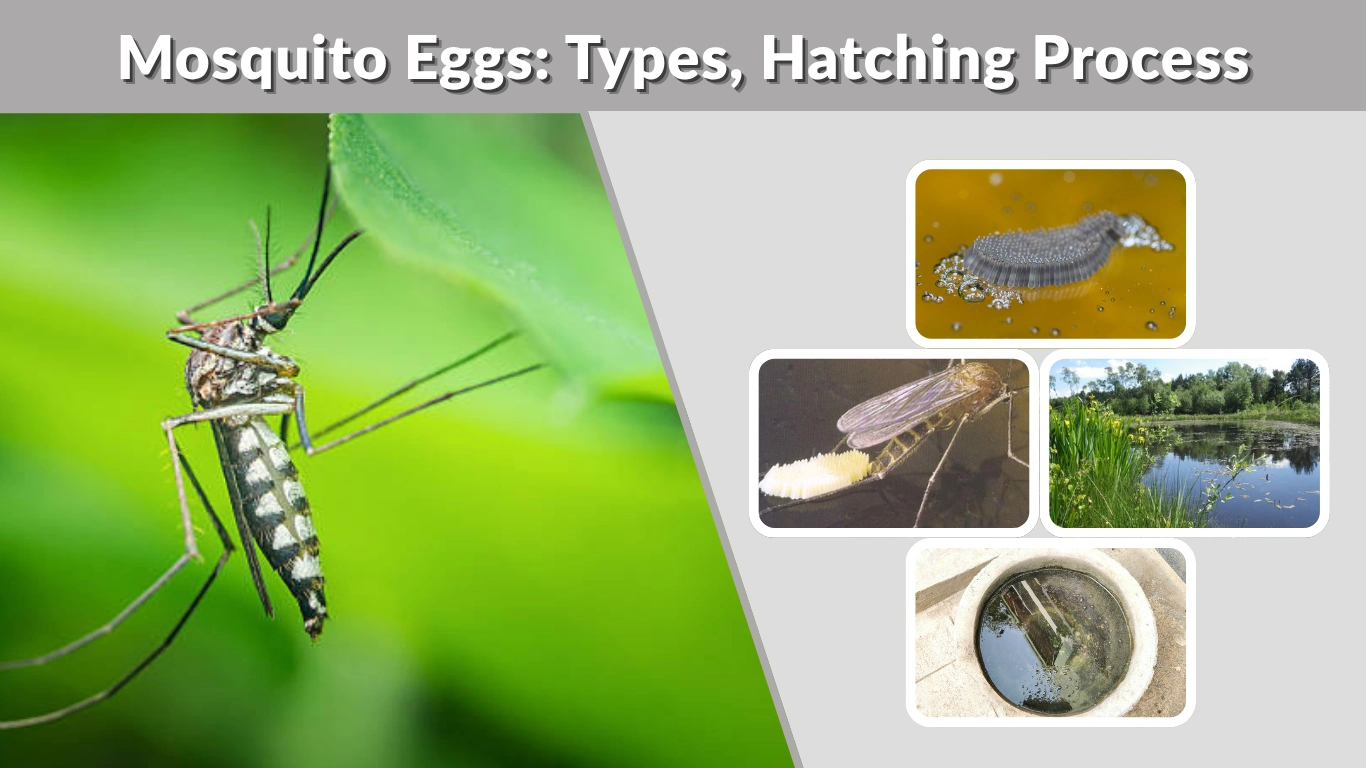
Mosquitoes are known for spreading dangerous diseases, but their life cycle begins with a tiny and often unnoticed stage—eggs. Mosquito eggs play a crucial role in the rapid growth of mosquito populations, especially in warm and humid environments. Understanding how these eggs are laid, where they are found, and how they develop can help in preventing mosquito breeding. This article explores mosquito eggs in detail, including their types, structure, and hatching process.
What are Mosquito Eggs?
Definition and Basic Overview
Mosquito eggs are the first stage in the mosquito life cycle. After feeding on blood, a female mosquito lays eggs to reproduce. These eggs are extremely small and are usually placed in or near water. From these eggs, larvae emerge, continuing the development process.
Each female mosquito can lay hundreds of eggs at a time, which makes mosquito populations grow very quickly under suitable conditions.
Why Mosquito Eggs Matter
Mosquito eggs are important because they determine how fast mosquito populations increase. A large number of eggs means more larvae, more adult mosquitoes, and a higher risk of disease transmission.
By targeting mosquito eggs early, it is possible to stop the life cycle before mosquitoes become adults and start biting humans. This makes egg control a key step in preventing diseases like dengue and malaria.
Types of Mosquito Eggs
Aedes Mosquito Eggs
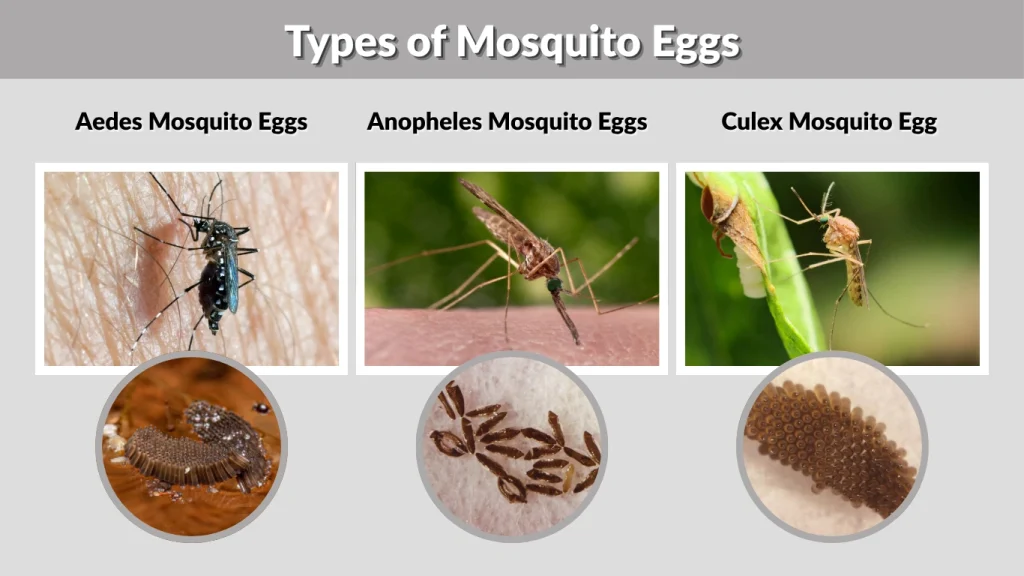
Aedes mosquitoes lay their eggs individually on damp surfaces just above the water line. These eggs are unique because they can survive in dry conditions for weeks or even months. When water becomes available, the eggs hatch quickly. This ability makes Aedes mosquitoes difficult to control.
Anopheles Mosquito Eggs
Anopheles mosquitoes lay their eggs singly on the surface of water. These eggs have special floating structures that help them stay on top of the water. Unlike Aedes eggs, they require water to survive and hatch.
Culex Mosquito Egg Rafts
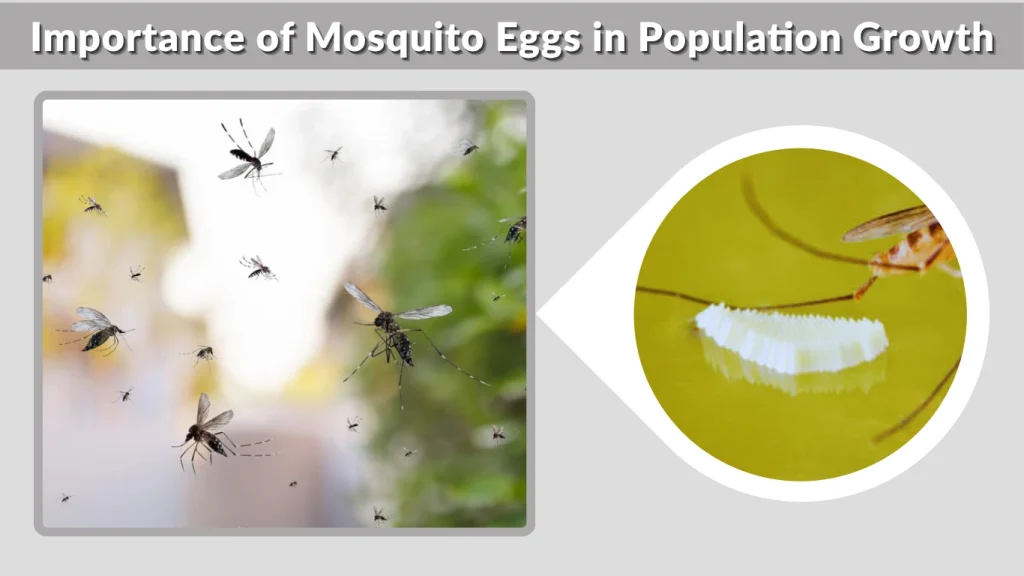
Culex mosquitoes lay their eggs in clusters called egg rafts. These rafts float on the water surface and can contain hundreds of eggs. This grouping allows them to hatch together, increasing survival chances.
Key Differences Between Types
The main differences between mosquito egg types include:
- Placement: On surfaces, in water, or in clusters
- Survival ability: Some can survive dry conditions
- Appearance: Single eggs vs raft formations
Understanding these differences helps in identifying breeding patterns and controlling mosquito populations effectively.
Where Do Mosquitoes Lay Eggs?
Common Breeding Places
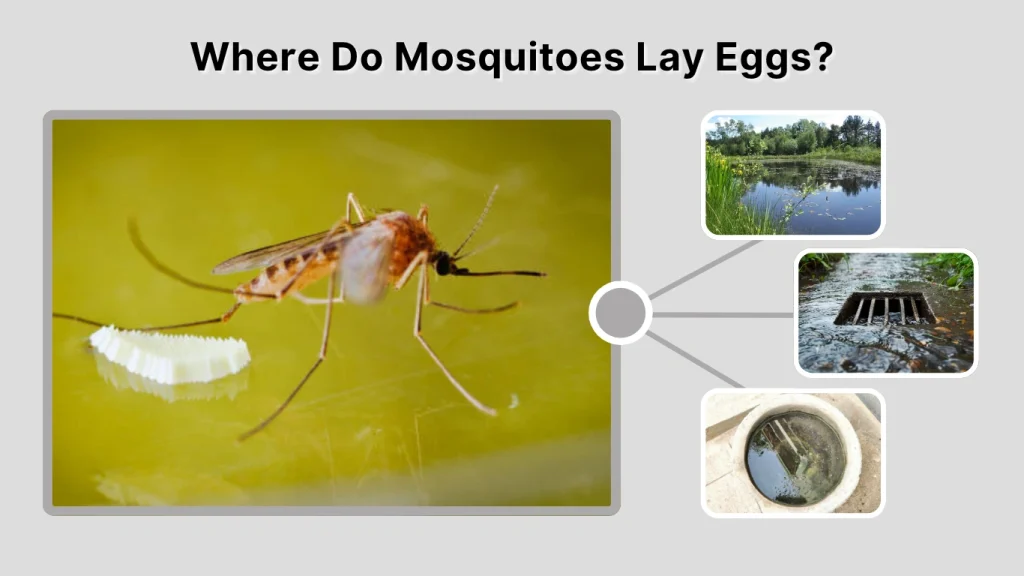
Mosquitoes prefer stagnant or slow-moving water to lay their eggs. Common breeding places include:
- Ponds and puddles
- Drains and gutters
- Buckets and containers
- Old tires and discarded items
Even a small amount of water is enough for mosquitoes to lay eggs.
Indoor vs Outdoor Locations
Mosquitoes can lay eggs both indoors and outdoors:
- Indoor locations: Water storage tanks, flower pots, vases
- Outdoor locations: Construction sites, roadside drains, gardens
This makes it important to check all areas around your home regularly.
Hidden Breeding Areas
Many mosquito breeding sites go unnoticed. Water collected in bottle caps, plant trays, or blocked drains can serve as ideal places for egg-laying. Regular inspection is necessary to identify and eliminate these hidden sources.
Mosquito Egg Hatching Process
Conditions Required for Hatching
For mosquito eggs to hatch, certain conditions must be met. The most important factor is the presence of water. Temperature and humidity also influence the hatching process. Warm and moist conditions allow eggs to develop faster.
Hatching Process Explained
When mosquito eggs come into contact with water, they absorb moisture and begin to develop. Inside the egg, the larva forms and eventually breaks out of the shell. Once hatched, the larva enters the water and starts feeding on microorganisms.
Time Required for Hatching
Under ideal conditions, mosquito eggs usually hatch within 1 to 3 days. However, the exact time depends on environmental factors such as temperature and water availability. In cooler conditions, hatching may take longer.
Structure and Appearance of Mosquito Eggs
Size, Shape, and Color
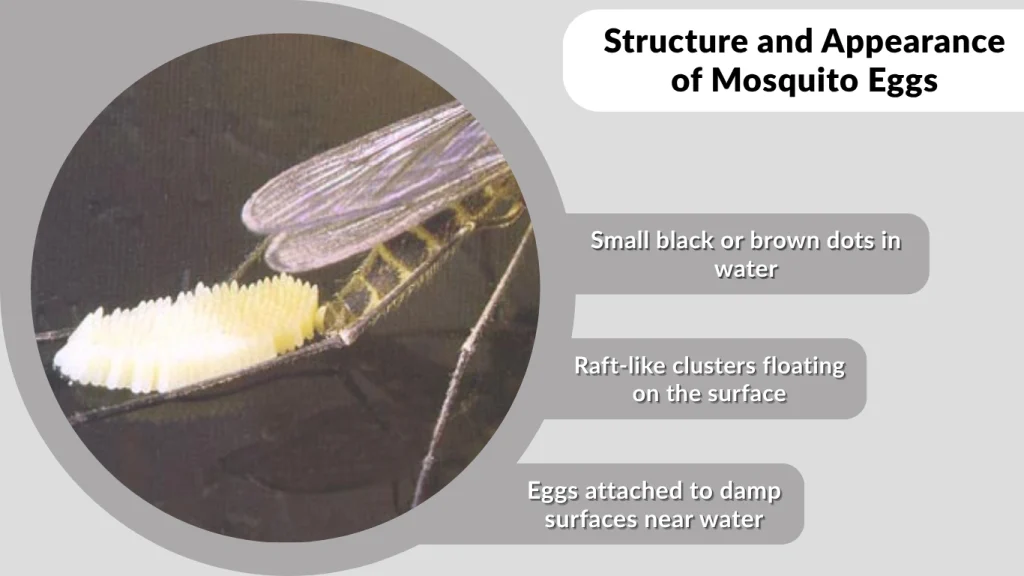
Mosquito eggs are extremely small and often difficult to see with the naked eye. They are usually oval or elongated in shape and can vary in color depending on the species. Some eggs appear white when freshly laid but quickly turn dark or black as they develop. Their tiny size allows them to go unnoticed, making mosquito control more challenging.
Unique Features
Mosquito eggs have special features that help them survive in different environments. For example:
- Some eggs have floating structures that keep them on the water surface
- Others have a protective outer layer that prevents drying
- Certain species can remain dormant until favorable conditions appear
These adaptations increase their chances of survival and successful hatching.
How to Identify Mosquito Eggs
Identifying mosquito eggs can be difficult, but there are some signs to look for:
- Small black or brown dots in water
- Raft-like clusters floating on the surface
- Eggs attached to damp surfaces near water
Regularly checking water sources can help detect eggs early and prevent further development.
Environmental Factors Affecting Mosquito Eggs
Temperature and Climate
Temperature plays a major role in mosquito egg development. Warm temperatures speed up hatching, while cold conditions slow it down or stop it completely. This is why mosquito populations increase during warmer months.
Moisture and Water Availability
Water is essential for mosquito eggs to hatch. Without water, most eggs cannot develop into larvae. Rainfall and poor drainage create ideal breeding conditions, leading to a rapid increase in mosquito populations.
Survival in Dry Conditions
Some mosquito species, especially Aedes, have eggs that can survive without water for long periods. These eggs remain inactive until they come into contact with water again. This ability makes it harder to eliminate mosquito populations, as eggs can hatch later when conditions improve.
Importance of Mosquito Eggs in Population Growth
Rapid Reproduction Cycle
Mosquitoes reproduce very quickly because each female can lay hundreds of eggs at once. With a short life cycle, these eggs hatch rapidly, leading to a fast increase in mosquito numbers. This is why even a small breeding site can produce a large number of mosquitoes in a short time.
Link to Disease Spread
A higher number of mosquito eggs means more adult mosquitoes. This directly increases the risk of mosquito-borne diseases such as malaria, dengue, and chikungunya. Controlling mosquito eggs at an early stage can significantly reduce the spread of these diseases.
How to Prevent and Destroy Mosquito Eggs
Eliminating Breeding Sites
The most effective way to control mosquito eggs is to remove their breeding grounds. This includes:
- Emptying stagnant water from containers
- Cleaning drains and gutters regularly
- Disposing of unused items that can collect water
By eliminating water sources, you can stop mosquitoes from laying eggs.
Household Prevention Methods
Simple actions at home can help prevent mosquito breeding:
- Cover water storage tanks
- Change water in vases and containers frequently
- Keep surroundings clean and dry
These steps are easy to follow and highly effective.
Community and Environmental Control
Mosquito control is not just an individual responsibility. Communities must work together to reduce breeding sites. Public awareness campaigns, proper waste management, and regular cleaning drives can help control mosquito populations on a larger scale.
FAQs
What do mosquito eggs look like?
Mosquito eggs are very small, oval-shaped, and usually dark in color. Some appear as single tiny dots, while others form clusters or raft-like structures floating on water.
How long do mosquito eggs take to hatch?
Mosquito eggs typically hatch within 1 to 3 days under warm and moist conditions. However, the time may vary depending on temperature and water availability.
Can mosquito eggs survive without water?
Yes, some species like Aedes mosquitoes can survive in dry conditions for weeks or even months. They hatch quickly when they come into contact with water again.
Where are mosquito eggs commonly found at home?
Mosquito eggs are often found in stagnant water such as flower pots, water tanks, buckets, drains, and even small containers like bottle caps or trays.
How can I destroy mosquito eggs effectively?
You can destroy mosquito eggs by removing stagnant water, cleaning containers regularly, covering water storage, and maintaining proper hygiene around your home.
Conclusion
Mosquito eggs may be small, but they play a major role in the rapid spread of mosquito populations and related diseases. Understanding their types, structure, and hatching process helps in identifying and eliminating breeding sites early. Since these eggs depend on water, removing stagnant water is the most effective way to control them. By taking simple preventive measures at home and in the community, we can reduce mosquito growth and protect ourselves from harmful diseases.
