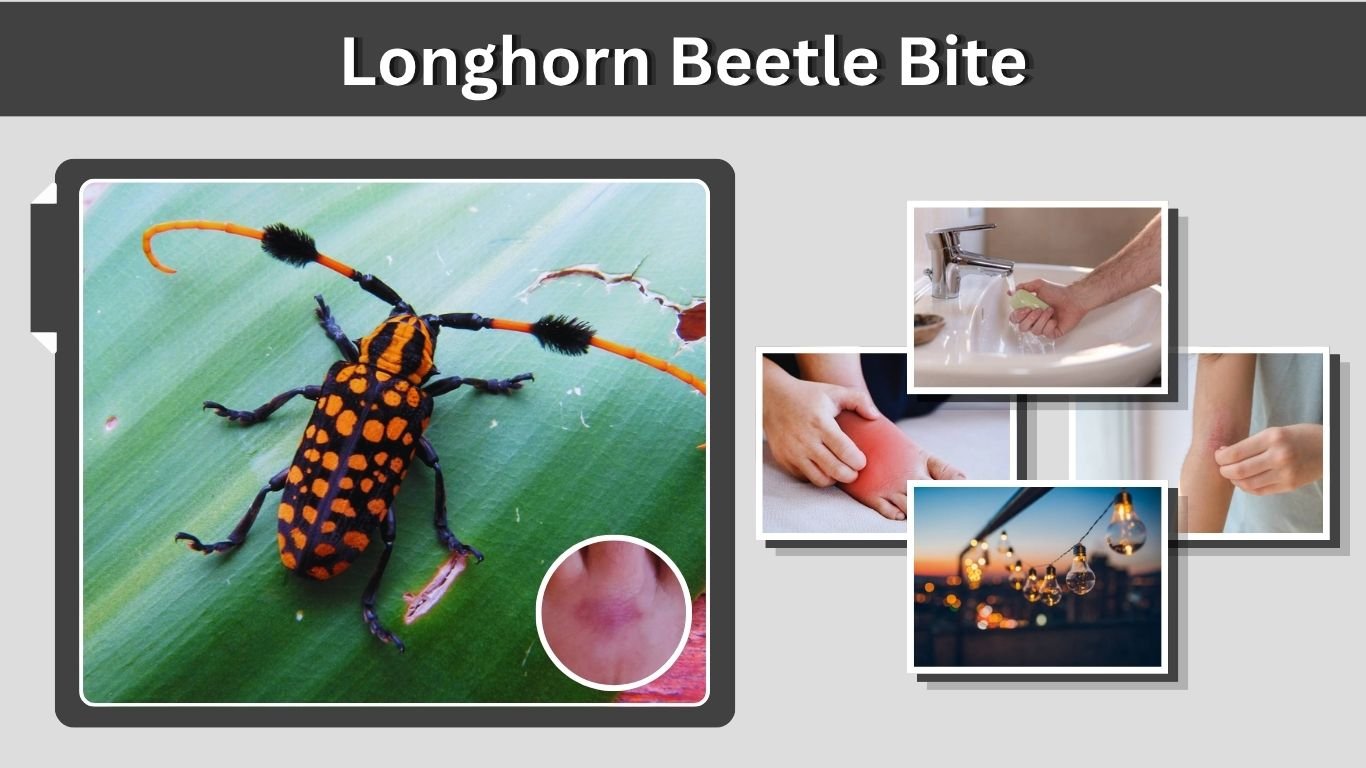
Longhorn beetles are recognizable insects with elongated bodies and unusually long antennae. Although most species are harmless to people, some adult longhorn beetles can bite when handled, threatened, or accidentally trapped against the skin. Their strong jaws may cause a sharp pinch, minor pain, or a small skin injury. Understanding which longhorn beetles can bite, what their bites look like, and how to treat them can help you respond appropriately. Fortunately, most encounters do not result in serious injuries or lasting health problems.
Do Longhorn Beetles Bite Humans?
Yes, some longhorn beetles can bite humans, but they rarely do so intentionally. These insects belong to the family Cerambycidae and use their strong chewing mouthparts to feed on plant materials, flowers, and other vegetation. Larger species may have powerful mandibles capable of pinching or breaking the skin. A bite usually happens when someone picks up, squeezes, or accidentally disturbs the beetle.
Longhorn beetles do not have stingers like wasps or bees, and they are not known for injecting venom through their bites. Most species prefer avoiding people rather than attacking them.
Why Do Longhorn Beetles Bite?
Longhorn beetles generally bite as a defensive response when they feel threatened. Their behavior depends on the species, body size, and circumstances of contact.
Common situations that may cause a bite include:
- Handling the beetle: Picking up or squeezing a longhorn beetle may cause it to defend itself with its mandibles.
- Accidental pressure: A beetle trapped against your skin or clothing may bite while trying to escape.
- Feeling threatened: Sudden movements or physical disturbance can trigger defensive behavior.
- Direct contact: Holding a large beetle without proper care increases the possibility of getting pinched.
Are Longhorn Beetles Aggressive?
Most longhorn beetles are not aggressive toward humans. They generally spend their time searching for food, locating mates, and reproducing. Adult beetles may visit flowers, feed on plant material, or remain around trees and woody vegetation.
Even larger species usually avoid people. Their long antennae and noticeable mandibles can make them look threatening, but these features are primarily associated with sensing their environment and feeding.
What Does a Longhorn Beetle Bite Look Like?

A longhorn beetle bite may resemble a small pinch, puncture, or minor insect-related skin injury. Its appearance depends on the beetle’s size, the strength of its mandibles, and how much pressure it applies. Some bites leave only a temporary red mark, while others may produce a small break in the skin.
Common Longhorn Beetle Bite Symptoms
Most reactions are localized and relatively mild. Possible symptoms include:
- Sharp pain: You may feel a sudden pinching or biting sensation when the beetle closes its jaws.
- Redness: The affected skin may become slightly red around the contact area.
- Swelling: A small raised area may develop around the bite.
- Tenderness: The skin may feel sensitive or uncomfortable when touched.
- Minor bleeding: A stronger bite may break the skin and produce a small amount of blood.
- Itching: Some people may experience temporary irritation as the affected area heals.
These symptoms are not specific to longhorn beetle bites, so the appearance of a skin mark alone cannot confirm which insect caused it.
How Painful Is a Longhorn Beetle Bite?
The pain varies depending on the beetle species and its mandible strength. Smaller species may produce little more than a mild pinch, while larger beetles with strong jaws can cause a more noticeable bite.
For example, brown prionid beetles have powerful mouthparts that can hurt when they bite. However, these beetles generally do not seek out human contact. Most minor bites cause temporary discomfort rather than serious injury.
Are Longhorn Beetle Bites Dangerous?
Longhorn beetle bites are generally not considered dangerous to humans. These insects are not known for transmitting diseases through their bites, and their mouthparts are not designed to inject venom. Most injuries are limited to temporary skin irritation, mild pain, or minor tissue damage.
However, a bite that breaks the skin should be cleaned properly to reduce the possibility of a secondary bacterial infection. People with unusual allergic reactions or worsening symptoms should seek medical advice.
Can a Longhorn Beetle Bite Cause an Infection?
A longhorn beetle bite can potentially become infected if bacteria enter through broken skin. This is not a specific disease caused by the beetle itself but a possible complication of an open wound.
Signs that may suggest infection include increasing redness, warmth, swelling, persistent pain, or pus around the affected area. Fever may also develop in more serious cases. Medical evaluation is recommended if these symptoms appear or continue to worsen.
Do Longhorn Beetles Have Venom?
No. Longhorn beetles do not have venom-delivery structures like venomous snakes or stinging insects. Their mandibles are chewing organs used for feeding and defense. A bite can still hurt or break the skin, but it does not normally involve injecting venom or poison.
Do Different Types of Longhorn Beetles Bite?

Longhorn beetles include thousands of species with different body sizes, feeding habits, and defensive behaviors. Some have strong mandibles, while others are unlikely to cause noticeable injuries to people. Therefore, the possibility of a bite depends on the particular species rather than simply its long antennae or body color.
Asian Longhorned Beetle Bite
The Asian longhorned beetle (Anoplophora glabripennis) is a large black beetle with distinctive white spots and long black-and-white banded antennae. Despite its intimidating appearance, it is considered harmless to humans and pets. It is primarily known for damaging hardwood trees because its larvae tunnel through wood and interfere with tree health.
Flat-Faced Longhorn Beetle Bite
Flat-faced longhorn beetles belong to a group of longhorn beetles with distinctive flattened body shapes. Their appearance varies between species, and their biting ability depends on their mouthparts and size. They are not generally considered aggressive toward humans, and there is no reason to handle them unnecessarily.
Black and Yellow Longhorn Beetle Bite
Some black-and-yellow longhorn beetles have patterns that resemble wasps or bees. These markings may discourage predators, but they do not mean the beetles possess a stinger. Certain species can use their mandibles defensively if handled, although bites are uncommon.
Giant Longhorn Beetle Bite
Giant longhorn beetles are among the largest members of the family Cerambycidae. Their impressive size and strong jaws can make handling them uncomfortable or potentially painful. However, they generally do not attack humans and are more interested in their natural food sources and breeding environments.
Longhorn Beetle Bite Treatment

If a longhorn beetle bites you, basic wound care is usually sufficient for a minor injury. The main priorities are cleaning the affected skin, reducing discomfort, and watching for signs of infection or an unusual allergic reaction.
How to Treat a Longhorn Beetle Bite
Follow these simple first-aid steps after a suspected bite:
- Wash the affected area: Clean the bite gently with soap and running water to remove dirt and reduce the risk of infection.
- Apply a cold compress: Place a cold pack wrapped in a clean cloth over the affected area for approximately 10–20 minutes to reduce swelling and discomfort.
- Protect broken skin: If the bite has caused a small wound, keep it clean and cover it with a suitable sterile dressing.
- Avoid scratching: Scratching can damage the skin further and increase the possibility of infection.
- Monitor the area: Watch for increasing redness, warmth, swelling, discharge, or persistent pain.
For ongoing itching or discomfort, a pharmacist or healthcare professional can recommend appropriate over-the-counter treatment. Seek medical advice if the wound becomes infected or does not improve.
When Should You Seek Medical Attention?
Most minor beetle bites do not require professional treatment. However, medical attention is important if the affected area becomes increasingly painful, swollen, or infected.
Seek urgent medical help if you experience difficulty breathing, swelling of the lips or tongue, throat tightness, fainting, or widespread hives. These may indicate a serious allergic reaction, even though such reactions are not typical of longhorn beetle bites.
How to Avoid Longhorn Beetle Bites

Preventing accidental contact is the easiest way to avoid a longhorn beetle bite. These insects may occasionally land on clothing, enter homes through open windows, or appear around outdoor lights. Giving them space and avoiding direct handling can significantly reduce the risk of injury.
Simple Ways to Prevent Bites
- Avoid handling unfamiliar beetles: Observe them without picking them up or squeezing their bodies.
- Use gloves when necessary: Wear protective gloves when working around firewood, tree branches, or outdoor vegetation.
- Keep windows screened: Proper window and door screens can reduce the number of insects entering your home.
- Use outdoor lighting carefully: Some adult beetles are attracted to artificial lights at night.
- Move beetles gently: If one enters your home, use a container and a piece of stiff paper to relocate it safely.
- Teach children to observe insects: Encourage children to look at beetles without touching or disturbing them.
Remember that longhorn beetles are generally more interested in plants and woody materials than people. Leaving them undisturbed is usually the safest approach.
FAQs
1. Do Longhorn Beetles Bite Humans?
Yes, some longhorn beetles can bite humans when handled or threatened. Their strong chewing mouthparts may cause a sharp pinch or minor skin injury. However, most species are not aggressive, and they generally avoid human contact.
2. Is a Longhorn Beetle Bite Poisonous?
No, longhorn beetles are not considered poisonous to humans. They do not inject venom through their mandibles. Their bites may cause temporary pain, redness, or swelling, but serious poisoning is not expected.
3. Do Asian Longhorned Beetles Bite?
Asian longhorned beetles are considered harmless to humans and pets. Although their large mandibles make them look intimidating, they are primarily wood-boring insects that damage hardwood trees rather than attack people.
4. What Happens If a Longhorn Beetle Bites You?
A longhorn beetle bite may cause a sudden pinch, localized pain, redness, or minor swelling. Larger beetles can sometimes break the skin. Cleaning the affected area and monitoring it for infection are generally sufficient for minor injuries.
5. How Do You Treat a Longhorn Beetle Bite?
Wash the affected area with soap and water, apply a cold compress, and avoid scratching. If the bite breaks the skin, keep it clean and covered. Seek medical advice if swelling, redness, pain, or other symptoms become worse.