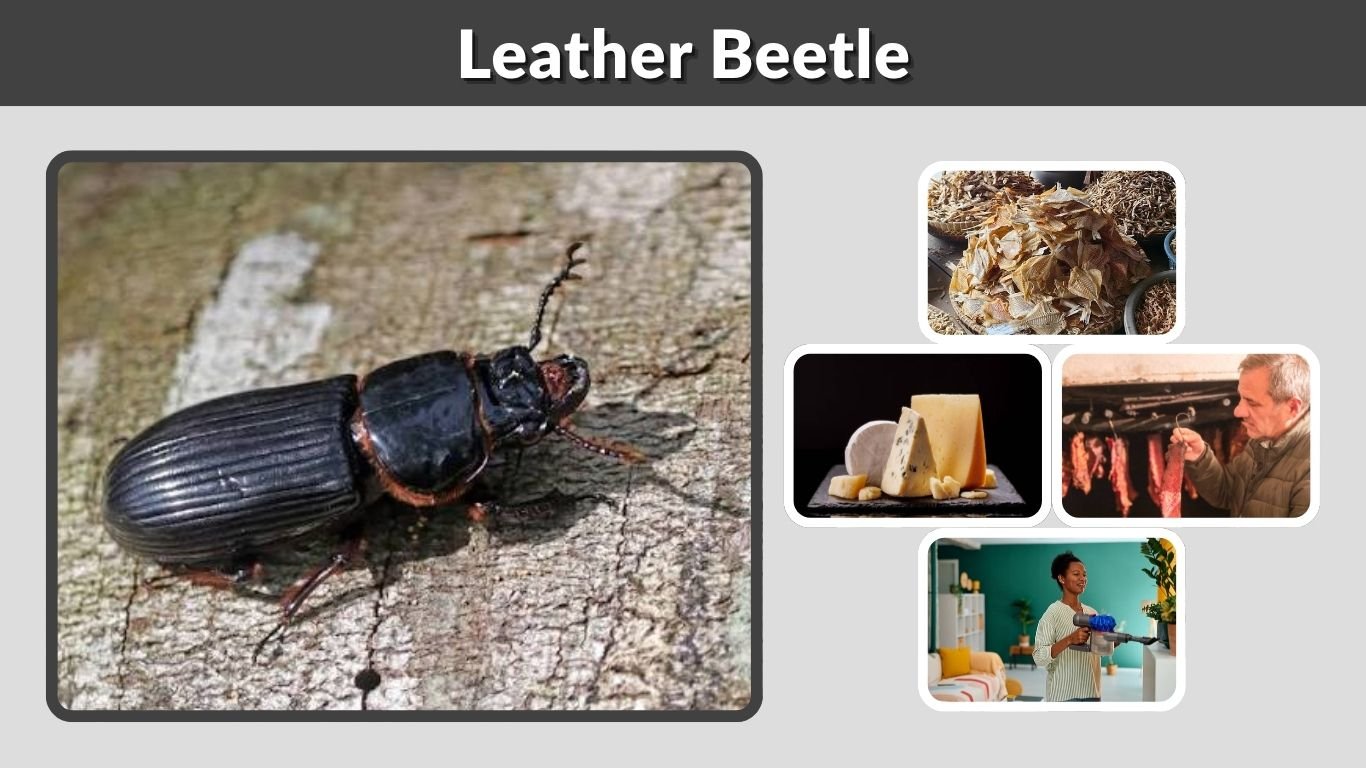
The leather beetle is a dermestid beetle commonly associated with hides, animal remains, dried meat, fish products, and other protein-rich materials. The name most often refers to Dermestes maculatus, also called the hide beetle or skin beetle, although other Dermestes species may sometimes receive similar common names. These beetles are useful decomposers outdoors but can become destructive stored-product pests indoors. Understanding their appearance, food sources, life cycle, damage, and control methods makes an infestation much easier to recognize and manage.
What Is a Leather Beetle?
Leather beetles belong to the family Dermestidae, a group that also includes hide, larder, skin, and carpet beetles. In most pest-control references, “leather beetle” refers to Dermestes maculatus. This species occurs widely around the world and feeds mainly on dried animal material. It plays an important recycling role in nature but becomes troublesome when it reaches stored products or valuable animal-derived materials.
Scientific Classification
Important identification information includes:
- Common name: Leather beetle, hide beetle, skin beetle
- Scientific name: Dermestes maculatus
- Family: Dermestidae
- Order: Coleoptera
- Adult length: About 5.5–10 mm
- General color: Dark brown to black
- Distribution: Cosmopolitan or worldwide
- Main food sources: Dried animal material and protein-rich products
The common name is not perfectly exclusive. Dermestes frischii is also called a leather beetle in some taxonomic databases, so scientific identification is useful when distinguishing closely related species.
Is a Leather Beetle a Carpet Beetle?
Leather beetles and carpet beetles are relatives because both belong to Dermestidae, but they are not the same species.
Typical carpet beetles in genera such as Anthrenus are much smaller and are well known for damaging wool, fur, feathers, and other materials. Dermestes maculatus is larger and is particularly associated with hides, carcasses, dried meat, animal products, and stored protein materials.
What Does a Leather Beetle Look Like?
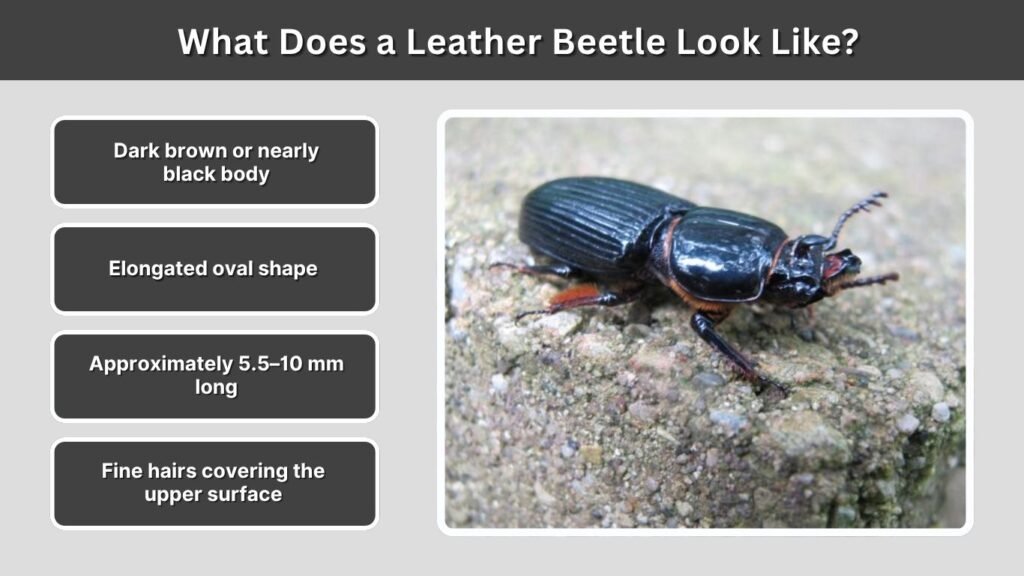
Adult leather beetles have an elongated oval body rather than the small, rounded shape associated with many carpet beetles. Their dark coloration can make them easy to overlook around stored materials. Larvae look completely different from adults and are hairy, elongated, and considerably more active when searching for food or a suitable place to pupate.
Adult Identification
Look for these characteristics:
- Dark brown or nearly black body
- Elongated oval shape
- Approximately 5.5–10 mm long
- Fine hairs covering the upper surface
- Whitish hairs along parts of the underside and sides
- Short antennae ending in noticeable clubs
- Pointed tips at the rear of the wing covers
- Serrated edges near the tips of the wing covers
The pointed wing-cover tips are especially useful for separating D. maculatus from some similar dermestid beetles.
Leather Beetle Larvae
Larvae are brownish and covered in conspicuous hairs. Mature larvae have a pair of projections, called urogomphi, at the rear of the abdomen that curve upward and inward.
They may wander away from their food source when ready to pupate. This behavior explains why larvae may appear in walls, wood, insulation, or other locations even when the original infestation began somewhere else.
What Do Leather Beetles Eat?
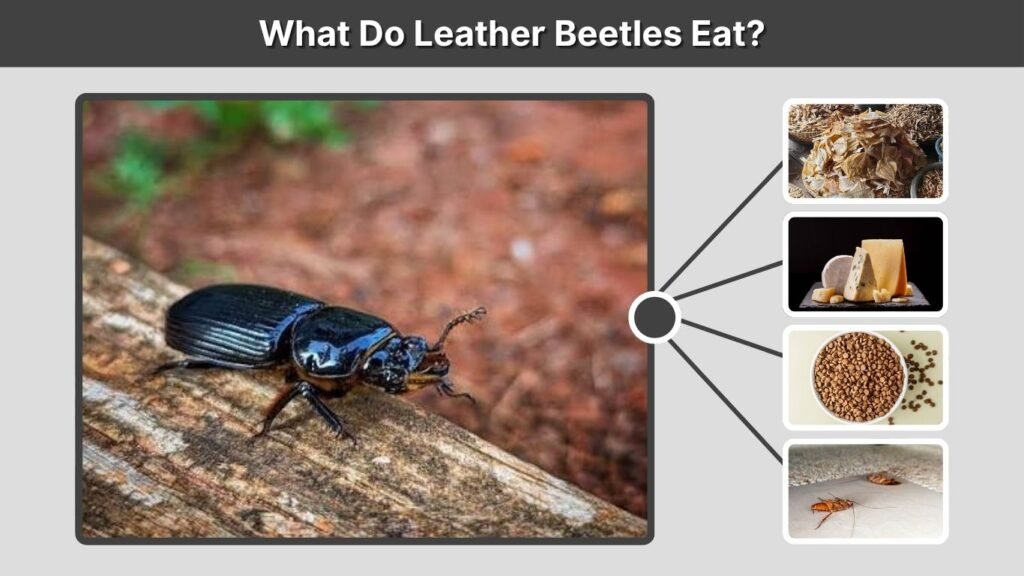
Leather beetles specialize in dry, protein-rich animal material. Outdoors, this diet allows them to help break down dead animals after softer tissues have disappeared. Inside buildings, the same feeding behavior can damage stored foods, hides, animal specimens, and other organic materials. Both adults and larvae may feed, although larvae can be especially destructive.
Common Food Sources
Leather beetles may feed on:
- Animal hides and skins
- Leather containing suitable animal material
- Dried fish
- Fish meal
- Dried or cured meat
- Cheese
- Bones and animal remains
- Fur and feathers
- Pet food
- Dead insects
- Taxidermy specimens
- Carcasses of rodents, birds, or other animals
They are especially important pests where dried animal products are stored for long periods.
Do Leather Beetles Eat Leather?
They can damage hides, skins, and leather-related animal materials, which is the origin of the name “leather beetle.”
However, finding damage on a modern leather object does not automatically prove that Dermestes maculatus is responsible. Manufacturing treatments and the composition of the item affect its susceptibility. Beetles may also be attracted to nearby animal material, food residues, or dead insects rather than the leather itself.
Leather Beetle Damage and Signs of an Infestation
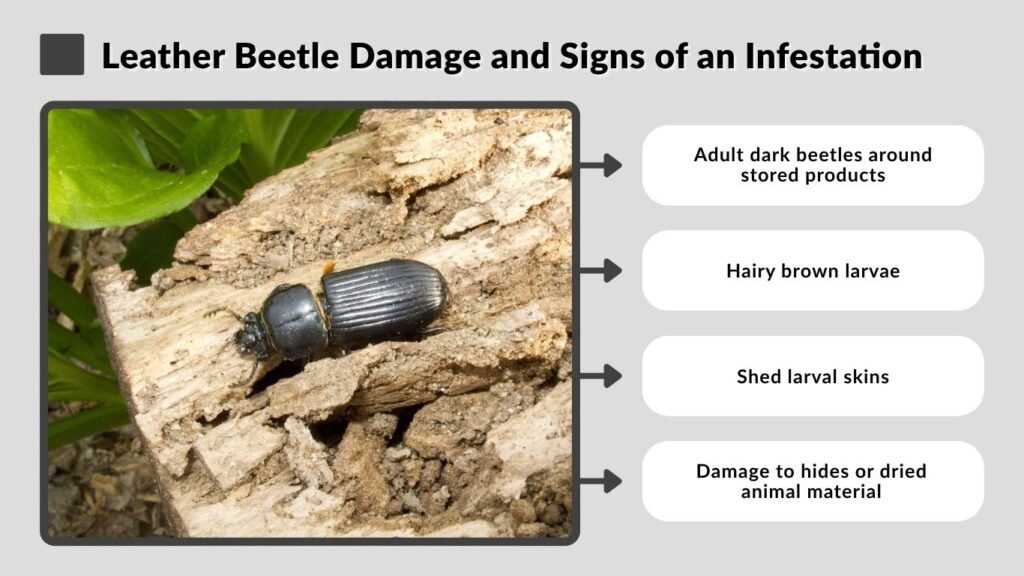
A leather beetle problem may involve more than simple feeding damage. Mature larvae search for protected places in which to pupate and can chew into materials that they do not actually eat. This behavior means an infestation associated with dried meat or animal remains may eventually produce damage to nearby wood, cork, plaster, packaging, or similar materials.
Common Signs to Look For
Signs may include:
- Adult dark beetles around stored products
- Hairy brown larvae
- Shed larval skins
- Damage to hides or dried animal material
- Holes or feeding marks in stored products
- Larvae wandering away from a food source
- Boring damage in wood or other materials
- Dark, string-like fecal material
- Dead insects or an animal carcass nearby
A hidden dead rodent, bird, or other animal can sometimes support a population until adult beetles begin appearing elsewhere in the building.
Why Larvae Can Damage Wood
Leather beetle larvae do not necessarily consume wood for nutrition. Mature larvae may bore into wood, cork, plaster, and other relatively firm materials to create protected pupation chambers.
This secondary damage can sometimes be more noticeable than the original food infestation. Historical reports even document structural wood damage where large populations developed near animal waste or stored animal products.
Leather Beetle Life Cycle
Leather beetles undergo complete metamorphosis through egg, larva, pupa, and adult stages. Development speed varies substantially with temperature, humidity, food quality, and other environmental conditions. Under favorable warm conditions, the entire process can be completed relatively quickly, allowing populations to increase rapidly around a dependable source of animal material.
From Egg to Adult
Females lay eggs close to suitable food, often inside cracks or protected spaces. The newly hatched larvae begin feeding and pass through several larval instars.
As a larva reaches maturity, it leaves the feeding material and looks for a protected pupation site. It may tunnel into nearby substances before transforming into a pupa.
University of Florida guidance reports that the complete life cycle can take roughly five to seven weeks under optimum conditions, although cooler temperatures can extend development substantially. Adults can live for several months and are capable of flying to new food sources.
Where Leather Beetles Live
Leather beetles can occur wherever suitable animal material is available. Outdoors, they are associated with carcasses and decomposing remains. Indoors, they may occur in warehouses, food-processing facilities, museums, taxidermy collections, pet-food storage areas, or buildings containing dead animals.
Their worldwide distribution means infestations are not limited to one particular climate or geographic region.
How to Get Rid of Leather Beetles
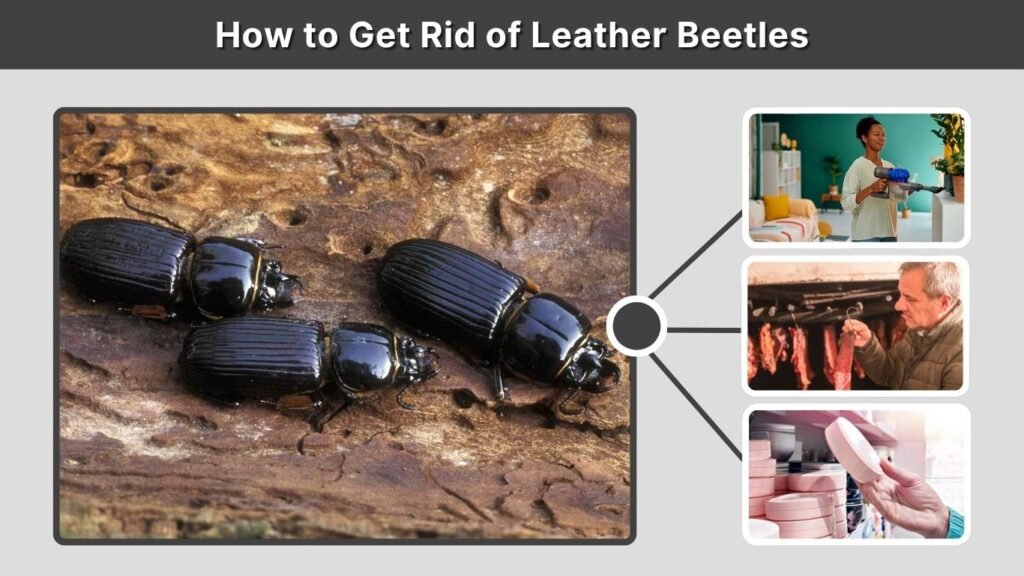
Successful control begins with finding the food source. Killing visible adults without eliminating dried animal material, contaminated stored products, or a hidden carcass may provide only temporary improvement. Sanitation and source removal are therefore central to controlling Dermestes infestations.
Steps for Leather Beetle Control
Use the following approach:
- Inspect dried meat, fish, pet food, hides, feathers, and animal products.
- Look for dead rodents, birds, or other animals in wall voids, attics, chimneys, or similar spaces.
- Discard heavily contaminated food or animal material.
- Vacuum larvae, adults, shed skins, and debris.
- Clean cracks, storage shelves, and food-spill areas thoroughly.
- Store susceptible products in tightly sealed containers.
- Repair openings that allow wildlife or rodents to enter.
- Monitor suspicious areas with suitable traps.
- Protect valuable hides and furs with appropriate cool storage where practical.
- Consult a pest-management professional when the infestation source cannot be located.
Cleaning is particularly important in warehouses and facilities handling dried animal products because spilled material can provide persistent breeding sites.
Preventing Another Infestation
Prevention depends on removing the resources these beetles need.
Keep pet food and animal-derived stored products sealed, clean food spills promptly, and inspect taxidermy, hides, feathers, or dried animal materials periodically. Rodent and wildlife exclusion is also important because a carcass hidden inside a building can become an unexpected breeding source.
Continued monitoring after cleanup helps reveal whether overlooked larvae are still emerging.
Leather Beetle vs Leatherwing Beetle
“Leather beetle” and “leatherwing beetle” sound similar but should not automatically be treated as the same insect. The leather beetle discussed here is Dermestes maculatus, a dermestid associated primarily with animal material. Searches for “leather wing beetle,” “leather winged beetle,” or “downy leatherwing” often refer instead to beetles in other groups, including soldier beetles.
Why the Names Cause Confusion
The term leatherwing refers to the relatively soft, flexible wing covers found in soldier beetles, whereas the name leather beetle refers to dermestids historically associated with hides and skins.
Therefore, keywords such as downy leather winged beetle should not be used as alternative names for Dermestes maculatus. Likewise, search phrases involving Volkswagen Beetle leather seats, leather bags, chairs, or backpacks represent unrelated product searches rather than entomological information.
FAQs
1. What is a leather beetle?
A leather beetle usually refers to Dermestes maculatus, a member of the Dermestidae family. It is also commonly called the hide beetle or skin beetle and feeds on dried animal products, hides, meat, fish, carcasses, and similar protein-rich materials.
2. Are leather beetles harmful to humans?
Leather beetles are principally scavengers and stored-product pests rather than human-feeding insects. Their main concern is damage to stored foods, hides, animal products, and surrounding materials during larval pupation.
3. Can leather beetles damage leather bags?
They can damage susceptible hides and animal-derived materials, but a damaged leather bag should not automatically be blamed on leather beetles. Look for larvae, shed skins, adults, or nearby infested animal material before identifying the cause.
4. How big are leather beetles?
Adult Dermestes maculatus are generally about 5.5–10 mm long. They have an elongated dark body with short clubbed antennae and distinctive pointed tips on the wing covers.
5. How do you get rid of leather beetles?
Locate and remove the food or breeding source first. Clean contaminated storage areas, vacuum larvae and debris, discard heavily infested products, seal susceptible foods, and investigate hidden animal carcasses. Persistent infestations may require professional pest-control assistance.