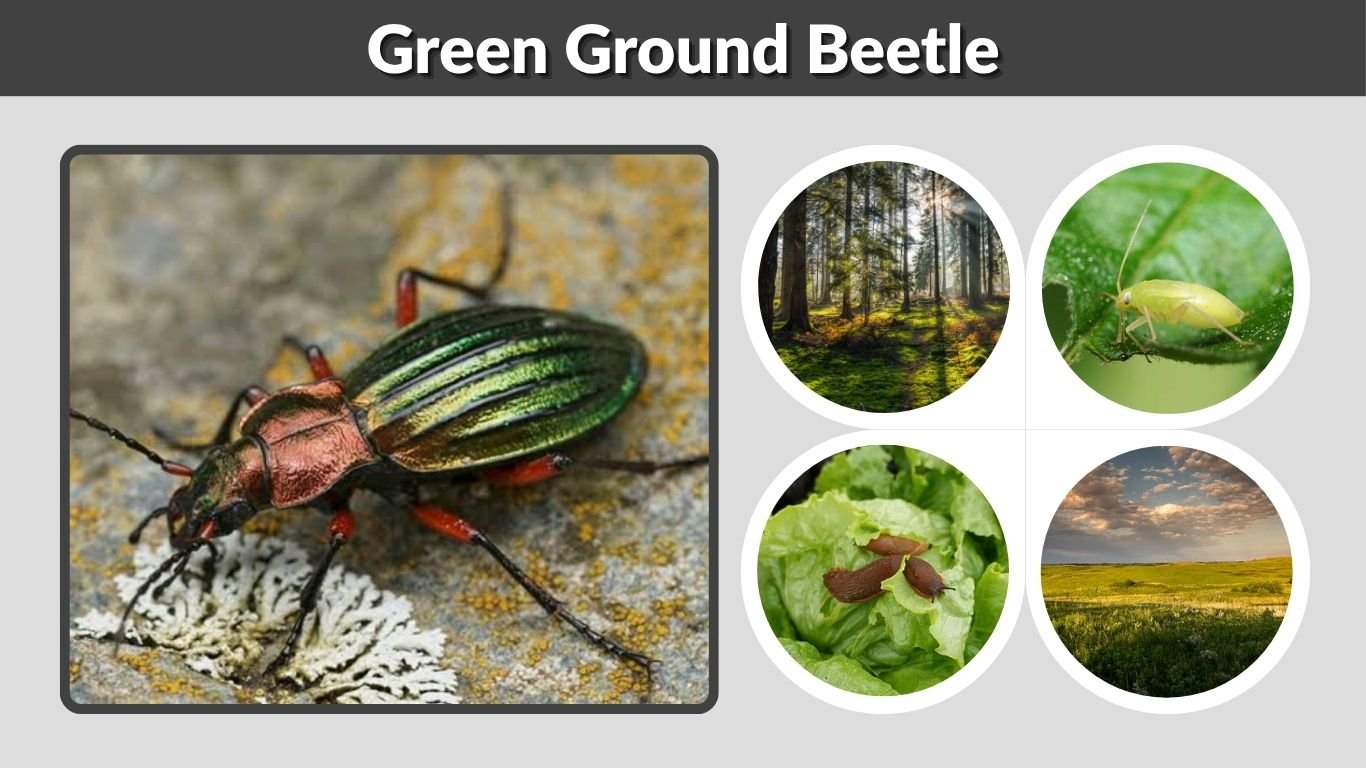
Green ground beetles are striking members of the ground beetle family, often recognized by metallic green, bronze, or iridescent coloring. Although “green ground beetle” can describe several carabid species, the Delta green ground beetle is a specific rare species found in California. Most ground beetles are fast-moving predators that spend much of their lives close to the soil. This guide explains their identification, scientific classification, habitat, diet, behavior, benefits, and the conservation status of the Delta green ground beetle.
What Is a Green Ground Beetle?
The term green ground beetle does not identify one single species. It is commonly used for members of the ground beetle family, Carabidae, that have green, blue-green, bronze, or strongly metallic bodies. Ground beetles occur in many habitats and are usually found running across soil rather than spending much time on plants.
Green Ground Beetle Scientific Name
There is no universal scientific name for every green ground beetle because several species can appear green. They belong to the family Carabidae.
One particularly important species is the Delta green ground beetle, scientifically known as Elaphrus viridis. This species has a much more restricted range than ordinary ground beetles and is currently known only from California’s Jepson Prairie region in Solano County.
Metallic species in genera such as Chlaenius may also be described informally as green ground beetles. Therefore, location, body structure, markings, and size are important for accurate identification.
How to Identify a Green Ground Beetle
Common identification characteristics include:
- Metallic green, bronze, blue-green, or iridescent coloration
- Flattened or slightly elongated body
- Noticeable jaws or mandibles
- Long, slender legs adapted for running
- Thread-like antennae
- Hard wing covers called elytra
- Fast movement when exposed
- Frequent hiding beneath stones, leaves, wood, or vegetation
Ground beetles range considerably in size. Many are approximately 1/8 to 1/2 inch long, although some species can approach an inch.
Green Ground Beetle Habitat and Distribution
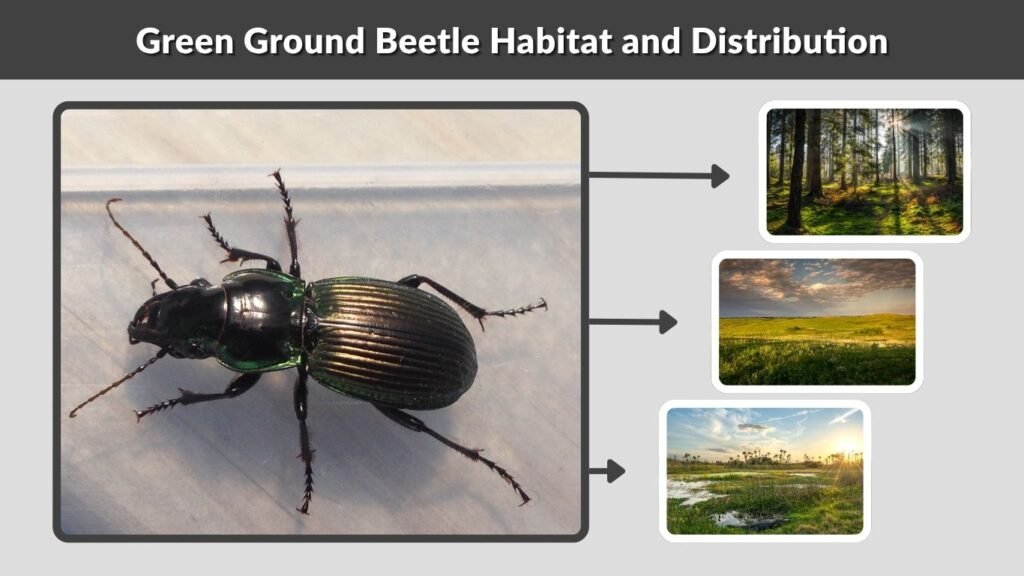
Green-colored ground beetles can occupy forests, grasslands, agricultural areas, gardens, shorelines, wetlands, and other places where suitable prey and shelter are available. They commonly remain beneath ground-level cover during daylight and become more active after dark. Because multiple species may have metallic green coloration, geographical location can be especially useful when trying to identify one.
Where Do Green Ground Beetles Live?
Ground beetles generally favor protected areas with access to moisture, prey, and hiding places. During the day, they may shelter beneath fallen leaves, stones, logs, loose bark, mulch, or dense vegetation.
Some people encounter shiny green ground beetles in gardens or agricultural fields because these habitats provide plentiful insects and other small invertebrates. Many species are active mainly at night and may occasionally be attracted to outdoor lighting.
Reports of a green ground beetle in Iowa, Virginia, Washington State, the UK, or Australia do not necessarily refer to the same species. Metallic coloration occurs in numerous carabid beetles around the world, so photographs or expert identification may be required to determine the exact species.
Green Ground Beetle Diet and Feeding Habits
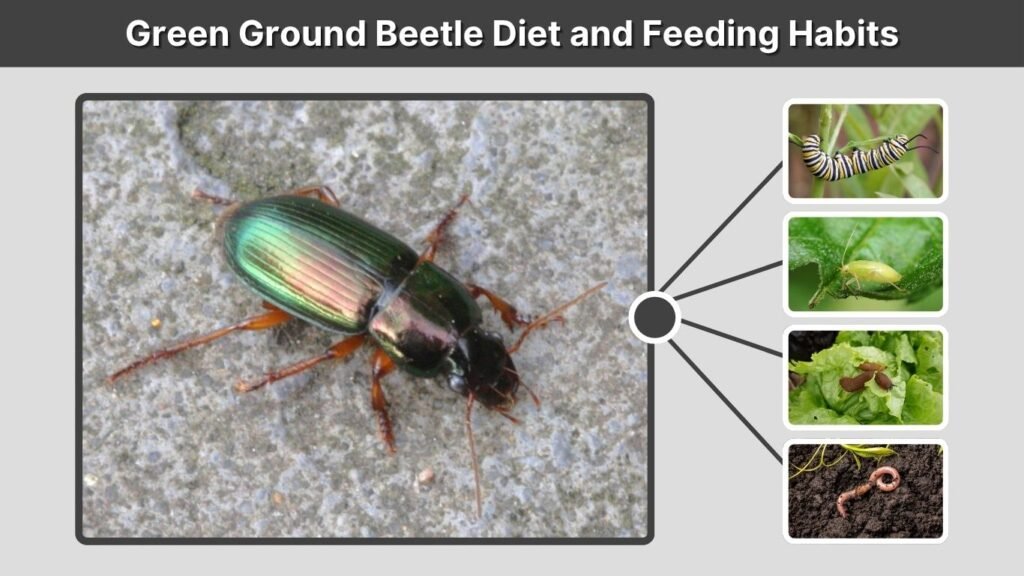
Most ground beetles are predators, although the diet varies between species. Their strong jaws and quick running ability allow them to capture many small organisms living at or near soil level. This feeding behavior is one reason carabid beetles are considered useful natural predators in gardens and agricultural ecosystems. Some species also consume seeds.
What Do Green Ground Beetles Eat?
Depending on the species, their food may include:
- Caterpillars
- Maggots
- Small insect larvae
- Aphids
- Slugs
- Worms
- Ants
- Springtails
- Small crickets
- Other soil-dwelling invertebrates
- Seeds and plant material in some species
Both adult and larval ground beetles may act as predators, although feeding habits vary considerably among the thousands of species in the family.
Are Green Ground Beetles Beneficial?
In most situations, yes. Ground beetles can help reduce populations of caterpillars, larvae, slugs, and other organisms that may damage plants.
They generally do not attack houses, clothing, stored food, or furniture. If one wanders indoors, it is usually there accidentally rather than because it is establishing an infestation. University of Minnesota Extension describes ground beetles as beneficial outdoors and not harmful to people or buildings.
Delta Green Ground Beetle Facts
The Delta green ground beetle is different from the many ordinary metallic green ground beetles seen in gardens. Elaphrus viridis has an extremely limited known distribution and specialized habitat requirements. The U.S. Fish and Wildlife Service lists it as threatened, a federal conservation status it has held since August 8, 1980.
Delta Green Ground Beetle Identification and Habitat
Important facts include:
- Scientific name: Elaphrus viridis
- Size: About 0.25 inch, or 0.6 cm
- Color: Brilliant metallic green and bronze
- Markings: Many adults have bronze spots on the wing covers
- Known range: Jepson Prairie region, Solano County, California
- Primary habitat: Edges of vernal and playa pools
- Activity: Adults may emerge during warmer periods in late winter and spring
Its habitat is closely associated with clay soils and seasonal pools. Adults may hide in soil cracks and beneath low vegetation.
Why Is the Delta Green Ground Beetle Threatened?
The U.S. Fish and Wildlife Service identifies several major concerns:
- Very small population and restricted geographical range
- Agricultural land use
- Drying of vernal pools associated with climate change
- Invasive and non-native vegetation
- Loss or alteration of suitable pool-edge habitat
Because the beetle survives within such a limited area, habitat changes can have an unusually large effect on the entire known population.
Delta Green Ground Beetle Population and Life Cycle
The exact population size remains unknown. Researchers have difficulty locating individuals, and important parts of the species’ life history are still poorly understood.
The beetle appears to produce one generation each year. Adults are thought to become active when conditions warm following winter, while females probably lay eggs once annually. During hot, dry periods, developing beetles may survive in cracks within the soil.
For food, observations suggest that springtails are particularly important. Delta green ground beetles have also been observed feeding on adult and larval midges and other beetle larvae.
Green Ground Beetles Around the Home
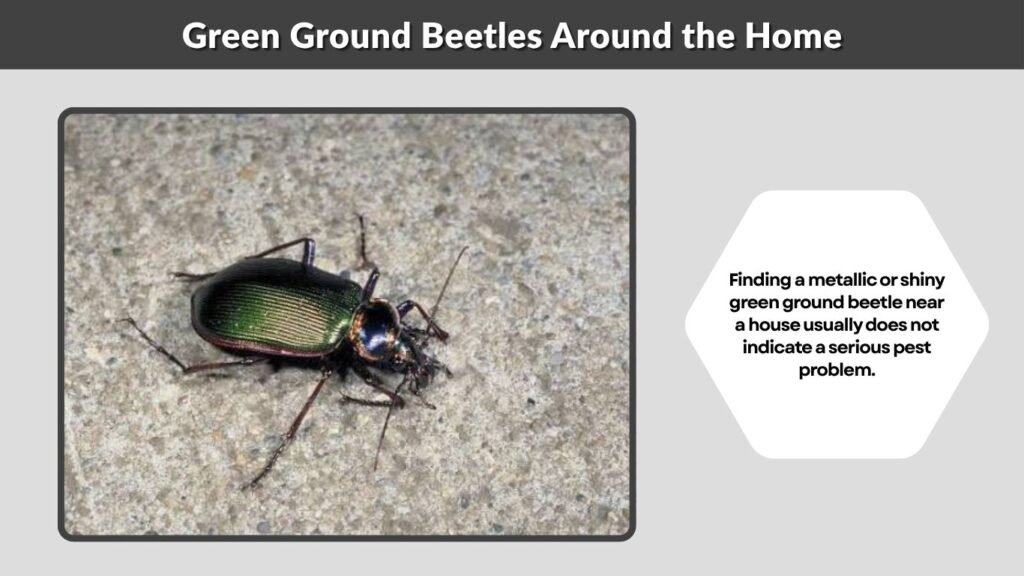
Finding a metallic or shiny green ground beetle near a house usually does not indicate a serious pest problem. Ground beetles naturally live outdoors, but some enter buildings through small gaps, especially during warmer months. Inside, they may appear in basements, garages, or other cool and relatively damp spaces while searching for shelter.
Are Green Ground Beetles Dangerous?
Ground beetles are not generally considered dangerous to people. They do not normally damage household structures, clothing, or stored foods.
If disturbed, a beetle may run quickly or use defensive behavior, but routine encounters rarely require pest-control treatment. Outdoor populations are usually better left alone because many species help control other insects.
What Should You Do If You Find One Indoors?
A single beetle can usually be captured gently in a container and released outdoors. Sealing gaps beneath doors, repairing screens, and closing cracks around foundations can reduce future accidental entry.
Avoid automatically treating every metallic green beetle as a pest. If you live within or near sensitive habitat in California and believe you have encountered a Delta green ground beetle, photographing the insect without disturbing it can provide useful identification information.
FAQs
Green ground beetles attract attention because their metallic colors can make them look very different from the familiar black or brown ground beetles. Their identity, diet, safety, and conservation status also cause confusion because “green ground beetle” can describe several insects. These answers address some of the most common questions about these beetles.
1. What is a green ground beetle?
A green ground beetle is generally a carabid beetle with green, bronze, blue-green, or iridescent coloration. It is not necessarily one particular species.
2. What do green ground beetles eat?
Most feed on insects and other small invertebrates such as caterpillars, maggots, larvae, slugs, springtails, and worms. Some species also consume seeds.
3. Is the Delta green ground beetle endangered?
Its current federal classification is threatened, not endangered. The U.S. Fish and Wildlife Service states that it has been federally listed as threatened since August 8, 1980.
4. Where does the Delta green ground beetle live?
Its known range is restricted to the Jepson Prairie region of Solano County, California, particularly around the margins of vernal and playa pools.
5. Are metallic green ground beetles good for gardens?
Most are beneficial because they prey on insects and other small organisms, including several potential garden pests. Unless a species is specifically identified as harmful, ground beetles generally do not need to be controlled outdoors.